In recent PKR elections, there were a lot of complaints coming mainly from Rafizi and his team, but the problem lies is that the complaint is dealt by Election Committee and the Leadership Council(who are the incumbent leaders, many of whom are contesting, and may be part of the Opposing Team, some say 'Team Anwar'). Thus, can justice be done or SEEN to be done? Most likely NO.
The problem existed in law, that DENIES member's who are not happy with the decision from taking the matter to Court
End
oppression of members of political party & Denial of the freedom of
association (and member's rights) - Repeal Societies Act, including
Section 18C that deny members of political parties’ access to court when
they are oppressed or are victims of abuse of power of party
leaders(MADPET)
Section 18C Societies Act 1966 Decision of political party to be final and conclusive
The decision of a political party or any person authorized by it or by its constitution or rules or regulations made under the constitution on the interpretation of its constitution, rules or regulations or on any matter relating to the affairs of the party shall be final and conclusive and such decision shall not be challenged, appealed against, reviewed, quashed or called in question in any court on any ground, and no court shall have jurisdiction to entertain or determine any suit, application, question or proceedings on any ground regarding the validity of such decision.
This draconian section prevent political party members, who are aggrieved with the decisions of the party from taking it to court. It is a violation of an individual member's right to freedom of association. The provision protects the 'association' and DENY member's from taking it to court.
Worse, when it is an issue related to upcoming or elections, when the INCUMBENT are still in control of the party.
Party elections is a RISK to incumbents, as other may be contesting for the leadership positions.
The challengers, in this case Rafizi and Team, would most likely be prejudiced as complaints are dealt with by incumbent controlled committee or leaderships.
Just before the last UMNO elections, we saw some potential challengers to leadership positions being 'expelled' or 'suspended' - and that was the end of their QUEST for Justice - Section 18C bars them from taking this matter to court.
Now, this Section only applies to POLITICAL PARTIES - not any other societies ... why? Is it simply because the Court declared UMNO illegal in 1987 - thus law change ousting Court's jurisdiction to hear and decide on grievances of political party members against the party? Repeal Sec. 18C - and restore FULL freedom of association rights to every member of political parties.
What is Nurul Izzah's, Rafizi's and others stance on Section 18C - restore jurisdiction of courts to hear such matters or NOT?
When a worker's rights is violated - a worker has a right to take the matter to court?
When anyone is aggrieved by the decision of the government, the Prime Minister, Minister or any government department - he/she had the right to take the matter to court..
SO, it is absurd, that members of the political party are denied that right to take the matter to Court..
Maybe, maybe they should take the matter to SUHAKAM and SUHAKAM may decide that Sec.18C(that oust jurisdiction of Court, and denies members taking matters to court) may be a violation of one's right to freedom of association.
Not wrong to have 'internal processes' - i.e. if you are unhappy with the police/immigration decision, the right to appeal to the Minister, and if still unhappy, the right to bring the matter to the Courts - appeal or judicial review > but wrongly, the bad law prohibits political party members from bringing matter to the courts..
Why COURTS? Because we trust courts to independently look into the matter and ensure justice is done. Anyone unhappy with a court's decision still have the right of 2 appeals to higher courts...
Sadly, Rafizi and other 'victims'
FAILED to call for the Repeal of Section 18C (and related sections) -
that is TYPICAL as many stand silently not bothered UNTIL they or their
family/friends themselves are victimized by these 'draconian' laws.
Likewise, most Malaysians were little bothered about Detention Without Trial laws - and this changed with Ops Lallang in 1987 and the Arqam detention in 1994.
Interestingly, once when Anwar was free to move, at a session at the Bar Council, Anwar Ibrahim said he opposed the use of ISA and the Arqam - he claimed that he brought his opposition to the Prime Minister Mahathir then - sadly, there is no evidence to prove whether it is true or not true?
But, then Anwar Ibrahim had promised REFORMASI and the repeal of bad laws like the Sedition Act - but sadly, we have not seen this happen when he became PM. Both PKR and DAP were all out for Local Government Elections (Local Council Elections), but now, when they are in power with the ability to restore Local Council Elections...there is no talk about this.
Previously PKR SHINED as the one and only party that gave ONE MEMBER-ONE VOTE - but it all 'mysteriously' changed at the end of last year - when it changed to ONLY DELEGATES can vote when it comes to choosing the top leadership - So sad...so sad. Will these delegates allow the members at branches/Division decide on who should the particular delegates vote for - or the delegate vote as he/she pleases(irrespective of how the members they represent feels/want) - NO MORE IS PKR one of the most democratic party that gave every member the right to vote...
IT is very sad when MPs and politician STAYS SILENT even when they disagree or have a different view on matters the government or Prime Minister says or does - WHY or the justification > because we should be 'loyal' and not express a different view from the government or our existing party leaders - this is NONSENSE - and this why Malaysian democracy is failing...At least Nurul expressed disappointment on the re-appointment of Azam Baki as MACC Chief, what are the times when Rafizi disagreed or had a different view, and spoke out...
JUST Raise in it Parliament - this is 'nonsense' - yes, you can try to raise it in Parliament - but you can also issue public statements, comment online on social media or print and circulate you views, send OPEN letters to the Minister, government departments, etc (OPEN letter means that it is also circulated to the people) > Even the media will not carry ALL issues raised in Parliament, and even if you raise it, there may even be no Ministers or Deputy Minister or PM to hear it...??
Rafizi- Did he talk about PKR reforms - restoring one member one vote, amending the Constitution to remove the President's 'dictatorial-like' power - In PKR. after the election, he can personally choose and appoint 2 Vice Presidents, the Party Secretrary General, State leaders, certain number of persons who will sit in the Leadership Council, etc - this is dictatorial, as it would be better if that power is given to all ELECTED members of the Leadership Council, and later to the Council to appoint any new position that becomes vacant.
Will Rafizi win? We don't know if the Delegates exercise their right to vote independently, and not as per instruction/order of some 'BIG BOSSes"?
There has been much criticism about the fact that his opponent is the daughter of Anwar? There is also questions about 'Fair Elections' as there have been much complaints.
So, maybe the 'BIG BOSSES' may send word down to vote for Rafizi - for if Rafizi wins, people will say there is fair elections, and that President Anwar did not interfere? We shall see..we shall see..
PKR Elections - not really a concern of anyone but members, but an opportunity to comment on needed reforms like getting rid of bad laws - that denies political party members access to the INDEPENDENT courts, like needed political party reforms in Malaysia - 1 member 1 vote, and erasing dictatorial powers of the President in favour of greater democracy...
As usual during election campaigns, this time party election campaign, we hear them SPEAKING UP - but after elections, back to disinterest and silence - how we hope this will change. One PKR MP that differs is Hassan Karim - sad that he said we will not contest in the next GE (in my opinion, even if he does want to contest - most likely PKR may drop him as a candidate for GE16)
Anwar, PKR - Danger of becoming Autocratic and not Democratic? President just too much power?
Azmin unhappy about people Anwar appointed? Amend PKR constitution to make it more democratic.
Nurul Izzah is VICE PRESIDENT - not because she won the position at the last PKR elections - she was chosen and appointed by her father, President Anwar Ibrahim. Same with then PKR Secretary General Saifuddin Nasution.. [Different from the Bar Council or other parties, where it is the whole elected Council that choses and appoints)
Does it matter who wins - Rafizi or Nurul Izzah?
|P Gunasegaram
No matter who wins, and going by delegate support, it looks like it will be Nurul Izzah, it seems unlikely that the party will be split badly.
Both candidates seem to have no acrimony towards each other, and Rafizi’s angst is clearly directed at Nurul Izzah’s father, Prime Minister Anwar Ibrahim, not Nurul Izzah.
Both candidates have indicated that whoever wins, they are prepared to be supportive of the other and close ranks.
But the puzzle is what happened to suddenly cause such a swing against the Rafizi bloc in the earlier divisional election last month for delegates.
For possible answers one has to rewind to last year, what might have happened there and whether there was any impropriety at the very least that took place to change the character of PKR members who voted for the delegates.
Internal manoeuvring?
Unless there is enough information on how membership patterns changed, much of the analysis at this stage has to be conjecture as to how certain events could have happened to alter the balance of power within PKR.
While PKR has refuted Rafizi’s allegations of election irregularities, it is entirely possible that new members could have been pushed into many divisions to alter the balance of voting power. That would not break the rules, but may not be considered fair.
The deadline to enable new members to vote in the party polls was mid-December, barely five months ago. With membership fees of a mere RM2 a year and little background checking, it would have been easy to inflate figures by a few hundred thousand for less than a million ringgit - small change these days.
That makes a huge difference because the total number of PKR members is said to be about a million.
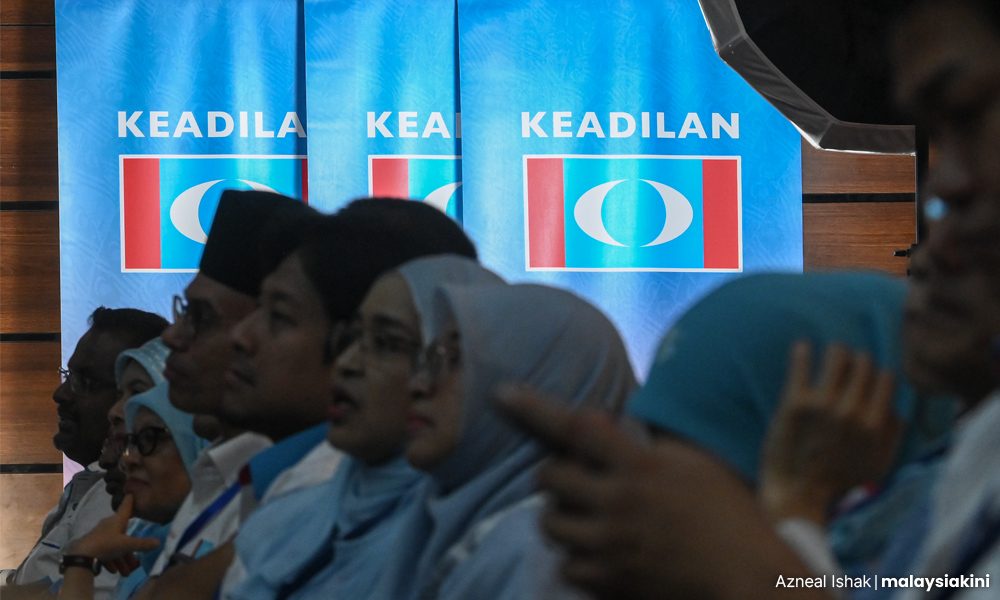
True, that’s difficult to prove, but looking at membership figures and establishing whether there was a sudden increase could indicate whether this happened.
The other telling indication, although it may not be evidence, is the poor showing of Rafizi supporters at the polls for delegates. That is likely the crux of Rafizi’s complaints and the reason for the ruckus he kicked up.
If indeed Anwar’s supporters had done this - some had alleged some new members were still members of other political parties - that’s not very friendly and smacks of a quick and easy return to money politics for PKR.
Saifuddin in Anwar’s eyes
It is obvious enough, although not very public, that Anwar, who was returned unopposed as president, did not have a great relationship with Rafizi and may have even considered him a threat to his position, favouring Saifuddin Nasution Ismail.
Rafizi beat Saifuddin soundly in the last PKR polls in May 2022, only to see himself sidelined in the relatively toothless position of economy minister, where he largely proposes but someone else disposes.
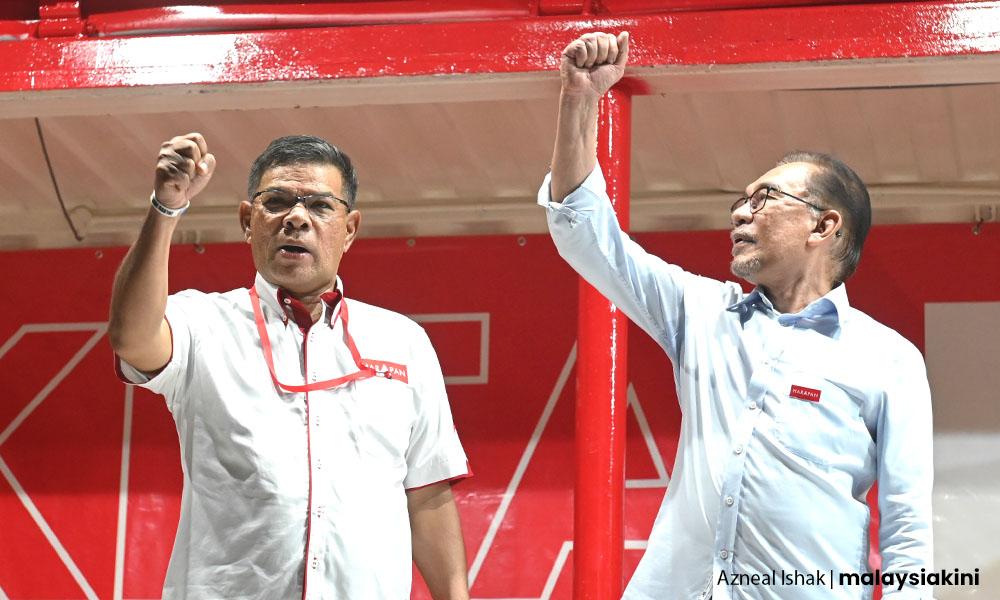
Saifuddin on the other hand, was made a senator and parachuted into the second most powerful position in the cabinet as home minister, where he held on to Umno's concepts of strong central control of the media and a reluctance to roll back oppressive laws.
He was also reappointed PKR secretary-general despite his loss, although he gave up the position in September last year to focus on his role as Pakatan Harapan secretary-general instead.
Anwar’s lack of endorsement of Rafizi as his replacement in PKR - for instance, not naming him as a deputy prime minister - left wide open the question of who would become PM if anything should happen to Anwar.
It began to look like Umno president Ahmad Zahid Hamidi may be the chosen successor under those conditions.
This did not go down too well with large sections within PKR, especially given Anwar’s excessive pandering to Umno’s wants and his previous close relationship with Zahid.
Seeds of suspicion
It was thought that to prevent a possible challenge by Rafizi against Anwar for the top position at PKR, Anwar supporters within and outside PKR may have considered it prudent to change the balance of power through new members in PKR. They had some two years to do it if indeed they had.
These are permitted under the rules, but Rafizi has alleged that they go beyond this. Thus were sown the seeds of suspicion. When the results of the divisional election became public, and amidst allegations of election irregularities, the PKR top brass met.
Meanwhile, Nurul Izzah announced her intention to contest the deputy president’s post on May 9, and Saifuddin announced his withdrawal from the contest after talking to top leaders.
When nominations closed, Anwar was returned unopposed as president. Nurul Izzah and Rafizi were the unlikely contestants for the number two position with Saifuddin’s withdrawal.
Perhaps there was a partial victory for the Rafizi camp with Saifuddin out of the way. But why did Nurul Izzah offer herself for the number two position, knowing full well it would invite charges of nepotism?
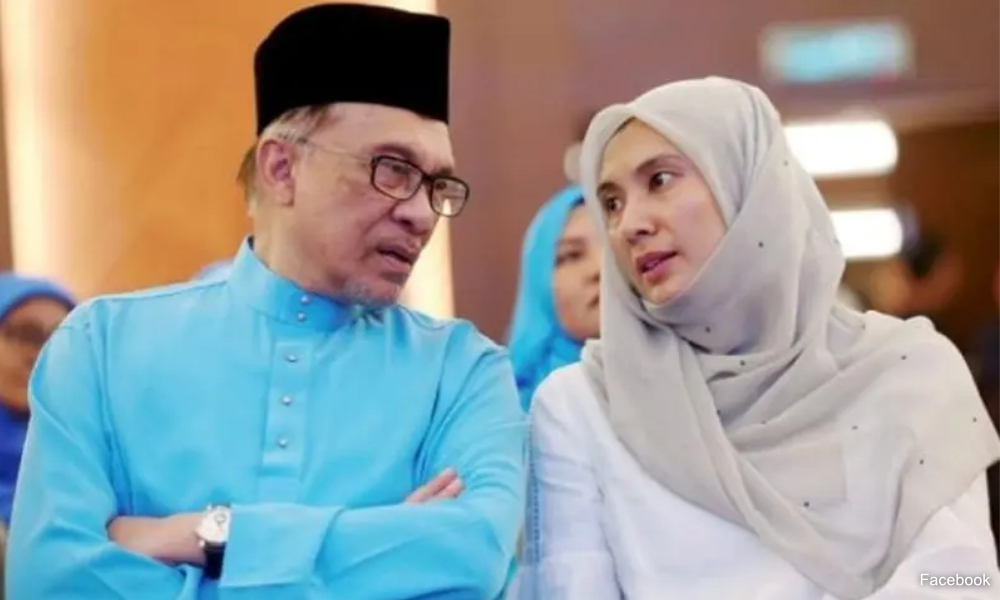
Does it mean she supports her father completely? Not necessarily. She has already criticised his move to extend MACC chief commissioner Azam Baki’s term for a third time.
Some in PKR said that Nurul Izzah put her candidacy in to prevent an unwanted person from becoming deputy president - that’s not likely to be Rafizi, which leaves who else but Saifuddin.
If Rafizi is out, so is Saifuddin. And if Rafizi works with Nurul Izzah if she wins, all is likely to be alright. Right now, it doesn't matter who - Rafizi or Nurul - wins. The damage is done - PKR is ailing badly.
Infected with Umno disease
With such shenanigans, something is not right - it means undesirable matters, even if not illegal, are taking place to engineer people in and out of positions of power, a patently Umno disease now threatening PKR.
In no small way, Rafizi’s position in PKR is being undermined, largely because he is straight and will not play the game that others do.
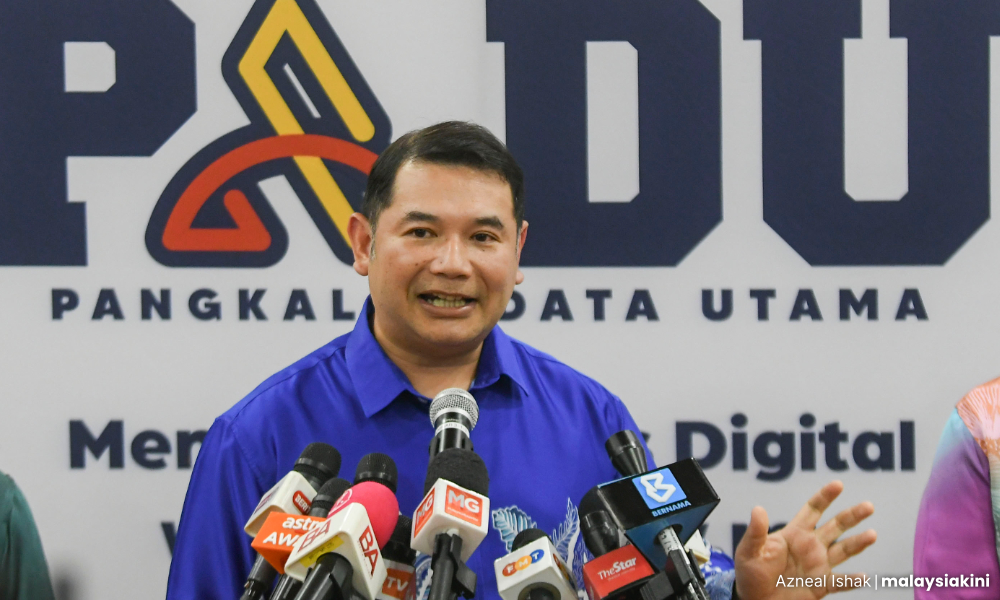
His Padu database was heavily criticised, but it was aimed at cutting wastage because those who were not entitled to subsidies were getting them due to insufficient information. He was trying to get that information.
Similarly, there were criticisms against the e-invoicing system, which basically sought to reduce tax evasion, but powerful people were against it.
Not just those within PKR, but other parties did not like Rafizi too because he was honest, sometimes brutally so.
But the ultimate mistake is Anwar’s. Rafizi as finance minister and a clear number two to Anwar would have done much for PKR and the country, reflecting the will of PKR members.
Instead, the premier sidelined him in favour of his Umno friends. PKR will suffer for it and see its influence rapidly diminish.
Perhaps Rafizi should have gone for the top post instead and challenged Anwar for party president. Even if he had lost, he would have said and done something.
P GUNASEGARAM laments that Umno-style politics has infiltrated PKR. - Malaysiakini, 22/5/2025
>PKR polls Part 1: Hard choices for the party
Bridget Welsh
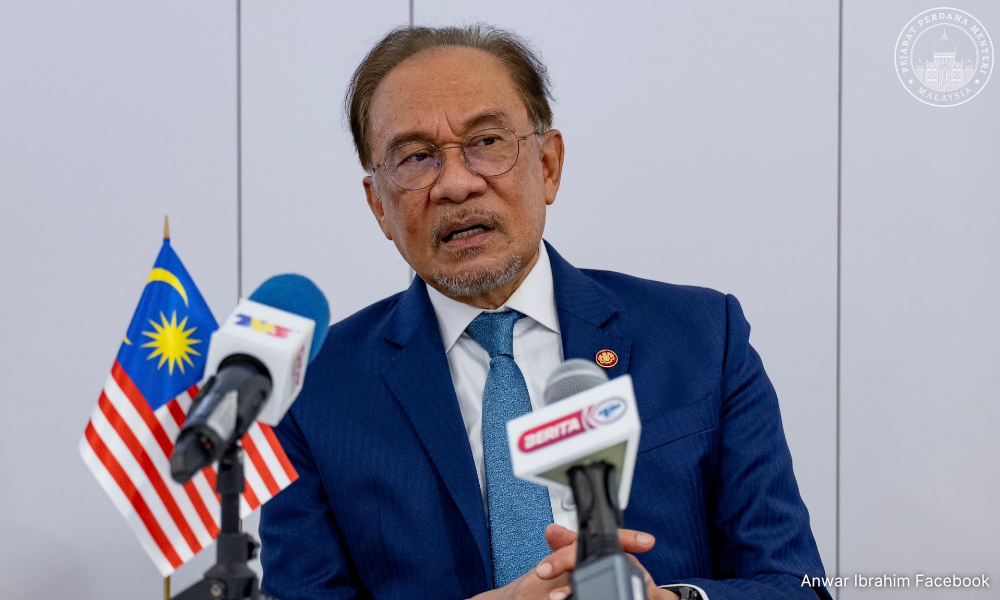
The inevitable conflict between the two main camps in the party - those aligned to Anwar and those aligned to his deputy, Rafizi Ramli, has come to a head.
This was a matter of time. For some, this battle came sooner than expected; those aligned with Rafizi seem to be caught off guard.
Power consolidation
The result of the senior leadership competition this week will likely be the same as it has always been across the seven previous party elections: a victory for the Anwar family and the continued endorsement of his leadership.
Fundamentally, PKR has always been Anwar’s party. Across the party’s history, space for alternative factions has opened up, but when alternative leaders pose a challenge to the Anwar core, it is narrowed.
This has been evident from the 2014 Kajang Move to the purges after the 2020 defection of the Azmin Ali camp.
As prime minister, Anwar’s control has become even more so as the office has given him even greater leverage over the party’s direction.
As the incumbent deputy president Rafizi said in his campaign, Anwar’s leadership would suffer if his daughter did not win.
Thus, it is no surprise that the campaign’s last week has seen the rally-around-the-Anwar effect.
A deputy choice: Loyalty or check
Much has been written about the deputy president contest. Both Rafizi and Nurul Izzah Anwar offer long and brave personal histories of fighting for reform and have made considerable personal sacrifices along the way.
They have shaped political and policy narratives for over two decades, from calls for an independent judiciary, anti-corruption, and greater equality.
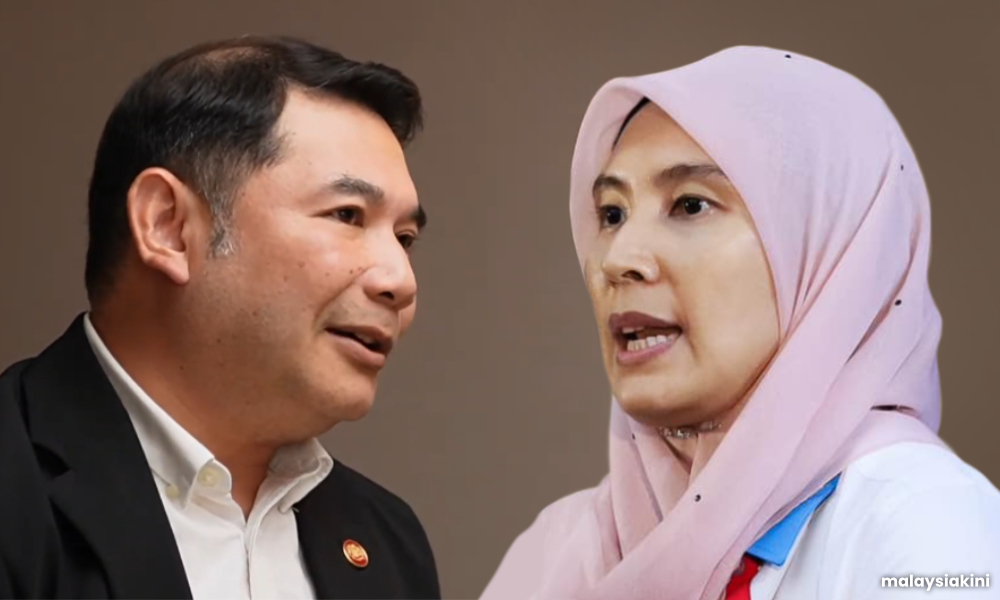
When one looks at the calibre of party leadership across Malaysia, both candidates stand tall.
They are both political leaders in their own right, outside of their family ties.
Nurul Izzah, in particular, has made important contributions to the inclusion of women in politics.
The campaign has centred on personality campaign personas - the hero agitator versus the peacemaker, hiruk vs damai - rather than on their records as leaders.
This has been a disservice, especially as the deputy president position is critical for leadership succession and direction.
At the deputy president level, individual PKR delegates are deciding on leadership style and access, with concerns about the risks of not being on the winning side.
The appeals of being more inclusive, with PKR fielding Malaysia’s first woman candidate for leadership in a viable contested competition, and the ability to concretely speak to policy are also quietly having traction.
Collectively, the delegates are fundamentally deciding the configuration of power within the party.
Loyalty and power consolidation are battling calls for checks on power and differing views on diversity.
When the results are in, the contenders’ contributions should not be overshadowed by some of the low points of the campaign, which include refusing to open party congresses and inadequate recognition of the many complaints about the integrity of the divisional elections.
Rather, it should begin with a recognition that PKR’s 2025 party election has given its delegates choices and raised hard questions about the party, a process that is never easy.
Most important contests
Arguably, the deputy president contest is not the most important election in the PKR 2025 polls.
The future of the party will be determined at the vice-president and supreme council levels.
It is in these contests that the delegates will decide on the calibre and range of voices to check the ongoing power consolidation.
It will be important to evaluate whether genuine reformers are rewarded, or if new blood comes into the leadership, especially leaders grounded in the reform movement and with technocratic credentials, or those just seeking power and spoils for themselves.
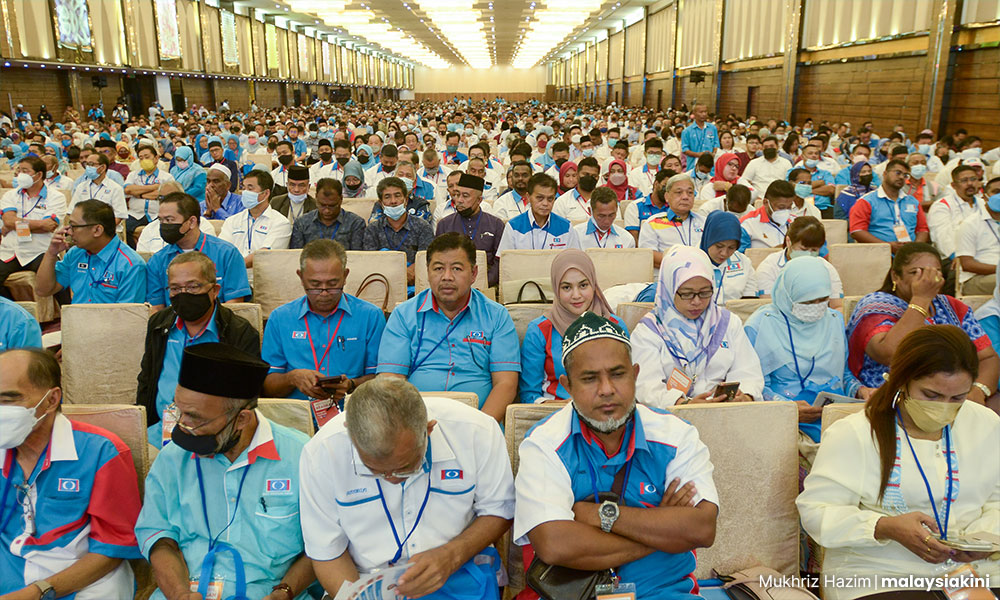
Of the 251 individuals competing for the support of the 30,000-plus delegates (with over two-thirds voting online), the vice-president contest, where 12 individuals are running for four positions, and 104 candidates contesting the central leadership council for 20 positions are the ones to watch.
These contests are comprised of three groups of individuals - those closely tied to Rafizi and Anwar, as well as those who are able to bridge the two groups and represent a middle ground in the party.
The middle-grounders are the critical peacemakers that will shape the cohesion of the party moving forward.
The real tests
In these two beyond-the-deputy leadership contests, there are three things to watch:
1) Power of camps
The “cai” lists of the different camps are circulating. It will be important to see whether Rafizi can hold onto the level of support his ground maintained at the divisional level.
Those aligned to Rafizi’s camp won an estimated third, up to 40 percent of the divisions as a whole (looking not just at division heads, but other positions).
Whether camp loyalties remain intact in other leadership contests will be important to assess, as to whether middle grounders win or are swept up in divisive loyalties.
This will shape the depth of division in the party and the concentration of power.
2) Body without the head phenomenon
The divisional results will impact the central leadership positions, as this previous contest influences the ability of the winner at the division level to control a higher share of delegates in the central leadership polls.
As such, the concerns raised during the campaign about the multiple differences between the team members who won lower-level division positions but lost the top (body without the head dynamic) could be significant in the outcome.
The results will point to the scope of this factor’s impact on the outcome and be a measure of the polls themselves.
3) Reform commitment
The election will showcase the commitment of delegates to the reform principles for party governance.
A win for individuals who have serious allegations of vote buying could seriously undercut the standing of the party moving ahead.
PKR is already facing negative public assessments about an inability to bring about political reform in government, a cornerstone of the party’s identity.
If tainted individuals are elected, this will cast another shadow.
For now, however, the cast that matters most in this party election will be the votes of the delegates.
The groups that will be especially important are the youth and women delegates, who comprise nearly a third and a quarter of the overall delegates, respectively.
As with the Umno party polls when the party held the office of prime minister, the 2025 PKR polls matter for Malaysia.
They both reflect and set the path for reform and democratic governance ahead. - Malaysiakini, 22/5/2025
No comments:
Post a Comment