Joint Media Statement(10 Groups) – 12/7/2025
Independence of the Judiciary Requires the Removal of the Prime Minister’s Power to Choose and Elevate Judges, whereby that power should be with an Independent Judicial Appointments Commission
Malaysian Federal Constitution and the Judicial Appointments Commission Act 2009 need to be speedily amended
We, the 10 undersigned groups advocate for the independence of the Judiciary, and an end of the role of the Prime Minister and/or the Executive arm of government in the appointment and elevation of judges in Malaysia. This also RISK compromising the important role the Judiciary plays in a democracy which is to be an effective check on the other branches, being the Executive and the Legislature.
Fair trial is also at threat in cases where the Prime Minister is a party, in his personal capacity or otherwise, if the Prime Minister has the power to choose, appoint and elevate judges to higher positions.
Malaysia’s New Judicial Crisis
Malaysia may be facing another ‘Judicial Crisis’ as allegations that Prime Minister Anwar Ibrahim may be appointing Judges on his own, and not always following the recommendations of the Judicial Appointments Commissions (JAC) have been raised. To date, Anwar Ibrahim has yet to confirm that all judicial appointments have been done as per the recommendation of the JAC, and that he had never appointed any Judge who was not recommended by the JAC.
The Lingam Tape scandal of 2007, brought to light concerns about the process of appointing judges, particularly the potential for improper influence by third parties. This scandal resulted in the stance that appointment and elevation of Judges ought to be done by an independent body, the Judicial Appointments Commission, who will then advice the King, or will inform the Prime Minister who will advice the King on judicial appointments.
In any event, following the Judicial Appointments Commission Act 2009, it was accepted that the Judicial Appointments Commission (JAC) shall recommend to the Prime Minister on judicial appointments and elevations, who will then advice the King.
Until Prime Minister Anwar Ibrahim, there has been no allegation of any past Prime Ministers acting not in compliance with the recommendation of the JAC.
Why 6-month extension for most, but 3 Judges of the Federal Court?
The recent failure of offering the 6-month extension to just 3 Federal Court judges, being Chief Justice Tengku Maimun Tuan Mat(who retired on 1/7/2025), Court of Appeal president Abang Iskandar Abang Hashim(who retired on 2/7/2025) and Federal Court judge Nallini Pathmanathan(who will retire in August) stands out as ODD when other retiring Federal Court judges were offered the post-retirement 6 month extension as provided by the Federal Constitution.
Of the 8 Federal Court judges due to retire, 5 have been granted extensions - Chief Judge of Malaya Hasnah Hashim (now to retire on Nov 14), Chief Judge of Sabah and Sarawak Abdul Rahman Sebli (now to retire in July), Federal Court judges Zabariah Yusof (now to retire on Oct 10) and FCJ Hanipah Farikullah(now to retire Nov 22). Federal Court judge Tan Sri Harmindar Singh Dhaliwal who turned 66 last October, is also serving his six-month extensions. Federal Court judge, Datuk Abdul Karim Abdul Jalil, who turned 66 in April, was also offered an extension, but chose not to take it. (Edge, 13/3/2025).
Thus, the failure to offer 6-month extension to just these 3 Judges raises questions, and suggest interference in judicial appointments.
Did the Judicial Appointments Commission (JAC) recommend no extension for this 3? Did the King oppose the extension? Or was it the Prime Minister that did not want to grant the 3 extensions? A lack of transparency keeps everyone in the dark and suspicions arises that the PM is picking and elevating judges as he pleases.
The law, as it stands now, still gives the Prime Minister the absolute power to decide on the appointment and elevation of judges. The King, is bound to appoint or elevate judges as advised by the Prime Minister. The King has no power to act contrary to the advice of the Prime Minister. Thus, if appointments are done contrary to the recommendation of the JAC, the fault lies with the Prime Minister alone.
Judicial Appointments Commission of Act 2009 and its shortcomings
After the Judicial Appointments Commission of Act 2009 came into being, which was intended to leave the selection of judges for appointment and elevation to an independent Commission who will then select and recommend the names of judges to be appointed or elevated to the Prime Minister, who will then advise the King.
Despite the inadequacies in the Judicial Appointments Commission Act 2009(JAC Act), including the failure to make it MANDATORY that the Prime Minister follow the recommendation of the JAC, past Prime Ministers seem to have followed the recommendations of the JAC when appointing judges but NOW there is concern that the current Prime Minister Anwar Ibrahim may have abandoned this good practice and may have appointed or elevated his own chosen persons, as judges, contrary to the recommendation of the JAC.
There is an urgent need to amend the JAC Act, and also the Federal Constitution to ensure that Prime Minister do as recommended by the JAC.
Unexplained Delay in Appointing Chief Judge of High Court of Malaya
The first indication that something was amiss may have been unexplainable delay of about 9 months before the vacancy for the position of the Chief Judge of High Court of Malaya, that became vacant on 29/2/2024, was finally filled on 12/11/2024, when Hasnah Mohamed Hashim was appointed. So, was the delay caused by the JAC, or was it because the Prime Minister refused to accept the JAC’s recommendation? Was Hasnah Mohamed Hashim, who was then appointed Chief Judge of High Court of Malaya, the Prime Minister’s own choice, or a person recommended by the JAC?
The composition of the JAC is mandatory, and it shall include the Chief Judge of High Court of Malaya, and as such in the of the said new Chief Judge’s appointment, the question of the validity of the Commission and its decisions is an issue, and hence, the question of the validity of appointment of that 25 judges on 12/11/2024 may be an issue.
The Appointment of a Sitting Public Prosecutor as Federal Court Judge
The 2nd issue of concern is the appointment of then sitting Attorney General/Public Prosecutor Ahmad Terrirudin Salleh as a Federal Court Judge. It was different from the situation when another former Attorney General, Mohtar Abdullah was made Federal Court Judge, after he had retired. The difference was that Terrirudin was appointed whilst he was still Public Prosecutor.
It is acknowledged that prosecutors must be able to perform their professional functions without intimidation, hindrance, harassment, or other improper interference, even from Government.
Thus, no one who understands this principle to safeguard the independence of Public Prosecutor would NEVER try to interfere with any sitting Public Prosecutor, by recommending him/her to be appointed Judges – thus reasonably the JAC would not have likely recommended Terrirudin to be Federal Court Judge when he was still the Public Prosecutor. It would not have been an issue if Terrirudin, after he had already retired or ended his term, was considered and recommended by the JAC to be appointed Judge.
Vacancies For 24 High Court Judges, 3 Court Of Appeal Judges And 2(Now 4) Federal Court Judges
The 3rd issue is the fact that there are at present vacancies for 24 High Court Judges, 3 Court of Appeal Judges and 2 Federal Court Judges, as at 1/7/2025, and it has been the case since before the Malaysian Bar press statement dated 5/6/2025.
The JAC reasonably will speedily make a recommendation to the Prime Minister for appointment whenever there is a vacancy, to ensure such judicial vacancies are speedily filled. The delay in filling the vacancies must be explained. Was the Prime Minister unhappy with the JAC’s recommendations? The delay in making judicial appointments will seriously impact the courts, and cause delays in trials.
Wrong For Cabinet To Discuss Or Exert Influence Of Who Be The Next Chief Justice
A recent 4th issue of concern is the fact that the Malaysian Cabinet has been discussing about the Chief Justice. ‘The appointment of a new Chief Justice was raised during the Cabinet meeting but it was not discussed in detail, says Communications Minister Datuk Fahmi Fadzil’(Star, 3/7/2025). Cabinet should not be even discussing about this, or even suggesting who should be appointed the next Chief Justice, the head of the Malaysian Judiciary.
CJM Highlights Concerns of Prime Minister’s Interference
It must be noted that Chief Justice Tengku Maimun did highlight concerns about interference in the independence of the Judiciary, reminding Anwar Ibrahim of his position before he became Prime Minister. ‘Tengku Maimun expressed hope that Anwar as prime minister "will remain true to those comments by continuing to unreservedly remain committed to upholding the cause of judicial independence". She said while Malaysia has made great strides in restoring the reputation of its judiciary since 2016, which has resulted in the country being ranked highly in global adherence to rule of law, there are still concerns that the prime minister "still has too much power in the appointment of judges"(Malaysia Now, 9/1/2025). Her comments came five months after concerns were raised over the appointment of former attorney-general Ahmad Terrirudin Salleh as a senior judge. Anwar failed to confirm that Terrirudin’s name was recommended by the JAC.
The Chief Justice did later again also suggest the removal of the Prime Minister’s role in appointment of judges. ‘The proposed changes to remove the prime minister in the appointment of judges will reinforce the impartiality of the selection process, says Chief Justice Tun Tengku Maimun Tuan Mat. She said the amendments, which would fall under the Judicial Appointments Commission (JAC) Act 2009 and the Federal Constitution, would ensure judicial appointments remain free from any perception of political influence. "Of late, there have been proposals to amend the JAC Act 2009 and the Federal Constitution to remove the role of the Prime Minister in the appointment of judges. "Such changes, in my view, would reinforce the impartiality of the selection process, ensuring that judicial appointments remain firmly grounded on merit and free from any perception of political influence," she said in her speech at the 24th Commonwealth Law Conference in St Julian's Bay, Malta, today. NST, 8/4/2025
We are in support of the proposal to remove the role of the Prime Minister in the appointment and elevation of judges.
The Need to Remove the Prime Minister’s Role in The Judicial Appointments Commission
‘Just a week after Anwar in 2022 came to power, the Conference of Rulers raised concerns about the prime minister's powers to appoint senior judges, where it said JAC in its present composition had weaknesses, and called for a more balanced composition so that appointments were not biased towards any parties. "To ensure the independence of JAC in carrying out its responsibilities, I propose that the appointment of its five members should not be made by the prime minister," Negeri Sembilan ruler Tuanku Muhriz Tuanku Munawir had then said. "Instead, it should be given to other institutions such as the Malaysian Bar Council, the Sabah Law Society, the Sarawak Bar Association and the Parliamentary Select Committee." "(Malaysia Now, 9/1/2025). To date, Prime Minister had failed to act on the Conference of Rulers’ recommendation.
The JAC is now made up of 9 members, where 5 are chosen by the Prime Minister, and the other 4 being the Chief Justice, Court of Appeal president, Chief Judge of High Court of Malaya and the Chief Judge of High Court of Sabah and Sarawak.
Prime Minister Can Be A Party in Cases Before Court, And Also Can Commit Crimes
After the conviction of former Prime Minister Najib Razak, and the fact that other past Prime Ministers have been charged, and, if not been investigated for criminal offences, it no longer is wise or safe to allow Prime Ministers to decide on who should be appointed Judges at any level.
There are also cases in court, where the Prime Minister or the person who is (or was) Prime Minister are parties in court cases.
In the case of current Prime Minister Anwar Ibrahim, he has a case where a former political aide, Yusoff Rawther, is suing him for sexual harassment/assault. Former Prime Minister Mahathir Mohamad defamation lawsuit against Anwar Ibrahim is also now scheduled for hearing between Aug 13 to 21. Anwar Ibrahim also did file a lawsuit against Terengganu MP Ahmad Amzad on 22/12/2022, after he became PM, which was settled in March. Anwar also sued Perak PAS Commissioner Razman Zakaria on 5/12/2022 for defamation, though now settled.
In such legal suits where Anwar Ibrahim or any sitting Prime Minister is before the courts as a party, it is crucial to ensure a Fair Trial where judges must be independent and seen to be independent. Would judges appointed on the advice of the Prime Minister be seen as independent, more so when the Prime Minister also has the power and role in elevating the said judge in the future?
Likewise, the decisions of the Prime Minister, or his Ministers can be subject to Judicial Review, and again can we say that a judge appointed on the advice of the Prime Minister, or a judge in the future could or could not be elevated to higher judicial office on the advice of the Prime Minister be said or be seen as an independent Judge?
To preserve the independence of the Malaysian judiciary, we call for the removal of the Prime Minister from deciding on the appointment and elevation of judges. This is to preserve the independence of the judiciary.
This will also to preserve the role of the Judiciary in a democracy to be an effective check on the other branches, being the Executive and the Legislature. Courts do examine laws passed by the legislature and actions taken by the executive to determine if they comply with the constitution and law.
We also call for the Malaysian Federal Constitution be amended, and the Prime Minister should be replaced by the Judicial Appointments Commission (JAC), who shall advice the King on the appointment, elevation, post-retirement 6-month extension and/or the removal of judges. The Prime Minister shall have no role with regards these aspects for the Malaysian judiciary.
We also call for the Judicial Appointments Commission Act 2009 be amended, amongst others, to abide with the recommendation of the Conference of Rulers whereby there will no longer be any Prime Minister’s appointees in the JAC.
Charles Hector
For and on behalf the 10 Groups listed below
MADPET (Malaysians Against Death Penalty and Torture)
Centre for Orang Asli Concerns (COAC), Malaysia
Hayat, Malaysia
North South Initiative (NSI), Malaysia
Persatuan Amal Progresif, Malaysia
Saya Anak Bangsa Malaysia (SABM)
Banglar Manabadhikar Suraksha Mancha (MASUM), India
Haiti Action Committee
Programme Against Custodial Torture & Impunity (PACTI), India
WH4C (Workers Hub For Change)
Lawyers say that judicial appointments should be free from executive influence, calling for amendments to the Judicial Appointments Commission (JAC) Act 2009 and the Federal Constitution, as the prime minister’s current powers undermine JAC’s purpose.
One lawyer says it was best for the executive not to have any role in appointing judges.
As tensions rise over the possibility of a judicial crisis, lawyers say judicial independence must be preserved by amending the Judicial Appointments Commission (JAC) Act 2009 and the Federal Constitution.
Speaking to Malaysiakini, lawyer Charles Hector Fernandez said it is time for the executive to no longer have their say when it comes to choosing judges.
“JAC was created and their functions were clearly defined - they picked and chose judges, and which judges were elevated - then the prime minister is expected to do as recommended.
“If the prime minister does as recommended, then there may not be an urgency to amend the Federal Constitution, but now, Anwar seems not to be following JAC’s recommendation,” he said.

On July 7, nine government backbenchers voiced concerns over judicial appointments and alleged judicial interference but the Attorney-General’s Chambers downplayed the matter.
The AGC said the prime minister can ignore JAC's recommendations to "protect" the judiciary.
On July 10, Istana Negara said the legal provision on the appointment of judges by the Yang di-Pertuan Agong on the prime minister's advice "clearly reflects the principle of checks and balances".
The palace also warned against politicising the appointment of judges to the superior courts.
‘Depoliticise judiciary’
On that note, lawyer Nizam Bashir said the judiciary must be depoliticised as much as possible.
“The desired effect is that if a judgment is delivered, it should not be shrouded with a perception that it was biased in favour of the appointing party,” he told Malaysiakini.
To avoid such perception, Nizam said it was best for the executive branch not to have any power in the appointment of judges, calling for the JAC Act to be amended to reflect this.
“Whatever the case, the bar for the present administration is higher as they were voted into power on the promises of reforms,” he added.
Under Article 122b of the Federal Constitution, the Yang di-Pertuan Agong appoints judges based on the prime minister’s advice, upon consulting the Conference of Rulers.
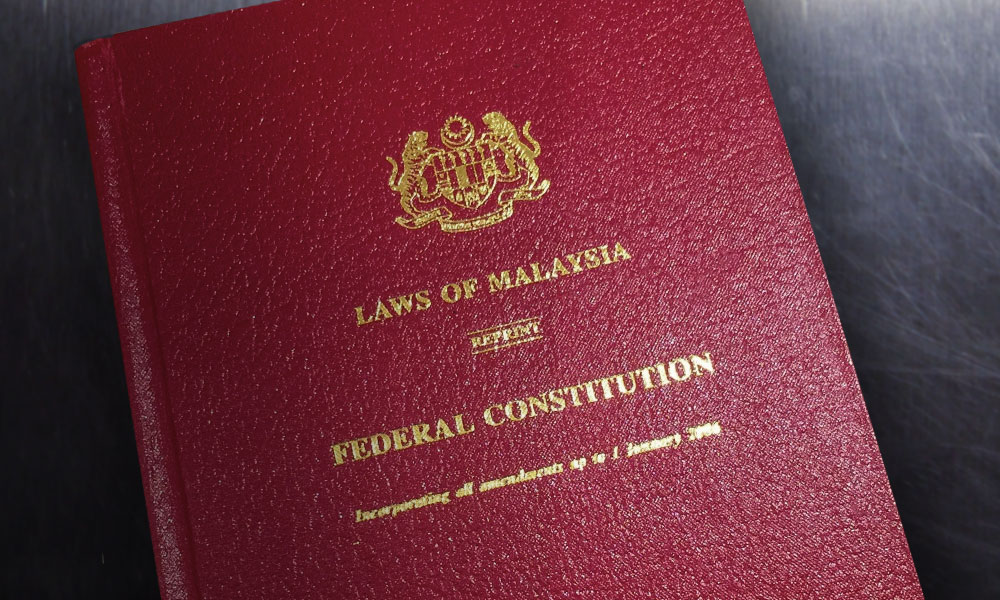
Section 5 of the JAC Act also provides the prime minister with the power to appoint five of the commission’s nine members.
JAC still needed
Meanwhile, lawyer Kokila Vaani Vadiveloo said the prime minister’s powers in appointing judges rendered JAC toothless.
However, she maintained that JAC still has its relevance.
“Even though JAC doesn’t have binding power, it still plays a vital role in the system. It helps bring transparency to the appointment process and acts as a filter to ensure only qualified candidates are considered.
“More importantly, it creates a record of how decisions are made.
“If the prime minister chooses to reject certain names, the public and legal community can and should ask why. This kind of accountability helps protect the judiciary from being politicised,” she told Malaysiakini.
Lawyers to march
The Malaysian Bar is set to march on July 14 to demand judicial independence.
Its president Ezri Abdul Wahab said the planned “Walk to Safeguard Judicial Independence” event will see participants hand over a memorandum to the Prime Minister's Office.

Among others, they demand that top judicial vacancies be filled, release minutes of a recent JAC meeting, form a royal commission of inquiry to probe alleged judicial interference, and address overall judicial vacancies.
Concerns arose after Chief Justice Tengku Maimun Tuan Mat and Court of Appeal president Abang Iskandar Abang Hashim retired earlier this month - with no successors named.
Later, Free Malaysia Today reported that Acting Chief Judge of Malaya Hasnah Hashim had summoned JAC for an urgent meeting.
Defend the Judiciary Secretariat expressed alarm over the matter, claiming it violates Section 13 of the JAC Act 2009, which requires a 10-day notice for the commission to meet. - Malaysiakini, 12/7/2025
G25 calls for urgent reform of judicial appointments system
The group of prominent former civil servants expresses serious concern over delayed judicial appointments and calls for urgent reform of the appointments system to protect judicial independence
No comments:
Post a Comment