PARLIAMENT | Malaysia is not bound by any United Nations or International Labour Organisation (ILO) conventions, and there is no need for the government to mandate a minimum wage and EPF contributions for migrant workers who are already in the workforce. This assertion was made by former finance minister Lim Guan Eng (Harapan-Bagan) in the Dewan Rakyat when debating the 13th Malaysia Plan today.
“Hence, there is no need to mandate RM1,700 minimum wage and two percent EPF contributions for migrant workers,” he claimed.
The DAP adviser pointed to Singapore’s policy of not requiring Central Provident Fund (CPF) contributions for migrant workers since 2003 without repercussions from the ILO.
“Therefore, the RM1,700 wage floor and two percent EPF contribution should apply only to new foreign hires - as employers engage current workers based on existing terms,” he said. - Malaysiakini, 6/8/2025
Human Rights Standard is ours - it is not relevant that Malaysia has not ratified/signed certain UN or ILO conventions, and Malaysia has not ratified/signed many UN or ILO Conventions. Irrespective, Malaysia believes in human rights and justice - and have always enacted laws, etc to ensure Malaysia respects human rights and justice, even if it is NOT yet acknowledged in local laws.
FIRST, let us be clear as to what Guan Eng said(based on the Malaysiakini report)EPF based on a percentage of the employee's monthly salary. The contribution rates vary based on the employee's age and salary, but generally, employees contribute 11%, while employers contribute either 12% or 13%.
Starting October 1, 2025, a mandatory 2% EPF contribution will be required for all foreign workers in Malaysia, except for domestic helpers. Both employers and employees will contribute 2% of their monthly wages to the EPF, a significant shift from the previous voluntary system. This new policy extends social protection to non-Malaysian citizens and aligns with international labor standards.
SO, for the same work. local employee gets monthly wages PLUS 12-13% for EPF from Employer...
Migrant workers get monthly wages PLUS just 2% of monthly wage from employer... Even if there is no access to the EPF scheme. the migrant worker MUST get the additional 12-13% of his/her monthly salary...
IF NOT, is this not a VIOLATION of the Equal Work Equal Pay Principle ..
{For a long time, women was paid less than men for the same work done - we have made much progress here to make sure that ALL are paid the same for the same work done >> Now, this discrimination is NOT limited to Gender but also nationality....)
THAT IS WHY WE NEED TO ENSURE THAT FOR THE SAME WORK, ALL WORKERS ARE PAID THE SAME - Not just basic wages, but all payments made by the employer i.e. for EPF, etc
We want Malaysian workers in Singapore and any other country to also not BE DISCRIMINATED - paid less by employers ...but if Malaysia, discriminates (to protect employers) against Migrant Workers - how can we fight DISCRIMINATION faced by Malaysian workers in any other countries...
So, in Malaysia, we should insist that for Migrant Worker's EPF scheme, the employer's contribution MUST BE THE SAME, 12-13% of the monthly wage...if the workers pay less or nothing, it matters not - but the Employer's contribution must be the same for all workers ---
Sadly, Guan Eng and DAP came out looking 'pro-employer' - which also means 'anti-worker'..? And, mind you, the majority of VOTERS are workers...
Remember, that even Malaysian law PROHIBITS discrimination or differential treatment based on nationality - workers should be accorded the same treatment by the employer...
Remember, all workers (local and migrant) can join Trade Unions to fight for better rights - how difficult would it be to unionize if migrant workers already suffer discrimination by reason of receiving LESS from employers??
So, the question is whether MALAYSIA, PH, DAP...discriminates against workers, be it based on GENDER or nationality?
For EPF members, if migrant workers contribute. it is beneficial for even local workers - as more contributions, more investments, more profits?, higher dividends for all EPF members...?
So best, if employers contribute the same as for local workers - 12-13% of the total monthly salary..
BENEFICIAL also - because we have heard that many migrant workers at the end find their own employers delaying payment of monies overdue putting migrant workers in a precarious position - hence, many stay on to work 'illegally' to get enough money before they return home > That EPF account money will resolve some of this 'economic difficulties' as migrant workers will take out the money once their employment in Malaysia is over.
WE have been fighting for a FIXED TERM Contract for migrant workers - be it 3- 5 years, but still their employment contract remains an annual contract - so too their employment pass/visa need annual renewal. Migrant workers should be given employment visa for 3 to 5 years as soon as they begin employment, and there is then certainty...
Before an employer can employ migrant workers, they must first try to employ LOCAL Workers (that was the policy before to ensure local workers can first bite for any employment opportunities in Malaysia) but today, it seems PERMITS to employ migrant workers are so easily given -- WHY? When have you seen adverts or banners offering jobs in Malaysia? Did employers TRY FIRST to employ local workers - or did they straight way go employ migrant workers? Is there still a QUOTA for local factories that LIMITS use of migrant workers to no more than 30%, or is it no more - just look at factories and workplaces, how many LOCAL EMPLOYEES? KLIA cleaning services - I do not see Malaysians, why?
Malaysia must treat WORKERS equally...no discrimination based on GENDER or even nationality...
See also:-
PARLIAMENT | Malaysia is not bound by any United Nations or International Labour Organisation (ILO) conventions, and there is no need for the government to mandate a minimum wage and EPF contributions for migrant workers who are already in the workforce.
This assertion was made by former finance minister Lim Guan Eng (Harapan-Bagan) in the Dewan Rakyat when debating the 13th Malaysia Plan today.
“Hence, there is no need to mandate RM1,700 minimum wage and two percent EPF contributions for migrant workers,” he claimed.
The DAP adviser pointed to Singapore’s policy of not requiring Central Provident Fund (CPF) contributions for migrant workers since 2003 without repercussions from the ILO.
“Therefore, the RM1,700 wage floor and two percent EPF contribution should apply only to new foreign hires - as employers engage current workers based on existing terms,” he said.

While Malaysia is a member of the ILO, only 18 out of 77 conventions have been ratified, with 14 currently in force. The remaining conventions, including those related to migrant labour protections, have yet to be adopted.
Lim also praised the unity government’s achievement in reaching full employment but cautioned that plans to reduce the proportion of migrant workers from 15 percent to 10 percent by 2030 could lead to labour shortages in key industries.
“Hence, the process for hiring foreign workers must be simplified,” he said, suggesting that the system be moved entirely online with the help of emerging technologies.
‘Step up support for local SMEs’
On the local business front, Lim underscored the growing importance of small and medium enterprises (SMEs), which currently contribute 38 percent to the GDP and are projected to hit 40 percent by 2030.
He said SMEs account for 48 percent of jobs and nearly 13 percent of Malaysia’s exports.

“Now, SMEs face intense competition from Chinese traders who fully source and manage costs from China.
“To support local SMEs, all foreign investors and contractors - whether working on public or private projects - should be required to procure at least 50 percent of their supplies from local producers,” he said.
To further ease pressure on the public and businesses, Lim proposed six additional financial measures:
Raise the SME tax threshold by 15 percent - from RM150,000 to RM300,000 at a 15 percent tax rate, and from RM300,000 to RM700,000 at a 17 percent rate - potentially saving SMEs up to RM10,000 from the 2025 assessment year;
Limit the two percent dividend income tax to individuals receiving dividends only from companies listed on Bursa Malaysia;
Introduce an additional RM5,000 in individual tax relief;
Expand the existing RM7,000 education tax relief to cover children in both primary and secondary school;
Spread the 14 percent electricity tariff hike into two staggered seven percent phases;
Exempt the construction and rental sectors from the six percent and eight percent SST expansion, respectively.
Lim said the proposed measures would provide targeted relief while supporting key sectors such as SMEs and households with school-going children. - Malaysiakini, 6/8/2025
A migrant rights group has urged DAP adviser Lim Guan Eng to apologise over his remarks that existing migrant workers need not be included in the minimum wage policy or Employees Provident Fund (EPF) contributions.
Tenaganita called the statement Lim made in Parliament “outrageous” and “irresponsible”.
“This is not just tone-deaf, it reinforces the dehumanisation of migrant labour, legitimises exploitative employment practices, and fundamentally betrays the principles of justice and equality,” its executive director Glorene Das told Malaysiakini.
In his debate on the 13th Malaysia Plan (13MP), Lim yesterday claimed that Malaysia is not bound by any United Nations or International Labour Organisation (ILO) conventions, and therefore it need not impose a RM1,700 minimum wage or two percent EPF contribution on migrant workers already in employment.
The Bagan MP had said the wage floor and EPF contribution should only apply to new foreign hires, as employers had engaged existing workers under different terms, prompting outrage from various stakeholders.
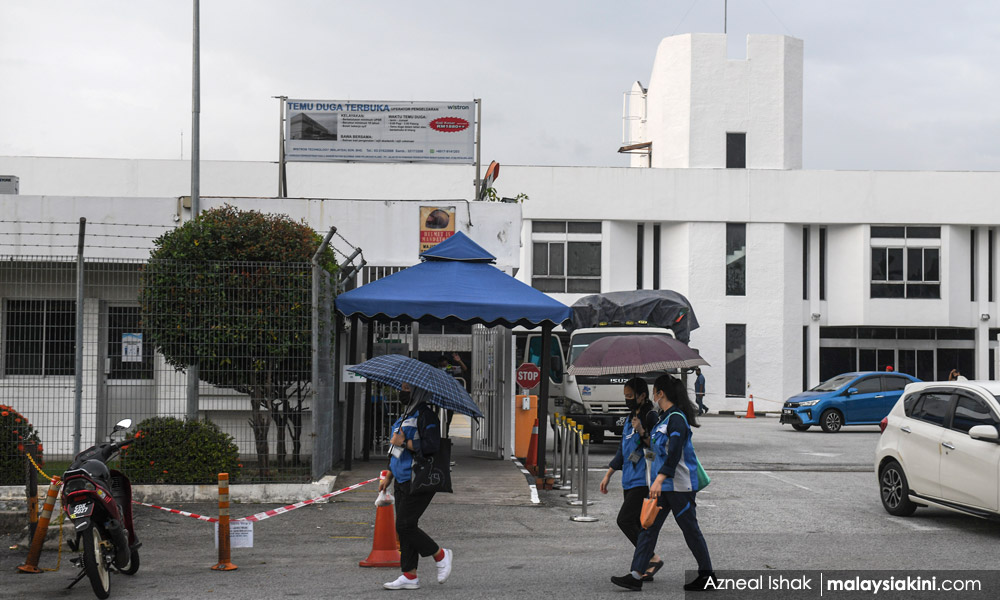
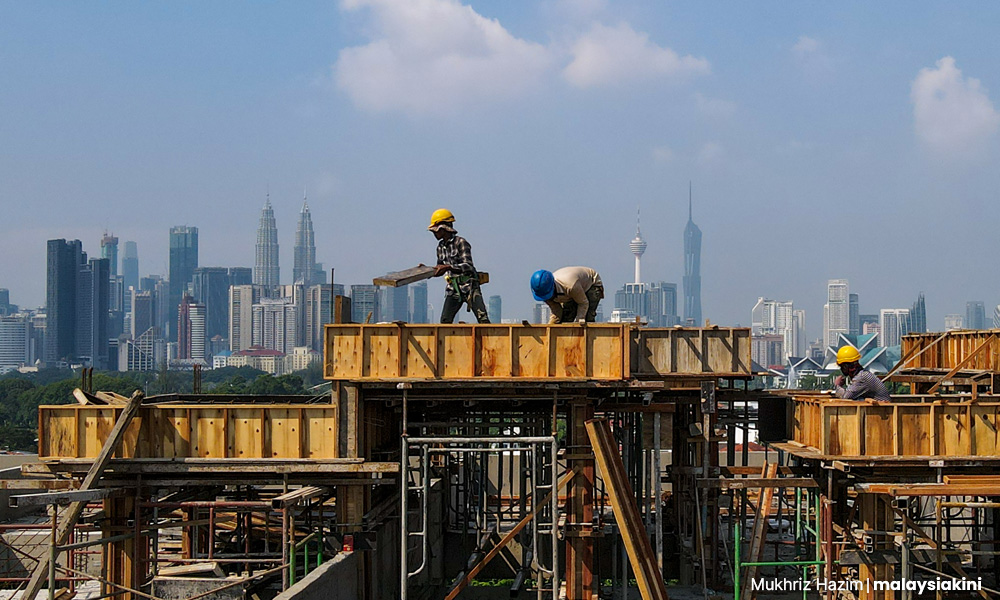
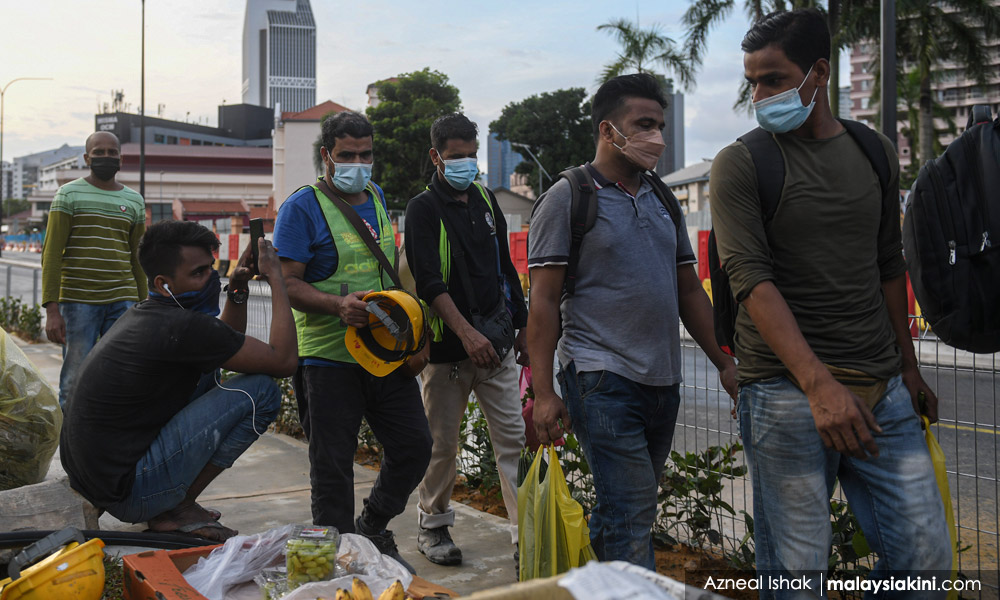
Glorene, however, reminded that migrant workers are essential to Malaysia’s economy, particularly in sectors such as construction, manufacturing, plantations, food processing and cleaning.

She also cited Tenaganita's decades of work with migrants, grounded in documented cases, which showed widespread issues including wage theft, unpaid overtime, and hazardous working conditions.
“Minimum wage is not a luxury. It is the bare minimum protection against structural exploitation.
“To deny migrant workers EPF is to rob them of dignity in retirement and strip them of the right to long-term security, while employers and corporations continue to profit off their labour,” she stressed.
In February, Tenaganita mooted a tiered EPF contribution rate for migrant workers, rather than the proposed 2 percent which is down from an initial 12 percent first announced under Budget 2025.
Worse for women migrants
Further, Glorene highlighted the particular vulnerabilities faced by migrant women in factories, agriculture and the food sector, where exploitation is compounded by gender-based discrimination, sexual harassment and unequal pay.
“To deny them the minimum wage is to perpetuate gendered economic violence,” she said, adding that such exclusion fuels a capitalist mindset of profit over people.
Glorene also reiterated Tenaganita's long-standing demand for stronger enforcement of labour laws and penalties against employers who underpay or withhold wages.
Malaysia, as an ILO member, has ratified eight out of 10 fundamental conventions, including one on “equal remuneration”.
The 1951 convention states protection against wage discrimination based on sex, while at least three other conventions ratified by Malaysia provided broader protections for all workers regardless of nationality. - Malaysiakini, 7/8/2025
"Today, you celebrate them. Tomorrow, you will go back to generalising them as cheats, liars and dirty."
- Singaporean social worker Suraendher Kumarr on a sinkhole incident
COMMENT | The quote that opens this piece is in reference to a news story about a group of migrant workers who rescued a woman in a sinkhole in Singapore.
As a BBC piece elaborates, this ignited a debate about how migrant workers in Singapore are treated.
In Malaysia, former finance minister Lim Guan Eng claimed that there was no need for a minimum wage or Employees Provident Fund (EPF) for existing migrant workers.
In response, former Klang MP Charles Santiago reminded Lim that: “It’s unbecoming of a leader who pretends to champion the working class while denying the most basic social protections to those who do the dirtiest, dangerous, hardest, most essential work just because they weren’t born here.”
PSM deputy chairperson S Arutchelvan also chimed in, saying: “This hypocrisy is staggering, especially after years of government efforts to align with International Labour Organisation (ILO) standards.”
Migrant rights activist Adrian Pereira pushed back as well at Lim’s suggestion.
“It is not about whether ILO asks us to do it or not, it is about doing the right thing,” he said.
Politicians rarely, if ever, want to do the right thing, therefore, this point, however laudable, is moot.
While I see no reason for Lim to apologise as Tenaganita demanded - after all he was just protecting the corporate interests which is his true constituency - the migrants rights group reminded Malaysians that: “To deny migrant workers EPF is to rob them of dignity in retirement and strip them of the right to long-term security, while employers and corporations continue to profit off their labour.”
Demonising progressive policies
Non-Malays often lament about the injustices and inequality of the system, but are the first to demonise progressive policies when it comes to issues like these.
The most vociferous defenders of the plutocrat class are most often non-Malay politicians and, by extension, their supporters.
Here we have fat cat politicians who are paid lavishly with our tax ringgit, telling the folk who do the work that the locals do not want to do, that they should be content with their unequal treatment.
Which of course is a similar narrative of Malay uber alles politicians in the sense that non-Malays should be grateful for the opportunities this country affords them and just shut their mouths when it comes to the systemic inequalities.
Also part of ketuanan (supremacy) strategies is cherry-picking international conventions and norms, which would maintain the status quo and not reform it.
This is exactly what Lim is doing, which normalises the inequality embedded in his policy proposal.
Economic competition
Mind you, there are real issues affecting the majority community when it comes to migrant workers.
The fact that there are tensions between working-class Malays and migrants when it comes to economic competition is well documented and remains a flashpoint, which is why Madani is cracking down.
Let us not forget the religious aspect of this. While there are many news reports of migrant workers benefiting from marriage to local women, the Islamic Development Department recently developed a module to curb extremism among foreign workers.
“We want them to return to the true moderate teachings of Islam. If we can assist in rehabilitating their ideology, we are not only protecting our country but also helping to prevent threats in their countries of origin,” Minister in the Prime Minister’s Department (Religious Affairs) Na’im Mokhtar said.
Money matters
All this is about money, of course. When it comes to cartels bringing in cheap labour, there is a connective tissue between the political class, bureaucrats on all levels and the plutocrat class.
This is about cheap labour to satisfy the dodgy economic initiatives of the government, oftentimes to artificially prop up the economy.
The shakedown money, the illegal granting of citizenship – which is treasonous if you ask me – the unreported rapes, physical and mental abuse and a host of other crimes that are inflicted upon foreign workers, which are in themselves a cottage industry carried out by low to mid-level government bureaucrats and those from the state security apparatus.
We have to look no further than certain race-based groups, which demonise foreign communities but at the same time collude to bring them in because they know that cheap foreign labour makes this an ideal country to produce cheap goods or carry out development for the "real" citizens to profit from.

As usual, when it comes to money, it is the exploited who are made scapegoats while the business folk get to rely on governmental programmes which merely enable them to carry on with business as usual instead of admitting that they, like us, are part of the problem.
Don’t take my word for it, Malaysiakini did an exposé on a system which had been operating for decades, exploiting migrant workers and making millions in the process.
READ MORE: Migrant workers: 'Employers' raking in millions through 'A to B' syndicate
It was reported that Malaysiakini learned that this syndicate began its activities in 1996 and was purportedly unstoppable with the help of corrupt law enforcement officers.
While several civil servants were caught colluding with the syndicate over the years, many of them only got a slap on the wrist with punishments such as getting transferred to another department, which was considered mild in comparison to the hefty bribes they received, the report added.
Commenting on the exposé, Arutchelvan said: “Looking at how our MACC hides behind bureaucratic reasoning as in the recent Sabah video cases, one wonders how we are to fight corruption when it is deep within the system of governance.”
This kind of corruption trickles down. Housing and Local Government Minister Nga Kor Ming had to remind Malaysians not to “loan” their licences to foreigners.
"That is why, as Malaysians, we should appreciate the government's efforts and policies in spurring the local economies and not give the benefits to foreigners, especially the undocumented migrants," he said.
Cretins go on about how this unduly places a burden on small businesses, but seem clueless that small businesses also exploit their migrant workers.

Do you know the difference between a “mom and pop” business and corporations exploiting the migrant class? The former, when it is exposed, makes for good press, and the latter, which rarely gets exposed, is just business as usual.
The plutocrat class relies on this argument to sustain these types of policies, understanding there are always useful idiots (Russian propaganda term) ever willing to throw the most disenfranchised under the bus and celebrate “fearless leader” types while ditching egalitarian principles, which would benefit all Malaysians.
The problem with ketuanan privilege is that it really does not extend to non-Malays, even those with power and influence.
KK Mart is an example of how non-Malay businesses had to supplicate before the riff raff of the ketuanan system, and non-Malay power brokers were helpless in the face of Umno Youth chief Dr Akmal Saleh’s rampage, and indeed the state colluded with the riff raff.
Then there’s the "ah pek" flag error - yet another incident where the riff raff have targeted the non-Malay mercantile class and the DAP is helpless to do anything about it.
It demonstrates how odious it is for Lim to defend the collusion between the ketuanan state and the plutocrat class.
However, this collusion does not lend any privilege or protection from the riff raff of the ketuanan state, who are bankrupt of any policy ideas or the legitimacy that democratic and secular ideals confer.
Striving for equality
This is about equality, something the ketuanan system and its adherents rage against.
More importantly, this is about striving for equality in a system which nature pits groups against each other.
At every opportunity, genuine reformists should attempt to change the system in favour of the disadvantaged.
Whenever you want to deny someone equal treatment, the rational question is why? Why deny this person or group equal treatment?
What Lim is attempting to do is normalise ketuanan dogma using Singapore, which has its very serious issues with migrant labour, as a fig leaf for efficient policy.
The ketuanan state thrives on making some more equal than others, or more accurately, seem more equal than others.
S THAYAPARAN is commander (Rtd) of the Royal Malaysian Navy. Fīat jūstitia ruat cælum - “Let justice be done though the heavens fall.”- Malaysiakini, 11/8/2025
No comments:
Post a Comment