The issue was highlighted last week by Petaling Jaya MP Lee Chean Chung, who called on the ministry to clarify whether existing tuition centres would be required to meet the 30% threshold when renewing their registrations from 2027.
This announcement comes NOW - but then, Anwar Ibrahim's PH-led government goes on to blame a 2006 "POLICY" - which allegedly says this.
A Government POLICY is NOT law - and reasonably when government changed since 2018, when the previous BN government was ousted > ALL SUCH policies are thrown out of the window, and any NEW government will make their OWN new policies.
2nd, it is obvious that the old 2006 Policy had not been followed > hence the threat NO RENEWAL of licences unless 30% Bumiputra equity. WHY? It seems that licences were renewed until 2026 despite not having that 30% Bumi equity - so now the utterance that licences will not be renewed only in 2027...???
Now, the government are going to review this 2006 POLICY - WHY? NO NEED > Policies are not approved by Parliament or by any law - so is this GOVERNMENT now going to DIG up ALL POLICIES from the BN ERA - and follow it? Did the PH government (after GE14), the PN government and now Anwar's MADANI government decide to follow ALL BN policies - ODD because it is NOT binding on new governments, in my opinion.
Is it by reason of Art.153, or is it NOT but simply a NEW Government policy, which may be contrary to the Constitution and existing LAWS?
In my opinion, the requirement of 30% Bumi equity is NOT based on Art. 153 - in fact it may be a VIOLATION of Art. 153...read on
Some government actions may be based on Article 153 that gives some preferential treatment to Malays and natives of Sabah and Sarawak BUT some are NOT - it is simply some NEW government policy. It was FOOLISH for us to presume that it was ALL in accordance with Art.153 when it was NOT. We need to understand Art 153 - which by the way DO NOT just talk about preference for a certain class, BUT also protection of the 'non-preferred class of other Malaysians.
Some policies/actions are simply the new government's policies - and here one must carefully evaluate whether it is in breach of the Federal Constitution...is it DISCRIMINATORY because government cannot discriminate based - no discrimination against citizens on the ground only of religion, race, descent, place of birth or gender in any law or in the appointment to any office or employment under a public authority or in the administration of any law relating to the acquisition, holding or disposition of property or the establishing or carrying on of any trade, business, profession, vocation or employment.
Many Malaysians have been 'AFRAID' to question government policies that affect Malays or the 'BUMIPUTRA" - as I mentioned, some are in belief that it is in accordance with Art. 153 > but many of the policies are NOT - it is simply a GOVERNMENT policy > WHY? Maybe to woo voter support from certain ethnic/religious groups?
The Ministry(absurd if not with approval of Education Minister Datuk Seri Fadhlina Sidek) makes the announcement which creates a lot of concern amongst Malaysians and businesses - then it is withdrawn.
Should we NOW foolishly be THANKFUL to Anwar Ibrahim's MADANI government now? NO, we should NOT because it was Anwar's Government that came out with this suggestion in the first place - you cannot 'CREATE' the problem and then resolve it...and this was an announcement of the government's own Ministry of EDUCATION > who should be blamed for that announcement that caused much distress to many - the blame should lie of PM Anwar Ibrahim, Pakatan Harapan(DAP/PKR/Amanah) and all parties part of government and are in CABINET...
Should not a PUBLIC announcement of the Ministry/MINISTER be with consent of the government of the day?
### Recently the scare of electric rates going to be increased by TNB, but is this NOT a Government Linked Company or government owned company > it was ODD to see Anwar Ibrahim saying when what TNB does is within the CONTROL of Anwar and the government > TNB is no private company with NO links to the government? Similarly with TOLS - do not the Malaysian Government control or OWN directly or indirectly these TOL companies? SO, what do you expect to Thank ANWAR and the MADANI government?
Prime Minister Datuk Seri Anwar Ibrahim has hinted at good news regarding the issue of higher electricity bills that have burdened some households...Anwar said a statement on the matter would be issued soon."As for Tenaga Nasional Bhd (TNB), it has been settled. A statement will be issued soon. Okay?"It's good news. We will issue a statement now," he told reporters when met at the Finance Ministry (MoF) today.Anwar chaired an hour-long special meeting to discuss measures to mitigate the impact of higher electricity bills on households.
So, was this a mere 'political gimmick' about 30% equity requirement in tuition centres and other education businesses? - that gives POSITIVE impression for this 'GOOD' government that it acted 'quickly' and withdrew it?
Private education centres operating under the education ministry’s purview will no longer be required to have 30% Bumiputera equity, says the ministry.
LET US EDUCATE OURSELVES ABOUT ART. 153 - what kind of 'special preference' allowed, and also the PROTECTION accorded to other Malaysians, not in the preferred class? [Art 153 is to be found below - do read it]
This proposed policy/action of Ministry of Education(the government of Anwar Ibrahim) is, in my opinion, NOT an action based on Art. 153 Federal Constitution - which is VERY SPECIFIC about the ethnic groups that can get special preference (Malays and Natives of Sabah and Sarawak) and what these preferences are is also clear - JOBs/Position as Public Sector employees, PROPORTION of government scholarship, places in education institutions,
such proportion as he may deem reasonable of positions in the public service (other than the public service of a State) and of scholarships, exhibitions and other similar educational or training privileges or special facilities given or accorded by the Federal Government and, when any permit or licence for the operation of any trade or business is required by federal law,...
What must be HIGHLIGHTED is that it is ONLY 'such proportion' deemed reasonable > That means NOT ALL > but just such proportion deemed reasonable.
THUS, should it not be the right of Malaysians to be informed by government as what 'reasonable proportion' is > is it 30%, 50% or 80%? We are talking about government scholarships, university places, permits for trade/business, etc - We need to know the 'reasonable proportion'? We also need to know HOW it is distributed to the 'preferred classes' - is it proportional or some named ethnic groups are benefiting more? We also need to know whether the RICH are benefiting from it - a concern raised before by PM Anwar where he believed that the very rich of preferred categories maybe should not be benefiting and it should be poorer in this preferred class - and sadly looks like NO FOLLOW-UP to that statement.
Another thing to be noted > is that it also applies to 'permit or licence for the operation of any trade or business' - again note NOT ALL but a certain PROPORTION that is deemed reasonable...
ALSO, NOTE the PROTECTION accorded to those not in the preferred classes in Article 153
...shall not deprive any person of any public office held by him or of the continuance of any scholarship, exhibition or other educational or training privileges or special facilities enjoyed by him.(see Art.153(4)
AND
(7) Nothing in this Article shall operate to deprive or authorize the deprivation of any person of any right, privilege, permit or licence accrued to or enjoyed or held by him or to authorize a refusal to renew to any person any such permit or licence or a refusal to grant to the heirs, successors or assigns of a person any permit or licence when the renewal or grant might reasonably be expected in the ordinary course of events.
(8) Notwithstanding anything in this Constitution, where by any federal law any permit or licence is required for the operation of any trade or business, that law may provide for the reservation of a proportion of such permits or licences for Malays and natives of any of the States of Sabah and Sarawak; but no such law shall for the purpose of ensuring such a reservation—
(a) deprive or authorize the deprivation of any person of any right, privilege, permit or licence accrued to or enjoyed or held by him; or
(b) authorize a refusal to renew to any person any such permit or licence or a refusal to grant to the heirs, successors or assigns of any person any permit or licence when the renewal or grant might in accordance with the other provisions of the law reasonably be expected in the ordinary course of events, or prevent any person from transferring together with his business any transferable licence to operate that business; or
(c) where no permit or licence was previously required for the operation of the trade or business, authorize a refusal to grant a permit or licence to any person for the operation of any trade or business which immediately before the coming into force of the law he had been bona fide carrying on, or authorize a refusal subsequently to renew to any such person any permit or licence, or a refusal to grant to the heirs, successors or assigns of any such person any such permit or licence when the renewal or grant might in accordance with the other provisions of that law reasonably be expected in the ordinary course of events.
THUS, most clear what CANNOT BE DONE > cannot REFUSE to renew business license by the introduction of a NEW condition requiring 30% Bumiputra equity - In my opinion, it goes against even Art. 153.
Thus, it is MOST clear that business permits/licenses of those in the 'non-preferred class (including Orang Asli, Indian Malaysians, Chinese Malaysians, Arabic Malaysians, Thai Malaysians, Sri Lankan Malaysians, Bangladeshi Malaysians, Pakistani Malaysians, Eurasians, etc ) cannot be CANCELLED or even subject to a REFUSAL to RENEW by the imposition of new conditions like 30% BUMI EQUITY.
No problem, if FOR NEW LICENSES for NEW Tuition Centers and those in Education Business be a reasonable proportion be fixed for the preferred class - maybe 30%, 50% > but still those from non-preferred class should be able to get licences...
BUT then, such policy/action of government not in reliance of Art. 153 can be CHALLENGED because it may be in violation of the Federal Constitution - including Art. 8 that GUARANTEES Equality and provisions that oppose DISCRIMINATION 'there shall be no discrimination against citizens on the ground only of religion, race, descent, place of birth or gender in any law'
Look at Art.8(2)
(2) Except as expressly authorized by this Constitution, there shall be no discrimination against citizens on the ground only of religion, race, descent, place of birth or gender in any law or in the appointment to any office or employment under a public authority or in the administration of any law relating to the acquisition, holding or disposition of property or the establishing or carrying on of any trade, business, profession, vocation or employment.
Now, the government WITHDREW this '30% proposal' - but the QUESTION we must ask is
# Was this a proposal approved by the Prime Minister/Cabinet - or was this a frolic of her own the Minister of Education Fadhlina Sidek? Was it the officers of the Education Ministry? WELL, whatever the government does, the ULTIMATE responsibility falls on Prime Minister Anwar Ibrahim and/or the Cabinet?
We need CLEAR LAWS that tells us HOW this government decisions on POLICY, etc are made? Is there a requirement that it must be approved by CABINET - and is it a simple majority approval, a two third approval, or a unanimous approval? I ask WHY DAP, Amanah and PH, the Sabah/Sarawak parties APPROVED this proposal of 30% equity ownership if not licence will not be RENEWED? WE NEED a clear law governing CABINET process and decision making?
NO Ministry or Minister should be making announcements like this '30% Equity" announcements on their OWN without PRIOR CABINET Approval > the announcement certainly caused a LOT of DISTRESS amongst Malaysians until the decision was withdrawn...
ANOTHER issue which I consider WRONG is also the current practice that Bumiputra's are given a 10% discount when they buy houses? This again may be UNCONSTITUTIONAL - Art. 153, in my opinion does not allow this... Who imposed this CONDITION? Was it the Housing Developer? Was it the politically appointed Local Council/Government? State Government? Federal Government. DISCOUNTED prices for purchase of houses/buildings is NOT provided for in Art.153. WHY has the GOVERNMENT or politicians/political parties acted on this yet? No one, I believe, have yet challenged this 10% discount rule ...
SUCH practices bring about INJUSTICES - The DEVELOPER is no fool - and will not do things that will reduce his/her PROFITS - thus they may just price houses HIGHER meaning house buyers end up paying (after all it is not the government to date that pays this 10% discount) - is this not DISCRIMINATION on the ground only of religion, race..?
Before in the Malaysian Bar, lawyers were concerned with the practice of some BANKS and entities that required law firms to have a certain percentage of 'Bumiputra' partners/lawyers before some Banks/entities gave them legal work - This DISCRIMINATORY practice was raised by the Malaysian Bar > and I hope that today no more Banks or entities are still doing this today? It is WRONG.
Art 153 for NOW does not give Bumiputra special preference - it only gives Malays and natives of Sabah and Sarawak.
WHO falls within this BUMIPUTRA class? We are NOT SURE. Does it include ORANG ASLI and others like Indian Malaysian Muslims?
The term "bumiputra" first gained widespread political and parliamentary usage in 1965, while the formal affirmative-action policies associated with it began in 1971.
If the Malaysian Government wanted other ethnic groups to be included in 'preference groups' in Art.153 - what it should have done was to AMEND the Constitution to include them specifically in Art. 153.
One sad reality is that the Peninsular Orang ASLI was not included - these were people that were considered the ORIGINAL inhabitants of Peninsular Malaysia - and they continue to be the most marginalised and poor groups - Negrito, Semai, Temuan, Mah Meri, Batek, Jahai, Kensiu, Kintak, Mendriq, Lanoh, ...
Negrito (Semang)
- Batek (Bateq): Famous for living deep within the rainforests of Taman Negara National Park.
- Jahai: Known for deep rainforest knowledge and residing largely in the-Perak-Kelantan border areas.
- Kensiu: A small community primarily found in Kedah near the Thai border.
- Kintak: Reside mostly in upper Perak.
- Mendriq: Found mainly along the river valleys in Kelantan.
2. Senoi
- Semai: One of the largest individual Orang Asli groups, primarily living in Perak and Pahang.
- Temiar: Another large group known for distinct communal longhouses and residing in northern/central Perak and Kelantan.
- Jahut: Located mainly in central Pahang, recognized for distinctive wood-carving traditions.
- Che Wong: Forest-dwelling group mostly centered in Pahang (near Krau Wildlife Reserve).
- Semoq Beri: Reside in the eastern parts of Peninsular Malaysia, mainly Pahang and Terengganu.
3. Proto-Malay (Aboriginal Malay)
- Temuan: One of the largest Proto-Malay groups, living in Selangor, Negeri Sembilan, Melaka, and Pahang.
- Jakun: Inhabit inland forest and agricultural areas of Johor and Pahang.
- Orang Kuala: Coastal/estuary dwellers living along the Straits of Johor and southwest Johor.
- Orang Seletar: Traditionally sea nomads (Orang Laut) living along coastal mangroves and estuaries in southern Johor.
- Orang Kanaq: A very small, distinct community residing in southern Johor.
- Semelai & Temoq: Communities found primarily in Pahang and Negeri Sembilan, speaking distinct Aslian/Austronesian-influenced language
There are maybe about 300,000 Orang Asli in Semenanjung and it is most DISSAPOINTING that until today, the Federal Constitution has yet to be amended, especially Art 153 to include these Natives of Peninsular Malaysia, the ORANG ASLI - I doubt that there will be any Opposition to this. Will Anwar Ibrahim's MADANI government finally cure this INJUSTICE?
153 Reservation of quotas in respect of services, permits, etc., for Malays and natives of any of the States of Sabah and Sarawak
(1) It shall be the responsibility of the Yang di-Pertuan Agong to safeguard the special position of the Malays and natives of any of the States of Sabah and Sarawak and the legitimate interests of other communities in accordance with the provisions of this Article.
(2) Notwithstanding anything in this Constitution, but subject to the provisions of Article 40 and of this Article, the Yang di-Pertuan Agong shall exercise his functions under this Constitution and federal law in such manner as may be necessary to safeguard the special position of the Malays and natives of any of the States of Sabah and Sarawak and to ensure the reservation for Malays and natives of any of the States of Sabah and Sarawak of such proportion as he may deem reasonable of positions in the public service (other than the public service of a State) and of scholarships, exhibitions and other similar educational or training privileges or special facilities given or accorded by the Federal Government and, when any permit or licence for the operation of any trade or business is required by federal law, then, subject to the provisions of that law and this Article, of such permits and licences.
(3) The Yang di-Pertuan Agong may, in order to ensure in accordance with Clause (2) the reservation to Malays and natives of any of the States of Sabah and Sarawak of positions in the public service and of scholarships, exhibitions and other educational or training privileges or special facilities, give such general directions as may be required for that purpose to any Commission to which Part X applies or to any authority charged with responsibility for the grant of such scholarships, exhibitions or other educational or training privileges or special facilities; and the Commission or authority shall duly comply with the directions.
(4) In exercising his functions under this Constitution and federal law in accordance with Clauses (1) to (3) the Yang di-Pertuan Agong shall not deprive any person of any public office held by him or of the continuance of any scholarship, exhibition or other educational or training privileges or special facilities enjoyed by him.
(5) This Article does not derogate from the provisions of Article 136.
(6) Where by existing federal law a permit or licence is required for the operation of any trade or business the Yang di-Pertuan Agong may exercise his functions under that law in such manner, or give such general directions to any authority charged under that law with the grant of such permits or licences, as may be required to ensure the reservation of such proportion of such permits or licences for Malays and natives of any of the States of Sabah and Sarawak as the Yang di-Pertuan Agong may deem reasonable; and the authority shall duly comply with the directions.
(7) Nothing in this Article shall operate to deprive or authorize the deprivation of any person of any right, privilege, permit or licence accrued to or enjoyed or held by him or to authorize a refusal to renew to any person any such permit or licence or a refusal to grant to the heirs, successors or assigns of a person any permit or licence when the renewal or grant might reasonably be expected in the ordinary course of events.
(8) Notwithstanding anything in this Constitution, where by any federal law any permit or licence is required for the operation of any trade or business, that law may provide for the reservation of a proportion of such permits or licences for Malays and natives of any of the States of Sabah and Sarawak; but no such law shall for the purpose of ensuring such a reservation—
(a) deprive or authorize the deprivation of any person of any right, privilege, permit or licence accrued to or enjoyed or held by him; or
(b) authorize a refusal to renew to any person any such permit or licence or a refusal to grant to the heirs, successors or assigns of any person any permit or licence when the renewal or grant might in accordance with the other provisions of the law reasonably be expected in the ordinary course of events, or prevent any person from transferring together with his business any transferable licence to operate that business; or
(c) where no permit or licence was previously required for the operation of the trade or business, authorize a refusal to grant a permit or licence to any person for the operation of any trade or business which immediately before the coming into force of the law he had been bona fide carrying on, or authorize a refusal subsequently to renew to any such person any permit or licence, or a refusal to grant to the heirs, successors or assigns of any such person any such permit or licence when the renewal or grant might in accordance with the other provisions of that law reasonably be expected in the ordinary course of events.
(8A) Notwithstanding anything in this Constitution, where in any University, College and other educational institution providing education after Malaysian Certificate of Education or its equivalent, the number of places offered by the authority responsible for the management of the University, College or such educational institution to candidates for any course of study is less than the number of candidates qualified for such places, it shall be lawful for the Yang di-Pertuan Agong by virtue of this Article to give such directions to the authority as may be required to ensure the reservation of such proportion of such places for Malays and natives of any of the States of Sabah and Sarawak as the Yang di-Pertuan Agong may deem reasonable; and the authority shall duly comply with the directions.
(9) Nothing in this Article shall empower Parliament to restrict business or trade solely for the purpose of reservations for Malays and natives of any of the States of Sabah and Sarawak.
(9A) In this Article the expression "natives" in relation to the State of Sabah or Sarawak shall have the meaning assigned to it in Article 161A.
(10) The Constitution of the State of any Ruler may make provision corresponding (with the necessary modifications) to the provisions of this Article.
THUS, Malaysians need to be aware that some actions are permisible by virtue of Art. 153 which deals with certain preference for MALAYS and Natives of Sabah and Sarawak - and this Constitution provision is specific about what can be given > IT is NOT ALL but a reasonable proportion ONLY > that means others not in the 'preferred class' can also get it.
Art. 153 also protects other Malaysians, not in the stated preferred classes ... KNOW THE LAW and do not allow your rights as Malaysians to be wrongly denied...
in my opinion, that proposal of the need for 30% equity in ownership of Tuition Centres, Education Business > if NOT, license will not be renewed in 2027(next year) was UNCONSTITUTIONAL and against the LAW
ANOTHER MAJOR issue the impact on Malaysian BUSINESSES - It is UNJUST after Malaysians have taken RISK, expended monies and effort to start BUSINESSES to find that the Malaysian Government comes later and make demands sharing with others like this '30% Bumi Equity' if NOT your license will not be renewed - Why should we give anyone a share on ownership and profits when they DID nothing to start and develop businesses? All that BUSINESSES should be required to do is pay the needed TAXES and license fees > and nothing else. SADLY, this worry about State interference in Malaysian businesses may have led to many Malaysians starting businesses and once developed - they chose to SELL it off usually to foreigners rather than keep it.
Thus, Government must ensure Malaysians that it will never ever come up with policies like 30% Business Equity,...thus Malaysian business remain Malaysian BUSINESSES > and not end up with foreigners...
MoE scraps 30pc Bumiputera equity requirement for private institutions


KUALA LUMPUR: The education ministry has scrapped the requirement for private education institutions to maintain at least 30 per cent Bumiputera equity ownership.
In a statement, it said the decision was reached following discussions with the investment, trade and industry ministry.
It said the 30 per cent Bumiputera equity threshold for institutions operating through Sdn Bhd companies, as set out in the Private Education Institution Policy Statement Book published in 2006, would no longer apply as a condition.
The ministry said the adjustment was made to meet the current needs of the education sector and ensure participation in education remained open to all parties wishing to contribute to the nation's educational development.
It added that it valued the contributions of all private education institution operators and would continue working with stakeholders in the interest of education.
Yesterday, the ministry said it would propose a review of tuition centre ownership rules to the cabinet next week following concerns over a proposed 30 per cent Bumiputera equity requirement.
On Saturday, MIC National Strategic Director Datuk C. Sivaraj called on the ministry to clarify the proposed equity requirement.
Sivaraj said efforts to increase Bumiputera participation in the economy should not come at the expense of the rights and equity of non-Bumiputera communities through licensing conditions, rulings or administrative regulations. - NST, 21/9/2026
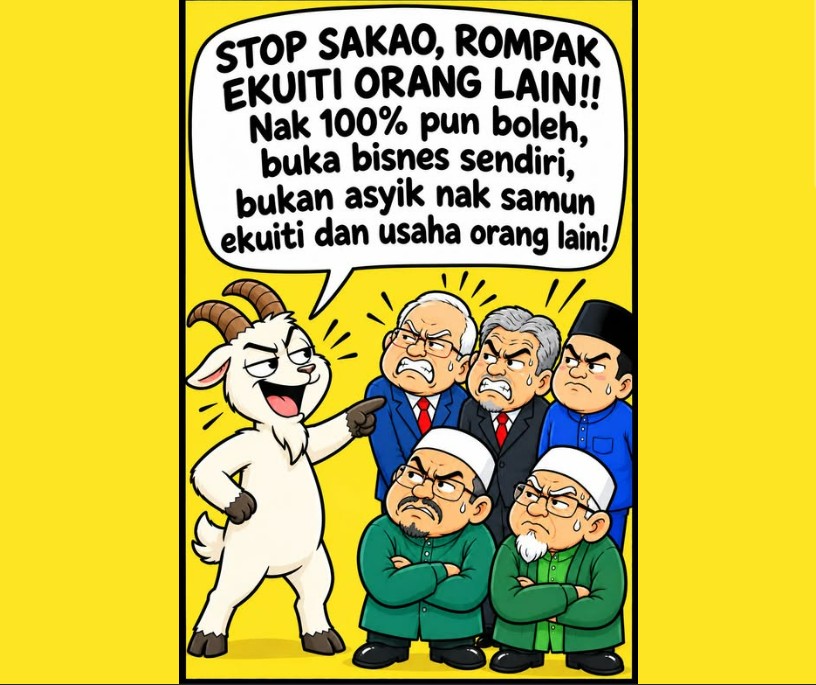
AFTER six days of controversy, the Education Ministry (MOE) seemed to U-turn on the issue of tuition centres needing 30% Bumiputera ownership.
This pullback occurred on Sept 21 after it had first been raised by Petaling Jaya MP Lee Chean Chung on Sept 15.
Why did Education Minister Fadhlina Sidek allow anger to simmer for six days before quenching it?
It’s one thing to insist on Bumi shares for big companies. But to demand 30% of small tuition centres, close to the community, struck a raw nerve.
Scholar Sharifah Munirah Alatas described such policy as “absurd” given it would racialise education while failing to focus on improving teaching.
The Melaka Action Group for Parents in Education (MAGPIE) commented, “Is it unfair for existing businesses – some of which have operated successfully for decade – to surrender 30% of their ownership?”
“These entrepreneurs invested their own money, took risks, employed teachers and built their centres from the ground up,” asserted its president Mak Chee Kin.
When I posted about this on my social media, one commenter joked, “My business is struggling. Can I get a Bumi partner to inject 30% shares?”
How far will “wealth sharing” go? Ex-banker JK Joseph asked if gyms, music schools and yoga centres would be next.
Datuk P. Kamalanathan, the former deputy education minister from MIC contended that the rule would create more unproductive Ali Baba “sleeping partners” rather than improve education.
Henceforth, if these centres close or raise fees due to extra share restructuring costs, they will lose access first.
I would add that the tuition business could simply go online or into homes. Shops would lose rentals, some teaching staff would lose jobs while surrounding eateries would lose customers.
Lawyer-activist Siti Kasim suggested that rather than taking part of other people’s hard-earned success, the government should help Bumi entrepreneurs to set up their own tuition centres with loans and training. Authorities should also subsidise tuition centres to help B40 pupils.
In other words, the government should do many mini-MARA Digital Malls – for tuition.
Political football
This Bumi equity rule is contentious and it soon became political football. On Sept 20 MOE indirectly blamed UMNO for introducing it 20 years ago and said the cabinet would “review” it.
The day after, it was reported that MOE had either “relaxed” or “cancelled” the 30% requirement after “discussions” with the Investment, Trade and Industry Ministry (MITI).
The turmoil continued on Sept 22 when MITI said it had “no information” on the alleged pull back and added that bumi share issues are under the Economy Ministry.
Was MOE misleading the public? Or was MITI wrong? The situation is uncertain. If the rule has been merely “relaxed”, will it be “tightened” later? Thus, Kamalanathan urged MOE to issue a written confirmation to clarify matters.
But the question remains: Why did Fadhlina wait six days to douse the simmering anger? This affected both the reputation of her Ministry and PKR.
Why was this policy defrosted after 20 years in cold storage? Was it to allow certain quarters to get shares of thriving tuition centres – before PKR loses the elections?
This may seem like a cynical view but the Madani government has been clouded by misconduct such as the alleged MACC (Malaysian Anti-Corruption Commission) corporate mafia scandal.
Rather than waiting for the political damage to build up, Fadhlina should have quickly quenched the embers of discontent by announcing that MOE would not implement the policy.
Instead, she kicked the hot potato over to the Cabinet and MITI which then bounced it over to the Economy Ministry. This is the classic bureaucratic ball game.
School problems
The PKR women’s wing chief was allegedly appointed not due to ability but because of Prime Minister Datuk Seri Anwar Ibrahim’s close ties to her father Prof Datuk Siddiq Fadzil during his days in Islamic youth activism at ABIM.
Apparently, two months into her tenure as minister, she made the shocking statement that Malaysian education was “on par” with Singapore and Japan.
In October 2025, Education Director-General Datuk Dr Mohd Azam Ahmad admitted that sexual harassment and bullying cases in schools were being “swept under the carpet” but Fadhlina downplayed this.
But soon Anwar himself raised the issue, citing an alleged gang rape by several Malacca pupils. Fadhlina’s rapid response to placate her boss was to introduce “Pendidikan Karakter” (Character Education) on top of the ineffective Moral Education subject.
Surely PMX could have found a more capable person for a crucial Ministry affecting millions of students?
Insulting capable Bumi educators
Of course, the infamous doctor provoker from Melaka attacked the MOE for scrapping the 30% rule, implying that Putrajaya is taking advantage of infighting among Malays to erode Bumi rights.
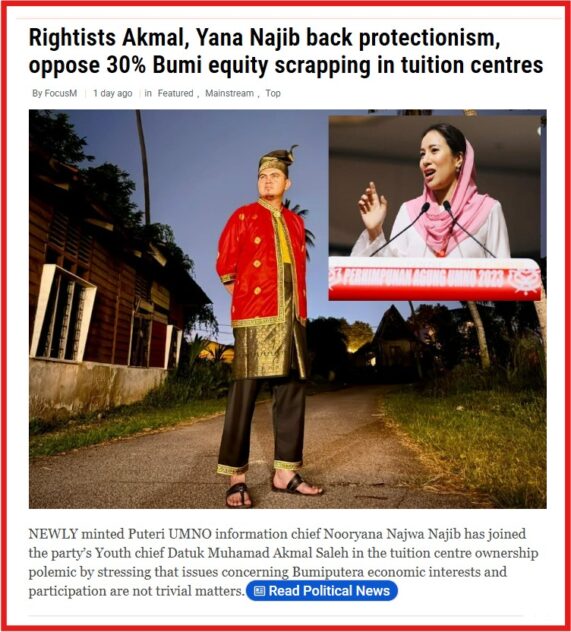
Actually, he and his supporters are insulting capable Malays. Nowadays, there are celebrity teachers online like Fathi Hussein (called Sir Fathi) who has added humour to Mathematics.
Ahmad Shahrul Azhan (Sir Asai) teaches English by asking his online pupils to pronounce tricky words, making millions laugh. In 2023, he was chosen as Best Educator at the TikTok Awards Malaysia.
They have huge online followings, as do others like Iqbal Ahyar and Saliza Ibrahim (Cikgu Zack) who turn science and Bahasa Malaysia into fun learning.
In reality, the dispute over shophouse tuition centres is getting outdated as platforms like MCPlus are doing loads of online tuition.
The 30% Bumi quota rule is part of the New Economic Policy (NEP) that was supposed to end in 1990. It has become the “Never Ending Policy” and a lightning rod for non-Malay anger.
But actually, it’s less about race and more about elite greed. Political cronies grab wealth – while poor Malays struggle to survive as Grab Food riders, hawkers, farmers etc
How do I know this? Well, back in April 2007, Anwar thundered that the NEP had been “hijacked” to enrich the UMNO elite as shameless “daylight robbery”.
“A chosen few allocate to themselves its fruits and deal out the crumbs to the rest,” he added.
The attempted grabbing of shares in tuition centres almost happened but was probably aborted after the uproar. But it has tarnished the Reformasi karakter of PKR and Pakatan Harapan (PH)
The solution is simple – help the poor of ALL races rather than the elite with cables. The poor Bumi majority will get the majority of aid but don’t forget struggling Indians and Chinese, too.
Cronies should stop preying on successful businesses. If politicians can’t help, at least leave them alone to boost education, jobs and the economy. – Sept 24, 2026, Focus Malaysia
Drop ‘absurd’ Bumiputera equity rule for tuition centres, govt urged
Parents' group and an academic say this is unfair to existing operators and fails to meaningfully encourage Bumiputera entrepreneurship.

The Melaka Action Group for Parents in Education (Magpie) and independent scholar Sharifah Munirah Alatas said the move was unfair to operators who have built their business over years, and fails to actually encourage Bumiputera entrepreneurship.
Sharifah said this policy is absurd and risks racialising the education sector, adding that it only exemplifies how distracted the education ministry is from more pertinent issues.
“This directive is another example of how our government gets bogged down in trivial administrative interventions. It fails to focus on the structural obligations, such as teacher training, administrative bloat, overwork, and other classroom challenges,” she said in a Facebook post.
She said the 30% equity condition merely distributes earned benefits to passive groups instead of actually birthing Bumiputera entrepreneurs in the sector.
“Throughout economic history, genuine entrepreneurs have never been the product of affirmative action enforced willy-nilly. Rather, they emerge organically through personal struggle, market discipline, and risk-taking.
“When aspiring entrepreneurs fail, they don’t run to the state for bailouts. Neither should the state offer any. When they fail, they should lick their wounds, pick themselves up, and then try again,” she said.
Magpie president Mak Chee Kin said the government should provide financing, training and grants if it wants to boost Bumiputera participation in tuition centres.
“Is it fair to require existing businesses, some of which have operated successfully for decades, to surrender 30% of their ownership simply to continue operating?
“These entrepreneurs invested their own money, took risks, employed teachers, and built their centres from the ground up. They should not be penalised by a policy introduced years after they established their businesses.
“Magpie urges the government to reconsider this policy and, most importantly, protect existing tuition centres that have been operating legally and responsibly for many years,” he said in a statement.
Mak also questioned whether the Bumiputera equity rule could be extended to other sectors little by little.
Earlier this week, Petaling Jaya MP Lee Chean Chung said a ministry guideline purportedly stated that tuition centres must have 30% Bumiputera equity in order to have their licences renewed next year.
Lee urged the ministry to explain the basis for the move and to consult operators and give them clear guidance on the implementation of the policy. - FMT, 19/9/2026


 Posts
Posts