Media Statement (World Drug Day) – 26/6/2025
Abolish Life Imprisonment and Death
Penalty for DRUG offences
On the occasion of the World Drug
Day (26th June), MADPET (Malaysians Against Death Penalty and
Torture) applauds Malaysia for the elimination of the mandatory death penalty
for the offence of drug trafficking, which now finally allows judges, after
convicting a person of the offence of drug trafficking, do have the option to
sentence persons convicted of drug trafficking offence to life imprisonment and
whipping, other than death. This was made possible after the Abolition of
Mandatory Death Penalty Act 2023.
An Oversight Which
Still Provides for Life Imprisonment for Drug Trafficking Should Be Speedily
Dealt With
However, there was an oversight,
when the alternative imprisonment sentence for drug trafficking remains the
life imprisonment, when MADPET believed that ‘life imprisonment’ should
have been amended to 30 to 40 years imprisonment, which
MADPET hope Malaysia should speedily do the needed amendment. This is inconsistent,
as all other previously mandatory capital offence, now carry an alternative
sentence of imprisonment – not the life imprisonment, which was also abolished
with the mandatory death penalty.
Section 39B(2) still today reads
‘(2) Any person who contravenes any of the provisions of subsection (1)
shall be guilty of an offence against this Act and shall be punished on
conviction with death or imprisonment for life and shall, if he
is not sentenced to death, be punished with whipping of not less than twelve
strokes.’
Until that ‘imprisonment for life’
for drug trafficking is speedily amended to a range like 30 to 40 years
imprisonment, Courts will have a problem when they chose the alternative to
death sentence, they still have to sentence convicted drug traffickers to ‘imprisonment
for life’.
Now, some courts have been since sentencing
drug traffickers to 30 to 40 years imprisonment, and not imprisonment for life,
which is JUST but still could be seen as illegal when this Drug law
specifically provides the alternative punishment of ‘imprisonment for life’ for
the crime of drug trafficking.
MADPET believes that the offence
of drug trafficking ought to broken up to provide for different types of drug
trafficking offences with different sentences. ‘Mules’ arrested with drugs in
their possession should be subjected to much lesser sentences, compared to
kingpins or bosses, that manufacture, sell, or arrange distribution networks. Rather
that fixing the minimum imprisonment term at 30 years, it may be just to set it
at no more than 5 years, or simply not fixing any minimum term of imprisonment,
and leaving it to judges to determine the appropriate just sentence for each
particular case.
DRUG
OFFENCES and Death Row
In November 2023 in Malaysia, on
death row, there were 840 for drug offences, and 435 for other offences – about
65% because of drug offence – drug trafficking. Now, in January 2025, only 40 are on death row
for drug offences, and another 100 for other offences – about 28% on death row
for drug offences (Malay
Mail, 5/4/2025)
This happened not only because of
the Abolition Of Mandatory Death Penalty Act 2023,
but more importantly the Revision of Sentence of Death and Imprisonment for
Natural Life (Temporary Jurisdiction Of The Federal Court) Act 2023 that
allowed the Federal Court temporary special jurisdiction to consider the
application of death row inmates, who had already exhausted all appeals, to
review their death sentence.
“… 814
individuals were granted a
reduction of their death sentences to imprisonment through hearings under the
Death Penalty and Life Imprisonment Review (Temporary Jurisdiction of the
Federal Court) Act 2023 [Act 847], which came into effect on September 12,
2023,” she[Prime Minister’s Department (Law and Institutional Reform) Datuk
Seri Azalina Othman Said] said in a parliamentary written reply to Bukit
Gelugor MP Ramkarpal Singh Deo.[Malay Mail, 6/11/2024]
After the Abolition Of Mandatory
Death Penalty Act 2023, courts hearing appeals could also change death
sentences in appropriate cases to the imprisonment sentence. The Minister also
said “Of that number, 52 were prisoners at the appeal stage who were granted a
reduction of their death sentences to imprisonment….’ .[Malay
Mail, 6/11/2024]
Likewise, now courts hearing drug
trafficking case could now avail themselves to the alternative to death
sentences if the accused had been found guilty.
Despite The Abolition Of Mandatory Death
Penalty, Persons Still Being Sentenced To Death..
Although Malaysia abolished the
MANDATORY death penalty, the death penalty still exists in all these offences.
The only difference, is that now, upon conviction, judges have the option of
sentencing to death, OR imposing the alternative imprisonment plus whipping
sentence.
The problem is that some Judges/Courts,
despite the abolition of mandatory death penalty, still continues to impose the
death penalty, both after trial at the court of first instance, or the appeals
following.
In November 2024, the Minister
acknowledged this. ‘Azalina noted that 18 individuals received new death
sentences — 12 from the High Court and six from the Court of Appeal.’ [Malay
Mail, 6/11/2024]
This means that there will still
be death row prisoners, and the numbers will rise in time – and there is NO
possible way on how to deal with this existing and new death row prisoners.
Revision of Sentence of Death and
Imprisonment for Natural Life (Temporary Jurisdiction Of The Federal Court) Act
2023 only gave TEMPORARY powers to
the Federal Court, and effectively now is a ‘DEAD Act’ – as persons in death
row cannot anymore apply for a revision of their death penalty.
In Indonesia, at the end of 2022,
their revised Criminal Code introduced an automatic 10-year probation for
convicts on death row to demonstrate good behavior for the possibility of
having their sentences commuted. This law will take effect on January 2, 2026.
MADPET urges Malaysia to revive
the Federal Court’s jurisdiction to be able to revise death penalty of those on
death row, who have already exhausted their appeals. Those on death row
ought to be allowed to make applications, maybe once every 2 years or when
circumstances warrant such an application.
MADPET also reiterates for the
abolition of the death penalty, noting Malaysia’s commitment to the world at
large to have a moratorium on execution pending abolition of the death penalty.
Malaysia voted in favor of the UN General Assembly Resolution in 2018, 2020,
2022 and 2024 which is also Malaysia’s commitment to abolish the death penalty.
No
Public Outcry Indicates Malaysia’s Readiness For Total Abolition Of Death
Penalty
There was no public outcry
when the mandatory death penalty was abolished. Likewise, there was no
outcry when dead sentence was commuted to imprisonment plus whipping,
and as such it is a positive indicator that Malaysia and Malaysians are ready
for the abolition of the death penalty.
A possible next step is the
abolition of death penalty for offences that does not directly result in death
or grievous bodily harm to any victim/s.
Drug offences are one such
category of offences, where death penalty ought to be abolished.
Statutory Denial of Bail Must be
Abolished – Let Courts decide on Bail
Section 41B(1) of the Dangerous
Drugs Act 1952[DDA] now states that ‘Bail shall not be granted to an accused
person charged with an offence under this Act – (a) where the offence is
punishable with death; or….’. The 39B Drug Trafficking offence carries the
sentence of death OR life imprisonment, and as such BAIL, by law, cannot be
granted.
Yusoff Rawther, and 7 others in 3
different cases, from February this year, who had languish in detention for
months, and the worst for more than 5 years because of this denial of bail,
ended up being found not guilty and acquitted (NST,
6/3/2025) (The
Star, 14/3/2025) (NST,
12/2/2025). This were only the media reported cases, and so there can be
more.
It is a gross miscarriage of
justice for these innocent persons to have suffered prolonged pre-conviction
detention because the Statute, not judges, denied them bail. MADPET
reiterates the call for the repeal of statutory provisions that deny bail, and
ask that judges be restored that Judges be restored the jurisdiction to hear
and decide on all bail applications.
DNAA If Trial Cannot
Speedily Begin and End
What is of great concern is the delay
of commencement and ending of criminal trials, more so for those who have
to suffer pre-conviction detention in Malaysia’s already overcrowded prisons.
Recently, in former Prime Minister Najib’s trial, where there was delay in
starting and ending trial, the courts DISCHARGED Najib – a Discharge Not
Amounting To Acquittal (DNAA).
MADPET asks for similar DNAA
for all pre-conviction or remand prisoners, be it for drug offences of other
offences, to ensure Malaysia’s Constitutional guarantee under Article 8(1) ‘All
persons are equal before the law and entitled to the equal protection of the
law.’
If trial cannot start within 3
months, they should all be DISCHARGED, and this will not be prejudicial to
State who can at anytime re-charge them when prosecution is ready to start and
end trial speedily. Justice Delayed is Justice Denied also applies to the
presumed innocent accused persons, especially those subjected to pre-conviction
or remand detention.
MADPET also reiterates for the
abolition of whipping, more so since the recent case where a person died after
being whipped.
In dealing with the DRUG problem,
it seems obvious that death penalty or heavy penalties have not solved the
problem of drug use and abuse. Thus, States should look at real causes of
addiction, mostly done voluntarily, and deal with it in more effective ways
like education.
Charles
Hector
For
and on behalf of MADPET (Malaysians Against Death Penalty and Torture)
Two years after abolishing the mandatory death penalty, data shows Malaysia may be moving on for good
Data
presented in Parliament during the February-March sitting showed a
sharp increase in commutations of existing death sentences in the six
months after Putrajaya repealed the mandatory death penalty, as death
row inmates filed appeals for resentencing and judges granted them. —
Picture by Yusof Mat Isa
By Syed Jaymal Zahiid
Saturday, 05 Apr 2025 7:00 AM MYT
KUALA LUMPUR, April 5 — Within two years year of the Prime Minister Datuk Seri Anwar Ibrahim administration abolishing the mandatory death penalty,
the number of death row inmates has plunged by nearly 90 per cent, the
clearest sign yet that Malaysia is moving away from capital punishment —
even as it remains legal.
Data presented in Parliament during the
February-March sitting this year showed a sharp increase in
commutations of existing death sentences in the six months after
Putrajaya repealed the mandatory death penalty.
This comes as death row inmates filed appeals for resentencing and judges granted them.
Most
sentences were commuted to prison terms of between 20 and 40 years,
with the latter often reserved for serious crimes such as murder.
 A Flourish chart
Rapid speed in resentencing
In
January 2024, there were 1,275 death row inmates, with 936 awaiting
their resentencing applications. By January 1 this year, the total
number of death row inmates had dropped to just 140 — a staggering 87
per cent decline.
The data reflects the speed at which judges
commuted these sentences, slashing resentencing cases by over half by
July 2024 before clearing most of them as the year progressed.
Just 50 death sentences were retained
A
total of 860 death sentences were commuted within 12 months, with just
50 retained. Meanwhile, courts struck out 22 applications on
administrative grounds, barring them from reapplying.
Four inmates, however, died in prison before their resentencing applications could be approved.
Some drug offenders remained on death row
While the data shows judges largely retained death sentences for murder cases, dozens of drug offenders were not spared.
Still,
the number of death row inmates convicted for drug trafficking dropped
significantly by January 1 this year, from 840 a year earlier to just 40
— the highest rate of commutations among all offences.
In
contrast, death sentences for homicide had the highest rate of
retention. On January 1, 2024, there were 435 death row inmates
convicted of murder, with 335 of them having their sentences commuted 12
months later.
A total of 100 death sentences were retained.
By
gender, male death row inmates had the highest rate of sentence
retention, at 137. Only three of the remaining death row inmates are
women.
Progress made, but gaps remain
Anti-capital
punishment groups such as Hayat, which works with families of death row
inmates, said the data signals progress but also highlights gaps.
For
instance, the absence of written judgments for resentencing cases was a
missed opportunity to provide guidance for fair and just sentencing
discretion, the group said.
There is also ambiguity around
resentencing for juvenile offenders and those with mental health
conditions. Laws governing sentencing for these groups still allow for
indefinite imprisonment and the death penalty.
Another issue is
whipping, which was not repealed despite the move to abolish the
mandatory death penalty. Human rights groups have described whipping as
inhumane. - Malay Mail, 5/4/2025
Over 800 death row sentences commuted to imprisonment under new Act, says Azalina
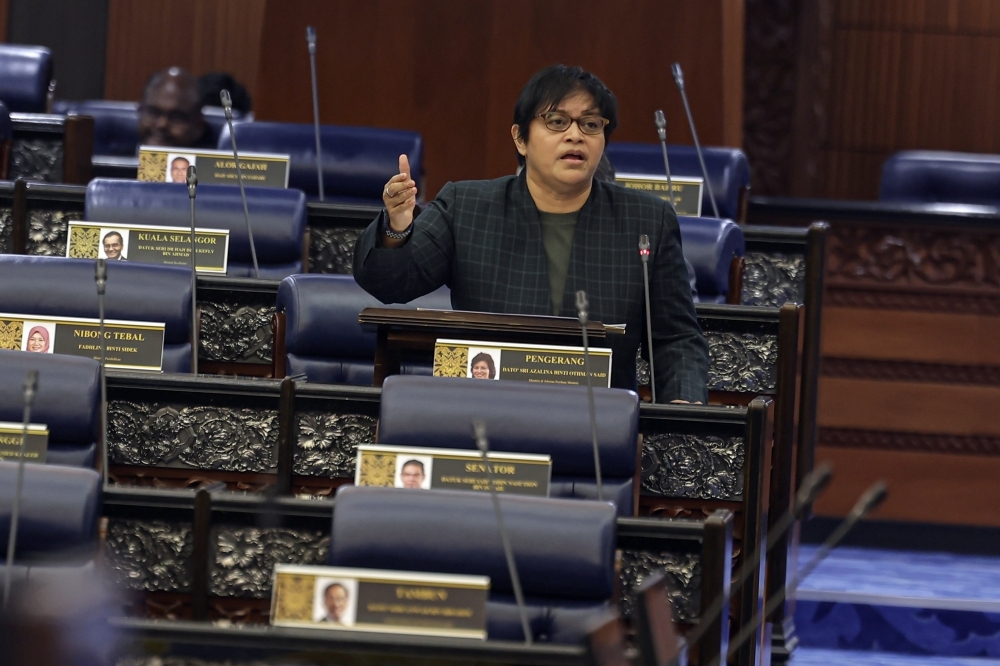
Minister
in the Prime Minister’s Department (Law and Institutional Reform) Datuk
Seri Azalina Othman Said said 866 individuals received reduced
sentences from the Federal Court between Jan 1 and Oct 14, 2024. —
Bernama pic
By Muhammad Yusry
Wednesday, 06 Nov 2024 8:39 PM MYT
KUALA
LUMPUR, Nov 6 — More than 800 death row inmates in Malaysia have had
their sentences commuted to imprisonment under the new Death Penalty and
Life Imprisonment Review Act 2023.
Minister in the Prime
Minister’s Department (Law and Institutional Reform) Datuk Seri Azalina
Othman Said said 866 individuals received reduced sentences from the
Federal Court between Jan 1 and Oct 14, 2024.
“Of that number, 52 were prisoners at the appeal stage who were granted a reduction of their death sentences to imprisonment.
“Additionally,
another 814 individuals were granted a reduction of their death
sentences to imprisonment through hearings under the Death Penalty and
Life Imprisonment Review (Temporary Jurisdiction of the Federal Court)
Act 2023 [Act 847], which came into effect on September 12, 2023,” she
said in a parliamentary written reply to Bukit Gelugor MP Ramkarpal
Singh Deo.
Ramkarpal
had asked the Prime Minister’s Department for the number of individuals
newly sentenced to death from January 1 to October 14 this year, and
the number of death penalty commutations during the same period.
Azalina noted that 18 individuals received new death sentences — 12 from the High Court and six from the Court of Appeal. - Malay Mail, 6/11/2024








 Posts
Posts