Monday, July 27, 2020

If Rayhan committed a crime, charge him in court - Do not simply deport?Abolish Administrative Deportation and Punishments?

Covid-19 and its impact on jobs, income and business maybe making many of to forget our values and principles. There is a rise of anti-migrant or ethnophobia  ...WE have to be careful not to abandon our values and principles....no matter how bad the situation is.


Deportation of Rayhan will undermine rule of law


MALAYSIANS Against Death Penalty and Torture (Madpet) is appalled by the administrative decision and action of the Malaysian Immigration Department to deport and permanently bar one Md Rayhan Kabir, a Bangladeshi national, who allegedly featured in the Al Jazeera documentary entitled “Locked Up in Malaysia’s Lockdown”.
“This Bangladeshi national will be deported and blacklisted from entering Malaysia forever,” director-general of Immigration, Khairul Dzaimee Daud said in news reports.
A decision that affects the life and liberty of a person should never be an administrative decision of an individual government department or even the cabinet. It must be a decision of the courts after the alleged perpetrator is accorded the right to a fair trial.
Media reports suggest that this may be a decision of the Immigration Department and not that of the prime minister or the cabinet. 
Such arbitrary decisions of the Immigration Department has many a times in the past undermined the administration of justice, and allowed perpetrator of crime to escape scot free, and victims to be denied existing legal rights, now available in Malaysian laws. 
Whenever a migrant or migrant worker raises complaints of rights violation, even after they have lodged the complaint at the relevant department and agency, some employers tend to respond by terminating their employment and  getting their permits or visas cancelled, resulting in their having to leave Malaysia. In the Malaysian administration of justice system, failure of the complainant to turn up for proceedings will generally mean the end of the investigation and the justice process, allowing the perpetrators to escape scot-free and denying the victims justice.
Foreigners have also been asked to leave or deported by the Immigration Department, despite the requirement of their needed presence in Malaysia as witnesses or victims, for the purposes of investigation, trials or other administration of justice processes. Crucial witnesses even in the Wang Kelian human trafficking case may today be no more in Malaysia, which will make it near impossible for perpetrators to be tried and successfully convicted.
In this case, the popular understanding, is that the relevant authorities are currently investigating the said Al Jazeera documentary, in which allegedly the said Rayhan was featured. As such, would not the deportation of this potential witness and/or perpetrator, impact the ongoing investigation, and even trials if anyone is be charged later in court? If Rayhan had indeed committed a crime, then justly he should be charged, accorded a fair trial and sentenced according to the Malaysian law, and not be prematurely sent out of the country. Thereafter, Malaysia may not be able to bring him back and charge him, or have him as a witness. Even in the 1MDB trials, Malaysia cannot even manage to secure the return of alleged perpetrators and/or key witnesses, who are now in some other country.
The government, the police and the Immigration Department may believe that someone is guilty but that is irrelevant until that person is charged, tried and found guilty by the courts. Malaysia, and the world, do acknowledge the legal principle that one is innocent until proven guilty in court.
Media reports quoted Inspector-General of Police Abdul Hamid Bador as saying that the police and the Attorney-General’s Chambers (AGC) found the documentary to contain seditious elements.
The beliefs or conclusion of the police or even of the AGC are really irrelevant; it is a court of law that, after a fair trial, determines the guilt or innocence of the accused person. Many in the past have been charged and tried and found not guilty.
If the deportation is not stopped, the concern is that many will believe that Malaysia is simply trying to avoid a fair trial. If Malaysia is truly convinced that he is guilty of a crime, then charge and try him in the Malaysian courts in accordance with Malaysian laws.
To suggest Rayhan is guilty simply because he appeared in the said documentary maybe unreasonable. He certainly did not edit or produce the said documentary, and it is totally unreasonable to jump to any conclusion now that all who allowed themselves be interviewed or featured in the said documentary are guilty. What did he actually say which was breaking the law? Did the producers edit his comments, choosing to simply include certain parts? Did he even see the final documentary, and specifically agree to it? Should we all now be scared to be interviewed by the press or documentary makers, when we have really no control about the finally published report or documentary?
It must be noted that historically the media and others, responsible in highlighting alleged crime, wrongdoings, injustices, and human rights violations has led to investigation and prosecutions, and even policy and legal reforms. If the New Straits Times had not highlighted the Wang Kelian and the Kuantan bauxite affairs, would the government even have taken action? The same also may apply to the cases connected to 1MDB and SRC. A recent foreign media report about labour violations moved Malaysian authorities to investigate whether there was forced labour in a Malaysian factory.
The importance of the media and ordinary persons speaking up or highlighting alleged or suspected wrongdoings, crimes, lacunas, injustices, and rights violations are important in bringing about not just government actions, but also needed reforms in policy, law and practice. A recent United Nations Special Rapporteur’s report led Malaysia to revise its household poverty line income from RM980 to RM2,208
Human rights defenders are recognised by the order of the 1998 United Nations Declaration on the Right and Responsibility of Individuals, Groups and Organs of Society to Promote and Protect Universally Recognised Human Rights and Fundamental Freedoms. The declaration indicates it is everyone’s duty to promote and protect human rights and safeguard democracy and its institutions, including to highlight rights violations.
Rayhan is a human rights defender because he has bravely shared his thoughts and opinions when many in Malaysia simply fear to speak up.
Therefore, Madpet calls for:
The non-deportation of Rayhan and that he be accorded a fair trial if he has indeed committed any offence;
The abolition of administrative deportation of foreigners;
Malaysia to respect freedom of expression and the media to ensure human rights violations are brought to light and investigations are held to verify the truth, leading to prosecution and a fair trial for the accused; and
The abolition of the Sedition Act and administrative punitions including detention without trial and deportation. – July 25, 2020.
* Charles Hector writes on behalf of Malaysians Against Death Penalty and Torture. -Malaysian Insight, 25/7/2020

SEE FULL STATEMENT

Media Statement – 25/7/2020


Deportation of Human Rights Defender Md Rayhan Kabir will undermine the administration of justice in Malaysia


-Abolish Administrative Deportation and Punishments - Respect Freedom of Expression-


MADPET(Malaysians Against Death Penalty and Torture) is appalled by the administrative decision and action of the Malaysian Immigration Department that decided to deport and permanently bar re-entry of one Md Rayhan Kabir, a Bangladeshi national, that was allegedly featured in the Al-Jazeera documentary entitled ‘Locked Up in Malaysia’s Lockdown’. (Malay Mail, 25/7/2020). ‘ “This Bangladeshi national will be deported and blacklisted from entering Malaysia forever,” said its director-general Datuk Khairul Dzaimee Daud.


Such actions and/or decisions, that affects the life and liberty of a person, should never be administrative decisions of any individual government department or even the Cabinet. It must be a decision of the courts after the alleged perpetrator is accorded his/her right to a fair trial.


The media report, suggest that this maybe a decision of the Immigration Department, not even the Prime Minister and/or the Cabinet. 


Such arbitrary decisions of the Immigration Department has many a times in the past undermined the administration of justice, and allowed perpetrator of crime to escape scot free, and victims to be denied existing legal rights, now available in Malaysian laws. 


Whenever a migrant or migrant worker, raises complaints of rights violation, even after he/she has already lodged the complaint at the relevant department and agency, some employers tend to respond by terminating their employment, and/or getting their permits/visas cancelled, resulting in their having to leave Malaysia. In the Malaysian administration of justice system, the failure of the complainant to turn up in a proceedings, will generally mean a discontinuation of the investigation and/or administration of justice process which allows the perpetrators to escape scot free, and the victims being denied justice.


Foreigners have also been asked to leave and/or deported by the Immigration Department, despite the requirement of their needed presence in Malaysia as witnesses or victims, for the purposes of investigation, trials or other administration of justice processes. Crucial witnesses even in the Wang Kelian human trafficking case, may today be no more in Malaysia, which will make it near impossible for perpetrators to be tried and successfully convicted.


In this case, the popular understanding, is that the relevant authorities are currently investigating the said Al Jazeera documentary, in which allegedly the said Md Rayhan Kabir was featured. As such, would not the deportation of this potential witness and/or perpetrator, impact the ongoing investigation, and even trials if anyone is be charged later in court? If Md Rayan Kabir had indeed committed a crime, then justly he should be charged, accorded a fair trial and sentenced according to the Malaysian law, and not be prematurely sent out of the country. Thereafter, Malaysia may not be able to bring him back and charge him, or have him as a witness. Even in the 1MDB trials, Malaysia cannot even manage to secure the return of alleged perpetrators and/or key witnesses, who are now in some other country.


The government, the police and/or the Immigration Department may believe that someone is guilty but it is irrelevant, until that person is charged, tried and found guilty by the courts. Malaysia, and the world, do acknowledge the legal principle that one is innocent until proven guilty in court.


The Malay Mail report stated, ‘Inspector General of Police Tan Sri Abdul Hamid Bador had said that the police and the Attorney General’s Chambers (AGC) have found that the documentary contained seditious elements.’


The beliefs and/or conclusion of the police and/or even the AGC’s chambers are really irrelevant, until a court of law, after a fair trial, determines the guilt or innocence of any accused persons. Many in the past who have been charged and tried have been found not guilty by the courts.


If the deportation is not stopped, the concern is that many will believe that Malaysia is simply trying to avoid a fair trial. If Malaysia is truly convinced that he is guilty of a crime, then charge and try him in the Malaysian courts in accordance to Malaysian laws.


To suggest that Md Rayhan Kabir, is ‘guilty’ simply because he appeared in the said documentary maybe unreasonable. He certainly did not edit and/or produce the said documentary, and it is totally unreasonable to jump to any conclusion now that all who allowed themselves be interviewed or featured in the said documentary are guilty. What did he actually say which was breaking the law? Did the producers edit his comments, choosing to simply include certain parts? Did he even see the final documentary, and specifically agree to it? Should we all now be scared to be interviewed by the press or documentary makers, when we have really no control about the finally published report or documentary.


It must be noted that historically the Media and others, responsible in highlighting alleged crime, wrongdoings, injustices, and human rights violations has led to investigation and prosecutions, and even policy and legal reforms. If the Malaysian New Straits Times did not highlight the Wang Kelian issue, and even the Kuantan Bauxite issue, would the government even have taken action? The same also may apply to the cases connected to 1MDB and SRC. A recent foreign media report about labour violations, moved Malaysian authorities to investigate whether there are ‘forced labour’ in a Malaysian factory.


The importance of the Media and ordinary persons speaking up and/or highlighting alleged or suspected wrongdoings, crimes, lacunas, injustices, and rights violations are very important in bringing about not just government actions, but also needed reforms in policy, law and practice. A recent United Nations Special Rapporteur’s report just recently maybe caused Malaysia to increase the household poverty line income(PLI) from RM980 to RM2,208


Human Rights Defenders are now recognized also by reason of the 1998 United Nations Declaration on the Right and Responsibility of Individuals, Groups and Organs of Society to Promote and Protect Universally Recognized Human Rights and Fundamental Freedoms”(The Declaration on human rights defenders). This Declaration outline responsibilities for everyone to promote human rights, to safeguard democracy and its institutions and not to violate the human rights of others, including the duty to highlight allegations of violations.


Md Rayhan Kabir is a Human Rights Defender, as he bravely shared his thoughts/opinions when many in Malaysia simply fear to speak up.


Therefore,  MADPET


Calls for the non-deportation of HR Defender Md Rayhan Kabir, and that he be charged and accorded a fair trial if he has indeed committed any offence;


Calls for the abolition of administrative deportation of foreigners, and consider whether the sentence of deportation be incorporated in relevant offences;


Calls for Malaysia to respect freedom of expression, opinion and media, and ensure that when allegations are highlighted, there would be investigations to verify the truth, that could also lead to prosecution and fair trial  of the accused;


Reiterates the call for the abolition of the Sedition Act, and also administrative punitions including detention without trial and deportation.


Charles Hector

For and on behalf of MADPET(Malaysians Against Death Penalty and Torture)


Immigration Dept: Rayhan Kabir to be deported, permanently banned from entering Malaysia


Bangladeshi national Md Rayhan Kabir was arrested by the Immigration Department yesterday and will be deported. — Picture via Facebook Immigration Department
KUALA LUMPUR, July 25 — The Immigration Department said today it will deport Md Rayhan Kabir, the Bangladeshi national under fire for criticising Putrajaya’s handling of migrants during the Covid-19 pandemic in Al Jazeera’s documentary.

In a brief statement, the agency confirmed that Rayhan was arrested by its intelligence unity yesterday afternoon in Setapak here, following two weeks of manhunt.

“This Bangladeshi national will be deported and blacklisted from entering Malaysia forever,” said its director-general Datuk Khairul Dzaimee Daud.

Rayhan had been the target of the government’s manhunt after his criticisms against Putrajaya’s detention of undocumented migrant workers in an Al Jazeera documentary titled Locked Up in Malaysia’s Lockdown which was aired on July 3.

In the 25 minute and 50 second video produced by Al Jazeera’s 101 East team, he had accused the authorities of racism against undocumented migrants, claiming that being an illegal immigrant in Malaysia is not a crime.

This led to the Home Ministry revoking Rayhan’s work permit in the country, while many Malaysians took to social media to express their anger against Rayhan.

At the same time, Bukit Aman had also called in the 101 East news crew for questioning.

Inspector General of Police Tan Sri Abdul Hamid Bador had said that the police and the Attorney General’s Chambers (AGC) have found that the documentary contained seditious elements. - Malay Mail, 25/7/2020


Peguam jumpa Md Rayhan esok


Muhaamad Hafis Nawawi
mhafis@hmetro.com.my

DUA peguam yang mewakili lelaki Bangladesh, Md Rayhan Kabir yang ditahan Jabatan Imigresen Malaysia (JIM) kelmarin, akan bertemu anak guamnya esok.
Peguam terbabit K Sumitha Shaanthinni dan C Selvaraja, dilantik keluarga Md Rayhan sebagai peguam bela.
Sumitha berkata, pihak Polis Diraja Malaysia (PDRM) dan JIM sudah dimaklumkan melalui emel hari ini.
"Di dalam surat itu, kami meminta satu tarikh untuk bertemu dengan anak guam kami.
"Kami akan berada di Bukit Aman jam 2 petang esok untuk bertemu dengan anak guam kami," katanya dalam satu kenyataan kepada Harian Metro hari ini.
Sementara itu, Pengerusi Yayasan Keprihatinan Komuniti Malaysia (MCCF), Halim Ishak berkata, tindakan Md Rayhan membuktikan warga Bangladesh terbabit tidak menghormati Malaysia sebagai sebuah negara yang berdaulat sehingga berani memperkotak katikkan tindakan kerajaan mengawal pandemik maut. 
Menurutnya, sudah tiba masanya kerajaan bertegas dan mengambil tindakan undang-undang kepada mana-mana warga asing yang sengaja mencari publisiti dengan menuduh wujudnya diskriminasi oleh kerajaan kepada komuniti Malaysia. 
"Warga asing harus sedar segala tindakan dilakukan kerajaan untuk mengawal penularan Covid-19 adalah yang terbaik bukan saja untuk rakyat Malaysia, malah pendatang asing tanpa izin (Pati). 
"Malaysia antara negara terbaik mengawal penularan Covid-19 tanpa mengira warga negara atau sebaliknya, kerana apa yang menjadi keutamaan adalah wabak ini dapat dikawal sebaik mungkin," katanya.
Peguam, Charles Hector Fernandez dari pertubuhan bukan kerajaan (NGO) Malaysia Against Death Penalty and Torture (Madpet) pula berpendapat mahkamah harus memutuskan sama ada Md Rayhan perlu dihantar pulang atau sebaliknya.

"Sekiranya pengusiran itu tidak dihentikan, kebimbangannya adalah banyak pihak yang percaya bahawa Malaysia hanya berusaha untuk mengelakkan perbicaraan yang adil.

"Sekiranya Malaysia benar-benar yakin dia melakukan jenayah, maka tuduh dan bicara di mahkamah Malaysia sesuai dengan undang-undang Malaysia," katanya dalam satu kenyataan berasingan. - Harian Metro(MyMetro), 25 or 26/7/2020


# This report carries MADPET's comment, from its Media Statement issued.

BERITA

Keluarga Rayhan lantik peguam, NGO gesa perbicaraan adil

Diterbitkan
Susulan penangkapan dan penahanan Md Rayhan Kabir, keluarga warga Bangladesh itu telah melantik perwakilan undang-undang.

Peguam K Sumitha Shaanthinni dan C Selvaraja akan mewakili pemuda 25 tahun itu.

"Polis dan imigresen dimaklumkan melalui e-mel hari ini. Dalam surat kami, kami meminta tarikh untuk bertemu dengan anak guam kami.

"Kami akan berada di Bukit Aman pada hari Isnin (27 Julai) jam 2 petang untuk bertemu dengan anak guam kami," kata Sumitha dalam satu kenyataan kepada Malaysiakini.

Imigresen mula memburu Rayhan setelah dia muncul dalam dokumentari Al Jazeera "Locked Up in Malaysia's Lockdown"

Jabatan itu juga telah menarik balik permit kerjanya.

Polis menahan Rayhan semalam dan akan menyoal siasatnya sebagai sebahagian daripada siasatan ke atas dokumentari tersebut.

Ketua Pengarah Imigresen, Khairul Dzaimee Daud berkata Rayhan akan diusir dari negara dan "menyenarai hitam" dia dari memasuki Malaysia pada masa akan datang.

Menteri Dalam Negeri Hamzah Zainuddin, yang memantau jabatan polis dan imigresen, mengatakan Rayhan akan direman selama 14 hari di pusat tahanan imigresen.

Rayhan menegaskan bahawa dia bercakap benar ketika ditemu ramah oleh Al Jazeera mengenai dakwaan penganiayaan terhadap pendatang tanpa izin oleh pihak berkuasa Malaysia semasa tempoh perintah kawalan pergerakan (PKP)
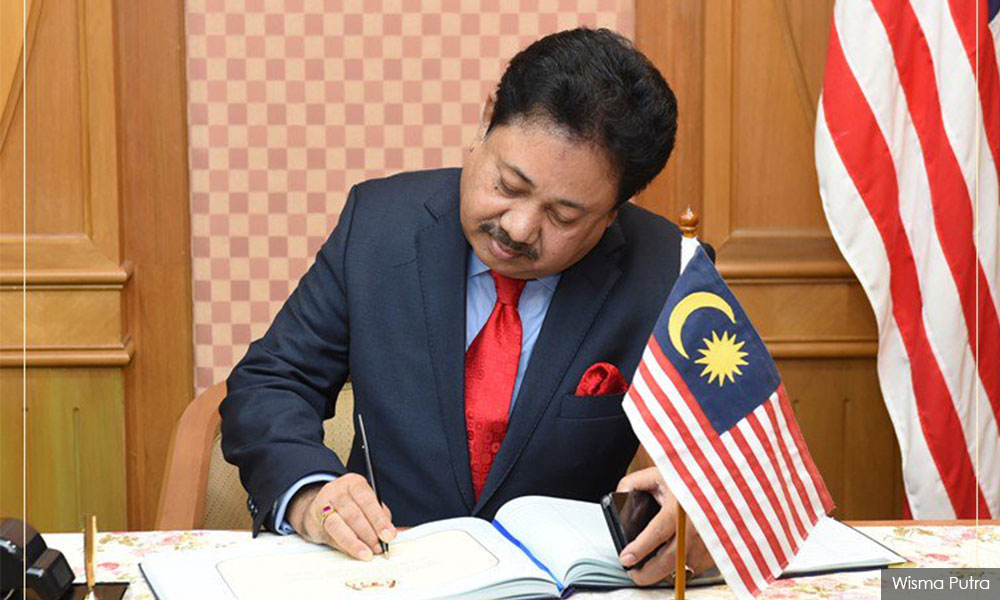
Ketika dihubungi, Pesuruhjaya Tinggi Bangladesh Md Shahidul Islam (gambar) memberitahu Malaysiakini bahawa dia telah meminta maklumat mengenai Rayhan dari pihak berkuasa Malaysia melalui "saluran diplomatik".

"Inisiatif diambil langkah demi langkah sesuai keperluan," katanya, yang enggan mengulas lanjut.

Shahidul kemudian memberitahu akhbar Bangladesh, Bangla Tribune bahawa suruhanjaya tinggi itu meminta kebenaran untuk membolehkan pegawai kedutaan berbincang dengan Rayhan.

Sementara itu, Al Jazeera dalam kenyataan di Twitter mengulas penangkapan Rayhan dengan berkata:"Al Jazeera mendapati adalah sangat mengganggu apabila pekerja asing Bangladesh Md Rayhan Kabir telah ditangkap kerana memilih untuk bercakap tentang beberapa pengalaman golongan yang tidak mempunyai suara".

Al Jazeera juga menyorot bahawa Rayhan juga mengalami gangguan secara dalam talian.

Pastikan keselamatan ketika dalam tahanan

Dua NGO hak asasi manusia sejak itu menegaskan agar Rayhan diadili di mahkamah dan bukannya "dideportasi secara sewenang-wenang" sebelum dibuktikan bersalah.

Pengarah eksekutif Inisiatif Utara-Selatan Adrian Pereira mendesak Peguam Negara Idrus Harun untuk memastikan kedaulatan undang-undang ditegakkan dalam kes ini.

"Peguam Negara harus memastikan peraturan undang-undang dan bukan peraturan menurut undang-undang bagaimana Jabatan Imigresen menuduh Rayhan.

"Rayhan mesti diberi perbicaraan yang adil untuk membolehkannya menjelaskan dirinya sendiri dan tidak dihantar pulang secara sewenang-wenang," katanya kepada Malaysiakini.

Pereira juga mendesak kerajaan untuk memastikan keselamatan Rayhan ketika dalam tahanan.

"Apa yang berlaku dalam tahanan adalah sesuatu yang dikhuatiri oleh banyak aktivis dan badan sivil.

"Setelah ditahan, kerajaan harus memastikan keselamatannya," tegasnya.
Pereira juga menggesa reformasi undang-undang imigresen untuk memastikan para pendatang tidak akan menjadi korban atau dideportasi setelah mereka membuat aduan.

Peguam Charles Hector Fernandez dari NGO Malaysia Against Death Penalty and Torture (Madpet) juga bersetuju bahawa mahkamah harus memutuskan sama ada Rayhan perlu dihantar pulang atau tidak.

Dia tidak setuju bahawa pengusiran diputuskan melalui keputusan "pentadbiran".

"Sekiranya pengusiran itu tidak dihentikan, kebimbangannya adalah banyak pihak yang percaya bahawa Malaysia hanya berusaha untuk mengelakkan perbicaraan yang adil.

“Sekiranya Malaysia benar-benar yakin bahawa dia melakukan jenayah, maka tuduh dan bicara di mahkamah Malaysia sesuai dengan undang-undang Malaysia.

"Untuk menunjukkan bahawa Rayhan bersalah hanya kerana dia muncul di dokumentari tersebut, mungkin tidak masuk akal," kata Fernandez dalam satu kenyataan. - Malaysiakini, 25/7/2020


Family appoints lawyers for Rayhan, NGOs call for fair trial

Published
The family of Bangladeshi national Mohd Rayhan Kabir (above, centre) has appointed legal representation for him following his arrest and detention.
Lawyers K Sumitha Shaanthinni and C Selvaraja will be representing the 25-year-old.

“The police and immigration were informed via email today. In our letter, we sought a date to meet our client.

“We will be at Bukit Aman on Monday (July 27) at 2 pm to meet our client,” Sumitha said in a statement to Malaysiakini.

Immigration authorities began looking for Rayhan after he appeared in the Al Jazeera documentary “Locked Up in Malaysia’s Lockdown”.

The department also controversially revoked his work permit.

Police arrested Rayhan yesterday and will proceed to question him as part of its probe into the documentary.

Immigration director-general Khairul Dzaimee Daud has vowed to deport and “blacklist” him from entering Malaysia again.

Home Minister Hamzah Zainuddin, who oversees the police and immigration departments, said Rayhan will be remanded for 14 days at an immigration detention centre.

Rayhan has insisted that he spoke the truth when interviewed by Al Jazeera about the alleged mistreatment of undocumented migrants by Malaysian authorities during the movement control order period.

When contacted, Bangladesh High Commissioner Mohd Shahidul Islam told Malaysiakini that he had sought information about Rayhan from Malaysian authorities through “diplomatic channels”.

 Shahidul Islam
“Initiatives are being taken step by step as per requirement,” he said, declining to elaborate.

He later told Bangladeshi newspaper Bangla Tribune that the high commission was seeking consular access to allow its officials to speak to Rayhan.

Fair trial call
Meanwhile, Al Jazeera tweeted its response to Rayhan’s arrest.

“Al Jazeera finds it disturbing that Bangladeshi migrant worker Mohd Rayhan Kabir has been arrested for choosing to speak up about some of the experiences of the voiceless and the vulnerable,” it said, pointing out that he was also subject to abusive harassment online.
Two human rights NGO have since insisted that he be tried in court instead of being “arbitrarily deported” before any guilt was established.
North-South Initiative executive director Adrian Pereira urged Attorney-General Idrus Harun to ensure the rule of law was upheld in this case.

“The AG must ensure rule of law and not rule by law in how the Immigration Department alleges and accuses Rayhan.

“Rayhan must be given a fair trial to allow him to explain himself and not be arbitrarily deported,” he told Malaysiakini.

Pereira also urged the government to ensure Rayhan’s safety while in custody.

“What happens in detention is something many activists and groups are concerned about. Once under custody, the government must ensure their safety,” he stressed.

He further called for immigration law reform to ensure migrants would not be victimised or deported once they lodged a complaint.

Lawyer Charles Hector Fernandez of the NGO Malaysians Against Death Penalty and Torture (Madpet) also agreed that it was up to the courts to decide if Rayhan needed to be deported.

He disagreed that deportation be decided through an “administrative” decision.

“If the deportation is not stopped, the concern is that many will believe that Malaysia is simply trying to avoid a fair trial.

“If Malaysia is truly convinced that he is guilty of a crime, then charge and try him in the Malaysian courts in accordance with Malaysian laws.

“To suggest that Rayhan is ‘guilty’ simply because he appeared in the said documentary is maybe unreasonable,” Fernandez said in a statement. - Malaysiakini, 25/7/2020

Industrial Manslaughter/Murder - More deterent laws needed to reduce deaths at workplace?

In Malaysia, even when death happens at the workplace, most laws do not even provide for a higher sentence when a non-compliance of occupational safety and health obligations causes injury or death to workers.

Malaysia's Penal Code, employers/developers/Contractors can be charged for murder and homicide  > BUT to date, almost no employer or such have been charged for murder, homicide or even the offence of causing death by negligence.

Drunk drivers are being charged for murder - likewise employers and their officers can also be charged for murder.

In Australia, in Queensland for example, they have the offence of industrial manslaughter -  offence for a person conducting a business or undertaking (PCBU), or a senior officer, to negligently cause the death of a worker, where the sentence is maximum penalty of 20 years imprisonment for an individual, or $10M for a body corporate, applies.

Malaysia needs more deterrent sentences to make our workplaces safer and reduce injury and death of workers

The industrial manslaughter offence under Queensland legislation

On 23 October 2017, industrial manslaughter provisions in the Work Health and Safety Act 2011 (WHS Act), Electrical Safety Act 2002 (ES Act), and Safety in Recreational Water Activities Act 2011 (SRWA Act) commenced.

These provisions make it an offence for a person conducting a business or undertaking (PCBU), or a senior officer, to negligently cause the death of a worker. In particular, the offence applies if:
  • a worker dies, or is injured and later dies, in the course of carrying out work for the business or undertaking (including during a work break); and
  • the PCBU’s, or senior officer’s, conduct cause the death of the worker (i.e. the action or inaction of the PCBU, or senior officer, substantially contributes to the death); and
  • the PCBU, or senior officer, is negligent about causing the death of the worker (i.e. the person’s action or inaction departs so far from the standard of care required).
Where a PCBU, or senior officer, commits industrial manslaughter, a maximum penalty of 20 years imprisonment for an individual, or $10M for a body corporate, applies.

Who is a PCBU?

For the purposes of the industrial manslaughter offence, a PCBU has the same meaning as applies under section 5 of the WHS Act or section 21 of the ES Act. For example, a PCBU can be a sole trader, a partnership, company, unincorporated association or government department.

Who is a senior officer?

A senior officer is:
  • an executive officer of a corporation (i.e. a person who is concerned with, or takes part in, the corporation’s management); or
  • for a non-corporation, the holder of an executive position who makes, or takes part in making, decisions affecting all, or a substantial part, of a PCBU’s functions.
The use of the term ‘senior officer’ for the industrial manslaughter offence is intended to capture individuals of the highest levels in an organisation (those who can create and influence safety management and culture at their workplace). The rationale for capturing these higher level officers is to ensure health and safety is managed as a cultural priority within organisations and to guarantee that safety standards are managed and supported from the top down.

Examples of senior officers may include:
  • a director or secretary of a corporation
  • Chief Executive Officers
  • Chief Financial Officers or Chief Operations Officers
  • General Counsel
  • General Managers
  • officeholders in a unincorporated association (i.e. a club president).
In determining whether you are a senior officer for the purposes of the industrial manslaughter offence, you should have regard to:
  • your position in the company (i.e. are you in senior management?)
  • your ability to take part in decisions which affect the company (i.e. can you decide how money will be spent or the strategic direction the company will take?)
  • your ability to influence how resources are used and what procedures are necessary (i.e. do you have the ability to make decisions about how work health and safety will be managed?)
  • your ability to make decisions (i.e. is your decision making subject to a further approval process or are you the final decision-maker?)
  • your reporting structure (i.e. do you report directly to a board?)
  • what is the extent of your domain? (i.e. do you head the largest division and is that division a core part of the business?)
  • who are your direct reports (i.e. do you have oversight of high level general managers?).
These and other similar factors would be part of the consideration for determining whether you are a senior officer.

Scenario 1

A Chief Executive Officer (CEO) of a manufacturing company is considering tenders for the supply of new plant for his workplace. An international company has provided a tender for the plant at a significantly cheaper price than the other tenders. It is brought to the attention of the CEO that the plant proposed to be supplied by the international company does not meet Australian Standards.

Despite this, the CEO decides to purchase the plant from international supplier as it meets international standards which he assumes are equivalent to the Australian Standards. The CEO does not request confirmation of this assumption. The plant is supplied and installed at the workplace. A week later, a worker is fatally injured following a catastrophic failure of the plant’s guarding. It comes to light during the investigation of this incident that the plant’s guarding was constructed to a lower standard than that required in the Australian Standard.

In this scenario, the CEO may be prosecuted as a senior officer for industrial manslaughter given the level of influence he has in deciding how money is spent and how safety is managed. The final decision to purchase the plant sat with the CEO and it was the CEO’s decision to not actively pursue advice to confirm the plant was safe to use. This negligent inaction and failure to undertake proper due diligence could see the CEO prosecuted for industrial manslaughter.

Who is not a senior officer?

A person is not a senior officer if they simply provide advice for the consideration of decision-makers or are only involved in the administration of a business process. For example, a manager or supervisor in an operational area of the business (i.e. a line manager) will not be a senior officer as the manager or supervisor administers the decisions of more senior management and do not make key decisions on how the business is managed.

Scenario 2

A site foreman for a major construction project is instructed by the Chief Operations Manager to not install edge protection during the erection of formwork as the project is multiple days behind schedule and over budget. The foreman advises the manager that the Formwork Code of Practice 2016 indicates such action is essential. Despite this, the manager instructs the foreman to "just put his most experienced guys on it" and "to make sure they are careful when they are near the edges".

During the erection of the formwork, an installer slips on the edge of the platform and is fatally injured during the fall.

In this scenario, the manager may be prosecuted for industrial manslaughter as it is the manager's role to make decisions regarding how work can be undertaken and influence what safety procedures are used. By contrast, the foreman's role was to provide advice and administer the procedures directed by his superior. The negligent conduct of the manager in actively ignoring the advice of the foreman and failing to ensure appropriate resources and processes are used to eliminate or minimise risks to health and safety could see the manager prosecuted for industrial manslaughter.

What is the standard of care required by PCBUs and senior officers?

The existing standard for criminal negligence in Queensland applies to the industrial manslaughter offences. This means that a PCBU or senior officer will be found negligent where their conduct departs from the standard of care expected to avoid danger to life, health and safety, and the conduct substantially contributed to the fatality.

In applying this standard, it is intended that corporate and senior officer criminal responsibility will be extended to cases where a corporation's unwritten rules, policies, work practices or conduct tacitly authorises non-compliance, or fails to create a culture of compliance within the workplace consistent with its responsibilities and duties of care.

Can volunteers be charged with industrial manslaughter?

No. A volunteer senior officer cannot be prosecuted for industrial manslaughter. This immunity from prosecution is consistent with the current immunity for volunteer officers under the WHS Act, ES Act and SRWA Act as they apply to the performance of 'officer' duties. This exemption is designed to ensure that voluntary participation at the senior officer level is not discouraged.

How does this offence apply to unincorporated associations such as sports clubs?

The current exclusions for unincorporated associations under section 34(2) of the WHS Act, section 40F(2) of the ES Act, and section 25(2) of the SRWA Act also apply to the industrial manslaughter offences. This means that an unincorporated association does not commit an offence for failure to comply with a duty or obligation, including industrial manslaughter. Instead, the liability sits with senior officers of unincorporated associations, who continue to be held liable. This applies in all circumstances except those where senior officers of unincorporated associations are volunteers.

Why are the industrial manslaughter offences in safety legislation as opposed to the criminal code?

Individuals and PCBUs have always been able to be prosecuted for manslaughter under the Queensland Criminal Code. However, there are limitations with establishing corporate criminal responsibility for manslaughter under the Criminal Code. In particular, successful prosecution of large corporations is difficult under the Criminal Code on account of the need to identify an individual director or employee as the directing mind and will of the corporation. Proof of fault by a top-level manager or director needs to be established, which can be challenging in the case of large corporations with elaborate corporate structures (e.g. a corporation with a Board of Managers). This ultimately means that manslaughter prosecutions under the Criminal Code are only successful against small businesses and that prosecutions against large corporations are unlikely to succeed.

Establishing industrial manslaughter as a separate offence under safety legislation ensures that prosecutions can extend to the highest levels of a corporation. It is also an important reminder to senior management to instill a positive health and safety culture in their workplace.

Inserting the offence in the WHS Act, ES Act and SRWA Act enables the conduct of employees, agents and officers to be attributed to the corporation. For example, directions from senior leadership in a PCBU to cut corners can lead to an acceptance and culture of poor safety standards.

Scenario 3

A worker suffers a dizzy spell and temporarily blacks out while operating a crane. He goes to the doctor and tests show he suffered a minor stroke. The doctor advises the worker to request lighter duties and not operate machinery. The worker provides a medical certificate to his project manager, which specifies his diagnosis and recommends that he be restricted to ground duties.

The Chief Operating Officer in the PCBU has instructed project managers across the company to cut costs by reducing the number of inspections and tests for equipment. The project manager (also a worker of the PCBU) is made aware of this policy and is expected to reduce costs in areas under her control.

As a result, the project manager insists the worker continue to operate the crane until a replacement operator can be engaged later in the day. While operating the crane, the worker suddenly collapses and loses complete control of the crane. The load being carried on the crane swings into the building killing another worker on impact. It is later established that the crane operator suffered a serious stroke.

The project manager knew that the worker, in having health issues and continuing to operate the crane against medical advice, constituted serious risks to the safe operation of the crane. The project manager made this decision because of the expectations of the Chief Operating Officer.
As the project manager made decisions to meet the Chief Operating Officer’s cost cutting policy, it is feasible her conduct could be attributed to the conduct of the PCBU. In this scenario, the actions and omissions of the project manager may be able to be used as evidence to prosecute the PCBU for industrial manslaughter.

In contrast, were the same scenario prosecuted under the Criminal Code, a top level manager would need to be identified as the directing mind and will of the PCBU before potentially offending conduct could be attributed to a PCBU. This would be more difficult to prove and would limit the opportunities for a successful prosecution of the PCBU.

Can a PCBU or senior officer be charged with both industrial manslaughter and manslaughter under the criminal code?

A PCBU or senior officer could potentially be charged with either manslaughter under section 303 of the Criminal Code or industrial manslaughter under the WHS Act, ES Act, or SRWA Act.
The Queensland Police progress manslaughter charges under the Criminal Code to the Director of Public Prosecutions for a decision on whether to prosecute those cases.

Who makes the decision to prosecute an industrial manslaughter case?

As the industrial manslaughter offence is an indictable offence, the Director of Public Prosecutions is responsible for deciding whether to prosecute these cases. This is consistent with the approach taken for manslaughter prosecutions under the Criminal Code and the prosecution of Category 1 offences under the WHS Act, ES Act and SRWA Act.

What defences apply to industrial manslaughter?

All of the defences in Chapter 5 of the Queensland Criminal Code can be used to defend a charge of industrial manslaughter, except for the defence in section 23, which relates to the defence of an individual’s act or omission being an 'accident'.
Examples of defences that can be used include ignorance of the law (section 22), mistake of fact (section 24), extraordinary emergencies (section 25) or insanity (section 27).

Thursday, July 23, 2020

Prime Minister's salary RM22,826-65, so what are the other sources of Muhyiddin's RM93,841.65 monthly income?

Prime Minister Muhyiddin Yasin declared his monthly income as being RM93,841.65, BUT the salary of a Prime Minister according to law[MEMBERS OF PARLIAMENT (REMUNERATION) ACT 1980] is only RM22,826-65 only. He is not entitled to get his salary as MP, when he is Prime Minister. So, where is the rest of his monthly income coming from? That is the question.


- Source: MACC Website
Is other monthly income coming from Allowances as an MP/Prime Minister? Surely, the allowances he receives as MP/PM cannot be so high, about RM...?

Is it coming from other sources & incomes derived from other 'political appointments'?

Is it income coming from regular political donations made by third parties to MP or PM Muhyiddin?

Is BERSATU paying its President monthly salaries/allowances?

Is it from income generated by his other personal investments - interest, dividends, rentals?

Is his other source of income coming from other questionable sources?

PM MUHYIDDIN, TELL US HONESTLY THE SOURCES OF YOUR MONTHLY INCOME - you should have nothing to hide from the Rakyat(the people)..


6  Remuneration of Members of the Administration

(1) The remuneration of the Members of the Administration shall consist of-
(a) in the case of the Prime Minister, a monthly salary of twenty-two thousand eight hundred and twenty-six ringgit and sixty-five sen;
(b) in the case of the Deputy Prime Minister, a monthly salary of eighteen thousand one hundred and sixty-eight ringgit and fifteen sen;
(c) in the case of a Minister, a monthly salary of fourteen thousand nine hundred and seven ringgit and twenty sen;
(d) in the case of a Deputy Minister, a monthly salary of ten thousand eight hundred and forty-seven ringgit and sixty-five sen;
(e) in the case of a Parliamentary Secretary, a monthly salary of seven thousand one hundred and eighty seven ringgit and forty sen.
(2)(a) Where a Member of the Administration is a member of the Senate, he shall be entitled, in addition to the salary specified in subsection (1), to the monthly allowance payable to him as a member of the Senate as specified in paragraph (a) of subsection (1) of section 3.

(b) Where a Member of the Administration is a member of the House of Representatives, he shall be entitled, in addition to the salary specified in subsection (1), to the monthly allowance payable to him as a member of the House of Representatives as specified in paragraph (b) of subsection (1) of section 3...

 3  Remuneration of Members of Parliament
(1) The remuneration of Members of Parliament shall consist of-
(a) in the case of a member of the Senate, a monthly allowance of eleven thousand ringgit;

(b) in the case of a member of the House of Representatives, a monthly allowance of sixteen thousand ringgit.

(2) Where a Member of Parliament is designated as Leader of the Opposition, he shall be entitled, in addition to the monthly allowance specified in paragraph (b) of subsection (1), to a monthly allowance of three thousand eight hundred and forty-six ringgit and fifty-nine sen.

SADLY, the current information publicly available - only talks about monthly income and total asset value; This is inadequate. There must be greater accountability and transparency - we need to know the exact sources of these monthly incomes.

It matters not how RICH they are - our concern must be their PERSONAL INCOME when they are PM or Member of Cabinet. 

How rich they are is concerning because it seems to indicate that the POOR and the lower incomed Malaysians may be under-represented in Parliament. 

ASSETS - how rich an MP is really do not matter that much but what matters is his interest in corporations/businesses especially since the government do make decisions as to awarding projects to certain businesses. If he has an interest, he should NOT be involved in such decision making process - thus, important for his interest in businesses be disclosed - shareholding, etc..

LAND - Government can make decisions that will increase value of land, so maybe where these lands are ought to be disclosed.

INDIRECT INCOME and INTEREST - this really means that it may be best for also a declaration of asset of his spouse, and maybe even children?

IN THAILAND, it is an offence for the Prime Minister to receive any other income from any other sources save his salary and allowances as Prime Minister(and/or MP) - Malaysia should also have such a law. One past Thai Prime Minister was removed from office simply because he received some monies/gift for participating in some TV cooking show.

A member of the Cabinet(Administration) should be barred from receiving any monies, gifts and/or benefits from any other sources, whilst he/she is in Cabinet.

This will not only curb corruption, or including attempts by third parties to get into the good books of the government.

Malaysia has a Minimum Wage of RM1,200(RM1,100), and we have such a high financial debt > is it right for Prime Minister, Members of Cabinet and/or MPs/Senators to be paid so much. 

Muhyiddin's monthly income is almost 90 times the wage earned a minimum wage worker - is that JUST?

When one is in the Cabinet, there are so many benefits provided, which would be part of a normal person's costs of living. It may be interesting to find out, what he uses his own personal income for - or is it all simply put into savings, or other income generating investments?

Remember government-linked MPs also get millions, for use in their constituency - so, even when the make 'donations', they may not really be using any of the personal income - but other government provided funds. When you and I make a donation, it comes from our own pocket...mmm.

MP's salary/allowance should be for personal use - they should also be provided additional money for the employment of support staff, and for the maintenance of offices and service centres. Now, it does not happen really, so many an Opposition MP ends up using his/her own salary/allowance as MP - to employ support staff and maintain offices.

CONSTITUENCY ASSISTANCE - maybe every MP and contesting candidate should be paid monthly RM1 per vote he received in the last the last elections. If the BN candidate wins with 25,000 votes received, he will receive RM25,000 per month until the next election. The losing PAS candidate, for example, who got 12,000 votes, will receive RM12,000 per month until the next elections. 


PM Muhyiddin tops MACC list with RM93,000 monthly income, 10 other govt officials have assets over RM10m


Prime Minister Tan Sri Muhyiddin Yasin had on June 15 declared his monthly income to be RM93,841.65 and his total assets to be worth more than RM10 million. — Picture by Miera Zulyana

KUALA LUMPUR, July 22 — With his public declaration of getting RM93,000 every month, Prime Minister Tan Sri Muhyiddin Yassin earns the highest income in the Perikatan Nasional (PN) government.

A list of assets owned by 57 of the country’s top officials who have declared the Malaysian Anti-Corruption Commission (MACC) is now publicly accessible on this portal as part of a move towards greater government transparency. However, this list does not include all 70 government officials.
Muhyiddin had on June 15 declared his monthly income to be RM93,841.65 and his total assets to be worth more than RM10 million.

10 other officials with assets exceeding RM10 million

The list also names 10 others in PN as having declared their assets to be worth more than RM10 million to the MACC.

They are:
1. Federal Territories Minister Tan Sri Annuar Musa
2. Deputy Tourism, Arts and Culture Minister Datuk Jeffrey Kitingan
3. Deputy Science, Technology and Innovation Minister Ahmad Amzad Mohamed @ Hashim
4. Finance Minister Tengku Datuk Seri Zafrul Zainal Abidin
5. Minister in the Prime Minister’s Department Datuk Seri Maximus Johnity Ongkili
6. Deputy Foreign Affairs Minister Datuk Kamarudin Jaafar
7. Deputy Education Minister II Datuk Dr Mah Hang Soon
8. Deputy Federal Territories Minister Datuk Seri Edmund Santhara Kumar
9. Deputy Minister in the Prime Minister’s Department Datuk Hanifah Hajar Taib
10. Deputy International Trade and Industry Minister Datuk Lim Ban Hong

However, they are not necessarily the ones with the highest monthly income that has been declared.

The MACC portal does not put the exact amount when it comes to the assets held by the members of the PN government.

Instead of listing the exact amount, MACC gave a range of values for the assets declared by each of the 57 members of the PN administration.

The other brackets of asset values listed by the MACC and the government officials in them are as follows.

With assets worth RM8.5 million to RM10 million:
1. Minister in the Prime Minister’s Department Datuk Seri Mohd Redzuan Md Yusof
2. Minister of Science, Technology and Innovation Khairy Jamaluddin

With assets worth RM5 million to RM8.5 million (eight individuals); RM2.5 million to RM5 million (12 individuals); RM1 million to RM2.5 million (16 individuals including Datuk Shahruddin Md Salleh who has since quit as deputy works minister); and those with less than RM1 million (eight individuals).

The eight individuals with less than RM1 million in declared assets are Minister in the Prime Minister’s Department Datuk Takiyuddin Hassan; Environment and Water Minister Datuk Tuan Ibrahim Tuan Man; Deputy Finance Minister II Mohd Shahar Abdullah; Deputy Home Minister I Jonathan Yasin; Deputy Minister in the Prime Minister’s Department Arthur Joseph Kurup; Deputy Human Resources Minister Awang Hashim; Women, Family and Community Development Minister Datuk Seri Rina Harun; and Deputy Rural Development Minister II Datuk Henry Sum Agong.

The previous version of the MACC portal that was first unveiled on November 1, 2018 initially only listed the total income for members of the administration and MPs from the ruling coalition, but did not include information on the value of their declared assets. The previous version of the portal had subsequently the same month included the exact value of the total assets declared by members of the then Pakatan Harapan administration and MPs from the ruling coalition.

The new version of the portal contains additional information such as the post of the individuals in the government.

Unlike the older version, the new version omits information on whether the spouse and children of the government official in question had also made declarations to the MACC.

Top 10 earners in PN government

Other than Muhyiddin, the top 10 monthly income earners are:

1. Annuar at RM87,877.20
2. Kitingan (RM85,450)
3. Home Minister Datuk Seri Hamzah Zainudin (RM84,615.20)
4. Minister in the Prime Minister’s Department Datuk Seri Mustapa Mohamed (RM69,427.20)
5. Senior Minister and Minister of International Trade and Industry Datuk Seri Mohamed Azmin Ali (RM69,186.48)
6. Redzuan (RM65,407.20)
7. Transport Minister Datuk Seri Wee Ka Siong (RM65,236.48)
8. National Unity Minister Datuk Halimah Mohamed Sadique (RM64,527.20)
9. Ahmad Amzad (RM64,087.41)

The top 11th to 20th earners in terms of declared monthly income are:

Minister in the Prime Minister’s Department Datuk Takiyuddin Hassan (RM62,412.13), Tengku Zafrul (RM62,077.20), Khairy (RM61,188.22), Agriculture and Food Industry Minister Datuk Seri Ronald Kiandee (RM59,972.43), Shahruddin (RM59,524.27), Ongkili (RM59,500.20), Deputy Minister of Energy and Natural Resources Ali Biju (RM58,762.89), Deputy Domestic Trade and Consumer Affairs Minister Datuk Rosol Wahid (RM57,322.89), Environment and Water Minister Datuk Tuan Ibrahim Tuan Man (RM57,227.20) and Deputy Higher Education Minister Datuk Mansor Othman (RM56,347.65). If Shahruddin is excluded from the list since he has quit as deputy works minister, Rural Development Minister Datuk Abd Latiff Ahmad will be the 20th highest monthly earner at RM55,147.35.

As for the 10 who have the lowest declared monthly income in the list as of the time of writing, they are Deputy Transport Minister Hasbi Habibollah (RM36,262.89), Deputy Agriculture and Food Industry Minister Datuk Seri Ahmad Hamzah (RM36,262.80), Deputy Minister in the Prime Minister’s Department Datin Mastura Mohd Yazid (RM35,847.65), Deputy Minister Lim Ban Hong (RM34,347.65), Senior Minister and Education Minister Mohd Radzi Md Jidin (RM34,242.00), Rina (RM34,004.48), Deputy Plantation Industries and Commodities Minister I Willie Mongin (RM33,450), Deputy Entrepreneur Development and Cooperatives Minister Datuk Mas Ermieyati Samsudin (RM 25,700), Datuk Henry Sum Agong (RM25,700) and finally Youth and Sports Minister Datuk Seri Reezal Merican Naina Merican at RM24,687.

Those yet to declare their assets

The MACC said that it has to date received and displayed the information on assets declared by 57 out of the 70 members of the PN administration. If Shahruddin is excluded, 56 have made their declarations to the MACC.

Based on the MACC’s definition of members of the administration covering the prime minister, senior ministers, ministers and deputy ministers, there are currently 14 of them who have yet to submit their monthly income and total assets declarations to the MACC.

Based on Malay Mail’s comparison of the MACC portal and the current list of ministers and deputy ministers, five of the 32 PN ministers are not currently listed as having declared their assets to the MACC for the public portal.

These five ministers are:
  1. Human Resources Minister Datuk Seri M. Saravanan
  2. Energy and Natural Resources Minister Datuk Shamsul Anuar Nasarah
  3. Health Minister Datuk Seri Dr Adham Baba
  4. Domestic Trade and Consumer Affairs Minister Datuk Alexander Nanta Linggi
  5. Plantation Industries and Commodities Minister Datuk Mohd Khairuddin Aman Razali
Of the 38 deputy ministers, nine not on the MACC list are:
  1. Deputy Defence Minister Datuk Seri Ikmal Hisham Abdul Aziz
  2. Deputy Home Minister I Datuk Seri Ismail Mohamed Said
  3. Deputy Works Minister Datuk Shabudin Yahaya
  4. Deputy Rural Development Minister I Datuk Seri Abdul Rahman Mohamad
  5. Deputy Housing and Local Government Minister Datuk Seri Ismail Abd Muttalib
  6. Deputy Communications and Multimedia Minister Datuk Zahidi Zainul Abidin
  7. Deputy Youth and Sports Minister Wan Ahmad Fayhsal Wan Ahmad Kamal
  8. Deputy Environment and Water Minister Datuk Ahmad Masrizal Muhammad
  9. Deputy National Unity Minister Datuk Seri Ti Lian Ker
* A previous version of this story contained errors which have since been corrected - Malay Mail, 22/7/2020


Saturday, July 18, 2020

Absurd is all 6 convicted of murdering Kevin Morais sentenced to death - Abolish mandatory death penalty, let judges decide sentence?

Media Statement – 17/7/2020

Abolition of the Mandatory Death Penalty in Malaysia Should Not Be Delayed Anymore

Parliament should not take away judges’ power and discretion in sentencing.

MADPET(Malaysians Against Death Penalty and Torture), in light of the recent conviction for murder and the sentencing to death 6 persons to death in the Kevin Morais on 10 July 2020,  reiterates the call for the immediate abolition of the mandatory death penalty, which deprives the trial judge the discretion to sentence persons convicted of murder justly. 

They may be all involved in the murder, but all the 6 may certainly not deserve the same sentence of death.

The person who paid or ordered the murder ought to receive the highest sentence. Maybe the person who did the actual killing deserve a high sentence, but the rest of them, depending on their involvement and participation ought to sentenced accordingly by the judge based on the facts and circumstances of the case. 

By imposing a mandatory sentence, Parliament removes the judge’s discretion when it comes to sentencing, which is a power that should be left with the judiciary. The judge now has no choice but to impose the mandatory sentence provided by the law, as enacted by Parliament.

A mandatory death penalty also reduces the possibility of persons charged helping the authorities identify and prosecute the ‘kingpin’, the person who ordered or paid for others to kill the victim; and/or other persons involved in the murder.

In the Altantuya Shaaribuu murder case, for example, there has been allegations that there may be others involved, possibly also someone who ordered or paid the persons who did the actual killing. 

Assistance provided by accused persons to help bring others involved in a crime, must be a mitigating factor, which may result in a reduction of sentence – but this is not possible, when for murder in Malaysia, the current law provides just one mandatory sentence – death penalty. As such, mandatory sentences may end up defeating Justice, when it helps other guilty persons evade investigation, prosecution and punishment.


Likewise in the Kevin Morais case, there may be still doubts whether the person who ordered or paid others to kill, or others involved have all been identified, investigated and charged in court. No one wants the guilty to escape.


When there is but one mandatory death penalty, many a accused will elect to be silent until all appeals are exhausted because it matters not since they will still be hanged to death if convicted. Further, there is that possibility that they may be also be subjected to threats to the lives of their loved ones by the persons who ordered or paid them to kill if they do speak up and reveal the truth.


Malaysia must abolish all mandatory sentences, not just the death penalty, and leave it to the judges and the courts to decide on the appropriate sentence for the crime in each and every case. 


It may be acceptable for Parliament to set the maximum sentence. Other than that, we should trust our judges, courts and the judiciary to impose an appropriate and just sentence depending on the facts and circumstances of each individual case, after also taking into consideration all mitigating and aggravating factors. There is, in Malaysia, also the right to 2 appeals, a needed check and balance, that gives the opportunity to higher appellate courts to correct errors made by lower courts, including varying the sentences imposed.


The previous Barisan Nasional government was looking at towards the abolition of the death penalty, which would bring Malaysia in line with the global trend where the death penalty have been abolished. At the end of 2019, 142 countries, which is more than two-thirds, had abolished the death penalty in law or practice  


The immediate past Pakatan Harapan plus government also wanted to abolish the death penalty, and then later they backtracked to just the abolition of the mandatory death penalty. 


Many in the new government since March 2020, who left the previous Pakatan Harapan coalition and/or parties, including current Prime Minister Muhyiddin Yasin, must remember their personal commitment and abolish the mandatory death penalty at the very least.


Every day the mandatory death penalty remains in Malaysian law, everyone who committed the crime of murder, including those being tried today, will be automatically sentenced to death if found guilty. This will impact also current trials, where prosecution and defense lawyers will certainly proceed differently if the sentence for murder was not the mandatory death penalty.


Parliament must respect the Judiciary, and restore sentencing discretion to the courts. All mandatory sentences ought to be abolished.

Mandatory sentences also is a violation of one’s right to a fair trial, as it removes sentencing power of judges, who can and will decide on just and appropriate sentences based on all the facts and circumstances of a particular case, after also considering all mitigating and aggravating factors.

Death penalty has been shown to have failed in deterring crime. It is also irreversible punishment and mistakes can happen. Death penalty also violates the right and best interest of a child when parents and/or siblings are hung to death by the State.

The abolition of the mandatory death penalty will not extinguish the death sentence, which will still be an available sentence for the worst criminal. 

Therefore, MADPET 

-          Calls for the speedy abolition of the mandatory death penalty, as the first step towards ultimately a total abolition of the death penalty;

-          Calls on Malaysia to abolish all mandatory sentences in law, and return to judges and courts sentencing discretion for all crimes;

-          Calls on Malaysia to respect the right to a fair trial, whereby a fair trial includes also the sentencing procedure that takes into consideration mitigating and aggravating factors before the court decides on an appropriate just sentence.

-          Calls on the Malaysian Executive and Legislative branch of government to respect the Malaysian Judiciary, and not remove or diminish the Judiciary’s role and function in the administration of justice, which includes trying all alleged law breakers to confirm guilt, and also the imposition of a just sentence; and 

-    Reiterates the call for the total abolition of the death penalty, and a moratorium on all executions pending abolition. 


Charles Hector

For and on behalf of MADPET(Malaysians Against Death Penalty and Torture)

Not all 6 convicted of murdering DPP deserve death sentence, says NGO

facebook sharing button

Malaysians Against Death Penalty and Torture wants judges to be given greater discretionary 
power, giving the example of the six jointly sentenced to death for the 
murder of DPP Kevin Morais. (Bernama pic)
PETALING JAYA: A NGO against the mandatory death penalty this evening said not all the six sentenced to hang for the murder of a deputy public prosecutor in 2015 deserve to be sent to the gallows.

Malaysians Against Death Penalty and Torture (Madpet) said while the sextet were found guilty of involvement in deputy public prosecutor Kevin Morais’s murder, they did not all deserve the death sentence.

“The person who paid for or ordered the murder ought to receive the highest sentence.

“Maybe the person who did the actual killing deserves severe punishment, but the rest of them, depending on their involvement and participation, ought to be sentenced accordingly by the judge, based on the facts and circumstances of the case,” Madpet’s spokesperson Charles Hector said in a statement.
He said this in reiterating a call for the abolition of the mandatory death penalty, arguing that it deprived the trial judge of the discretion to sentence any person convicted of murder justly.

The judge, he added, had no choice but to follow the law.

Hector also said the country must do away with all mandatory sentences, not just the death penalty.
Judges and courts, he said, should be left to decide on the appropriate sentence for the crime in each and every case.

“We should trust our judges, courts and the judiciary to impose an appropriate and just sentence, depending on the facts and circumstances of each individual case, after also taking into consideration all mitigating and aggravating factors.”

Former military doctor R Kunaseegaran, along with R Dinishwaran, AK Thinesh Kumar, M Vishwanath, S Nimalan and S Ravi Chandaran, were found guilty on July 10 of murdering Morais in 2016. - FMT, 17/7/2020

Abolish the mandatory death penalty: Parliament should not take away judges’ power and discretion in sentencing — MADPET


JULY 17 — MADPET(Malaysians Against Death Penalty and Torture), in light of the recent conviction for murder and the sentencing to death of six persons in the Kevin Morais case on 10 July 2020, reiterates the call for the immediate abolition of the mandatory death penalty, which deprives the trial judge the discretion to sentence persons convicted of murder justly.

They may be all involved in the murder, but all the six may certainly not deserve the same sentence of death.

The person who paid or ordered the murder ought to receive the highest sentence. Maybe the person who did the actual killing deserve a high sentence, but the rest of them, depending on their involvement and participation ought to sentenced accordingly by the judge based on the facts and circumstances of the case.

By imposing a mandatory sentence, Parliament removes the judge’s discretion when it comes to sentencing, which is a power that should be left with the judiciary. The judge now has no choice but to impose the mandatory sentence provided by the law, as enacted by Parliament.

A mandatory death penalty also reduces the possibility of persons charged helping the authorities identify and prosecute the ‘kingpin’, the person who ordered or paid for others to kill the victim; and/or other persons involved in the murder.

In the Altantuya Shaaribuu murder case, for example, there has been allegations that there may be others involved, possibly also someone who ordered or paid the persons who did the actual killing.
Assistance provided by accused persons to help bring others involved in a crime, must be a mitigating factor, which may result in a reduction of sentence – but this is not possible, when for murder in Malaysia, the current law provides just one mandatory sentence – death penalty. As such, mandatory sentences may end up defeating Justice, when it helps other guilty persons evade investigation, prosecution and punishment.

Likewise in the Kevin Morais case, there may be still doubts whether the person who ordered or paid others to kill, or others involved have all been identified, investigated and charged in court. No one wants the guilty to escape.

When there is but one mandatory death penalty, many a accused will elect to be silent until all appeals are exhausted because it matters not since they will still be hanged to death if convicted. 

Further, there is that possibility that they may be also be subjected to threats to the lives of their loved ones by the persons who ordered or paid them to kill if they do speak up and reveal the truth.

Malaysia must abolish all mandatory sentences, not just the death penalty, and leave it to the judges and the courts to decide on the appropriate sentence for the crime in each and every case.

It may be acceptable for Parliament to set the maximum sentence. Other than that, we should trust our judges, courts and the judiciary to impose an appropriate and just sentence depending on the facts and circumstances of each individual case, after also taking into consideration all mitigating and aggravating factors. There is, in Malaysia, also the right to two appeals, a needed check and balance, that gives the opportunity to higher appellate courts to correct errors made by lower courts, including varying the sentences imposed.

The previous Barisan Nasional government was looking at towards the abolition of the death penalty, which would bring Malaysia in line with the global trend where the death penalty have been abolished. At the end of 2019, 142 countries, which is more than two-thirds, had abolished the death penalty in law or practice  

The immediate past Pakatan Harapan plus government also wanted to abolish the death penalty, and then later they backtracked to just the abolition of the mandatory death penalty.

Many in the new government since March 2020, who left the previous Pakatan Harapan coalition and/or parties, including current Prime Minister Muhyiddin Yasin, must remember their personal commitment and abolish the mandatory death penalty at the very least.

Every day the mandatory death penalty remains in Malaysian law, everyone who committed the crime of murder, including those being tried today, will be automatically sentenced to death if found guilty. This will impact also current trials, where prosecution and defence lawyers will certainly proceed differently if the sentence for murder was not the mandatory death penalty.

Parliament must respect the Judiciary, and restore sentencing discretion to the courts. All mandatory sentences ought to be abolished.

Mandatory sentences also is a violation of one’s right to a fair trial, as it removes sentencing power of judges, who can and will decide on just and appropriate sentences based on all the facts and circumstances of a particular case, after also considering all mitigating and aggravating factors.

Death penalty has been shown to have failed in deterring crime. It is also irreversible punishment and mistakes can happen. Death penalty also violates the right and best interest of a child when parents and/or siblings are hung to death by the State.

The abolition of the mandatory death penalty will not extinguish the death sentence, which will still be an available sentence for the worst criminal.

Therefore, MADPET

-          Calls for the speedy abolition of the mandatory death penalty, as the first step towards ultimately a total abolition of the death penalty;

-          Calls on Malaysia to abolish all mandatory sentences in law, and return to judges and courts sentencing discretion for all crimes;

-          Calls on Malaysia to respect the right to a fair trial, whereby a fair trial includes also the sentencing procedure that takes into consideration mitigating and aggravating factors before the court decides on an appropriate just sentence.

-          Calls on the Malaysian Executive and Legislative branch of government to respect the Malaysian Judiciary, and not remove or diminish the Judiciary’s role and function in the administration of justice, which includes trying all alleged law breakers to confirm guilt, and also the imposition of a just sentence; and

-          Reiterates the call for the total abolition of the death penalty, and a moratorium on all executions pending abolition.

*This statement is submitted by Charles Hector for and on behalf of MADPET (Malaysians Against Death Penalty and Torture).

**This is the personal opinion of the writer or organisation and does not necessarily represent the views of Malay Mail. - Malay Mail, 17/7/2020