ON HUMAN RIGHTS, JUSTICE AND PEACE ISSUES, LABOUR RIGHTS, MIGRANT RIGHTS, FOR THE ABOLITION OF THE DEATH PENALTY, TOWARDS AN END OF TORTURE, POLICE ABUSES, DISCRIMINATION...
Do the Pakatan Harapan governed States already have a MORATORIUM on logging?
ISSUE - calling for a temporary moratorium 'until the government finds that the respective areas are safe for logging activities' is really LAME because logging can only happen if the government gives the logging license, and then the permission to start logging. That means logging delayed but will continue later....mmm
What we need is TOTAL MORATORIUM now on licenses already issued...and NO NEW LOGGING LICENSES.
ILLEGAL LOGGING - well, that shows the inability of State, and so maybe to protect our forests, wildlife, etc, the power to protect our forests should be shifted to the FEDERAL GOVERNMENT?
How do you not be able to detect 'illegal logging' - surely it can be detected when the 'illegal loggers' build tracks to access the forest, when they start the logging, when they transport these large logs along our roads, when the 'illegal logs' are processed in sawmills... so, the 'non-detection' of this law breaking may be due to 'corruption',....
Maybe, EIA(Environment Impact Assessment) is made MANDATORY for all logging irrespective of the size of the area to be logged..(Now, some States issue logging licenses for an area of the forest, that falls short of the area that requires an EIA - so, no EIA)
Maybe, endangered species policy need to change from merely 'no hunting, no selling' to protection of the entire habitat of an endangered species - we should be against the policy of 're-location or put to sleep sent to zoo' for endangered species..
What exactly is PH policy and stance on the issue of forestry and logging, protection of endangered animal, plant,.. species, environment impact assessment, etc..
Does Anwar just voice his personal opinion - not really the position of all the Opposition MPs, not even the position of PKR... Let alone PH..
Political Parties really must STATE their clear position/stance on issues on their website - this would prevent 'lallang like tendencies of changing positions when they please...'. Many believed that DAP, PKR.. PH were against Detention Without Trial laws but this is not the case... As they never even pushed or made a move to repeal it when in power... So, are Malaysian political parties different only in terms of personalities but not in terms of principles, values, stance on issues?
Anwar calls for moratorium on logging activities
By Nor Ain Mohamed Radhi, Hana Naz Harun, Teh Athira Yusof - January 20, 2022
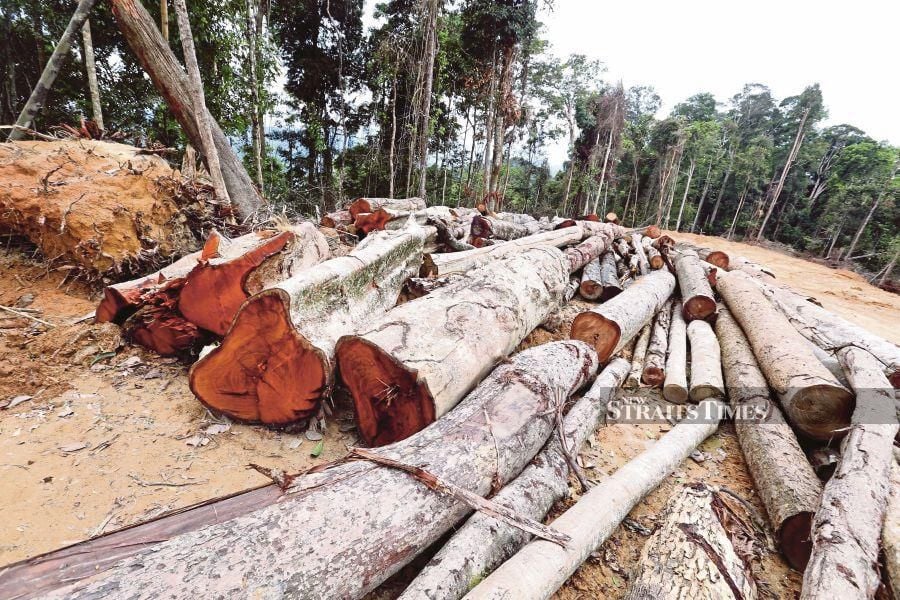
Opposition leader Datuk Seri Anwar Ibrahim (PH-Port Dickson) has called for a moratorium on logging activities, following its impact on the environment. - NSTP/ZUNNUR AL SHAFIQ
KUALA LUMPUR: Opposition leader Datuk Seri Anwar Ibrahim (PH-Port Dickson) has called for a moratorium on logging activities, following its impact on the environment.
He said the moratorium, including on projects that have been approved, should be in force until the government finds that the respective areas are safe for logging activities.
Other than the moratorium, he also called for a freeze on new approvals to be given or logging activities, regardless of rank or political ideologies.
"If the government is assertive in solving the problem, Parliament will give its full support so that the problem will not be prolonged," he said while debating the recent flood disaster during a special sitting in Dewan Rakyat today.
In the same development, Anwar also called on the government to force logging companies to pay compensation if a disaster was caused by logging activities.
"Although they have paid taxes, it was not for the damages caused to the houses. They must compensate the victims," he said. - NST, 20/1/2022
Persistence pays off for the first ever Malaysian Young Journalist winner
Posted by Deborah Kelly
PROFILE: Young Journalist Award 2021 winner
It was Kai Hui Wong’s “persistence in her
investigations” which led her to reveal abuses of power that convinced
the judges that the Malaysian journalist should win this year’s Thomson
Foundation Young Journalist Award.
Two of the three stories submitted for the award by Kai
Hui explored the damaging impact on the environment of mining projects
and uncovered links to Malaysian royalty.The
third looked at transgender healthcare rights in Malaysia and how the
community is being “pushed towards the black market” by the country’s
health system.
Kai Hui’s first love is documentary filmmaking, which she
studied alongside journalism at National Chung Cheng University in
Taiwan. But finding it difficult to find a job as a paid filmmaker, she
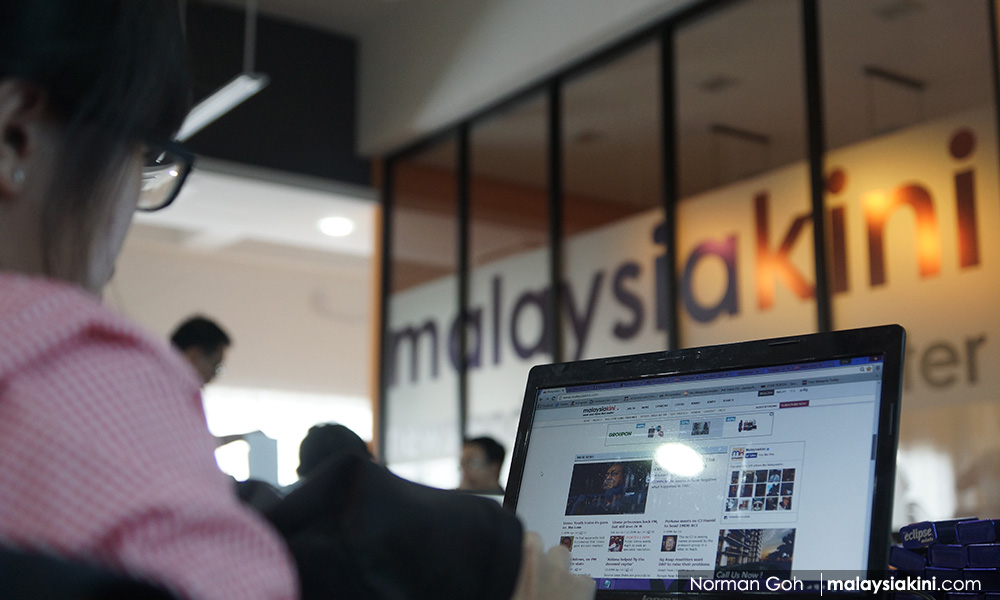
grabbed the opportunity to work as a journalist with Malaysiakini, an
independent online news portal.
“No matter if it is documentary filmmaking or journalism,”
she says, “I think what I have always wanted to pursue is documenting
what’s happening in our society in a more contextualised form.”
At Malaysiakini, the environment is not treated by
journalists as an isolated issue but is seen in its social and political
context.
Kai Hui’s investigations submitted for the Young
Journalist Award relied on data journalism and monitoring. She
interrogated the data and researched reports to alert people about the
impact of any development, the potential environmental damage and
possible abuses of power.
I became a journalist to explore and understand more about our lived reality.
Her first story highlighted
how a mining project, which involves the deforestation and excavation
of 150 acres in the Som Forest Reserve – home to the critically
endangered Malayan Tiger – is linked to members of the current federal
monarchy of Pahang state.
She uncoveresd similar royal links in her second story,
this time with the construction of permanent waste disposal facilities
by Australian mining company, Lynas, a company which has been the
subject of protests over the years.
The third story in
her portfolio was on a subject she feels most passionate about, the
issue of the basic rights of sexual minorities. It considers the
treatment of transgender people and how their needs are not adequately
served by the health system.
“Living in a multicultural, multi-religious and
multi-ethnic country, the points of view on gender identity, sexual
orientation, gender expression and also sexuality are very diverse,” she
says. “And reaching a consensus is a very long journey.”
The daughter of a Malaysian migrant worker who travelled
to Singapore daily to work, Kai Hui was educated in the minority Chinese
school system in Malaysia and, as her qualification wasn’t recognised
by the Malaysian public universities, she attended the university in
Taiwan.
Her degree was part communications, part philosophy.
“Studying philosophy has opened up my critical thinking.
My teachers in the department of communications inspired me a lot,” she
says “Not only with the knowledge they have but also how they practice
what they preach.”
Describing herself as an introvert, she says she forced
herself to become a journalist to “step outside and explore and
understand more about our lived reality”.
Kai Hui was chosen from almost 200 entrants from 55 countries to win this year’s award. Tatiana Pardo Ibarra from Colombia and Mahima Jain from India were very worthy runners up. All three, including our environmental prize winner, Monika Mondal from India, have been awarded £1,000 learning bursaries and funds to buy equipment.
Acknowledgements
We would like to congratulate the following journalists for making it into this year’s shortlist: Carmen Valeria Escobar Castillo, El Salvador; Zuha Siddiqui, Pakistan; Parth Nikhil, India; Samad Uthman, Nigeria; Shrouk Ghonim, Egypt; Daniel Lutaaya, Uganda; and Md Ibrahim Khalilullah, Bangladesh. To see their work, click here.
Young Journalist Award
Thomson Foundation has been searching for talent from around the world since 2013 and its Young Journalist Award enjoys a reputation as the premier prize for up-and-coming journalists from emerging economies.
The final judging panel selected by the FPA were Dr Zahera
Harb, director of MA International Journalism programmes at City,
University of London; Sir Clive Jones, journalist and Thomson Foundation
trustee; and Doug Wills, editor emeritus of the London Evening Standard
and The Independent.
The winner of the Young Journalist Award and our special environmental prize were revealed during the FPA’s media awards ceremony in London on Monday 29th November, which was livestreamed on our Facebook page.
The Young Journalist Award will reopen in July, 2022.
Images courtesy of Abdul Rahman, Kai Hui Wong, Mukhriz Hazim- Thompson Foundation
News
Malaysiakini's Wong bags Thomson Foundation Young Journalist Award
Published: Nov 30, 2021 7:37 AM
⋅
Updated: 5:56 PM
Malaysiakini reporter Wong Kai Hui, 27, has won
the prestigious Thomson Foundation Young Journalist Award, chosen from
almost 200 entrants from 55 countries, to win this year’s award.
Tatiana
Pardo Ibarra from Colombia and Mahima Jain from India were runners- up.
All three, including environmental prize winner Monika Mondal from
India, have been awarded £1,000 (RM5,639) learning bursaries and funds
to buy equipment.
Other nominees included Carmen Valeria Escobar
Catillo (El Salvador), Parth Nikhil (India), Samad Uthman (Nigeria),
Shrouk Ghonim (Egypt), Daniel Lutaaya (Uganda), Md Ibrahim Khalilullah
(Bangladesh), and Zuha Siddiqui (Pakistan).
The award recognises
stories produced by journalists that are revelatory, prompt public
debate, and have or potentially have led to positive change in society.
Among Wong’s stories are her reporting on the Pahang royalty’s involvement in the Lynas’ permanent waste disposal (PDF) facility in Bukit Ketam, Kuantan.
Following
the report, Pahang Regent Tengku Hassanal Ibrahim Alam Shah divested
his 50 percent stake in the company hired to build the PDF.
The Department of Environment has also asked Lynas to seek a new site. The original site sits on a water catchment area which the Australian firm initially denied.
Wong (top, left) and the other nine were picked as the top 10 running for the Young Journalist Award
Wong’s other work that has been highlighted includes her reporting on a mining project in a forest reserve in Kuala Tembeling, Jerantut.
The area was degazetted for the project and was similarly linked to the Pahang royalty.
Wong has also reported on marginalised groups, including the struggles of the transgender community.
Her
first love is documentary filmmaking, which she studied alongside
journalism at National Chung Cheng University in Taiwan. But finding it
difficult to find a job as a paid filmmaker, she grabbed the opportunity
to work as a journalist with Malaysiakini.
“It doesn't
matter if it is documentary filmmaking or journalism,” she said. “I
think what I have always wanted to pursue is documenting what’s
happening in our society in a more contextualised form.
“Living in
a multi-cultural, multi-religious and multi-ethnic country, the points
of view on gender identity, sexual orientation, gender expression and
also sexuality are very diverse. And reaching a consensus can be a very
long journey," added Wong.
Remarkable achievement
Malaysiakini editor-in-chief Steven Gan said that the team was extremely proud of Wong’s achievement.
“Kai Hui is one of the many young journalists I have the privilege to work with in Malaysiakini.
She is tenacious, meticulous, and diligent in pursuing her stories –
all prerequisite skills for a budding investigative journalist,” Gan
said.
“What I find even more remarkable - like a number of journalists in Malaysiakini
- she took it upon herself to not only write her stories in Chinese,
which is her strongest language, but also translate them into English
and Bahasa Malaysia.”
Gan expressed hope that Wong, who has just left for Taiwan to pursue further studies, will return to be part of a new generation of Malaysian journalists and contribute to making this country better than the one they inherited.
Thomson Foundation,
a media development organisation founded in 1962, helps train
journalists in developing countries. It has given out the Young
Journalist Award since 2013. - Malaysiakini, 30/11/2021
Medical woes: Try stepping into the shoes of a transgender person
Wong Kai Hui
Published: Feb 9, 2021 9:29 AM
Updated: Feb 10, 2021 9:31 AM
SPECIAL REPORT
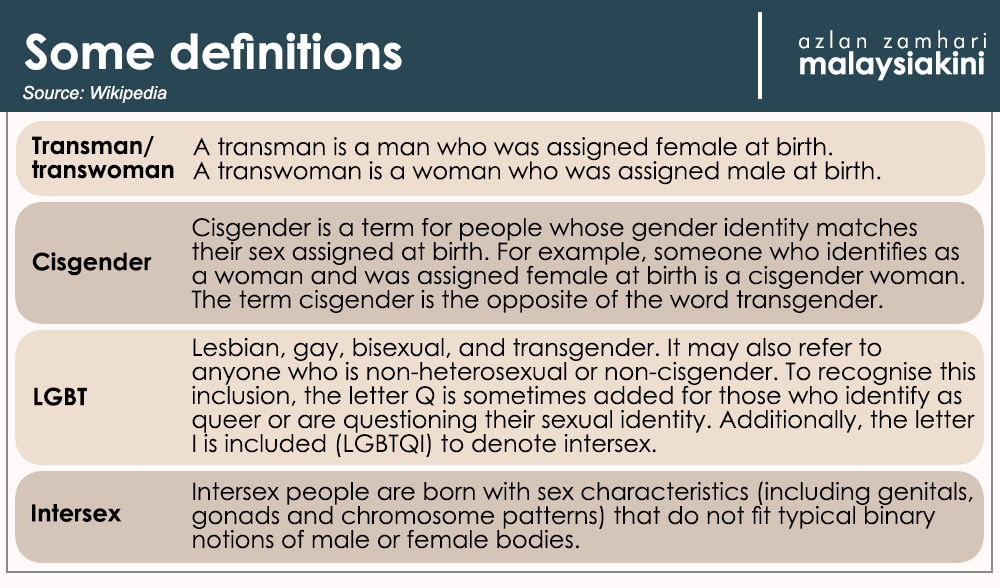
| Dr Subatra Jayaraj was preparing spinal anaesthesia when Che Nusrat
(not her real name) was brought in for a diabetic foot ulcer operation.
Wearing a headscarf, the woman in her 60s had been in the hospital for two weeks and this was her third time under the knife.
"It
was only on the third time that we realised she was a transwoman who
had not undergone reassignment surgery yet," Subatra recalled.
"Unfortunately,
as the health team had to report it, the decision was made to transfer
her to the male ward because her ID refers to her as male.
"Can
you imagine, this lady, who has probably lived and dressed her entire
adult life as a woman in her community, having to move to a male ward
because of policy and procedure?
"My heart went out to her, for
the unfairness that the discriminatory health system insists on putting
on patients with diverse gender identities," she added.
This is
what transgender people experience when seeking medical treatment. Apart
from health concerns, they have to deal with prejudice and
discrimination as well.
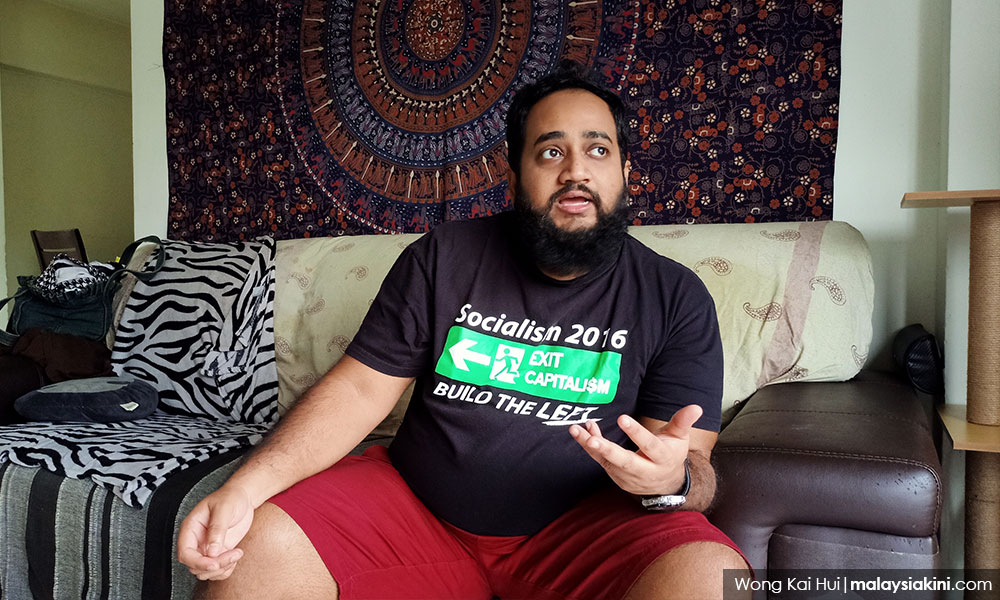
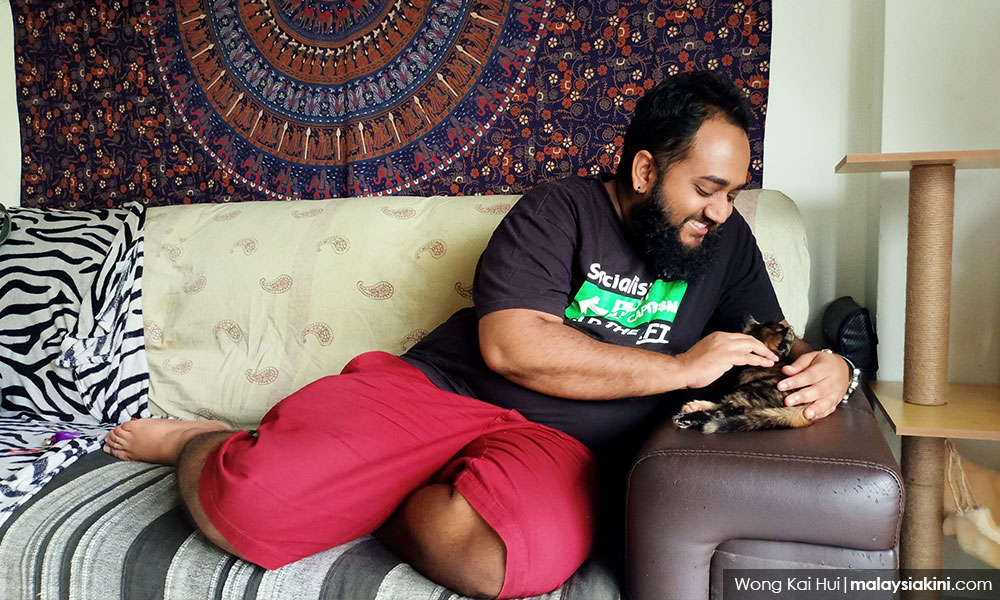
Dorian Wilde, 33, who sports a thick
moustache and beard, dreads going to a gynaecologist. In his identity
card (IC), he is a woman.
"Can you imagine me, with this face, going there for medical help (as a woman)?
"Other
men are there to accompany the women. Everyone stares at you. What
makes it worse is that you have to spend hours to see the doctor. So I
just put on my earphones to drown out these thoughts.
"It was a
rough experience. It was so bad that I thought I should just leave. But I
could not because I really needed to see the doctor," he told Malaysiakini.
ToM founder Dorian Wilde
Dorian
is the founder of Transmen of Malaysia (ToM). He considers himself an
empowered transman, who knows his fundamental rights.
"Many
transmen do not want to visit the doctor because of these issues. They
only visit the doctor when it is really severe, especially when it
concerns the vagina, cervix, uterus or ovaries," he said.
Sharing
another experience, Dorian said once he was “observed” by a group of
doctors and trainees at a government clinic without his consent.
"They didn't even ask me if it is okay. They just did it," he said, adding that he felt his privacy violated.
In another incident, a receptionist bombarded him with questions about his body.
"The
basic thing is, they are not treating us like other patients. We are
someone you need to criticise, be told to 'balik ke pangkal jalan'
(return to the right path) or someone who is seen as a 'special case'
and bring others to see us as well,” he rued.
Strange glances,
prying questions and verbal abuse are some of the obstacles transgender
people are all too familiar with. Add institutionalised oppression into
the mix, and it becomes a hostile environment.
Greater tolerance in the past
However,
the healthcare situation was different before the 1980s. Things changed
when the National Fatwa Committee (NFC) stepped in.
At present,
trans-specific healthcare development in Malaysia has fallen behind
other countries. There is rampant discrimination even in general
healthcare services.
"People used to come to Malaysia to get
surgeries done. At that time, surgeries were covered by the government
(for Malaysians)," said Dorian.
Circa 1980, he revealed that a
team of doctors and psychologists at the University of Malaya Hospital
provided trans-specific healthcare services, including hormone
replacement therapy, gender-affirming surgeries and pre-operation
counselling services.
"After doing your surgery, you go to the
National Registration Department (NRD) and say that you have done your
surgery, and 'Bam! Your IC (gender) is changed'," he said.
He noted how some of his older transgender friends have managed to lead normal lives after changing their gender on their IC.
“For younger transgenders like us, it feels like we are moving backwards. It is not supposed to be like that,” he lamented.
The
watershed moment was in 1982 when the NFC issued an edict prohibiting
sex reassignment surgeries and change of gender status after such
procedures, except for intersex (khunsa musykil) people.
According to a report published
by Human Rights Watch in 2014, Dr Khairuddin Yusuf and his team, who
had performed surgeries on transgender people, successfully lobbied the
NRD to allow changing gender markers as the team found their
post-operative patients faced difficulties in finding jobs.
"The
NFC heard about it. They expressed concern. We then explained the
science behind it to them," Khairuddin said, according to the report.
"Our
languages were totally different. They didn't get the language of
science. I understood what Galileo (Galilei) was facing. Science
challenges conventional wisdom.
"I was explaining the importance
of transgender people getting jobs, that we have to help our patients.
They did not explain their reasoning... Our reasoning was not accepted,
so I closed the services," he added.
Clinicians afraid of pushing boundaries
Commenting
on this, Subatra said although the fatwa is not legally binding, many
healthcare centres do not want to take the risk of violating it.
Sexual and reproductive health expert Dr Subatra Jayaraj
"In my opinion, the current system is more conservative in keeping with the religiopolitical direction of the country.
"There is a need to be seen to be more religious to get approval from your peers, colleagues and bosses.
"Clinicians are also afraid of pushing boundaries due to increased scrutiny by the government," the doctor added.
Subatra
obtained her Masters in Medicine at the University of Sydney, majoring
in sexual and reproductive health which covers issues of trans health.
After
leaving government service, she started a clinic to provide primary
care focusing on sexual and reproductive health. Her clients are mostly
cisgender women, but there are also transmen clients.
Recalling
her time in government hospitals, Subatra said she witnessed
"internalised discrimination" and realised the gap in clinical
understanding and willingness to learn clinical aspects of trans health
in Malaysia.
For example, she said, medical staff referred to such
patients with derogatory names such as "pondan" or "songsang". These
terms cropped up during discussions and were even written down on
documents.
"It makes for an uncomfortable environment that is not
welcoming for the trans community," she said, adding that many
clinicians are not familiar with concepts of sexual orientation, gender
identity and expression and do not know what are the proper terms.
Pointing
out that some transgender persons are told by medical staff to “return
to the right path”, Subatra said this is the reality in Malaysia.
"Doctors
should follow evidence-based medicine and treat our clients
non-judgmentally and not based on their own beliefs and practices,” she
added.
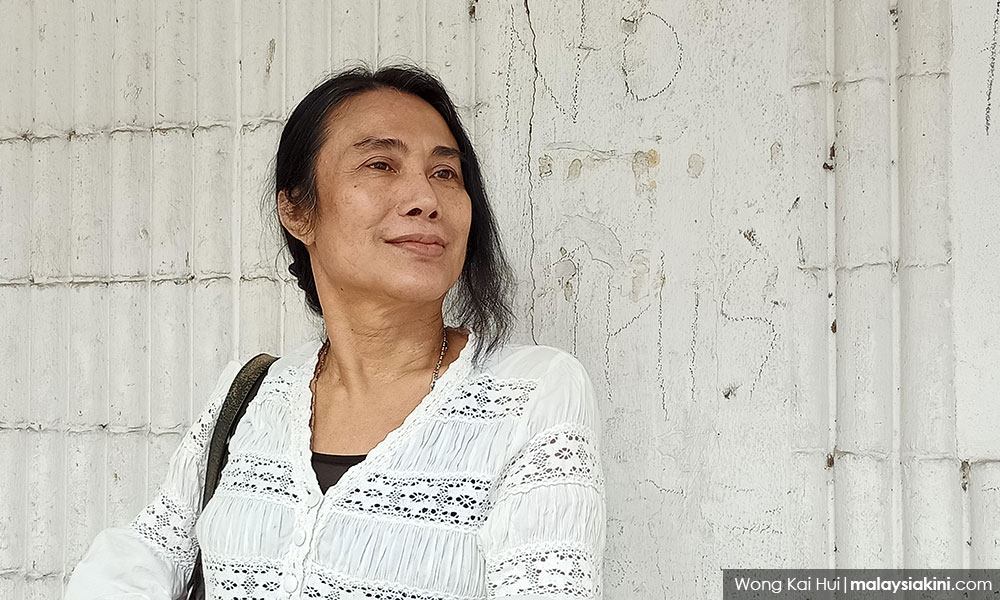
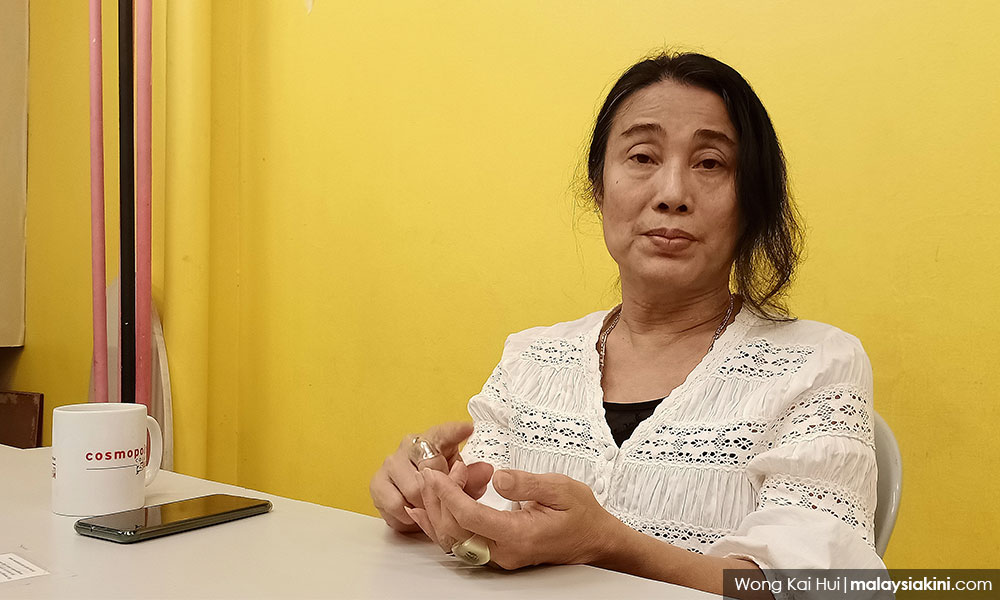
Sulastri Ariffin, one of the many transgender people Malaysiakini interviewed, is no stranger to being told to “return to the right path”.
Transgender woman Sulastri Ariffin
"We went to see the doctor, but why did the doctor give us a speech? It is not a surau or masjid, you are not an ustaz, you should focus on patients' symptoms and medical needs," she said.
Galen
Centre for Health and Social Policy chief executive Azrul Mohd Khalib
noted that the medical sector is affected by the rise of conservatism.
"Islamic orthodoxy and social conservatism have been on the rise since the 1980s, particularly among the Malay-Muslim community.
"This
has affected policy-making structures, even in more secular disciplines
such as medicine which are based on science and evidence obtained
through research.
“The space for those who do not conform to socially-accepted norms is narrowing, especially for transgender people,” he said.
According to Azrul, institutional persecution and violence have compounded the problem for this vulnerable group.
"The
increase in conservatism is primarily due to Malaysian society, in
particular the Malay-Muslim community, needing to find comfort and
stability in the rigidity of social and religious structures, amidst a
changing world," he surmised.
Political leaders are also to blame for perpetuating this stigma towards sexual minorities.
Recently, PAS pushed for the formation of an anti-LGBT taskforce and making gender change an offence for Muslims, among others. - Malaysiakini, 9/2/2021
Orked's plight - from med student to injecting black-market hormones
Wong Kai Hui
Published: Feb 10, 2021 9:07 AM
⋅
Updated: Dec 1, 2021 7:48 AM
When
Orked decided to pursue a medical degree, little did she realise that
it would lead her to the point of wanting to end her life.
Before she was born, Universiti Malaya Hospital had allowed transgender people to be themselves but much had changed since then.
"The
way I speak is very feminine. And the way the doctors looked at me
showed that they don't want people like me to become part of their
profession,” she told Malaysiakini.
Unable to conceal her “trans-ness”, Orked, 21, said she fell into a “dark spiral” and was later diagnosed with schizophrenia.
"I
had multiple suicide attempts and I was in a psychiatric ward for
several weeks. In the ward, I told them I am a transgender person and
the Malay psychiatrists refused to acknowledge our existence," she
revealed.
"They tried to use religion to help me, asked me to pray
and be close to God. I didn't see how that would help me because it
(schizophrenia) is an actual pathology."
Last year, Orked quit her medical studies to embark on a journey of transition.
"At
first, I thought that I should prove them wrong, to change their
perception of people like me. But it was taking too much of a toll on
me...
“If society or the medical field was more accepting, I would be inclined to complete my studies," she added.
Orked
found work at a burger joint in Kuala Lumpur and with the money she
earned, began purchasing hormones from the black market, which is the
only option for her, knowing it could lead to adverse side effects.
"We
didn't learn trans-specific healthcare needs (in medical school). I
literally learned everything online. I learned how to inject myself with
hormones from the Internet.
"I don't get to check myself. If my
hormones exceed normal levels, the side effects would be bad but this is
the life we are forced to live."
Furthermore, Orked said she could not afford the tests to determine hormone levels.
"I
am not from a privileged family, I am from a B40 (bottom 40 percent of
income earners) family. Being a transgender person, you can get your
hormones checked every month if you are rich."
Although happier now that she is able to embrace her true self, Orked, however, is still saddled with concerns about her health.
This
is because some of her transgender friends suffered from kidney, lung,
and blood-related problems due to injecting themselves with black-market
hormones.
“If we can have specialised medical services for old
people, why not for transgender people? This is a violation of human
rights,” said Orked.
No choice but to look for alternatives
According
to Dr Subatra Jayaraj, a former government doctor who now runs her own
clinic, trans-specific healthcare services gradually disappeared after
the 1980s in Malaysia.
However, she said the transgender
population still exists and their medical needs never vanished. This has
forced them to turn to alternatives.
Dorian Wilde, the founder of
Transmen of Malaysia (ToM), said the public might feel that
transgender-specific healthcare is unimportant.
Stressing
that it is a necessity, he said: "They don't understand. Banning it
doesn't mean people would stop it (transitioning)."
ToM founder Dorian Wilde
Speaking
from experience, Dorian said when a person is uncomfortable with his or
her sexual identity, it would lead to dysphoria and anxiety as well as
suicidal tendencies.
"Even though people are strapped for cash,
they would still do it (turn to the black market). For us, this is
important. It is life-changing,” he explained.
Trans-specific
healthcare services include hormone replacement therapies,
gender-affirming surgeries (also known as gender reassignment
surgeries), and affirming counselling services.
Not all
transgender people would choose to undergo surgery, preferring instead
to take hormones to modify visible characteristics.
At the same time, appropriate hormonal therapy is required for those who undergo surgeries as well.
To ensure safety and to avoid complications with regard to hormonal therapy, experts note that medical advice is essential.
In
certain countries, puberty blockers are used to suppress the
development of biological secondary sex characteristics in children who
identify themselves as transgender.
Despite having side effects,
it helps reduce the medical cost for transitioning surgery and the
trauma of developing sex characteristics that do not suit the
transgender teenager's gender identity.
As there are no proper and
open channels for the transgender community in Malaysia to access
hormonal therapy, most undergo the transitioning process without proper
medical supervision.
Subatra has been working with the transgender
community for over five years and aims to provide non-discriminative,
affordable, woman and trans-friendly healthcare for lower to
middle-income individuals who cannot afford private hospitals.
Sexual and reproductive health expert Dr Subatra Jayaraj
Besides the high cost, she said transgender patients also faced problems such as discrimination amongst healthcare workers.
On
the same note, Subatra said doctors also encountered difficulties in
providing trans health facilities due to inexperience and stigma.
"They
don't want to be seen as a 'transgender clinic'. There is also
difficulty purchasing recommended medication as well," she explained.
Religiopolitical factors
Subatra
said misusing hormones such as taking the wrong medication or dosage
increased the risk of complications such as blood clots and stroke.
"Some transmen on testosterone are on a very high dose such as those used by bodybuilders which is harmful in the long run."
Emphasising
that transgender healthcare should be holistic, Subatra, however, noted
that the direction of healthcare development in Malaysia is impeded due
to religiopolitical factors.
“We are a secular nation. We have
doctors and clients from many religions - why should a particular
religion dictate healthcare policies for all?”
However, a Muslim
doctor, who spoke on condition of anonymity, argued that the healthcare
system is inclusive of sexual minorities as well.
"Of course,
transwomen are not allowed to do sex reassignment surgeries in Malaysia
and cross-dressing is considered 'haram' (forbidden in Islam).
“But
if a transgender person comes to our clinic, our service should be
without boundaries. She should be regarded as another patient who needs
medical attention," she stressed.
The doctor pointed out that men who have sex with men make up the bulk of HIV patients but are still entitled to free treatment.
She
also cited how the Health Ministry has been collaborating with local
NGOs to provide STI (sexually transmitted infection) screening and other
services as well as to raise awareness among transgender people.
"We
are still getting sufficient budget to run our STI clinic. Transgender
people with diabetes or hypertension can still get their treatment from
clinics or hospitals," she added.
To address the issue of
transphobia amongst healthcare providers, the doctor said the ministry
has organised numerous courses and set up "friendly clinics".
'Trans-friendly' clinics?
Offering a different view, transwoman Sulastri Ariffin, 60, expressed reservations about these so-called “friendly clinics”.
"They
claim these are 'trans-friendly' clinics but there are no
trans-specific healthcare services like hormone therapy or surgery. You
can't even open your mouth to ask about it.
"I know the ministry
would say they had been setting up some trans-friendly clinics. Of
course, they need to be friendly because they have their KPI (key
performance indicator) to meet,” she added.
Transwoman Sulastri Ariffin
Relating
a personal experience, Sulastri said the assumption that transgender
people are highly susceptible to STIs and HIV also contributed to stigma
and discrimination.
When she visited a clinic for a nerve
problem, the doctor appeared alarmed and asked her to undergo a blood
test without any clear explanation.
It was later that Sulastri discovered she had undergone an HIV test.
“The
doctor did not explain why I needed a blood test for a nerve problem.
They seem to think that all transgender people must do an HIV test.
"I
didn't mention any HIV-related symptoms. I have been educating the
transgender community about HIV and STIs, I know what the symptoms are,”
she said.
Despite the constraints, there are doctors attempting to serve the community by providing advice on safe hormone usage.
"We
provide information on the effects of hormones on their liver,
cholesterol level, circulation, and others. We also offer to do checks.
"Many
of them are keen to know their hormone level. We don’t have that
facility (at government clinics) but we help to take their blood and
outsource it to a private lab if they can afford it," said one doctor,
who declined to be named.
Include, not exclude
Last December, trans-led organisation Seed Foundation and Galen Centre for Health and Social Policy published a guideline titled 'Practical Guidelines for Trans-specific Primary Healthcare in Malaysia'.
Galen
Centre chief executive Azrul Mohd Khalid said a legal framework for the
recognition of issues affecting transgender persons is essential for
trans-friendly services.
"When the existence of this community is
not properly recognised within the healthcare system, appropriate
services will be difficult to set up even if done independently.
"When
their existence is not recognised, their needs are not acknowledged and
left unaddressed. The training of medical practitioners should also
include the issues and challenges of trans-friendly healthcare
services," he told Malaysiakini.
"Religious and social
mores which seek to exclude rather than include people should be left
aside. They have no place in a healthcare environment.” - Malaysiakini, 10/2/2021
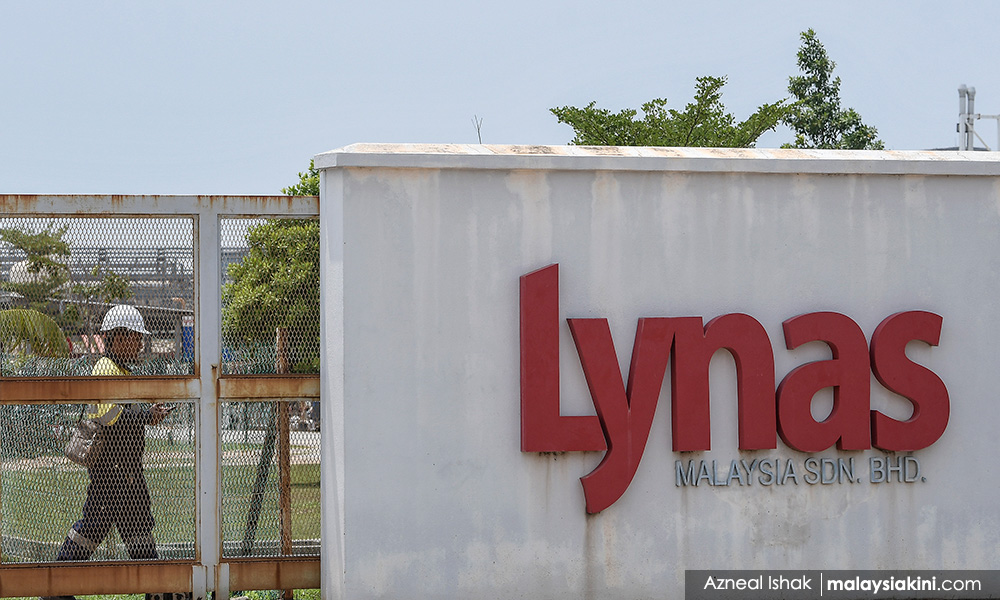
Company linked to royalty in Lynas' waste disposal site project
Wong Kai Hui
Published: Feb 17, 2021 9:10 AM
⋅
Updated: Feb 24, 2021 7:08 AM
Bukit Ketam, located around 35km from Kuantan town, was an unassuming place
until recently when Lynas Malaysia announced it will be building its permanent
disposal facility (PDF) there to store toxic waste from its factory near
Kuantan port.
While much attention was on the rare earth firm, what is taking shape at
Bukit Ketam is much bigger than Lynas, and a firm linked to Pahang royalty has
been tasked to set the plan in motion.
A total of 202.35 hectares, the size of 283 football fields, has been carved
out of the Bukit Kuantan permanent forest reserve, to be converted into a
Multi-Category Industrial Scheduled Waste Disposal Site (MCISWDS).
Lynas' PDF will only occupy 58.25 hectares or 29 percent of the overall
site.
Gading Senggara Sdn Bhd (GSSB), a private firm linked to Pahang royalty,
will be the contractor of the MCISWDS. Likewise, Lynas appointed the same
company to build its PDF there.
GSSB, founded in July 2012 as Puncak Trillium Sdn Bhd, changed to
its current name in December 2014.
A Malaysiakini check on the firm with the Companies Commission of
Malaysia (CCM) revealed that the majority shareholder, with a 50 percent stake,
is Pahang Regent Tengku Hassanal Ibrahim Alam Shah.
The second-largest shareholder is Gading Group chief executive officer
Johari Harun, who is also the Bentong Umno vice-chief. He controls a 40 percent
stake.
The remaining 10 percent is held by one Mohd Firdaus Redzuan. The company
information is based on records it submitted to the CCM as of Oct 5, 2020.
The company's directors are Johari, Firdaus, and one Ahmad Radzi
Zaini.
Environmental struggles
The mega-contract is another project that the people of Kuantan have to deal
with as the town struggles to balance the environment and industry over the
last decade.
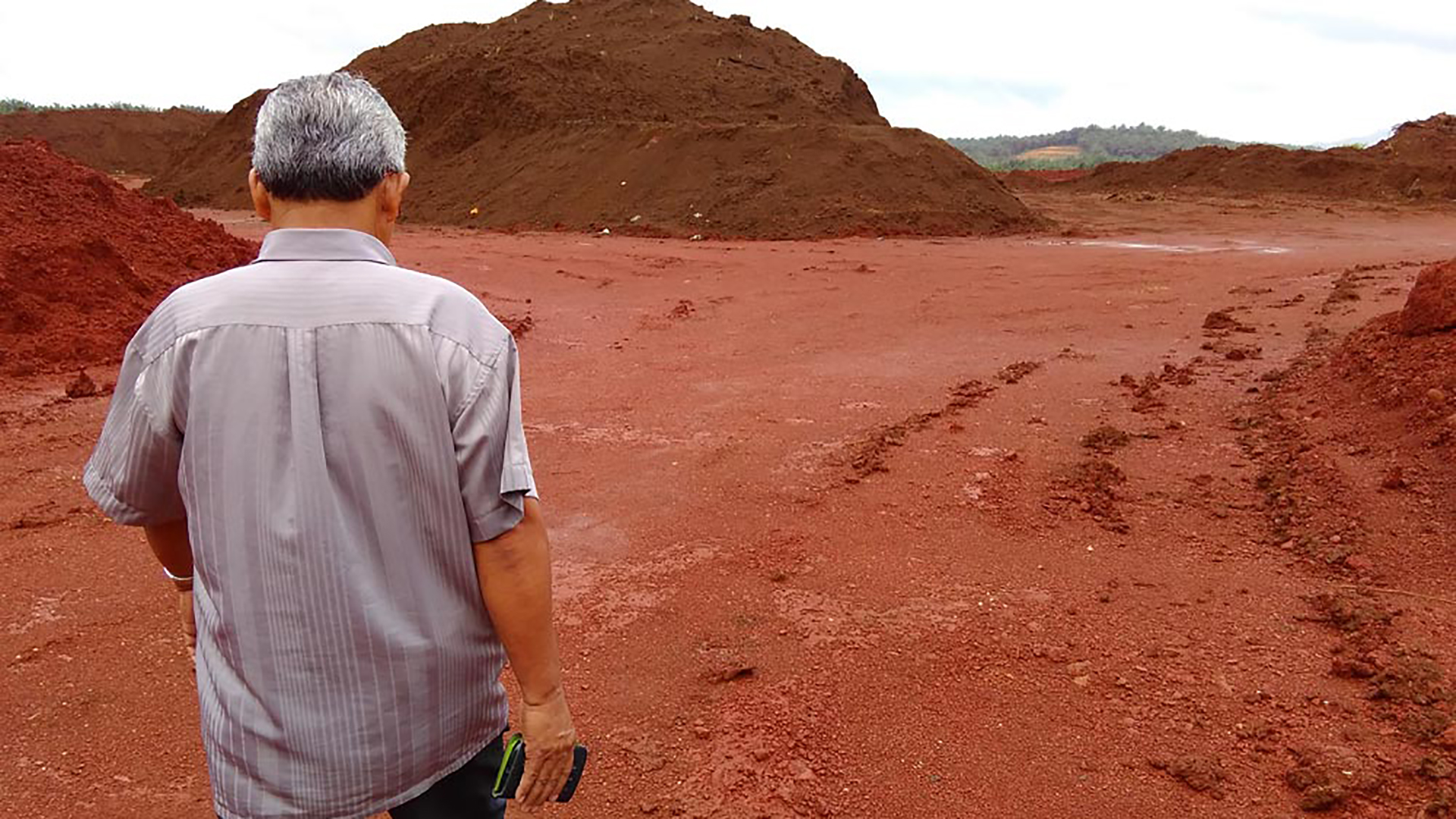
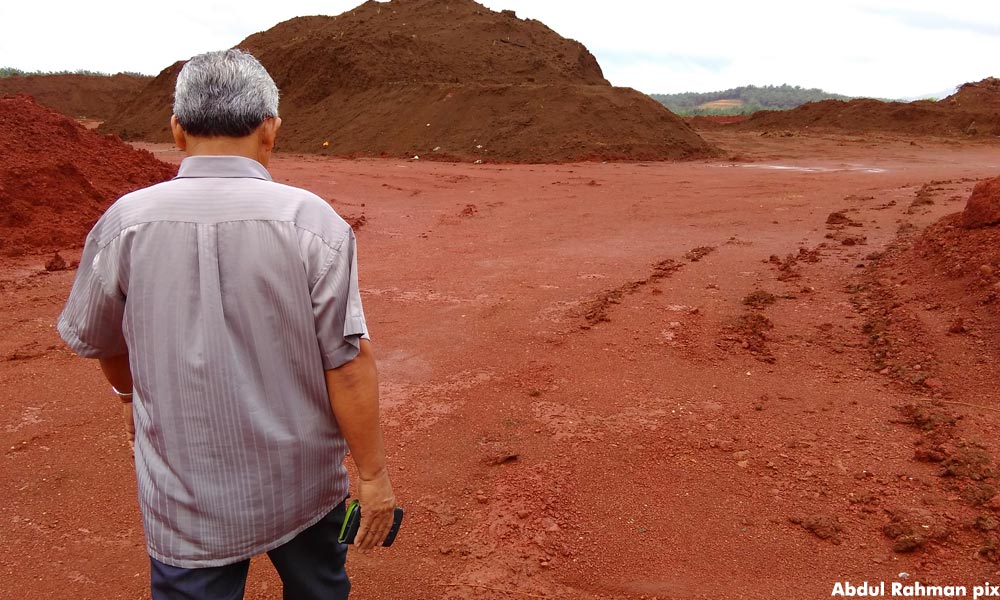
The path from town to the future MCISWDS site is flanked by oil
palm plantations with road tainted with red dirt, a reminder of the rampant
bauxite mining in 2015 that left parts of Kuantan
covered in red dust.
The mining frenzy, which saw oil palm smallholders giving up their
land for mining in exchange for stacks of cash, eventually forced the federal
government to intervene by imposing a moratorium on exports from the Kuantan
port.
The MCISWDS itself was a byproduct of environmentalists protesting
against Lynas' Advanced Material Plant in Gebeng, Kuantan since 2010.
Its processing of rare earth material at the facility produces
toxic waste, including radioactive Water Leach Purification (WLP) residue.
While the waste has low radioactivity, its build-up over the years raised
concerns.
The previous Pakatan Harapan government, which as the opposition had
supported protests against the facility, unsuccessfully tried to get the waste
sent back to Mt Weld in Western Australia, where the original rare earth was
mined from.
However, Lynas Malaysia agreed, as part of its new licensing condition, to move its cracking and
leaching operations, which produces the radioactive waste, back to Western
Australia.
The waste already produced here since 2012 remains a problem and this is
where the PDF comes in.
But the MCISWDS project is significantly larger than Lynas' PDF and it
is not yet clear what other forms of waste will be stored at the facility.
A waste dumpsite until 2119
The MCISWDS in Pahang will hug the state's border with Terengganu.
Adjacent to the site, on the Terengganu site of the border, is a vast durian
plantation.
Information on the MCISWDS is still limited but some details can be gleaned
from the Environmental Impact Assessment (EIA) report on Lynas' PDF,
located within the site.
According to the EIA, the Pahang government, Kuantan Municipal Council, Land
Office, Pahang Forestry Department, Pahang Public Works Department, Terengganu
government, Syarikat Air Terengganu, and Kemaman Municipal Council have no
objections to the Lynas PDF.
Supporting documents also revealed that the Pahang government already
excised the MCISWDS area from the Bukit Kuantan Forest Reserve, which was
gazetted as a permanent forest reserve since 1962.
The forest in the project site will be felled before construction
begins.
Under Section 13 of the National Forestry Act 1984, the "state
authority" can excise a permanent forest reserve by publishing a gazette
specifying the extent of such land and a fixed date.
The interpretations of Acts 1948 and 1967 defines "state
authority" as the ruler of a state.
The accompanying land grant in the EIA showed the site is now listed for
industrial use for a period of 99 years - from Aug 14, 2020 until Aug 13,
2119.
While the waste, at least for Lynas, will be stored there permanently, the
EIA said the site could still be converted into a public recreational park in
the future.
According to the Lynas PDF project implementation timeline, the land
clearing was scheduled to start in the middle of this month.
GSSB had applied to the Pahang Forestry Department for the land clearing in
October 2020.
The Pahang Forestry Department has informed the Department of
Environment last November that it did not have any objections, as long as GSSB
left the forest surrounding the project site untouched.
Malaysiakini has contacted GSSB for a response and requested further information about the MCISWDS project.
Unwanted neighbours: Lynas waste in Felda settlers' backyard
Wong Kai Hui
Published: Feb 18, 2021 9:14 AM
⋅
Updated: Feb 24, 2021 7:07 AM
Away
from Kuantan's hustle and bustle, the Felda population spread near the
Pahang-Terengganu border live an adequate and simple life.
For
years, they've seen their quality of life improve thanks to income from
oil palm plantation programmes which the government initiated in the
1970s. The programmes transformed the local population into smallholders
who have benefited for generations.
Their way of life was however
disrupted in the last decade following a brush with industrial greed
that left the landscape in the area scarred with red ditches from
bauxite mining.
They were able to return to some degree of
normalcy following a moratorium on bauxite mining since 2016 to allow
for proper regulations to be enacted.
However,
the community is set to have another brush with big industry as
radioactive rare earth waste will end up a stone's throw away from where
they live.
The name "Lynas Malaysia" is not unfamiliar to the
local community but with the firm's rare earth processing plant located
30km to the east in Gebeng, it has never been a real concern. Instead,
it was more of an urban issue for the folks in Kuantan.
Unfortunately,
a plan to build a massive industrial waste facility in Bukit Ketam and
the relocation of Lynas' waste from Gebeng mean the rare earth firm's
toxic byproducts will be just three kilometres away from the nearest
Felda settlement - Felda Neram Satu.
Other Felda settlements within a 10km radius of
the waste facility include Felda Bukit Kuantan, Felda Bukit Sagu and
Felda Bukit Goh.
The Environmental Impact Assessment (EIA)
for Lynas' Permanent Disposal Facility (PDF) revealed that it would be
part of a larger Multi-Category Industrial Scheduled Waste Disposal Site
(MCISWDS) that plays host to more than just Lynas' waste.
Monitoring for 100 years
The
Lynas component, which makes up about one-third of the site, will
require radiological and environmental monitoring for at least 100
years.
Yesterday, Malaysiakinireported
that the proposed MCISWDS in Bukit Ketam, the size of 283 football
fields, has been carved out of the Bukit Kuantan Forest Reserve.
A private firm that is majority-owned by Pahang Regent Tengku Hassanal Ibrahim Alam Shah will be the contractor of the MCISWDS.
Even
though the EIA report for Lynas' PDF has gone on a month-long public
display since Jan 27, there was little attention over the mega project.
Affected communities don't normally pore over voluminous EIA reports until the impact becomes apparent.
The
situation was not unlike the Lynas Advanced Material Plant (Lamp) in
Gebeng, which started construction in 2010. Since 2008, Kuantan MP
Fuziah Salleh has been the lone voice in Parliament to raise concerns
about the Lamp.
The community only started to notice and organise themselves after the Lamp was approved and already under construction.
After years of protests, Lynas finally agreed to move
its cracking and leaching process, which produced the radioactive Water
Leach Purification (WLP) residue, back to Western Australia by July
2023. It was part of an agreement with the Pakatan Harapan government in 2019 in exchange for extending its operating licence.
Even
though the radioactivity of the WLP is considered low, there has been a
build-up of the residue since 2012 and more will continue to accumulate
until 2023. This is where Bukit Ketam comes in.
The
EIA report estimated that by September 2023, Lynas would have
accumulated 1.037 million cubic metres of WLP, enough to fill 415
Olympic swimming pools.
Treated runoff released into river
At
present, they are stored at Lynas' factory at Gebeng, near Kuantan
Port. They will be transported to the new PDF site farther inland when
it is ready.
Lynas' PDF will occupy 58.25ha of the 202.35ha MCISWDS.
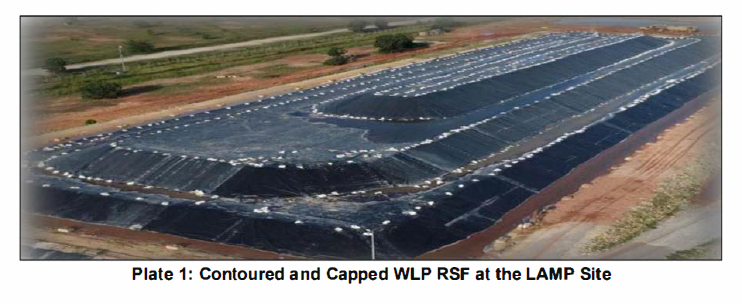
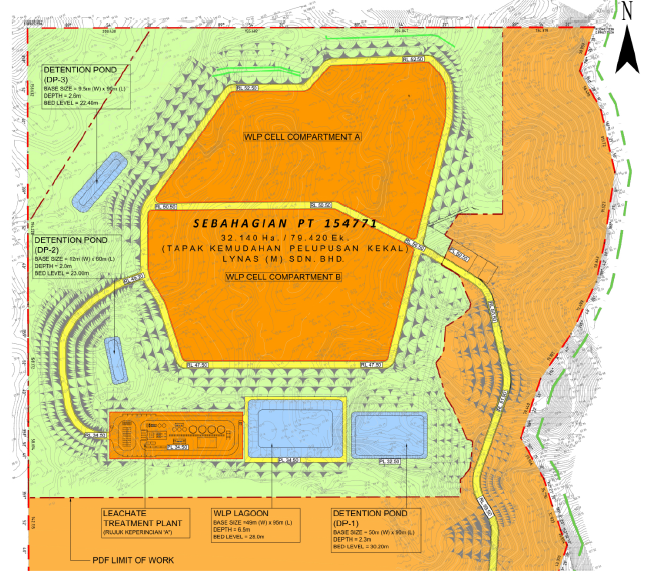
The
Lynas PDF will include two storage cells, a lagoon, leachate treatment
plant (LTP), detention pond and administrative buildings, according to
the EIA report prepared by AGV Environment Sdn Bhd.
The
cells are for the permanent storage of Lynas' WLP, while the detention
pond is to temporarily store uncontaminated stormwater and allow for
controlled release to avoid flooding. The lagoon is to store
contaminated stormwater that came in contact with the WLP.
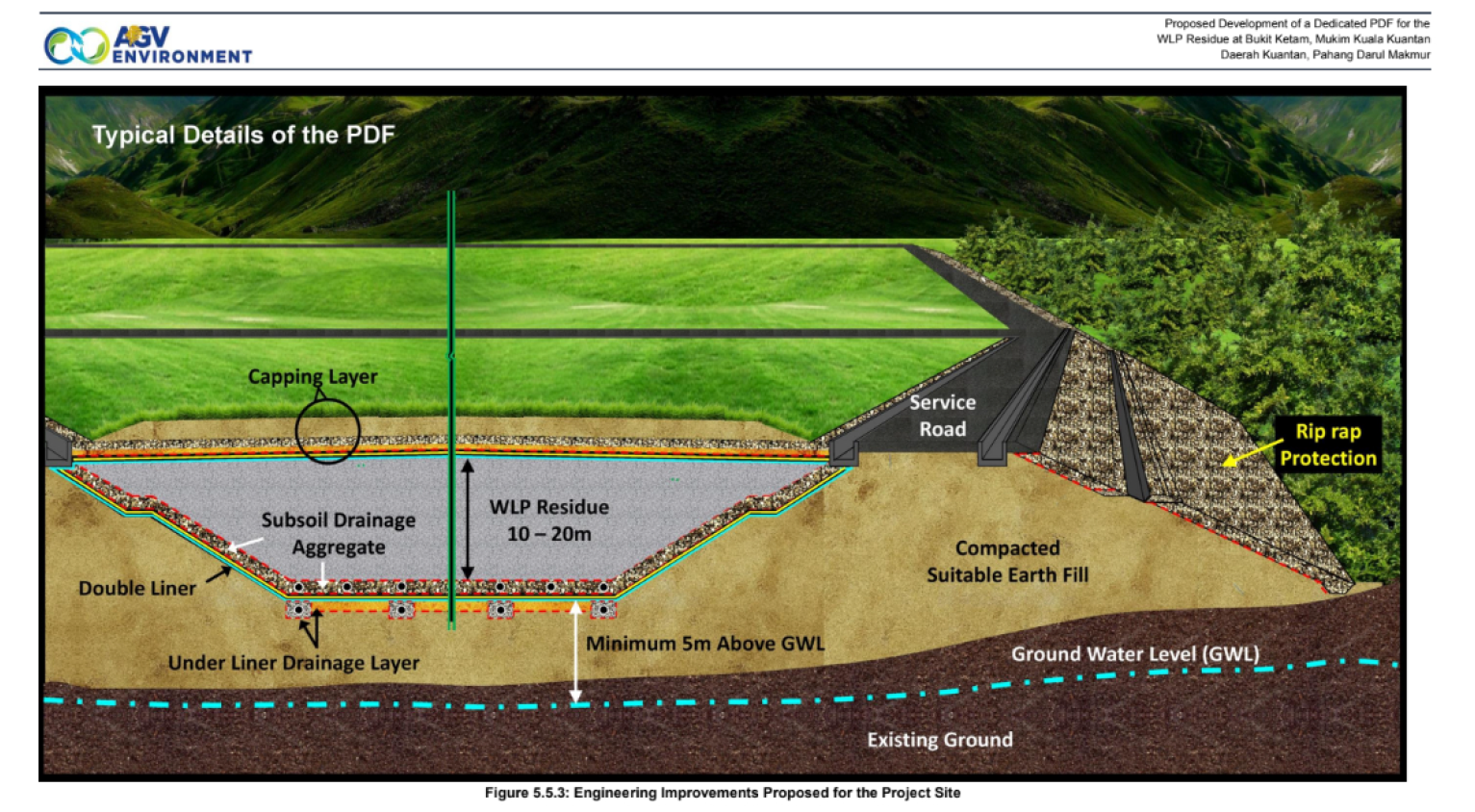
The PDF
cells, which are essentially huge holes carved out of the ground and
reinforced with containment material, will be 1.35 million cubic metres
in size, equivalent to 540 Olympic swimming pools.
One
of the most critical components is the LTP, which will treat stormwater
tainted by WLP, before releasing the treated water into Sungai Ara.
Sungai
Ara is connected to Sungai Riau that flows into Sungai Kuantan, where
the Kobat Water Intake Station is located. The water intake station
provides water to 781,000 users in Kuantan.
"The
composition of active surface runoff from the PDF cells is not suitable
to be released to the tributaries of Sungai Ara. Therefore, it will be
contained in the WLP Lagoon before being conveyed to the LTP for
treatment.
"The effluent will be discharged into the tributaries of Sungai Ara, which are ephemeral in nature," the EIA report said.
Clearing of the site is set to start in the middle of this month, and the PDF is expected to be completed by September 2024.
The public can view the full EIA report here. They can also make formal feedback here.
Som Forest: Home to tapirs and elephants or mining site for Pahang royals?
Wong Kai Hui
Published: Jun 22, 2021 7:13 AM
⋅
Updated: 3:41 PM
Another
mining project is now awaiting approval from the Department of
Environment to excavate iron ore in a degazetted forest reserve at Kuala
Tembeling, Jerantut, Pahang.
This project has two similarities to the earlier reported controversial mining operations near Tasik Chini - both are linked to Pahang royalty and have appointed Golden Prosperous Resources Sdn Bhd as the contractor.
According
to the environmental impact assessment (EIA) report which was released
for public viewing at the end of last month, the Kuala Tembeling project
involves 60.75ha of land, which is the size of around 113 football
fields.
The
project site, which affects the Central Forest Spine, will be cleared
and excavated if the EIA is approved. The Central Forest Spine covers a
wide swath across Peninsular Malaysia and links four main forest
complexes.
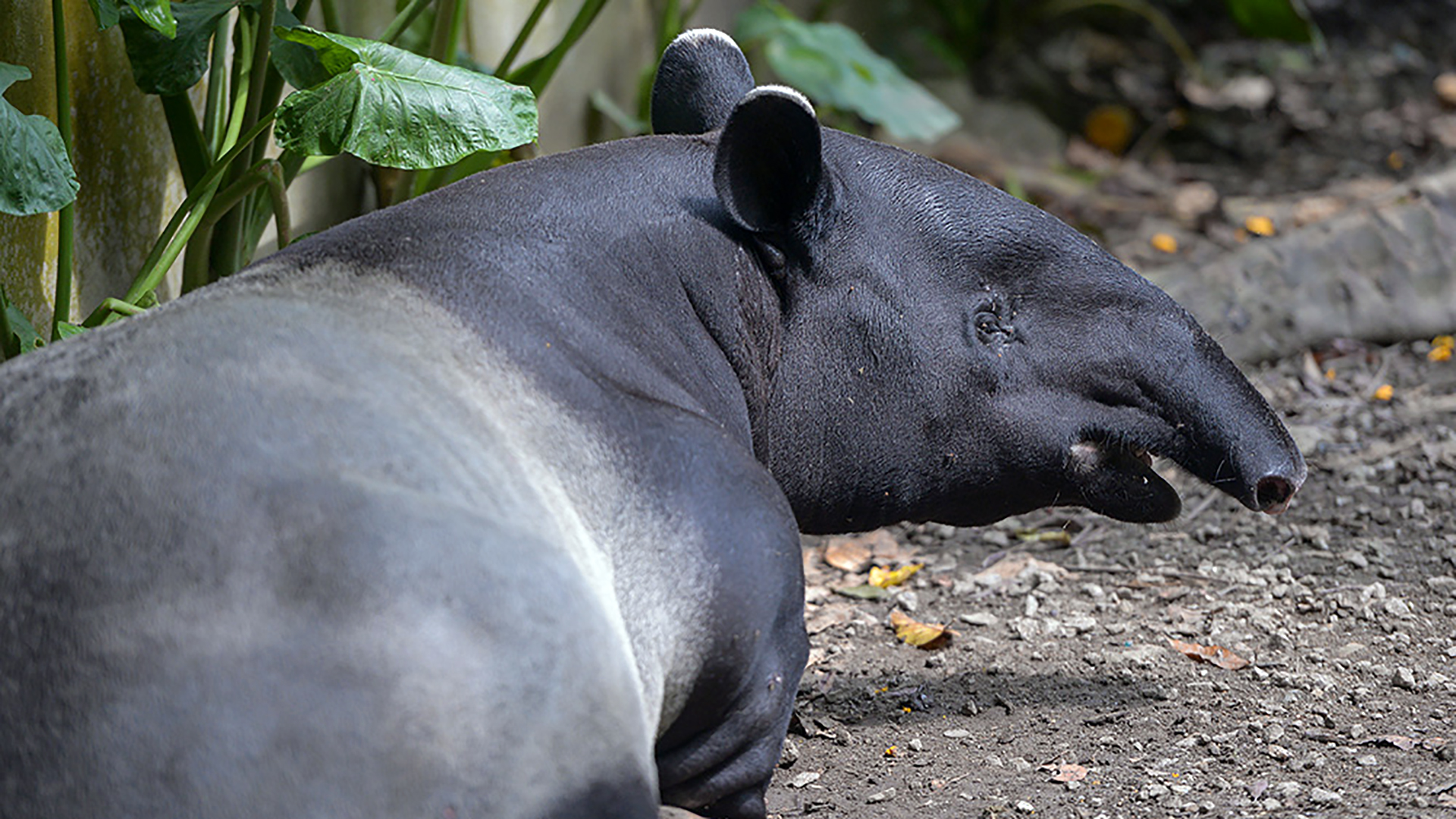
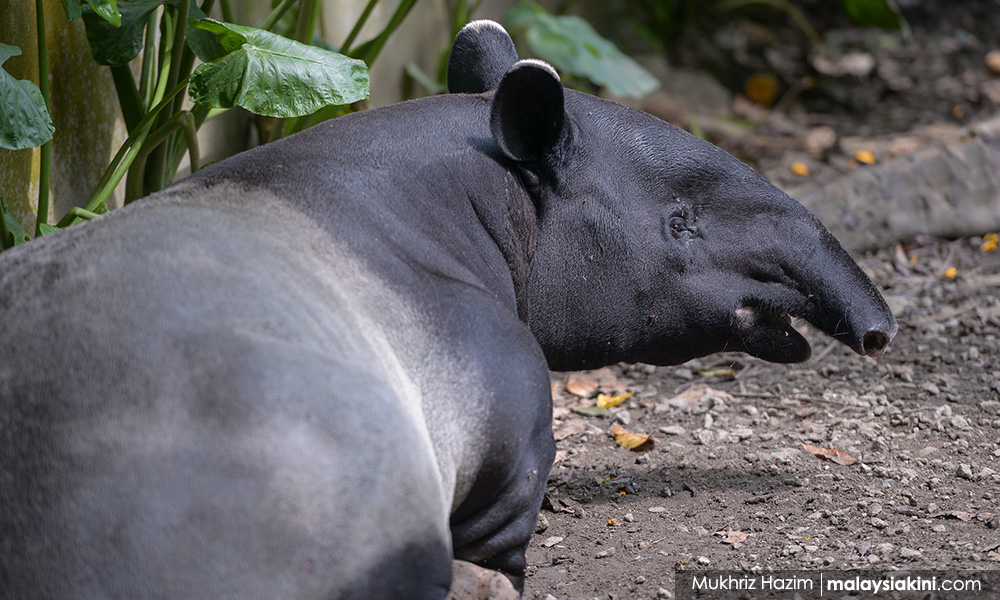
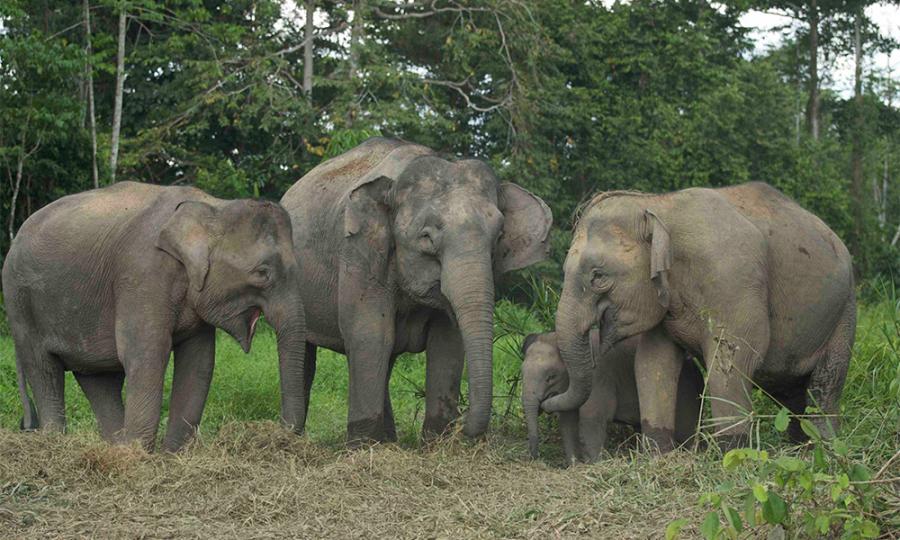
The project site, located in the middle of the
Som Forest Reserve, is a known roaming habitat for several protected
wildlife, such as the Asian Tapir, Asian Elephant, Malayan Sun Bear, and
the critically endangered Malayan Tiger.
According to
the EIA report, the project will "significantly, permanently, and
irreversibly impact" wildlife habitats. This is despite reclamation and
rehabilitation of the area after mining activities are completed.
Mining lease owned by Pahang royalty
The
EIA report states that the mining lease for Lot 15523 was owned by
Tengku Nong Fatimah Sultan Ahmad Shah, who is the younger sister of Yang
di-Pertuan Agong and Pahang ruler Sultan Abdullah Sultan Ahmad Shah.
Golden Prosperous Resources was appointed by Tengku Nong Fatimah through Sutera Manja Sdn Bhd.
Data
from the Companies Commission of Malaysia (CCM) shows that Tengku Nong
Fatimah is the largest shareholder of Sutera Manja. She holds a 70
percent stake.
Meanwhile, three other shareholders hold 10 percent of shares each. The three are all members of Pahang royalty.
As for Golden Prosperous Resources, CCM data shows it was registered in 2014 as a "bauxite mining and trading" company.
After
Indonesia stopped exporting bauxite in 2014, the bauxite mining
industry in Malaysia has grown substantially, filling the gap in the
market.
Previous bauxite mining activity in Kuantan, Pahang became rampant and subsequently raised concerns of air and water pollution.
In
2016, the federal government stepped in and banned the mining and
export of bauxite. The ban was lifted in 2019 after stricter standard
operating procedures were set by the federal government.
When
contacted, Golden Prosperous Resources said that issues regarding
wildlife conservation and protection have been stated clearly by their
professional consultant in the EIA report.
“The EIA report is
carefully displayed and sent to the Department of Environment for
approval. The implementation of this mining operation will be monitored
by the government from time to time,” the company said in a short reply.
Mining lease will expire this July
It is worth noting that the mining lease held by Tengku Nong Fatimah is only valid for two years.
An attached document in the EIA shows the lease was approved on July 25, 2019, and is expected to expire on July 24, 2021.
However,
according to the project implementation timeline, site clearing will
begin in August 2021 before starting mining operations. Post-remediation
was scheduled to end in June 2023.
In other words, although the
existing mining license will expire in July this year, the iron ore
mining plan will only start a month later in August.
For the
record, lands and mining fall under the jurisdiction of the state
government, so mining leases are approved by the Pahang state
government.
Forest reserve degazetted
The
60.75ha project site was part of the Som Forest Reserve, which is also
part of the Central Forest Spine categorised as an "environmentally
sensitive area" in the National Physical Plan.
Despite this, the
Pahang state government on June 18, 2019, excised the project land from
the Som Forest Reserve through a gazette. The proposed site is now a
piece of "state land" and no longer a forest reserve.
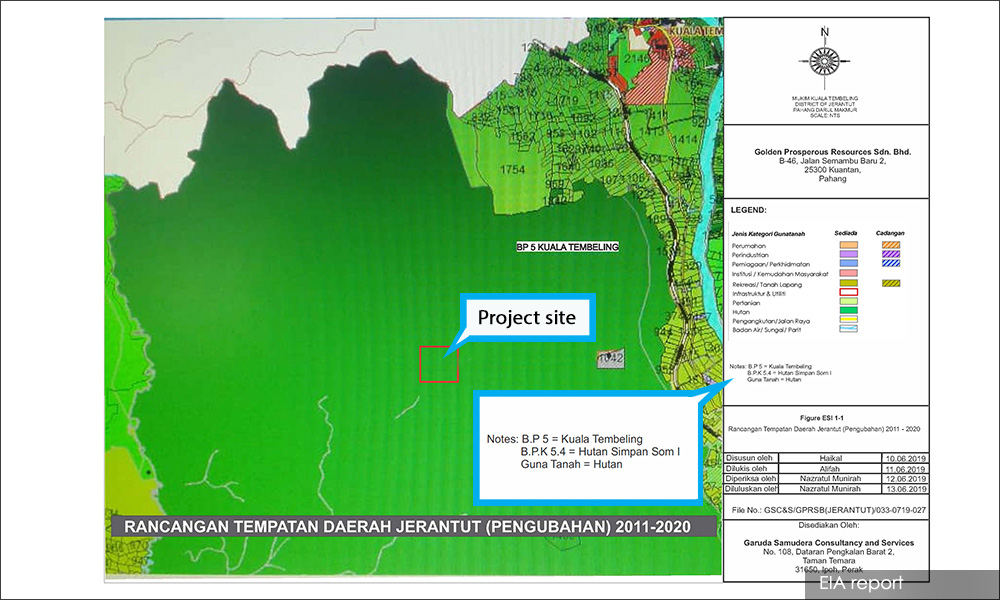
Current land use of project site is 'forest' in Jerantut District Local Plan.
However,
the current land use has yet to be amended in the gazetted Jerantut
District Local Plan 2011-2020. According to the EIA report, the current
local plan states that the land use of the project site is still listed
as "forest".
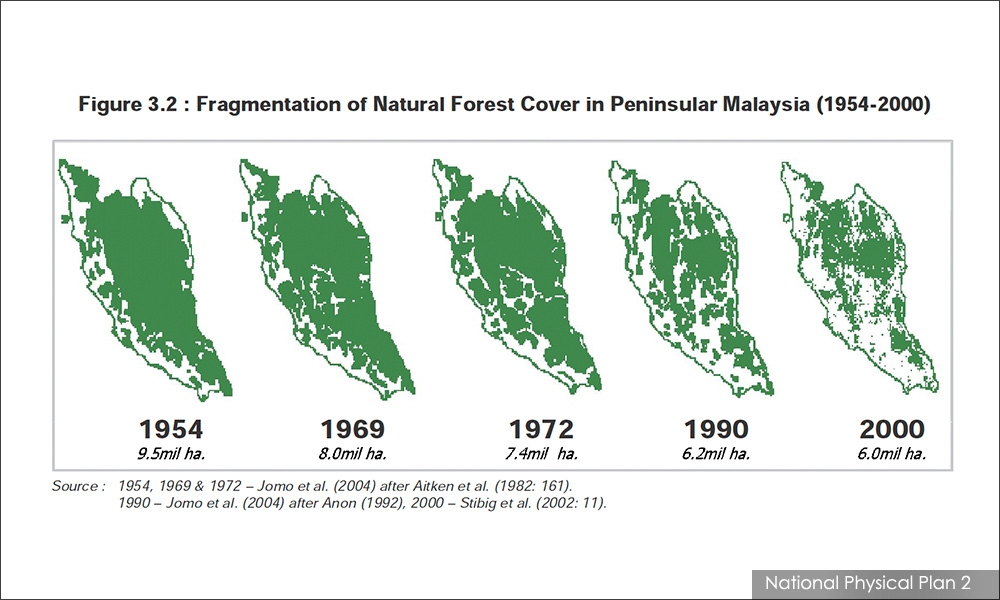
Natural forest cover in Peninsular
Malaysia has been gradually reduced and it has been getting worse over
the past few decades as shown in the graph below extracted from the
National Physical Plan 2.
Reduce and fragmentation of forest cover in Peninsular Malaysia over the past decades.
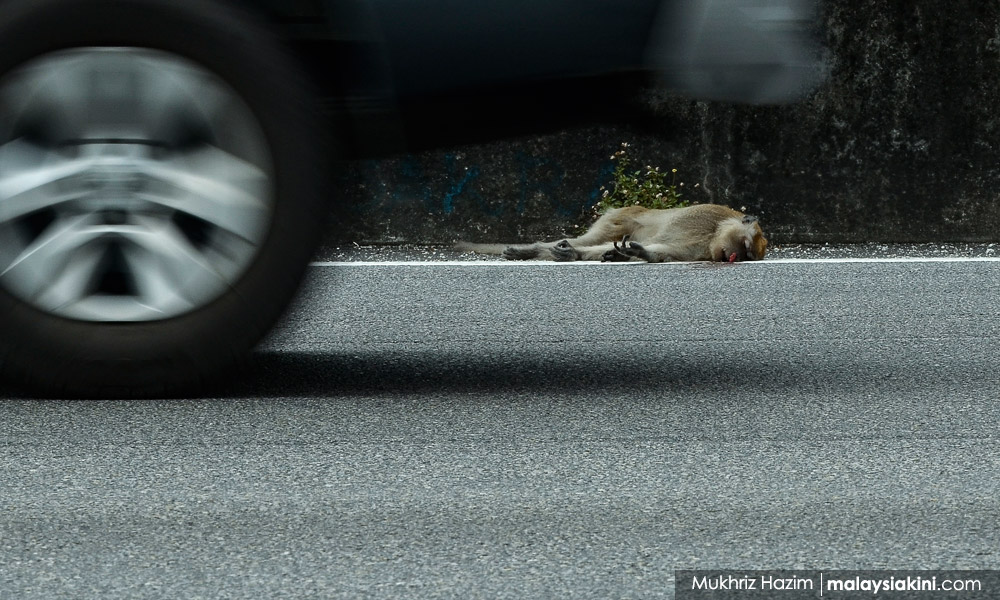
As
forests are developed into roads, plantations, or other projects, the
natural habitats of wildlife are cut into fragments. This leads to more
conflict between wild animals and humans.
For example, tigers and
elephants may go into plantations or human residential areas. Tapirs,
apes, monkeys, and other wildlife may be killed by motor vehicles when
their homes are crisscrossed with roads.
The
EIA report highlighted that land clearing for mining activities may
cause direct and indirect impacts on wildlife due to the "total loss" of
habitat.
"For large and medium-sized wildlife, they are forced to
flee to other available habitats or nearby forest areas for feeding and
shelter. For small mammals, their feeding areas will be permanently
lost.
"For the mining project, since most of the proposed work
areas and mining areas are the existing forest areas in the Som Forest
Reserve, the impacts would be significant," read the report.
In
the Wildlife Conservation Act 2010, endangered and protected wild
animals are categorised into two protection levels - totally protected
and protected.
The EIA for the mining project included surveying and recording the existing environment situation.
The
research team listed protected species in accordance with the Wildlife
Conservation Act 2010, as well as the Red Lists of Endangered Animals
for Peninsular Malaysia and also the International Union for
Conservation of Nature (IUCN) Red List of Threatened Species.
The survey recorded 15 totally protected and 11 protected mammals in the area.
The
15 totally protected mammals are the Asian Tapir, Malayan Sun Bear,
Malayan Tiger, Leopard, Leopard Cat, Asian Elephant, Common Treeshrew,
White-handed Gibbon, Black Giant Squirrel, Cream-coloured Giant
Squirrel, Prevost's Squirrel, Large Indian Civet, Short-tailed Mongoose,
Clouded Leopard, and Sambar Deer.
The report stated that the most important species
that needed detailed attention are the elephant and tapir. It is because
they were found frequently roaming in the area.
"Based on dung
distribution - regardless of individuals and age of dung - and mostly
footprints for tapir that was documented during our field surveys, it
can be concluded that elephants and tapirs are common within the
proposed project area."
As for birds, 117 totally protected birds
and 13 protected birds were found. For plants, no endangered species in
the local or international Red List have been found.
Wildlife-human conflict expected
Over
90 percent or 55.14ha out of the 60.75ha project site will be cleared
while the remaining 5.61ha will be left untouched as a buffer area.
The survey stated that feeding signs of elephants were found nearby.
"It
is likely due to the fact that the areas in the western part of the
proposed project have already been converted into plantations, such as
oil palm and banana.
"Further opening and clearing of the forest are predicted to
force this protected species to further move out of range and some
individuals might be displaced towards neighbouring plantation and
residential areas.
"This is a typical case of elephant-human conflict that should be avoided," read the report.
Malayan tiger
The
report emphasised that Som Forest Reserve was reported to be the
roaming habitat for IUCN-listed critically endangered species of Malayan
Tiger and several large and important mammals such as elephants,
tapirs, and sun bears as well as birds.
Essential salt lick nearby
A natural "salt lick" resource was also found by the survey team, which is located less than 500m south of the proposed site.
A
salt lick is where wildlife obtain necessary nutrients such as calcium,
magnesium, sodium, and zinc. This critical resource for animals in the
Som Forest Reserve could face a total loss of functionality if the
mining project is approved.
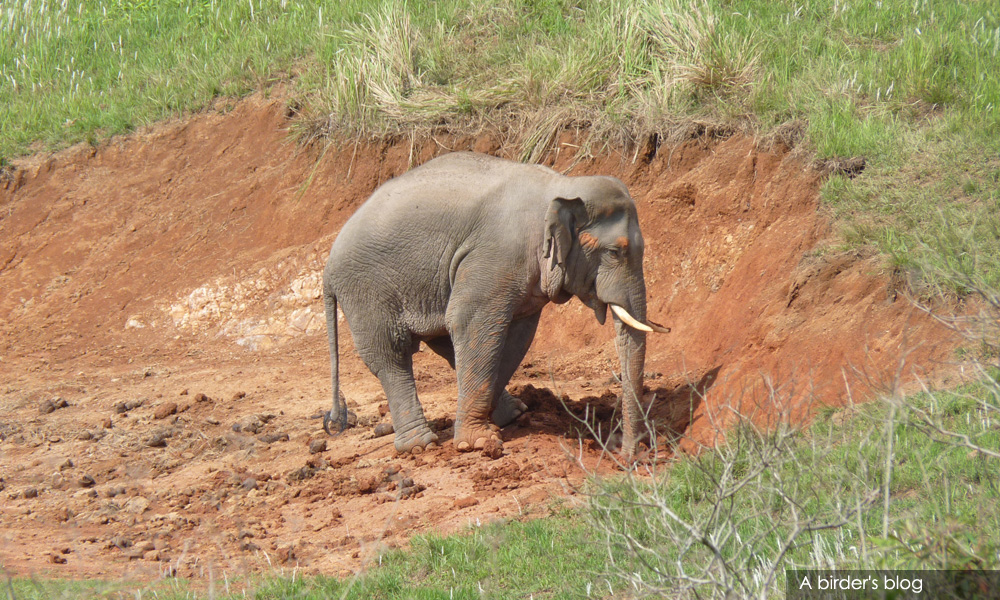
"From camera trapping studies, the salt lick is frequently visited by big herds of elephants, tapirs, and also sun bear."
Elephant at a salt lick
Salt
licks are places rich in essential minerals where animals regularly
visit to lick the soil or water to supplement their diet.
"The salt lick acts as a keystone resource for various important wildlife species in the Som Forest Reserve.
"Any
disturbance surrounding the areas will change the geological structure
of the area and further deteriorate the quality of the salt lick," read
the report.
'Loss of habitat will be permanent'
The
EIA reported was prepared by Garuda Samudera Consultancy And Services
Sdn Bhd, who was appointed by Golden Prosperous Resources.
In
addition to studying the impact on wildlife and forest environments, the
EIA also looked into other aspects such as the potential of air
pollution, sound pollution, as well as surface water and groundwater
pollution.
It proposed mitigation plans to reduce the possible environmental impacts.
However, for the loss of habitat and loss of species, the report said it is difficult to propose effective mitigation measures.
"Site
clearing and the creation of a mining area are two main activities. The
most important impact is the loss of habitat which cannot be mitigated
and the loss will be permanent.
"For loss of species, no proper
mitigation can be provided except to try to minimise the work areas and
ensure no movement of wildlife inside the work areas.
"The
presence of endangered wildlife species needs to be reported to the
Department of Wildlife and National Parks of Peninsular Malaysia
(Perhilitan) where proper action can be made."
Mitigating measures
As
one of the proposed mitigation methods, the EIA report suggested that a
Wildlife Management Plan (WMP) needs to be established and submitted to
Perhilitan for approval.
The WMP needs to provide detailed wildlife monitoring and addressing related issues.
It
also suggested that the project proponent needed to establish a
Wildlife Monitoring Team (WMT) with the supervision of Perhilitan in
order to manage all situations involving wildlife, including wildlife
conflicts.
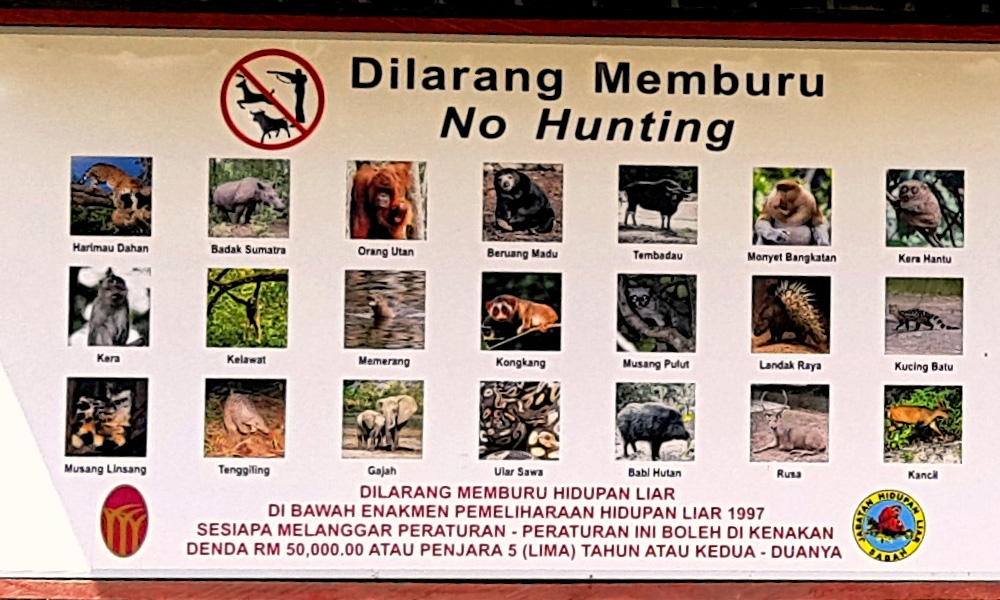
Sign warning against hunting.
The report also stressed that contractors, workers, and villagers must be prohibited from illegal wildlife hunting and poaching.
Instead,
they should be educated in periodic briefing sessions about wildlife
conservation, laws prohibiting poaching, and punishments for disobeying
the law.
Site clearing in phases to reduce harm
The report also proposed some wildlife-human conflict management strategies.
"Conflict between wildlife and humans can be mitigated differently by either guiding them back to the wild or translocation.
"Translocation is the last option and applies only to conflicts with wildlife that cannot be mitigated at the conflict area.
"Early assessment is very important because mitigating by wildlife translocation is very expensive."
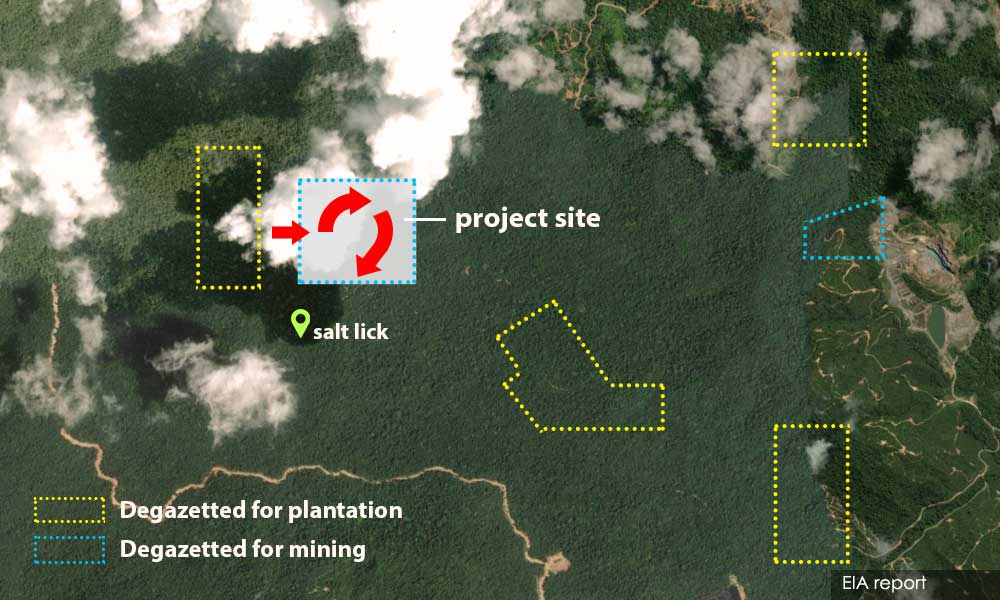
Proposed clearing starts from west to middle, then in a clockwise direction to allow wildlife to move to adjacent forests.
In
addition, it suggested that site clearing for building roads, logging,
mining, and setting up processing sites shall be done phase-by-phase,
and following specific directions to minimise the impact on wildlife.
"Starting
from the entry point on the west boundary, which is near to the forest
edge, moving along the middle of the proposed site and followed by
phases clearing towards the north, northeast, east, southeast, and south
of the project boundary.
"This will ensure big mammals,
especially elephants and tapirs, move gradually from the proposed site
and move outwards from the proposed site to the direction of intact
forest area.
"Gradually it will divert the movement of big mammals
from the normal routes to the newly established routes and would not
stop them from visiting the salt lick just about 500m south of the
project boundary."
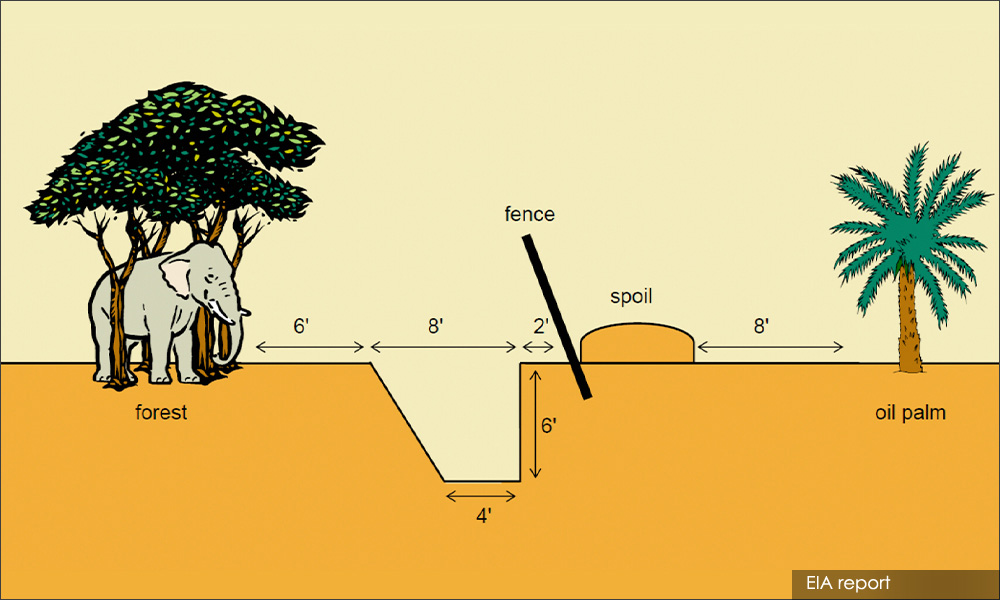
To avoid elephants stepping into the mining
areas or nearby plantations, the EIA report also suggested for the
project proponent and plantation owners to construct dry moats of at
least six feet (1.8m) deep, and electrified fences after detailed
discussions with Perhilitan.
"The
purpose of an electric fence is not so much as a physical barrier but
more as a psychological one but it is important to remember that a
determined elephant will usually get its way.
"The effectiveness
of an electric fence and trenches does not rely solely on its design,
construction, and voltage but has to be complemented with active
protection and maintenance. This would mean that WMT should be employed
to do maintenance works and to monitor wildlife movement at the mining
and working areas."
Control and mitigate soil erosion
Deforestation
and excavation activities may cause other environmental impacts such as
dust pollution, increased surface runoff, and soil erosion.
"The
land clearing and earthworks of the proposed project for the purpose of
mining may expose the large tract of bare soil to erosion.
"The
increase in sedimentation rate at the nearby river may not only reduce
river conveyance capacities but also may destroy the habitat for aquatic
lives.
"The reduction in conveyance capacities may result in the occurrences of flash floods," the report read.
According
to the report, the annual amount of sediment which will flow into the
river, in the worst case, will be 14,400 metric tons or 14.4 million kg.
It
proposed constructing some facilities to reduce this impact, such as
sediment pond and runoff management facilities to ensure water flowing
into the river meets certain standards.
No significant impact to water source
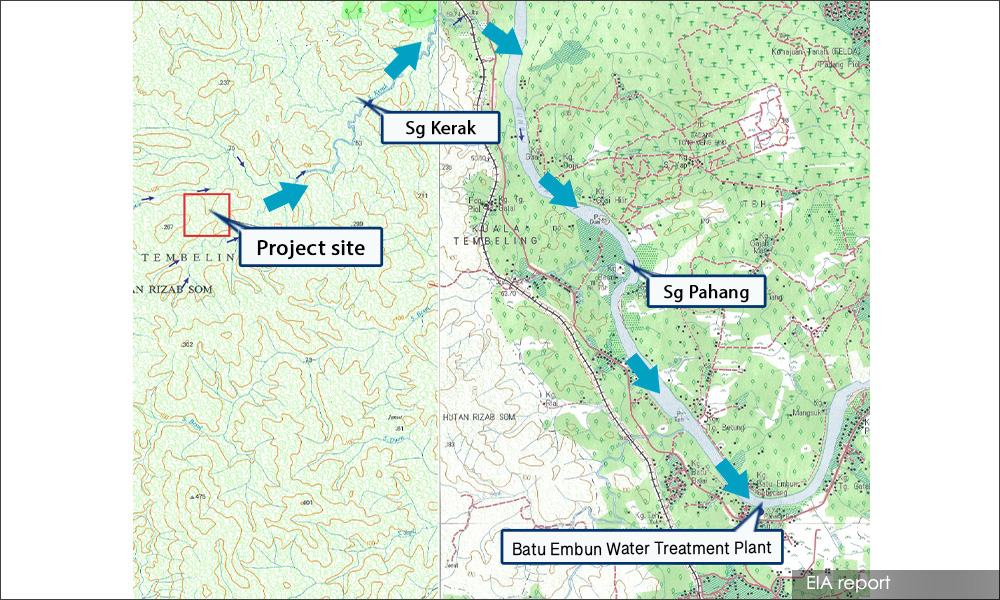
Generally,
surface water from the project site will flow into Sungai Kerak’s
tributaries. Sungai Kerak crosses 6km to the north and flows northward
into Sungai Pahang.
There is a water intake named Air Batu Embun Treatment Plant located downstream of Sungai Pahang.
Surface water from the project site will ultimately flow into Sg Pahang where there is a water treatment plant downstream.
The
EIA report claimed that no significant impact on water quality is
expected at the water treatment plant located 20km away as there are
mitigation plans in place.
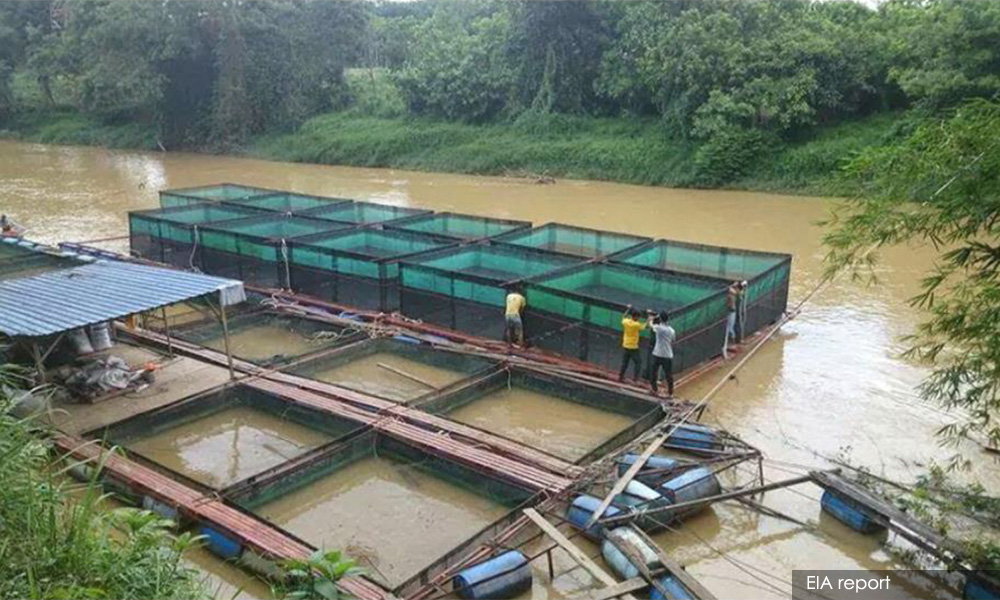
However, growing fish in cages is a
major contributor to the livelihoods of villagers especially at Kuala
Tembeling, as recorded in the report.
Patin and Tilapia are the
fish species that are most widely cultured in cages along Sungai
Tembeling, Sungai Jelai, and also Sungai Pahang.
Despite
this, the report did not go into further details as it concluded that
there is "no residential and aquaculture activity within the project
site or five-kilometre radius from the project site."
The public viewing
of the EIA report started from May 31 and will be open until June 29.
Members of the public are encouraged to give their feedback in this
period.
Critical linkages of Central Forest Spine
In
fact, the federal government in its 2005 National Physical Plan (NPP)
aimed to conserve and rehabilitate critical linkages of the Central
Forest Spine, which harbours the remaining population of Malayan tigers.
Several
plans were formulated to implement this vision, including the Central
Forest Spine Master Plan (CFSMP) and the National Tiger Conservation
Action Plan (NTCAP).
In 2014, the government endorsed the Improving Connectivity in the Central Forest Spine (IC-CFS) project in collaboration with the Global Environment Facility (GEF) and the United Nations Development Programme (UNDP).
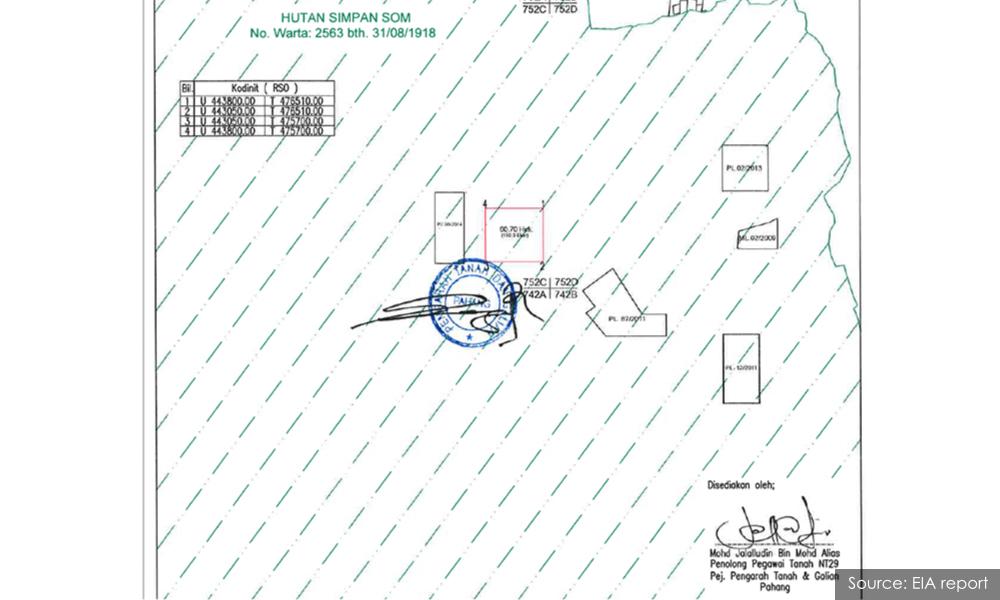
However,
a map from the Pahang Land and Mines Office attached in the EIA report
shows how the fragmentation of the Som Forest Reserve is continuing as
more land is being excised from it.
Map from Pahang Land and Mines Office showing parts of Som Forest Reserve being excised for plantations/mining.Source: Malaysiakini, 22/6/2021
This is how Tabung Haji lost RM10bn
-
Mr Money TV breaks down the massive Tabung Haji scandal following the
declassification of the report by the royal commission of inquiry. How did
a fund c...
BN-PN topple PH in Negeri Sembilan
-
The Negeri Sembilan state assembly has 36 seats. Actual results: BN 18
seats + PN 7 seats = 25 seats PH 11 seats Ilham Centre’s prediction: Ong
Kian Ming’s...
APA PADA NAMA
-
1. Sejarah Malaysia dikait rapat dengan UMNO, Parti Kebangsaan Melayu
Bersatu. Parti UMNO pula dikenali dengan pemimpinnya. 2. Demikian di
peringkat permul...
China and HK may be barred from Asia Team meet
-
PETALING JAYA: The status of next week’s Asia Team Champion-ships in
Manila, the Philippines, is in quandary as two badminton nations – China
and Hong Kong...
PRU14 - Keputusan TEMERLOH - Parlimen dan DUN
-
Keputusan di Temerloh, harus kita analisa
1- Parlimen dimenangi Pakatan Harapan, yang juga menang DUN Mentakab,
tetapi BN menang DUN Lancang dan DUN Kuala ...
Thank you, Malaysians
-
Before the lights go out on The Malaysian Insider at midnight, we say
"Thank You" to our readers. TMI started on February 25, 2008. Today, after
eight year...
I believe in the freedom of expression - and everyone is free to use, reproduce, quote, copy and circulate, etc... materials published here. Please credit the source: http://charleshector.blogspot.com/.
For those of you who do have Blogs/Websites, it would be good if you could add a link to CHARLES HECTOR Blog. Please do promote the BLOG.
Anonymous comments or those containing profanities and obscenities (or irrelevant matters) will be rejected. Note that all comments made in post are personal opinions.
Number of Visits
Over 4 million visits. On an average, we have about 700-750 visits per day.Thank you all for your support and encouragement..










 Posts
Posts