Monday, February 14, 2022

Halt the Executions of Pausi Jefridin and Roslan Bakar in Singapore(Malaysian Bar)


Press Release

Halt the Executions of Pausi Jefridin and Roslan Bakar in Singapore

The Malaysian Bar is saddened to learn about the impending executions of two men — Pausi Jefridin (“Pausi”), and Roslan Bakar (“Roslan”) — in Singapore on charges of drug trafficking.  Pausi is a Malaysian from Sabah, whilst Roslan is reported to be a Singaporean.1  Their executions are scheduled for 16 February 2022, and according to reports, the families of the two men were only informed of their scheduled executions on 9 February 2022.2

Both men are suffering from some form of intellectual disability.  It was reported that during their resentencing application, Pausi’s counsel submitted that his client has an IQ level of 67, and “had an arrested or retarded development of mind as a result of his exceptionally low and restricted education.”  Similarly, counsel for Roslan submitted that his client had “limited capacity for judgment, decision-making, consequential thinking, impulse control and executive function.”3

Due to their cognitive limitations, these individuals are often subjected to stigma and discrimination associated with their disabilities.  In this case, Pausi and Roslan’s intellectual conditions may have contributed toward their poor assessment of the very serious risks in agreeing to carry out the acts which were the basis of their criminal charges.

Furthermore, the execution of a mentally impaired person is prohibited under the United Nations’ Convention on the Rights of Persons with Disabilities (“CRPD”), which both Malaysia and Singapore have signed.  We take cognisance of Singapore’s strict policy with regard to drug trafficking; however, we sincerely hope that Singapore will uphold its commitment that it has made under the CRPD.

The Malaysian Bar therefore humbly calls upon the Government of Singapore to consider granting clemency to both Pausi and Roslan.  While we understand and respect the Singapore judicial process, we are hoping that clemency can still be afforded to them.  The death penalty is an irreversible act of punishment, and we ask that the Government of Singapore consider the cognitive impairments of Pausi and Roslan, and whether carrying out the death sentence is justified.  The circumstances call for humanity and compassion.


A G KALIDAS
President
Malaysian Bar

14 February 2022


1Singapore set to hang another Malaysian diagnosed with low IQ”, Malaysia Now, 12 February 2022. 
2Singapore set to execute 2 men on 16 February 2022”, The Independent Singapore, 13 February 2022.
3 Roslan bin Bakar v Public Prosecutor and another matter [2017] SGHC 291.


The case refered in the Bar Statement, I have laid out below


In the high court of the of singapore [2017] SGHC 291
 
Criminal Motion No 40 of 2016
Between
Roslan Bin Bakar… Applicant
And
Public Prosecutor… Respondent
 
A N D
 
Criminal Motion No 45 of 2016
Between
Pausi Bin Jefridin… Applicant
And
Public Prosecutor… Respondent
 
judgment
[Criminal Law] — [Statutory offences] — [Misuse of Drugs Act] — [Discretion of court not to impose sentence of death when offender was suffering from an abnormality of mind]
[Criminal Procedure and Sentencing] — [Sentencing] — [Mentally disordered offenders]


This judgment is subject to final editorial corrections approved by the court and/or redaction pursuant to the publisher’s duty in compliance with the law, for publication in LawNet and/or the Singapore Law Reports.
 
Roslan bin Bakar

v

Public Prosecutor and another matter
[2017] SGHC 291
 
High Court — Criminal Motion Nos 40 and 45 of 2016

Choo Han Teck J

12, 14–15, 20 September 2017
13 November 2017 Judgment reserved.
 
Choo Han Teck J:
 
1 Both applicants applied to this court to consider whether the death sentence meted out to them on 22 April 2010 ought to be substituted with a sentence of life imprisonment, under s 27(6) of the Misuse of Drugs (Amendment) Act 2012 (Act 30 of 2012).
 
2 The grounds for the applications of both applicants were similarly based on s 33B(3)(b) read with s 33B(3) of the Misuse of Drugs Act (Cap 185, 2008 Rev Ed) (“MDA”). Both applicants claimed to be suffering from an abnormality of mind, as defined in this provision, which substantially impaired his mental responsibility for his acts and omissions. In order to escape the death sentence under s 33B, both applicants also had to prove that they were couriers only. The prosecution did not dispute that Pausi was a courier but denied that Roslan was one.
 
3 Counsel for the applicant in Criminal Motion No. 45 of 2016 (“Pausi”), Mr Chung Ting Fai, submitted that his client had an arrested or retarded development of mind as a result of his exceptionally low and restricted education. He further submitted that Pausi does not possess the average reasoning abilities to think through his actions and consequences thoroughly. Pausi’s expert, Mr Danny Ng, assessed Pausi’s IQ to be at 67, which would be a mild intellectual disability. According to Mr Chung, the low intelligence of Pausi made him “incapable of resisting any internal rationality that might have dissuaded him from committing the offence”. 
 
4 Counsel for the applicant in Criminal Motion No. 40 of 2016 (“Roslan”), Mr Kertar Singh, submitted that his client was a courier and denied that he gave instructions to another to retrieve and deliver the drugs. Mr Singh argued that his client suffered from an abnormality of mind as he had reduced intellectual functioning. He also relied on the experts’ opinion that his client had “limited capacity for judgment, decision-making, consequential thinking, impulse control and executive function” due to the underlying cognitive defects. The learned DPP, Ms Christina Koh challenged these findings on various grounds, such as the language used by the defence experts in conducting the psychiatric assessments as well as the limitations of the prison setting under which they were conducted. She argued that Roslan was within the borderline range of intellectual functioning, relying on the testimony of IMH psychiatrists, which she submitted was more accurate. 
 
5 Counsel for prosecution and the applicants could not agree as to how the IQ levels of the two applicants ought to be interpreted. Ms Koh maintained that the IQ score alone, is not conclusive because it only assesses cognitive abilities but not one’s adaptive functioning abilities. 
 
6 I am of the view that the IQ level of both applicants in this case does not assist them. In some cases, the IQ level may offer corroborative support, but here, the conduct of both applicants were amply shown through the evidence at trial including their own testimonies, that they were functioning in ways no different from people with higher IQ level in relation to the drug offences. Significantly, Roslan was the central figure in the drug transaction. He directed the actions of the others involved and orchestrated its moving parts. Pausi was able to deliver the drugs from outside Singapore and participated in the operation with little difficulty. That conduct and behaviour, cannot be regarded as that of affecting their culpability. A low IQ level alone is not evidence of an abnormality of mind.
 
7 I find on the evidence at trial that Pausi was probably acting only as a courier but I am satisfied that Roslan was not. This finding is for completeness in dealing with their applications before me. It does not affect the verdict because neither applicant succeeded in proving the second criterion of s 33B(3) of the MDA.
 
8 For the purposes of s 33B(3), the court cannot ignore the functionality of the mind of an accused person in question. In this case, I find that despite a low score, both applicants had displayed competence and comprehension of what they were doing when they carried out their act of trafficking in the drugs.
 
9 Their applications for re-sentencing are therefore dismissed.
 
- Sgd -

Choo Han Teck

Judge
Christina Koh, Chan Yi Cheng and Samuel Yap (Attorney-General’s Chambers) for prosecution

Kertar Singh s/o Guljar Singh (Kertar and Sadhu LLC) for applicant in Criminal Motion No 40 of 2016

Chung Ting Fai (Chung Ting Fai & Co) for applicant in Criminal Motion No 45 of 2016
 
My Comments:- 
 
# Sadly, the focus in this case seems to be the state of the mind during the commission of the offence, and during trial > it did not look at the state of the mind NOW during the serving of the sentence on death row - on just before he is hanged to death. If a person serving his/her sentence or about to be executed - does not understand anymore the reason why he is serving a sentence or about to be hung, this state of mind brought about by mental condition or intellectual disability is very important.
 
## The failure of the prosecution to establish  whether the accused person is of unsound mind and consequently incapable of making his defence or even be charged is an issue. The duty, in my opinion is on the Court and the prosecution. The determination of the capacity of one to be charged and tried is determined by a Medical Certificate by a medical professional - it not to be determined by a subjective view of prosecutor or judge. Should this be a mandatory requirement for all criminal trials. 

## For a crime, what is important is also 'mens rea' - A mens rea​ refers to the state of mind statutorily required in order to convict a particular defendant of a particular crime. Was this established - some legal presumptions removes the obligation of the prosecution to prove this. So, should such legal presumptions be abolished? 
 
## After conviction, when one is serving the sentence - again here mental or intellectual disability. When discovered, that person would be send to the relevant medical institution for treatment - it is foolish to keep in prison or even execute anyone, who know longer knows that he committed a crime, or that he is being sentenced for a crime.
 
###However, in the case above, these issues were not raised or considered by courts according to my reading of the judgment. Some lawyers may have raised this issue, some will fail to raise these relevant questions...
 
#### Prison and more so death row can bring about mental illness - how do we deal with it? Ignoring it is not an option. 


21(now 25) Groups - State and public officers’ use of SLAPP and other harassment against Women Human Rights Defenders in Malaysia Condemned ### Shariffa Sabrina and Lalitha Kunaratnam, Women HRDs, must be recognized and protected


Media Statement - 14/2/2022 - now 25 Groups

State and public officers’ use of SLAPP and other harassment against Women Human Rights Defenders in Malaysia Condemned

Shariffa Sabrina and Lalitha Kunaratnam, Women HRDs, must be recognized and protected

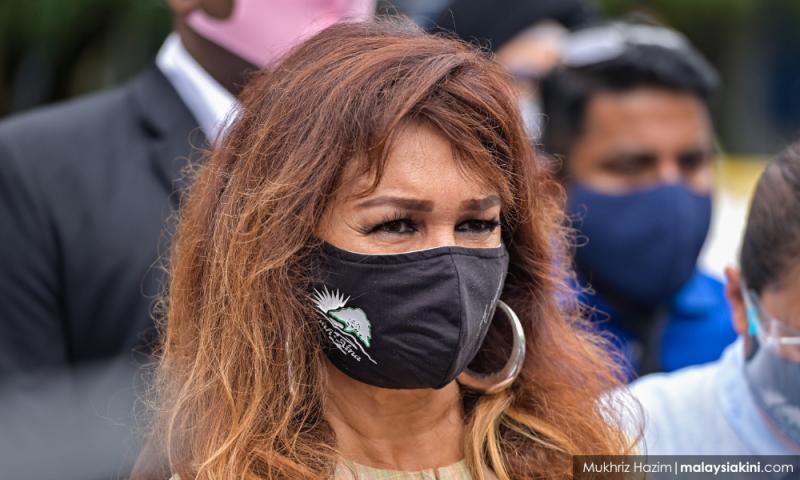
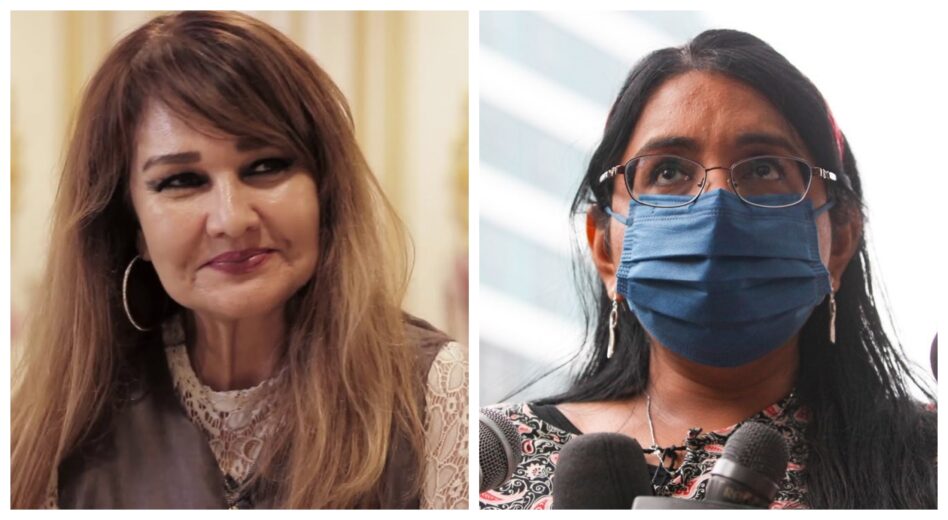
We, the undersigned 21 groups, organizations and trade unions are appalled by the harassment of environmental women human rights defender by the Pahang State government. The Pahang government has been reported issuing a letter of demand, seeking an apology and RM1 million in damages from activist Shariffa Sabrina Syed Akil for allegedly making slanderous statements on logging activities in the state. (Malaysian Insight, Malaysiakini, FMT 10/2/2022)

Shariffa Sabrina, the president of the environmental group, Pertubuhan Pelindung Khazanah Alam Malaysia[Malaysian Natural Resources Protection Organization](PEKA), who spoke about logging activities, environment impact assessment(ISA) and the protection of the forest received a legal notice that claimed that her statements had subjected the state government to public criticism and damaged its reputation. Shariffa Sabrina was asked to issue an unconditional apology to the state government through all sharing platforms, including Facebook and Instagram. It also said should she fail to heed the notice within 14 days of receiving the letter, the state government would file a claim with the courts without referring to her as well as seek other damages.

Governments, including State governments and their Ministries, agencies and officers, more so in a democratic state should never threaten or commence legal suits against people who raise or highlight objections and/or concerns about issues of human rights, justice and/or the environment. If the stated statements/views are incorrect, then a democratic State must simply do the needful to clarify the misunderstanding by the presentation of material facts, that sometimes may only be easily accessible to State

SLAPPs (Strategic Lawsuits Against Public Participation)

SLAPPs (Strategic Lawsuits Against Public Participation) are usually used by corporations and other alleged human rights violators to silence and harass critics by forcing them to spend money to defend unnecessary legal suits.  Many a time, SLAPPS are intended to intimidate those who disagree with them or their activities by draining the target’s financial resources.

SLAPPs are effective because even a meritless lawsuit can take years and many thousands of dollars to defend.  To end or prevent being victimized by prolonged SLAPP actions, many a HR Defender and even media are frequently forced to ‘apologize’ or ‘settle’ despite doing no wrong.

Hence, the recent threat of a democratic State government, and the earlier action of a public officer to use SLAPPs against Human Rights Defenders in Malaysia is most disheartening and must end.

Lalitha Kunaratnam, a  journalist and HR Defender

On 12/1/2022, Lalitha Kunaratnam, a journalist and HR Defender, was sued in the High Court by one Azam Baki, the current chief of the Malaysian Anti-Corruption Commission (MACC) who is seeking 10 million ringgits (2.1 million euros) in damages for a two-part investigative story, entitled ‘Business Ties Among MACC Leadership: How Deep Does It Go? (Part 1 & 2), authored by Lalitha and published in October by the Independent News Service, in which she allegedly exposed possible conflicts of interest and wrongdoings of anti-corruption officers within the Malaysian Anti-Corruption Commission(MACC).

Recently, on 3/2/2022, Lalitha Kunaratnam was called to Bukit Aman, the Royal Malaysia Police headquarters, for questioning as the police investigate a violation of the draconian Section 233 of the Communication and Multimedia Act 1998 and Section 505 of the Penal Code. The police report that led to the commencement of the police investigation was allegedly lodged by a MACC's senior assistant commissioner on Jan 7, and this raises the question whether this is part of the retaliation carried out on instruction of the MACC and/or its chief.

Both Shariffa Sabrina and Lalitha Kunaratnam are Human Rights Defenders, as now also recognized by the 1998 United Nations General Assembly Declaration on the Right and Responsibility of Individuals, Groups and Organs of Society to Promote and Protect Universally Recognized Human Rights and Fundamental Freedoms( also commonly known as the ‘Declaration on human rights defenders’).

Malaysia is also bound to protect human rights defenders, as ‘The State shall take all necessary measures to ensure the protection by the competent authorities of everyone, individually and in association with others, against any violence, threats, retaliation, de facto or dejure adverse discrimination, pressure or any other arbitrary action as a consequence of his or her legitimate exercise of the rights referred to in the present Declaration.(Article 12(2))

What the Pahang State Government is doing is certainly a retaliation against the Human Rights Defender Shariffa Sabrina, and being a State in Malaysia, it is in violation of its duties to, amongst others, to protect Human Rights Defenders. 

Lalitha Kunaratnam can also be said is suffering retaliation from the State, that is through a Federal government’s public officer, together with other public officers, and maybe even the Malaysian Anti-Corruption Commission (MACC). As such, the Malaysian government ought to speedily act to end this harassment of a human rights defender, who is also a ‘whistle blower’ who has highlighted important issues noting that the ‘problems’ of the MACC is still an active issue today.

Hence, we call  

-         For Malaysia to do the needful to immediately end the harassment against women human rights Defenders Shariffa Sabrina and Lalitha Kunaratnam, one by a State government, and the other by a public officer and the Malaysian Anti-Corruption Commission (MACC);

-         For Malaysia to abolish the usage of SLAPPs (Strategic Lawsuits Against Public Participation) against Human Rights Defenders, which also must include the Media;

-         For Malaysia to respect and protect all HR Defenders, and also the freedom of public participation, freedom of expression/opinion and also the freedom of peaceful assembly; and

-         Call on the government to enact needed laws that will prevent State and/or its public officers from retaliating ever again against human rights defenders and/or whistle blowers.

Charles Hector

For and on behalf of the following 21 groups


ALIRAN

All Women's Action Society (AWAM)

MADPET(Malaysians Against Death Penalty and Torture)

Black Women for Wages For Housework

Centre for Orang Asli Concerns (COAC)

Citizens Against Enforced Disappearances, CAGED

Consumers' Association of Penang (CAP)

Haiti Action Committee

KRYSS Network

Network of Action for Migrants in Malaysia(NAMM)

North South Initiative

Payday Men’s Network (UK/US)

Sahabat Alam Malaysia/Friends of Earth Malaysia(SAM)

Sarawak Dayak Iban Association(SADIA)

Saya Anak Bangsa Malaysia (SABM)

Teoh Beng Hock Trust for Democracy

The William Gomes Podcast, United Kingdom

Womens Criminal Justice Network

WH4C (Workers Hub For Change)

Women of Color/Global Women’s Strike

Workers Assistance Center, Inc., Philippines


Additional groups endorsing are:-

Persatuan Komuniti Prihatin Selangor dan Kuala Lumpur

SUARAM

Greenpeace Malaysia

Japan Innocence and Death Penalty Information Center


The statement has been carried by the media, to date in Malaysiakini and Focus Malaysia


From Our Readers
LETTER | Harassment against human rights defenders condemned
Aliran &et al

Published:  Feb 14, 2022 7:49 AM
Updated: 7:49 AM

LETTER | We, the undersigned 21 groups, organisations and trade unions are appalled by the harassment of an environmentalist by the Pahang state government.

The Pahang government has been reported issuing a letter of demand, seeking an apology and RM1 million in damages from activist Shariffa Sabrina Syed Akil for allegedly making slanderous statements on logging activities in the state.

Shariffa Sabrina, the president of the environmental group Malaysian Natural Resources Protection Organisation (PEKA), who spoke about logging activities, environment impact assessment (ISA) and the protection of the forest received a legal notice that claimed that her statements had subjected the state government to public criticism and damaged its reputation.

Shariffa Sabrina was asked to issue an unconditional apology to the state government through all sharing platforms, including Facebook and Instagram. It also said should she fail to heed the notice within 14 days of receiving the letter, the state government would file a claim with the courts without referring to her as well as seek other damages.

Governments, including state governments and their ministries, agencies and officers, more so in a democratic state should never threaten or commence legal suits against people who raise or highlight objections and/or concerns about issues of human rights, justice and/or the environment.

If the stated statements/views are incorrect, then a democratic state must simply do the needful to clarify the misunderstanding by the presentation of material facts, which sometimes may only be easily accessible to the state.

SLAPPs (Strategic Lawsuits Against Public Participation)

SLAPPs are usually used by corporations and other alleged human rights violators to silence and harass critics by forcing them to spend money to defend unnecessary legal suits. Many a time, SLAPPS are intended to intimidate those who disagree with them or their activities by draining the target’s financial resources.

SLAPPs are effective because even a meritless lawsuit can take years and many thousands of dollars to defend. To end or prevent being victimised by prolonged SLAPP actions, many human rights activists and even media are frequently forced to ‘apologise’ or ‘settle’ despite doing no wrong.

Hence, the recent threat of a democratic state government, and the earlier action of a public officer to use SLAPPs against Human Rights Defenders in Malaysia is most disheartening and must end.

Whistleblower Lalitha Kunaratnam

Lalitha Kunaratnam, a journalist and human rights defender

On Jan 12, Lalitha Kunaratnam, a journalist and a human rights defender, was sued in the High Court by MACC chief commissioner Azam Baki, who is seeking RM10 million in damages for a two-part investigative story, entitled ‘Business Ties Among MACC Leadership: How Deep Does It Go? (Part 1 & 2), authored by Lalitha and published in October by the Independent News Service, in which she allegedly exposed possible conflicts of interest and wrongdoings of anti-corruption officers within the MACC.

Recently, on Feb 3, Lalitha was called to Bukit Aman for questioning as the police investigate a violation of the draconian Section 233 of the Communication and Multimedia Act 1998 and Section 505 of the Penal Code.

The police report that led to the commencement of the police investigation was allegedly lodged by a MACC's senior assistant commissioner on Jan 7, and this raises the question of whether this is part of the retaliation carried out on the instruction of the MACC and/or its chief.

Both Shariffa Sabrina and Lalitha are human rights defenders, as now also recognised by the 1998 United Nations General Assembly Declaration on the Right and Responsibility of Individuals, Groups and Organs of Society to Promote and Protect Universally Recognised Human Rights and Fundamental Freedoms (also commonly known as the ‘Declaration on human rights defenders’).

Malaysia is also bound to protect human rights defenders, as ‘The State shall take all necessary measures to ensure the protection by the competent authorities of everyone, individually and in association with others, against any violence, threats, retaliation, de facto or dejure adverse discrimination, pressure or any other arbitrary action as a consequence of his or her legitimate exercise of the rights referred to in the present Declaration (Article 12(2)).

What the Pahang state government is doing is certainly a retaliation against Shariffa Sabrina, and being a state in Malaysia, it is in violation of its duties to, amongst others, protect human rights defenders.

Lalitha can also be said to be suffering retaliation from the state, that is through a federal government’s public officer, together with other public officers.

As such, the Malaysian government ought to speedily act to end this harassment against human rights defenders.

Hence, we call:

- for Malaysia to do the needful to immediately end the harassment against Shariffa Sabrina and Lalitha, one by a state government, and the other by a public officer and the MACC;

- for Malaysia to abolish the usage of SLAPPs against human rights defenders, which also must include the media;

- for Malaysia to respect and protect all human rights defenders, and also the freedom of public participation, freedom of expression/opinion and also the freedom of peaceful assembly; and

- call on the government to enact needed laws that will prevent the state and/or its public officers from retaliating ever again against human rights defenders and/or whistleblowers.

This statement is signed by:

Aliran

All Women's Action Society (Awam)

Madpet (Malaysians Against Death Penalty and Torture)

Black Women for Wages For Housework

Centre for Orang Asli Concerns (COAC)

Citizens Against Enforced Disappearances, CAGED

Consumers' Association of Penang (CAP)

Haiti Action Committee

KRYSS Network

Network of Action for Migrants in Malaysia (NAMM)

North South Initiative

Payday Men’s Network (UK/US)

Sahabat Alam Malaysia (SAM)

Sarawak Dayak Iban Association (Sadia)

Saya Anak Bangsa Malaysia (SABM)

Teoh Beng Hock Trust for Democracy

The William Gomes Podcast, United Kingdom

Womens Criminal Justice Network

WH4C (Workers Hub For Change)

Women of Color/Global Women’s Strike

Workers Assistance Center, Inc, Philippines


The views expressed here are those of the author/contributor and do not necessarily represent the views of Malaysiakini. - Malaysiakini, 14/2/2022

Use of SLAPP against women human rights defenders in M’sia condemned

SOME 21 groups, organisations and trade unions stood up against the use of strategic lawsuits against public participation (SLAPP) on two Malaysian activists, namely Malaysian Natural Resources Protection Organisation president Shariffa Sabrina Syed Akil and journalist Lalitha Kunaratnam.

Shariffa Sabrina who spoke about logging activities, environment impact assessment (EIA) and the protection of forests, recently received a legal notice which claimed that her statements had subjected the Pahang state government to public criticism and damage of its reputation.

As such, the Pahang state government has reportedly issued a letter of demand, seeking an apology and RM1 mil in damages from Shariffa Sabrina for allegedly making slanderous statements on logging activities in the state.

She was asked to issue an unconditional apology to the state government through all sharing platforms, including Facebook and Instagram. Should she fail to heed the notice within 14 days of receiving the letter, the state government would file a claim with the courts without referring to her as well as seek other damages.

“Governments, including state governments and their ministries, agencies and officers, more so in a democratic state, should never threaten or commence legal suits against people who raise or highlight objections and/or concerns about issues of human rights, justice and/or the environment,” the group of 21 pointed out in a joint statement.

“If the stated statements/views are incorrect, then a democratic state must simply take the necessary steps to clarify the misunderstanding by the presentation of material facts that sometimes may only be easily accessible to state governments.”

Meanwhile, Lalitha was sued by the Malaysian Anti-Corruption Commission (MACC) chief commissioner Tan Sri Azam Baki for RM10 mil for her two-part investigative story entitled “Business Ties among MACC Leadership: How Deep Does It Go?” which were published in October 2021 by the Independent News Service.

Both articles, which are still available online, allegedly exposed possible conflicts of interest and wrongdoings of anti-corruption officers within the graft buster agency.

Against such backdrop, the group of 21 makes the following call:

  • For Malaysia to do the needful to immediately end the harassment against women human rights defenders Shariffa Sabrina and Lalitha Kunaratnam, one by a state government, and the other by a public officer and the MACC;
  • For Malaysia to abolish the use of SLAPPs against human rights defenders which also includes the media;
  • For Malaysia to respect and protect all human rights defenders and also the freedom of public participation, freedom of expression/opinion and freedom of peaceful assembly; and
  • For the Government to enact needed laws that will prevent state and/or its public officers from retaliating ever again against human rights defenders and/or whistleblowers. – Feb 14, 2022, Focus Malaysia


Sunday, February 13, 2022

On flood prevention and mitigation - moratorium on logging?Karak, Bentong, PAHANG- 45 Group Statement


A huge pile of timber debris and other rubbish covered the village of Sungai Kerau (locally known as Sungai Sri Telemong) after the flash flood | Photo: Kampung Sri Telemong community members

This is a statement issued by the Global Environment Centre (GEC) with endorsements from local NGOs and communities

Forty-five NGOs (including Sahabat Alam Malaysia) and local communities are calling for the institution of an independent inquiry, and immediate action to identify and penalise parties responsible for the recent massive mudflows and log slides near Karak town in Bentong District in Pahang resulting in massive destruction last week. 

The mudflows and log slides which occurred between Dec 18 and 19, 2021, turned rivers, roads and villages into seas of mud and timber debris, has led to destruction and damage of hundreds of houses in several villages and the loss of almost 10 lives to date. 

The map shows the severely affected locations in the Bentong District during the December 2021 Flood Disaster such as Kampung Sungai Perdak, Kampung Sungai Sri Telemong, Karak Town and Bentong Town | Source: Google Earth

While we acknowledge the swift and immediate action to rescue and help victims of floods, mudflows and log slides over the past week and encourage ongoing action in the future, we, the 45 organisations listed below strongly believe that there is a dire need for a more holistic and cohesive approach towards flood prevention, mitigation and preparedness. 

Though climate change has been identified as one of the contributing factors, other possible factors that warrant thorough and immediate investigation and action include checking on possible weak systemic issues on existing infrastructural and support mechanisms facing the country. These include investigating extensive logging and clearance of forests at steep hills along the main range and completely inadequate erosion and sediment controls in these developments. It also must include looking into the possible lack of flood warning and also monitoring conducted over the time. 

Logs and timber debris from the land clearance activities at the hillsides were washed away and jammed under the bridges, blocking the rivers and forcing the water and mud to overflow into the surrounding areas to cause heavy destruction to Kampung Sungai Perdak | Credit: Kampung Sungai Perdak community members

Bentong District, located on western part of Pahang, bordering Selangor and Negeri Sembilan, comprises of steep forested hills rising to between 1,000 metres and 2,000 metres, is a water catchment of a number of important rivers in Western Pahang including the Telemong, Bentong and Semantan Rivers. These forests are also Environmentally Sensitive Areas (ESAs), important for biodiversity conservation and forming part of the Central Forest Spine (CFS) Conservation Zone. 

In recent years, large-scale logging and forest clearance activities for durian and forest plantations have been taking place in this region, with many cases these developments have been undertaken without Environmental Impact Assessment (EIA) and little or no environmental mitigation and control measures in place. Clearing has been undertaken 2 on steep slopes without erosion control measures and river buffer zones have been cleared completely and planted. Logging has also been undertaken in ESAs and also within communities, including the Orang Asli settlements. 

Local communities as well as environmental and social NGOs have been highlighting their strong concerns on these activities and the risks they pose to the rivers, water supplies, cultural and environmental features of the area. Since September 2020, several communities and NGOs have been protesting the logging and land clearing near Sg Gapoi and Sg Telemong to the south of Karak and highlighting the risk to water supply, safety and environmentally sensitive areas. 

When the heavy downpour occurred from Dec 17 to 19, there was relatively little intact forest remaining to slow the flow of the water, and instead massive amounts of soil, logs and forest debris were washed rapidly downstream leading to catastrophic impacts in Karak, Bentong and many surrounding villages and residential areas. In many cases, walls of mud, logs and forest debris swept down the valleys and devastated the communities. The muddy water rapidly rose so high that many houses submerged without warning and many were badly damaged as a result of the floating logs and other debris. Logs were also jammed under bridges, blocking the rivers and forcing the water and mud to overflow into the surrounding area causing further damage. 

At Kg Sri Telemong, a wall of water, mud and logs smashed over the main road and bridge and swept away a pick-up truck trying to carry 16 people to safety. Although 10 people managed to escape the raging waters with some injuries, five lost their lives and one remains missing. In Bentong, four people were killed when a wave of mud buried a resort in more than three metres of mud. In other villages like Kg Sg Perdak, massive logs eight metres long with a diameter of two metres demolished houses, cars and electric poles like they were toys. In addition to the severe destruction, hundreds or thousands of houses were damaged and locals lost their belongings and necessities such as water, electricity, and so on. One week later, roads and rivers are still blocked, people are still missing and many of those remaining have yet to receive adequate assistance and are still in major distress. 

The nearby Karak Highway was blocked in three places by floodwater, mud and forest debris, cutting the main east west transportation artery for days. In one location two entire lanes were completely blocked with mud and timbers of more than one-metre high for the length of at least two kilometres. Further downstream, the entire Mentakab town was flooded with more than two metres of muddy water for several days. Overall, these floods and mudflows have cost hundreds of millions of ringgit in economic, social and environmental damage. Post flood and disaster recovery actions may take months and require sizable budget allocations. The impact of this incident is expected to linger for at least 10 years. 

Just across the hills to the west in Selangor State, the rain was just as heavy, and the slopes were just as steep, but there were no reports of mudflows or log debris, since Selangor designated the forests as the Selangor State Park and banned logging 10 years ago. The forests protected the slopes and soil, reduced the runoffs and prevented floods and damage in the East parts of the state although there were serious floods in the lowlands. 

We strongly believe that the main factors in the catastrophe in Bentong District was the widespread logging and clearing of land in hilly areas in the landscape and lack of proper erosion controls or flood warning measures and lack of monitoring and enforcement; combined with the heavy rainfall. 

With regard to the disaster in Bentong District, we urge for cohesive and coordinated efforts among the Malaysian Federal and State governments to: 

a) Establish an independent inquiry into the massive floods, mudflows and logslides and associated damage to property and loss of lives and livelihood in Bentong District to identify the root causes and recommend immediate and medium term actions to repair the damage and prevent any recurrence; 

b) Impose an immediate moratorium on any further approval for clearance of forests and sloping land in Bentong District as well as halt any ongoing logging or land clearing operations pending the outcome of the proposed inquiry; 

c) Undertake an immediate review of compliance with forestry, environmental and land management regulations by respective land owners and managers in Bentong District and take swift action to bring any party that has beached regulations to justice and provide appropriate compensation to impacted communities; 

d) Allocate budgets or establish a fund to support the post flood recovery plan, which includes rebuilding of the destroyed villages and properties, enhance the community welfare, including their physiology aspect and establishment of community-based rehabilitation of the forests and rivers of the region. We suggest the establishment of official community-based patrol teams as on-the-ground eyes and ears to monitor, report and share information. 

We further call for action at a national level to: 

a) Incorporate the experience and lessons learned into Malaysia’s forest, land and flood mitigation plans as well as the proposed Climate Change Adaptation Plan. 

b) Establish effective forest and river catchment conservation and restoration action plans or policies responses tailored at the Mukim, District and State levels and new methods for monitoring and enforcement of forest and catchment protection. 

c) Start a catchment protection, tree planting and river restoration programme that can contribute to reducing flood risks as part of a wider flood risk management approach, including conventional flood defenses 

d) Develop and implement Integrated River Basin Management (IRBM) for all river basins in the country avoid development in floodplains, lowland areas, river reserves, wetlands and peatland areas to act to retain excess water and reduce floods. This includes taking into account the impact on the community’s livelihood and identifying alternative livelihood options for them. 

e) Develop and establish integrated fast and effective monitoring, and information dissemination system to enhance and alert the public at the earliest possible on any disaster. 

f) Establish more cross-sectoral partnerships for mainstreaming disaster risk reduction into development planning, promoting risk-informed investment, and strengthening urban and rural resilience, as a result of climate-induced disaster in an ever changing environment. 

This statement is endorsed by the following: 

1. Alliance of River Three 

2. Angkatan Belia Islam Malaysia 

3. Belia di Bawah Bayu 

4. Caring Asian Women (CAW) 

5. Centre for independent journalism (CIJ) 

6. Centre for Orang Asli Concerns (COAC) 

7. CERAH – Anti Haze Action 

8. Environmental Protection Society Malaysia (EPSM) 

9. Five Arts Centre 

10. Friends of Bukit Kiara 

11. Friends of Klang River Basin 

12. Gabungan Darurat Iklim Malaysia (GDIMY) 

13. Global Environment Centre 

14. Global Water Partnership 

15. Greenpeace Malaysia 

16. Jaringan Ekologi dan Iklim (JEDI) 

17. Malaysian Nature Society (Pahang branch) 

18. Malaysian Nature Society (Selangor branch) 

19. North South Initiative 

20. Parti Sosialis Malaysia 

21. Pergerakan Tenaga Akademik Malaysia (GERAK) 

22. Persatuan Benih Hijau 

23. Pertubuhan Alam Sekitar Sejahtera Malaysia – GRASS 

24. Persatuan Kesedaran dan Keadilan Iklim Malaysia (Klima Action Malaysia – KAMY) 

25. Persatuan Sahabat Wanita Selangor 

26. Persatuan Tindakan Alam Sekitar Kuala Langat 

27. Pertubuhan Pelindung Khazanah Alam (PEKA) 

28. Pertubuhan Sahabat Gambut Asli Temuan (SGAT) 

29. Pertubuhan Sahabat Hutan Bakau Kampung Dato’ Hormat (SHBKDH) 

30. Pertubuhan Sahabat Hutan Bakau Kuala Gula (SHBKG) 

31. Pertubuhan Sahabat Hutan Bakau Pasir Panjang Laut (SHBPPL) 

32. Pertubuhan Sahabat Hutan Bakau Pulau Tanjung Surat (SHBPTS) 

33. Pertubuhan Sahabat Hutan Gambut Selangor Utara (SHGSU) 

34. Pusat KOMAS 

35. Rimba Disclosure Project 

36. Sahabat Alam Malaysia 

37. Society for Equality, Respect And Trust for All Sabah (SERATA) 

38. Suara Rakyat Malaysia (SUARAM) 

39. Sustainable Development Network Malaysia (SUSDEN Malaysia) 

40. Treat Every Environment Special Sdn Bhd (TrEES) 

41. UndiSabah 

42. Universiti Malaya Students’ Union 

43. Water Watch Penang 

44. Wetlands InternationalMalaysia 

45. WWF-Malaysia 

For more information, please contact Global Environment Centre (GEC): 

Technical matters: 

Dr Kalithasan Kailasam
Email: kalithasan@gec.org.my
Mobile: +6010-366 9772

Mr Nagarajan Rengasamy 
Email: nagarajan@gec.org.my 
Mobile: +6012-296 8438 

Media enquiries: 

Ms Linda Archibald 
Email: linda@gec.org.my 
Mobile: +6012-282 2192 

Ms Ummi Nur Asyiqeen 
Email: ummi@gec.org.my 
Mobile: +6013-509 9510 


Source: Sahabat Alam Malaysia Website


See related posts: 

Pahang government is seeking an apology and RM1 million in damages from Shariffa Sabrina, if not will SUE?

Logging firms apply to cite villagers, lawyer for contempt(Malaysiakini)