ON HUMAN RIGHTS, JUSTICE AND PEACE ISSUES, LABOUR RIGHTS, MIGRANT RIGHTS, FOR THE ABOLITION OF THE DEATH PENALTY, TOWARDS AN END OF TORTURE, POLICE ABUSES, DISCRIMINATION...
Will Anwar and his Pakatan Harapan-led 'unity' government finally care about workers?
In Malaysia, worker-employees are WEAKENED in the strength and ability to FIGHT for Better Rights and Working Conditions have been reduced - as the Malaysian government continues to allow non-employees of the workplace owner-employer to work in the workplace.
So, make sure that ALL workers are under a CONTACT OF SERVICE - making them all employees of the workplace they work in... employees of the owner-operator not some other 3rd party...
Workers UNITED will never be defeated - so, make all workers at the workplace EMPLOYEES of the one owner-operator, and under a CONTRACT OF SERVICE... Minister has the power to do this under Employment Act...See how them contract doctors fought and managed to win...
These non-employees at workplaces are:-
- 'Outsourced workers' - referred to employees of 3rd parties(like labour providers or 'contractor for labours') who are working at workplaces. They are NOT employees of the owner-operator, and hence have no right to demand from owner-operators better rights and better working conditions. These workers CANNOT join in-house Trade Unions, as they are not employees of the owner-operator.
- Other workers who are under 'contracts for service' - usually called 'independent contractors'. Some workplace employers have 'forced' some employees into becoming 'independent contractors' - again a contract for service. Being non-employees, they do not enjoy employee rights and benefits provided by law including annual leave, sick leave, maternity leave, EPF and SOCSO. Now, these 'independent contractors', no more employees will just get paid for work done - like truck/van drivers will only get paid for the number of trips. Not being employees - they cannot anymore fight for better employee rights or better conditions of work, they cannot join Trade Union of employees(as they are no more employees)
The effect of having non-employees of the owner-operator of the workplace, WEAKENS the worker-employees and/or their Trade Unions in their capacity to struggle for better worker rights and better working conditions.
Now, when it comes to worker rights - it is basically what is decided by EMPLOYER and EMPLOYEE in their employment contracts. When it comes to employment contracts, the worker is normally at a disadvantageous position, and will normally sign the agreement as his/her primary concern is getting a job and a pay. Hence, for workers, the struggle for better rights from the employer comes after that when workers UNITE and collectively fight for better rights from employers - and this could happen through Trade Unions or workers united acting collectively as one. However, workers' power and ability to fight against their employer for better rights is WEAKENED if there are NON-EMPLOYEE workers in the workplace, because employer can always continue to operate using non-employees.
Laws only provide for MINIMUM Rights - so, it is still up to the Worker and Employer to fight and decide on working condition and better rights. Malaysia, by law, set a minimum wage of RM1,500 - BUT, workers can struggle to get from their employer a Higher Minimum Wage > maybe RM2,500 or more. For this the worker-employees need POWER - and a joint action/effort by ALL workers is more likely to lead to an employer agreeing to pay a HIGHER MINIMUM WAGE for his/her workplace. But, the fact that the Malaysian government allows the use of 'contract FOR service' workers - employees of 3rd parties and independent contractors weakens the workers' ability to be able to succeed in getting better rights...Wonder whether government owned companies and GLCs provide for a Higher Minimum Wage than RM1,500-00, hence demonstrating a positive example to other private sector employers?
EPF/KWSP - some workers and/or Unions have managed to get employers to pay a Higher employer monthly contribution, higher than the mandatory limit of 13%(or 12% for employees earning more RM4k) - It could be 15% or more, sometimes increasing as the number of working years increase.
Workers can fight and get employers to pay a higher number of annual leave and sick leave, a reduced number of working hours, etc... the list and possibilities are unlimited, and it depends on the workers and their employer.
Now, will the government, i.e. the Minister who already has the power under Section 2A of the Employment Act, PROHIBIT EMPLOYMENT OTHER THAN CONTRACT FOR SERVICE, and the effect will be making all workers at any workplace EMPLOYEES of the workplace owner/operator >>> Hence, restoring the STRENGTH and Capacity of employees to fight for better worker rights and benefits with the ONE employer?
2A Minister may prohibit employment other than under contract of service(Employment Act 1955)
(1) The
Minister may by order prohibit the employment, engagement or contracting
of any person or class of persons to carry out work in any occupation
in any agricultural or industrial undertaking, constructional work,
statutory body, local government authority, trade, business or place of
work other than under a contract of service entered into with-
(a)
the principal or owner of that agricultural or industrial undertaking,
constructional work, trade, business or place of work; or
(b) that statutory body or that authority.
(2)
Upon the coming into force of any such order, the person or class of
persons employed, engaged or contracted with to carry out the work shall
be deemed to be an employee or employees and-
(a) the principal or owner of the agricultural or industrial undertaking, constructional work, trade, business or place of work; or
(b) the statutory body or local government authority,
shall
be deemed to be the employer for the purposes of such provisions of
this Act and any other written law as may be specified in the order.
So, MINISTER, for the sake of workers - use the powers provided under Section 2A
* See also the 3 part series on the Malaysian Labour Movement
Almost 13,000 contract doctors in Malaysia to get permanent positions within 3 years: PM Anwar
Nearly 4,300 contract doctors in Malaysia will be offered
permanent positions in 2023 at a cost of about RM1.7 billion. (Photo:
Bernama)
04 Apr 2023 04:44PM
(Updated: 04 Apr 2023 04:54PM
KUALA LUMPUR: Malaysia Prime
Minister Anwar Ibrahim on Tuesday (Apr 4) said that the government is
expected to absorb some 12,800 contract doctors into permanent positions over the next three years.
Speaking in parliament, Mr Anwar, who is also the finance minister,
said that just this year alone, nearly 4,300 contract doctors will be
offered permanent positions at a cost of about RM1.7 billion (US$385.8
million), Free Malaysia Today (FMT) reported.
“Although they are being absorbed into permanent posts, the health
ministry will continue appointing contract doctors for the purpose of
housemanship, which also has implications for the ministry’s emoluments
every year,” Mr Anwar was quoted as saying by FMT.
He was responding to a question posed by Tuaran Member of Parliament
Madius Tangau who had asked about the total number of contract doctors
in the country that are absorbed into permanent positions and the
financial implications of it on the government.
Mr Anwar on Tuesday pleaded with contract doctors for their
understanding of the government’s ability to absorb them into permanent
positions under the health ministry, Malay Mail reported.
“I hope they understand that there is no intention to look at this
matter lightly as the contract doctors have been serving well and
sacrificed their time and energy, and the country does need them,” he
said, according to Malay Mail.
Just last week, a group of Malaysian contract doctors threatened to
go on strike and carry out a mass resignation due to unhappiness over
their working conditions and low salary.
The group – which calls itself “Mogok Doktor Malaysia” or “Malaysian
Doctors on Strike” – had called on medical doctors who are under
contract to go on emergency or medical leave from Apr 3 to Apr 5.
It also told those who were looking to quit to do so on Apr 1 as part of a mass resignation.
Local media has since reported that there has been minimal disruption
at government hospitals on the purported strike, with many hospitals
saying that it was “business as usual”.
The Star reported on Tuesday that the activist group’s spokesman claimed that the strike has successfully achieved its aim.
The spokesman, identified as Dr Jamal, told The Star that the strike
appeared to have no impact as there were fewer people waiting at
hospitals on Monday – the first purported day of the strike.
“Even though we might not get most contract doctors involved in it,
we have brought the issues of contract doctors to the eyes of the public
and brought it to the attention of politicians in power,” he was quoted
as saying by The Star.
Last month, Malaysia’s health director-general Noor Hisham Abdullah
urged healthcare workers who had planned on going on strike to not do
so, saying that a strike would not be the best solution to the issues
faced by these workers.
Dr Noor Hisham pointed out that
the government has previously acted on requests raised by health
officials through the creation of permanent positions, sponsorship of
specialised training or advanced training, and time-based promotions,
among others.
The issue regarding contract doctors has gained traction in recent
years. It was a system introduced in 2016 when medical school graduates
were only offered contractual positions by the government.
According to local media, the system was only meant to be a temporary
solution to the government’s inability to offer permanent positions.
But the issue has since persisted and doctors on temporary contracts
kept getting extended without being converted to permanent status.
It was also reported that doctors under contract have fewer benefits,
fewer opportunities to specialise in specific medical tracks and
experience a lack of job security. - Channel News Asia, 4/4/2023
So, how much additional monies and allowances will these MPs and Senator receive?
Why must it be be Indian Malaysian MPs and Senator be responsible for disposal of assistance to Indian Malaysians? This is Malaysia - any Malaysian can be made responsible for disposal of aid/assistance to selected ethnic groups in Malaysia...
Why the need for a 'special agency' when it could be done by the relevant government department/agency?
When politicians are in-charge > problem is the treatment of the individuals in target groups EQUALLY - will they not practice positive discrimination in favour of their own party members and supporters, and discriminate against supporters of other 'Opposition' parties?
Anwar Ibrahim's PH-led coalition follows the 'racist practices' of the then BN government. In BN, the 3 main parties were ethnic-based - UMNO, MIC and MCA, so the tendency was to give power to the ethnic parties to deal with people from the ethnic groups their members are. Of course then, the likelihood of discrimination of persons from the target group being supporters of Opposition parties was there..
So, is Anwar Ibrahim's Pakatan Harapan continuing the same 'racist practices'..???
Malaysian Indian Community Transformation Unit (Mitra) - problem is why the Pakistani Malaysians, Sri Lankan Malaysians, Bangladeshi Malaysians left out? Thai Malaysians, Eurasian Malaysians, ... Will there be other "Transformation Units' for the other minority ethnic groups....
'MALAYSIAN INDIAN' - that is the wrong terminology, it should be INDIAN MALAYSIANS. If Malaysian Indians, it means Malaysians who are Indians(Or Indian Nationals). When we use Indian Malaysians - it is clear that we are Malaysians.
Sungai Buloh MP R Ramanan has been appointed as Malaysian Indian Community Transformation Unit (Mitra) special committee chairperson.
The PKR lawmaker confirmed his appointment when contacted by Malaysiakini.
“Yes, I was appointed as the chairperson of Mitra’s special committee. Four other committee members were also appointed.
“The committee will hold its first meeting tomorrow with the members,” Ramanan (above) said.
The newly appointed members were Senator Sivarraajh Chandran (MIC), Klang MP V Ganabatirau (DAP), Segamat MP R Yuneswaran (PKR) and Mitra director-general K Raveendran Nair.
Mitra, launched in 2013 by former prime minister Najib Abdul Razak, was initially known as Socio-Economic Development of the Indian Community Unit (Sedic).
It was established to help poor Indians uplift their income capacity.
Sedic was disbanded when the BN government fell after the 14th general election and was later revived as Mitra under the Pakatan Harapan administration.
After the Harapan government fell, Mitra was placed under the National Unity Ministry.
The Mitra fund issue came under the spotlight in 2021 following the arrest of several companies’ directors, who were suspected of embezzling funds allocated by the agency.
A total of 337 companies, organisations and NGOs were identified as having received grants of an approximate total of RM203 million from Mitra, between 2019 and 2021.
It was placed under the Prime Minister’s Department after the unity government took office last November.
Anwar Ibrahim, who is also the finance minister, allocated funds worth RM100 million for Mitra during the tabling of Budget 2023 earlier this year. - Malaysiakini, 18/4/2023
Would any company continue to give 'bonuses' or 'raya bonuses' ...raya open houses... when they are in debt - RM1.5 Trillion?
The nation’s debts and liabilities stand at about RM1.5
trillion, or 82% of the gross domestic product, Anwar said during
Question Time in the Dewan Rakyat. That includes 1MDB’s debt of RM18.2
billion, he said.
Sadly, PM Anwar is continuing with bonuses, toll free during Raya(meaning government has to pay toll operators to get toll-free...) . If Anwar and government managed to convince Malaysia's toll operators to not collect toll for the Raya period, that would have been Great... But now, it seems that the government may have paid these toll operators 'RM93 million' to not collect tolls for the said number of days.
The government has to bear about RM93mil to implement the free ‘Rahmah’
toll initiative for four days from today, said Deputy Finance Minister I
Datuk Seri Ahmad Maslan.
What about Malaysians that use busses, trains, taxis, Grab - will the price the customer pay for these transportation modes also be reduced - after all, they(bus/taxi/grab/etc) will not have to pay for toll for a few days but the people pay same rates? . Someone has also raised the issue with flight costs.. Car owners mostly are not from B40.
Special allocation to assist B40 or the poor during this difficult times is reasonable - but for public officers? B4, the public sector workers earned less compared to those in the private sector... But no more is this the case, Public officers today have not only high wages, but the more secured regular employment and also pension(at the rate of 50-60% of their last drawn salary until they die, and thereafter their spouse continue receiving pensions at a slightly lower rate until they die.
Comparatively, workers in private sector wages are low... And they do not in most cases have employment security - many are on yearly contracts, which may not be renewed. It is more and more difficult for older workers to find new employment... as employers prefer younger workers or migrant workers (being more easily controlled, even exploited). The Minister has the power to require all workers to be Regular employees until retirement - no more short-term contract employees. No more 'outsourced workers' at workplaces.
Political Appointments to government agencies and GLCs continue - with possibly still the 'same high salary/allowance'... Where is the move to reduce salary/allowance? If public officers are appointed instead, money will be saved as they already receive government salary - so no need for extra salary/allowance????
If PM Anwar simply follows Najib's ways, the worry is that debts will only increase.
Remember with increased debts, there is annually money utilized just to 'service debts' - if no debt, then this money can be used for improving benefits for the people...
How is Anwar going to reduce debts? Reduce government spending?
MP's benefits - will if with regard the '4 cars', as highlighted b4 in the Zuraidah's issue be removed? OTHER benefits, all of which involves government spending... Has these benefits been removed?
Zuraida also stressed that the vehicles were bought at nearly 50
percent discount using facilities provided to all federal lawmakers.
"Every MP will get one AP (approved permit) for each term. We were
also given a quota for one vehicle with reduced excise duty. The other
facility is a RM100,000 loan to buy a car.
"So if I don't use these facilities, am I not stupid? In two-terms I
have (bought) six cars," Zuraida said,..
Is PM Anwar Ibrahim being 'most irresponsible' with the management of Malaysia...Is he on the same course to 'appease Malaysians' as Najib? No bother about getting deeper into debt... Let the future generations worry about the consequences. Now we make voters HAPPY - give them many 'goodies'...Are Malaysians OK with this?
Raya exodus: Toll-free days to cost govt RM93mil, says Deputy Finance Minister
KUCHING: The government has to bear about RM93mil to implement the free ‘Rahmah’ toll initiative for four days from today, said Deputy Finance Minister I Datuk Seri Ahmad Maslan.
He said the free Rahmah toll initiative, applicable on 13 highways and for all classes of vehicles, was one of Madani's aspirations to reduce the cost of living for the people.
Ahmad said the amount was a preliminary estimate calculated by the National Budget Office to be paid to the concessionaires involved.
"Think of it as ‘duit raya’...to give highway users the opportunity to return to their hometowns or visit family members in conjunction with Aidilfitri," he said after handing over donations to 30 asnaf at the Malaysian Tax Academy here Wednesday (April 19).
Also present was Sarawak Inland Revenue Board (LHDN) director Vijayen Nagalingham.
In another development, Ahmad said the Sarawak LHDN recorded a total of RM6.6bil in tax collection last year.
Prime Minister Anwar Ibrahim says good governance will be key to managing the nation’s debts. (Bernama pic)
KUALA LUMPUR: Malaysia will tackle its rising debt levels through
subsidy reduction and good governance instead of imposing new,
broad-based consumption taxes, Prime Minister Anwar Ibrahim said today.
The nation’s debts and liabilities stand at about RM1.5
trillion, or 82% of the gross domestic product, Anwar said during
Question Time in the Dewan Rakyat. That includes 1MDB’s debt of RM18.2
billion, he said.
“The steps we are taking to manage this, firstly, is to improve
governance,” he said. “Some of the billion ringgit spending lost was
because of weak management (and) leakages, which caused debts to be
higher than the economy’s growth.”
Anwar said the government has no plans to reintroduce the goods and
services tax, which was abolished by the Dr Mahathir Mohamad
administration in 2018. Instead, it would continue to lower subsidies
for the rich and review public spending without burdening the poor, he
said, pointing to the adjustments in electricity tariffs announced in
December.
Malaysia, which runs Southeast Asia’s widest fiscal deficit after the
Philippines, has seen its budget strained by the cost of keeping
essentials at below-market prices. Government subsidies were forecast to
reach a record RM80 billion in 2022, with concessions on fuels and
cooking gas alone projected to account for about half the amount.
Anwar, who doubles as the finance minister, is set to table the
revised 2023 budget in Parliament on Feb 24, and has been preaching
fiscal prudence as Malaysia stares down still-elevated debt levels in
the wake of a Covid-era spending drive. - FMT, 14/2/2022
“Of course you don’t lose your human rights because you take a dollar for sex,” says Liz Hilton of Empower Foundation, a Bangkok-based organization that works with sex workers.
But making people and governments understand this continues to be
“the fight”, she explains, adding that many sex workers in Southeast
Asia continue to be rounded up in raids, jailed, shamed or punished in
other ways.
Liz Hilton
On its 32nd year this year, Empower was among the three recipients of awards as women human rights defenders given by the National Human Rights Commission of Thailand for International Women’s Day, 8 Mar. 2018.
In this chat with Reporting ASEAN’s founder/editor Johanna Son
a day before the awarding ceremony in the Thai capital, Hilton
discusses – with a generous touch of joviality at times and irony at
others but all in total seriousness – how Southeast Asian societies
stick to duality in dealing with sex work: shutting one eye when
convenient, or condemning it during the day but accepting it during the
night.
In ASEAN, sex work remains illegal in all except one country,
Singapore. Since 2012, given greater integration within ASEAN, Empower
has been working with sex workers’ groups in nine member countries
(except Brunei), plus Timor-Leste. These groups have also taken part in
the people’s forums around ASEAN meetings, and followed ASEAN
discussions on migrant workers, trafficking, and human rights. They have
also held a sex workers’ summit called ‘Sex Workers of ASEAN Summit’ or
SW-ASEAN.
“I think most societies everywhere have two faces when it comes to
women and sex,” says Hilton, who is from Australia and has been with
Empower for 26 years.
*****
Reporting ASEAN: How would you characterize being a sex worker in an ASEAN country these days?
Hilton: Really, if you ask any sex worker in ASEAN or the
rest of the world, what are the two biggest issues the sex workers face,
they will all answer the same – the police and stigma. These are the
two big issues.
Reporting ASEAN: If women are choosing to go into this, how can they
be empowered as such, given that sex work is not even recognized as
work?
Hilton: When women have decided to do sex work, that doesn’t
mean you throw away all your human rights. You still have a right to
decent work; you still have a right to justice before the law. You still
have the right to freedom from exploitation and violence. All these are
your human rights.
Reporting ASEAN: But this is not a norm – yet?
Hilton: No, this is the fight; this is the struggle.
Reporting ASEAN: Is there something particular about a society in
ASEAN when it comes to understanding, at the very least, the rights
aspect of sex work?
Hilton: What I think is for women in ASEAN, what is different
is the women’s responsibility to provide for the family in ASEAN,
especially Mekong countries – Vietnam, Laos, Burma, Thailand, Cambodia.
The eldest unattached daughter has a responsibility to look after the
other siblings, her parents. . . . I don’t know in comparison with other
places, but I think in the daytime, no one can accept sex work, but in
the nighttime when all the politicians come around, everyone accepts
this! Government workers, police, all these people are good customers
across ASEAN.
Reporting ASEAN: Why is that?
Hilton: Why do they do that? I think you have to interview
them, I don’t know (laughs). I know what it means for women who’re doing
sex work. It means they are expected to work to provide for their
families, they’re expected to do a good job to look after their
customers, but at the same time they’re not accepted and made invisible –
and punished. I think most societies everywhere have two faces when it
comes to women and sex.
Reporting ASEAN: Have the laws affecting sex workers changed, or is sex work mostly still criminalized?
Hilton: It’s very funny across our region. You have the whole
fruit salad – we have (laws that make sex work) illegal, we have legal
and then we have not illegal, but against religious law.
Singapore is the only country in ASEAN that has a legalized
system. So that doesn’t mean that women are in control of their own
work. It doesn’t mean good conditions. It means that the government
controls the sex work. So you have to register; there are many rules
that you have to do. (In) Thailand, Burma, Cambodia, Laos, it’s illegal;
it’s criminalized. Legal in Singapore, illegal in five countries. Our
friends in Malaysia – actually there is no law specifically about
prostitution, but it’s illegal under the religious laws to be having sex
with someone you’re not married to. In the Philippines, it’s illegal.
Across the world, it’s 116 countries where it is illegal.
Logo of the Sex Workers of ASEAN summit in 2012, attributed to Empower
Reporting ASEAN: In Empower’s work in ASEAN countries as a unit, what are your goals?
Hilton: Empower is now 32 years old; that’s a long time, no?
Nobody meant to start anything; it was just a group of women getting
together, as we do. The goal is really for women to be able to work
safely and fairly, in whatever work they do, including whether that is
prostitution or not, in the home or not, across the board. If you ask
the women what do you want, women will say ‘we want to be able to look
after our families and we want acceptance by society, and have a better
life’. We’ve broken that down to mean, over the years, they need to stop
being treated as criminals; there is no need for criminal laws. They
need to be protected under the labor law framework.
Most of the time in Thailand, most of the time and most of
the work is done in a registered entertainment place. So your dancing,
your playing snooker, your mixing drinks, your giving massage – these
are not illegal things and not done in an illegal place. So why aren’t
the workers protected by the labor law? Everybody’s so worried about the
five minutes they are having sex, they forget about the seven hours
they’re not having sex. . .
And in ASEAN, people have been moving across borders many
years ago. . . they are moving a lot, so we want to the same rights and
protection for migrant sex workers as would apply to the local sex
workers. So they also need to be not criminal. They also need labor
protection.
Reporting ASEAN: That’s probably harder, no? There is this talk of
the ASEAN Community as one community, so where does this figure in
issues related to sex work?
Hilton: I think that (one community) just meant the governments; I think we got it wrong. . . .
Reporting ASEAN: Migrant workers across ASEAN borders are already hard enough an issue for ASEAN to address –
Hilton: And I don’t know why it has to be so hard. Nobody
would cross if there was no work and if there is work, what’s the
problem if people cross? The people doing bad things, they don’t have
any problems crossing; they fly first class. They don’t even see the
border.
Reporting ASEAN: The concept of ‘rights’ and attaching that to sex
work – how much progress has been made in terms of the acceptance of
these rights?
Hilton: I think, a lot. You say attaching rights to sex work,
no? We’re attaching humanity to sex workers, saying these people are
human. They’re mothers like us. So, of course you don’t lose your human
rights because you take a dollar for sex. It wouldn’t make any sense, so
of course you still have all your rights.
We don’t say rights to do sex work. There is no human right
to do sex work, any more than there is a human right to be a journalist.
But we say that you have to the right to be safe, to be treated with
dignity and be respected under the law as an equal. We went to CEDAW
(Commission on the Elimination of All Forms of Discrimination) last year
and CEDAW gave us the recommendation to Thailand that they should stop
criminalizing women, they should stop doing raids, they should put women
under the labor law. So yes, the CEDAW committee of experts also agreed
that sex workers must have these rights.
Reporting ASEAN: Now you’ve been given the human rights defender
award by the National Human Rights Commission of a country where sex
work is illegal? Is that an irony or what?
Hilton: Yeah, maybe! Yeah yeah, it’s not bad.
Reporting ASEAN: Have any of the laws around sex work changed in the last 10, 20 years?
Hilton: No. The law in Thailand last changed in 1996. It got
better, a little bit better. Before it was three years’ detention and
rehabilitation, now it’s a one thousand baht fine, which is not very
much, or 30 days. In Vietnam, they’re looking at decriminalization. . . .
Burma – they’ve got very old laws and they’re really looking at a whole
lot of law reform, but the sex workers have been in Parliament talking
about that.
I think there’s an acceptance in ASEAN that we have to do
things in a new way – there’s just not an agreement on what the new way
should be. Because it’s been criminalized and banned in Thailand since
1960 – 1960 the first time was this was criminalized.
Q: What’s the range of penalties like in ASEAN?
Hilton: Burma still has three to 15 years’ prison (for sex
work). I don’t know that anyone’s getting that but people are getting
three years. Vietnam – they did have mandatory long-term rehabilitation,
three, four years but they closed those centers in 2011, I think. They
closed all the centers and said no, we can’t do that. So they’re kind of
in limbo. They aren’t sure what penalties to impose because they don’t
want the old ones.
Reporting ASEAN: If you look at the 32 years of experience of
Empower, Thailand has been kind of different, or ahead, or had more room
for this kind of work than other countries. What has Empower’s
experience taught it that it can share with other ASEAN countries?
Hilton: I’ve read a lot that people say that prostitution is
illegal in Thailand but tolerated. It’s not actually true. It’s
manipulated. So when nobody wants to see it, they shut one eye. But when
it’s good to announce a crackdown or whatever, they shut the other. So,
I think Thailand’s experience (is that) criminalizing sex work fails.
It’s a spectacular failure to have any kind of prostitution law.
Reporting ASEAN: That’s the lesson from Thailand’s experience you mean?
Hilton: Yeah, because you look – it’s been criminal; how’s
that going? I really think investing in eradicating poverty is much more
feasible that eradicatingprostitution. Start with eradicating poverty – why is that not criminal?
Reporting ASEAN: You’re saying so that people don’t feel that they don’t need to get into sex work?
Hilton: Eradicate poverty because it’s the right thing to do.
Then you say could we can start with that, and then maybe people won’t
do sex work. We don’t know. Of course there are rich people doing sex
work, but let’s see. I think the amount of money that our sex workers
make for Thailand has never been reciprocated in terms of rights for sex
workers and respect.
Reporting ASEAN: What does the award from the Thai human rights commission mean for Empower?
Hilton: For our sex workers, it’s a big statement that yes,
it’s true, we do have rights. That sex workers are human beings, they
are women with equal rights, and that calling for your rights and
standing up for your friends and the rights of your friends, is not a
bad thing to do. It’s not wrong. We’re not human wrongs, we’re human
rights.
Oops, it's about SEX work - so will our PREJUDICE stop us from reading on... do read, and get a better understanding and broaden your understanding...
Beyond Trafficking and Slavery
When is sex work 'decent work'?
The
world is aiming to have ‘decent work for all’ by 2030. What could that
look like for one of the most stigmatised professions in the world?
Empower Foundation
Sam Okyere
9 April 2018
My name's is Liz Hilton. I'm from Empower Foundation, which is
a sex worker organisation. I've been part of the Empower family since
1992. The reason why there's only me here (at the conference ‘Human
trafficking, forced labour and modern slavery: understanding popular
narratives and planning strategic action’, held by the Global Alliance
Against Traffic in Women in August 2017 in Bangkok, Thailand), and not
the rest of Empower, is that the sex workers in Thailand are sick of
talking about trafficking so they sent me.
Sam Okyere (oD):
Well thank you for joining us. In the context of trafficking then, this
is obviously an issue that has always been discussed but recently there
has been news of raids on sex workers' premises. Would you be able to
elaborate on that and some of the problems that sex workers face with
raids?
Liz: I think the word trafficking, and the
practice of trying to do something about trafficking, fell on us in
2001. So for 16 years sex workers in Thailand have been living and
working on top of the idea of ‘anti-trafficking’, which people are
calling now a modern form of slavery.
We actually think that it’s a
modern form of abolition, because the whole framework has really not
been useful to sex workers – whether they've been trafficked, whether
they're in forced labour, whether they're working in sub-standard
conditions, or whether they're working well. It hasn't been useful at
all. It's been quite punitive. People have said that they focus on
prevention, prosecution, and protection. But it's more like persecution
really.
Recently there was a raid a little bit up the river from
here. Entrapment operations have increased and sometimes the operations
can go on for up to three months, while they try to collect evidence.
These are followed by raids, and this raid was 50 armed soldiers at
least to catch 22 little women. They must feel very brave. The women,
six of them were Thai women but the remaining 16 women are migrant sex
workers – so the consequences of the raid is much more serious for them.
It’s
one stop shopping. They can raid for trafficking but then use a
prostitution law, immigration law, migrant worker act – you can even do
some drug testing if you like, or claim money laundering. We once were
in a raid they even got them for playing music that has a copyright. So
it's very one stop shopping.
Sam (oD): It's a real movable
feast in terms of the bouquet of laws that could be used to carry out
unjust measures in this arena. Given the fact that you said 16 of these
women were migrants, would you would you be able to comment on the idea
that anti-trafficking is really mainly about anti-migration? Is that something you found in your work?
Liz:
Yeah, I did. It's racist and anti-migrant, and it's also sexist because
there's a lot of focus on not allowing women to move around freely. You
don't want to allow certain people – so the people who are poor,
working class people from a different ethnicity – to move around. It's
actually not anti-migration, because they do want some migrant workers.
But they want who they want and they want them very controlled.
The
movement of migrants and refugees is actually the movement of people.
This is the campaign. They are showing exactly that borders should be
open, and that people should be able to move as freely as money does.
Most people do not move with document and passing proper channels. That’s
irregular migration. Regular migration is you go anywhere you can,
however you can, to make your dream, and nobody dreams backwards. So if
your dream is interrupted by bad working conditions, or interrupted by
trafficking or interrupted by anti-trafficking, you still want to get
out of that situation, find a better situation, and keep going.
But
if you're unfortunate enough to be caught up in anti-trafficking it's
go back to zero, because the end result for any anti-trafficking
practice is deportation. That's what is at the end point now. It's reset
to zero, and you go home ashamed because you haven't made good. There's
usually some kind of stigma attached to you being sent home, penniless,
and nothing is improved where you live so your dream has to start
again.
Sam (oD): Indeed. Speaking of dreams, I’d like to hear a
bit more about the situation here in Thailand. I think for most
outsiders, when you talk about Thailand and sex workers, there’s this
kind of utopian ideal that it's a nation where people can buy and sell
sex. From the UK you've got tourists coming in with this idea – that
it's all very open and accessible and there's no real sort of harassment
of sex workers or the clients. Can you elaborate on the legality of sex
work in Thailand?
Liz: In Thailand prostitution is
illegal. It has been criminalised since 1960, and then the latest law
was the 1996 Suppression and Prevention of Prostitution Act. It's
illegal to buy and sell sex in Thailand. Yet the only people really
caught are the women. Not the not the employer, and not the customer. We
don't want anyone caught. Nobody's wrong.
Is prostitution
accepted in Thailand? No, it's not. It's very stigmatised. It's not
tolerated. People like to say tolerated. We say that sex workers are
manipulated. Everybody wants to shut it down, clean it up, and sweep it
away. Except when the money is coming in. Then we want to keep it open.
So you shut one eye, you open the other one, and now prostitution makes
up between 5%-10% of the Thailand's GDP.
Sam (oD): I think one
of the lesser-explored dimensions to sex workers' rights is the economic
part of it. So often we think about the dynamics of sex work in
relation to individual benefit. So some might argue that, well it's
work, first of all. It feeds families, which it does, and it puts money
into people's pockets and food on the table. But we rarely speak on the
national scale, in terms of contribution to GDP. Could you elaborate on
that part of it?
Liz: I think what we know is that most
sex workers in Thailand are mothers. About 80% are mothers before they
start sex work. Many sex workers are supporting between five and eight
other adults, and for them nobody is really working to eat. They're
building the big dreams of the family, and it's a big job.
Economically,
in comparison to all the other jobs they've done – it's not like they
never did any other jobs, they've done them all, they've been through
the list – they've chosen sex work as the one that's offering the best
opportunities. Economically the comparison between sex work and other
jobs is quite different. Women are earning at least double the minimum
wage in sex work – undocumented migrants will be earning at least double
the minimum wage, and then it goes up from there.
Economically sex work is much better than working in a factory.
Economically
it's much better than working in a factory, working in the restaurant,
things like that. The other thing is that it offers, at that level, is
an opportunity, a chance. If you work in a factory for $10 a day, you're
going $10 a day for the next 40 years. If you work in a karaoke bar for
$10 a day, maybe tomorrow Sam will come in and he will give me an extra
$20. It is a chance that other jobs don't offer.
These are the
family providers of Thailand, and an informal welfare system of
Thailand. It has been a long time since anybody did the research on
this, but ILO research in 1998 found that sex workers in Thailand are
sending home $300 million per year to rural areas. That's 1998, and we
know it will have gone up since then, but $300 million per year to rural
areas is larger than the government development projects and World
Bank.
Sam (oD): I want us to move on now to this new obsession
with numbers and indexes like the US Trafficking in Persons reports
(TIPs), and the Global Slavery Index, and others. How have these
transformed you know the whole project, if I can use that word, for good
or bad?
Liz: The numbers have always been crazy about
sex work, and they've always been crazy about sex work in Thailand. We
don't really notice them, because the only number that matters is what
the Thai government says – because that's who controls the budget, and
that's who controls the policy.
Sam (oD): But you did say during the conference that TIP reports do affect Thailand…
Liz:
The TIP report does, but it's not about the numbers. The TIP report
affects all countries, not just Thailand, because the TIP report is tied
to money and sanctions. It’s like getting a bad report card from the
headmaster, and this time it's Headmaster Trump. We didn't get one from
him yet. We got a bad report card from Headmaster Obama, and from
Headmaster Bush. It's nothing to do with trafficking, the report card.
Nothing to do with women, nothing to do human rights, nothing to do with
migrant labour rights. But what it means is then the government must
react.
Sam (oD): Given your wealth of experience here in
Thailand, what would you say has been the most remarkable change
positively or negatively in sex workers' rights advocacy and activism?
Liz:
I think the most important change is the continuing strength of the sex
worker movement in Thailand, and the sustainability. I think that it's
not remarkable in that it's surprising, but it's notable that nothing
will change without that.
In terms of the outside, the biggest
positive development has been the improvement in working conditions.
Since 1998-99 working conditions in the sex industry developed and
improved to the point that we now say that we have more women abused by
anti-trafficking than women who are trafficked. This is a big
development.
Working conditions in the Thai sex industry have
improved to the point that we now say that we have more women abused by
anti-trafficking than women who are trafficked.
I think stigma
against women in Thailand has gone down. That doesn't mean stigma
against sex work has gone down, but just that people aren't sure who to
stigmatise because now many women will wear something sexy. In the old
days only it was the sex workers, but now they're not sure – do you work
in a bank or a bar? Should I look down on you or not? So this
improvement of less stigma against women generally is also positive.
Sam
(oD): In the most ideal scenario, if you were in power and were able to
dictate the sort of policies you want to see, what ‘silver bullet’ or
single policy would you want to see put in place?
Liz:
There’s a difference between urgently and finally. There may be many
things that need to happen urgently, but the finally thing is that we
must remove the criminal law from prostitution and sex work. We have to
get the police out of women's lives. This has to happen because the
whole of everything starts from the criminalisation.
Women become
criminals, not workers, or victims, not workers. The employers become
mafia guys, not employers. Customers become pseudo-criminals and not
customers. So they all have to be dealt with in a criminal framework,
and a punitive framework, and it's a framework of suspicion. If everyone
is moved into the labour framework – employers, customers, workers –
then everyone is supposed to behave according to the labour law. We'd
like to see outlaws made in-laws.
Red Umbrella March for Sex Work Solidarity in Vancouver, Canada. Sally T. Buck/flickr. (CC BY-NC-ND 2.0)
Sam
(oD): One final question. Empower engaged in a very remarkable exercise
of trying to define decent work in sex work from a sex worker's point
of view. Could you summarise what you found?
Liz: We
began with the idea that people keep talking about exploitation in
prostitution, yet nobody knows what that means. We thought we better
find out what it means before someone else decides what it means, and so
we spread out and asked each other what would this mean? It was about a
year long process. There were 228 sex workers working on the project,
and in the end the core community that we looked at was 3000 sex workers
working in all sectors of the entertainment industry.
It's impossible to do sex work with human dignity when it's criminalised.
What
we looked at was what would be decent sex work, what is unacceptable
forms of sex work, and we used the ILO definitions of forced labour,
debt bondage, decent work, decent work deficits. We just went with their
definitions, and then also the Thai laws: the Thai national labour
framework laws.
What we came out with was a very clear, measurable
description of what is exploitation of prostitution in Thailand. We
discovered there's about 20 violations of national labour law that sex
workers live on top of every day, and that at long as there is criminal
law, the ILO will never be able to succeed in its decent work agenda for
decent sex work. That’s because one of the core principles of this work
is human dignity, and it's impossible to do sex work with human dignity
when it's criminalised. So yeah, the rest are easy to fix. It's just
apply the labour law.
I think what became clear again and again,
is that sex workers have a problem with the work, not the sex. The
people from the outside think the sex is the problem when it's the work
that's the problem.
Sam (oD): Anything else you'd like to say?
Liz:
Yes, one thing. I hear a lot about people talking about the private
sector – I've heard it around a few meetings now in different
circumstances: business and human rights, that sort of thing. Every time
I've asked and looked at it, no one's thinking about including the
employers of sex workers and the sex workers' business within this
‘private sector’. If people are going to move to this private sector,
and not bring the private sector of sex work to the table, we will be
left behind again. We're going to be something else again. These guys
need to be sat down and be with other employers, and realise they're
employers. They're not mafia. They're employers. - Open Democracy Website
Anthony Loke reportedly said Ismail Sabri's 'criticism' was 'disobeying Agung' - well, we need to be clear we respect the freedom of expression and opinion, and point out that it is wrong to bring in the King on the question of the 'unity government'. Did the King ever say that he supported Anwar Ibrahim's 'unity government' and decreed that no one should challenge this current government? Ismail Sabri is FREE to express his views...and so too Anthony Loke.
Back to the Federal Constitution, it is clear when Anwar Ibrahim loses the confidence of the majority of the MPs, he will cease to be Prime Minister - and then, we may find ourselves with a new Prime Minister and maybe even a NEW government. MPs who did once support Anwar, may tomorrow withdraw their support ... Remember, even when the vote of confidence came up in Parliament, we do not know HOW MANY MPs voted for Anwar - there was no count, and only a voice vote was taken...
Remember, PM Mahathir's led Pakatan Harapan government, who then had the majority also collapsed in about 22 months > and the reason was the loss of support from WITHIN PH itself...Likewise, this current Anwar's government may at any time collapse - maybe also by reason of loss of confidence of some PH component parties.
Now, Ismail Sabri is also not in Cabinet - he is a thus a government backbencher, and as such he can be critical of PM and Cabinet as it is his role.
As it stands, many are getting very worried with the Anwar Ibrahim's PH-led coalition government - there has been many backtracking on 'promises' or hopes placed on PH.
Home minister Saifuddin Nasution Ismail has indicated that the
government will not be reviewing the Security Offences (Special
Measures) Act 2012 (Sosma). - FMT, 13/12/2022
Deputy law and institutional reforms minister Ramkarpal Singh says the
government has no plans to abolish the Sedition Act at the moment...In its manifesto for last year’s general election, Pakatan Harapan (PH)
said it would review and repeal draconian provisions of Acts that can be
abused to restrict free speech such as the Sedition Act, the
Communications and Multimedia Act, and the Printing Presses and
Publications Act.- FMT, 21/3/2023
Detention Without Trial Laws - No talks about abolishing POTA, POCA and other Detention Without Trial Laws.
The government has decided to keep the Universities and University
Colleges Act 1971 Higher Education Ministry said in a parliamentary
reply today.But it added that it is looking to improve the Act - Malay Mail, 24/2/2023
POLITICAL APPOINTMENTS - Where are the REFORMs? What about the limits on salary/allowances? What about the appointment of professionals, rather than politicians?
It was interesting to see how Anthony Loke(of DAP) 'tried to defend'
Political appointments in statutory bodies should not be a problem as this has been practised before, says Anthony Loke...The DAP secretary-general said in view of this, Prime Minister Datuk
Seri Anwar Ibrahim should be given some leeway in the matter....However, he stressed that Pakatan Harapan was against political appointments in government-linked companies (GLC)..“We don’t agree with appointing politicians in GLCs or (public-listed) companies..Star, 26/3/2023
But then, there have already been political appointments in GLCs ...so, will the prohibition of politicians(past or present) being appointed only be for for public-listed companies? TELL us how much allowances/salaries does these political appointees receive?
After all, these are monies of the people...Malaysians.
Will there be REFORM in terms of political appointments - will there be an end to the appointment of politicians from the ruling political parties, including MPs? Will there be a change in the selection process - maybe a Parliamentary Committee, or an independent Commission?
Sadly, many MPs that were previously vocal in being critical of actions/omissions in government have gone silent - maybe because their parties are in government. How sad for those not in Cabinet still must speak up to prevent abuse and wrongdoings? Ismail Sabri, a government back-bencher is speaking up...what about the other government back-benchers playing their 'check and balance' role too...Lim Kit Siang too has been vocal...
Remember that the people supported Pakatan Harapan against the BN because of its promised reforms ....but, if there are no reforms and the current government does the same as pre-GE14 BN regimes, the people's support and hope for change may erode...
As stated, the future of Anwar's 'Unity Government' is never guaranteed - it can change if there is a loss of confidence at any time...The continuation or fall is not at all dependent on the King...it depends on the 'confidence of the majority of MPs' - and the people of Malaysia.
Ismail Sabri disobeying Agong by continuing to condemn ‘unity govt’, says Anthony Loke
Former
prime minister Datuk Seri Ismail Sabri Yaakob is going against the Yang
di-Pertuan Agong’s wishes by continuing to condemn and talk ill of the
coalition government under Datuk Seri Anwar Ibrahim, Transport Minister
Anthony Loke said today. — Picture by Choo Choy May
By R. Loheswar
Monday, 17 Apr 2023 3:32 PM MYT
PUTRAJAYA,
April 17 — Former prime minister Datuk Seri Ismail Sabri Yaakob is
going against the Yang di-Pertuan Agong’s wishes by continuing to
condemn and talk ill of the coalition government under Datuk Seri Anwar
Ibrahim, Transport Minister Anthony Loke said today.
Loke, who is
also DAP secretary-general, was responding to Ismail Sabri’s reported
comments earlier today, in which the former Umno vice-president
described the alliance between Pakatan Harapan and Barisan Nasional as a
“forced marriage” that would soon break up.
“In any relationship we try to strengthen it. Right now, we’re trying to strengthen our unity so those talking about friction must want so see friction.
“Firstly the concept of marriage in politics is not applicable. Our cooperation was made to form a stable government and this cooperation was encouraged by Agong.
“So I want to remind Ismail Sabri that this government formed at the Agong’s advice, and as a party that upholds loyalty to the King, we will stay true to his wishes.
“I don’t know what Ismail Sabri’s intentions are by saying such things. As a former prime minister he seems to want to see us break up.
“However, we as a government do not discuss issues such as friction or breaking up as a coalition. Our meetings are filled with discussions on how to ease the people’s problems,” Loke told a news conference at the Transport Ministry here.
When Anwar Ibrahim got his Royal Pardon, he had almost completed his sentence for the crime he committed. Hence, when should Najib really deserve to be pardoned?
Ex-Premier Najib Razak was found guilty for all
7 offences, and was sentenced to 72 years in prison and a fine of RM210 million
(in default five years' imprisonment), should there not have been an
application for compensation for the victims of his crimes? The Court was
‘merciful’ and ordered his sentences for the different offences to run at the
same time – and thus he has to spend only 12 years, being the highest sentence
being 12 years for the abuse of power charge.
Anwar Ibrahim's pardon comes about 3 weeks before he would have finished serving the 5 year sodomy sentence. Even, if there was NO Pardon, Anwar would have been released from prison on 8th June
May 16, 2018 - Anwar is granted full royal pardon and released from detention ahead of the end of his sentence on June 8.
How was a former UMNO-BN politician dealt with?
In 1983, Datuk Mokhtar Hashim,
then Culture, Youth and Sports Minister received the death penalty for the
murder of Datuk Taha Talib, the state assemblyman for Tampin, In 1984 he
received a ‘royal pardon’ when his death sentence was commuted to life
imprisonment, and thereafter in 1991 another ‘royal pardon’ set him free from
prison. - He spent about 8 years in prison.
Now, for a politician or future politician, the Disqualification last for an additional FIVE(5) years after he has served his/her sentence and released from jail, or paid his fine...
Article 48(3) The disqualification of a person under paragraph (d) or paragraph (e)
of Clause (1) may be removed by the Yang di-Pertuan Agong and shall, if
not so removed, cease at the end of the period of five years beginning
with the date on which the return mentioned in the said paragraph (d) was required to be lodged, or, as the case may be, the date on which the person convicted as mentioned in the said paragraph (e)was released from custody or the date on which the fine mentioned in the said paragraph (e) was imposed on such person; and a person shall not be disqualified under paragraph (f) of Clause (1) by reason only of anything done by him before he became a citizen.
This is an UNJUST provision in law - why should he be further disqualified from contesting and being an MP, after he has already served the sentence imposed by court. After serving one's sentence, one should be FREE to contest for elections, and become a MP or ADUN. If not, is this not DISCRIMINATION against a certain class - politicians? THIS PROVISION MUST BE REPEALED.
At, present to avoid this further 5 year disqualification, one needs the King's pardon.
Remember, that Anwar was released on September 2004, after the Federal Court acquitted him of sodomy. Yes, acquitted for SODOMY, but on that date he had already served the sentence for his 'Corruption' charge - so, his disqualification 5-year period still ran from the date he completed his sentence for the corruption charge.
Sept 2, 2004 - Anwar freed after Federal Court acquits Anwar of sodomy.
March 8, 2008 - Faced with a five-year ban from
politics due to his past conviction, Anwar acts behind the scenes to
negotiate direct fights between opposition parties against BN in the
12th general election. BN loses two-thirds majority in the Dewan Rakyat
in its worst performance in history.
April 2, 2008 - Pakatan Rakyat comprising PKR, DAP and PAS formed.
April 14, 2008 - Anwar's five-year ban on politics expires. 20,000 people gather at the "Black 14" rally to welcome his return to politics.... Malaysiakini, 20/9/2018
....ex- Deputy Prime Minister Anwar Ibrahim's record - for in April 1999, he
was also found guilty of 4 corruption charges, and was sentenced to 6
years imprisonment for each of these charges. Again, there the Judge
ordered that all sentences to run concurrently, meaning he just had to
spend 6 years in jail.
Anwar was sentenced to six years on each of the four charges. The
sentences were to run concurrently, according to one of Anwar's defense
attorneys, Pawancheek Merican.
Anwar appealed - but he failed to overturn his conviction and sentence for these corruption charges.
Attention of many were focused on the sodomy charge. On Aug. 8, 2000 - Anwar is found guilty and is sentenced to nine
years prison for sodomy, to be served consecutive to his six year term
for corruption.This meant that the 9 year term will only begin after the six years imprisonment for corruption ends.
On July 10, 2002, Anwar loses final appeal at the Federal Court on his corruption conviction.
However, on September 2004, the three-person Federal Court bench reached a 2-1 majority decision in the Sodomy case
when they allowed the former deputy prime minister’s appeal and
overturned the conviction and nine-year jail term yesterday regard the sodomy charge.
Now, the talk in town is about the PARDON of Najib - well, personally, I am of the opinion that pardon should not be granted until one has served maybe 75% or more of their sentence...
Pardon should maybe not be granted to one who has not yet REPENTED ...Should it not follow the principles set by Federal Law that allows for the 'remission of sentences for good conduct or special services'...Would even such 'principles' apply in the case of Najib as the crimes are related to offenses committed when he was a Minister??? Good conduct - well, that should be determined on his conduct in prison serving his sentence.
The power of PARDON is with the King and the Rulers of States > generally where the offenses were committed.
The Pardon Powers of the King are exercisable on the advice of the relevant Pardons Board or is it so, as this is not clear. - '...Yang di-Pertuan Agong acting on the advice of the Pardons Board...'
Anyway, then the composition of the Pardons Board becomes an issue > we know that MPs and Senators cannot be part of the Pardons Board, although the Prime Minister and the Menteri Besar will accompany the ruler during proceedings of the Pardon Board. Can they speak, or do they just accompany?
(5) The
Pardons Board constituted for each State shall consist of the Attorney
General of the Federation, the Chief Minister of the State and not more
than three other members, who shall be appointed by the Ruler or Yang
di-Pertua Negeri;...
Who appoints the 3 members of the Pardon Board? Is it the King alone, OR the King acting on the advice of the Prime Minister? {Note, it is not clear whether the King has absolute discretion to appoint Pardon Board members - see Article 40(2). Is it '...any other case mentioned in this Constitution....'?
40 (2) The Yang di-Pertuan Agong may act in his discretion in the performance of the following functions, that is to say:
(a) the appointment of a Prime Minister;
(b) the withholding of consent to a request for the dissolution of Parliament;
(c)
the requisition of a meeting of the Conference of Rulers concerned
solely with the privileges, position, honours and dignities of Their
Royal Highnesses, and any action at such a meeting,
and in any other case mentioned in this Constitution.
As it stands now, the King's Pardons Board has 5 members - the Prime Minister, the Attorney General and 3 other members? What is the quorum? How independent is the Pardons Board from the current Prime Minister?
In short, there really is a need for REFORM of the composition of the Pardons Board and the pardon procedure...It should certainly be independent from the current Prime Minister and government...and the selection of the OTHER 3 Pardon Board members need to be also independent. Should the KING be given absolute discretion in the appointment of Pardon Board members?
Rights of the victims to address the Pardon Boards - considering they suffered because of the action/omission of the perpetrator who may or may not be pardoned by the King or any ruler?
Should the Prime Minister, Chief Ministers and the Attorney General be not given a right to VOTE?
Many are worried about PM Anwar Ibrahim and the Pakatan Harapan? How they are 'changing' is a concern. Do they still depend on the UMNO-BN to remain PM and government - as they now claim they have the support from Sabah/Sarawak MPs, which means that even if BN stops supporting Anwar, they will still be in power.
Compromising values and principles to simply retain government power is not a good justification at all...Will PH come back in GE16, and blame their failure to secure majority and their need to be with BN...as an excuse for people to still support them?
Well, personally, if PH elects to form an 'electoral pact' with BN in the upcoming State elections, I would say all is lost for PH. PH should contest and run alone in ALL seats against BN, PN and others in the upcoming State elections... The people will decide.
In any event, there must be REFORM in the Pardon process - the composition of the Pardon Board members, the rights and procedures, and the decision making at the end of the day. The government of the day(be it Prime Minister or Chief Minister) must not be in the Pardon Board...The Attorney General(who is also the Public Prosecutor now) certainly should not have voting rights in the Pardon Board. The VICTIMS must also be a right to be heard in Pardon Board proceedings.
In Najib's case, the victim are Malaysians, the government and related companies maybe. Rightfully, one of the person speaking for Malaysians maybe Prime Minister Anwar Ibrahim...
APRIL 13 — What would the rakyat do if he is released prematurely?
A
substantial number of Malaysians spent a better part of 10 years to
raise awareness and champion the successful prosecution of former prime
minister Najib Razak. They won after great sacrifices.
He has been incarcerated for seven months now.
An effort is underway to give him a pardon.
The cost-benefit analysis to a pardon decision holds a whole government hostage as it increasingly appears a damned if you do, damned if you don’t situation.
Yet, the hullabaloo over Najib sheds light on our fragile present.
Pardon the paradoxical permutations
A straight answer is elusive. It is a triangle of the executive, the Pardons Board and the Agong.
Our
Constitution’s Article 42 is solely about pardons and covers
extensively the roles and processes with persistent caveats that those
decisions are subject to advisories and considerations by committee.
So,
the persistent suggestion the decision rests squarely on the monarch
rather than on political interests is both naïve and misleads.
Constitutions
by their very nature allow for healthy ambiguities in which the best
minds of each passing generation sit and argue.
Obviously, those
debates fascinate. But to oversimplify them to absolutes and rely on the
complexities to reduce the ownership of the decision from any one reeks
of political cover.
Here’s the uncomfortable truth.
Without political push, pardons for politicians are not accelerated or even processed.
Anwar
Ibrahim was arrested in 1998 and never saw a day out of prison until
September 2004. The political realities then did not permit the
possibility of a pardon.
Anwar was convicted again in 2014 and
served his sentence until 2018. The political realities of 2014 to 2018
did not permit the possibility of a pardon.
In May, 2018, a coalition with his party PKR’s 50 seats formed government. Anwar had still a month to complete his sentence.
The
political realities of 2018 post-government change processed his pardon
inside a week. The political realities then permitted a pardon.
Najib
was convicted in August 2022. The Perikatan Nasional government then
under Ismail Sabri Yaakob continued to govern until November 2022. With
Bersatu part of his government, the political realities did not permit
the possibility of a pardon.
Anwar replaced Ismail Sabri as prime
minister late last year with Umno’s assistance. The political realities
now permit the possibility of a pardon.
The Najib pardon scenario
relies heavily on political support. Anyone saying otherwise is pulling
the wool over the nation’s collective eyes.
It’s obvious many in the corridor of power desire this, otherwise it won’t merit the discussion.
The
Najib pardon scenario relies heavily on political support. Anyone
saying otherwise is pulling the wool over the nation’s collective eyes. —
Picture by Yusof Mat Isa
All quiet on the Pakatan front
Through 2015 to 2018, Pakatan Harapan politicians could not shut up about 1MDB.
There were camel jokes, whale jokes, fat Penang boy who does not want to return to the island cause he is busy partying with the rich and famous jokes and of course, Arab passion to donate jokes.
They filled up whole rally speeches. It is the rakyat’s money and 1MDB is about the rakyat they shouted, and the speakers intended to be elected so they can go after those behind the mother of all scandals.
And
here they are, the various Pakatan MPs — Gobind Singh, Nga Kor Ming and
Rafizi Ramli for instance — gone silent on the Najib pardon efforts.
Should they not speak up and insist that he should serve his sentence to
underline the gravity of the issue?
The self-imposed gag among
Pakatan MPs and politicians is palpable and reflects the ugly side of
the wholehearted all-in attitude to work at all levels with Umno and to
realise the unity government’s secretariat.
It means they let go of previous struggles for current gains.
The only Pakatan MP, ironically from Anwar’s PKR, Batu Pahat’s Hassan Abdul Karim has urged a rethink on the Najib pardon effort.
How did he end up the unitary voice of Opposition in a coalition built to oppose injustice?
A whale of a scandal
It went on for years. It dragged in Martin Scorsese, Leonardo Di Caprio and the Golden Globes.
It went on yachts, parties with the glamorous like Paris Hilton and the who’s who of Hollywood.
It went to the US Courts via the US Justice Department initiating investigations.
It went into investigations in at least six countries, including the United States, Singapore, Australia and Switzerland.
It went into the billions and left the Malaysian taxpayers with a bill to settle over the decades to come.
It was 1MDB. The SRC corruption is part of the whole tangled web of 1MDB’s deceit, lies and theft.
To
then reduce this conviction to a small error of judgement, one minor
indiscretion insults the collective intelligence of all Malaysians. The
whole fiasco was diligently executed with layers of malice and absolute
contempt for those who suffer.
Hassan Minhaj’s hit show Patriot Act on Netflix has a whole episode on it for a global audience, that’s how big it was.
In case it has passed notice, Najib was 1MDB’s chairman. As a reminder, just watch the clip again.
The
prosecution was a mountain to scale as it is with modern financial
cases when it is difficult to link acts with people when paper trails
are longer than giant rivers.
Somehow, they managed to get the prized conviction.
He has been in prison for less than a year and they want to consider a pardon.
Why bother fighting for justice when the mischievous are forgiven in record time?
Clemency is for the contrite
A teacher told me years ago, if you want to be forgiven you must ask for it. You must exhibit remorse and apologise, she said.
However, she reminded me it is human to forgive, even the vilest of acts.
Can anyone please point out the moment Najib apologised to the Malaysian people?
Malaysians
have seen him ride bikes, lift weights and eat his chocolates but
nowhere in his vast and colourful collection of videos has the sixth
prime minister submitted himself to the rakyat and said he is sorry.
While
the pardons process is complex and legal, please do indulge the
plain-speaking Malaysians who may lack the comprehension of complexities
or fail to be erudite about the law. But they ask, are apologies from
the mighty beyond the rakyat to expect?
Timing and Zahid
While a Najib apology is unlikely, a Najib release is equally unlikely before the six state elections are completed in midyear.
Neither Pakatan nor Umno want Najib to be a campaign distraction.
The
talk about Najib’s release also test the waters. On how much the
Malaysian public is willing to forgive in order to let the present unity
government operate without the fear of PAS-dominated Perikatan Nasional
(PN) to usurp the current progressive set-up.
Which leads to a
discussion about Deputy Prime Minister and Umno President Zahid Hamidi.
His corruption cases are coming to a close and manoeuvres may be
necessary to rationalise his situation.
If Zahid is vital to the
survival of the unity government, can public sentiments be placated? To
know that, they have to see how Najib’s situation plays out in the court
of public perception.
There’s a secondary game in play to read the mood of the people.
Freer than free
Prison is not fun. The pain of the Najib family is real. First-class flyers are not exempt from feeling longing and abandonment.
It
is not unusual for national leaders to be pardoned for crimes when in
office. From Nixon to pick any Korean president in the past 20 years.
But none of them participated in a scandal with the depth, scale and recklessness as 1MDB.
There should be no easy path to reconciliation over this conviction.
No
man or family is above the country, its people. To reconcile, to
initiate the process, the man has to come to terms with his acts.
The
prime minister has to understand that to act ahead of public sentiment
on this may end up giving his administration a black eye.
New
efforts are underway for a royal pardon for former prime minister Najib
Razak, who is currently serving a 12-year jail term. Photo: Bernama
A
senior lawyer has disagreed with a claim that the power of pardon is
ultimately the sole discretion of the Yang di-Pertuan Agong, ahead of an
audience by Umno to plead for the freedom of jailed former leader Najib
Razak.
Zainur Zakaria, who was once part of Anwar Ibrahim's defence team,
said the Agong was expected to act on the advice of the Pardons Board,
which includes the prime minister.
"The YDPA (Agong) does not act as a court to review court decisions.
"The YDPA has no power and neither is it his role to review the
decisions of the courts on the law and facts," said Zainur, believed to
be in response to a claim by PKR MP Hassan Karim that the Agong would
not need to listen to the prime minister or the Cabinet in granting a
royal pardon to Najib.
Hassan had said that as long as Anwar does not interfere in the
process of pardon, there was no question of his administration's
survival coming under threat in the event of Najib leaving jail.
But Zainur said as a member of the Pardons Board, Anwar would be part
of the decision-making process to advise the Agong on whether Najib
should be granted a pardon.
Earlier today, Anwar said there was no conflict of interest despite
his involvement in the process of considering a royal pardon for Najib.
Some analysts had warned that the renewed bid for a royal pardon for
Najib could spell trouble for Anwar's coalition government, formed last
year after Umno president Ahmad Zahid Hamidi committed the 26 MPs from
his party to back the PKR leader for the top office.
They also pointed out that Najib's influence in Umno was stronger
than that of Zahid, and that the outcome of the pardon process would
ultimately affect the Umno president.
The Umno Supreme Council yesterday criticised last week's Federal
Court decision dismissing Najib's bid for a review of his conviction in
the SRC International case, for which he is currently serving 12 years
at Kajang Prison.
The five-panel bench headed by judge Abdul Rahman Sebli had dismissed the review application in a 4-1 majority decision.
Abdul Rahman, the sole dissenting judge, however opined that it was
wrong for the Federal Court panel headed by Chief Justice Tengku Maimun
Tuan Mat not to allow more time for Najib's newly appointed counsel to
prepare for the final appeal in August last year.
Zainur meanwhile said it would not make sense for Najib's lawyer to use Abdul Rahman's view in future appeals.
"Why should the Pardons Board and the Agong take into account this
sole dissenting judgment and reject the four majority judgments in
considering Najib's petition?" said Zainur, a former vice-president of
PKR's predecessor Parti Keadilan Nasional. - Malaysia Now, 8/4/2023
Najib’s ‘house arrest’
-
Aliran has released a statement on the latest developments: The news has
made headlines both at home and abroad, and for good reason. For many, this
decisi...
Beyond the Bandung nostalgia
-
Sixty years on, the spirit of 1955 needs updating for today's world.
The post Beyond the Bandung nostalgia appeared first on Aliran.
APA PADA NAMA
-
1. Sejarah Malaysia dikait rapat dengan UMNO, Parti Kebangsaan Melayu
Bersatu. Parti UMNO pula dikenali dengan pemimpinnya. 2. Demikian di
peringkat permul...
China and HK may be barred from Asia Team meet
-
PETALING JAYA: The status of next week’s Asia Team Champion-ships in
Manila, the Philippines, is in quandary as two badminton nations – China
and Hong Kong...
PRU14 - Keputusan TEMERLOH - Parlimen dan DUN
-
Keputusan di Temerloh, harus kita analisa
1- Parlimen dimenangi Pakatan Harapan, yang juga menang DUN Mentakab,
tetapi BN menang DUN Lancang dan DUN Kuala ...
Thank you, Malaysians
-
Before the lights go out on The Malaysian Insider at midnight, we say
"Thank You" to our readers. TMI started on February 25, 2008. Today, after
eight year...
I believe in the freedom of expression - and everyone is free to use, reproduce, quote, copy and circulate, etc... materials published here. Please credit the source: http://charleshector.blogspot.com/.
For those of you who do have Blogs/Websites, it would be good if you could add a link to CHARLES HECTOR Blog. Please do promote the BLOG.
Anonymous comments or those containing profanities and obscenities (or irrelevant matters) will be rejected. Note that all comments made in post are personal opinions.
Number of Visits
Over 4 million visits. On an average, we have about 700-750 visits per day.Thank you all for your support and encouragement..

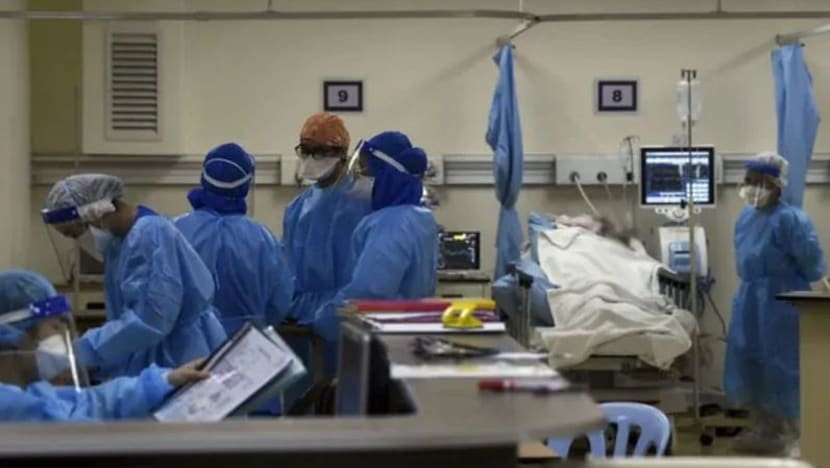


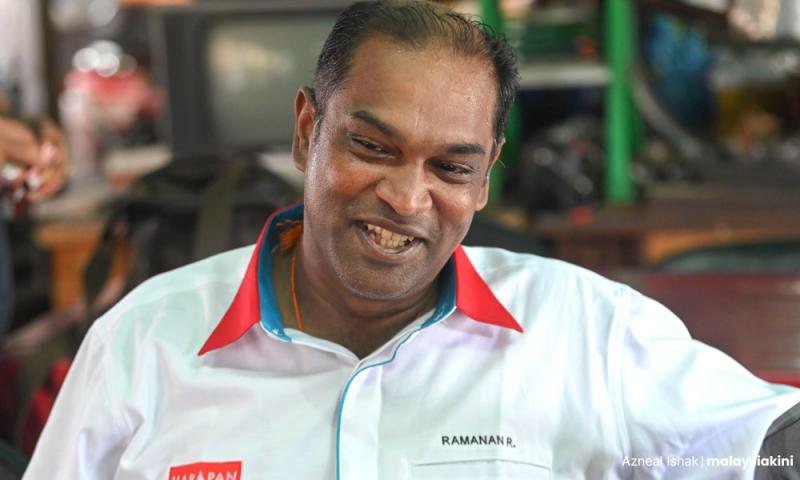

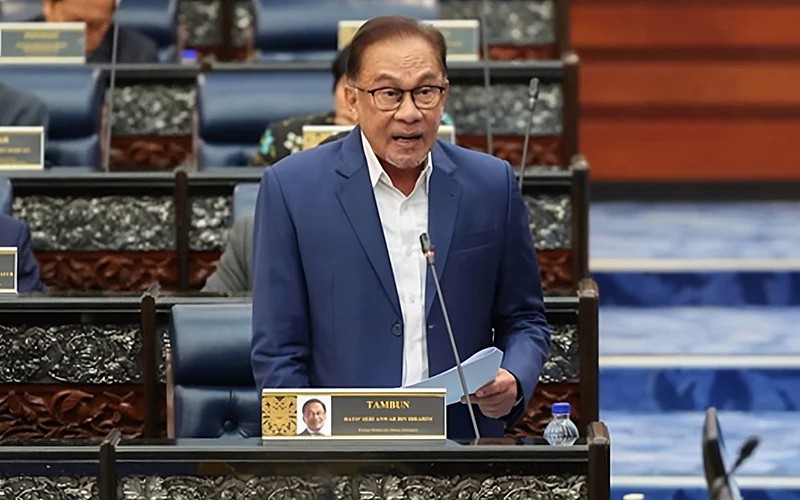 Prime Minister Anwar Ibrahim says good governance will be key to managing the nation’s debts. (Bernama pic)

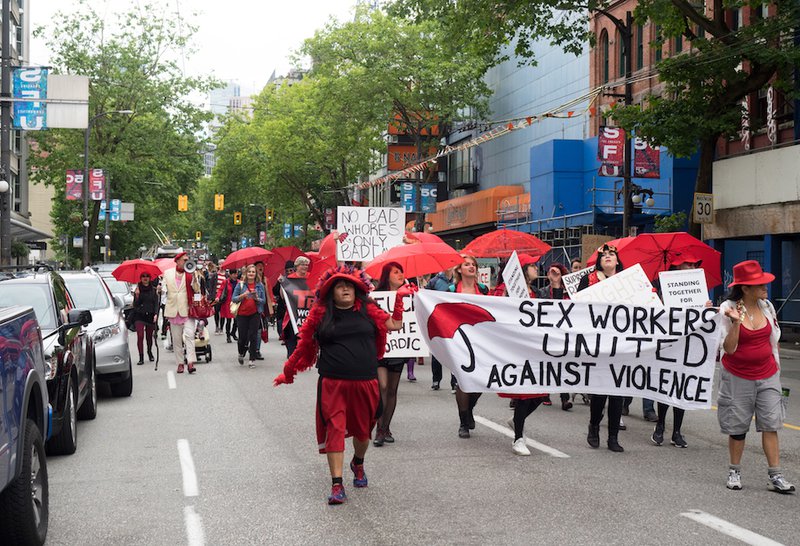

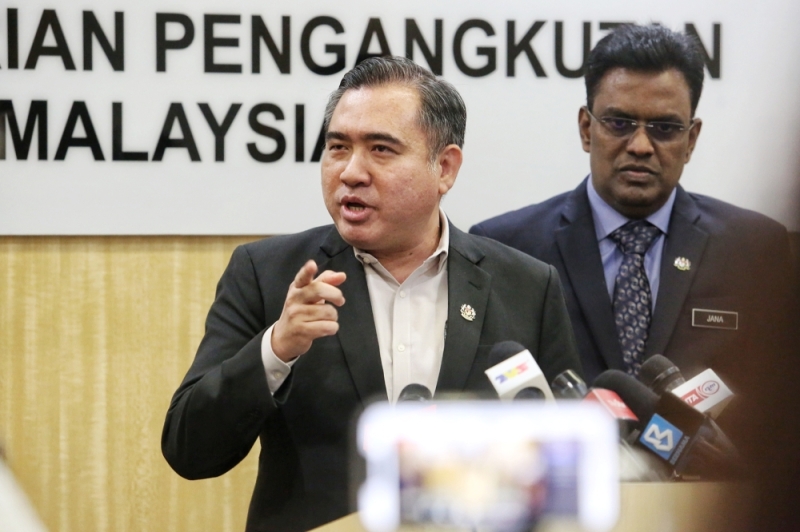
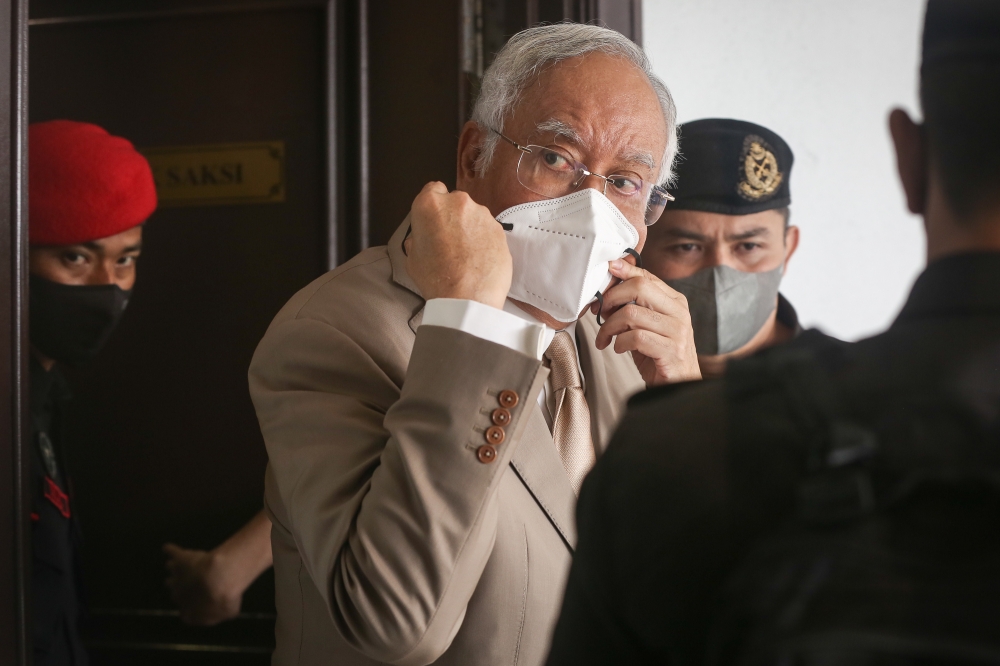
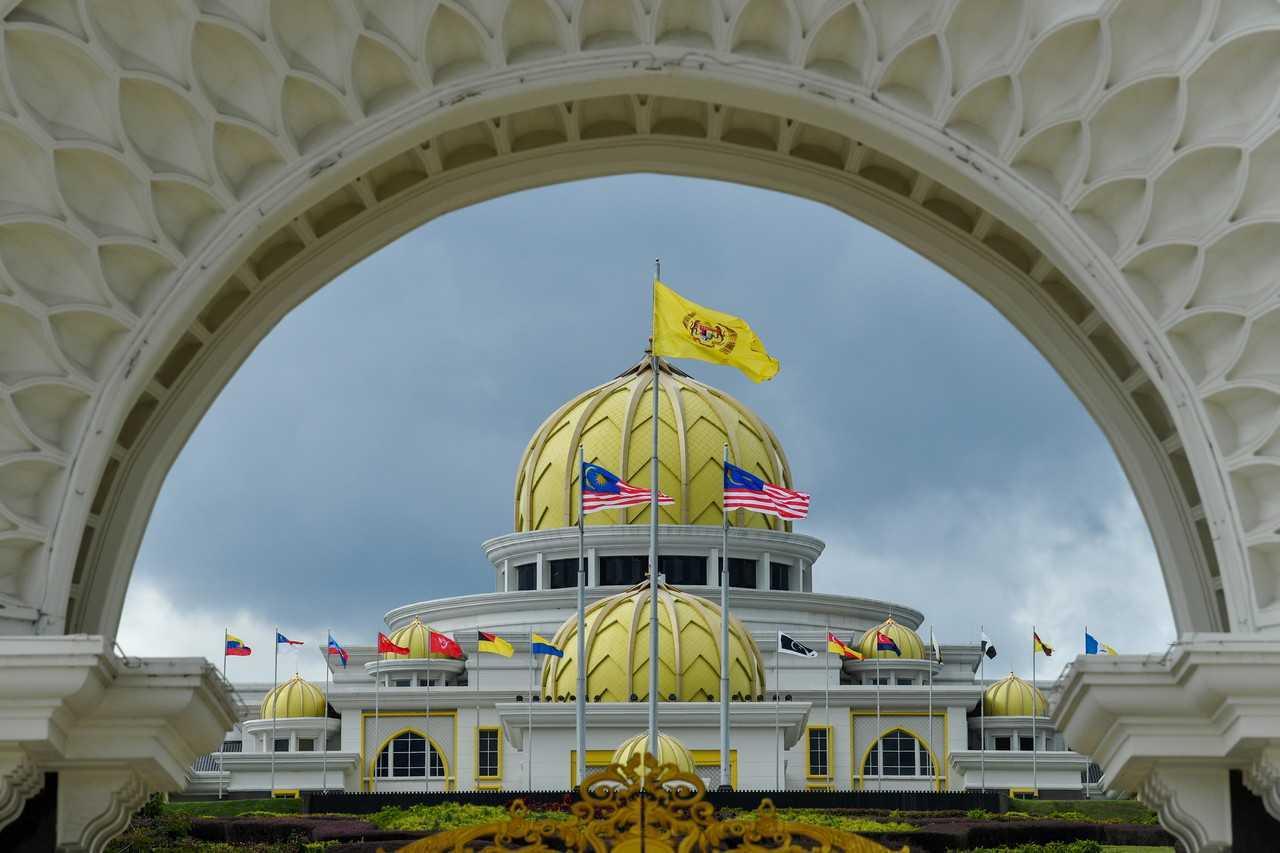

 Posts
Posts