ON HUMAN RIGHTS, JUSTICE AND PEACE ISSUES, LABOUR RIGHTS, MIGRANT RIGHTS, FOR THE ABOLITION OF THE DEATH PENALTY, TOWARDS AN END OF TORTURE, POLICE ABUSES, DISCRIMINATION...
A
group of NGOs and trade unions said the government ‘generally claims
that allegations of forced labour in the country are baseless’.
PETALING JAYA: Twenty NGOs and trade unions have urged the government
to ensure that workers who fall victim to labour offences are justly
compensated.
The groups noted that compensation for victims of labour
offences can be dealt with at the same proceedings during which their
employers are hauled up to face the law.
“Fining
or even imprisoning employers is simply not enough. (The government)
must ensure workers, including migrant workers, are justly compensated
by the perpetrators of forced labour,” the groups said in a statement.
Among the signatories were Aliran, North South Initiative, Persatuan
Sahabat Wanita Selangor, and the Sabah Timber Industry Employees Union.
International groups such as the Japan Innocence and Death Penalty
Information Center, Serve the People Association (Taiwan) and Women of
Color/Global Women’s Strike (US) were among other signatories to the
statement.
The groups said that while there have been numerous allegations of
forced labour in the country, the government “generally claims that
(the) allegations are baseless”.
They added that such perpetrators seldom get prosecuted for their actions.
The groups noted that earlier this month, human resources minister V
Sivakumar said RM2.17 million in compounds and RM242,000 in fines were
meted out to 128 employers since Jan 1 for various labour offences,
including illegal wage deductions.
“However, the minister failed to state how many workers were
victims of forced labour practices and whether they have been justly
compensated,” they said.
“Fines and compound payments go to the government, and not to the victims.”
It noted that Section 426(1A) of the Criminal Procedure Code
(CPC) provides that the court can order the convicted to pay
“…compensation to a person who is the victim of the offence committed by
the convicted accused in respect of the injury to his person or
character, or loss of his income or property, as a result of the offence
committed…”.
The groups said a similar provision could be inserted in the Employment Act 1955 and other labour laws.
It added the Employment Act states that where an employer
has been convicted of an offence relating to the payment of wages, or
any other payments payable to an employee under the Act, the court
before which he is convicted may order the employer to pay any payment
due to the employee in relation to that offence.
However, the groups said this does not extend to other
forced labour or worker rights violations. Further, this can only happen
if the perpetrator is charged and convicted in court, not to those who
were offered compounds and not charged in court.
“Adequate (and) just compensation can also be awarded to
victims of forced labour and other worker rights violations in the same
proceedings, without requiring victims themselves to go after the
convicted perpetrators alone to get justice.
“At least, then, victims of forced labour will get some
compensation after the court convicts forced labour offenders, (but)
still retain the right to get further compensation, if they so desire,
through other civil remedies.” - FMT, 22/9/2023
FORCED LABOUR POLICIES AND LAWS, WITHOUT ENFORCEMENT AND ENSURING
VICTIMS JUSTICE IS USELESS
Laws that allow excessive overtime makes
Malaysia party to propagating forced labour
We, the undersigned 20 groups, organizations
and Trade Unions applaud Malaysia’s stated commitment to eradicating forced
labour. However, fining and/or even imprisoning employers only is simply not enough, as
it must ensure workers victims, including migrant workers, are justly
compensated by the perpetrators of forced labour. Offering Compounds rather
than prosecuting in Court allows perpetrators of forced labour to escape
conviction.
Forced Labour includes work or service which is exacted
from any person under the threat of a
penalty and for which the person has not offered themselves voluntarily. The
International Labour Organisation (ILO) Indicators of Forced Labour are Abuse
of vulnerability, Deception, Restriction of movement, Isolation, Physical and
sexual violence, Intimidation and threats, Retention of identity documents,
Withholding of wages, Debt bondage, Abusive working and living conditions and Excessive overtime.
Sadly, Malaysia’s Employment (Limitation of
Overtime Work) Regulations 1980 states that the overtime limit shall be a total
of one hundred and four hours in any one
month, and this does not include work on rest days, or paid holidays.
Until, this draconian law is amended, Malaysian
law continues to promotes forced labour -being excessive overtime.
1921 ILO Convention stated that workers will have
to work not more than 8 hours per day OR not more than 48 hours a week, and
this limit may ‘be exceeded in those processes which are required by reason of
the nature of the process to be carried on continuously by a succession of
shifts, subject to the condition that the working hours shall not exceed fifty-six in the week on the average.’ (Article 4,
ILO Convention 1). In Malaysia, overtime is not limited to exceptional
situations in practice – but sometimes becomes the norm. Even though Malaysia have reduced weekly working hours from 48 to 45 beginning
January 2023, it is useless if the legal overtime limit remains 104 hours a
month.
Malaysia’s Poor Track Record on Forced Labour
Over the years, there have been several
allegations of forced labour in Malaysia, whereby countries like the United States
of America and even the United Kingdom did not stop with allegation but also took
actions. Sadly, the Malaysian government generally claim allegations are
baseless and seldom do anyone get prosecuted for forced labour.
As an example, the United States lifted a 17-month
import ban on products from Malaysian rubber glove maker Smart Glove, saying
the company has addressed exploitative labour practices.including
repaying recruitment fees borne by migrant workers and improving workers'
living condition. (Reuters, 28/4/2023)
London High Court is set to hear claims by migrant
workers of forced labour and dangerous working conditions at a factory in Johor
which manufactures components for Dyson electrical goods next week.(FMT,
11/7/2023)
Survey by International Labour Organization (ILO)
indicate that 29 per cent of surveyed migrant domestic workers in Malaysia were
in conditions meeting the ILO’s statistical definition of forced labour (1LO,
15/6/2023).
Victims of Forced Labour – Local and Migrant Workers
Local workers and migrant workers are both victims
of forced labour. When they do muster the courage to demand their rights, outstanding
payments due and other entitlements provided by law, some employers respond with
threats of termination(penalty), and in the case of migrant workers,
cancelation of work permits and even detention and repatriation back to country
of origin.
Noting that avenues of justice for workers are in
Malaysia, and many require the physical attendance of the affected worker,
which is almost impossible for poor migrant workers who already have been sent
back to countries of origin. For local poor workers, the problem is resources
(money and time) and capacity deters them from pursuing justice.
RM242,000 in fines and RM2,17 million in Compound, But
Victims left out
‘Since January 1…for various labour offences including illegal wage
deductions, 272 employers were issued
compounds totalling RM2.17 million, while 128 employers were fined by the
court, amounting to RM242,000, he (Human Resources Minister V. Sivakumar)
said…’(Malay Mail, 14/9/2023). However, the Minister failed to state how many
workers were victims of forced labour practices, and whether these worker
victims have been justly compensated.
Fines and compound payments go to the government, and not to the affected
worker victims of forced labour. Justice for forced labour victims must be a
government’s priority that could be even be dealt by the court that convicts
employer, Directors and other officers for forced labour crimes.
Compensation for Worker
Victims can be dealt with in the same proceedings
In Malaysia’s Criminal Procedure Code (CPC),
after the perpetrator has been convicted, Section 426(1A) provides that the Court can order the convicted to pay ‘…compensation to a person who is the victim of the offence
committed by the convicted accused in respect of the injury to his person or
character, or loss of his income or property, as a result of the offence
committed…’
A similar provision could
easily be inserted in the Employment Act 1955 and other labour laws, so that
adequate just compensation can also be awarded to victims of forced labour and
other worker rights violation in the same proceeding, without requiring victims
themselves to go after the convicted perpetrators alone to get justice.
The CPC further states
that the such orders for payment shall not prejudice any right to a civil
remedy for the recovery of any property or for the recovery of damages beyond
the amount of compensation paid under the order.
At least, then, victims
of forced labour will get some compensation after the Court convicts forced
labour offenders, and still retain the right to get further compensation, if
they so desire, through other civil remedies.
Now, Section 87A states
that, ‘(1) Where an employer has been convicted of an
offence relating to the payment of wages or any other payments payable to an
employee under this Act, the court before which he is convicted may order the
employer to pay any payment due to the employee in relation to that offence.’
However, this do not extend to other forced labour or worker rights violation.
Further, this can only happen, if the perpetrator is charged and convicted in
Court, not to those who were offered compounds and not charged in court.
Most victimized workers
are poor and lack capacity, and simply choose not to pursue justice, hence
allowing perpetrators of forced labour to get away with it. Fines and compounds
alone do not justice to worker victims of forced labour.
Were the human
Directors, Managers, etc OR just body corporate prosecuted?
Since 2012, Employment
Act 1955 was amended to include Section 101B, which states, ‘Where an
offence under this Act has been committed by a body corporate, partnership,
society or trade union-(a) in the case of a body corporate, any person
who is a director,
manager, or other similar officerof the body corporate at the time of
the commission of the offence;(b) in the case of a partnership, every partner in the partnership at the
time of the commission of the offence; and..’.
Thus, it is important for the Malaysian Human
Resource Minister to disclose how many
Directors and officers of these corporation or entities were also prosecuted
for forced labour offences. It is a grave injustice if actions is not taken
against the human persons responsible for actions/omissions of a company. A
company is a mindless shell, and thus merely fining or receiving compounds from
companies, but not directors, managers, or other similar officers enables the
real criminals to escape.
The Minister must disclose how many human persons
in the companies or body corporates were fined or paid compounds – for to not
do so is basically protection of the human perpetrators of forced labour.
Failure to prosecute will not deter these human perpetrators from repeating
crimes of forced labour.
End Compounds -Discriminatory
to charge 128 employers in court, but not the other 272?
Was there discrimination or selective
prosecution? All employers, Directors and officers that committed forced labour
or other labour offences must be charged in Court, where it will be clear from
the charges what offences is committed?
Were those who were offered compounds government
linked entities/persons? Why were they not charged, and allowed to escape with
no record of guilt for the offences of forced labour?
The compound process is an administrative action,
not a judicial process. How much is the compound offered is decided by the
administration. In Court, the Judge will consider all factors including the
injustices suffered by the many victims before pronouncing a just sentences.
Although the offence of forced labour provides
for a sentence of ‘…fine not exceeding one hundred thousand ringgit or to imprisonment for a term
not exceeding two years or to both…’, it is shocking the Human Resources
Minister disclosure implies that no one was sentenced to imprisonment, and this
may be indicative of Malaysia’s commitment to eradicating forced labour and
ensuring justice.
Amongst the many employers that were fines or paid
compounds, how many of these employers did justice to the worker victims? Were
they compensated? Were they reinstated or paid in lieu of reinstatement? Have
Malaysia forgotten to ensure justice to worker victims? Will the information of
employers that paid compounds even be disclosed to the public or worker
victims, as those charged in court and fined are available to the public?
A National Action Plan on Forced Labour (NAPFL)
2021-2025 or having Guidelines on Preventing and Eradicating Forced Labour
Practices in the Workplace is just not enough without indiscriminatory
prosecution of all guilty of forced labour offences, and ensuring justice for
all worker victims.
There, we call:-
For
Malaysia to be intolerant of forced labour and worker rights violations, and
ensure all worker victims are justly compensated;
For the
repeal/amendment of all draconian laws or provisions of law, that facilitate or
fail to deter forced labour and workers violation. Employment (Limitation of
Overtime Work) Regulations 1980 must be amended to reduce the legal limit
of monthly overtime from 104 hours per month to one that will ensure that working
hours with overtime, work on rest days/public holidays shall not exceed
fifty-six in the week on the average.
For the
Malaysian government to abolish compound for forced labour and all worker
rights violations, and ensure all perpetrators including human decision makers
be charged, tried and convicted in court.
For a
transparent disclosure of all perpetrators of forced labour, with a practice
where repeat offenders will receive higher sentence.
For a
deterrent punishment that employers pay at least 5 times the amount of
monies they withheld from workers wrongly. Now, all that the law requires
is that ‘…the employer to pay any payment due to the employee in relation to
that offence…’, not even with interest or double.
For
Malaysia to defend and promote worker rights, and to eradicate forced labour.
Charles Hector
Apolinar Z
Tolentino, Jr.
For and on behalf of the 20
organisations listed below
ALIRAN
WH4C (Worker Hub For Change)
MADPET (Malaysians Against
Death Penalty and Torture)
Building and Wood Workers
International (BWI) Asia Pacific Region
Black Women for Wages for
Housework
Clean Clothes Campaign
International Office
Clean Clothes Campaign (CCC)
SEA Coalition
David Foust, México
GoodElectronics Network
Japan Innocence and Death
Penalty Information Center
North South Initiative (NSI),
Malaysia
Payday
Men’s Network (UK/US)
Persatuan
Komuniti Prihatin Selangor and Kuala Lumpur
Persatuan
Sahabat Wanita Selangor
Sabah
Timber Industry Employees Union (STIEU)
Sarawak
Dayak Iban Association (SADIA)
Serve
the People Association, Taiwan
SETEM
Catalunya, Spain
Women
For Equality Association, Malaysia
Women
of Color/Global Women’s Strike, US
>
HR minister: Malaysia’s forced labour practices under control
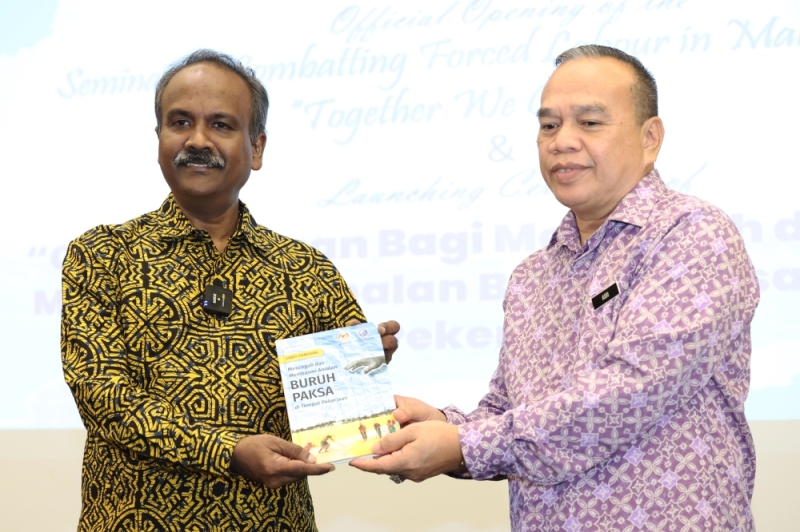
Human
Resources Minister V. Sivakumar receives the Guidelines on Preventing
and Eradicating Forced Labour Practices in the Workplace from Department
of Labour Peninsular Malaysia deputy director-general (Operations) Mohd
Asri Abdul Wahab in Putrajaya, September 14, 2023. — Bernama pic
Thursday, 14 Sep 2023 9:41 PM MYT
PUTRAJAYA,
Sept 14 — The government views the practice of forced labour in
Malaysia seriously, even though it is still under control, and has set a
target of zero forced labour by 2030, said Human Resources Minister V.
Sivakumar.
He said the government’s commitment to addressing
forced labour can be seen through the amendment of the Employment Act
1955 (Amendment) 2022, which has created new provisions through Section
90B regarding forced labour, in addition to launching the National
Action Plan on Forced Labour (NAPFL) 2021-2025.
The
Department of Labour Peninsular Malaysia (JTKSM) has taken action, with
1,321 investigation papers opened against 645 employers since January
1, for various labour offences including illegal wage deductions.
In
the same period, 272 employers were issued compounds totalling RM2.17
million, while 128 employers were fined by the court, amounting to
RM242,000, he said.
“The
JTKSM’s action is not intended to punish employers involved, but rather
to serve as a lesson so that the issue of forced labour is not taken
lightly in the country,” he said at a press conference, after launching
the Guidelines on Preventing and Eradicating Forced Labour Practices in
the Workplace, today.
The
50-page guideline is a joint effort of JTKSM and the Home Ministry’s
Council for Anti-Trafficking in Persons and Anti-Smuggling of Migrants
(MAPO), to serve as a guide for employers and employees and to raise
awareness among stakeholders on the issue of forced labour practices.
The
book explains the indicators of forced labour, including persecution of
vulnerable groups, excessive overtime and physical and sexual violence.
Based
on the provisions under Article 2(1) of the Forced Labour Convention
1930, any work or service performed by a person under threat of any form
and without consent, is defined as forced labour.
The book will
be distributed to government premises as well as private employers and
can be obtained through the JTKSM website. — Bernama- Malay Mail, 14/9/2023
US lifts import ban on Malaysia's Smart Glove ReutersApril 28, 202311:20 AM GMT+8Updated 5 months ago
The logo of Smart Glove, a rubber glove manufacturer, is displayed at its facility in Klang, Malaysia April 27, 2023. REUTERS/Hasnoor Hussain Acquire Licensing Rights
KUALA LUMPUR, April 27 (Reuters) - The United States lifted a 17-month import ban on products from Malaysian rubber glove maker Smart Glove, saying the company has addressed exploitative labour practices.
U.S. Customs and Border Protection (CBP) in November 2021 sanctioned imports from Smart Glove and its group of companies over the alleged use of forced labour at its production facilities.
Smart Glove, which makes gloves used in the medical and food industries, had then said it was opposed to forced labour and committed to the well-being of its workers. Advertisement · Scroll to continue
In a statement on Wednesday, the CBP said Smart Glove has taken various remediation measures, including repaying recruitment fees borne by migrant workers. Activists say the onerous fees result in debt bondage.
Smart Glove also improved workers' living conditions, and implemented new worker-centered policies and procedures, the CBP said.
Smart Glove in a statement said the lifting of the import ban "allows us to again fully meet the needs of our valued customers in the United States". Advertisement · Scroll to continue
The company added it has implemented a "zero cost" recruitment policy, upgraded worker housing and created an anonymous reporting channel for workers to engage with management on any issues.
Malaysian companies, including some of the world's major suppliers of palm oil and medical gloves, have come under increased scrutiny over suspected abuse of foreign workers, a significant part of the country's manufacturing workforce.
Reporting by A. Ananthalakshmi; Editing by Kanupriya Kapoor - Reuters, 28/4/2023
Dyson faces London lawsuit over ‘forced labour’ claims at Malaysian factory
Twenty-three foreign workers say the electrical gadget manufacturer was unjustly enriched by the factory’s ‘unlawful, exploitative and dangerous conditions’. FMT Reporters - 11 Jul 2023, 1:05pm
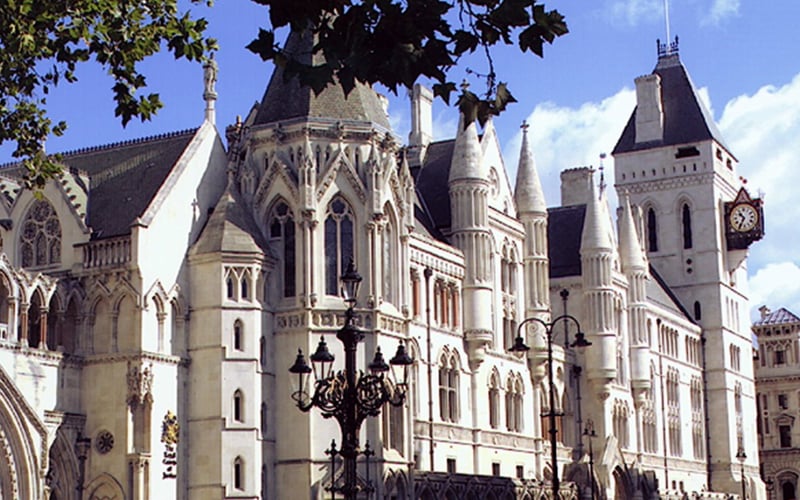
The London High Court will hear the migrant workers’ claim of assault, battery, cruel and degrading treatment, exposure to extremely hazardous working conditions, and abusive living conditions. (judiciary.uk pic)
PETALING JAYA: The London High Court is set to hear claims by migrant workers of forced labour and dangerous working conditions at a factory in Johor which manufactures components for Dyson electrical goods next week.
Leigh Day, a law firm representing 23 Nepali and Bangladeshi workers, said the claims against the British appliance maker also include allegations of false imprisonment at its contractor’s factory in Johor.
Scheduled to run from July 17 to 19, the case will also hear claims by the workers of assault, battery, cruel and degrading treatment, exposure to extremely hazardous working conditions, and abusive living conditions.
Dyson terminated various contracts with the factory since 2021, citing alleged forced labour and worker mistreatment.
The factory produces components for Dyson vacuum cleaners, lighting, haircare equipment, heaters and fans.
The individuals are said to have worked at the factory for between three and nine years.
The civil negligence claim is being brought against three companies within the Dyson Group – Dyson Technology Limited and Dyson Limited, both based in Malmesbury, England, and Dyson Malaysia, located in Johor Bahru.
The workers said they paid the equivalent of several months’ wages to recruitment agents working for the factory.
In exchange, they were provided with visas and flown into Malaysia to work, allegedly finding themselves in debt bondage and paid below minimum wage, sometimes earning less than US$10 (RM46) a day.
Many say they were forced to resort to borrowing money from loan sharks, exacerbating their debts and vulnerability.
They allege that their passports were retained for the duration of their employment, making it impossible to find other work, and so were trapped into working at the factory.
The minimum daily shift for the claimants was 12 hours long, but they allege that they were forced to work overtime, with daily shifts lasting up to 18 hours without a break. They also allege that they were refused annual leave.
The workers say their work visas were allowed to lapse, resulting in them being in the country illegally. As a result, they claim to have been living in constant fear of arrest.
The claimants say they were charged rent to live in a mass dormitory with up to 80 people sleeping in stacked beds in one room. They describe poor sanitation, overcrowding, no air conditioning, unclean and broken toilet facilities.
They also allege that Dyson had known about the unlawful conditions at least since November 2019 when they were notified by whistleblower Andy Hall.
They contend that the exploitation and dangerous working conditions faced by migrant workers in Malaysian factories had been widely reported over the last 10 years, and therefore, was something that Dyson should have been aware of.
In their legal claim, the workers said Dyson was unjustly enriched as a result of the unlawful, exploitative and dangerous conditions at the factory.
They say Dyson is liable for violating their legal rights, having known of the alleged unlawful practices at the factory, and because of their assumption of responsibility through numerous public statements regarding their policies and procedures for detecting and preventing forced labour and exploitation in their supply chains.
A preliminary issue which the judge must decide is whether the claims can proceed in the courts of England and Wales.
Dyson contends that the claims should be heard in Malaysia. The claimants say these claims relate to the Dyson UK companies and should be heard in the English courts.
“Post-Brexit, overseas victims of alleged corporate abuses by UK headquartered companies no longer have the automatic right to sue that company in the UK,” said Leigh Day partner Oliver Holland.
“Access to justice will be a significant factor in deciding whether the English High Court should continue to hear these kinds of claims against companies which are based in the UK but employ labour in other countries.”. - FMT, 11/7/2023
Nearly 30pct of domestic workers in M'sia face forced labour: UN agency
Reuters
Published: Jun 15, 2023 4:51 PM
⋅
Updated: 4:51 PM
Nearly
a third of migrant workers employed in domestic households in Malaysia
are working under forced labour conditions, according to a survey
released by the United Nations' labour agency on Thursday.
The
International Labour Organisation (ILO) identified conditions such as
excessive working hours, unpaid overtime, low wages, restricted
movement, and being unable to quit among its indicators of forced
labour.
The survey, based on interviews with 1,201
domestic workers in Southeast Asia, found 29 percent of those in
Malaysia faced such conditions, compared to 7 percent and 4 percent in
its neighbours Singapore and Thailand, respectively.
Malaysia and Singapore did not immediately respond to requests for comment on the survey findings.
Wannarat Srisuksai, a spokesperson for Thailand’s labour ministry, told Reuters the treatment of domestic workers in the country has improved following laws introduced in 2012 to protect the group.
In
all three countries, the domestic workers surveyed on average worked
hours “well in excess” of those legislated for other workers, and none
earned the minimum wage, the ILO said.
“Domestic work
is one of the most important tasks in our society, and yet provided
with the least protection. This can no longer be accepted,” said Anna
Engblom, chief technical adviser at the ILO programme, which conducted
the study.
The ILO urged Malaysia, Singapore, and
Thailand to ratify UN conventions on domestic workers and forced labour,
to recognise the skilled nature of domestic work, and ensure migration
pathways that did not tie the workers to their employers.
Households
in Asia often employ domestic workers - usually women from developing
nations such as Indonesia, Myanmar, and the Philippines - to carry out
housekeeping tasks including cooking, cleaning, childcare, and
gardening.
Malaysia has faced criticism in recent
years following multiple incidents of Indonesian domestic workers being
abused in Malaysian households, while several of its companies have been
accused of exploiting migrant labourers.
Indonesians
make up about 80 percent of domestic workers in Malaysia, according to
the ILO. Last year, Malaysia and Indonesia signed an agreement to
improve protections for domestic workers.
Study highlights forced labour amongst migrant domestic workers in Southeast Asia
Survey by International Labour Organization
(ILO) of migrant domestic workers in Singapore, Malaysia and Thailand
points to poor working conditions, yet also highlights the skilled
nature of domestic work.
BANGKOK, Thailand (ILO News) - Denial
of labour and social protection rights to migrant domestic workers is
leading to exploitation and forced labour in key Southeast Asian
employment markets according to a new report issued by the International
Labour Organization (ILO). Findings also highlight the skills required
for work carried out by domestic workers and calls for this to be
recognized in pay and regulated hours, like any other job.
The
study is based on interviews with 1,201 domestic workers between July
and September 2022 in Malaysia, Singapore and Thailand. Findings
indicate that 29 per cent of surveyed migrant domestic workers in
Malaysia were in conditions meeting the ILO’s statistical definition of
forced labour; as were 7 per cent of surveyed workers in Singapore and 4
per cent in Thailand. Indicators of involuntariness include not being
able to quit your job, having to stay in the job longer than agreed, and
being made to work without overtime pay, among others.
“Domestic work is one of the most important
tasks in our society, and yet provided with the least protection. This
can no longer be accepted,” said Anna Engblom, Chief Technical Adviser
of ILO’s TRIANGLE in ASEAN programme which produced the study.
The study challenges the narrative that domestic work is unskilled or
low skilled. Domestic workers were found to be regularly doing
medium-skilled tasks, especially when providing care work. These were
classified as International Standard Classification of Occupations
(ISCO) Skills Level 2 which require more technical skills and good
transversal skills including communication and the ability to speak the
local language. However, these skill levels are neither recognized in
domestic workers’ pay nor other working conditions.
Additional findings highlight the relatively low enrollment rates
amongst migrant domestic workers in social security schemes, a situation
which can amplify the isolation of workers and their vulnerability to
forced labour practices. Various states also restrict domestic workers’
ability to organize or collectively bargain, with legal and social
obstacles still preventing domestic workers from forming, and sometimes
joining, trade unions in the study countries.
“Domestic workers
need to be recognized as the skilled employees that they are in terms
of pay and employment conditions. The skilled nature of their work
should also be reflected in migration pathways. All too often migrant
domestic workers are locked into restrictive employment patterns. By
allowing them the opportunities to change employers or negotiate better
working conditions, as other skilled migrants can, they would be far
less likely to suffer exploitation,” Ms Engblom added.
Recommendations made by the study include the ratification and
implementation of ILO’s Domestic Workers Convention, 2011 (No. 189),
Forced Labour Convention, 1929 (No. 29), and the Protocol of 2014 to the
Forced Labour Convention, 1930 to ensure that domestic workers enjoy
rights at least equal to those of other workers, in law and in practice.
Instances of forced labour should result in criminal charges and
policies changed to prevent its occurrence. Skills recognition
opportunities for domestic workers should also be explored and migration
pathways should be appropriately flexible, accessible and rights-based.
IPOH:
The government has urged all employers to comply with the Employment
Act 1955, especially with regard to the reduction of working hours from
48 hours to 45 hours a week.
Human Resources Minister V. Sivakumar said this was because the
amendment had been approved in Parliament last year and employers were
given until Jan 1 this year to implement it.
"So I don't want any excuse from employers who say that they don't
know about the law that has been passed," he said when met by reporters
during a press conference at the Perak Human Capital Development Centre
today.
On Feb 23, Malaysian Trade Union Congress (MTUC) secretary-general
Kamarul Baharin Mansor was quoted in a media report urging the Human
Resources Ministry to take strict action against employers who flouted regulations under the Act. - NST,26/2/2023
PAHANG - well, yet another IMPORTANT bus service is going, and the government(Federal/State/Local) simply fail to ensure that this is available in all towns and districts in Malaysia. Poor public transport forces people to buy cars and motorbikes - all of which will just increase living cost and debt.
Bas henti-henti laluan (Stop stop bus) - YES many people need bus services that will stop near kampungs and tamans along its route, and for that you used to pay rates depending on where the stop is. This is different from express busses that travel from one town to another, where every passenger will have to pay the SAME ticket price.
There were people that wanted to get licences/permit to operate town buses, bus henti-henti, but it is very difficult to get permits - and now, the permits are controlled by Federal/State and not Local Government. In the previous Pakatan Rakyat States of Penang and Selangor, the respective State Governments provided town bus services or in-town bus services.
But, then when Malaysia started with its own car - Public Transport especially busses declined. The Local Government even fails to maintain or build good bus-stops(that will protect people from rain/sun). The bus-stops in town dissapears and so too the bus services.
PRIORITY - Local or in-town or in-District public bus services must be speedily restored, and the public encouraged to use public transport. This will decrease living cost, and even protect the environment. There should be a BUS-STOP every where, not more than 400 meters walk from Taman/Kampungs.
Now, Tamans are now spread out over a large area of each Local Government - and bus services must be available to all.
As the 'forced' use of private vehicles increase, another major problem is parking spaces...cars go round and round several times before finding a parking space. This lack of parking spaces impacts small business (I cannot find a spot means I go elsewhere to buy my goods). So big impact to SMEs - not the big supermarkets who have their own large parking areas at times - pity the small shops.
During the BN reign, small towns and rural areas were not a priority - Is Anwar's Pakatan Harapan any different?
Selective Prosecution or Selective Non-Prosecution in Malaysia, is unfortunately something many Malaysians believe happens - and, it was believed that the incumbent Prime Minister and the government had a say on who is charged and prosecuted and who is not in Malaysia. TRUE? FALSE?
During the reign of the Barisan Nasional, many believe that there were not many charges levied at UMNO or BN leaders or their 'friends'
All things changed, after Pakatan Harapan came into power after GE14 - and we saw so many investigations, charges and trial of those, who once were previously considered 'UNTOUCHABLES'. The people were happy with this new development - as finally, no one is above the law.
Malaysians want our law enforcement, prosecution and judges to be truly independent - and will no longer be 'influenced' by the sitting Prime Minister, Ministers or the government.
Anyway, after what many considered 'odd' discontinuance of criminal proceedings against Zahid Hamidi (the UMNO President, and Anwar's Deputy Prime Minister), which naturally led to a DNAA(Discharge Not Amounting to An Acquittal), many wondered why the prosecution did so, more so during Zahid's defence stage, after the prosecution had successfully proved prima facie case for all 47 charges.
Our law gives the power to the Attorney General/Public Prosecutor to decide not to proceed with a criminal trial at any stage of the trial. Currently, there seems to be no 'check and balance' mechanisms on the powers of the AG/PP - should there be a right to JUDICIAL REVIEW decisions of the Attorney General/Public Prosecutor? Hence, court can review and determine the correctness or reasonability of these prosecution's decisions?
Let's not stop with the prosecution, what about the police and law enforcement - many are frustrated when their reports end up with 'No Further Action'(NFA) - should there be a right to appeal or a right to Judicial Review of police decisions/actions?
If prosecution stops, Judges now have no power to order prosecution to continue ...?? The best a judge can do is DNAA
Now, if the prosecution does not want to proceed, the Judge have no choice but to give a DNAA. They cannot ask prosecution to continue...
The judge also do have the power to acquit when this happens, but despite application by Zahid's lawyers for an ACQUITAL - the judge only gave a DNAA. I believe that this was RIGHT > A judge, in my opinion, must never ACQUIT anyone except after a FULL TRIAL and the judge had the opportunity to consider all evidence and decide on guilt or 'innocence'.
When prosecution decides not to proceed further for whatever reasons, an acquittal not based on evaluation of all evidence is simply wrong.
What is DNAA?
When a person is CHARGED in court, the trial starts and continues.
When a person is DISCHARGED, what it means is that person is no longer facing a criminal charge > hence putting himself/herself at the same footing of all others. There is NO CHARGE hanging over his/her head. Everyone is in that position, as we all can always be charged if we commit a crime, and the prosecution is confident that they will succeed in convincing the Judge that one is GUILTY beyond a reasonable doubt. An ACQUITTAL, on the other hand is a GUARANTEE that one can never ever be charged for the same offence, or even similar offences based on the same facts - that is why it is unjust to simply give an acquittal simply because the prosecution decided to discontinue a trial, or even if the current prosecutor says he/she has no intention of re-charging in the future >> things may change with a new prosecutor in the future, the obtaining of NEW evidence later that will be enough to prove GUILT.
Why do Prosecution STOP proceeding with a criminal trial?
Some reasons are:-(a) In mid-trial, the Prosecution is of the opinion that they no longer have sufficient evidence to prove guilt beyond reasonable doubt, and if they simply continue with the trial, there is RISK that the GUILTY may be acquitted. How can this happen - maybe some 'material evidence' disappeared - maybe a witness suddenly changed their testimony or 'disappeared', maybe, they discovered evidence that the person charged with a crime like murder, rape, etc was a different person not the accused or the alleged victim had lied or made a mistake in identification of the accused.
In the Zahid Hamidi's case, the Prosecution already proved PRIMA FACIE case, which means that Zahid Hamidi will be CONVICTED unless Zahid Hamidi, during the Defence Case, is able to raise reasonable doubt or rebut evidence before the court. This also means that Zahid Hamidi's lawyers had failed during cross examination and in other ways during Prosecution's case to raise reasonable doubt that he is not guilty, or rebut sufficient material evidence submittedthat would have resulted that Judge not deciding that prosecution had proven the Prima Facie case. - see Zahid Hamidi's can always be charged again, the trial reinstated and continued - section 254A CPC? Explaining and concerns?So, why did the Prosecution discontinue criminal proceedings at this stage?
Our law states that at any later time with regard a person who was DNAAed, the prosecution can re-charge Zahid Hamidi for the same 47 offences, and the trial will continue where it ended. Of course, the prosecution also may choose not to charge Zahid again.
PRIME MINISTER ANWAR IBRAHIM SHOULD NEVER HAVE 'INTERFERED' by commenting about possible interference in the administration of justice - OR EVEN SUGGESTED anything ... Anwar Ibrahim personally can express his personal view, but not as Prime Minister, more so when it a case involving Zahid, the DPM, and whose party is part of Anwar's 'UNITY' government.
Anwar Ibrahim's position as reported on 6/9/2023 was good - Prime Minister Anwar Ibrahim has denied having a hand
in the court’s decision to grant his deputy, Ahmad Zahid Hamidi, a
discharge not amounting to an acquittal (DNAA) in his Yayasan Akalbudi
case. “This is the attorney-general’s decision. I did not interfere,” Bernama quoted him as saying.
BUT, in yesterday's(15/9/2023) media report, the Prime Minister's comments are of concern. - the
charges against Ahmad Zahid Hamidi were "questionable" and not carried
out professionally.
"Was it 47? Every cheque is a charge. So the charge is questionable.
Every cheque issued is a charge by itself, which does not necessarily
seem to be professionally done,"
Response:- There is nothing wrong with the 47 charges even if one charge refers to one cheque. Normally, even if it was 1 transaction, one may be facing 2 or more charges > WHY? Remember that the prosecution have to prove every charge beyond reasonable doubt - which is not easy, and if ONE transaction breaks several laws, they will be facing several charges for the one transaction. If there were 10 different money transaction, it is always best to have at least 10 charges. If there is only ONE Charge for all the different 10 transactions, what happens if one or several transactions is not proven...Hence, Anwar's comment about 'questionable' or not professionally done is without basis. At the end of the day, it is the prosecution that decides how to frame the charges... The accused(Zahid) could have challenged the charges, but he did not. Remember, Muhyiddin just manage to quash 4 Charges...
Anwar also repeated a claim by Zahid that the charges had been
brought against him in 2019 because he refused to fulfill a demand by
then prime minister Dr Mahathir Mohamad to dissolve Umno. "When was the charge preferred? During that time, Mahathir was prime
minister. When? A week after he called up this president of this
nationalist party (Umno), which is a member of my coalition, and told
him (Zahid), 'you dissolve your party and join my party',"
Response- So, Anwar now believes Zahid? Remember, he is talking about Mahathir, when he was the Pakatan Harapan Prime Minister, and Anwar was then a key leader of PH. Even if Mahathir asked Zahid to dissolve UMNO - it is something not even a President alone can do. In any event, NO Prime Minister really can get the Public Prosecutor to charge anyone in court, or discontinue any criminal proceedings.
But, then all that is now totally irrelevant because after Zahid was charged, prosecution successfully proved all the elements of the charge - a prima facie case to the satisfaction of the High Court judge, that ordered Zahid to enter his defence.
Hence, no one can suggest that charging of Zahid was done wrongly, after the fact that Prosecution successfully proved prima facie case. It is absurd to question the independence or the professionalism of the High Court Judge, the prosecution or even the law enforcement.
Further, it was an open trial - and many of the evidence tendered was reported in the media.
Hence, in my opinion, it was wrong for a Prime Minister to say such things - which may also promote the perception that law enforcement, prosecution and even the judiciary is not independent, and will do what the Prime Minister or the government will tell them to do.
If the media report was wrong, Prime Minister Anwar Ibrahim must speedily clarify matters to prevent confusion.
Anwar alleges the existence of a document - a "leaked document", which purportedly
showed that members of the prosecution had opposed the charges against
Zahid. First, how did Anwar have access to the 'leaked document'? Was it a confidential document? When and how did he have access to it - why did he not immediately report it? Why did he not disclose the 'leaked document' to the media and public?
How does prosecution decide on charging anyone - the authority lies with one person, according to the Federal Constitution, and law - it is only the Attorney General/Public Prosecutor.
Anyway, when Zahid was charged - no one, not even Zahid or Anwar, raised this issue before. 'Selective Prosecution' or 'Selective Non-Prosecution' is discriminatory and against the principle of equality, but the ONLY RELEVANT question is whether he/she committed the crime alleged, and whether the Court decided guilt beyond reasonable doubt.
But, as mentioned, the fact that prosecution already proved prima facie case for all 47 charges...it is IRRELEVANT. [Remember, in another case, prosecution failed to prove prima facie case, and Zahid was acquitted without having to call his Defence - but that is now on appeal to determine whether that High Court Judges erred or not]
Make police reports if needed...
186 Obstructing public servant in discharge of his public functions
Whoever
voluntarily obstructs any public servant in the discharge of his public
functions, shall be punished with imprisonment for a term which may
extend to two years or with fine which may extend to ten thousand
ringgit or with both.
Will there now be another defamation suit? Did our Prime Minister interfere with the administration of justice? Did the Prime Minister LIE? Was what he said to the media based on HEARSAY or actual evidence? Questions to be considered.
Will action be taken against law enforcement officers, and prosecutors if the ABUSED their powers?
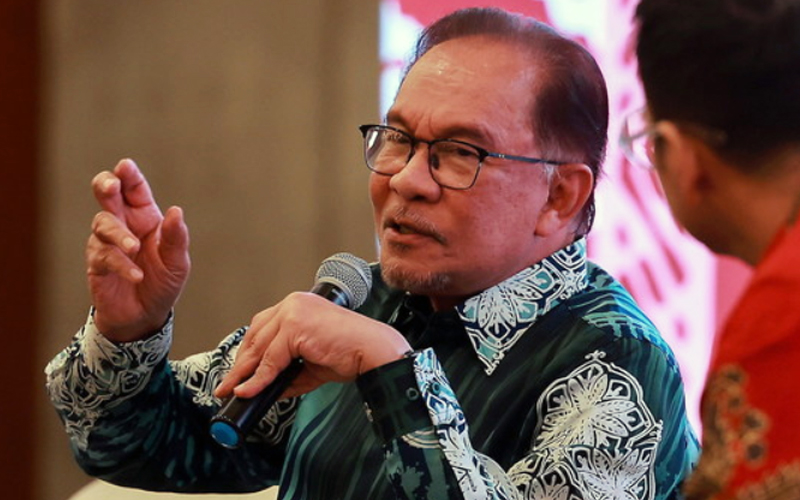
Anwar says 47 charges against Zahid 'questionable'
The
prime minister also echoes his deputy's claim that the charges against
him stemmed from his refusal to comply with Dr Mahathir Mohamad's
request to dissolve Umno.
Prime
Minister Anwar Ibrahim has come to the defence of his deputy over the
recent decision by the government's prosecution team to halt the
latter's trial on 47 corruption charges.
Anwar, who previously denied interfering in the decision while saying
it was within the powers of the attorney-general, added that the
charges against Ahmad Zahid Hamidi were "questionable" and not carried
out professionally.
"Was it 47? Every cheque is a charge. So the charge is questionable.
Every cheque issued is a charge by itself, which does not necessarily
seem to be professionally done," he said when asked about the dropped
graft charges during a session at the annual Milken Institute Asia
Summit in Singapore.
Anwar also repeated a claim by Zahid that the charges had been
brought against him in 2019 because he refused to fulfil a demand by
then prime minister Dr Mahathir Mohamad to dissolve Umno.
"When was the charge preferred? During that time, Mahathir was prime
minister. When? A week after he called up this president of this
nationalist party (Umno), which is a member of my coalition, and told
him (Zahid), 'you dissolve your party and join my party'," he said.
Anwar also cited claims of a "leaked document", which purportedly
showed that members of the prosecution had opposed the charges against
Zahid.
Still, Anwar said he had no role in the discharge not amounting to acquittal, or DNAA, that was granted to Zahid.
Zahid, the Umno president, was crucial in committing the support of
his 30 Barisan Nasional MPs to Anwar's government in the aftermath of
the 15th general election.
He was given the DNAA on Sept 4 after deputy public prosecutor Mohd
Dusuki Mokhtar informed the judge of the request by the
Attorney-General's Chambers (AGC) to discontinue the case.
The decision sparked widespread outrage, with the AGC saying the
judge had decided based on the strong reasons it submitted to the court.
"In reaching the decision, the judge stated that the reasons
submitted by the prosecution were cogent," it said, responding to
statements describing the decision as immoral.- Malaysia Now, 15/9/2023
I had nothing to do with Zahid’s DNAA, says Anwar
Prime Minister Anwar Ibrahim says the decision was made by the attorney-general.
Anwar
Ibrahim must shoulder full responsibility for the ‘damage to the
justice system’, Bersatu president Muhyiddin Yassin said. (Bernama pic)
PETALING JAYA: Prime Minister Anwar Ibrahim has denied having a hand
in the court’s decision to grant his deputy, Ahmad Zahid Hamidi, a
discharge not amounting to an acquittal (DNAA) in his Yayasan Akalbudi
case.
“This is the attorney-general’s decision. I did not interfere,” Bernama quoted him as saying.
Earlier
today, former prime minister Muhyiddin Yassin said Anwar must shoulder
full responsibility for the “damage to the justice system (in the
country)”.
This evening, the Attorney-General’s Chambers (AGC) defended its
highly criticised decision to apply for a DNAA, saying the reasons
presented before the High Court were deemed “cogent” and accepted by
Justice Collin Lawrence Sequerah.
Zahid was yesterday granted a DNAA on all 47 of his corruption, criminal breach of trust (CBT) and money laundering charges.
He had been accused of embezzling millions of ringgit from his
foundation, Yayasan Akalbudi, and accepting bribes for various projects
during his tenure as the home minister between 2013 and 2018.
The decision, however, drew brickbats, with activists, party leaders
from the unity government as well as the opposition demanding an
explanation from the AG.
Separately, home minister Saifuddin Nasution Ismail hit out at the
opposition’s inconsistent stand citing how Perikatan Nasional is
accusing Anwar of abuse of power.
He
said the opposition seemed to only consider as such when it involved
their rivals but were silent when PN leaders were acquitted, Bernama
reported him as saying.
He was referring to the High Court decision on Aug 15 to
allow an application by Muhyiddin to strike out the four charges of
abusing his position to obtain bribes totalling RM232.5 million for
Bersatu.
He said both Muhyiddin and Zahid were represented by the
same lawyer, Hisyam Teh Poh Teik, but when the Umno president was
granted a DNAA, they claimed Anwar had a hand in it.
“Look at how inconsistent they (the opposition) are. When
it’s their people who are freed, it’s okay, but if it’s their enemy
(government leaders), Anwar is to blame. It is as if everything is
controlled by Anwar.” - FMT, 6/9/2023
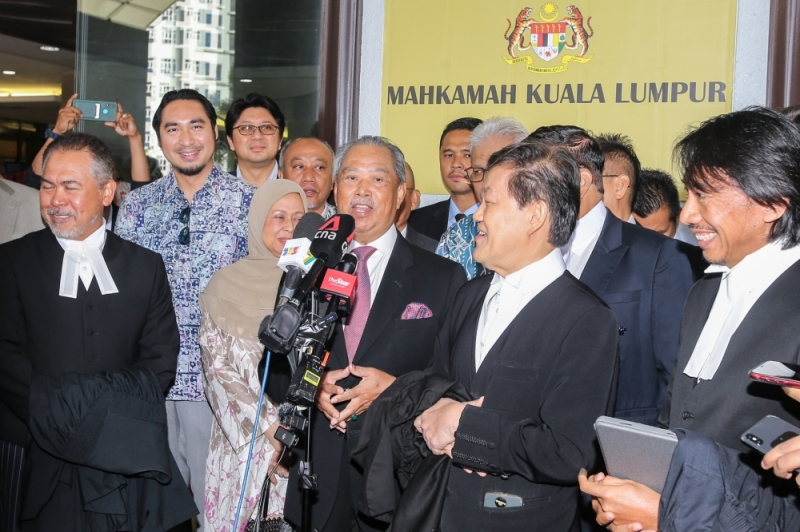
Muhyiddin succeeds in having abuse of power charges dropped, court rules them defective
Tan Sri Muhyiddin Yassin speaks to reporters at the Kuala Lumpur High Court August 15, 2023. ― Picture by Ahmad Zamzahuri
By Kenneth Tee
Tuesday, 15 Aug 2023 10:03 AM MYT
KUALA
LUMPUR, Aug 15 — Former prime minister Tan Sri Muhyiddin Yassin has
succeeded in having four abuse of power charges against him quashed
following a High Court decision today.
In delivering the court's
decision, High Court judge Datuk Muhammad Jamil Hussin said the
aforementioned charges accusing Muhyiddin of allegedly using his
position to obtain gratification amounting to RM232.5 million for Parti
Pribumi Bersatu Malaysia failed to disclose any offence details.
"The
four charges did not disclose an offence under Section 23(1) of the
Malaysian Anti-Corruption Commission (MACC) Act and Section 154 of the
Criminal Procedure Code (CPC) which calls for an extraordinary
circumstance compelling me to use the court's inherent powers.
“This
is to prevent an abuse of the court process. I am therefore allowing
for the four charges to be struck out and the applicant is acquitted and
released,” he said.
With
the four charges struck out, Muhyiddin has three remaining criminal
charges under the Anti-Money Laundering and Anti-Terrorism Financing and
Proceeds of Unlawful Activities Act that are pending at the Sessions
Court.
In
his decision, Muhammad Jamil said the court disagreed with the
prosecutors' argument that the particulars of how the offence was
committed were not required to be disclosed in the charge but could
later be proven through court testimonies.
"This will surely bring
about injustice to the applicant who is uninformed of the true nature
of the offence committed and therefore incapacitating them of an
effective defence before trial commences.
"The unmentioned
particulars render the charges vague and the applicant confused since he
has no idea what matter concerning his decision or action he had taken
(in committing the offence).
"The applicant should not be allowed to speculate and prejudiced when he is not informed of their true nature," he said.
Ruling
in favour of Muhyiddin, the judge said the former cannot be forced to
undergo a criminal proceeding that was in clear violation of the law,
since this will constitute an abuse of the court process should the
trial be allowed to continue under the defective charges.
He said
Muhyiddin's right to a fair trial under Article 5 of the Federal
Constitution was also violated in the process due to the defective
charges filed against him.
When met outside the court, lawyer
Datuk Hisyam Teh Poh Teik said the charges against his client were
seriously defective and expressed gratitude to His Lordship for
accepting their arguments.
He also said the three money laundering
charges would also not stand on their own and would be dismissed as
well since they were dependent on the predicate offences which were
struck out today.
Last April 18, Muhyiddin filed a notice of
motion to request that he be acquitted and discharged of all four
charges brought against him, alleging the charges lacked particulars as
to how he had abused his position or the Prime Minister’s Office for the
purpose of gratification.
Based on the four charges, Muhyiddin as
prime minister of Malaysia and Parti Pribumi Bersatu Malaysia president
is alleged to have used his position to receive bribes amounting to
RM232.5 million from three companies namely Bukhary Equity Sdn Bhd,
Nepturis Sdn Bhd and Mamfor Sdn Bhd as well as Datuk Azman Yusoff for
the party.- Malay Mail, 15/8/2023
This is how Tabung Haji lost RM10bn
-
Mr Money TV breaks down the massive Tabung Haji scandal following the
declassification of the report by the royal commission of inquiry. How did
a fund c...
BN-PN topple PH in Negeri Sembilan
-
The Negeri Sembilan state assembly has 36 seats. Actual results: BN 18
seats + PN 7 seats = 25 seats PH 11 seats Ilham Centre’s prediction: Ong
Kian Ming’s...
APA PADA NAMA
-
1. Sejarah Malaysia dikait rapat dengan UMNO, Parti Kebangsaan Melayu
Bersatu. Parti UMNO pula dikenali dengan pemimpinnya. 2. Demikian di
peringkat permul...
China and HK may be barred from Asia Team meet
-
PETALING JAYA: The status of next week’s Asia Team Champion-ships in
Manila, the Philippines, is in quandary as two badminton nations – China
and Hong Kong...
PRU14 - Keputusan TEMERLOH - Parlimen dan DUN
-
Keputusan di Temerloh, harus kita analisa
1- Parlimen dimenangi Pakatan Harapan, yang juga menang DUN Mentakab,
tetapi BN menang DUN Lancang dan DUN Kuala ...
Thank you, Malaysians
-
Before the lights go out on The Malaysian Insider at midnight, we say
"Thank You" to our readers. TMI started on February 25, 2008. Today, after
eight year...
I believe in the freedom of expression - and everyone is free to use, reproduce, quote, copy and circulate, etc... materials published here. Please credit the source: http://charleshector.blogspot.com/.
For those of you who do have Blogs/Websites, it would be good if you could add a link to CHARLES HECTOR Blog. Please do promote the BLOG.
Anonymous comments or those containing profanities and obscenities (or irrelevant matters) will be rejected. Note that all comments made in post are personal opinions.
Number of Visits
Over 4 million visits. On an average, we have about 700-750 visits per day.Thank you all for your support and encouragement..



 The London High Court will hear the migrant workers’ claim of assault, battery, cruel and degrading treatment, exposure to extremely hazardous working conditions, and abusive living conditions. (judiciary.uk pic)



 Posts
Posts