Saturday, February 17, 2024

REFORM - Vetting of Ministerial Candidates, Parliament verification Ministerial Regulations/Orders,etc..REPEAL power of Minister to exempt compliance with law??? Did PH get a Ministerial Exemption?

Malaysia needs to consider VETTING of potential Members of Parliament and Senators that the Prime Minister wants in his Cabinet(the Executive) - We do not want the 'wrong' person to become Minister or Deputy Minister, noting that this Ministers, after appointment, has a lot of powers - many of which that could be exercised by the Minister/Deputy Minister alone without the need of any prior approval of the Prime Minister or Cabinet, or even Parliament. In most Acts, the Minister has the power to even make subsidiary legislation, orders, etc.. The Minister also have the power to make 'political appointments' including to GLCs that come under the ambit of the Ministry. He/she can also decide on who gets contracts, and the terms of such contracts. 

Therefore, is it time for maybe PARLIAMENT to be given the power to VET potential Cabinet Members before they are appointed by the King acting on the advice of the Prime Minister. We want qualified and CLEAN persons to be appointed as Ministers and Deputy Ministers, if not there is always a SERIOUS RISK of abuse of power or other wrongdoings.

LET us look at the HOME MINISTERS powers under the Societies Act as an  example:- 

5  Power of the Minister to declare a society unlawful

(1) It shall be lawful for the Minister in his absolute discretion by order to declare unlawful any society or branch or class or description of any societies which in his opinion, is or is being used for purposes prejudicial to or incompatible with the interest of the security of Malaysia or any part thereof, public order or morality.

Comment:- Those affected can go to court for a Judicial Review - which can result in the quashing of the Order of the Minister. BERSIH was successful in their application??

67  Regulations

(1) The Minister may make regulations for the purpose of carrying into effect the provisions of this Act. 

Comment:- Whilst the Act of Parliament is debated and approved by Parliament > such 'REGULATIONS' and/or ORDERS are not. Should not ALL Regulations,etc of Ministers be brought to Parliament for ratification? This is only right, as these regulations/rules often also create crimes that are punishable by law? It is best that there permanent Select Committees in Parliament that will continue to monitor all new Regulations/Rules, Orders and Exemptions. Better if there are several Select Committees, each to specifically monitor a Ministry or some Ministries > to monitor all the different Ministries will be tough. 

70  Power to exempt 

The Minister may at his discretion in writing exempt any society registered under this Act from all or any of the provisions of this Act.

Comment:- This provision in this Act(and similar provisions in other Acts) must be REPEALED - for it is absurd to have LAWS, and then give any Minister the power to EXEMPT some or any society from obeying the law in full, or obeying particular provisions. This can be seen as DISCRIMINATORY, and also a violation of Art  8(1) All persons are equal before the law and entitled to the equal protection of the law.

There can be NO justification for saying that Society X is 'EXEMPTED" from following this provision of the law, and escapes the Act imposed penalty, but then all other Societies must follow the law, and if not suffer the penalty in law for non-compliance.

The HOME MINISTER using his power of 'EXEMPTIONS' - meaning that a particular society(including political party), although they broke the law is EXEMPTED from compliance of the law, in the case of UMNO from a particular section Section 13(1)(c)(iv)

"In reference to Umno's constitution and meeting rules, the ministry had decided to grant an exemption from compliance Section 13(1)(c)(iv) through Section 70...

Section 13(1)(c)(iv) is as follows

13  Cancellation and suspension (Societies Act) 

(1) Subject to subsection (2), the Registrar may, in the following cases, cancel the registration of any society registered under section 7:

 (c) if the Registrar is satisfied—

(iv) that the registered society has wilfully contravened any provisions of this Act or of any regulations made under this Act or of any of its rules or that any members of the society have habitually contravened the provisions of subsection 4(1) of the Sedition Act 1948 [Act 15] by any acts or utterances to which paragraph 3(1)(f) of that Act applies;

Now, the Minister's Exemption reasonably will come after the Registrar of Society has come to a decision/finding that UMNO was in breach of  Section 13(1)(c)(iv)- and thus was at risk of having its registration cancelled. Then, and then only will the Minister come in and use his Power of Exemption... 

In my opinion, it is more JUST if a society that had broken the law be simply given more time to comply with the law. In terms of UMNO, the issue seemed an UMNO Resolution tabled during a General Meeting(and not before - usually at least 7 days b4 a General Meeting) calling for a NO-CONTEST for the top 2 position of UMNO) - which may be also unlawful as the only way one is elected is usually by elections, and no RESOLUTION can overrule the requirement of an election. Would it not be ABSURD to call for a General Meeting of a Society, and then pass a RESOLUTION naming the President, office bearers and committee members) - thus cancelling the need for a society's elections, which normally how the leadership of any society determined.

A PARLIAMENT QUESTION:- How many times have the Home Minister used his power of EXEMPTION, and for what societies, and how many other societies were actually penalized by law for a violation of Section 13(1)(c)(iv)

HENCE, RIGHTFULLY THE POWER OF MINISTER'S TO EXEMPT COMPLIANCE OF THE LAW, OR FOR CERTAIN PROVISIONS OF THE LAW MUST BE REPEALED? If the law is bad, amend it - provide for extra time for compliance, rather than de-registration...  

An interesting question is HOW DID PAKATAN HARAPAN GET REGISTERED AS A SOCIETY(POLITICAL PARTY) given the fact that it did not have the required 7 or more members? Did it also get a Minister's exemption so that it could register with 4 members, rather than comply with the minimum requirement of 7 or more...???

One requirement for registration of a Society(including Political Party) is that it must at least have 7 or more members. This can be individual human persons, or registered legal entities. 

The definition of "society" under s. 2 of the Act includes "an association of seven or more persons... whatever its nature or object whether temporary or permanent." The word "person" is defined under s. 3 of the Interpretation Acts 1948 and 1967 to include "body of persons, corporate or unincorporated." Applying that definition, the word "persons" in s. 2 included coalition of NGOs... from the Judgment of the DATO' AMBIGA SREENEVASAN & ORS v. MENTERI DALAM NEGERI & ORS,  [2012] 7 CLJ 43 - which is simple summary of what the law is today
Everywhere I look on the internet, I see that Pakatan Harapan has only 4 Members - PKR, DAP, Amanah and UPKO? Are there other members in PH that has not been disclosed? Maybe there were 3 or more other NGOs who are members...

What about Perikatan Nasional - how many members does it have? 7 or more, or did it also get a Minister's EXEMPTION to be registered as a society?

In the Malaysian Bar, as an example, at every Bar Council meeting, all minutes and decision made under various committees or sub-committees are looked at and approved. If there is anything not right, the Bar Council communicates back its approval/objections/questions back to the relevant committees. Do the Malaysian Cabinet also go through the various decisions or proposed plans of Ministers including regulations/rules, Orders by the Minister, Exemptions granted?

Today, in view of the Anti-Hopping law, there is a need for a FULL DISCLOSURE of the Constitution/Rules of Pakatan Harapan, Perikatan Nasional, Barisan Nasional - as these were political parties/societies that contested in GE15 and other subsequent elections - and a MP will be disqualified only if they leave PH, BN, PN,... A MP may leave DAP - but nothing will happen unless he/she leaves PH - then, he/she will be disqualified and a by-election will be called for. So, we must consider the PH Constitution - when does it say that a PH MP leaves PH. Would a MP that leaves DAP and join another PH member party, Amanah (for instance) be considered a MP that has left PH - resulting in disqualification and by-elections?

Hence, all political parties including PH, PN and BN must make available its Constitution/Rules to the public and its website. Now, it is so difficult to find these political party Constitution/Rules. Unlike other societies, political parties must openly disclose its Constitution, Rules, etc...as it is a matter of public interest.

see also:- 

Ministers(as part of Executive) must resign as soon as they are charged, just like the King who ceases to function when the King is charged? Art.48 need to be amended, 48(4) repealed?


Finally, Pakatan Harapan gets registered

KUALA LUMPUR, May 16 — The Registrar of Societies (RoS) has today approved Pakatan Harapan’s (PH) registration to be an official political coalition.

The news was confirmed by sources in both DAP and Parti Pribumi Bersatu Malaysia (PPBM), two of the ruling pact’s four component parties.

However, when contacted, PPBM’s strategic director Datuk Rais Hussin told Malay Mail to wait for the official announcement by the Home Ministry tomorrow.

“I cannot say further, but all I can say is wait for the announcement from KDN tomorrow,” he said, referring the ministry by its Malay acronym.

Similarly, PH secretariat chief Datuk Saifuddin Abdullah tweeted that the coalition had yet to receive the registration certificate, and also asked the public to wait for an official statement from the Home Ministry.

The registration certificate was circulated on social media this evening.

It was signed by the RoS director-general Surayati Ibrahim, who had previously blocked the move.

On February 22, PH had through five of its leaders filed for judicial review against the RoS over the latter’s alleged unlawful failure to respond to a registration bid.

The RoS said it could not proceed with the application since PH’s component PPBM had yet to respond and provide all the information and documents required.

PH parties then contested the election under PKR’s ticket and logo in Peninsular Malaysia, and the pact then took over Putrajaya after a shock win against then-ruling Barisan Nasional. - Malay Mail, 16/8/2018


Pakatan Harapan registration approved, says Muhyiddin

Registrar of Societies has also restored status of PPBM, says its head


KUALA LUMPUR: PPBM president Muhyiddin Yassin has confirmed that Pakatan Harapan’s registration has been approved by the Registrar of Societies (RoS).

“I am happy to inform that Pakatan Harapan’s registration has been approved by the RoS.

“It was given without any interference on my part, because I have not even been officially sworn in as home minister.

“I’ve also been informed by the RoS that PPBM’s status has been restored.“It is no longer a party facing registration issues,” said Muhyiddin, who has been named by Prime Minister Dr Mahathir Mohamad as the home minister in the new PH government.

He was speaking at a rally in Padang Timur, Petaling Jaya, to celebrate the release of PKR de facto leader Anwar Ibrahim. - FMT, 16/5/2018

RoS confirms Perikatan as registered entity, says approved on Aug 7


KUALA LUMPUR, Sept 14 — The Registrar of Societies (RoS) today confirmed that Perikatan Nasional (PN) is a registered entity as of August 7 and said claims that the coalition had no record of being a registered party was baseless.

Earlier today, PKR challenged PN and its leader Tan Sri Muhyiddin Yassin to reveal the coalition’s true status as to whether or not they have been formally recognised as a political party by the RoS.

PKR information chief Datuk Seri Shamsul Iskandar Mohd Akin, and PKR deputy Youth chief Syed Badli Shah Syed Osman alleged that checks with RoS’ online registration system failed to show PN as an official political entity.

RoS, in a statement, said PN was registered as Parti Perikatan Nasional through the issuance of registration certificate PPM-019-14-07082020, which was approved and signed by the RoS.

“PN was approved and came into force on Aug 7, under the political category, under the provisions of the Societies Act 1966 (Act 335).

“The registration certificate, party logo and constitution were signed and submitted to PN as soon as the party’s registration was approved.

“In this regard, RoS would like to stress that the statement alleging that PN has no registration record is completely unfounded,” it said.

RoS also said PN’s successful registration could not be found on its website as its system automatically updates every two months, adding that PN would only show up on the website in early October.

“However, if a specific search is made in the eROSES system, it will clearly display that the PN party had been approved on August 7.

“However, the information on the party, found in the eROSES system, can only be accessed by the secretary of the party,” it added. - Malay Mail, 19/9/2020


BERSIH - Organizing Peaceful Assembly or Not? If needed reforms did not come after 1 year - why wait? Local Government Elections?

Will BERSIH TAKE THE LEAD AND ORGANIZE A PEACEFUL ASSEMBLY because of the growing disappointment with PM Anwar Ibrahim's slowness or U-turns on institutional and other reforms expected when PH comes into power? 

Many Malaysians are likely not participate in peaceful assemblies organized by political parties or coalitions, but it is different when BERSIH or other bodies other than those related to political parties do. Hence, BERSIH has the capacity to draw the crowds, irrespective of party affiliations. A DAP supporter may not participate in a protest organised by PN eventhough he/she supports the call, but would participate if it was BERSIH or some non-party partisan groups is organizing.

But, sadly some believe that  BERSIH and many other human rights groups were 'compromised' after GE14 - unwilling to protest against PH >>> always talking about 'giving more time' even in the face of obvious wrongs committed that angers justice loving persons. 

Even now, after the recent discontinuance of Zahid Hamidi's criminal case, Najib's pardon, etc  - BERSIH is still waiting 'giving more time' - 'ready to organise another mass demonstration against the government if it does not take concrete steps to implement promised institutional reforms in the coming parliamentary meetings.' HOW LONG BEFORE BERSIH MOVES? Is BERSIH still independent, or is it sympathetic to Anwar Ibrahim, a former ABIM leader?

Muhammad Faisal Abdul Aziz has been elected as the new Coalition for Clean & Fair Election (Bersih) chairman for the 2023-2025 term... Muhammad Faisal was the former president of the Muslim Youth Movement Malaysia (Abim) from 2019 to 2023 and deputy chairperson of Bersih from 2018 to 2020.

How many Parliamentary meetings...until the end of this government's term in office?

If BERSIH has no intention to organise a peaceful assembly - do not deceive the public...and maybe others will take the initiatives..A peaceful assembly's timing - best after something that angers the public, and Najib's pardon was such an event - it will be ineffective to wait several months for the issue may be 'forgotten' like Zahid's DNAA has become,...SO, BERSIH SHOULD DO IT NOW AND NOT WAIT ANYMORE..

Many in Malaysia are waiting for the opportunity to express their unhappiness or 'disappointed' with the Malaysian government, now under the premiership of Anwar Ibrahim and his PH led government...

Anyway, with the draconian Peaceful Assembly Act still in place - will BERSIH even be allowed to organize a peaceful assembly at the Dataran Merdeka, etc > or will they be forced to do in in some closed stadium or in some field far away from the public eye? I wonder...I wonder...

Sadly, often they cannot hope for their 'elected representative' MPs to raise their issues, especially if it a criticism of current government policies and practices - because most PKR,DAP,Amanah or UPKO MPs appear just too 'afraid' to express views publicly that are critical of PM Anwar(also the Chairperson of PH) or his government >>> for the worry is that if they do, they may be 'penalized' by the party or get in the 'bad books' of ...

Despite Anwar's government backtracking on election promises or party promises, how many PKR, DAP or Amanah MPs even spoke out about SOSMA, Sedition Act and its continued usage...

MPs - they are  in name, but their failure to SPEAK OUT publicly their views and the people's concerns especially if it is against Anwar or their own political parties is disturbing...

So, who speaks for the people of Malaysia? Sadly, for many - it goes back to the people themselves to speak out for themselves...

Going into GE15, many people voted against BN and voted for PH. But, then PH formed a coalition government with the 'enemy' BN, and BN/UMNO leader the Deputy PM position, and even made one of the BN leaders the Deputy Finance Minister...Well, it is true that PH had little or no choice after PN decided that it will not form a unity government with PH, and the Sarawak/Sabah MPs also did not. Left with no choice, PH formed a coalition government with BN...maybe the only option between becoming government or remaining Opposition. Such coalition with 'enemy' is common place in many jurisdictions.

BUT, then when it came to the subsequent 6 State elections, PH formed an  electoral pact with BN - when, it would have been best to contest the said State elections alone, and after the results came out decide whether to form a coalition government with BN or any other party IF AND ONLY IF PH failed to win sufficient seats to form government on its own.

Hence, what the PH did could be seen as a 'BETRAYAL' of the people - something that warrants the immediate resignation of all PH MPs - If GE was held today, will PH still have the support of the people and win the majority of seats again?

The new 'unity government' has since then abandoned a lot of REFORMS that was expected by PH - none of the bad laws like Sedition Act, SOSMA, Detention Without Trial laws, etc were even repealed, let alone amended after all this time to remove the draconian provisions contained there in. Local Government(Council) election promise was 'forgotten' ...

Then, recently we had the pardon of Najib, the discontinuance of criminal case against Zahid...

Of course, the people may have much grievances against PM Anwar Ibrahim and his government...and one way that they can really express their grievances, expectations,..is maybe through a PEACEFUL ASSEMBLY ... and so, there is likely to support when BERSIH said it was planning or rather contemplating the holding of a PEACEFUL ASSEMBLY (so, is it all talk by BERSIH).

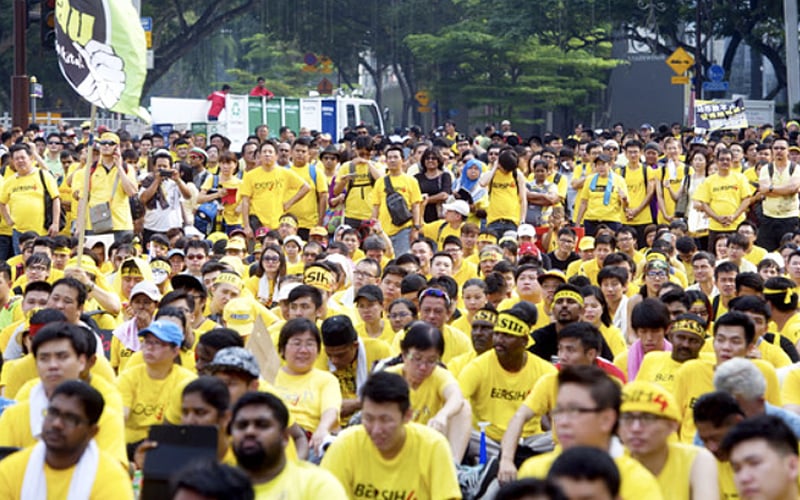
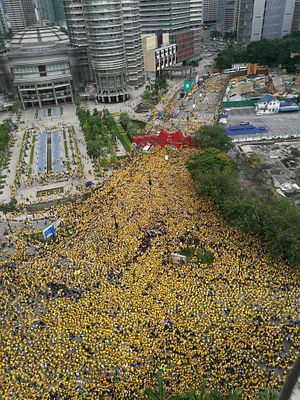
BERSIH in the past had demonstrated that it had the capacity to get tens of thousands, hundreds of thousands to participate in peaceful assembly...

BUT post GE14, BERSIH suffered a loss of credibility - when its leader was co-opted to contest as a PH MP(who was then dropped come GE15), and other key personalities were given government or PH-linked positions. The result was BERSIH's image - it was seen as a pro-PH movement. It must dispel such perception and reclaim its image as an independent pro people movement...not a 'tool' of any political parties. Can it?

BERSIH's ability to get peoples' support was because it was seen to be independent of political parties despite the fact that many Opposition parties grabbed the opportunity to subsequently support these BERSIH organized peaceful assembly...

Bersih has not invited Perikatan Nasional (PN) to join in protesting the reduced sentence for former prime minister Najib Razak, says coalition secretary-general Hamzah Zainudin...When asked if PN would join the electoral watchdog at such demonstrations, Hamzah said both parties must first discuss the issues they should collectively fight for.
It was absurd for PN to suggest that it will not support a BERSIH protest unless 'both parties must first discuss the issues they should collectively fight for.' BERSIH can invite views from all quarters, including political parties but ultimately BERSIH must independently act...of course inviting all, persons and parties to join...

Remember, the people are not just unhappy with PH-led unity government but also some of the matters in PN governed states - or just positions taken by some political parties and/or politicians.

PN can organize its own peaceful assembly and determine the issues they fight for in their peaceful assembly - WHY DON'T THEY? Sadly, many political party simply is not confident enough that they can attract Malaysians from all walks of life, religion, ethnicities, etc to come out for a peaceful assembly...NO GUTS. Even the government fears that they will not get the peoples' support if they organize a peaceful assembly - so, even such an assembly is heard, we hear rumours of people being 'paid' to attend, 'ordered' to attend...

BERSIH organised peaceful assemblies according the people the ability to express their many grievances against the government - but there has been NO BERSIH organised peaceful assemblies after GE14, after PH became government ousting the BN rule and domination of the Federal Government.  The last big BERSIH Protest happened on November 2016.

The rally highlighted five demands: clean elections, clean government, strengthened parliamentary democracy, the right to dissent, and empowerment for Sabah and Sarawak under the tagline “Satukan Tenaga – Malaysia Baru” (“Stand United – New Malaysia”).

The demands are still valid in 2024 - Will BERSIH act and lead?  Will they organize a PEACEFUL ASSEMBLY ...

Bersih warns Putrajaya of fresh protest unless reform agenda put back on track

Bersih warns Putrajaya of fresh protest unless reform agenda put back on track
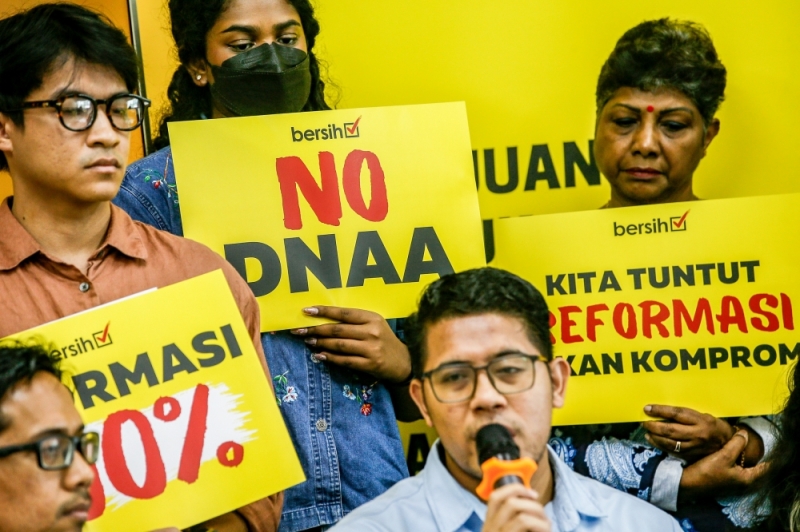
The Coalition for Clean and Fair Elections (Bersih 2.0) today told the Putrajaya that it was ready to organise another mass demonstration against the government if it does not take concrete steps to implement promised institutional reforms in the coming parliamentary meetings. — Picture by Hari Anggara.

PETALING JAYA, Feb 7 — The Coalition for Clean and Fair Elections (Bersih 2.0) today told Putrajaya that it was ready to organise another mass demonstration against the government if it does not take concrete steps to implement promised institutional reforms in the coming parliamentary meetings.

Bersih demanded that the government begin delivering on the reforms promised during the 15th general election in 2022, including the separation of the attorney general’s functions and the restoration of Parliament’s independence from the executive.

“The people urge the government to implement the 100 per cent reform agenda without compromise.

“Bersih will not hesitate to mobilise the people to take to the streets as this is the language best understood by those comfortably in power, regardless of the various excuses given,” said Bersih chairman Faisal Abdul Aziz in a press conference here today.

Faisal said the government must implement these reforms as they were promised the election manifestos of the coalitions that were now in power.

He added that the priority was for structural reforms, and that his organisation would closely monitor the next parliamentary meeting for progress on these promises.

Faisal said Bersih was issuing this warning due to recent developments that show the derailment of the reforms agenda.

Bersih and other NGOs present at the press conference expressed their disappointment with the government’s failure to reveal the advice submitted to the Pardons Board on Datuk Seri Najib Razak’s pardon application as well as the discharge not amounting to acquittal (DNAA) given to Deputy Prime Minister Datuk Seri Ahmad Zahid Hamidi for his corruption charges after the courts had determined prima facie.

Faisal said that while there is no legal obligation for the government to explain, it still has a moral responsibility to do so in matters that were of significant public interest.

Aliran executive committee member K. Haridas clarified that the public were not questioning the Yang di-Pertuan Agong’s discretionary powers enshrined in the Federal Constitution, but rather the government’s advice on Najib’s pardon application.

Suara Rakyat Malaysia (Suaram) program director Azura Nasron complained of the lack of transparency in the matter, asking why Najib’s application was expedited over those of death row inmates made previously.

Electoral watchdog Bersih has organised five massive protests considered to be inflection points in the evolution of Malaysia’s political landscape, beginning with the first in 2007 - Malay Mail, 7/2/2024 

Hassan backs Bersih’s call for protest, says reforms taking too long

Pasir Gudang MP Hassan Karim says the slow pace of reforms has left the people disillusioned and disappointed in the unity government.


Election watchdog Bersih held rallies in 2015 and 2016 over the 1MDB scandal. (Bernama pic)

PETALING JAYA: PKR veteran Hassan Karim says Bersih should take to the streets to protest the sluggish pace of reforms under Prime Minister Anwar Ibrahim’s leadership.

The Pasir Gudang MP said the issue has left the people disillusioned and disappointed in the unity government.

“So it is only natural if Bersih decides to take to the streets to voice their protest against Pakatan Harapan (PH) and the government under Anwar’s leadership for their failure to implement the changes as promised,” he told FMT.

Hassan Karim.

Last Wednesday, Bersih warned that it would not hesitate to organise street protests again if the government does not commit to its institutional and political reform agenda.

At a press conference, Bersih chairman Faisal Abdul Aziz said Malaysia was in a critical period of “democratic transition” that required the coming together of all parties to realise reforms.

“Bersih will not hesitate to mobilise the people back to the streets, a ‘language’ comprehensible to those in power who have been dismissing the people’s aspirations with excuses against supporting reforms. We urge the government to implement the reform agenda without compromise,” he said.

Faisal also said the handling of recent corruption cases involving political elites, including former prime minister Najib Razak, had left the public as well as civil society organisations disappointed and angry.

However, government spokesman Fahmi Fadzil said the government has never forgotten about the institutional reforms it once promised, adding that it is one of the main agendas pursued by Anwar’s administration.

Hassan said Bersih’s fight for free and fair elections also included demands for reforms as pledged by PH in their election manifesto.

The people have very high hopes for the reforms promised, he added.

Hassan pointed out how between 2018 and 2020, the previous PH government led by former prime minister Dr Mahathir Mohamad had also failed to implement the promised reforms, with the latter claiming that the PH manifesto was “not a bible”.

“So when Anwar, a leading advocate for reform and who spearheaded the movement back in 1998, became prime minister, of course people anticipated the promised reforms, but more than a year into the Anwar administration, reforms are progressing too slowly,” he said.

Bersih has been holding protests since 2007 to shine a light on alleged electoral malpractices and to push for fair elections. It also held rallies in 2015 and 2016 over the 1MDB scandal. - FMT, 9/2/2024

Thousands gather for Zahid DNAA rally despite police warnings

The participants then head to the Dang Wangi police headquarters to lodge a report.

Ahmad Mustakim Zulkifli
Share
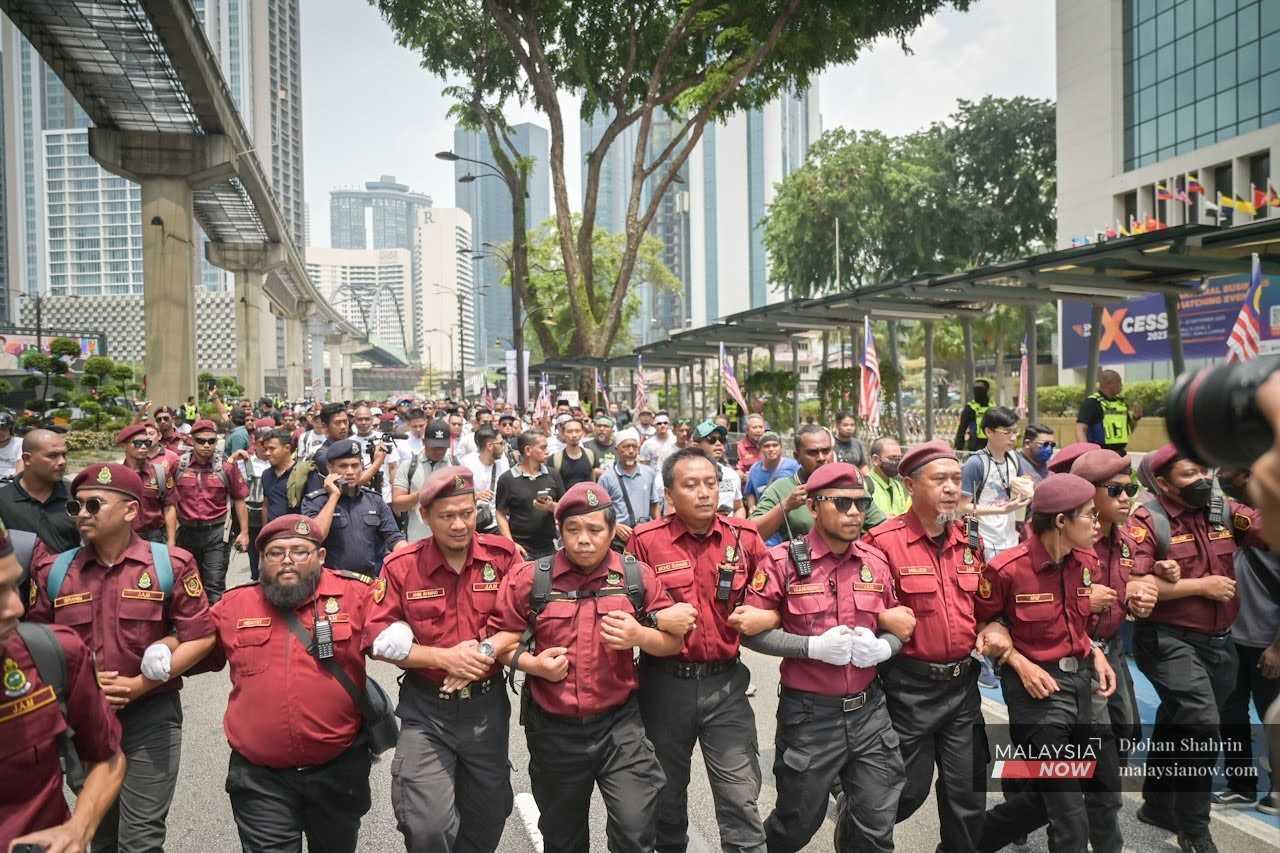
Members of the PAS crowd control unit escort the participants of the 'Save Malaysia' rally as they move from Kampung Baru to the Dang Wangi police headquarters to lodge a police report in Kuala Lumpur, Sept 16.

Crowds today gathered for the "Save Malaysia" rally in Kampung Baru, Kuala Lumpur, to protest the attorney-general's decision to halt the corruption trial of Deputy Prime Minister Ahmad Zahid Hamidi.

Dressed in white, they gathered at the Kampung Baru mosque after the afternoon prayer, carrying placards calling for the Umno president to be re-prosecuted. 

They then began moving to the Dang Wangi police headquarters, where a police report will be lodged by the organiser's secretariat, Tun Faisal Ismail Aziz. 

Those in attendance included activist Badrul Hisham Shaharin or Chegubard, who was released following his arrest several days ago, Bersatu information chief Razali Idris, and Pejuang information chief Rafique Rashid. 

PSX_20230916_143346
'Save Malaysia' participants move from Kampung Baru to the Dang Wangi police headquarters to lodge a police report.

Tun Faisal earlier said in his speech that no gathering would be held.

"We want to express our desire, guaranteed under the constitution, that there was something amiss when Zahid was given the DNAA," he said, referring to the discharge not amounting to acquittal granted to Zahid for 47 charges of corruption in the Yayasan Akalbudi case. 

"Before the election, they promised they would jail Zahid, not put him in Putrajaya."  - Malaysia Now, 16/9/2023


After Bersih 5: Fear and Repression Continue in Malaysia

While the latest rally went off peacefully, that should not overshadow an ongoing crackdown.

After Bersih 5: Fear and Repression Continue in Malaysia
Credit: Jiannoi93 via Wikimedia Commons

The much-anticipated Bersih 5 rally in Malaysia has finally concluded in a relatively peaceful manner, despite some minor incidents in the evening of November 19 amidst a downpour. Bersih 5 is intended to pressure the government toward a new, reformed Malaysia through institutional changes to the country’s flawed governance system ahead of the 14th General Election, due by 2018. The rally highlighted five demands: clean elections, clean government, strengthened parliamentary democracy, the right to dissent, and empowerment for Sabah and Sarawak under the tagline “Satukan Tenaga – Malaysia Baru” (“Stand United – New Malaysia”).

As investigations on the 1Malaysia Development Berhad (1MDB) scandal continue, Prime Minister Najib Tun Razak’s administration has become increasingly repressive and authoritarian. While Saturday’s rally was overall considered as peaceful — due to the heavy police presence in cordoned-off Kuala Lumpur to prevent a potential clash between the Bersih yellow shirts and Red Shirts — it is not an indication that state repression has decreased.

A day before Bersih 5, there was a series of heavy-handed attempts to intimidate activists and opposition leaders. Fears of clashes between Bersih and Red Shirts were real after the latter threatened to target Bersih supporters. It was a dramatic Bersih eve, with more than a dozen from the Red Shirts and the Bersih group arrested. The pre-rally arrests had the result of causing more fear for potential protesters that intended to participate in the Bersih 5 rally the next day. Many are also angry that Bersih co-chair Maria Chin Abdullah is being held under the country’s anti-terror law, Security Offenses (Special Measures) Act 2012, which allows preemptive detention for up to 28 days.

There were also social attempts to dissuade protesters. Religious authorities told Muslims ahead of the Bersih 5 rally that staging demonstrations would invite foreign intervention and run contrary to Islamic laws. In the Friday sermon prepared for mosques nationwide, the Department of Islamic Development Malaysia (Jakim) highlighted the Islamic way of changing leaders’ faults through advice, prayers, and assisting leaders in virtuous matters.

A day after the rally, Deputy Prime Minister Ahmad Zahid Hamidi announced that more individuals would be arrested. Arguing that the law must be respected, he is reported as saying that a list of individuals involved in the Bersih 5 and Red Shirt rallies have been identified, but the names will not be disclosed.

On the rally day itself, there was a strong police presence on standby, with Federal Reserve Unit (FRU) trucks and lots of barricades. Approximately 7,000 policemen were on duty to ensure security and public order. Water cannon trucks were also deployed. Traffic at 58 roads in seven areas in the city was diverted starting at 7 am on the morning of the rally itself to keep the two rival groups from meeting. he rally organizers’ original plans to convene in Dataran Merdeka for the finale was halted by police as various barricades were erected along main roads leading to the square. Eventually, the organizers made eleventh hour plans to convene the crowd in Kuala Lumpur City Center (KLCC), and the rally was allowed to proceed as planned with no interruption from the police. Former Prime Minister Dr. Mahathir Mohamad turned up unannounced just after 2 pm in Bangsar; this marked his second time participating in a Bersih rally.

According to estimates from the police, there were about 15,000 protesters from Bersih group and 2,500 from the Red Shirts. The online portal Malaysiakini estimated that more than 40,000 protesters marched in the rally organized by Bersih. Malaysiakini estimated the number of Red Shirts who also took to the streets at around 4,000. As the protesters were not allowed to converge at meeting points before they decided to gather at KLCC later in the day, it is difficult to estimate the exact number who turned out.

However, turnout figures are no longer a direct reflection of the support received by Bersih in view of the repressive situation, which does not encourage people to come out and protest without feeling fearful. While some have suggested that political fatigue is setting in among Malaysians, dimming enthusiasm for political rallies, it is equally important to understand that Malaysia does not have an enabling environment for peaceful citizen action.

What could explain the pre-Bersih crackdown this time around is the real fear the government itself has toward citizen action. The much-predicted clash between the red and yellow shirts did not happen, due to the heavy road closures by the police. The police managed to prevent the two groups from clashing; however, in blocking off roads they also impinged on the right of protesters to march peacefully. Although the police were even-handed in their treatment of both groups, the heavy road closures were unnecessary.

While some argue that repression is hinders popular mobilization, due to the added costs associated with mobilizing, others insist that repression potentially increases grievances — which could lead to more united collective action.

This is Bersih’s fifth rally and this year marks the movement’s 10th anniversary. While many have argued Bersih has achieved little in demanding the government make meaningful reforms, one interesting trend that has emerged is that how state repression influences Malaysians’ ability to challenge the government. Although state repression limits protests, over time it has also facilitated the continuing growth of civil society in the country, which then led to the crippling of the government’s political legitimacy.

Najib argued that it is unlawful for any party to try to unseat a democratically elected government via street protests, saying that the people should wait until the next election to choose their government via ballot box. But the crucial issue remains: toppling a democratically elected government and reforming the election process are interlinked issues.

Dr. Khoo Ying Hooi is Senior Lecturer at the Department of International and Strategic Studies, Faculty of Arts and Social Sciences, University of Malaya. - The Diplomat, 23/11/2016

Friday, February 16, 2024

ANWAR - No more hardcore poor in 3 States - True or False? Poverty line income must be revised to reflect current increased cost of living? Gift for those who highlight hardcore poor still in said 3 States?

Proudly, Malaysia's Prime Minister announced that there are NO MORE Hardcore poverty in 3 States - KL, Melaka and Negeri Sembilan. He is merely talking about HARDCORE Poor and not those who ABSOLUTELY POOR. 

Did Anwar LIE? Maybe he can offer a REWARD to anyone who brings out the fact that there are still HARDCORE POOR in KL, Melaka and Negeri Sembilan.

In Malaysia, poverty determination is not determined individually - but based on 'household' (meaning the calculation of total monthly income of all living within the said housing unit'. It could be 1, 2 or 10-15. Previously, household used to refer to the immediate family unit father, mother and 3-4 kids, but not so anymore.

The hardcore poor refers to households with a monthly income of less than RM1,169, while those in absolute poverty have an income of less than RM2,208.

The figures determining hardcore poverty and poverty, I believe is still the 2020 figures, but we all know that the Malaysian cost of living, including food prices have been going up and up. Hence, should not the poverty line incomes be reviewed to reflect the real situation today. What is the poverty line income for 2024? Should there be different poverty line income for rural areas and urban areas, as the cost of living differs? Should there be a calculation of poverty line income for an individual, a family unit,.. rather than a household? Poor adults with low income may share the same house, sometimes with 5-15(or more) sharing the same living accommodation?

Is the income of RM1,169 sufficient for house rental/etc, utility bills, phone, food for maybe 5 in the household, transportation, clothing, etc? Even for an individual in Malaysia in February 2024, this will be far from adequate, so will it be sufficient even for a family unit with 2/3 kids?In Malaysia, the poor can live sometimes - but then they or their kids may really be malnourished?

In Malaysia, the incidence of poverty is defined as the percentage of households that has a gross monthly household income lower than the poverty line income. The government revised the national poverty line to RM2,208 in 2020 from RM980 previously. Consequently, the number of households living under the poverty line increased to 5.6 percent in 2020, according to the latest figures from the World Bank.

What exactly did the government do to alleviate 'hardcore' poverty - was it merely a temporary measure of providing sufficient monetary aid to simply increase the household income beyond RM1,169.00? Should it not be a more permanent measures - maybe getting of better employment(permanent) or income generation activities...The Welfare Department talks about skills training, income generating opportunities... Anwar should reveal how hardcore poverty was overcome in the 3 States - KL, Selangor and Negeri Sembilan.

▪ Provide skills training and income generation opportunities for productive group, e.g., in agro-based industries through funding, management,training, and marketing programmes
▪ Provide welfare aid and other forms of support to eligible applicants
▪ Develop self-reliance through mindset change programme
With regard to WELFARE AID, should the law be amended to provide for higher welfare aid? Now, for the needy  is merely...in 2017 as stated below. Has this been amended? It is important that AID for the poor and needy not simply be up to the government of the day - BUT it must be made a right and obligatory by means of amendments to the relevant Acts of Parliament.

Among the help that is available for the poor and elderly in Malaysia is the financial aid of RM300 on a monthly basis. ..Aid’s available for disabled individuals from the Department of Social Welfare Malaysia are:RM350 monthly income maintenance. This is available for disabled people who are working either under an employer or self-employed with a salary below RM1,200.RM200 monthly financial assistance for disabled individuals without a job..single mothers can apply to receive financial aid to temporarily ease their burden.Child helpminimum: RM100 per month, per child..Maximum: RM450 per month if there are more than 4 children involved -

Source: 6 government aids and subsidies to help you save money in 2017

Maybe, the Federal Constitution ought to be amended to provide all the right to food, shelter, clothing and healthcare. Maybe another amendment to provide us with the right to a clean and healthy environment. YES, when it is part of the CONSTITUTION, it becomes the government's duty and responsibility to ensure that all in Malaysia enjoys these rights, and for the poor, it becomes the  the government's duty and responsibility that they have proper housing, food, shelter,... no more up to the whims and fancy of any government of the day...

Employment and steady income can be provided by the government(Federal Government, State Government and Local Government) - the poor can be employed to carry out works like cleaning, grass cutting and management of gardens... many of which is now being done by migrant workers of private companies. A poor family could be housed in a school area, while the father/mother could be employed to maintenance cleanliness of the school and the upkeep of the garden.. the presence of the family also will assist in 'security' of the premises, would it not. .. There are ways in which the government can eliminate poverty.

Identifying the poor and the hardcore poor may be assisted by the MANDATORY requirement that all adults must submit Income Tax returns, wherein which they would have to list their gross annual income(from whatever source) - in this way, the government can more easily identify the poor that require assistance. Tax returns irrespective of whether you are liable to pay tax or not??

ZAKAT goes to the State, how can the Federal Government work with State Governments to address the question of poverty in Malaysia(in all 13 States and 3 Federal Territories). There must be coordination? Or should each and every State transmit all monies it collected as Zakat for the Federal Government to use it to deal with poverty?

There are 13 States and 3 Federal Territories, and until HARDCORE POVERTY is eliminated in Malaysia, there is nothing to be proud of.

Talking about HOUSING - maybe the government to build and have their own housing units to be then rented out to the hardcore and absolute poor at a minimal rental. The availability of low cost houses to be bought may do no good for the poor...

LOW COST HOUSING must be used by the intended - not to be rented out or sold for profit to another. Maybe a law that reverts the ownership of low cost housing units, if it is found that the unit is not being used by the intended as required. [There were allegations that in the past, there was much abuse - low cost units ended up with cronies/friends - not in the hands of the truly poor who needed houses. ]


No more hardcore poor in KL, Melaka and Negeri Sembilan, says PM

Anwar Ibrahim says programme has targeted people in need regardless of race, despite doubts in some communities.


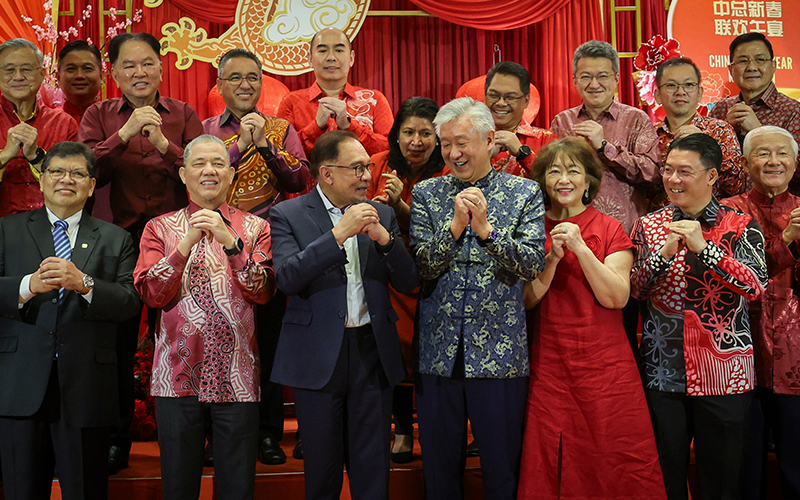
Prime Minister Anwar Ibrahim and ACCCIM president Low Kian Chuan at the Chinese New Year event today. On Anwar’s right are deputy prime minister Fadillah Yusof and Dewan Rakyat Speaker Johari Abdul. (Bernama pic)

PETALING JAYA: Efforts to eradicate extreme poverty in Kuala Lumpur, Melaka and Negeri Sembilan have been 100% successful, Prime Minister Anwar Ibrahim said.

He said this drive to eradicate hardcore poverty encompassed all races and was not specific to Malays, Bernama reported.

“In Kuala Lumpur, although the majority are Malays, there is a proportionately high Indian population.

“We have assisted every Indian family in Kuala Lumpur to break free from hardcore poverty. This is our approach, but sometimes we face community leaders who doubt the allocation for Indians.

“For me, we will address every hardcore poor person, regardless of whether they are Chinese, Malay or Indian.

“In Kuala Lumpur, Melaka and Negeri Sembilan, based on the figures we have obtained, we have achieved 100% (success),” he said at the Associated Chinese Chambers of Commerce and Industry of Malaysia Chinese New Year celebration in Kuala Lumpur today.

Anwar has made eradicating hardcore poverty a key aspect of his Madani agenda. - FMT, 15/2/2024

No more excuses for hardcore poverty, Anwar tells state zakat agencies
Published on: Friday, February 16, 2024
By: FMT, Predeep Nambiar
Text Size:

No more excuses for hardcore poverty, Anwar tells state zakat agencies
Prime Minister Anwar Ibrahim delivering his speech at the Penang International Zakat Conference at Universiti Sains Malaysia in George Town, Penang, today.
GEORGE TOWN: There can be no more excuses for hardcore poverty in the country given the sizeable zakat (tithes) collections in several states, says Prime Minister Anwar Ibrahim.

Anwar said the primary objective of zakat is to help the poor. As such, he said, state zakat authorities are obliged to prioritise the eradication of hardcore poverty.

“Zakat is not about generating revenue for the country. It is an institution dedicated to eradicating poverty,” he said when opening the Penang International Zakat Conference at Universiti Sains Malaysia here.

“I cannot accept the fact that there are people who remain in the hardcore poor bracket despite states collecting large sums as zakat.”
Since becoming prime minister in 2022, Anwar has made eradicating hardcore poverty one of his key missions.

Yesterday, the prime minister commended the success of efforts to eradicate extreme poverty in Kuala Lumpur, Melaka and Negeri Sembilan.

“Based on figures we have obtained, we have achieved 100% success in Kuala Lumpur, Melaka and Negeri Sembilan,” he said at the Associated Chinese Chambers of Commerce and Industry of Malaysia’s (ACCCIM) Chinese New Year celebrations in Kuala Lumpur.

Last December, Negeri Sembilan menteri besar Aminuddin Harun announced that his state had successfully eradicated hardcore poverty, with 3,530 households moving out of the lowest bracket of poverty.

The hardcore poor refers to households with a monthly income of less than RM1,169, while those in absolute poverty have an income of less than RM2,208. - Daily Express, 16/2/2024


MTEN AGREES TO PROPOSALS TO END HARDCORE POVERTY – PM ANWAR

KUALA LUMPUR, Nov 6 (Bernama) — Prime Minister Datuk Seri Anwar Ibrahim said the National Economic Action Council (MTEN) meeting he chaired today agreed on three proposals to end hardcore poverty in the country.

Anwar said MTEN agreed that special monthly cash assistance would be considered to overcome the food poverty line (PGK) for households unable to participate in income-generating activities due to age and health factors.

All agencies and ministries will conduct a review and update the data to confirm the number of recipients who have been given assistance and generate income exceeding the food PGK in 2023.

“All agencies need to identify households which can participate in the programme in the remaining three months and be absorbed in other suitable programmes,” he said in a statement issued after the MTEN meeting today.

He added that today’s meeting was also informed about the status of implementation and efforts in eliminating hardcore poverty as well as the challenges faced.

He said that several efforts and programmes have been implemented by the government to eradicate hardcore poverty, including programmes related to monthly cash assistance, home upgrading, providing business capital, skills training and income-generating activities.

“These efforts have already been implemented by various ministries and agencies to help people to break away from the shackles of hardcore poverty.

Meanwhile, Anwar said the meeting had examined and found that the actual development expenditure was shrinking every year, although the budget showed a large increase and this could have a long-term impact on the country’s economic growth.

Apart from that, the implementation of development projects which are problematic and experience delays in implementation has caused an increase in costs and impacted the economy negatively.

He added that the meeting also found that determining the specifications and cost evaluation of information and communications technology (ICT) projects effectively was difficult to do, and it was also challenging to do a cost review process without a standard cost estimate.

He said the situation could lead to duplication of work and an increase in the cost of ICT projects.

In this regard, he added that the government will take immediate action to improve the processes in the implementation of development expenditure (DE) projects.

He said this would include the setting up of an inter-ministerial team, namely the Ministry of Economy; Implementation Coordination Unit (ICU); Ministry of Finance; Public Works Department; Department of Irrigation and Drainage; Malaysian Administrative Modernisation and Management Planning Unit (MAMPU) and related departments to review and prepare a framework on improvement, to be approved by the government.

Anwar said other actions were policy decisions towards decentralisation and empowerment of project implementation and control of allocations to implementing agencies, balanced with strict governance.

He said another action is a policy decision towards centralisation of ICT project implementation and determination of specifications/costs at MAMPU to control costs and in preparation towards GovTech.

BERNAMA


Hardcore poverty: It is expensive to be poor

KUALA LUMPUR: In this quiet little hamlet, smack dab in the middle of the sprawling metropolis that is Kuala Lumpur, dozens of people stand in line patiently to receive food aid, a daily occurrence for many.

One woman easily stood out from the throng, her wizened brown countenance setting her apart. She is small and stick-thin, her bony body slightly bowed as if burdened by the passing years and life. Despite that, she is quite spry for her age which she, after several meetings, divulges is 74.

She tells Bernama she recently returned to the soup kitchen in Medan Tuanku here, organised by Pertubuhan Tindakan Wanita Islam (Pertiwi), after stopping for a few years. She had no choice after losing her life savings to a scammer, she says.

"I lost RM31,000. He (the scammer) told me he was going to give me Eid money. It was like I was hypnotised. I went to the bank, signed the paper. I thought he was going to put the money in, but he took the money out instead. Everything is gone," she said, upset.

"I didn't eat for two days. All I could do was cry."

What really upsets her is that she feels she has run out of options as she is unable to work and dependent on the RM500 monthly stipend she receives from the Social Welfare Department (JKM). She contemplates returning to Kelantan where she has family but is afraid her situation will be worse over there. 

At least here, she says she has a home. She is renting a low-cost apartment unit for RM150 monthly together with her 28-year-old adopted son. A daily wage earner, he gives her money when he can. Otherwise, they both depend on her JKM allowance. So far, her son has not been able to get a permanent position.

With the loss of her savings, life has become more precarious. She and her son are likely one major health emergency away from being completely destitute. Even now, she complains of stomach ache and pain in her knees. 

In this, she is emblematic of the risks and lack of choices some two million people living in abject poverty in Malaysia face, an issue Prime Minister Datuk Seri Anwar Ibrahim has vowed to alleviate, if not eradicate. It is an uphill battle, however, with many tangential issues that will need tackling in tandem.

THE COST OF BEING POOR

In Malaysia, the incidence of poverty is defined as the percentage of households that has a gross monthly household income lower than the poverty line income. The government revised the national poverty line to RM2,208 in 2020 from RM980 previously. Consequently, the number of households living under the poverty line increased to 5.6 percent in 2020, according to the latest figures from the World Bank.

For decades, Malaysia has provided assistance to the poor and lower-income groups with targeted subsidies and financial assistance. While it has largely worked, lifting Malaysians from a 50 percent poverty rate in the 1970s to less than 10 percent now, there remain pockets of poverty in rural areas as well as in urban areas.

Experts say alleviating hardcore poverty is not that easy although they lauded the effort. While there are many facilities and services available for the poor, gaining access to such services can be a challenge in a multitude of ways. 

In short, many people in abject poverty cannot afford the cost of being poor.

Economist and former Human Rights Commission of Malaysia (Suhakam) commissioner Prof Datuk Dr Madeline Berma, who has done a lot of research on poverty, said Malaysia uses the targeted approach method, where the indigent and poor have to register with the government first and then undergo the process of verification. This can be a stumbling block for many poor people.

"You have to be registered in e-kasih (National Poverty Data Bank System) in order for you to qualify for support. So if you are a Penan living seven days walking distance (from the nearest assistance centre) and you don't know about e-kasih then how are you supposed to register?" she said.

She said even when people have managed to register themselves, they may still face obstacles such as transportation. Depending on where they live, some can ill-afford the cost of travelling to the district office which is responsible for disseminating aid and financial assistance to the poor.

She gave the example of getting financial aid in Sarawak: "In the old days, the JKM allowance was RM70. The cost of traveling from the longhouse to the district office to get that assistance will cost you about RM30 to RM40 by boat.

"For the poor, the most expensive thing in their budget is food. Next is transport. If we can address these two issues, it will help a lot in terms of (alleviating poverty)," she added.


For decades, Malaysia has provided assistance to the poor and lower-income groups with targeted subsidies and financial assistance. - File pic

ACCESSIBILITY  

One visually-impaired man Bernama talked to knows very well what it means to spend what little money he has to collect money and assistance to survive. The 62-year-old man, who asked to be identified only as Low, takes a bus from Rawang to Kuala Lumpur and then the MRT to the soup kitchen every day without fail.

He gets three packs of free food, consisting of rice, a protein dish and vegetables, for his breakfast, lunch and dinner. He leaves at 11 am every day to make sure he arrives on time so as not to risk the soup kitchen running out of food. He then takes the MRT and bus back home. 

Low said he receives RM300 a month from JKM. His travelling expenses per month alone come to at least RM110.  He lives in an illegal dwelling rent-free on someone else's land which allows him to save a little money. He tries not to spend more than necessary.

"What I don't use, I put into (my EPF account). I don't want to use the money," he said, adding he has RM20,000 in the account. He has already earmarked the money for an old folks home when the time comes.

He has no family, save for a sister who lives away from him. The house itself is very sparse, he said, equipped only with a kettle, washer, bed and radio. 

Low said he does not find his daily travel too arduous although he gripes about the state of facilities for the disabled at some of the stations. Being legally blind, the lack of working elevators in some places puts him at risk of falling,

Disability advocate Murugeswaran Veerasamy, who prefers to be called Muru, said improving disability access everywhere, not just in public transportation, will help reduce abject poverty overall. 

Although Malaysia does not have exact figures on the number of disabled people living in abject poverty, research has found that many disabled Malaysians are unable to earn an income. This includes the elderly, who become more physically disabled as they get older, even if they remain mentally alert.

"The quota (for hiring disabled persons) in the government sector and private sector is one percent. At the moment, I think only 0.02 percent of employees are disabled whereas this quota system was implemented (decades ago)," said Muru.

He and other experts warned that policies to alleviate poverty cannot have a one-size-fits-all kind of solution. As such, Muru said part of disability access means the assistance should be tailored to what the people need.

"Identify and separate them and give them the proper assistance so they can contribute to themselves, to the family and to the country. If we give them proper guidance, they can do well," he said.


DOCUMENTATION

But identification and classification can be a sign of some privilege as well, presenting insurmountable obstacles to some who are hardcore poor. Much of the poverty assistance in Malaysia is reserved for Malaysians which requires documentation. 

Experts said the lack of documentation among the poor is a common issue that continues the cycle of poverty. 

Pertiwi president Datuk Munirah Abdul Hamid told Bernama she would not be surprised if the number of people living in abject poverty is higher than the governmental figures.

"It's always the privileged who are able to get classification, the rest fall in the margins," she said.

Mega, a 38-year-old homeless woman, can attest to the state of limbo being undocumented brings. She used to live with her mother, an Indonesian domestic worker, in a shophouse. She never knew her father who may or may not be Malaysian.

 Now her mother is dead. She told Bernama she does not have a birth certificate. She has never been to school, only learning how to read and write from friends. She does not know if her parents were married and if her father was Malaysian which would have qualified her for assistance from the government.  

Being undocumented, she cannot be employed formally which makes it difficult for her to earn an income or afford her HIV medication.

Despite her hardship, she is friendly and quick to smile, despite missing some teeth.

"Life is hard now. I'm still happy but I miss my mother," she said.

Dr Berma said many among the hardcore poor lacked awareness of the importance of getting the necessary documentation. She acknowledged that registering for MyKad was a lengthy process, usually taking a whole day, which is difficult for daily wage earners who may have to give up a day's wages or those who live far away.

However, she said it was a necessity.

"If they know the importance of their children having their identity cards, then they would really do it," she said, adding the process could be simplified. -- BERNAMA, NST, 23/6/2023

Thursday, February 15, 2024

PARDON - Discrimination, only for some? Should Shafee's disclosure that could invalidate Najib's pardon be acted on? A law on PARDONS?

A law governing Pardons can be enacted by Parliament. Yes, it will be automatically govern the Pardons Board in the Federal Territories, and all the States if the respective States thereafter adopts it through State enactments. 

After one is convicted and sentenced. There are several things that can happen besides PARDON by King/Rulers - including 'parole', etc

Malaysia has 13 States, and 3 Federal Territories - Therefore 13 Rulers, and the King has the power of pardon. It all depends where the crime in committed and/or tried. So 14 PARDON BOARDS - separate from each other.

The King/Rulers power of pardon is not a power that the King or ruler can simply do as he pleases > The King/Ruler only acts on the advice of the Pardon Board - hence if the Pardon Board advises dropping the sentence from 12 years to 6 years, then the King must do so even if he disagrees. 

Can the King refuse the advise of the Pardon Board - theoretically and reasonably NO. There is no specific provisions in the Constitution, but the principle is evident

What happens if the King refused to pardon Najib as advised by the Pardons Board? Now, he has to do as was advised...and usually the King will issue the Pardon himself, but questions arise with Najib's pardon as the media statement was issued by the Pardons Board with the Prime Minister's Department letterhead. {see earlier post, and see the difference with Anwar's pardon and Najib's pardon announcement -  More about Najib's Pardon - Is the Pardons Board under the Cabinet? What is FULL PARDON? AG must explain and clarify confusions ...?

DOUBLE STANDARDS IN GIVING PARDONS??

There are tens of thousands of convicted criminals in Malaysia, and there are also thousands who have already served their prison sentence or paid their fine, who are still disqualified from contesting in elections or even holding positions in societies for 5 years(or more) - AND they all need a PARDON from the King/Rulers.

A recent media report revealed that these 'lesser' people even after the applied for Pardon, never even received any communication back from the Pardons Board...  At the very least, a communication saying that their petition/request for pardon had been received and will be processed soon would be good... 

...angry that her brother, who's been languishing in prison since 2001, has not had a shot at a royal pardon, while a politician recently had his sentence halved after spending barely two years behind bars."We are mad. The difference is that we are common people. So, no one is looking at us," she lamented to Malaysiakini....In 2020, the family wrote to the Pardons Board but never heard back....Intan strongly believes that a "VIP", such as a politician, could get an express pathway to pardon, as opposed to a common prisoner."Please don't have double standards. (It's as if) if you are a 'somebody', you are a bit special," she said.

So, How many petitions for pardon have been submitted to the King and/or various Rulers? How many of these pardon petitions have been considered and decided upon - and the results communicated back to the petitioner - rejection, approvals - sentence reduced/commuted/etc, never even had any communication back from the King/Rulers? Did Anwar Ibrahim's and Najib's pardon jump the queue and get preferential treatment? ONLY  IF A MP/SENATOR ASK THIS QUESTION IN PARLIAMENT WOULD MALAYSIANS GET AN ANSWER - Sadly transparency is lacking even with regards the King/Rulers? 

As there are 13 plus 1 different pardon boards in Malaysia - there may be different rules/procedures(if there is) - but sadly there seems to be in many cases not even an address/office of these different Pardon Boards for people to even follow-up and find out what is happening to their petition for pardons? 

Najib, as soon as he was sent to jail following the dismissal of his final appeal by the Federal Court applied for a pardon...YUP, as there are no clear rules, everyone can apply for a Pardon to the King/Rulers after they fail in their final appeal in the courts - NAY - nothing is actually even stopping them to apply for pardon after they are first convicted - i.e. even Syed Saddiq, who was recently convicted at the High Court can apply to the King/Ruler for Pardon now...There is NO CLEAR RULES OR GUIDELINES for the Pardon Procedure in Malaysia that applies to the pardon processes today that guide/govern the 14 different Pardon Boards.

Now, consider PAROLE, there are some clear guidelines

a prisoner shall only be eligible to be considered for parole-

(a) if he is sentenced to a minimum of one year imprisonment for any offence other than the offences prescribed in the Fourth Schedule;

(b) subject to subsection (7), after he has served at least half of his term of imprisonment without taking into account the remission of sentence granted to him under section 44; and

(c) after he has undergone a rehabilitation program approved by the Commissioner General while serving his sentence of imprisonment....[46E  Eligibility for parole, PRISON ACT 1995]

For parole, it is also stated that one can apply for parole only ...  '...such prisoner shall be eligible to be considered for parole only after the final decision of such pending appeal has been made...' This means Syed Saddiq still cannot apply for parole...only after all his appeals are over. Does this also apply to Pardons - or can the King Pardon Syed Saddiq now, before his appeal is heard?

Parole is (d)"parole" means the release of a prisoner to serve any part of his sentence of imprisonment outside prison pursuant to a Parole Order;. Now, all members of the Parole Board are also appointed by the KING - '...members who shall be appointed by the Yang di-Pertuan Agong...' Now, Parole is different from PARDON by King/Ruler of State.

Another problem with the PARDONS BOARD is the composition and their independence... There are 5 members according to the Federal Constitution - 

(5) The Pardons Board constituted for each State shall consist of the Attorney General of the Federation, the Chief Minister of the State and not more than three other members, who shall be appointed by the Ruler or Yang di-Pertua Negeri; but the Attorney General may from time to time by instrument in writing delegate his functions as a member of the Board to any other person, and the Ruler or Yang di-Pertua Negeri may appoint any person to exercise temporarily the functions of any member of the Board appointed by him who is absent or unable to act....(11) For the purpose of this Article, there shall be constituted a single Pardons Board for the Federal Territories of Kuala Lumpur, Labuan and Putrajaya and the provisions of Clauses (5), (6), (7), (8) and (9) shall apply mutatis mutandis to the Pardons Board under this Clause except that reference to "Ruler or Yang di-Pertua Negeri" shall be construed as reference to the Yang di-Pertuan Agong and reference to "Chief Minister of the State" shall be construed as reference to the Minister responsible for the Federal Territories of Kuala Lumpur, Labuan and Putrajaya.(Art. 42 Federal Constitution)

So, beside the AG(or his/her rep) and the Chief Minister(or the Federal Minister), there are 3 others, and reasonably these 3 members will be appointed by the King/Ruler on the advice of the Prime Minister or the the Chief Minister of the State. 

As the King/Ruler acts on '...be exercised on the advice of a Pardons Board constituted for that State in accordance with Clause (5)...' the question that arises, is that WHO HAS A VOTE in the Pardon's Board? Does the AG and Chief Minister(Federal Minister) have a vote too? Does the King and/or State Ruler also have a vote - as presider of Pardons Board meetings?

Should there be reforms - whereby the appointment of members of the Pardon be done by Parliament(or State Parliament) who shall advise the King/Ruler, rather than the Prime Minister or Chief Minister)? This is in light of the fact of Anwar's and Najib's pardon - where they were both persons closedly related to the Prime Minister(or government of the day) - where they were key members of the parties in government?

Should the AG have NO VOTING RIGHTS? Likewise, the Chief Minister(or Federal Minister) have no voting rights - just observer status?

Does the King (or State Ruler) have voting rights, considering that he Presides the Pardons Board meetings? I think not - it is ONLY the Pardons Board that decides. The King or Ruler sits in to better understand the reasons for the decision - that is all. After all, the relevant Article is clear that pardon powers be exercised on the advice of the Pardons Board. Although Art 42(4) clearly states that this is the case for State Rulers, it is rationalle and reasonable to imply that the same applies to the KING...

(4) The powers mentioned in this Article—

(a) are, so far as they are exercisable by the Yang di-Pertuan Agong, among functions with respect to which federal law may make provision under Clause (3) of Article 40;

(b) shall, so far as they are exercisable by the Ruler or Yang di-Pertua Negeri of a State, be exercised on the advice of a Pardons Board constituted for that State in accordance with Clause (5).

Now, Art 40(2) is clear as to when the KING must act on the advice - and when he can act on own discretion, which is limited to appointment of Prime Minister, decision to dissolve Parliament or not, the requisition of meeting of Conference of Rulers and and '...in any other case mentioned in this Constitution...' and Article 42 is CLEAR that with regard to pardons, he must act in accordance to the advice of the relevant Pardons Board - not Cabinet or any other Minister.

Art40(1) In the exercise of his functions under this Constitution or federal law the Yang di-Pertuan Agong shall act in accordance with the advice of the Cabinet or of a Minister acting under the general authority of the Cabinet, except as otherwise provided by this Constitution; but shall be entitled, at his request, to any information concerning the government of the Federation which is available to the Cabinet.
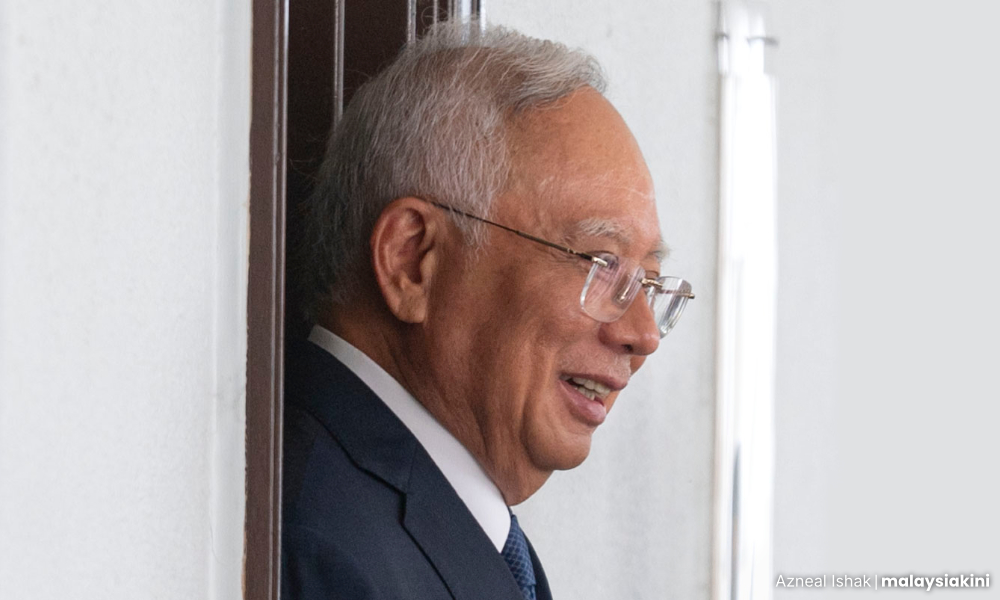
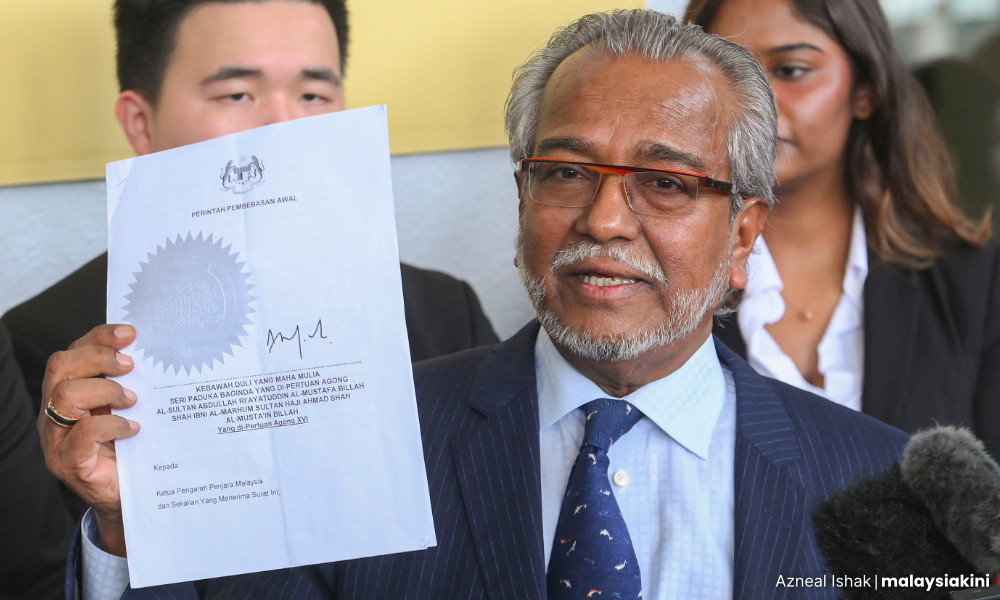
Recently, lawyer Muhammad Shafee Abdullah revealed(as reported) certain concerns about the Pardon Board that dealt with Najib's Pardon..

(a) The Pardons Board advised the King that Najib serve out the rest of his sentence - which means the King's pardon of Najib that reduced the sentence may be INVALID.

“After the preamble, they now say that ‘the Pardons Board, following Article 42 of the Federal Constitution had on Jan 29 considered the convict’s sentence and advised the Yang di-Pertuan Agong to serve out the rest of his sentence’.

(b) That the Pardons Board that gave the King the right to exercise mercy despite the Pardons Board's advice... Is this not a violation of the Federal Constitution? Can the person/s who is supposed to advice the King, who is bound to act on that advice, give the King the power to act against the advice given? Another constitutional issue??? Did the King act despite the advise of the Pardons Board and reduce Najib's sentence because the Pardons Board said that 'that mercy should be shown to Najib' ?

“(The letter then says) ‘It is reasonable in His Majesty (the King’s) view, that mercy should be shown to Najib’,” Shafee said reading out the letter....In the letter, Sultan Abdullah Sultan Ahmad Shah decreed, using his authority under Article 42 and other powers, that Najib’s sentence be halved and his fine be reduced to RM50 million. 

(c) The alleged letter signed by Dr Zaleha(Minister) bore the Royal Seal? Should not a Pardon letter be issued by the King or the Palace, not a Minister in PM Anwar's cabinet?

Shafee noted that the letter was signed by Zaliha - who is a Federal Territories Pardons Board member - but also carries the royal seal.

(d) that there were 4, not 3 members of the Pardons Board as provided by law.

He then alleged that the ruler passed empty ballots to the “four” non-permanent members of the Pardons Board on whether a full pardon should be granted.

(e) How did Shafee know what happened in the Pardons Board? 

Other issues were raised, but all in all, there is a need to VERIFY the truth of what happened, as it can have the result of completely NEGATING Najib's Pardon that reduced his prison term and fine.

How will PM Anwar Ibrahim's government respond? SILENCE is not an option. A ROYAL COMMISSION OF INQUIRY?? A Parliamentary Select Commitee? AG takes the matter to Court to get an order on the validity of Najib's Pardon? What? What?

There is another issue with Najib's Pardon - should the then King(the Sultan of Pahang) have recused himself - and let the Deputy King preside over the Pardons Board. WHY? Najib is a citizen of Pahang, and more importantly part of royal structure - Najib is the current Orang Kaya Indera Shahbandar. RECUSAL of the King/Rulers or even members of the Pardons Board when the person one has to consider for pardon is a family member, friend or associate, member/leader of your political party/coalition, part of royal structure of the State. With the King, it may be possible because Malaysia always has a Deputy King(being a Ruler of a different State, but with the State Rulers, most times the Raja Muda(or 'Deputy') is the son of the Ruler ... REFORM COMMITTEE to consider?

Orang Kaya Indera Shahbandar ('Mighty Noblemen Shahbandar', Jawi: اورڠ كاي ايندرا شهبندر) is a nobility title in Pahang Sultanate and one of the four highest-ranking nobles below the monarch — equivalent to Duke in some European peerage.

AG should also advise us if action can be taken against Pardons Board or Pardon Board members when they acted in breach of the law in their exercise of powers as Pardons Board members? 

Would decisions of the King's Pardon of Najib be invalidated?


'Why the double standards in giving pardons?'
Ili Aqilah
Published: Feb 9, 2024 12:09 PM

Updated: 12:59 PM
 

Intan Diana Abdul Rahim is fuming mad. The 40-year-old is angry that her brother, who's been languishing in prison since 2001, has not had a shot at a royal pardon, while a politician recently had his sentence halved after spending barely two years behind bars.

"We are mad. The difference is that we are common people. So, no one is looking at us," she lamented to Malaysiakini.

According to Intan, her elder brother, whom she refused to name due to fear of repercussions, was sentenced to life in prison and six strokes of the rotan 23 years ago for a firearm-related offence.

While serving his sentence, the 43-year-old received numerous awards for being a model inmate, and picked up various new skills, including sewing, she said.

In 2020, the family wrote to the Pardons Board but never heard back.

Intan said her family spent thousands of ringgit, including by pawning jewellery and selling land to fund her brother's legal fees.

Intan strongly believes that a "VIP", such as a politician, could get an express pathway to pardon, as opposed to a common prisoner.

"Please don't have double standards. (It's as if) if you are a 'somebody', you are a bit special," she said.

Intan is among the families of many inmates who are awaiting their second shot at life - a royal pardon, or sentence reduction/remission.

Malaysiakini reached out to the kin of one such inmate, as well as activists and lawyers following the Pardons Board's decision to reduce former premier Najib Abdul Razak’s jail term and fine over the SRC International case.

Former prime minister Najib Abdul Razak

Last week, the board halved Najib's jail sentence from 12 years to six and reduced his fine from RM210 million to RM50 million.

Democracy means equality

According to Intan, it was her brother who got her in touch with the human rights group Suaram, where she met programme manager Azura Nasron.

Azura, who has dealt with many such cases involving prisoners, recalled not hearing a squeak from the Pardons Board over another royal pardon request made for Intan's brother in 2022.

"We are sad because the (inmate's) family has been fighting the case for many years. His father has passed away and his elderly mother is unwell.

"They are a B40 family who lives in a PPR (public housing scheme)," she told Malaysiakini.

As the government is embarking on a review of the death sentence and life imprisonment, the said prisoner's royal request will not be entertained as he would have to wait - possibly for a few more years - for a resentencing, Azura lamented.

Suaram programme manager Azura Nasron

"The prisoner will have to wait for a long time as the government would prioritise elderly and sick prisoners," she added.

Thus, she said it is unfair for "elite politicians" who are in jail for corruption to be prioritised by the system.

"There are many prisoners who have been behind bars for 20, 30 years, who are more deserving of pardons."

Azura opined that in the name of transparency, Najib should have "waited in line" for his turn, rather than using privilege to fast-track his case.

"Democracy means everyone is equal in law. But here, there is clear discrimination between the 'elites' and the others," she said.

'Why can't all enjoy the privilege?'

Lawyer Goh Cia Yee questioned why all accused persons can’t enjoy the same privileges that the "elites" do in the criminal justice system.

He cited the case of two of his clients imprisoned for drug-related offences, who waited for five years just to get their trials and appeals heard.

"One client was arrested five years ago, convicted in 2022, and is awaiting his appeal to be heard this year.

"Another client who was arrested five years ago for a similar offence is still waiting for the conclusion of his trial," Goh told Malaysiakini, adding that the wait would be longer for cases where bail is not possible.

Lawyer Goh Cia Yee

He attributed such delays to analysis taking a long time to be completed, cases being transferred to the High Court, and having proceedings done in person.

Citing Najib's case as an example, Goh acknowledged that there are cases where one's status in society can be in their favour in the criminal justice system.

"Decent and humane treatment is a basic right, but sometimes it may appear to be available only depending on your status in the society," the lawyer said. - Malaysiakini, 9/2/2024

Pardons Board recommended Najib serve out his sentence - Shafee
Malaysiakini Team
Published:  Feb 7, 2024 6:32 PM
Updated: 5:42 PM
A letter carrying the seal of the previous Yang di-Pertuan Agong shed light on a possible impasse between the then-king and the Pardons Board regarding Najib Abdul Razak’s jail sentence.

The letter, read out by Najib’s lawyer Muhammad Shafee Abdullah today, revealed that the Pardons Board did not advise the Agong to reduce the former prime minister’s prison term.

“The announcement (in the letter) is made by someone called Dr Zaliha Mustafa (the de facto Federal Territories Minister).

“After the preamble, they now say that ‘the Pardons Board, following Article 42 of the Federal Constitution had on Jan 29 considered the convict’s sentence and advised the Yang di-Pertuan Agong to serve out the rest of his sentence’.

“(The letter then says) ‘It is reasonable in His Majesty (the King’s) view, that mercy should be shown to Najib’,” Shafee said reading out the letter.

Shafee showed the letter to the media but did not hand out copies.

Sultan Abdullah Sultan Ahmad Shah

In the letter, Sultan Abdullah Sultan Ahmad Shah decreed, using his authority under Article 42 and other powers, that Najib’s sentence be halved and his fine be reduced to RM50 million.

Article 42 of the Federal Constitution covers the power to pardon and the formation of pardons boards at the federal and state levels.

Shafee noted that the letter was signed by Zaliha - who is a Federal Territories Pardons Board member - but also carries the royal seal.

He also said his client - Najib - received the letter as he was an affected party.

Lawyer Muhammad Shafee Abdullah

However, the lawyer cast doubts that the letter was written on Jan 29 when the Pardons Board met to decide on Najib.

He implied that it was written after the government’s Legal Affairs Division issued its statement announcing the Pardons Board decision on Feb 2.

He said this is because the letter does not contain errors and ‘blunders’ as in the Feb 2 statement - such as stating that Najib would get a 50 percent discount on his RM210 million fine, which was incorrect.

Agong held a vote

Earlier in his press conference, Shafee also insinuated that Sultan Abdullah wanted to grant Najib a full pardon.

“I am told, and I am confident this happened otherwise I wouldn’t dare tell you this, that on Jan 29, the Yang di-Pertuan Agong was thinking of a full pardon.

“But he wanted to be sure,” Shafee claimed.

He then alleged that the ruler passed empty ballots to the “four” non-permanent members of the Pardons Board on whether a full pardon should be granted.

The Federal Territories Pardons Board should only have three non-permanent members, with another three being the Agong, the attorney-general, and the Federal Territories minister.

Shafee said he does not know what the results of the vote were, but that it led to Najib’s sentence being reduced instead of a full pardon.

Minister in the Prime Minister’s Department (Federal Territories) Dr Zaliha Mustafa

He claimed this showed that contrary to claims otherwise, the Yang di-Pertuan Agong had the prerogative to decide on pardons but that Sultan Abdullah chose to listen to the advice of others.

The government’s position has been that the power to pardon, and thus the Pardons Board’s decisions, are the sole prerogative of the Agong.

Zaliha said on Saturday that the reduction of Najib’s sentence was a “collective decision”.

The Malaysian Bar and other legal experts, meanwhile, maintain that the Agong must follow the advice of the executive, as per Article 40(1) of the Federal Constitution.

Later in the press conference, Shafee claimed this was based on what was being discussed in the public.

Shafee had said that Najib is considering filing for another pardon to secure his freedom.

The decision to reduce Najib’s sentence caused widespread dismay, with critics lamenting the former prime minister should not have been shown leniency, while Najib and his supporters yearned for a full pardon.