In 2017, finding that there was very little on the history of Malaysian Labour Movement, I researched and wrote several articles that was also re-published by ALIRAN, Malaysiakini and several other websites. A understanding of HISTORY is crucial, as it HIGHLIGHTS how Malaysian labour movement was once very strong when it did not just fight for labour rights, but also for Independence of Malaya, and all issues that really affect the worker, the citizen or people of the nation.
The state of the labour movement in Malaysia (Part 1)
The Malaysiakini reports(1st Part) is re-published here as we move towards MAY DAY
When will the Malaysian Government finally grant 'INDEPENDENCE' to the workers and their unions by the abolition of draconian laws and provisions - so that workers and their unions can be FREE to again FIGHT for Better Rights (better than what is contained in their Employment Contracts or Collective Bargaining Agreements), and also fight for BETTER RIGHTS than contained in existing laws of the land. Allow workers through their Unions to also fight in the political arena - to fight or even support parties/candidates willing to fight for BETTER RIGHTS of workers.
It is so sad that the government now is only interested on Minimum Wages, but NOT the betterment of the other rights. Stop preventing union/workers to actively participate through their Unions in matters of creating a better Malaysia > now they can only be interested in and focus on employer-employee issues, 'prevented' from effectively taking Industrial Actions to 'force' or compel employers to give them BETTER RIGHTS, better than minimum rights in law, better than rights contained in employment agreement/Collective Bargaining Agreement.
Only 3% of private sector workers are trade union
members, and less than 2% are covered by collective agreements.
SAD when Unions and their leaders come to the defence of the Employer Company, CEO - rather than workers.
The Union of Pos Malaysia Uniformed Staff (UPUS) and its branches in
Sarawak and Sabah have defended Group Chief Executive Officer Charles
Brewer over recent remarks regarding delays in the supply of new staff
uniforms... NST, 22/4/2025
How sad for workers in Malaysia, when their UNIONs and leaders fails to fight for the PROMOTION of better rights, or Defend Workers when Rights have been violated. YELLOW UNIONS was the label given for pro-employer Unions. Will the worker members of the Pos Malaysia Unions kick out such pro-employer Unions?
FEATURE | In Malaysia, the trade union movement seems to be weakening, with the number of unions and unionised workers steadily decreasing.
According to the Trade Union Affairs Department, only 875,193, or six percent, of the 14.5 million workers in the country, are currently union members. Union membership in the private sector also shows a marked decrease, dropping from 433,702 in 2009 to 359,206 in 2017.
Traditionally, trade unions have been controlled by laws, first imposed by the British colonial administration. This practice was continued post-independence by their successors, the Umno-led BN.
Malaysian trade union and labour laws fall far short of minimum international standards.
Even when Malaysia wanted to be part of the Trans-Pacific Partnership agreement (TPPA) – itself perceived to be a threat to labour rights – one of the preconditions was that Malaysia should make significant amendments to its labour laws to bring it up to par with minimum human rights and worker rights standards.
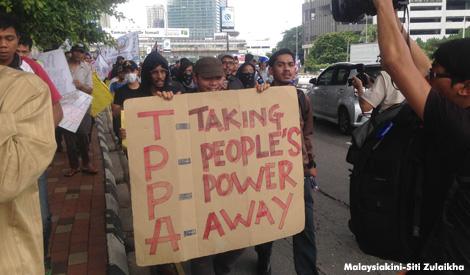
Although the government promised to implement some of the provisions of the TPPA despite the deal falling through, no amendments have been made to labour laws.
When there are violations of worker or trade union rights, many Malaysian unions still do not choose to struggle through pickets, strikes or campaigns against employers.
Instead, they choose to lodge complaints with relevant government institutions, which leads to court actions, and possibly the appeal process, which can last for many years.
Even when workers and unions do win, the remedies are weak, having no real impact on employers nor instrumental in bringing about legislative changes. Employers are very happy with the state of affairs, for this method of industrial dispute resolution does not really impact its business and profits. The only victims are workers and unions.
Surviving within a limited space
What has happened to the trade union movement is an acceptance of the limitations imposed on them by authorities, and a choice of surviving within that limited space with a strong adherence to the law, even if that law is unjust.
There is also very little effort to reach out to the Malaysian public or even elected representatives for help in the fight for justice.
Since 1998, Malaysians generally have become braver, and have started coming out in much larger numbers in peaceful assemblies to protest wrongdoings and demand changes. But alas, this has not moved the trade union movement or workers to do the same, despite the continued erosion of worker and trade union rights.
The absence of a progressive and dynamic new breed of worker leaders may also be a factor. Current existing union leaders seem to have been compromised – worried more about union de-registration, the financial security of union members, or perhaps their own.
But the struggle for better rights and justice will always have an element of risk, and unless unions and their leaders are brave enough to fight for justice and rights, then things will not change.
Union leaders have also forgotten how to use their largest asset, namely the large numbers of workers acting in solidarity.
Union leaders today often choose to act alone, in a representative capacity – but neither employers nor government ministries are really worried because they believe that unions are weak, and that their leaders are incapable of moving even their own membership to collective action.
Even when pickets are carried out, the members that do come out and participate is but a small percentage of the membership. The last few large pickets or protests that occurred in Malaysia were from migrant workers, and many of them are not even unionised.
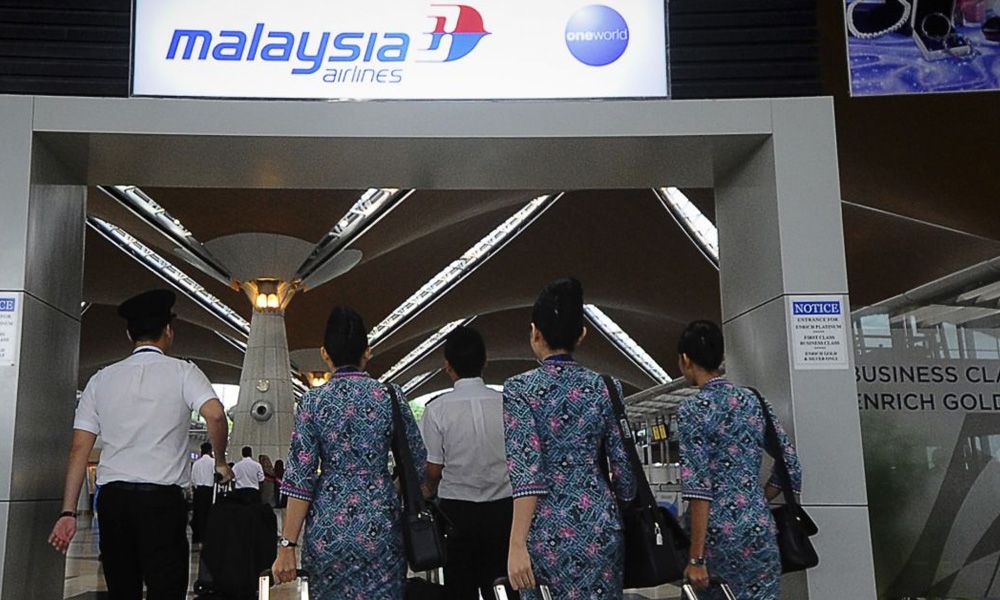
What happened with Malaysian Airlines when the company decided to get rid of about 6,000 workers is an indication of the state of the labour movement. These were all mostly unionised workers, with the unions affected having thousands of members, and yet not a single dedicated mass protest took place.
To appreciate how the Malaysian trade union movement came to be this way, the history of the labour movement in the country has to be recounted, particularly before the subjugation of the labour movement by the British.
The Malaysian Trade Union Congress (MTUC), unfortunately, is a creature of British manipulation, emerging only after much stronger unions, federations, and leaders were suppressed.
One would have expected that the MTUC and the larger labour movement would have undergone a resurrection after Malaya gained independence in 1957, but that did not happen.
The ‘union way’
With the passage of time, workers themselves have forgotten the past, and how strong the labour movement was at one point in the history of Malaysia.
This lack of historical knowledge, complemented by a lack of education and empowerment of workers and union members by existing “leaders,” keeps unions weak.
For many workers today, the union is simply a “subscription” deducted automatically from their salary by employers and transmitted to their unions, and the little benefit that they get from collective bargaining, which are usually salary increments and bonuses.
Unions now also seldom have regular meetings for its members, if at all, which has been proven to be essential for the strengthening of solidarity, enhancing knowledge of members, and strengthening unions as a whole.
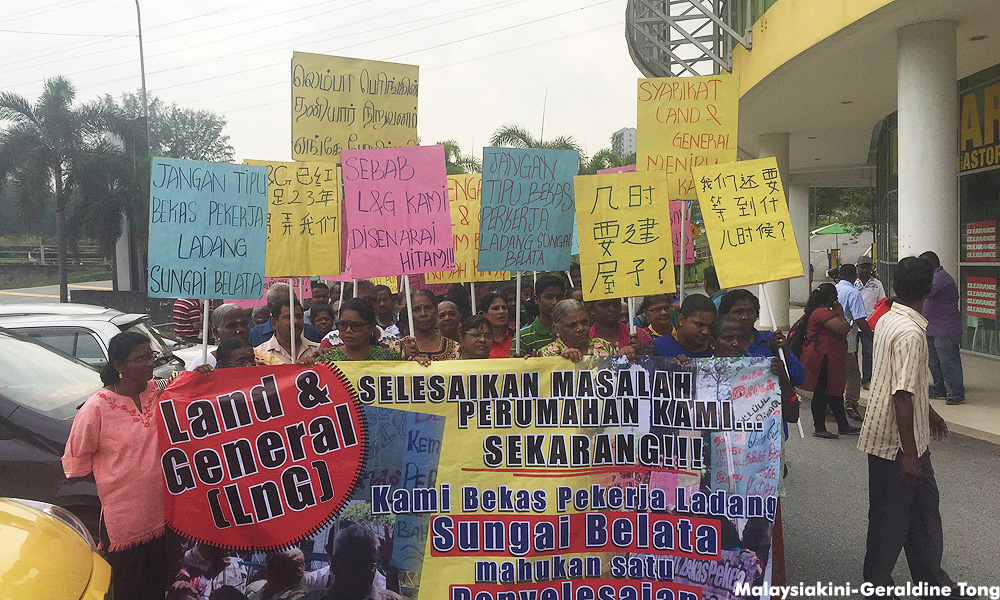
The lack of members being involved in decision-making and union actions has also developed in an overall lack of interest. The dearth of new leaders is also problematic, and we find the same old people retaining union leadership positions for years and years.
Things need to change, if unionism and the labour movement are to become stronger and more effective, but standing in the way are the existing leaders of unions.
It is easy to blame the government and existing laws, but if workers and unions are not ready to fight for better rights together, then the legislative hurdles to overcome will only get taller.
There must be a “union way” – a collective struggle with all workers standing together in solidarity, not a handful of representatives working without the participation or support of their members.
Part 2: The origins of the labour movement in Malaysia
Part 3: How the British suppressed the Malayan labour movement
Part 4: The last breath of the labour movement?
Source: Malaysiakini, 16/11/2017
Pos Malaysia unions defend CEO, say uniform remarks misunderstood


KUALA LUMPUR: The Union of Pos Malaysia Uniformed Staff (UPUS) and its branches in Sarawak and Sabah have defended Group Chief Executive Officer Charles Brewer over recent remarks regarding delays in the supply of new staff uniforms.
In a joint statement, the unions said Brewer's comments — which went viral — had been misunderstood and were not intended to belittle staff.
"We clarified the matter with Mr Charles Brewer a day after it went viral. He explained that it was a misunderstanding and has since acknowledged the mistake," the statement said.
"The union urges that this matter not be further sensationalised to avoid misinterpretation of his intentions."
The unions also praised Brewer for maintaining a strong relationship with staff and union members, saying he frequently engages on the ground to address workplace issues.
"There have been no disputes with him. The union firmly supports his leadership," they added.
On the delayed uniform supply, the unions explained it was due to ongoing quality improvements. As an interim measure, Pos Malaysia will distribute company jerseys to affected members, in coordination with the union.
The company has also begun supplying safety shoes and gloves to enhance protection for delivery staff.
"We thank the company for prioritising safety and improving both the quality and quantity of staff uniforms, in line with — and even beyond — the standards in the Collective Agreement," the statement added.
The unions said they would continue working closely with Pos Malaysia to ensure staff welfare and ongoing progress.
Brewer drew public attention after a screenshot of his reply to an employee's post about a torn uniform on the company's internal platform went viral. - NST, 22/4/2025
Three workers' unions representing Pos Malaysia delivery staff members issues a statement defending company CEO Charles Brewer, who was recently caught in controversy for his offensive response to an employee’s query.
The unions says Brewer did not intend to insult the worker, and they stand to support his leadership.
The statement has since courted flak online as netizens slam the unions for not siding with the worker.
Three labour unions representing Pos Malaysia uniformed workers have come under fire from netizens after they appeared to take sides with the company management in an issue about staff welfare.
This followed a joint statement by the unions - Union of Pos Malaysia Uniformed Staff (Upus), Upus Sarawak, and their Sabah chapter called Keppses - where they defended Pos Malaysia Berhad chief executive officer Charles Brewer, who had been criticised for his offensive response to an employee’s query about damaged uniforms.
In the statement issued this morning, the unions said they had obtained an explanation from Brewer and believed the top executive had no intention to belittle any employee through his remarks.
“The unions understand that it was not his intention to insult the employee, but instead it was a misunderstanding, and he (Brewer) has admitted his mistake, thus, we urge that this issue not be blown out of proportion as it can create a false interpretation of his true intention.
“Throughout his service as the group CEO, he has shown great commitment to engage employees at all levels and directly interact with members of the unions, including by going to the ground to understand and address issues (faced by workers).
“He also has a very good relationship with the unions, and this has been going on harmoniously and openly without any dispute. Thus, the unions strongly support his leadership,” said the statement, signed by the organisations' respective presidents Ismail Ali (Upus), Rasdi Ahmad Mohamad (Upus Sarawak), and Henry Petrus (Keppses).
Embattled CEO
Last week, Brewer was publicly condemned after screenshots of his response to a delivery mail carrier were leaked and went viral on social media.
The screenshots from the company’s internal communications platform showed the staff member sharing a picture of his uniform, which has a tear along the seam on the right shoulder, and asking when they will get new uniforms.
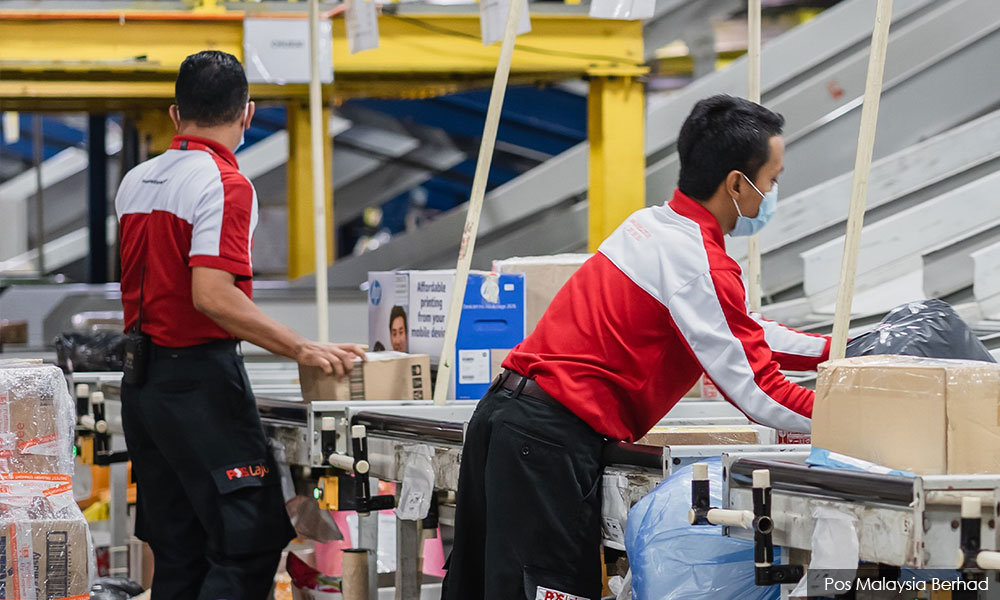
Brewer reportedly wrote in response by reminding him to be grateful for working at a delivery company that provides uniforms.
The CEO had since issued an apology to the affected employee.
On the issue of uniforms, the unions said they were informed that Pos Malaysia is providing new clothing to all workers, but this is delayed as they are “improving the material used and quality” for employees’ comfort.
According to them, the company has also promised to add safety gear for its delivery workers, including providing safety shoes and gloves.
“Thus, the unions would like to thank the company for making improvements and for their continuous commitment towards the safety of employees and readiness to provide uniforms more than what has been agreed upon in our Collective Agreement, which is a move that clearly shows their concern and continuous support for frontline workers.”
Cold reception
Many netizens did not take kindly to the statement shared by Pos Malaysia on their official Facebook and X accounts just before 10am today.
Many had condemned the unions, whom they believed should play their role by defending the staff member involved instead of Brewer.
Some even regarded the unions’ statement as “menjilat”, which is a Malay colloquial term for ass-kissing or brown-nosing.
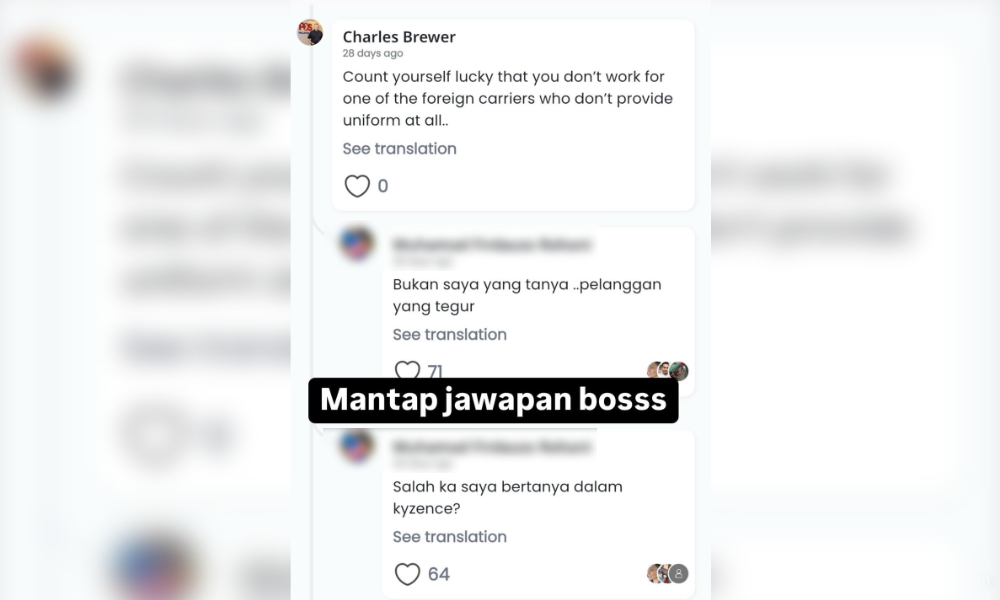
“Workers’ unions should be defending the workers’ welfare, but now they are doing the opposite.
“The workers’ unions are siding with the CEO who has clearly insulted his employees’ rights. Charles Brewer should be sacked,” said a netizen, who replied to Pos Malaysia’s post on X.
Another social media user questioned the unions' functionality in the issue.
“What have these unions done so far? Were they only collecting monthly fees, then going to sleep?
“They supposedly have three unions for uniformed workers, but they weren’t even concerned about the delivery workers’ torn uniforms. If the staff member had not gone viral, there wouldn't be any action forever."
A Facebook user, meanwhile, shared her father's experience as a union member, saying that workers’ unions were supposed to defend their members' welfare and rights.
“But this (statement) appeared to be the opposite. Or is it that the unions today have lost their teeth? Just asking,” said the netizen.- Malaysiakini, 22/4/2025



 Posts
Posts