After the US Court had declared that Trump's Action was ILLEGAL, and this case is now on appeal at the US Supreme Court - so, why did some nations, including Malaysia even enter into the US-Malaysia Agreement whereby Malaysia agreed to the imposition of this US 'increased tariff'(which the US Court now considers illegal)
Three lower courts have concluded that most of the president's tariffs are illegal, and a ruling from the Supreme Court upholding those decisions would deal a blow to Mr. Trump's plans to use tariffs as leverage to push U.S. trading partners to negotiate better trade deals. - CBS News, 6/11/2025
"Trump is breaking existing trade law [with his tariffs]. And the additional measures he has announced against China, the EU, and other countries would also violate international trade law. But that doesn't seem to concern him much," Matthes told DW.... He argues that it's "very likely" that the WTO arbitration panel would rule US tariffs unlawful. But then the Trump administration would appeal the decision...DW, 3/3/2025
Did not our Attorney General Mohd Dusuki Mokhtar advise Prime Minister Anwar Ibrahim and the government to WAIT - and act only if the US Supreme Court decided to OVERTURN the previous court verdict that Trump's action to threaten or increase tariffs imposed on trading partner nations was LEGAL? Did the AG advise, but PM and government acted against the advice?
However, when Malaysia enters an agreement with US - then it is no more a question of US unilaterally imposing increased tariff on Malaysia > because by said Agreement, Malaysia AGREED to the NEW TARIFF RATES... thus even if the US Supreme Court confirms that Trump's action on the Tariff's were ILLEGAL - it may not matter anymore because Malaysia AGREED with the increased Tariff Rates - it cannot be said that US unilaterally impossed new tariff rates...
Did our Attorney General Mohd Dusuki Mokhtar look at the Malaysian-US Agreement and say it is OK? Good question as Dusuki has yet to say anything yet...
Well, our Attorney General has yet to speak OPENLY - all we have is some reports about AGC(Attorney General's Chamber)'s statement - but it was NOT issued clearly in the name of OR by our Attorney General Mohd Dusuki Mokhtar - so we cannot clearly and positively say that AG Mohd Dusuki said this.
Who issued the statement - who were the members of the AGC that looked at the matter and issued the AGC Statement - a name or names of the Legal Officers from the AGC would have been good. Was it a majority decision of the AGC - or where only 49% did not agree?
More importantly was WHAT were the questions that were referred to the AGC? This is VERY IMPORTANT... Either way, the AG will only advise on legality and legal matters - it is the government and Malaysians to decide on political policies and political matters...
If anyone looks at the US-Malaysian Agreement (not yet in force YET), it is biased in favour of US - so many clauses of Malaysia shall - and very very little on US shall clauses ...(see below the Agreement from the US White House website) - Has Malaysia even published the Agreement anywhere for Malaysians to see it, comment, etc....? Don't Malaysia consider itself EQUAL to US...it is shameful for any Malaysians, in my opinion ...
Is the Agreement LEGAL - that is not the issue, is it now?
One major ISSUE is will that Agreement control future Malaysian decisions - does Malaysia have to follow whatever sanctions and economic measures imposed by US on Iran, North Korea, Russia, Venezuela, etc...
Article 5.1.1 obliges Malaysia to become a direct participant in US economic conflicts. It states that if Washington imposes sanctions or tariffs on any third country for national security reasons, Malaysia "shall adopt or maintain a measure with equivalent restrictive effect".
This provision effectively ends Malaysia’s long-held foreign policy of non-alignment, contractually obliging it to mirror US sanctions against other nations, regardless of Malaysia’s own interests.
This alignment is deepened in Article 5.2, which requires Malaysia to “align with all unilateral export controls in force by the US” and actively cooperate in restricting its own nationals from transacting with entities on US domestic sanctions lists, such as the Department of Commerce’s Entity List and the Treasury's SDN List.
Then, there is that clause about Malaysia having to consult US before entering trade agreements
a clause requiring Malaysia to consult the US before entering any new digital trade agreement with another country "that jeopardises essential US interests".Another clause states that the US government would reimpose the 25% tariff announced in April should Malaysia enter into any bilateral trade deal with "a country that jeopardises US interests"
the agreement as "a surrender". "Malaysia gives away too much control over its economy, while the US keeps its freedom to decide what benefits its own industries. This deal limits Malaysia's right to make our own decisions, forcing us to follow US rules in trade, investment, and regulation," the coalition said in a statement released by PN secretary-general Azmin Ali. "What is described as a 'reciprocal partnership' is, in truth, the loss of our economic sovereignty and policy space."
Then, there is a QUESTION of DISCRIMINATION - yes, Malaysia may have successfully negotiated even ZERO Tariff for certain products - but is it not discriminatory for the other Malaysian products that still have to pay 19% Tariff - the companies, the workers involved??? Were even all those who were impacted by this Tariff Increase even consulted?
These are the questions our Attorney General Mohd Dusuki Mokhtar should share his view on... So, what questions did PM Anwar Ibrahim and the MADANI government ask AG Dusuki or the 'AGC' - that question and full answers must be publicly available...
Now, if Malaysia wants to become a CRONNY of US and Trump - that is a political decision, and here the Attorney General Mohd Dusuki Mokhtar or the 'AGC' has no business in - it is purely the the Government's Decision.
The OTHER BIG issue is whether Parliamentary Approval, The State's Approval or even the RULER's approval is needed before this US-Malaysia Agreement becomes valid and enforceable -
'This Agreement shall enter into force 60 days after the date on which the Parties have exchanged written notifications certifying completion of their applicable legal procedures or on such other date as the Parties may agree.'
In US, generally, this generally requires US Congress approval - but in Malaysia, until now, it seems all that it needs is the Prime Minister's approval (at most maybe Cabinet's approval - filled now persons the PM chooses and decides on his own)
Should we NOT now DISCUSS this aspect - and enact a LAW stating what is the 'applicable legal procedures' for Malaysia - JUST allowing the Prime Minister to decide is MOST DANGEROUS because such agreements AFFECT all Malaysians, most likely even after PM Anwar Ibrahim ceases to be PM -
THUS, such Agreements should and must need the Malaysian peoples' approval - and, now it can be achieved by a Parliamentary Approval as our MPs are the duly elected peoples' representative.
Article 7.2: Entry into Force
This Agreement shall enter into force 60 days after the date on which the Parties have exchanged written notifications certifying completion of their applicable legal procedures or on such other date as the Parties may agree.
Before Malaysians blindly trusted our PRIME MINISTERS, but all that changed especially with Najib Razak.
Now, we will be FOOLS to allow only our Prime Minister to sign any agreements with other NATIONS, or maybe any corporations - when the effect will be felt by ALL Malaysians even after that PM is no more.
So, in the past, there was no NEED for Parliamentary approval, individual State approvals or the King/Rulers approval - and this must be CHANGED now - better to prevent the milk from being spilled.

BUT, what has our Parliamentarians done so far other than TALK
- Have they proposed an EMERGENCY Motion that the US-Malaysian Agreement until it gets Parliamentary approval - NOT YET?
- Has anyone, MP or Political party taken the matter to COURT - asking that Malaysia not 'put into force' this Agreement until it gets Parliamentary approval, all State governments approval and/or the approval of the King/Rulers at least....an important issue as currently there is NO clear law that says that it ONLY needs the Prime Minister's approval or the Cabinet's approval - so what will the COURT say may be important.
In my opinion, for any such agreement that Malaysia enters into with a foreign nation like US - cannot just need PM Anwar's approval...It must need Parliamentary approval, State approval and also the approval of the KING/Rulers - I explain WHY?
PARLIAMENTARY APPROVAL - because it represents the Malaysian people, i.e. the respective people's representative - the MPs, and also Parliament's ROLE to prevent ABUSE or WRONGS being committed by the EXECUTIVE - IT IS TO PREVENT....take action before the milk is spilled, before NASI SUDAH JADI BUBUR(rice became porridge) - no use REGRETTING after you failed to do the needful. NO use later blaming Anwar or the Madani Government LATER after we have already suffered the consequence... 1MDB - if Parliament acted faster - how many Billions could have been saved?? Thus, Parliamentary approval is a MUST.
STATEs Approval - Malaysia is a FEDERATION of States - and this kind of agreement will directly impact all States, their people, and even the companies therein(especially those who will still suffer having to pay TARIFF of 19%?? So, reasonably STATE approval should be secured.
KING/RULERS approval - this is ingrained in our Malaysian Constitution - whereby even when laws are passed, the approval of King/Rulers are needed - so, do we need KING/Rulers approval...
Considering there is NO CLEAR LAW yet as to state what such 'applicable legal procedures' is required in Malaysia before any such agreements are 'put in force' - maybe, this is the time for the COURT or PARLIAMENT to finally decide. We do not have to FOLLOW BAD CONVENTIONS simply because that is how we have always done it before...
Yes, Anwar has been answering questions about the US-Malaysia agreement - BUT he is not yet suggesting that he will get PARLIAMENTARY APPROVAL before putting it in force, has he NOW...
PARLIAMENT | Once again faced with calls led by former premier Dr Mahathir Mohamad for his resignation, Prime Minister Anwar Ibrahim today said, “That’s enough”.
Speaking in the Dewan Rakyat, Anwar did not name anyone but alluded to the centenarian’s criticisms yesterday on the Malaysia-US trade agreement.
“I want to point out here the hot issue raised by the other side - the trade agreement. It involves not only Malaysia, but also Asean.
“China, this new economic giant, is still negotiating tariffs with the US. We are not exempt from that,” said Anwar during Minister’s Question Time.
“This isn’t about surrender, betrayal, selling out, or a new kind of colonisation… enough of that.
“Want to ask (me) to step down again? Berapa kali nak suruh turun? (how many times do you want to ask to step down?) Enough already,” he said.
US, China held trade talks in M’sia
In response to Ku Abdul Rahman Ku Ismail (PN-Kubang Pasu), Anwar elaborated on Malaysia’s focus to boost intra-Asean trade and touched on the Malaysia-US trade agreement, which also has an impact on Asean.
“But what I want to emphasise here is that the issue of China-US trade relations - their negotiations actually took place here, in Kuala Lumpur.
“The Chinese and American teams negotiated for three days and three nights in Kuala Lumpur before the recent meeting between US President Donald Trump and Chinese President Xi Jinping. So we, too, played a role and made our contribution,” Anwar added.
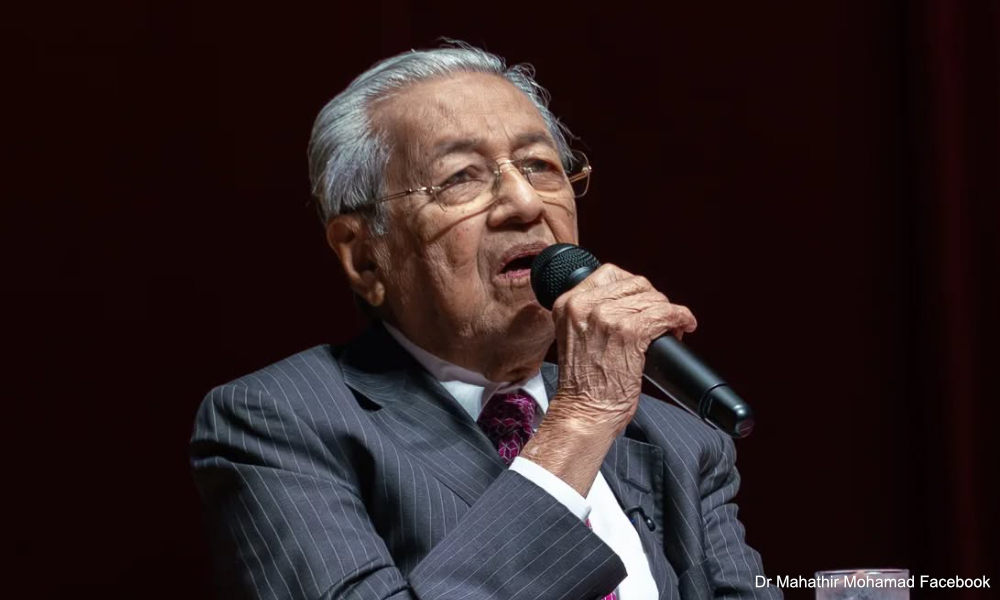
Yesterday, Mahathir, along with several NGOs and political parties, announced their 12 joint resolutions to reject the trade agreement.
Among them, they asserted that the exit clause that Anwar pointed to was merely a deception that would not save Malaysia from the agreement’s trap.
“The only exit clause now is for Anwar and his cabinet to take responsibility and resign,” the resolutions said.
AGC ensured deal not against Constitution
Anwar further told the Dewan Rakyat that the government sought the Attorney-General’s Chambers’ (AGC) advice on the reciprocal trade agreement to ensure it did not conflict with the Federal Constitution.
He said the AGC’s input was crucial to ensure that the provisions in the agreement were consistent with “the spirit of the Federal Constitution and domestic laws”.
“The AGC issued its recent statement after having gone through the deal in detail. Please don’t say that it (statement) was political,” he added.
He was responding to Takiyuddin Hassan (PN–Kota Bharu), who asked whether the government would share the AGC’s views on the trade deal with the cabinet.
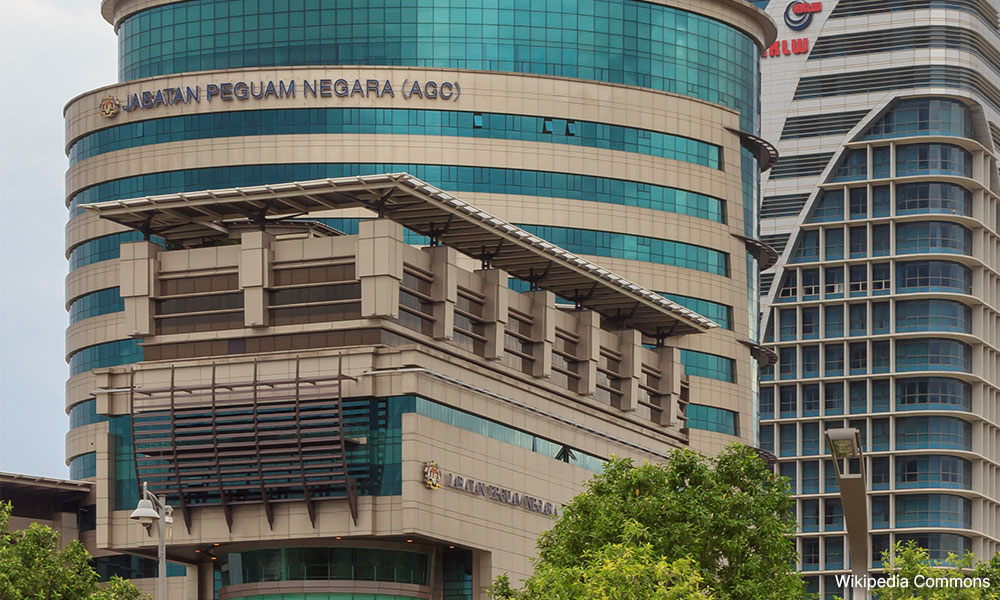
According to Anwar, the cabinet had “revised” its decisions based on the AGC’s input.
His remarks came a day after the AGC assured that Malaysia’s sovereignty and national interests remain fully protected under the deal.
The AGC said the agreement requires both countries to hold consultations in good faith before taking any action related to its implementation.
It
also emphasised that Malaysia retains the right to terminate the
agreement at any time through written notice to the US without needing
the latter’s consent - a provision Anwar said safeguards the country’s
sovereignty and national interests.
Reporting by Alyaa Alhadjri, Haspaizi Zain, Malaysiakini, 4/11/2025
AGC: M'sia can terminate trade agreement with US at any time
Malaysia has the right to terminate its reciprocal trade agreement with the US at any time through written notice without requiring Washington’s consent, said the Attorney-General's Chambers (AGC).
In a statement, the AGC said this is provided for under Article 7.5 of the deal, which also emphasises that all protections under the agreement are intended to defend and preserve Malaysia's sovereignty and protect the country's interests at all times.
The statement clarifies that the agreement will only come into effect 60 days after both parties exchange written notifications confirming that their respective domestic legal procedures have been completed.
"The implementation of obligations and commitments under this agreement by Malaysia is subject to applicable Malaysian domestic laws and procedures," the AGC stated.
The deal also provides for good-faith consultations between Malaysia and the US regarding implementation issues before either party can take action against the other.
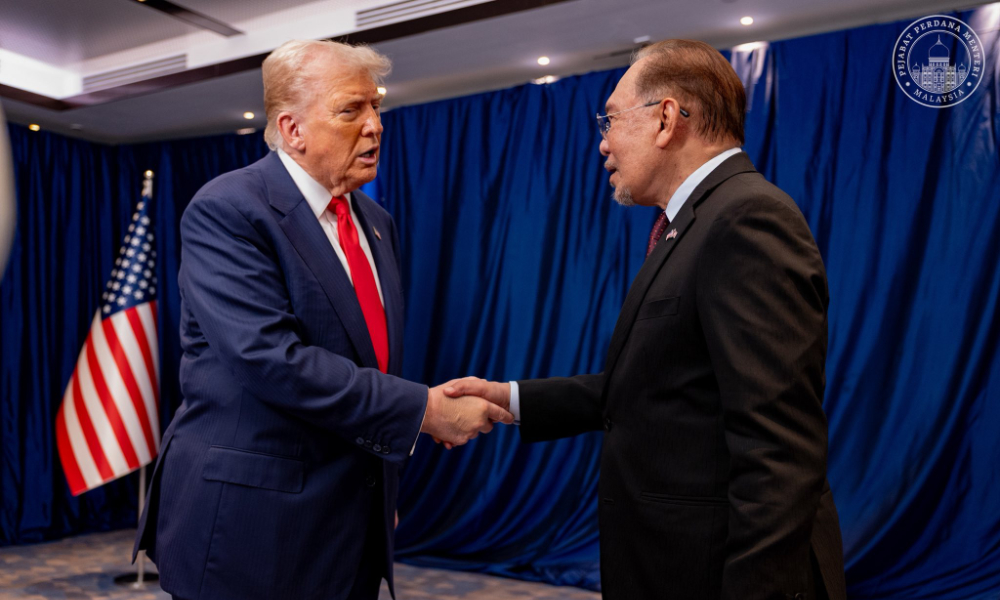
However, based on Article 7.1, Malaysia and the US, as member countries of the World Trade Organisation (WTO), will continue to recognise the rights, obligations, and protections established under the WTO agreement for international trade.
Tariff talks
Malaysia and the US signed the deal on Oct 26 during the 47th Asean Summit in Kuala Lumpur.
The agreement is a US proposal to renegotiate tariffs on Malaysia from 25 percent to 19 percent, under Executive Order 14257 issued by US President Donald Trump on April 2.
The negotiations were led by the Investment, Trade, and Industry Ministry on behalf of Malaysia, while the US was represented by the Office of the United States Trade Representative.
Other relevant ministries and agencies were also involved in the negotiations, and policy decisions regarding the agreement were made by the cabinet after considering economic, political, and legal aspects.
- Bernama
AGREEMENT BETWEEN THE UNITED STATES OF AMERICA AND MALAYSIA ON RECIPROCAL TRADE
Preamble
The Government of the United States of America (“United States”) and
the Government of Malaysia (“Malaysia”) (hereinafter referred to
individually as “a Party” and collectively as
“the Parties”),
EMPHASIZING their shared values, including their shared commitment to sovereignty, economic prosperity, and resilient supply chains;
RECOGNIZING the bonds of friendship and cooperation between them, in particular in their trade and investment relations, as reflected in the Trade and Investment Framework Agreement between the Government of the United States and the Government of Malaysia;
INTENDING to enhance reciprocity in their bilateral trade relationship by addressing tariff and non-tariff barriers; and
SEEKING to strengthen their commercial relationship through increased alignment on national and regional economic security matters,
HAVE AGREED as follows:
Section 1. Tariffs and Quotas
Article 1.1: Tariffs
1. Malaysia shall apply a rate of customs duty[1] on originating goods of the United States as set out in Schedule 1 to Annex I.
2. The United States shall apply a revised reciprocal tariff rate on originating goods of Malaysia as set out in Schedule 2 of Annex I.
Article 1.2: Quantitative Restrictions
Malaysia shall not impose quantitative restrictions on imports of originating goods of the United States except in accordance with the General Agreement on Tariffs and Trade 1994 (GATT 1994).
Section 2. Non-Tariff Barriers and Related Matters
Article 2.1: Import Licensing
Malaysia shall not apply import licensing[2] to U.S. originating goods in a manner that restricts the importation of such goods. Malaysia shall ensure that any non-automatic import licensing that it applies is applied only to administer an underlying measure, and in a manner that is transparent, nondiscriminatory, and not unduly burdensome, and that does not reduce the competitiveness of U.S. exports.
Article 2.2: Technical Regulations, Standards, and Conformity Assessment
1. The Parties recognize their existing rights and obligations with respect to each other under the World Trade Organization (WTO) Agreement on Technical Barriers to Trade. Malaysia shall allow U.S. originating goods that comply with applicable U.S. or international standards, U.S. technical regulations, or U.S. or international conformity assessment procedures to enter its territory without additional conformity assessment requirements. In doing so─
(a) Malaysia shall accord to the conformity assessment bodies of the United States treatment no less favorable than that it accords to its own bodies; and
2. Malaysia shall ensure that technical regulations, standards, and conformity assessment procedures are applied in a non-discriminatory manner and do not operate as disguised restrictions on bilateral trade, and shall remove existing technical barriers to trade in areas that undermine reciprocity, including requirements for duplicative or unnecessary testing or conformity assessment.
Article 2.3: Agriculture
Malaysia shall provide non-discriminatory or preferential market access for U.S. agricultural goods as set forth in this Agreement. In doing so─
(a) Malaysia shall ensure that its sanitary and phytosanitary (SPS) measures are science- and risk-based and do not operate as disguised restrictions on bilateral trade, and shall remove unjustified SPS barriers in areas that undermine reciprocity.
(b) Malaysia shall not enter into agreements or understandings with third countries that include non-scientific, discriminatory, or preferential technical standards or third-country SPS measures that are incompatible with U.S. or international standards; or otherwise disadvantage U.S. exports.
Article 2.4: Geographical Indications
Malaysia shall ensure transparency and fairness with respect to the protection or recognition[3] of geographical indications, including pursuant to an international agreement to which Malaysia is a party. Malaysia shall only protect or recognize a term that identifies a good as a geographical indication where there is a given quality, reputation, or other characteristic of the good that is essentially attributable to its geographical origin.
Article 2.5: Cheese and Meat Terms
Malaysia shall not restrict U.S. market access due to the mere use of the individual cheese and meat terms listed in Annex II.
Article 2.6: Intellectual Property
Malaysia shall provide a robust standard of protection for intellectual property.[4] Malaysia shall provide effective systems for civil, criminal, and border enforcement of intellectual property rights and shall ensure that such systems combat and deter the infringement or misappropriation of intellectual property, including in the online environment. Malaysia shall prioritize and shall take effective criminal and border enforcement actions against copyright and trademark infringements.
Article 2.7: Services
This Agreement incorporates, mutatis mutandis, any commitment concerning trade in services that Malaysia has made or hereafter makes in a trade agreement to any third country, jurisdiction, or economy. This Article shall not apply to any commitment to the Association of Southeast Asian Nations (ASEAN) under any ASEAN trade or investment agreement.
Article 2.8: Good Regulatory Practices
Malaysia shall adopt and implement good regulatory practices as set out in Article 2.21 of Annex III that ensure greater transparency, predictability, and participation throughout the regulatory lifecycle.
Article 2.9: Labor
1. Malaysia shall adopt and implement a prohibition on the importation of goods mined, produced, or manufactured wholly or in part by forced or compulsory labor. Malaysia may acknowledge U.S. government determinations on entities under Section 307 of the Tariff Act of 1930 and shall take appropriate action to prohibit importation of goods from those companies. The Parties shall cooperate by sharing best practices on the development and enforcement of forced labor import prohibitions, as appropriate. Malaysia shall implement the obligations in this paragraph within two years of the date of entry into force of this Agreement.
2. Malaysia shall protect internationally recognized labor rights.[5] This includes by adopting or maintaining such rights in its domestic law and practice, and effectively enforcing its labor laws, including by creating or maintaining necessary institutions to protect labor rights. Malaysia shall establish and effectively apply appropriate legal sanctions for violations of those laws. Malaysia shall not weaken or reduce the protections in its labor laws and shall address any such weakening or reduction that has been made to encourage trade or investment to date.[6] In addition, Malaysia shall address issues related to labor rights that contribute to non-reciprocal trade.
Article 2.10: Environment
Malaysia shall adopt and maintain environmental protections, effectively enforce its environmental laws, uphold or institute, as necessary, strong environmental governance structures, and address environment-related issues that contribute to non-reciprocal trade.
Article 2.11: Customs and Trade Facilitation
Malaysia shall facilitate technology solutions that allow for full pre-arrival processing, paperless trade, and digitalized procedures for the cross-border movement of goods.
Article 2.12: Border Measures and Taxes
1. Malaysia shall coordinate and endeavor to align its border measures applicable to third-country imports with relevant border measures that the United States may adopt in the future, such as border-adjusted tax measures or other border measures, to combat regulatory arbitrage that would disadvantage U.S. workers and businesses.
2. No Party shall contest at the WTO a measure adopted by the other Party to rebate or to refrain from imposing direct taxes in relation to exports from that Party.
Section 3. Digital Trade and Technology
Article 3.1: Digital Services Tax
Malaysia shall not impose digital services taxes, or similar taxes, that discriminate against U.S. companies in law or in fact.
Article 3.2: Facilitation of Digital Trade
Malaysiashall facilitate digital trade with the United States, including by─
(a) refraining from measures that discriminate against U.S. digital services or U.S. products distributed digitally;[7]
(b) ensuring the cross-border transfer of data by electronic means across trusted borders, with appropriate protections, for the conduct of business; and
(c) endeavoring to collaborate with the United States to address cybersecurity challenges and matters of mutual interest, which may include exchanging information on threats and best practices, promoting the use of relevant international standards, and understanding capacity-building activities.
Article 3.3: Digital Trade Agreements
Malaysia shall consult with the United States before entering into a new digital trade agreement with another country that jeopardizes essential U.S. interests.
Article 3.4: Market Entry Conditions
1. Malaysia shall not impose any condition or enforce any undertaking requiring U.S. persons to transfer or provide access to a particular technology, production process, source code, or other proprietary knowledge, or to purchase, utilize, or accord a preference to a particular technology, as a condition for doing business in its territory.
2. Nothing in this Article shall─
(a) preclude the inclusion or implementation of terms and conditions related to the provision of source code in commercially negotiated contracts;
(b) preclude a Party from requiring that access be provided to software used for critical infrastructure, to the extent required to ensure the effective functioning of critical infrastructure, subject to safeguards against unauthorized disclosure;
(c) preclude a Party from requiring the modification of source code of software necessary for that software to comply with laws or regulations which are not inconsistent with this Agreement;
(d) apply to government procurement;
(e) preclude a regulatory body or judicial authority of a Party from requiring a person of another Party to preserve and make available the source code of software, or an algorithm expressed in that source code, to the regulatory body for a specific investigation, inspection, examination, enforcement action, or judicial proceeding, subject to safeguards against unauthorized disclosure; or
(f) apply to a Party’s measures adopted or maintained for prudential reasons.[8]
Article 3.5: Customs Duties on Electronic Transmissions
Each Party shall not impose customs duties on electronic transmissions, including content transmitted electronically, and shall support multilateral adoption of a permanent moratorium on customs duties on electronic transmissions at the WTO. For greater certainty, this Article does not preclude a Party from imposing internal taxes, fees, or other charges on electronic transmissions, including content transmitted electronically, provided that those taxes, fees, or charges are imposed in a manner consistent with Articles I and III of the GATT 1994 or Articles II and XVII of the WTO General Agreement on Trade in Services (GATS).
Section 4. Rules of Origin
Article 4.1: General Provision
The Parties intend for the benefits of this Agreement to accrue substantially to them and their nationals. If benefits of this Agreement are accruing substantially to third countries or third-country nationals, a Party may establish rules of origin necessary to achieve the Parties’ intention for this Agreement.
Section 5. Economic and National Security
Article 5.1: Complementary Actions
1. If the United States imposes a customs duty, quota, prohibition, fee, charge, or other import restriction on a good or service of a third country and considers that such measure is relevant to protecting the economic or national security of the United States, the United States intends to notify such measure to Malaysia for the purpose of economic and national security alignment. Upon receiving such notification from the United States, Malaysia shall adopt or maintain a measure with equivalent restrictive effect as the measure adopted by the United States or agree to a timeline for implementation that is acceptable to both Parties, to address a shared economic or national security concern, guided by principles of goodwill and a shared commitment to enhancing bilateral relations between the United States and Malaysia.
2. Malaysia shalladopt and implement measures, in accordance with its domestic laws and regulations, to address unfair practices of companies owned or controlled by third countries operating in Malaysia’s jurisdiction that result in─
(a) the export of below-market price goods to the United States;
(b) increased exports of such goods to the United States;
(c) a reduction in U.S. exports to Malaysia; or
(d) a reduction in U.S. exports to third-country markets.
3. Malaysia shall adopt, through its domestic regulatory process, similar measures of equivalent restrictive effect as those adopted by the United States to encourage shipbuilding and shipping by market economy countries. The Parties shall discuss the structure and effect of such measures, recognizing the Parties’ commitment to address shared economic or national security concerns in the shipbuilding and shipping sector.
Article 5.2: Export Controls, Sanctions, Investment Security, and Related Matters
1. Malaysia shall, through its domestic regulatory process, cooperate with the United States to regulate the trade in national security-sensitive technologies and goods through existing multilateral export control regimes, align with all unilateral export controls in force by the United States, and ensure that its companies do not backfill or undermine these controls.
2. Malaysia shall cooperate with the United States, in a manner consistent with applicable requirements of domestic laws and regulations, with a view to restricting transactions of its nationals with individuals and entities included in the U.S. Department of Commerce Bureau of Industry and Security Entity List (Supplement 4 of Part 744 of the Export Administration Regulations), as well as the U.S. Department of the Treasury Office of Foreign Assets Control Lists of Specially Designated Nationals and Blocked Persons List (SDN List) and the Non-SDN Consolidated Sanctions List.
3. Malaysia shall explore the establishment of a mechanism to review inbound investment for national security risks, including in connection with critical minerals and critical infrastructure, consistent with widely accepted international best practices, and shall cooperate with the United States on matters related to investment security.
4. If the United States determines that Malaysia is cooperating to address shared national and economic security issues, the United States may take such cooperation into account in administering its domestic laws and regulations pertaining to export controls, investment reviews, and other measures.
Article 5.3: Other Measures
1. The United States shall work with Malaysia to streamline and enhance defense trade.
2. Malaysia shall, in accordance with its domestic laws and regulations,adopt and effectively enforce measures to combat transshipment and other practices to evade or circumvent duties applied by the United States. Malaysia shall enter into a duty evasion cooperation agreement with the United States.
3. If Malaysia enters into a new bilateral free trade agreement or preferential economic agreement with a country that jeopardizes essential U.S. interests, the United States may, if consultations with Malaysia fail to resolve its concerns, terminate this Agreement and reimpose the applicable reciprocal tariff rate set forth in Executive Order 14257 of April 2, 2025.
4. Malaysia shall not purchase any nuclear reactors, fuel rods, or enriched uranium from certain countries, except where there are no alternative suppliers on comparable terms and conditions.
Section 6. Commercial Considerations and Opportunities
Article 6.1: Investment
2. The United States shall work through U.S. institutions such as the Export-Import Bank of the United States (EXIM Bank) and the U.S. International Development Finance Corporation (DFC), if eligible, to consider supporting investment financing in critical sectors in Malaysia in collaboration with U.S. private sector partners, consistent with applicable law.
3. Malaysia shall facilitate, to the extent practicable, approximately USD70 billion in job-creating investment, including greenfield investment, in the United States over the next 10 years.
Article 6.2: Commercial Considerations
1. Malaysia shall ensure that its State-Owned or -Controlled Enterprises (SOEs) operating in its market, when engaging in commercial activities─
(a) act in accordance with commercial considerations in their purchase or sale of goods or services; and
(b) refrain from discriminating against U.S. goods or services.
Malaysia shall refrain from providing non-commercial assistance or otherwise subsidizing its goods-producing SOEs, except for the achievement of their public service obligations. Malaysia shall ensure a level playing field for U.S. companies in Malaysia’s market with respect to SOEs of third countries.
2. Upon the written request of the United States, Malaysia shall provide non-confidential[9] information regarding all forms of non-commercial assistance or subsidies that it provides to a manufacturing enterprise in its territory, and shall take action to address the distortive impacts of those subsidies and support mechanisms that may materially affect bilateral trade and investment with the United States.
Article 6.3: Purchases
Malaysia intends to purchase, or to facilitate the purchase by Malaysian companies, of originating goods of United States, as set out in Annex IV.
Section 7. Implementation, Enforcement, and Final Provisions
Article 7.1: Recognition of Existing Rights and Obligations
The Parties recognize their rights and obligations under the WTO agreements, including provisions of those agreements that reflect a WTO member’s sovereign rights to protect essential security, address unfair trade practices, and pursue other public policy objectives.
Article 7.2: Entry into Force
This Agreement shall enter into force 60 days after the date on which the Parties have exchanged written notifications certifying completion of their applicable legal procedures or on such other date as the Parties may agree.
Article 7.3: Modifications and Amendments
Either Party may request reasonable modifications to any provision of this Agreement. The other Party shall consider such modifications in good faith. The Parties may agree, in writing, to amend this Agreement. An amendment to this Agreement shall enter into force 60 days after the date on which the Parties exchange written notification of the completion of their respective applicable legal procedures or on such other date as the Parties may agree. An amendment shall not affect the rights and obligations of the Parties provided for under this Agreement until the amendment enters into force.
Article 7.4: Enforcement
1. Nothing in this Agreement shall constrain, or otherwise prevent, a Party from imposing additional tariffs to remedy unfair trade practices, to address import surges, to protect its economic or national security, or for other similar reasons consistent with its domestic law.
2. If a Party considers that the other Party has not complied with a provision of this Agreement, the Party may review the terms of this Agreement and take action in accordance with applicable domestic law. A Party shall, when practicable, with a view to finding a mutually satisfactory solution, notify and seek consultations in good faith with the other Party prior to taking any action.
Article 7.5: Termination
Either Party may terminate this Agreement by written notification to the other Party. Termination shall take effect 180 days after the date of the notification.
Article 7.6: Annexes, Appendices, and Footnotes
The annexes, appendices, and footnotes to this Agreement constitute an integral part of this Agreement.
IN WITNESS WHEREOF the undersigned, being duly authorized thereto by their respective Governments, have signed this Agreement.
DONE in duplicate at Kuala Lumpur, this 26th day of October, 2025.
________________________________ _______________________________
FOR THE GOVERNMENT OF FOR THE GOVERNMENT OF THE UNITED STATES OF AMERICA MALAYSIA
[1] Customs duty includes any duty or charge of any kind imposed on or in connection with the importation of a good, and any surtax or surcharge imposed in connection with such importation, but does not include any─
(a) charge equivalent to an internal tax imposed consistently with Article III:2 of GATT 1994;
(b) fee or other charge in connection with the importation commensurate with the cost of services rendered; or
(c) antidumping or countervailing duty applied pursuant to a Party’s law.
[2] For greater certainty, “import licensing”, “automatic import licensing”, and “non-automatic import licensing” have the same meanings as provided in the WTO Agreement on Import Licensing Procedures.
[3] For greater certainty, Malaysia shall not protect or recognize a predetermined list of geographical indications.
[4] For purposes of this Agreement, “intellectual property” refers to all categories of intellectual property that are the subject of Sections 1 through 7 of Part II of the WTO Agreement on Trade-Related Aspects of Intellectual Property Rights. Further, for purposes of this Agreement, the protection of intellectual property includes matters related to technological protection measures and rights management information.
[5] For purposes of this paragraph, internationally recognized labor rights include those in the International Labor Organization (ILO) Declaration on Fundamental Principles and Rights at Work and its Follow-Up (1998), as amended in 2022; a prohibition on the worst forms of child labor; and acceptable conditions of work with respect to minimum wages and hours of work.
[6] For greater certainty, the scope of this paragraph includes special economic zones, including export processing zones, or sector-specific laws or regulations that have lesser labor protections than the overall economy.
[7] For greater certainty, Malaysia has the right to regulate in the public interest. [1] The Parties understand that the term “prudential reasons” includes the maintenance of the safety, soundness, and integrity or financial responsibility of individual financial service suppliers as well as the safety and financial and operational integrity of payment and clearing systems.
[8] For purposes of this paragraph, “non-confidential information” means information other than confidential information, and “confidential information” means information that relates to a specific enterprise and is protected under the laws and regulations of Malaysia.
[9] For purposes of this paragraph, “non-confidential information” means information other than confidential information, and “confidential information” means information that relates to a specific enterprise and is protected under the laws and regulations of Malaysia.
Source: US White House Website


 Posts
Posts




No comments:
Post a Comment