Legal Profession Qualification Board(LPQB) - amendments that will place it under EXECUTIVE(Minister) control - and no more INDEPENDENT.
As it is the Judicial Appointment's Commission has a majority of members chosen by the Prime Minister, and it RECOMMENDS persons to be appointed Judges. Many are asking that there should be NO PM(or Executive) appointed members of the JAC to ensure INDEPENDENCE of Judges..
Now, the Legal Profession Qualification Board(LPQB) - another attempt by Executive to place it under Executive Control? Changing it so that there will be 8 out of 13 in the LPQB appointed by the Minister(executive).
Public Prosecutor - already is decided by the Prime Minister(Executive) - hopefully will change when Malaysia enacts law separating Attorney General from Public Prosecutor - where it is hoped that the Executive(PM) no longer chooses the Public Prosecutor - and he/she will be INDEPENDENTLY appointed, with security of tenure(until retirement age) - Changes on the way - and we still do not what are proposed changes yet....taking TOO MUCH time.
Legal Profession (Amendment) (No. 2) Bill 2025 was tabled on 17/11/2025, and speedily passed by Dewan Rakyat on 1/12/2025 - YET to be passed by Senate, and herein LIES the problems -
NOW,
The Board shall consist of -
(a) the Attorney General who shall be the Chairman;
(b) two Judges nominated by the Chief Justice;
(c) the Chairman of the Bar Council; and
(d) a full-time member of the academic staff of a Faculty of Law nominated by the Minister of Higher Education.
The amendment
3. The principal Act is amended by substituting for section 7 the following section:
“Membership of Board
7. (1) The Board shall consist of—
(a) the Attorney General who shall be the Chairman;
(b) the Chairman of the Bar Council who shall be the Deputy Chairman;
(c) a Judge nominated by the Chief Justice;
(d) the Director General of the Legal Affairs Division of the Prime Minister’s Department;
(e) the Chief Registrar;
(f) a member of the Malaysian Bar nominated by the Bar Council and appointed by the Minister;
(g) a full-time member of the academic staff of a Faculty of Law nominated by the Minister charged with the responsibility for higher education and appointed by the Minister;
(h) a full-time member of the academic staff of a faculty of law of a private higher educational institution approved and registered under the Private Higher Educational Institutions Act 1996 [Act 555] nominated by the Minister charged with the responsibility for higher education and appointed by the Minister;
(i) a member who is an advocate and solicitor of the High Court of Sabah and Sarawak and
practicing law in the State of Sabah nominated by the Sabah Law Society and appointed by the Minister;
(j) a member who is an advocate and solicitor of the High Court of Sabah and Sarawak and
practicing law in the State of Sarawak nominated by the Advocates Association of Sarawak and appointed by the Minister; and
(*k) three other members appointed by the Minister.
What changes?
1) Reduction of the number of Judges that can be nominated by the Chief Justice, from 2 to now 1;
2) The number of persons appointed by the Minister INCREASED from 1 to 8?? - and, worse the Minister can remove them at anytime without even giving reasons for said removal???
Now, even though the Bars may nominate, it is the Minister that appoints (and, as such, the Minister may refuse to appoint by the Bar Council, the Sabah Law Society, the Advocates Association of Sabah and Sarawak the person to be nominated to the Board, and ask for some other nominations of person that the Minister accepts - this allows the MINISTER to choose - why was it that persons nominated by the BARs are automatically appointed to the LPQB??? [Note that the LPA is concerned about the Malaysian Bar (in Peninsular Malaysia), the Sabah and Sarawak Bar comes into being by different respective State Laws)'full-time member of the academic staff of a faculty of law of a private higher educational institution' nominated by the Minister responsible for higher education {not a body made up by full-time member of the academic staff of a Faculty of Law nominated by the Minister of Higher Education.
Then, there are 'three other members appointed by the Minister'
ALL in all, the EXECUTIVE has the power to APPOINT 8 members of the 13 member LPQB, and there is also Director General of the Legal Affairs Division of the Prime Minister’s Department... In short, the LPQB has just fallen under EXECUTIVE control - the Minister?
Previously, the LPQB was balanced, and not under EXECUTIVE control - because 2 of the 5 member LPQB are Judges appointed by the Judiciary, the Attorney General, the Malaysian Bar President, and only ONE chosen by the Executive - academic staff of law faculties in private higher institution?), and then again it is the Minister in charge of Law that appoints - HENCE, it was more independent.
There is NO problem with adding on the 2 Presidents of the Sabah Law Society and the Advocates Association of Sabah and Sarawak.
No problem with adding on a LAW academic from the Malaysian public and/or private universities...BUT the choice should not be with the Minister [At present, the amendments talk about Law Academic from private institutions - what about PUBLIC institutions like the Law Faculties of UM, UKM, UITM,....?
BUT, the troubling part is that they do not become members of LPQB as of right - but needs to also be APPOINTED by the Minister, who also has the power to remove those appointed any time, without even reference to those who nominated' without assigning any reason for the revocation
ALL in all, it LOOKS like another attempt for the EXECUTIVE control of the LPQB - and it is most SHOCKING that this time the Malaysian Bar failed to strongly PROTEST in the past of any attempt that will affect the Independence of the Legal Profession in Malaysia - this time only a Media Statement by the Vice President(not even the President)
NOW, there is a concern about the COMPOSITION of the Judicial Appointments Commission - where the Prime Minister picks 5 out of the 9 member JAC. Even the Conference of Rulers have called for removal of the Prime Minister's power/role in picking the members of the JAC?
The Conference of Rulers is proposing that five of the nine members of the Judicial Appointments Committee (JAC) no longer be appointed by the prime minister so that its composition is more balanced and does not carry the interest of any party.The Yang Dipertuan Besar of Negeri Sembilan, Tuanku Muhriz Tuanku Munawir, who chaired the 260th Conference of Rulers meeting today, said in terms of the judicial system, the Conference of Rulers is responsible for the appointment of judges in Malaysia, and at present, this process is seen as having weaknesses that can be improved, JAC's membership included.His Highness said JAC plays a key role in proposing judicial nominations, and therefore its membership was critical in ensuring that the committee continued to be looked up to and is capable of nominating judges of calibre and integrity."Instead, it (power to appoint JAC members) should be given to several other institutions such as the Malaysian Bar, the Sabah Law Society, Advocates Association of Sarawak and Parliament's Select Committee."Currently, JAC has nine members, four of whom are senior judges while five more are individuals appointed by the Prime Minister," Tuanku Muhriz said in his message in conjunction with the two-day 260th Conference of Rulers meeting that began yesterday at Istana Negara.- Astro Awani, 30/11/2022
Thus, should also the EXECUTIVE appointed members in the LPQB also be an ISSUE OF CONCERN - as a majority executive appointed LPQB may affect the quality and the members of the Advocates and Solicitors in Malaysia in the future. A 'BAD' or an 'unqualified' lawyer is a great DANGER to the administration of justice in Malaysia - there must be standards to ensure only the qualified becomes lawyers.
In Malaysia, even though Malaysia now recognizes foreign law degrees - it is not enough. There is a requirement for these foreign law degree holders to sit and pass the Certificate of Legal Practice(where it was shown that only about 20% do pass it at every sitting). Those who failed will have to re-sit until they pass >>> this is an important mechanism to ensure only QUALIFIED lawyers are admitted to the Bar and allowed to practice as lawyers...
Of late, there has been great concern about Law Graduates from Malaysian Public Universities - thus, the question has been raised as to whether they too will need to sit for the CLP or some new Legal Profession Qualifying Exams - I think they should, as this is a matter of Public Interest - and we do not want to blindly admit local Public University graduates to become lawyers. They may be able to EXCEL in their academic LAW degrees - but that certainly do not mean that they will make desirable lawyers..
Now, was that the intention of this AMENDMENT - because the government does not want LOCAL law graduates to undergo any CLP or Legal Profession Qualification Exams - which may show the LAW academic qualification wanting > when the majority fails such CLP or Qualification exams? The Executive may be more interested in protecting 'the standards' of public universities - rather than ensuring that the truly qualified becomes lawyers. Excelling academically does not automatically make one a GOOD lawyer. EITHER way - it will lead to greater EXECUTIVE control, which is wrong...
The problem with majority executive appointed members in the Legal Profession Qualifying Board poses a RISK - as the EXECUTIVE is concerned more about appeasing VOTERS and winning elections rather than ensuring the Independence and professionalism of lawyers, judges and even the Public Prosecutor(prosecutors) - and that is why the LPQB should be INDEPENDENT and should only be comprised of persons in the Judiciary, the various Bars, and the public lawyers(public prosecutors/Federal Counsels) - the Minister and/or the Executive should not have any power or role in appointing members of the LPQB, or in JAC(that picks qualified Judges)...
In the past, the Malaysian Bar, led by the President and the Bar Council, would have REACTED very strongly if there are any attempts that will compromise the INDEPENDENCE, and/or even quality of the Legal Profession. There will be EGMs, and other actions - BUT this time, the response had been just a media statement - What is happening? Why has the BC also not analyzed the proposed amendments - and educated lawyers about the potential concerns/risk?
The said statement did raise some of the CONCERNS - but the question is why did the President and the Bar Council not go FURTHER and move its members towards greater awareness of his amendment (Legal Profession (Amendment) (No. 2) Bill 2025 was tabled on 17/11/2025, and speedily passed by Dewan Rakyat on 1/12/2025 - YET to be passed by Senate) and STRONGER protests NOW as it may affect the INDEPENDENCE of the Legal Profession???
Another concern is the NEW Section 7A
7a. (1) The Minister may at any time revoke the appointment of any member of the Board under paragraphs 7(1)(g), (h), (i), (j) and (k) without assigning any reason for the revocation
## Interestingly they left out the Malaysian Bar representative - in 7(1)(f) ...who is also appointed by the Minister???
The concern is these include the persons nominated by the Sabah Bar, Sarawak Bar, Minister of Higher Education - BUT the Minister can revoke their appointment... without even the approval of the Sabah or Sarawak BAR? And worse 'without assigning any reason for the revocation' - so for 'no clear reason' they can be removed? This 'THREAT' will result in some doing as what the Minister(Executive) wants - OR else, they will be kicked out > so the question of INDEPENDENCE here - no real independence at all?
SECURITY of Tenure is important to ensure INDEPENDENCE - so, if there is going to be any removal, it must be for a reason - with the right to them removed to APPEAL and/or go for Judicial Review for court to consider whether the Minister's decision is RIGHT or WRONG.
Watching what the Malaysian Bar would do NOW?
# Note the amendments may bring about some GOOD - but we must be vigilant to ensure that Government does not seek in some BAD provisions - which it did in transforming the Legal Profession Qualifying Board in an EXECUTIVE-controlled entity - changing it from its previous form, which was more INDEPENDENT and had only ONE government political appointee, the AG, 2 Judges decided by the Judiciary, and the President of the Malaysian Bar?? DANGER ...DANGER...
Legal Education Should be Free from Executive Encroachment
20 Nov 2025 9:22 pm
On 17 November 2025, the Government tabled the Legal Profession (Amendment) (No. 2) Bill 2025 (“November Bill”) for its first reading before the Dewan Rakyat. The November Bill was presented by YB M Kulasegaran, Deputy Minister in the Prime Minister’s Department (Law and Institutional Reform). The November Bill seeks to amend the Legal Profession Act 1976 (“LPA”) in relation to the Legal Profession Qualifying Board (“LPQB”).
Since its establishment in 1976, the LPQB has maintained its present form1 and has been chaired by the Attorney General. The LPQB also comprises 2 judges nominated by the Chief Justice, the Chairman of the Bar Council, and a senior academic from a Malaysian Faculty of Law, ie 5 Board members.
In recent times, the LPQB has come under fire from Members of Parliament2, with attention being drawn to the total funds in its accounts of approximately RM55.2 million3. A new section 9A of the LPA has already been passed into law by Parliament in May 2025 to mandate an annual audit by the Auditor General to address and to ensure financial transparency.
While the Malaysian Bar continues to welcome amendments that strengthen governance and transparency, we vehemently oppose other proposed amendments that allow for political or executive appointment, influence and interference in the composition of the Board.
The November Bill proposes to alter the LPQB’s composition by empowering the Minister for Law to appoint and remove a majority of LPQB Board members. Specifically, the November Bill proposes to give the Minister the power to appoint 8 out of 13 Board members; a new power that presently does not exist in the LPA. The November Bill also proposes to grant the Minister the power to remove 7 of the 13 Board members without assigning reasons. Such provisions gravely compromise professional independence by creating an LPQB heavily shaped by the executive, while reducing the Malaysian Bar and the judiciary to a minority of 3 out of the 13 Board positions.
The November Bill further proposes to allow the Minister to determine the pay and perks of members of the Board. We are gravely concerned that enlarging the Board from 5 to 13 members, with further powers to create an unlimited number of committees with consequential allowances and expenses, may result in a depletion of the LPQB’s funds and an increase in costs to law students, which is the opposite of what responsible reform requires.
If the leadership of the LPQB is entrusted to the Malaysian Bar, as it should have been all along, we pledge to reduce operational expenditure and fees chargeable to law students while ensuring governance that is transparent, professional and accountable.
The Malaysian Bar vehemently opposes the proposals in the November Bill proposing to create a new power of the Minister to appoint and remove Board members and believes that the LPQB should be led and chaired by the Malaysian Bar with balanced representation from the judiciary, qualified academics and the legal profession; free from political and executive appointment, involvement and interference.
The Malaysian Bar is disappointed with the Government’s proposals and with the limited number of consultation sessions held by the Government. Despite this, we had articulated our position and formally recorded our disagreement and concerns regarding the proposed amendments as far back as May 2025, when we submitted our detailed feedback to the Legal Affairs Division of the Prime Minister’s Department; and again in early November. It is unfortunate that our feedback and concerns have been disregarded.
The Hon Dr Lloyd Barnett, OJ, the former President of the Organisation of Commonwealth Caribbean Bar Associations4 warned that “a legal profession which is controlled or manipulated or intimidated by politicians cannot effectively carry out its duty of sustaining the independence of the administration of justice. As a corollary, despotic government usually commences with the suppression of the legal profession”5.
The Malaysian Bar calls upon the Government, YB Dato’ Sri Azalina bt Othman Said, the Honourable Minister and YB M Kulasegaran, the Honourable Deputy Minister, as members of the legal fraternity who are looked up to by their peers, for responsible leadership and to heed this principle.
While the Malaysian Bar is in favour of positive reforms to enhance the LPQB, we strongly oppose the political and executive encroachment proposed under the November Bill and the looming increase in costs that the November Bill portends.
Anand Raj
Vice-President
Malaysian Bar
20 November 2025
1 Legal Profession (Amendment) Act 1983 (A567).
2 “33 years of missing data: Kulasegaran demands probe into Legal Profession Qualifying Board’s finances”, Scoop, 10 July 2024; “Bill to allow audits of Legal Profession Qualifying Board’s accounts coming soon: Kula”, Scoop, 12 November 2024; “LPQB to be audited once Act gazetted, says Deputy Law Minister”, The Star, 27 February 2025; “Kulasegaran: I’ll get legal board to explain in writing over RM500,000 UK trip”, New Straits Times, 8 October 2025; “LPQB to be Transformed into Body Corporate under New Policy Measures”, Bernama, 9 October 2025.
3 Parliamentary Debates, Special Chamber, 29 October 2024, pg 14.
4 At a seminar convened by the Centre for the Independence of Judges and Lawyers International Commission of Jurists in 1988.
Proposed amendments to Legal Profession Act: Concerns over the executive’s overreach must be addressed — Hafiz Hassan
NOVEMBER 24 — On October 9, the Deputy Minister in the Prime Minister’s Department (Law and Institutional Reform) M. Kulasegaran informed the Dewan Rakyat that the government had agreed in principle to several policy measures aimed at improving the structure of the Legal Profession Qualifying Board (LPQB), including transforming it into a body corporate.
According to Kulasegaran, the policy decisions had been approved by the Cabinet on August 1 and are intended at enhancing the LPQB’s accountability.
The LPQB membership would be expanded to make it more inclusive, with greater representation from various stakeholders in the legal profession, including the Malaysian Bar, academic staff from private higher learning institutions’ law faculties, and legal practitioners from Sabah and Sarawak.
“It is hoped that with these enhancements, the Qualifying Board will become more effective and efficient in carrying out its functions relating to admission qualifications into the legal profession,” the deputy minister said during question time in the Dewan Rakyat.
He was responding to a question from S. Kesavan (PH–Sungai Siput), who wanted to know what actions were being taken by the government to reform and improve the LPQB, which, among others, had allegedly failed to perform its statutory responsibilities under the Legal Profession Act 1976 (Act 166) (LPA) since 1985.
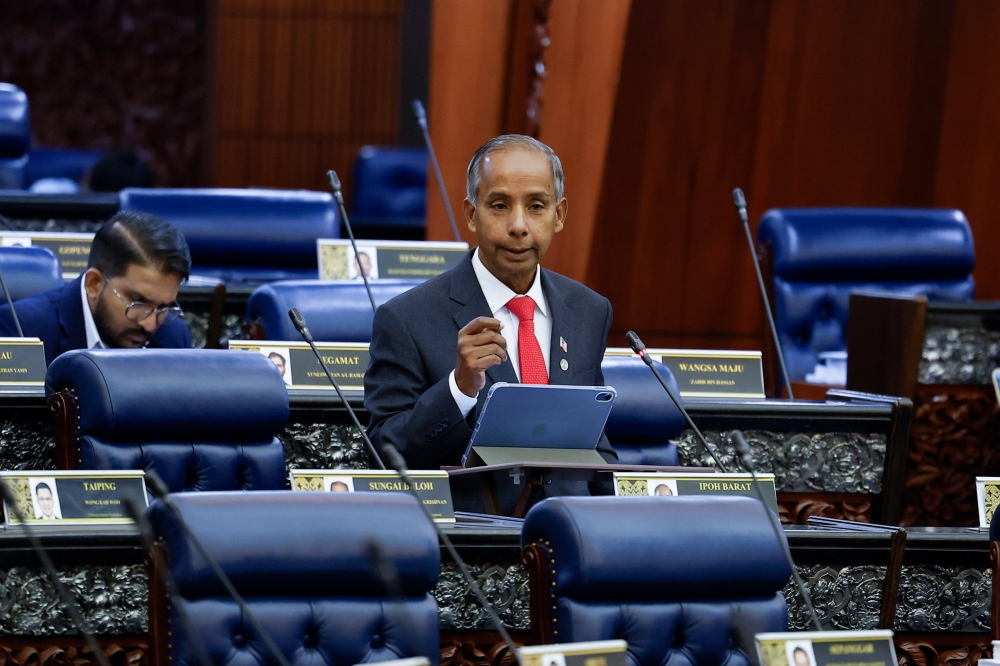
On November 17, Kulasegaran duly introduced the Legal Profession (Amendment) (No. 2) Bill 2025 (No. 37/2025) in the Dewan Rakyat for its first reading. The Bill seeks to amend the Legal Profession Act 1976 (Act 166) (LPA).
Clause 3 of the Bill seeks to substitute Section 7 of LPA to provide for the membership of the Legal Profession Qualifying Board (LPQB). The proposed membership of the LPQB is as follows:
(a) the Attorney General who shall be the Chairman;
(b) the Chairman of the Bar Council who shall be the Deputy Chairman;
(c) a Judge nominated by the Chief Justice;
(d) the Director General of the Legal Affairs Division of the Prime Minister’s Department;
(e) the Chief Registrar;
(f) a member of the Malaysian Bar nominated by the Bar Council and appointed by the Minister;
(g) a full-time member of the academic staff of a Faculty of Law nominated by the Minister charged with the responsibility for higher education and appointed by the Minister;
(h) a full-time member of the academic staff of a faculty of law of a private higher educational institution approved and registered under the Private Higher Educational Institutions Act 1996 [Act 555] nominated by the Minister charged with the responsibility for higher education and appointed by the Minister;
(i) a member who is an advocate and solicitor of the High Court of Sabah and Sarawak and practicing law in the State of Sabah nominated by the Sabah Law Society and appointed by the Minister;
(j) a member who is an advocate and solicitor of the High Court of Sabah and Sarawak and practicing law in the State of Sarawak nominated by the Advocates Association of Sarawak and appointed by the Minister; and
(k) three other members appointed by the Minister.
The above will mean that eight out of 13 members will be appointed by the minister. That, in my humble view, is an overreach of the executive over the LPQB.
The overreach will be further cemented by Clause 4 of the Bill, which seeks to introduce new Sections 7A, 7B and 7C into the LPA. Just look at the proposed new section 7A(1) which empowers the minister to revoke the appointment of members “without assigning any reason”.
Meanwhile, the new Section 7C allows the minister to approve “allowances and other benefits” to be paid to the members.
It is therefore not surprising that the Malaysian Bar, through its vice president, Anand Raj, has raised concerns over the Bill.
According to Anand, while the Malaysian Bar welcomes amendments that strengthen governance and transparency, it vehemently opposes other proposed amendments that would allow for political or executive appointment, influence and interference in the composition of the LPQB.
I couldn’t agree more.
And Anand couldn’t have done better either when he cited the statement of the Hon Dr Lloyd Barnett, the former President of the Organisation of Commonwealth Caribbean Bar Associations almost 40 years ago:
“[A] legal profession which is controlled or manipulated or intimidated by politicians cannot effectively carry out its duty of sustaining the independence of the administration of justice. As a corollary, despotic government usually commences with the suppression of the legal profession.” (See “The Independence of Judges and Lawyers in the Commonwealth Caribbean: Report of a Seminar” held in Tobago from 12 to 13 September 1988)
Concerns over the executive’s overreach must be addressed.- Malay Mail, 24/11/2025

Deputy Minister in the Prime Minister’s Department (Law and Institutional Reform) M Kulasegaran
KUALA LUMPUR (Dec 1): The Dewan Rakyat on Monday night passed the Legal Profession (Amendment) (No.2) Bill 2025, which among others seeks to prohibit individuals holding positions in political parties from being appointed as members of the Legal Profession Qualifying Board (LPQB).
Deputy Minister in the Prime Minister’s Department (Law and Institutional Reform) M Kulasegaran said the provision is stipulated under Subsection 7(3) of the amended Legal Profession Act 1976 (Act 166).
“With this safeguard in place, there should no longer be concerns among members of Parliament regarding allegations of influence, interference or political appointments within the LPQB,” he said when winding up debate on the Bill.
He added that the amendments will strengthen governance, improve efficiency and enhance the accountability of the LPQB, in line with efforts to reform and uplift the legal profession in Malaysia.
Other amendments to Act 166 involve Section 4, aimed at clarifying the status of the LPQB as a corporate body with legal capacity.
The Bill was passed by a majority voice vote after debates by 12 backbenchers and opposition MPs.
The Dewan sits again on Tuesday. - The Edge, 2/12/2025


 Posts
Posts




No comments:
Post a Comment