ON HUMAN RIGHTS, JUSTICE AND PEACE ISSUES, LABOUR RIGHTS, MIGRANT RIGHTS, FOR THE ABOLITION OF THE DEATH PENALTY, TOWARDS AN END OF TORTURE, POLICE ABUSES, DISCRIMINATION...
Many a time the police and other law enforcement break the law and violate people's rights - but in most cases, people just may complain or highlight the wrongs, and sadly the PM or the relevant Minister or even Parliament do not do much. Sometimes, some people like Siti Kassim takes the trouble to fight for their rights by Court action - and it is good to note that we still have some GOOD judges who do uphold the cause of justice without fear or favour...
Of late, more people are losing faith in law enforcement - they do not just make REPORTS to law enforcement - but they also HIGHLIGHT it to the Malaysian public about these wrongdoings and violation of rights...
High Court rules Siti Kasim’s 2018 arrest unlawful, govt to pay RM120,625 to her and RM53,750 to client
In
delivering her grounds, Judicial Commissioner Arziah Apandi said
allegations that Siti Kasim had obstructed a public servant or committed
kidnapping were unsupported in law, noting that Section 186 of the
Penal Code requires physical obstruction or criminal force — not mere
verbal disagreement or refusal to comply. — Picture by Miera Zulyana
By Malay Mail
Friday, 19 Dec 2025 3:25 PM MYT
KUALA
LUMPUR, Dec 19 — The High Court has ruled that the police unlawfully
arrested and detained lawyer Siti Kasim and her client, Anis Nur Izzaty
Ruslan, during a late-night raid at Siti’s home in June 2018, finding
that officers had abused their powers and violated both women’s
constitutional rights.
According
to Free Malaysia Today, Judicial Commissioner Arziah Apandi held that
the police had no lawful basis to enter Siti’s property, describing the
raid as trespass and the subsequent arrests as an act of misfeasance in
public office.
In
delivering her grounds, Arziah said allegations that Siti had
obstructed a public servant or committed kidnapping were unsupported in
law, noting that Section 186 of the Penal Code requires physical
obstruction or criminal force — not mere verbal disagreement or refusal
to comply.
“She was detained for approximately 17 hours, from
about 12.30am until late evening on June 24, 2018, in clear violation of
Article 5(1) of the Federal Constitution,” Arziah said, adding that
Siti was only released hours after a magistrate had already dismissed
the police’s remand application.
The court also found that Siti
was acting strictly in her professional capacity as a lawyer
representing Anis at the time of the incident, and referred to the
United Nations Basic Principles on the Role of Lawyers, which safeguard
legal practitioners from prosecution for actions taken in the course of
their duties.
Arziah
further ruled that Anis’ detention — between about 9pm on June 23 and
3am the following day — was similarly unlawful, concluding that the
officers involved had acted with reckless indifference to the legality
of their actions.
“The evidence before this court of misfeasance
in public office is satisfactory,” she said, adding that Anis’ right to
personal liberty under Article 5 of the Federal Constitution had also
been breached.
The court
ordered the government to pay RM120,625 in general damages to Siti and
RM53,750 to Anis, along with joint exemplary damages of RM100,000.
Costs of RM50,000 were also awarded.
The suit named 30 defendants, including police officers involved in the raid.
Siti was arrested on June 24, 2018, following a report lodged by Anis’ mother.
Siti had denied kidnapping allegations, saying she had assisted Anis in escaping what she described as an abusive situation.
Federal counsel Anis Najwa Nazari and Siti Aishah Ramlan represented the government, while Surendra Ananth appeared for Siti. - Malay Mail, 19/12/2025
Enforced Disappearance must be CRIMINALISED - sadly, even in Malaysia, this crime has yet to investigated, and those criminally liable, be it police officers or even their 'bosses' ought to be charged and tried for this offence..
"You have hunted her, you have watched her every step, you have
refused to let her leave this country on the pretext of investigation –
the day she disappears you go silent," her family's lawyer Sangeet Kaur
Deo told Bloomberg. "The change in the behaviour of the MACC, going from hunting her to
not caring whether she is around, also needs to be explained."...Three months have passed, but Ling's mysterious disappearance has not
sparked the kind of outrage from politicians who had pressured
authorities over similar cases in the past, such as the 2009 death of
DAP official Teoh Beng Hock hours after he was summoned for questioning,
as well as the mysterious abduction of Pastor Raymond Koh and several
social and religious activists. -Malaysia Now, 31/7/2025
15
December 2025. On the 13-year anniversary of the enforced disappearance of Lao
civil society leader Sombath Somphone, we, the undersigned civil society organizations
and individuals worldwide, urge once again United Nations (UN) member states and
Laos’ development and international cooperation partners to demand the Lao
government promptly resolve Sombath’s enforced disappearance and deliver
justice and an effective remedy and reparations to him and his family.
Despite calls by civil society
organizations for
states to use the fourth Universal Periodic Review (UPR) of Laos in April 2025 to
express their concern over the Lao government’s protracted failure to determine
Sombath’s fate or whereabouts, only one -- Canada -- recommended the Lao
government conduct a credible investigation into Sombath’s enforced
disappearance.
We
deplore this silence over Sombath’s enforced disappearance, as it is likely to continue
to facilitate the Lao authorities in their determination to shield the
perpetrators of such a serious crime from accountability.
We
note that various individuals who occupied high-ranking positions in the
government when Sombath disappeared retain important official roles in the
country’s political sphere today. These individuals could and should play a
proactive role in clarifying Sombath’s fate and achieving truth and justice.
For
example, Thongloun Sisoulith, who served as Foreign Minister and Deputy Prime
Minister of Laos at the time of Sombath’s enforced disappearance, is now the
country’s President and the General Secretary of the Lao People’s Revolutionary
Party – effectively, the supreme leader of Laos. Chaleun Yiapaoher,
then-Minister of Justice, is now one of the National Assembly’s
Vice-Presidents. Thongsing Thammavong, then-Prime Minister, is currently a
National Assembly member. These and other influential individuals hold the key
to resolve Sombath’s enforced disappearance - a case that has been described by
the International Commission of Jurists as “eminently solvable.”
UN
member states and Laos’ development and international cooperation partners
should press the government to establish the fate or whereabouts of Sombath and
all other victims of
enforced disappearances in
the country, identify the suspected perpetrators of such serious crimes, and
provide victims with an effective remedy and full reparations. To date, no case
of enforced disappearance in Laos has been resolved and no perpetrators have
been identified or brought to justice.
In
its September 2025 report, the UN Working Group on Enforced or Involuntary
Disappearances emphasized that the disappearance of community leaders such as
Sombath resulted in a collective impact on the groups to which they belonged, including
by weakening community ties, depriving them of leadership, and increasing their
vulnerability to “cultural erosion and environmental exploitation.” The Working
Group further stated that Sombath’s disappearance created a chilling effect on
public participation, noting reports of “serious risks and fear” of retaliation
when his name is mentioned.
We
urge the Lao government to promptly ratify, without reservations, the
International Convention for the Protection of All Persons from Enforced
Disappearance, which it signed in September 2008, and fully implement it into
national law, policies, and practices.
We
continue to stand in solidarity with Sombath and his family and urge UN member
states to support our calls for truth, justice, and accountability for all
cases of victims of enforced disappearance in Laos.
Even
if 13 years have passed, the Lao government is obligated to answer the question
we and many others have been asking since 15 December 2012: “Where is Sombath”?
Background
Sombath
Somphone, a pioneer in community-based development and youth empowerment, was
last seen at a police checkpoint on a busy street in Vientiane, the capital of
Laos, on the evening of 15 December 2012. Footage from a traffic CCTV camera
showed that police stopped Sombath’s vehicle at the checkpoint and that, within
minutes, unknown individuals forced him into another vehicle and drove him away
in the presence of police officers. CCTV footage also showed an unknown
individual arriving and driving Sombath’s vehicle away from the city center. In
December 2015, Sombath’s family obtained new CCTV footage from the same area
and made it public. The video shows Sombath’s car being driven back towards the
city by an unknown individual.
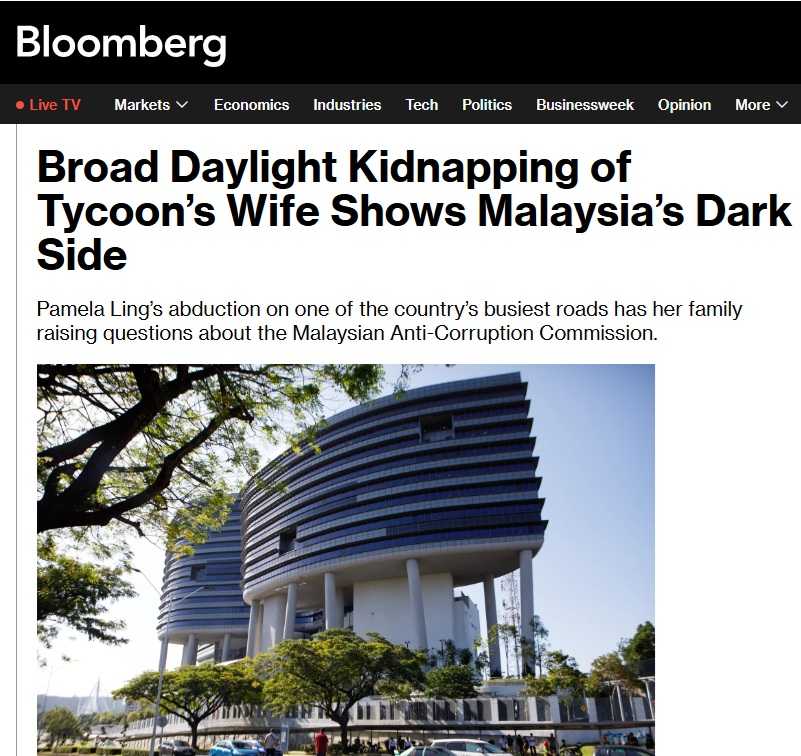
MACC chief Azam Baki has come under renewed scrutiny over his handling of the disappearance of Pamela Ling.
A
new report by Bloomberg on the abduction of a witness extradited from
abroad by the Malaysian Anti-Corruption Commission (MACC) raises
questions about the fact that the anti-graft commission did not seek an
arrest warrant even after she failed to turn up for questioning on the
fateful day.
The report also touched on the question of why Pamela Ling's
appointment with MACC scheduled on April 10 was brought forward to April
9, when her e-hailing vehicle was surrounded by a group of individuals
in police gear just 10 minutes before her arrival at the MACC
headquarters in Putrajaya.
Family members say it "doesn’t make any sense" that MACC did not seek
a warrant for Ling's arrest after she went missing, especially when she
had been arrested before and slapped with a travel ban.
"You have hunted her, you have watched her every step, you have
refused to let her leave this country on the pretext of investigation –
the day she disappears you go silent," her family's lawyer Sangeet Kaur
Deo told Bloomberg.
"The change in the behaviour of the MACC, going from hunting her to
not caring whether she is around, also needs to be explained."
According
to Bloomberg, MACC claimed Ling had been asked to come a day early in
order for it to investigate her application for a second passport.
The report comes at a time when MACC under its chief commissioner
Azam Baki has come under fire for launching a series of
politically-charged investigations into enemies of Prime Minister Anwar
Ibrahim, which was the subject of an explosive report by Bloomberg last
year.
Ling, 42, is the former wife of Sarawak tycoon Hah Tiing Siu. Both
have been through a controversial divorce in Singapore and Malaysia
involving a substantial fortune.
MACC said it had launched an investigation into graft and money
laundering offences involving the couple, adding that Ling had not
co-operated. However, in a lawsuit filed two days before her abduction,
Ling claimed that MACC was using anti-money laundering law to pressure
her to resolve her disputes with her ex-husband.
Among others, she stated that Hah was present during one session she
was interrogated by MACC. She also named one Muslimin Chia Abdullah from
MACC who "urged them to settle matters so the case could be dropped",
said the Bloomberg report.
Three months have passed, but Ling's mysterious disappearance has not
sparked the kind of outrage from politicians who had pressured
authorities over similar cases in the past, such as the 2009 death of
DAP official Teoh Beng Hock hours after he was summoned for questioning,
as well as the mysterious abduction of Pastor Raymond Koh and several
social and religious activists.
The government at the time had carried an official inquest, and in
the case of Teoh, a royal commission of enquiry, although they failed to
specifically conclude what transpired or identify the culprits.
The Malaysian Anti-Corruption Commission headquarters in Putrajaya.
What is chilling is that Ling's abduction took place on a busy stretch of highway leading to the MACC headquarters in Putrajaya.
It is reminiscent of how Koh was similarly kidnapped in broad
daylight in 2017 by a group of men who stopped his vehicle in Petaling
Jaya.
Suspicions of foul play were further fuelled after a Grab driver stepped forward and narrated how Ling was forcibly taken away.
"There were two men and one woman. One man and the woman were wearing
uniforms resembling police attire, and the other man wore a vest
labelled 'police'. They approached me and said that my passenger was
being detained to assist with an investigation based on a police
report," he reportedly said, adding that he was ordered to press the
"complete trip" button on the e-hailing app.
Added to this are parts of Ling's divorce affidavits containing serious allegations against her ex-husband Hah.
"He said he had 'connections to organised crime and gang leaders in
Malaysia, as well as people in powerful positions'," Bloomberg quoted
one of the court filings.
Hah did not answer Bloomberg's queries. His lawyer Selva Mookiah also
did not respond to questions about the couple's divorce and Hah’s
dealings with MACC.
Azam under scrutiny
In its report today, Bloomberg said Ling's "disappearance has
increased scrutiny of the MACC" and its chief Azam, whose tenure was
"repeatedly extended by Anwar in a break from past precedent".
Azam's handling of Ling's disappearance has come under scrutiny after
he reportedly claimed that MACC "never called her with the intent to
arrest her".
Sangeet slammed his statement as "patently false" and reminded that MACC had arrested Ling and extradited her to Malaysia.
"For the chief commissioner to deny a matter already in the public
record was alarming. It suggests not only indifference but an absence of
fear of accountability," she had said last May.
The sources also claimed that Anwar had told Azam not to investigate
his former political secretary Farhash Wafa Salvador over the
controversial purchase of shares in a company linked to the development
of a new billion-ringgit immigration system.
Despite a police report calling for Anwar to be investigated for
abuse of power, authorities have classified the case as "no further
action". - Malaysia Now,. 31/7/2025
Legal Profession Qualification Board(LPQB) - amendments that will place it under EXECUTIVE(Minister) control - and no more INDEPENDENT.
As it is the Judicial Appointment's Commission has a majority of members chosen by the Prime Minister, and it RECOMMENDS persons to be appointed Judges. Many are asking that there should be NO PM(or Executive) appointed members of the JAC to ensure INDEPENDENCE of Judges..
Now, the Legal Profession Qualification Board(LPQB) - another attempt by Executive to place it under Executive Control? Changing it so that there will be 8 out of 13 in the LPQB appointed by the Minister(executive).
Public Prosecutor - already is decided by the Prime Minister(Executive) - hopefully will change when Malaysia enacts law separating Attorney General from Public Prosecutor - where it is hoped that the Executive(PM) no longer chooses the Public Prosecutor - and he/she will be INDEPENDENTLY appointed, with security of tenure(until retirement age) - Changes on the way - and we still do not what are proposed changes yet....taking TOO MUCH time.
Legal
Profession (Amendment) (No. 2) Bill 2025 was tabled on 17/11/2025, and
speedily passed by Dewan Rakyat on 1/12/2025 - YET to be passed by
Senate, and herein LIES the problems -
NOW,
The Board shall consist of -
(a) the Attorney General who shall be the Chairman;
(b)two Judges nominated by the Chief Justice;
(c) the Chairman of the Bar Council; and
(d) a full-time member of the academic staff of a Faculty of Law nominated by the Minister of Higher Education.
The amendment
3. The principal Act is amended by substituting for section 7 the following section:
“Membership of Board
7. (1) The Board shall consist of—
(a) the Attorney General who shall be the Chairman; (b) the Chairman of the Bar Council who shall be the Deputy Chairman; (c) a Judge nominated by the Chief Justice; (d) the Director General of the Legal Affairs Division of the Prime Minister’s Department; (e) the Chief Registrar; (f) a member of the Malaysian Bar nominated by the Bar Council and appointed by the Minister; (g) a full-time member of the academic staff of a Faculty of Law nominated by the Minister charged with the responsibility for higher education and appointed by the Minister; (h) a full-time member of the academic staff of a faculty of law of a private higher educational institution approved and registered under the Private Higher Educational Institutions Act 1996 [Act 555] nominated by the Minister charged with the responsibility for higher education and appointed by the Minister; (i) a member who is an advocate and solicitor of the High Court of Sabah and Sarawak and practicing law in the State of Sabah nominated by the Sabah Law Society and appointed by the Minister; (j) a member who is an advocate and solicitor of the High Court of Sabah and Sarawak and practicing law in the State of Sarawak nominated by the Advocates Association of Sarawak and appointed by the Minister; and (*k) three other members appointed by the Minister.
What changes?
1) Reduction of the number of Judges that can be nominated by the Chief Justice, from 2 to now 1;
2) The number of persons appointed by the Minister INCREASED from 1 to 8?? - and, worse the Minister can remove them at anytime without even giving reasons for said removal???
Now, even though the Bars may nominate, it is the Minister that appoints (and, as such, the Minister may refuse to appoint by the Bar Council, the Sabah Law Society, the Advocates Association of Sabah and Sarawak the person to be nominated to the Board, and ask for some other nominations of person that the Minister accepts - this allows the MINISTER to choose - why was it that persons nominated by the BARs are automatically appointed to the LPQB??? [Note that the LPA is concerned about the Malaysian Bar (in Peninsular Malaysia), the Sabah and Sarawak Bar comes into being by different respective State Laws)
'full-time member of the academic staff of a faculty of law of a private higher educational institution' nominated by the Minister responsible for higher education {not a body made up by full-time member of the academic staff of a Faculty of Law nominated by the Minister of Higher Education.
Then, there are 'three other members appointed by the Minister'
ALL in all, the EXECUTIVE has the power to APPOINT 8 members of the 13 member LPQB, and there is also Director General of the Legal Affairs Division of the Prime Minister’s Department... In short, the LPQB has just fallen under EXECUTIVE control - the Minister?
Previously, the LPQB was balanced, and not under EXECUTIVE control - because 2 of the 5 member LPQB are Judges appointed by the Judiciary, the Attorney General, the Malaysian Bar President, and only ONE chosen by the Executive - academic staff
of law faculties in private higher institution?), and then again it is
the Minister in charge of Law that appoints - HENCE, it was more independent.
There is NO problem with adding on the 2 Presidents of the Sabah Law Society and the Advocates Association of Sabah and Sarawak.
No problem with adding on a LAW academic from the Malaysian public and/or private universities...BUT the choice should not be with the Minister [At present, the amendments talk about Law Academic from private institutions - what about PUBLIC institutions like the Law Faculties of UM, UKM, UITM,....?
BUT, the troubling part is that they do not become members of LPQB as of right - but needs to also be APPOINTED by the Minister, who also has the power to remove those appointed any time, without even reference to those who nominated' without assigning any reason for the revocation
ALL in all, it LOOKS like another attempt for the EXECUTIVE control of the LPQB - and it is most SHOCKING that this time the Malaysian Bar failed to strongly PROTEST in the past of any attempt that will affect the Independence of the Legal Profession in Malaysia - this time only a Media Statement by the Vice President(not even the President)
NOW, there is a concern about the COMPOSITION of the Judicial Appointments Commission - where the Prime Minister picks 5 out of the 9 member JAC. Even the Conference of Rulers have called for removal of the Prime Minister's power/role in picking the members of the JAC?
The Conference of Rulers is proposing
that five of the nine members of the Judicial Appointments Committee
(JAC) no longer be appointed by the prime minister so that its
composition is more balanced and does not carry the interest of any
party.
The
Yang Dipertuan Besar of Negeri Sembilan, Tuanku Muhriz Tuanku Munawir,
who chaired the 260th Conference of Rulers meeting today, said in terms
of the judicial system, the Conference of Rulers is responsible for the
appointment of judges in Malaysia, and at present, this process is seen as having weaknesses that can be improved, JAC's membership included.
His
Highness said JAC plays a key role in proposing judicial nominations,
and therefore its membership was critical in ensuring that the committee
continued to be looked up to and is capable of nominating judges of
calibre and integrity.
"Instead,
it (power to appoint JAC members) should be given to several other
institutions such as the Malaysian Bar, the Sabah Law Society, Advocates
Association of Sarawak and Parliament's Select Committee.
"Currently,
JAC has nine members, four of whom are senior judges while five more
are individuals appointed by the Prime Minister," Tuanku Muhriz said
in his message in conjunction with the two-day 260th Conference of
Rulers meeting that began yesterday at Istana Negara.- Astro Awani, 30/11/2022
Thus, should also the EXECUTIVE appointed members in the LPQB also be an ISSUE OF CONCERN - as a majority executive appointed LPQB may affect the quality and the members of the Advocates and Solicitors in Malaysia in the future. A 'BAD' or an 'unqualified' lawyer is a great DANGER to the administration of justice in Malaysia - there must be standards to ensure only the qualified becomes lawyers.
In Malaysia, even though Malaysia now recognizes foreign law degrees - it is not enough. There is a requirement for these foreign law degree holders to sit and pass the Certificate of Legal Practice(where it was shown that only about 20% do pass it at every sitting). Those who failed will have to re-sit until they pass >>> this is an important mechanism to ensure only QUALIFIED lawyers are admitted to the Bar and allowed to practice as lawyers...
Of late, there has been great concern about Law Graduates from Malaysian Public Universities - thus, the question has been raised as to whether they too will need to sit for the CLP or some new Legal Profession Qualifying Exams - I think they should, as this is a matter of Public Interest - and we do not want to blindly admit local Public University graduates to become lawyers. They may be able to EXCEL in their academic LAW degrees - but that certainly do not mean that they will make desirable lawyers..
Now, was that the intention of this AMENDMENT - because the government does not want LOCAL law graduates to undergo any CLP or Legal Profession Qualification Exams - which may show the LAW academic qualification wanting > when the majority fails such CLP or Qualification exams? The Executive may be more interested in protecting 'the standards' of public universities - rather than ensuring that the truly qualified becomes lawyers. Excelling academically does not automatically make one a GOOD lawyer. EITHER way - it will lead to greater EXECUTIVE control, which is wrong...
The problem with majority executive appointed members in the Legal Profession Qualifying Board poses a RISK - as the EXECUTIVE is concerned more about appeasing VOTERS and winning elections rather than ensuring the Independence and professionalism of lawyers, judges and even the Public Prosecutor(prosecutors) - and that is why the LPQB should be INDEPENDENT and should only be comprised of persons in the Judiciary, the various Bars, and the public lawyers(public prosecutors/Federal Counsels) - the Minister and/or the Executive should not have any power or role in appointing members of the LPQB, or in JAC(that picks qualified Judges)...
In the past, the Malaysian Bar, led by the President and the Bar Council, would have REACTED very strongly if there are any attempts that will compromise the INDEPENDENCE, and/or even quality of the Legal Profession. There will be EGMs, and other actions - BUT this time, the response had been just a media statement - What is happening? Why has the BC also not analyzed the proposed amendments - and educated lawyers about the potential concerns/risk?
The said statement did raise some of the CONCERNS - but the question is why did the President and the Bar Council not go FURTHER and move its members towards greater awareness of his amendment (Legal Profession (Amendment) (No. 2) Bill 2025 was tabled on 17/11/2025, and speedily passed by Dewan Rakyat on 1/12/2025 - YET to be passed by Senate) and STRONGER protests NOW as it may affect the INDEPENDENCE of the Legal Profession???
Another concern is the NEW Section 7A
7a. (1) The Minister may at any time revoke the appointment of any member of the Board under paragraphs 7(1)(g), (h), (i), (j) and (k) without assigning any reason for the revocation
## Interestingly they left out the Malaysian Bar representative - in 7(1)(f) ...who is also appointed by the Minister???
The US-MALAYSIA Agreement is of great concern, as it will have many NEGATIVE impacts on Malaysia ...many have HIGHLIGHTED the problems. BUT PM Anwar still seems like he is going to put the Agreement into FORCE without getting PRIOR approval from Parliament, the States and even the Rulers Conference. It seems he believes, that as PM, he has the power to do as he wants...
Interestingly, this SOLE DISCRETION of the PM to enter into agreements with other countries, other entities is NOT CLEARLY stated in our Federal Constitution or any LAWS currently, thus making it something that maybe OUR COURTS should decide on....
Too many have raised the 'problems' with this rather ONE-SIDED Agreements that also will put pressure on Malaysia to do the needful to
US has sanctions now on so many countries like IRAN, North Korea, ... and many of these countries of the NON-ALLIGNED Movement(NAM) - so will Malaysia also 'implement' US Sanctions against these countries...
' The U.S. imposes sanctions on countries like Cuba, Iran, North Korea, Russia, Syria, and Venezuela,
with some facing comprehensive embargoes (Cuba, Iran, NK, Syria) and
others targeted measures (Russia, Belarus, Venezuela). Sanctions also
exist for ... China (military), Belarus, Burma, Afghanistan, and others,' So, will Malaysia also now adopt and maintain a
measure with equivalent restrictive effect as the measure adopted by
the United States???
A clause in the current US-Malaysia Agreement says this - Article 5.1
'. If the United States imposes a customs duty, quota,
prohibition, fee, charge, or other import restriction on a good or
service of a third country and considers that such measure is relevant
to protecting the economic or national security of the United States,
the United States intends to notify such measure to Malaysia for the
purpose of economic and national security alignment. Upon receiving such
notification from the United States, Malaysia shall adopt or maintain a
measure with equivalent restrictive effect as the measure adopted by
the United States or agree to a timeline for implementation that is
acceptable to both Parties, to address a shared economic or national
security concern, guided by principles of goodwill and a shared
commitment to enhancing bilateral relations between the United States
and Malaysia.'
But, what about Malaysia - if it imposes similar 'customs duty, quota,
prohibition, fee, charge, or other import restriction on a good or
service of a third country ' - Is US bound to follow? If Malaysia imposes such economic 'sanctions' on Israel, or countries that are pro-Israel that supply arms or monies to Israel that end up being used to kill Palestinians and destroy Palestine?
Then, there is that is another clause - the FREEDOM to enter into agreements ...
(b) Malaysia shall not enter into agreements or understandings
with third countries that include non-scientific, discriminatory, or
preferential technical standards or third-country SPS measures that are
incompatible with U.S. or international standards; or otherwise
disadvantage U.S. exports.
WHY TAKE IT TO COURT?
Malaysia is a Parliamentary Democracy - a Prime Minister is decided by the Members of Parliament. Parliament has the duty of 'CHECK and BALANCE' to prevent PM or Executive wrongdoings and abuses ...
HENCE, should not in be RIGHT to secure Parliamentary Approval before the PM can enter into any agreement on behalf of Malaysia, more so whose effect will last beyond the tenure of said Prime Minister?
Malaysia is a FEDERATION OF STATES/REGIONS - should not the approval of the said States/Regions be needed before any Federal Prime Minister enters into any agreement which naturally will affect all States and its citizens too..
Malaysia has a King and Conference of Rulers - the HEAD OF STATE is the KING, not the Prime Minister > and, as such, should not also the CONSENT of the King and the individual Rulers be obtained before any sitting PM enters into any agreement on behalf of Malaysia with any other countries and entitities?
These are, I believe, our Malaysian Courts should consider and decide - more so, since there is NO provisions in our Federal Constitution and/or LAWS that clearly state that the PM has full AUTHORITY to sign any such agreements, that will bind Malaysia even beyond the term of this Prime Minister.
THESE ARE IMPORTANT QUESTIONS THAT MAYBE THE MALAYSIAN COURTS SHOULD CONSIDER AND DECIDE ON...
So, should someone, maybe some politician or a political party or OTHERS take this matter to court, applying also maybe for an INTERIM INJUNCTION preventing the PM from putting this Agreement into FORCE on behalf of Malaysia???
Of late, our former Prime Minister also filed a POLICE REPORT - but no news still whether the police is even going to investigate?
Was the US-Malaysia Agreement even legal - Was it NOT a THREAT by Trump to increase TARIFFS the reason why Malaysia, in fear of the Threat and the consequences of the threat if carried out, 'FORCE" Malaysia into such an agreement?
There is still TIME - Will anyone take this Agreement to COURT?
The Government of the United States of America (“United States”) and
the Government of Malaysia (“Malaysia”) (hereinafter referred to
individually as “a Party” and collectively as “the Parties”),
EMPHASIZING their shared values, including their shared commitment to sovereignty, economic prosperity, and resilient supply chains;
RECOGNIZING the bonds of friendship and cooperation
between them, in particular in their trade and investment relations, as
reflected in the Trade and Investment Framework Agreement between the Government of the United States and the Government of Malaysia;
INTENDING to enhance reciprocity in their bilateral trade relationship by addressing tariff and non-tariff barriers; and
SEEKING to strengthen their commercial relationship through increased alignment on national and regional economic security matters,
HAVE AGREED as follows:
Section 1. Tariffs and Quotas
Article 1.1: Tariffs
1. Malaysia shall apply a rate of customs duty[1] on originating goods of the United States as set out in Schedule 1 to Annex I.
2. The United States shall apply a revised reciprocal tariff
rate on originating goods of Malaysia as set out in Schedule 2 of Annex
I.
Article 1.2: Quantitative Restrictions
Malaysia shall not impose quantitative restrictions on imports of
originating goods of the United States except in accordance with the General Agreement on Tariffs and Trade 1994 (GATT 1994).
Section 2. Non-Tariff Barriers and Related Matters
Article 2.1: Import Licensing
Malaysia shall not apply import licensing[2]
to U.S. originating goods in a manner that restricts the importation of
such goods. Malaysia shall ensure that any non-automatic import
licensing that it applies is applied only to administer an underlying
measure, and in a manner that is transparent, nondiscriminatory, and not
unduly burdensome, and that does not reduce the competitiveness of U.S.
exports.
Article 2.2: Technical Regulations, Standards, and Conformity Assessment
1. The Parties recognize their existing rights and
obligations with respect to each other under the World Trade
Organization (WTO) Agreement on Technical Barriers to Trade.
Malaysia shall allow U.S. originating goods that comply with applicable
U.S. or international standards, U.S. technical regulations, or U.S. or
international conformity assessment procedures to enter its territory
without additional conformity assessment requirements. In doing so─
(a) Malaysia shall accord to the conformity assessment bodies
of the United States treatment no less favorable than that it accords to
its own bodies; and
2. Malaysia shall ensure that technical regulations,
standards, and conformity assessment procedures are applied in a
non-discriminatory manner and do not operate as disguised restrictions
on bilateral trade, and shall remove existing technical barriers to
trade in areas that undermine reciprocity, including requirements for
duplicative or unnecessary testing or conformity assessment.
Article 2.3: Agriculture
Malaysia shall provide non-discriminatory or preferential market
access for U.S. agricultural goods as set forth in this Agreement. In
doing so─
(a) Malaysia shall ensure that its sanitary and phytosanitary
(SPS) measures are science- and risk-based and do not operate as
disguised restrictions on bilateral trade, and shall remove unjustified
SPS barriers in areas that undermine reciprocity.
(b) Malaysia shall not enter into agreements or understandings
with third countries that include non-scientific, discriminatory, or
preferential technical standards or third-country SPS measures that are
incompatible with U.S. or international standards; or otherwise
disadvantage U.S. exports.
Article 2.4: Geographical Indications
Malaysia shall ensure transparency and fairness with respect to the protection or recognition[3]
of geographical indications, including pursuant to an international
agreement to which Malaysia is a party. Malaysia shall only protect or
recognize a term that identifies a good as a geographical indication
where there is a given quality, reputation, or other characteristic of
the good that is essentially attributable to its geographical origin.
Article 2.5: Cheese and Meat Terms
Malaysia shall not restrict U.S. market access due to the mere use of the individual cheese and meat terms listed in Annex II.
Article 2.6: Intellectual Property
Malaysia shall provide a robust standard of protection for intellectual property.[4]
Malaysia shall provide effective systems for civil, criminal, and
border enforcement of intellectual property rights and shall ensure that
such systems combat and deter the infringement or misappropriation of
intellectual property, including in the online environment. Malaysia
shall prioritize and shall take effective criminal and border
enforcement actions against copyright and trademark infringements.
Article 2.7: Services
This Agreement incorporates, mutatis mutandis, any
commitment concerning trade in services that Malaysia has made or
hereafter makes in a trade agreement to any third country, jurisdiction,
or economy. This Article shall not apply to any commitment to the
Association of Southeast Asian Nations (ASEAN) under any ASEAN trade or
investment agreement.
Article 2.8: Good Regulatory Practices
Malaysia shall adopt and implement good regulatory practices as set
out in Article 2.21 of Annex III that ensure greater transparency,
predictability, and participation throughout the regulatory lifecycle.
2. Malaysia shall protect internationally recognized labor rights.[5]
This includes by adopting or maintaining such rights in its domestic
law and practice, and effectively enforcing its labor laws, including by
creating or maintaining necessary institutions to protect labor rights.
Malaysia shall establish and effectively apply appropriate legal
sanctions for violations of those laws. Malaysia shall not weaken or
reduce the protections in its labor laws and shall address any such
weakening or reduction that has been made to encourage trade or
investment to date.[6] In addition, Malaysia shall address issues related to labor rights that contribute to non-reciprocal trade.
Article 2.10: Environment
Malaysia shall adopt and maintain environmental protections,
effectively enforce its environmental laws, uphold or institute, as
necessary, strong environmental governance structures, and address
environment-related issues that contribute to non-reciprocal trade.
Article 2.11: Customs and Trade Facilitation
Malaysia shall facilitate technology solutions that allow for full
pre-arrival processing, paperless trade, and digitalized procedures for
the cross-border movement of goods.
Article 2.12: Border Measures and Taxes
1. Malaysia shall coordinate and endeavor to align its border
measures applicable to third-country imports with relevant border
measures that the United States may adopt in the future, such as
border-adjusted tax measures or other border measures, to combat
regulatory arbitrage that would disadvantage U.S. workers and
businesses.
2. No Party shall contest at the WTO a measure adopted by the
other Party to rebate or to refrain from imposing direct taxes in
relation to exports from that Party.
(a) refraining from measures that discriminate against U.S. digital services or U.S. products distributed digitally;[7]
(b) ensuring the cross-border transfer of data by electronic
means across trusted borders, with appropriate protections, for the
conduct of business; and
(c) endeavoring to collaborate with the United States to
address cybersecurity challenges and matters of mutual interest, which
may include exchanging information on threats and best practices,
promoting the use of relevant international standards, and understanding
capacity-building activities.
Article 3.3: Digital Trade Agreements
Malaysia shall consult with the United States before entering into a
new digital trade agreement with another country that jeopardizes
essential U.S. interests.
Article 3.4: Market Entry Conditions
1. Malaysia shall not impose any condition or enforce any
undertaking requiring U.S. persons to transfer or provide access to a
particular technology, production process, source code, or other
proprietary knowledge, or to purchase, utilize, or accord a preference
to a particular technology, as a condition for doing business in its
territory.
2. Nothing in this Article shall─
(a) preclude the inclusion or implementation of terms and
conditions related to the provision of source code in commercially
negotiated contracts;
(b) preclude a Party from requiring that access be provided to
software used for critical infrastructure, to the extent required to
ensure the effective functioning of critical infrastructure, subject to
safeguards against unauthorized disclosure;
(c) preclude a Party from requiring the modification of source
code of software necessary for that software to comply with laws or
regulations which are not inconsistent with this Agreement;
(d) apply to government procurement;
(e) preclude a regulatory body or judicial authority of a
Party from requiring a person of another Party to preserve and make
available the source code of software, or an algorithm expressed in that
source code, to the regulatory body for a specific investigation,
inspection, examination, enforcement action, or judicial proceeding,
subject to safeguards against unauthorized disclosure; or
(f) apply to a Party’s measures adopted or maintained for prudential reasons.[8]
Article 3.5: Customs Duties on Electronic Transmissions
Each Partyshall not impose customs duties on electronic
transmissions, including content transmitted electronically, and shall
support multilateral adoption of a permanent moratorium on customs
duties on electronic transmissions at the WTO. For greater certainty,
this Article does not preclude a Party from imposing internal taxes,
fees, or other charges on electronic transmissions, including content
transmitted electronically, provided that those taxes, fees, or charges
are imposed in a manner consistent with Articles I and III of the GATT
1994 or Articles II and XVII of the WTO General Agreement on Trade in Services (GATS).
Section 4. Rules of Origin
Article 4.1: General Provision
The Parties intend for the benefits of this Agreement to accrue
substantially to them and their nationals. If benefits of this Agreement
are accruing substantially to third countries or third-country
nationals, a Party may establish rules of origin necessary to achieve
the Parties’ intention for this Agreement.
Section 5. Economic and National Security
Article 5.1: Complementary Actions
1. If the United States imposes a customs duty, quota,
prohibition, fee, charge, or other import restriction on a good or
service of a third country and considers that such measure is relevant
to protecting the economic or national security of the United States,
the United States intends to notify such measure to Malaysia for the
purpose of economic and national security alignment. Upon receiving such
notification from the United States, Malaysia shall adopt or maintain a
measure with equivalent restrictive effect as the measure adopted by
the United States or agree to a timeline for implementation that is
acceptable to both Parties, to address a shared economic or national
security concern, guided by principles of goodwill and a shared
commitment to enhancing bilateral relations between the United States
and Malaysia.
2. Malaysia shalladopt and implement measures, in accordance
with its domestic laws and regulations, to address unfair practices of
companies owned or controlled by third countries operating in Malaysia’s
jurisdiction that result in─
(a) the export of below-market price goods to the United States;
(b) increased exports of such goods to the United States;
(c) a reduction in U.S. exports to Malaysia; or
(d) a reduction in U.S. exports to third-country markets.
3. Malaysia shall adopt, through its domestic regulatory
process, similar measures of equivalent restrictive effect as those
adopted by the United States to encourage shipbuilding and shipping by
market economy countries. The Parties shall discuss the structure and
effect of such measures, recognizing the Parties’ commitment to address
shared economic or national security concerns in the shipbuilding and
shipping sector.
Article 5.2: Export Controls, Sanctions, Investment Security, and Related Matters
1. Malaysia shall, through its domestic regulatory process,
cooperate with the United States to regulate the trade in national
security-sensitive technologies and goods through existing multilateral
export control regimes, align with all unilateral export controls in
force by the United States, and ensure that its companies do not
backfill or undermine these controls.
2. Malaysia shall cooperate with the United States, in a
manner consistent with applicable requirements of domestic laws and
regulations, with a view to restricting transactions of its nationals
with individuals and entities included in the U.S. Department of
Commerce Bureau of Industry and Security Entity List (Supplement 4 of
Part 744 of the Export Administration Regulations), as well as the U.S.
Department of the Treasury Office of Foreign Assets Control Lists of
Specially Designated Nationals and Blocked Persons List (SDN List) and
the Non-SDN Consolidated Sanctions List.
3. Malaysia shall explore the establishment of a mechanism to
review inbound investment for national security risks, including in
connection with critical minerals and critical infrastructure,
consistent with widely accepted international best practices, and shall
cooperate with the United States on matters related to investment
security.
4. If the United States determines that Malaysia is
cooperating to address shared national and economic security issues, the
United States may take such cooperation into account in administering
its domestic laws and regulations pertaining to export controls,
investment reviews, and other measures.
Article 5.3: Other Measures
1. The United States shall work with Malaysia to streamline and enhance defense trade.
2. Malaysia shall, in accordance with its domestic laws and
regulations,adopt and effectively enforce measures to combat
transshipment and other practices to evade or circumvent duties applied
by the United States. Malaysia shall enter into a duty evasion
cooperation agreement with the United States.
4. Malaysia shall not purchase any nuclear reactors, fuel
rods, or enriched uranium from certain countries, except where there are
no alternative suppliers on comparable terms and conditions.
Section 6. Commercial Considerations and Opportunities
2. The United States shall work through U.S. institutions
such as the Export-Import Bank of the United States (EXIM Bank) and the
U.S. International Development Finance Corporation (DFC), if eligible,
to consider supporting investment financing in critical sectors in
Malaysia in collaboration with U.S. private sector partners, consistent
with applicable law.
3. Malaysia shall facilitate, to the extent practicable,
approximately USD70 billion in job-creating investment, including
greenfield investment, in the United States over the next 10 years.
Article 6.2: Commercial Considerations
1. Malaysia shall ensure that its State-Owned or -Controlled
Enterprises (SOEs) operating in its market, when engaging in commercial
activities─
(a) act in accordance with commercial considerations in their purchase or sale of goods or services; and
(b) refrain from discriminating against U.S. goods or services.
Malaysia shall refrain from providing non-commercial assistance or
otherwise subsidizing its goods-producing SOEs, except for the
achievement of their public service obligations. Malaysia shall ensure a
level playing field for U.S. companies in Malaysia’s market with
respect to SOEs of third countries.
2. Upon the written request of the United States, Malaysia shall provide non-confidential[9]
information regarding all forms of non-commercial assistance or
subsidies that it provides to a manufacturing enterprise in its
territory, and shall take action to address the distortive impacts of
those subsidies and support mechanisms that may materially affect
bilateral trade and investment with the United States.
Article 6.3: Purchases
Malaysia intends to purchase, or to facilitate the purchase by
Malaysian companies, of originating goods of United States, as set out
in Annex IV.
Section 7. Implementation, Enforcement, and Final Provisions
Article 7.1: Recognition of Existing Rights and Obligations
The Parties recognize their rights and obligations under the WTO
agreements, including provisions of those agreements that reflect a WTO
member’s sovereign rights to protect essential security, address unfair
trade practices, and pursue other public policy objectives.
Article 7.2: Entry into Force
This Agreement shall enter into force 60 days after the date on which
the Parties have exchanged written notifications certifying completion
of their applicable legal procedures or on such other date as the
Parties may agree.
Article 7.3: Modifications and Amendments
Either Party may request reasonable modifications to any provision of
this Agreement. The other Party shall consider such modifications in
good faith. The Parties may agree, in writing, to amend this Agreement.
An amendment to this Agreement shall enter into force 60 days after the
date on which the Parties exchange written notification of the
completion of their respective applicable legal procedures or on such
other date as the Parties may agree. An amendment shall not affect the
rights and obligations of the Parties provided for under this Agreement
until the amendment enters into force.
Article 7.4: Enforcement
1. Nothing in this Agreement shall constrain, or otherwise
prevent, a Party from imposing additional tariffs to remedy unfair trade
practices, to address import surges, to protect its economic or
national security, or for other similar reasons consistent with its domestic law.
2. If a Party considers that the other Party has not complied
with a provision of this Agreement, the Party may review the terms of
this Agreement and take action in accordance with applicable domestic
law. A Party shall, when practicable, with a view to finding a mutually
satisfactory solution, notify and seek consultations in good faith with
the other Party prior to taking any action.
Article 7.5: Termination
Either Party may terminate this Agreement by written notification to
the other Party. Termination shall take effect 180 days after the date
of the notification.
Article 7.6: Annexes, Appendices, and Footnotes
The annexes, appendices, and footnotes to this Agreement constitute an integral part of this Agreement.
IN WITNESS WHEREOF the undersigned, being duly authorized thereto by their respective Governments, have signed this Agreement.
DONE in duplicate at Kuala Lumpur, this 26th day of October, 2025.
FOR THE GOVERNMENT OF FOR THE
GOVERNMENT OF THE UNITED STATES OF AMERICA MALAYSIA
[1] Customs duty includes any duty or charge of any
kind imposed on or in connection with the importation of a good, and any
surtax or surcharge imposed in connection with such importation, but
does not include any─
(a) charge equivalent to an internal tax imposed consistently with Article III:2 of GATT 1994;
(b) fee or other charge in connection with the importation commensurate with the cost of services rendered; or
(c) antidumping or countervailing duty applied pursuant to a Party’s law.
[2]
For greater certainty, “import licensing”, “automatic import
licensing”, and “non-automatic import licensing” have the same meanings
as provided in the WTO Agreement on Import Licensing Procedures.
[3] For greater certainty, Malaysia shall not protect or recognize a predetermined list of geographical indications.
[4] For purposes of this Agreement, “intellectual property” refers to
all categories of intellectual property that are the subject of
Sections 1 through 7 of Part II of the WTO Agreement on Trade-Related Aspects of Intellectual Property Rights.
Further, for purposes of this Agreement, the protection of intellectual
property includes matters related to technological protection measures
and rights management information.
[5] For purposes of this paragraph, internationally recognized labor
rights include those in the International Labor Organization (ILO) Declaration on Fundamental Principles and Rights at Work and its Follow-Up (1998),
as amended in 2022; a prohibition on the worst forms of child labor;
and acceptable conditions of work with respect to minimum wages and
hours of work.
[6] For greater certainty, the scope of this paragraph includes
special economic zones, including export processing zones, or
sector-specific laws or regulations that have lesser labor protections
than the overall economy.
[7] For greater certainty, Malaysia has the right to regulate in the
public interest. [1] The Parties understand that the term “prudential
reasons” includes the maintenance of the safety, soundness, and
integrity or financial responsibility of individual financial service
suppliers as well as the safety and financial and operational integrity
of payment and clearing systems.
[8]
For purposes of this paragraph, “non-confidential information” means
information other than confidential information, and “confidential
information” means information that relates to a specific enterprise and
is protected under the laws and regulations of Malaysia.
[9] For purposes of this paragraph, “non-confidential information”
means information other than confidential information, and “confidential
information” means information that relates to a specific enterprise
and is protected under the laws and regulations of Malaysia.
'I, Mahathir bin Mohamad, wish to report sabotage': Historic police report filed against Anwar over Trump deal
The
former leader also urges that everyone involved in the preparation,
negotiation and finalisation of the Oct 26 trade agreement be
questioned.
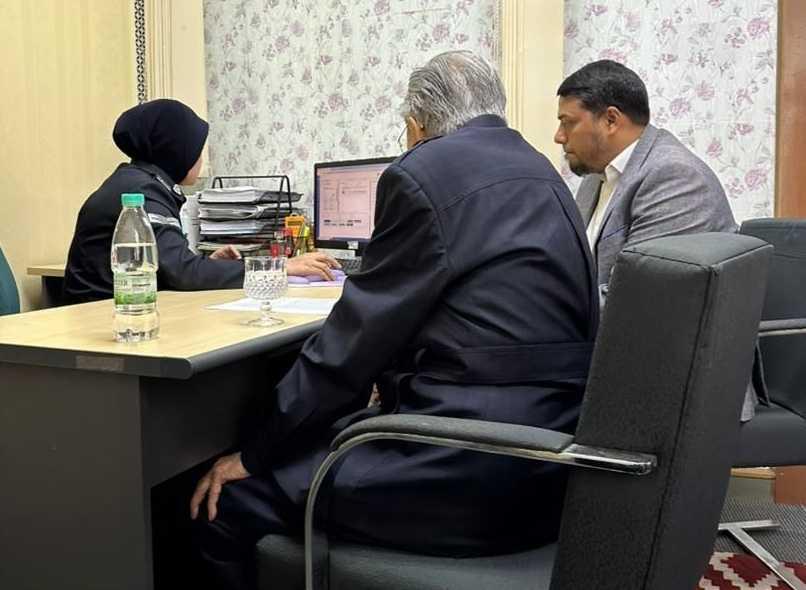
Dr Mahathir Mohamad at the Putrajaya police headquarters accompanied by his lawyer Rafique Rashid.
Dr
Mahathir Mohamad today called on authorities to investigate Anwar
Ibrahim for economic sabotage and undermining the country's sovereignty
over an agreement signed with the US, in a historic police report lodged
by one of Malaysia's best-known post-independence figures against a
sitting prime minister.
In his report lodged at the Putrajaya police headquarters this
morning, accompanied by lawyer Rafique Rashid, the centenarian said the
Malaysia-US Agreement on Reciprocal Trade (ART) signed by Anwar with
President Donald Trump in October could harm Malaysia's position and
undermine its economic and political sovereignty.
"I believe that the action was taken without fully considering the
national interest and, in my opinion, can be considered an act by
someone who disregards the sovereignty of Malaysia as a sovereign
country, and has the potential to drag the country into a situation
where it is mortgaged to the influence of foreign powers," Mahathir said
in his police report seen by MalaysiaNow.
- Advertisement -
He cited breaches under various sections of the Penal Code, namely
sections 124B, 124C and 124K, dealing with acts of sabotage and
activities detrimental to parliamentary democracy.
Mahathir also listed at least four major clauses in the agreement
which he said effectively surrender Malaysia's sovereignty and trade
independence to a foreign power.
They include clauses obliging Malaysia to follow any unilateral
sanctions by the US against other countries, and to reveal Malaysia's
cross-border data, which has "potential to interfere with the country's
regulatory policy".
He also listed 14 negative implications for Malaysia, including those
related to regulation of the halal industry, Bumiputera economic
empowerment, national strategies for the high-tech sector, and export of
critical minerals such as rare earth elements.
"All of these matters raise serious concerns, as in my opinion, they
eliminate Malaysia's power to determine foreign policy, economic policy
and the use of national strategic resources independently and
sovereignly," said Mahathir.
'Probe MITI, AG and everyone involved'
He said any investigation should also probe elements of power abuse
and negligence in discharging official duties, including breach of trust
regarding decisions involving rare earths and critical minerals.
- Advertisement -
He said that besides Anwar, police should also question officials of
the Ministry of Investment, Trade and Industry (Miti), the
attorney-general, and all parties involved in the preparation and
negotiation of the agreement.
"It is now clear that the statement by the government on the
agreement with the US hid many serious undertakings by Malaysia to
submit to the US," said Mahathir, the man widely credited with
Malaysia's rapid economic growth throughout the eighties and nineties.
The agreement, which has been hailed by Anwar and government leaders,
has sparked public outrage and criticism from experts and politicians
over clauses seen as overwhelmingly favouring Washington's interests.
Among them is former attorney-general Tommy Thomas, who said
the various commitments imposed on Malaysia showed that those involved
in the negotiations – from the Prime Minister’s Office to the
Attorney-General’s Chambers – "did not negotiate at all".
"The US handed them their draft. And it was signed lamely by Anwar,
who had Trump’s pen to show for it, and a ride in Trump’s car," he said,
referring to Trump's gift of a White House pen to Anwar shortly after
the latter signed the agreement in Kuala Lumpur on the sidelines of the
Asean Summit on Oct 26.
Details of the deal only emerged to the Malaysian public after the
White House published them on its official website hours later.
At the heart of the outrage is a provision that obliges Malaysia to become a direct participant in US economic conflicts.
It states that if Washington imposes sanctions or tariffs on any
third country for national security reasons, Malaysia "shall adopt or
maintain a measure with equivalent restrictive effect", effectively
ending Malaysia’s long-held foreign policy of non-alignment and
mirroring US sanctions against other nations.
Anwar's defence of the agreement has renewed accusations of the
Pakatan Harapan chairman's leaning towards US and Western policies, a
claim cited by Mahathir as far back as 1998 when he sacked Anwar from
the government during the height of the Asian financial crisis. - Malaysia Now, 2/12/2025
Najib’s ‘house arrest’
-
Aliran has released a statement on the latest developments: The news has
made headlines both at home and abroad, and for good reason. For many, this
decisi...
PRU14 - Keputusan TEMERLOH - Parlimen dan DUN
-
Keputusan di Temerloh, harus kita analisa
1- Parlimen dimenangi Pakatan Harapan, yang juga menang DUN Mentakab,
tetapi BN menang DUN Lancang dan DUN Kuala ...
I believe in the freedom of expression - and everyone is free to use, reproduce, quote, copy and circulate, etc... materials published here. Please credit the source: http://charleshector.blogspot.com/.
For those of you who do have Blogs/Websites, it would be good if you could add a link to CHARLES HECTOR Blog. Please do promote the BLOG.
Anonymous comments or those containing profanities and obscenities (or irrelevant matters) will be rejected. Note that all comments made in post are personal opinions.
Number of Visits
Over 4 million visits. On an average, we have about 700-750 visits per day.Thank you all for your support and encouragement..



 According
to Bloomberg, MACC claimed Ling had been asked to come a day early in
order for it to investigate her application for a second passport.
According
to Bloomberg, MACC claimed Ling had been asked to come a day early in
order for it to investigate her application for a second passport.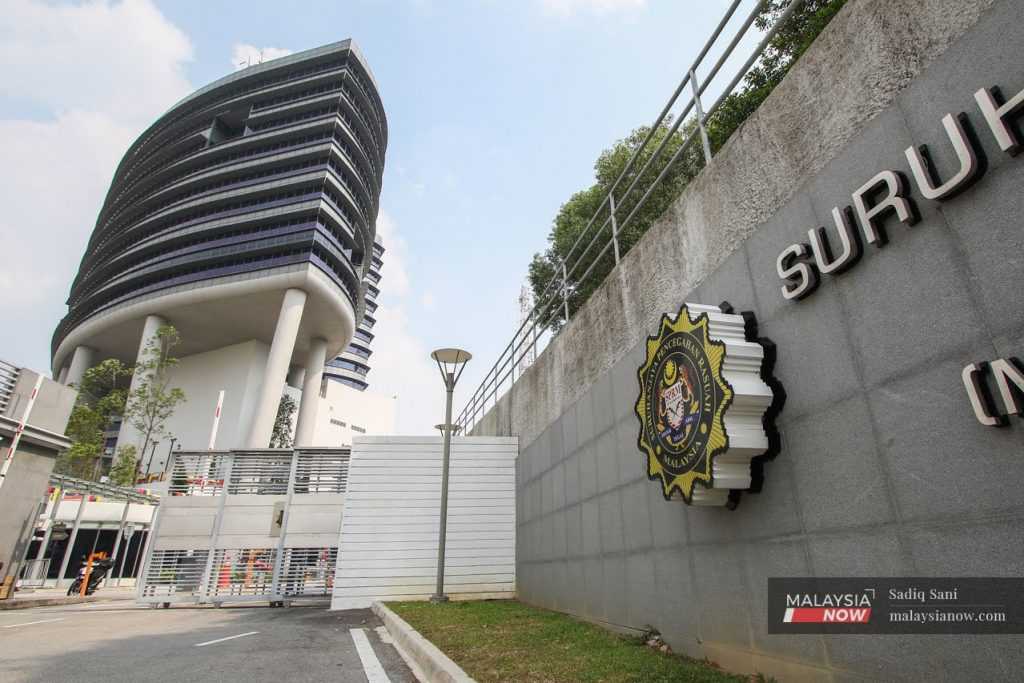

 Posts
Posts