ON HUMAN RIGHTS, JUSTICE AND PEACE ISSUES, LABOUR RIGHTS, MIGRANT RIGHTS, FOR THE ABOLITION OF THE DEATH PENALTY, TOWARDS AN END OF TORTURE, POLICE ABUSES, DISCRIMINATION...
Communist ideology, amongst others, is also about providing free services to all citizens, particularly emphasizing healthcare and education.
So, when the Home Ministry (PM Anwar Ibrahim, Home Minister Saifuddin Nasution and the MADANI government) banned 2 books - it is BEST that the government explains WHAT ASPECTS of the communism is going against national security interest?
The memoirs of two Communist Party of Malaya (CPM) members were banned
for containing elements and ideologies of communism, says the home
ministry.... recent developments show a tendency to normalise and glorify that
ideology, which clearly goes against national security interests.
COLD WAR - Capitalism and communism represent opposite economic and political systems.
Capitalism is defined by private ownership, free markets, and profit accumulation, allowing individual initiative and class distinctions.
Communism
advocates for communal ownership of production, a classless society,
and state-directed distribution of resources to eliminate wealth gaps. - FREE EDUCATION and HEALTHCARE for all.
Under Capitalism(or Neo-liberalism) as it is known today - NO free education or healthcare.If you want, you pay for it - and if you cannot afford to pay, then too bad, you do not get it. It is how PRIVATE schools and PRIVATE hospitals/clinics operate in Malaysia today...
Most modern countries or economies, including Malaysia, are actually mixed systems that blend elements of
capitalism (private enterprise) with state regulations or socialist
policies to manage wealth inequality, rather than implementing a "pure"
version of either system. They took what was good from the communist/socialist ideology, and also aspects from the capitalist/Neo-liberalism model.
THUS, today in MODERN MALAYSIA, the Malaysian Government must clarify WHAT ASPECTS OF THE COMMUNIST/SOCIALIST ideology it opposes - that threatens 'national security'?
Don't let PREJUDICES of the past affect Malaysia's current policies and stance?
'Communist Terrorists' was a term coined by the BRITISH colonial power - to 'demonize' all those that were 'fighting' for the end of the British colonial rule for Malaysian independence...
The US today calls all those who will not 'KOW TOW (act in ansubservient manner) to the US as terrorists/rebels - so, HAMAS, IRAN, Hezbollah, etc are all terrorists - REGIME CHANGE agenda...
Today, the COMMUNIST States are China, Cuba, Laos, North Korea, and Vietnam.
As of 2024–2025,
communist and socialist parties hold representation in the national
parliaments of roughly 76 different recognized and non-recognized states
worldwide.
As of 2026, Kerala
is the only Indian state with a communist party-led government, where
the Left Democratic Front (LDF), led by the Communist Party of India
(Marxist) [CPI(M)], holds power. The Communist Party of India
(CPI) also participates in this coalition. Historically, communist
parties held power in West Bengal and Tripura.
THUS, will Malaysia SEVERE ties with Countries and States governed by COMMUNIST parties - because of 'national security interest'?
What about UK or Britain, the colonial power that 'demonized' and made illegal the Communist Party in Malaysia? Communist Party of Great Britain (CPGB) and a new Communist Party of Britain (CPB)
US - Communist Party USA (CPUSA), officially the Communist Party of the United States of America
Communist Party of Iran is an Iranian communist party founded on 2 September 1983...The Communist Party of Turkey (Turkish: Türkiye Komünist Partisi, TKP) was a political party in Turkey.
IS IT NOT TIME FOR MALAYSIA TO LIBERATE ITSELF FROM THE 'BRAINWASHING' BY ITS PAST COLONIAL MASTERS - And thus end actions of banning books, by reason the 'communist ideology' - and threat to 'national security' - what does the MADANI government consider 'national security' is confusing > should Parliament decide by law, the meaning of this 'national security'?
What aspect of 'Communist Ideology' is the MADANI government against - Please CLARIFY...
Many contributed to the struggle for INDEPENDENCE of Malaysia
Malaya's struggle for independence (merdeka) was a complex, multi-faceted process combining armed insurrection/struggle, peaceful diplomatic negotiations, and ...
The struggle for INDEPENDENCE of Malaysia was a struggle for self-rule, and to kick out the British colonial power and many people were involved - though the methods they employed differed - some used 'peaceful' means, and some used 'violence'.
We may today disagree with the means used by some - but it is difficult to simply ignore the different contributions...
It is a FOLLY to believe that the BRITISH grant INDEPENDENCE to Malaysia out of their own benevolence and 'good will' . Was it really because the BRITISH could not take the 'resistance' and the struggle of the people for independence.?
BRANDING those who wanted to oust the British - 'communist terrorists' or terrorist. It is SAD that PM Anwar Ibrahim and the current MADANI government still seems to believe in this OLD British propaganda...
Likewise, today we begin to realize the TRUTH when we look at the actions of US and Israel. Any country/group that the US is not happy with are branded 'TERRORIST"
HAMAS - well, the fact is that this was the party that successfully defeated the Fatah party in the last General Elections in 2006, and is rightly governing GAZA - Fatah, despite losing in the elections, refused to hand over power in West Bank to the victors after the elections.
HEZBOLLAH - the fact is that this again is a political party that contested Lebanon elections - and in the last elections, formed an electoral bloc - which included the Christian Free Patriotic Movement. What? A Multi-Religious election coalition like BN and Pakatan Harapan?
The Shia Muslim Hezbollah movement and its allies have lost
their majority in Lebanon's parliament, results from Sunday's election
show. The bloc's candidates won 62 of the 128 seats, three fewer than it needed.Hezbollah retained its own seats, but President Michel Aoun's Christian Free Patriotic Movement lost support.
Interestingly, in the struggle for independence, the Malaysian workers and the Trade Union movement was considered a 'bigger threat' than the communist party - thus, the crackdown on unions, which saw the British colonial powers BANNING first the WORKERS UNION...
On 12 June 1948, the British colonial occupation banned the Pan Malayan Federation of Trade Union(PMFTU), Malaya's largest trade union. The Communist party, MCP, was banned later on 23 July.
It is time for Malaysia to wake up from the 'brainwashing' of then British colonial powers - and re-write our HISTORY acknowledging the contributions of many others in the fight/STRUGGLE for Malaysian independence...
The problem with HISTORY is who writes it - and, in Malaysia, that was done by the Malaysian government of UMNO-MIC-MCA, who sadly did not have much of a history of 'fighting for independence', an ongoing struggle that began even before World War II, and intensified thereafter... Note, UMNO also did not support the HARTAL...
ON Oct 20,1947,the whole of Malaya and Singapore bore witness
to the first political action that involved the united action of people of all
races – the Malaya–wide hartal.
The hartal, a general strike and the halting of economic
activity, was effectively used in the Indian struggle for independence. It was
used for the first time in Malaya by the left–wing coalition, Putera–AMCJA as a
weapon against British colonialism....Putera–AMCJA succeeded in bringing together all the political parties in
Malaya except the United Malays National Organisation (Umno) and the Communist
Party of Malaya (CPM) in a popular people’s front to protest the Federation
Constitution that was formulated by the British to replace the Malayan Union.
At each gathering, attended by thousands from all races,
Putera–AMCJA leaders such as Tan Cheng Lock,Ishak Haji Muhammad, John Thivy,
Philip Hoalim Sr, Dr Burhanuddin Helmy, Gerald de Cruz, Ahmad Boestamam, K.
Ganapathy and Shamsiah Fakeh explained the importance of people from all races
uniting to fight the Federation Constitution and to back Putera–AMCJA’s
struggles.
And now, this Anwar Ibrahim's MADANI government has banned the Memoirs of Shamsiah Fakeh...
Malaysia need to look again at all currently BANNED books and movies - and decide whether these BANs ought to be removed...
2 books banned due to communist ideologies, says home ministry
FMT Reporters
It
claims recent developments show a tendency to normalise and glorify
communism, which goes against national security interests.
The two non-fiction books banned by the home ministry are the memoirs of two Communist Party of Malaya members.
PETALING JAYA:
The memoirs of two Communist Party of Malaya (CPM) members were banned
for containing elements and ideologies of communism, says the home
ministry.
The ministry said continuous surveillance
and intelligence gathered found that publications containing communist
elements and ideologies had begun to circulate more openly in the
market.
“If the dissemination of such materials
was previously limited and restricted, recent developments show a
tendency to normalise and glorify that ideology, which clearly goes
against national security interests.
“In this context, the ministry rejects
claims that the enforcement action was aimed at restricting intellectual
freedom or academic discourse.
“On the contrary, this is a necessary
preventive measure to protect society from the spread of ideologies that
could undermine public harmony and order,” it said in a statement.
The ministry also said the publisher of
the books, the Strategic Information and Research Development Centre, or
SIRD, is under investigation.
“This is to ensure compliance with legal
requirements, including registration with the Companies Commission of
Malaysia and the Registrar of Societies.”
Yesterday, independent publisher
Gerakbudaya said two books entitled Memoir Shamsiah Fakeh: Dari Awas ke
Rejimen Ke-10 and Komrad Asi (Rejimen 10): Dalam Denyut Nihilisme
Sejarah had been banned by the home ministry.
Gerakbudaya said the memoir of Shamsiah, a
former CPM leader, had been reprinted three times and was first
published in 2004 by Universiti Kebangsaan Malaysia, while the other
book was published in 2022.
2 books banned due to communist ideologies, says home ministry
It
claims recent developments show a tendency to normalise and glorify
communism, which goes against national security interests.
The two non-fiction books banned by the home ministry are the memoirs of two Communist Party of Malaya members.
PETALING JAYA:
The memoirs of two Communist Party of Malaya (CPM) members were banned
for containing elements and ideologies of communism, says the home
ministry.
The ministry said continuous surveillance
and intelligence gathered found that publications containing communist
elements and ideologies had begun to circulate more openly in the
market.
“If the dissemination of such materials
was previously limited and restricted, recent developments show a
tendency to normalise and glorify that ideology, which clearly goes
against national security interests.
“In this context, the ministry rejects
claims that the enforcement action was aimed at restricting intellectual
freedom or academic discourse.
“On the contrary, this is a necessary
preventive measure to protect society from the spread of ideologies that
could undermine public harmony and order,” it said in a statement.
The ministry also said the publisher of
the books, the Strategic Information and Research Development Centre, or
SIRD, is under investigation.
“This is to ensure compliance with legal
requirements, including registration with the Companies Commission of
Malaysia and the Registrar of Societies.”
Yesterday, independent publisher
Gerakbudaya said two books entitled Memoir Shamsiah Fakeh: Dari Awas ke
Rejimen Ke-10 and Komrad Asi (Rejimen 10): Dalam Denyut Nihilisme
Sejarah had been banned by the home ministry.
Gerakbudaya said the memoir of Shamsiah, a
former CPM leader, had been reprinted three times and was first
published in 2004 by Universiti Kebangsaan Malaysia, while the other
book was published in 2022.The publisher described the ban as a form of censorship and said it would challenge the matter in court.
Pakatan Harapan politicians have
criticised the bans, including PKR’s Petaling Jaya MP Lee Chean Chung
and DAP’s Bandar Utama assemblyman Jamaliah Jamaluddin, who is
Shamsiah’s granddaughter.
Jamaliah said the memoir focussed more on
her grandmother’s life journey and experiences, adding that it had not
sparked any extremist movement all this time.
The Selangor executive councillor
expressed disappointment with the home ministry’s “baseless” actions and
called for the ban to be reviewed.
Separately, Lee pointed out the irony
that the books were not banned by the previous Barisan Nasional and
Perikatan Nasional-led administrations but by the PH-led government.
He added that the late Syed Husin Ali, a
founding member of PKR, would have been critical of the home ministry
banning books despite being led by a PKR leader.
Home minister Saifuddin Nasution Ismail is from PKR and is also the PH secretary-general. - FMT 16/4/2026
Why does Malaysia fear the books that tell our story? — Khoo Ying Hooi
Thursday, 16 Apr 2026 11:19 AM MYT
APRIL 16 — The recent banning of two books published by Gerakbudaya, Memoir Shamsiah Fakeh: Dari Awas ke Rejimen ke-10 and Komrad Asi (Rejimen 10): Dalam Denyut Nihilisme Sejarah, is deeply unsettling.
As
an educator, it feels personal. It raises a question that is hard to
ignore, what happens when access to knowledge and difficult parts of our
past is taken away?
These are not just books. They are attempts to tell a version of Malaysia’s past that is not always comfortable.
The cover of ‘Memoir Shamsiah Fakeh: Dari Awas ke Rejimen ke-10’. — Screengrab via Gerakbudaya website
They
engage with narratives linked to the Malayan Communist Party, including
the life of Shamsiah Fakeh, a figure who does not sit easily within our
official narratives.
She
was many things at once, a nationalist, a woman navigating
male-dominated political spaces, and someone associated with a movement
that remains deeply sensitive in Malaysia’s historical memory.
That discomfort is precisely why such works matter.
History,
if we are honest about it, is rarely clean. It is layered with
contradictions, silences, and competing interpretations.
Yet it is through this messiness that we begin to understand the complexity of nation-building.
The
author argues that banning controversial books narrows Malaysia’s
understanding of its complex past, weakens critical thinking, and
reflects fear of open historical debate. — Unsplash pic
When
we remove certain narratives because they are inconvenient or
unsettling, we are not protecting history. We are simplifying it.
In
Malaysia, book banning is not new. Over the years, various titles have
been restricted under broad categories such as public order, morality,
or national security.
But what strikes me, especially when
looking at the “Hall of Banned” compiled by Gerakbudaya, is how
wide-ranging these bans are.
Books about May 13, reformasi,
corruption, governance, sexuality, and religion all appear on the same
list. They do not share a single theme. What they share is that they ask
difficult questions.
That is perhaps what makes them vulnerable.
When books like Rebirth: Reformasi, Resistance, and Hope in New Malaysia are restricted for political critique, and others like Gay is OK! A Christian Perspective are banned on moral grounds, it becomes clear that the issue is not about one specific concern.
It
is about drawing boundaries around what can be discussed. And those
boundaries are not always clear. They shift, sometimes quietly,
sometimes abruptly.
For writers, publishers, and educators, this
creates a certain unease. It is not always the explicit ban that shapes
behaviour, but the possibility of one.
You begin to wonder which
topics might be too sensitive, which perspectives might invite scrutiny.
Over time, this anticipation can be just as powerful as regulation
itself.
The banning of the Gerakbudaya titles sits within this broader pattern, but it also touches something deeper.
It
is about history, and more specifically, about who gets to tell it. The
story of the Malayan Communist Party has long been framed in a
particular way, often centred on security and threat.
But history
is never just one story. Figures like Shamsiah Fakeh complicate that
narrative. They force us to see the past not as a single, settled
account, but as something contested and evolving.
To read about
her is to understand that Malaysia’s past was shaped by multiple actors,
not all of whom fit neatly into categories of hero or villain.
When
access to such stories is restricted, something shifts. Students,
readers, and the public are left with a narrower field of vision.
History
becomes less about inquiry and more about acceptance. And over time,
this shapes how we think, not just about the past, but about the present
and the future as well.
I often think about what this means in
the classroom. How do we encourage critical thinking if certain
materials are out of reach? How do we ask students to engage with
complexity when the sources themselves are limited?
Education, at
its core, is about asking questions, sometimes uncomfortable ones. When
those questions become harder to ask, something fundamental is lost.
And
perhaps that is the most concerning outcome. A society that does not
engage with its difficult histories does not resolve them. It carries
them forward, often in ways that are less visible but no less
significant.
A confident Malaysia should not need to fear books.
It should trust Malaysians to read critically, to question what they
encounter, and to disagree where necessary.
Understanding a perspective does not mean agreeing with it. It simply means taking the past seriously enough to engage with it.
Malaysia’s history is not singular. It is made up of many voices, some of which sit uneasily with one another.
From
colonial resistance to post-independence politics, from official
narratives to marginalised experiences, these layers are part of how the
nation came to be.
To remove parts of that story is not to build
unity. It is to construct a version of history that is incomplete, and
therefore fragile.
So when books are banned, the issue is about what kind of relationship Malaysia wants to have with its own past.
Whether it is a relationship shaped by openness and critical engagement, or one defined by caution and control.
Because
when books are banned, history does not disappear. It is rewritten,
narrowed, and eventually remembered only in the ways we are allowed to
see.
* Khoo Ying Hooi, PhD is an associate professor at Universiti Malaya. - Malay Mail, 16/4/2026
Shamsiah Fakeh And L. Ramasamy — Get To Know The 2 Historical Figures Whose Books Are Now Banned In Malaysia
Learn who Shamsiah Fakeh and Komrad Asi aka L. Ramasamy were, and why their books were banned by the Malaysian government.
Malaysian
publisher Gerakbudaya will challenge the Home Ministry’s recent ban for
two of its titles, deemed “unlawful” under the Printing Presses and
Publications Act 1984.
The two memoirs feature — Shamsiah Fakeh
and Komrad Asi (real name L. Ramasam) — now deceased figures who were
once members of the Communist Party of Malaya (CPM).
According to Gerakbudaya’s public statement, — Memoir Shamsiah Fakeh: Dari Awas ke Rejimen ke-10 and Komrad Asi (Rejimen 10): Dalam Denyut Nihilisme Sejarah — have been in print for some years, with the former title having underwent three prior reprints to date.
“These
two books are not dangerous texts; they merely tell the story of
ordinary citizens who fought for our country’s freedom, not only from
the colonial system but also from the colonial mindset,” Gerakbudaya
said.
Shamsiah Fakeh’s self-authored memoir has been in the public
domain for 22 years after its first publication by Universiti
Kebangsaan Malaysia (UKM) in 2004. Gerakbudaya published Komrad Asi’s
memoir in 2022.
The sudden ban has prompted criticism from some
Malaysian writers and activists, who are questioning the basis of the
Home Ministry’s decision and calling for greater transparency over how
the prohibition was imposed.
Memoir
Shamsiah Fakeh: Dari Awas ke Rejimen ke-10 and Komrad Asi (Rejimen 10):
Dalam Denyut Nihilisme Sejarah are two books banned in 2026. IMAGE: Gerakbudaya
Urgent concerns on Malaysia’s freedom of expression
In
a press statement, PEN Malaysia strongly condemned the ban, stating
that the prohibition of the two books raises urgent concerns about
freedom of expression in Malaysia.
“Books are not weapons; they
are repositories of evidence-based research, debate, and critical
thought. To suppress them is to deny society the right to engage with
its own past in all its complexity,” PEN Malaysia said, adding that it
will be engaging the home ministry.
“PEN Malaysia will formally
seek an engagement with the Ministry of Home Affairs, including
requesting an appointment with the Minister, Saifuddin Nasution Ismail,
to discuss the urgent need for a clear, transparent, and accountable
standard operating procedure governing the banning of books.”
In a letter to Free Malaysia Today, former journalist Martin Vengadesan, questioned the ban of the books.
“I
have to question the logic behind banning books that have been in
circulation for many years. As a reporter with The Star, I interviewed
the late Shamsiah in 2008, a few months before her passing. I read her
memoir as part of my preparation for the interview, and her story is a most fascinating one that sheds light on forgotten eras of our history.”
Shamsiah
Fakeh was a nationalist, feminist, and former leader of Angkatan Wanita
Sedar (AWAS), the first nationalist women’s organisation in Malaya.
Her
memoir offers a rare first-person account of anti-colonial struggle
from a woman associated with the 10th Regiment, the predominantly Malay
regiment linked to the Malayan Communist Party. She writes of the pain
of losing her children in the jungle and the decades of exile in China.
For many, her book is a vital piece of the “Malaysian puzzle,” offering a
female perspective on a history usually told by men in uniform.
Komrad Asi (Rejimen 10): Dalam Denyut Nihilisme Sejarah
is a more recent addition, published by Gerakbudaya in 2022. Written by
researcher Aziz Suriani, the book shifts the lens toward the
“marginalised of the marginalised.”
It
follows the life of Asi (real name L. Ramasam), an Indian child from a
colonial rubber estate who became a courier for the 10th Regiment.
Through Asi’s eyes, we see a side of the insurgency that official
history textbooks often omit: the involvement of the Indian working
class and the complex socio-economic grievances that drove them toward
the left.
Taken together, both books unsettle the tidy versions of history often found in official narratives.
Challenging the ban
In its statement, Gerakbudaya said it will challenge the ban of the two books in Malaysian courts.
“The books chronicling their lives may have been banned, but their stories will remain with us,” it said.
The publisher is requesting readers to share messages of solidarity in response to the sudden ban here.
“We
may be sharing the collected messages on our social media, so we kindly
request that you avoid including any identifying information,”
Gerakbudaya added.
The two books recently banned in Malaysia. Photo courtesy Gerakbudaya
On 15 April, book publisher and distributor Gerakbudayareceived a noticefrom Malaysia’s Ministry of Home Affairs informing it of abanon two of their books, Memoir ShamsiahFakeh: Dari AWASke Regimen ke-10 (ShamsiahFakeh’s Memoir: From AWAS to the 10th Regiment) and KomradAsiRegimen 10: DalamDenyutNihilisme Sejarah (Comrade AsiRegiment 10: In the Pulse of Historical Nihilism).Both books recountthe struggles of the Malayan Communist Party in their fight against British colonialism for full independence.According to Gerakbudaya, the ban was imposed under Sections 7(1)1, Section 8(1)2 and Section 8(2)3 of the Printing Presses and Publications Act 1984 (PPPA).The ban is unnecessary and disproportionate, and ARTICLE 19 calls on the government to immediately lift the ban and repeal the PPPA.
This arbitrary action from the Ministry of Home Affairs represents
yet another instance of this draconian Act being used to restrict access
to information in a manner that contravenes international human rights
standards.
‘The continued reliance on the PPPA to suppress
historical and political narratives that are indispensable to a healthy
democracy is deeply troubling. Removing parts of history – regardless of
how uncomfortable or controversial they may be – not only limits our
access to information but also shuts down our ability to recognise and
understand different viewpoints. To truly progress as a nation, we must
be able to learn from all sides of our history, rather than being
confined to a narrative sanctioned by the authorities for us. Malaysia’s
history was not created by single actors, but shaped by many, including
people like Shamsiah Fakeh. Shamsiah Fakeh is recognised as one of
Malaysia’s most prominent feminist and leftist women’s leaders who
contributed to the struggle against colonialism and the fight for
independence from the British. Banning her memoirs is an attempt to
diminish the important role of women in Malaysia’s history,’ said Nalini
Elumalai, ARTICLE 19’s Senior Malaysia Programme Officer.
ARTICLE 19 has repeatedly warned
that the PPPA is incompatible with international human rights law and
standards relating to freedom of expression. The law gives sweeping
discretion to the Minister of Home Affairs to ban publications, opening
the door to arbitrary and discriminatory application of the law.
‘As long as this law remains on the books, it will
continue to enable arbitrary censorship and suppress the free exchange
of ideas – even erasing critical sections of history. We urge the
Malaysian government to immediately reverse the ban and take concrete
steps to repeal the PPPA. Such steps are vital to safeguarding freedom
of expression and ensuring that all individuals can access, share, and
engage with information without fear of repercussions,’ added Nalini.
1
Section 7(1)
gives the Minister of Home Affairs ‘absolute discretion’ to ban any
publication deemed undesirable if it poses a threat to public order,
morality, security, or the national interest, or likely to alarm public
opinion or to be contrary to any law.
2
Section
8(1) makes it an offence for any person to possess a prohibited
publication without lawful excuse, punishable by a fine of up to 5,000
ringgit.
3
Section 8(2) states that
anyone involved in printing, importing, distributing, or selling such
publications can face imprisonment for up to three years, a fine of up
to 20,000 ringgit, or both. - ARTICLE 19
The
Criminally Liable In 2021 LRT Collision Must Be Charged in Court and Convicted
Before Court Can Order Convicted to Compensate Victims
MADPET (Malaysians Against Death
Penalty and Torture) calls for all, companies and individuals, who were
criminally liable for the 24/5/2021 LRT collision of 2 trains on the same track
that injured the 213 passengers, 47 severely, to be charged, tried and possibly
convicted. Same call for the 2024 LRT accident that caused 1 death.
Only after being convicted in
Court, can the Court/Judge order the convicted to pay compensation to the
victims pursuant to section 426 Criminal Procedure Code.
On 15/4/2026, Attorney-General
Dusuki Mokhtar has ordered all deputy public prosecutors to apply for the
courts to order compensation for the victims of crimes, including those killed
by drivers driving under the influence.With reference to Section 426 CPC, he said
that “That
order can be made on top of a sentence, for the purpose of compensating the
aggrieved party. (FMT,
15/4/2026). This compensation order must be paid to the victims, and
cannot be extinguished by any in default prison sentence [s. 426(2)]
Court Can Only Order CONVICTED,
NOT the Compounded, To Pay Victims Compensation
However, if the alleged accused is not convicted in Court, or
escapes being charged by a Compound Offer, then the criminal courts cannot
order the convicted to pay victims for their suffering or loss.
MADPET is thus disappointed that a compound was offered to Rapid
Rail Sdn Bhd, and as soon as the offer is accepted, and Rapid Rail Sdn Bhd
pays, they cannot anymore be charged in court for the same offence – so there
will be no trial or conviction, and thus the victims will not be able to get
any remedy in the criminal courts.
On 11/4/2026, it was reported that the Land Public Transport
Agency (APAD) offered Rapid Rail Sdn Bhd a compound offer of RM100,000, which
was accepted.
Sec. 235 Land Public Transport Act 2010(LPTA) says that the
Director General of Land Public Transport or any land public transport officer,
amongst others, can make ‘…a written offer to the person suspected to have
committed the offence to compound the offence upon payment to the person making
the offer to compound of an amount of money not exceeding fifty per centum of
the amount of maximum fine…’
The offence was Sec 101(10) offence concerning operator’s license,and if Rapid Rail wascharged and tried ‘….shall, on conviction, be
liable to a fine not exceeding five hundred thousand ringgit or
to imprisonment for a term not exceeding three years or to both…’ (NST,
11/4/2026) Thus, the compound offer could be as high as RM250,000, but why was
Rapid Rail asked to pay Compound of only RM100,000?
Not the first time for Rapid Rail to be compounded, rather
than be charged, tried and convicted in Court.
In the 12/12/12, 2024 incident, where there was one
fatality and three injuries to Rapid Rail staff members, Rapid Rail also
was not charged but offered a compound of RM100,000. That incident involved a
brake system failure of a shunting machine operated by Rapid Rail, which led to
a collision with a Speeder 3 machine. Again, no charge but compounded for
RM100,000. (Star,
27/2/2026)
Section 235(4) Land Public Transport Act 2010 states ‘Where
an offence has been compounded under subsection (2), no prosecution shall be
instituted in respect of the offence against the person to whom the offer to
compound was made…’
Some media reports referred to it as a ‘fine’, which can be
misleading – but it was not court sentence to pay a fine after conviction.
COMPOUND never to be
offered for crimes that caused injuries/death
'You Pay So Much, We Stop
Investigations and You Will Not Be Charged in Court' – that is
briefly what a COMPOUND is, and thus the power to offer compound is open to the
possibility of abuse. Compounds may be permissible for small offences – like
not wearing mask during Covid, littering, ect.
But it should not be allowed for
serious crimes like LRT, motor vehicle or industrial accidents especially where
there are victims, injured or even killed. For such cases, the perpetrator
should be charged in Court, where the accused can plead guilty or claim trial,
and be sentenced justly by Courts – and this also will open to Court the
ability to order the convicted to pay compensation to victims.
The amount of compound offer is an
administrative decision – not a Court’s decision. For the 2021 LRT accident,
that caused injuries to about 213 – the compound offer was RM100,000 (about
RM450 per victim) which is absurd and it is the State, not the victims, that get
the monies.
However, if Rapid Rail Sdn Bhd was
charged in Court for just ONE charge under section 101, tried and then
convicted – the court could have sentenced the company by imposing ‘a fine not
exceeding five hundred thousand ringgit or to imprisonment for a term not
exceeding three years or to both’, and then the court could also order Rapid
Rail Sdn Bhd to pay each of that 213 victims compensation, and this would have
been more just.
There is still doubts, as to
whether there are still ongoing investigations that may see other ‘…person who
at the time of the commission of the offence was a director, chief executive
officer, chief operating officer, manager, secretary or other similar officer
of the body corporate...’ being charged in the near future.
Sec. 242(1) LPTA, says that ‘If
a body corporate commits an offence under this Act, any person who at the time
of the commission of the offence was a director, chief executive officer, chief
operating officer, manager, secretary or other similar officer of the body
corporate or was purporting to act in any such capacity or was in any manner or
to any extent responsible for the management of any of the affairs of the body
corporate or was assisting in such management-(a) may be charged severally or jointly in the same proceedings
with the body corporate…’
LRT Accidents – Ministry
of Transport may be criminally liable too?
In this case, it seems that the
investigation was conducted by the Ministry of Transport, where oddly a most
important element was left out in the investigation, i.e. the determination of
persons who may be criminally liable for that LRT accident.
In fact, in the Media Release,
twice it stated, ‘This report is not for the
purpose of apportioning blame nor liability on any party.' (See Ministry
of Transport Media Release, 24/5/2021).
This was most ODD, as in
such investigations, it is crucial to determine whether anyone was at fault, by
reason of action/omission, and also whether such persons and/or any companies
may be criminally liable. The investigation revealed system failure, the
malfunctions, SOP non-compliance, etc. - and thus it is ODD that no one has yet
to be found to be criminally liable? Was it a failure of law enforcement and
inspection, a responsibility of the Ministry of Transport too?
Remember, the Ministry of Transport
(MOT) is also duty bound to approve and inspect regularly the LRT to ensure it
is in compliance with standards, and is always SAFE for public usage. Section
105, for example, says, ‘After a railway has been opened, the railway shall
be inspected by a person appointed by the Director General of Land Public
Transport in such manner and at such intervals as may be set out in the
regulations made…’
Thus, in the LRT accident,
the Ministry itself could be implicated, and/or be criminally liable if it did
anything wrong in approval and/or inspection duties – thus best, that Ministry
not be involved right from investigations, and the determination of who has
criminal liability for the LRT accident?
In this case, it seems the
investigation and finally the compound offer to the suspected perpetrator was
all made by entities under the Minister of Transport, and the question that
should be asked is whether the investigation and the decision to prosecute (or
offer a Compound) should have been independent, without the involvement of the
Ministry of Transport or entities under the said Ministry.
Need for Independent
Investigation and Prosecution
MADPET is of the view that
when the police, MACC or in this case the Ministry of Transport, may be
criminally liable, it is best that some other investigates it independently –
if not, there is a risk of a ‘FLAWED’ investigation maybe even attempt to
‘eliminate’ the liability of the police, MACC or the MOT itself.
It was this rationale that
led to promotion of the idea that we need an INDEPENDENT body, not linked in
any way to the entity or Ministry involved – hence the Independent Police
Complaints and Misconduct Commission (IPCMC). In the LRT accident case, we are
still in doubt whether the Ministry of Transport was in any way criminally
liable for the accident?
What happened to the
other investigations by police, Human Resource Ministry?
Even in the LRT accidents,
we wonder why we have not heard the report of the Ministry of Human Resources, who
would have conducted their own independent investigation as it is also an
Industrial Accident. It should also be investigated under Labor laws like
the Occupational Safety and Health Act 1994.
As there were serious
injuries to the victims, and even death in the 2024 LRT accident, should there
also not have been an investigation by the police for murder, etc.? Penal Code
offences like Negligent conduct with respect to any machinery in the
possession or under the charge of the offender (s.287), Causing grievous
hurt (s.338) and even MURDER is appropriate since the 2024 accident
resulted in death and injuries.
It would be ODD if the
Public Prosecutor comes and says MURDER is only possible in road accidents, but
not LRT or railway accidents. Interestingly, we did not hear much from the
Public Prosecutor, the Human Resource Ministry and/or the police on what was
the outcome of their investigations with regards these 2 LRT accidents on 2021
and 2024. Are investigations still not complete? Will others be charged soon?
No Preferential
Treatment For ‘Law Breakers’ By Reason Company Owned By Government?
Rapid
Rail Sdn Bhd is a wholly-owned subsidiary of Prasarana Malaysia Berhad, a
government-owned company under the Minister of Finance (Incorporated). Malaysia
must not do anything that will raise any suggestions or perception that special
treatment have been accorded to government owned companies.
So,
the question we should ask why was the driver, the person responsible for the equipment’s
that failed, the Directors, etc. not charged.
In Grece, a similar train
accident, and we see 36 charged in Court
In comparison, we look at a
similar train collision in Greek in 2023, where 36 persons have now been
charged in court. 33 face the charge of felony of endangering transport safety,
an offense that can carry a sentence of life imprisonment. Other charges
include involuntary manslaughter and bodily harm by negligence. (Euractiv/AFP Mar
24, 2026)
MADPET calls on the Public
Prosecutor to immediately charge persons who are criminally liable for the 2021
LRT accident that caused injury to about 231, and the 2024 LRT accident that
left 1 dead and 2 injured. A corporate entity’s liability for a
crime means there must be actions/omission of some human persons, done
intentionally or negligently, and thus JUSTICE demands that all these persons
must be charged and tried in an OPEN Court.
Restorative justice also
focusses on repairing the harm done to victims, and ensuring that the offenders
take responsibility for their actions.
In this case, the investigations
revealed, amongst others, Vehicle On-Board Communication (VOBC) system failure
(not once but twice), that both the hostler(driver) and OCC’s train controller
had overlooked and missed critical procedures,and
Train 81 was prematurely made to depart KLCC station towards Kampung Baru
station without the proper verification that Train 40 had been safely reset and
re-entered into automated train operation (ATO) mode. (See MOT
Media Release 10/6/2021). Surely human persons, and maybe even the
suppliers of the VOBC and ATO may also be criminally liable and thus should be
charged in court.
Shocking Denial of
Liability and Shifting Blame on Passengers?
It
was most disturbing that in an earlier media report, Prasarana Malaysia Bhd
(Prasarana) and Rapid Rail Sdn Bhd (Rapid Rail) allegedly denied negligenceand asserted such claims must be
proven with strong evidence. They suggested that victims may be partially or
entirely responsible for their injuries sustained during the Kelana Jaya LRT
crash that occurred in May 2021…“Failing to stand or sit at the locations designated for passengers,
failing to hold the straphangers provided by the defendants, with negligence
and/or purposely caused and/or allowed themselves to experience the injuries to
which they have claimed,” the statement of defence read….’ (Vibes,
29/5/2023).
This
was shocking, and in such cases, compound should never have been offered, and an
OPEN trial would have been best to determine the truth. An acceptance of a
compound offer is NOT an admission of guilt – thus the victims will still have
to prove in court that Rapid Rail was negligent before the victims can be
compensated – an onerous task for lay victims.
However,
if Rapid Rail and/or Prasarana, together with criminally liable human persons
had been charged and tried, and possibly convicted, Malaysians will also know
the TRUTH whether it was an ‘Act of God’ or an act of negligence by the company
and/or some human person. Once convicted, Court can order the convicted to
compensate all VICTIMS.
MADPET
calls upon the Malaysian government, the Prime Minister and Finance Minister
Anwar Ibrahim, to act fast to ensure that all victims of these LRT accidents
are justly compensated.
MADPET
also calls for the abolition of the availability of compounds for crimes, where
there are victims of crime, in this case passengers injured in the LRT collision,
and also serious crimes like corruption, money laundering and abuse of power.
Failure
to charge and try offenders of law also means an absence of conviction and sentences,
and as such there be no deterrence. Would the 2024 accident happen, if there
was a speedy OPEN trial and conviction for the 2021 LRT accident?
Charles
Hector
For
and on behalf of MADPET (Malaysians Against Death Penalty and Torture)
Apad
said Rapid Rail failed to ensure critical track components were in
proper working condition. File Pic Credit: Wee Ka Siong
KUALA
LUMPUR: Rapid Rail Sdn Bhd has been fined RM100,000 for the 2021 Light
Rail Transit (LRT) collision that left 65 passengers injured.
The Land Public Transport Agency (Apad) said the penalty follows
investigation findings into maintenance shortcomings by the operator.
The incident occurred on May 24, 2021, between the KLCC and Kampung Baru stations.
Apad said Rapid Rail failed to ensure critical track components were in proper working condition.
"As a licensed operator, Rapid Rail failed to ensure the rail
alignment was safe for operations, leading to the incident. This
resulted in the inability to operate the train safely, causing the
accident," Apad said in a statement.
The offence falls under Section 101(10) of the Land Public Transport
Act, which mandates enforcement action against operators failing to meet
safety requirements.
The agency said safety remains its highest priority, and the fine
serves as a reminder to all rail operators to adhere to technical
maintenance standards and ensure adequate personnel training.
"The decision to impose the compound also takes into account public
interest and the principle of accountability in preserving the integrity
of the nation's rail transport system," the agency said.
Former transport minister Datuk Seri Dr Wee Ka Siong previously said
technical faults and a loss of communication between a train hostler
and the operations control centre were among the factors behind the
crash.
In 2023, eight victims filed a civil lawsuit against Rapid Rail and Prasarana alleging negligence.NST, 11/4/2026
Apad fines Rapid Rail RM100,000 over Subang depot accident
KUALA LUMPUR: The Land Public Transport Agency (Apad), through the
Transport Ministry, has fined Rapid Rail Sdn Bhd RM100,000 over an
accident at the Subang Depot in 2024.
Apad, in a statement on
Friday (Feb 27), said that the action was taken for an offence under
Section 101(7)(e) of the Land Public Transport Act 2010 (Act 715) due to
non-compliance with maintenance guidelines set by the manufacturer.
According
to Apad, the incident at 3.36am on Dec 12, 2024, involved a brake
system failure of a shunting machine operated by Rapid Rail, which led
to a collision with a Speeder 3 machine.
"The accident resulted in
one fatality and three injuries to Rapid Rail staff members, in
addition to serious damage to the Grinder, Speeder 3 and Shunting
machines, with estimated losses totalling RM574,550.00.
The investigation found that Rapid Rail, as the licensed
operator, failed to ensure the rail alignment and machinery were in a
safe condition for operation, thereby committing an offence under
Section 101(7)(e) of Act 715," the statement said.
Apad added that
under Section 101(10) of the same act, if convicted, the guilty party
could face a fine not exceeding RM500,000, imprisonment for up to three
years, or both.
Consequently, the agency emphasised that the
safety of land public transport operations is of the highest priority
and cannot be compromised under any circumstances.
According to Apad, this enforcement action serves not only as a
measure of legal compliance but also as a stern reminder to all rail
service operators to always ensure maintenance is carried out according
to established technical standards and that adequate training is
provided to the staff involved.
"The decision to maintain this
compound also takes into account public interest and the principle of
accountability in ensuring the integrity of the country's rail transport
system continues to be preserved.
"Apad remains committed to
strengthening monitoring and enforcement activities to ensure every
operator fully complies with legal requirements, operational needs, and
established safety standards," the statement added. – Bernama, Star, 27/2/2026
We weren’t negligent: Prasarana, Rapid Rail in LRT crash defence
Plaintiffs at fault for injuries, failed to adhere to passenger safety protocols, both claim
Published on 29 May 2023 8:27PM
Responding
to the companies’ denials, the plaintiffs said in their reply that they
will present medical reports as evidence to support their claims that
the injuries suffered were indeed caused by Prasarana and Rapid Rail’s
negligence. – AZIM RAHMAN/The Vibes file pic, May 29, 2023
by Arjun Mohanakrishnan
JOHOR BARU – Prasarana
Malaysia Bhd (Prasarana) and Rapid Rail Sdn Bhd (Rapid Rail) have
suggested that victims may be partially or entirely responsible for
their injuries sustained during the Kelana Jaya LRT crash that occurred
in May 2021.
Named as defendants in a suit filed by
eight plaintiffs at the Kuala Lumpur High Court, Prasarana and Rapid
Rail only briefly admitted that a crash did occur.
However, although the plaintiffs claimed
that the crash occurred because of Prasarana and Rapid Rail’s
negligence, both companies denied the allegations and asserted such
claims must be proven with strong evidence.
In addition to denying negligence on
their part, both companies also suggested that the plaintiffs sustained
injuries after failing to stand or sit at the appropriate place in the
train, not holding the straphangers, and allowing themselves to be
injured.
“Additionally and/or in the alternative,
the defendants plead that the injuries suffered by the plaintiffs (which
must be proven with concrete evidence) is caused wholly and/or in the
alternative partially by the negligence of the plaintiffs in all
material times.
“Failing to stand or sit at the locations
designated for passengers, failing to hold the straphangers provided by
the defendants, with negligence and/or purposely caused and/or allowed
themselves to experience the injuries to which they have claimed,” the
statement of defence read.
Both Prasarana and Rapid Rail have requested that the court strike out the statement of claim by the plaintiffs.
Responding to the companies’ denials, the
plaintiffs said in their reply that they will present medical reports
as evidence to support their claims that the injuries suffered were
indeed caused by Prasarana and Rapid Rail’s negligence.
Additionally, the plaintiffs also refuted
the defendants claims that they were negligent and brought upon the
injuries onto themselves, given that Prasarana and Rapid Rail are
responsible for their passengers’ safety.
“The plaintiffs deny the details of
negligence pleaded by the defence because the accident happened during
peak hours, and it is the responsibility of the defendants to ensure the
plaintiffs’ safety,” the statement of reply said.
The suit was filed by Tengku Amalie
Alauddin Shah, Marvena Jitol, Riezariel Haeqal, Rozita Che Rus, Ng Siow
Nee, Siti Nuralliah Hashim, Nurul Athirah Mohd K. Jayabee and Muhammad
Firdaus Bin Mohd Saleh on March 9.
All of the individuals were LRT
passengers who claimed that they boarded the train at the KLCC station
around 8pm on May 24, 2021.
All plaintiffs assert they were physically and mentally healthy prior to the accident.
In the suit, all eight individuals claimed physical injuries and other losses as a result of the crash.
Some of the injuries experienced by the
victims included lacerations on the head, broken teeth, concussions, and
depression, among others.
All plaintiffs are seeking both general and special damages from the court.
However, the total amount claimed against
both companies has yet to be quantified, as the plaintiffs are seeking
the court’s guidance on quantifying certain claims. – The Vibes, May 29, 2023
DPPs ordered to seek compensation for crime victims
FMT Reporters
The
Criminal Procedure Code allows the courts to order convicts to pay
costs of prosecution and compensation to victims or their next of kin.
Attorney-General
Dusuki Mokhtar said a court can order compensation on top of a
sentence, for the purpose of compensating the aggrieved party. (Bernama
pic)
PETALING JAYA:
Attorney-General Dusuki Mokhtar has ordered all deputy public
prosecutors to apply for the courts to order compensation for the
victims of crimes, including those killed by drivers driving under the
influence.
Dusuki said Section 426 of the Criminal
Procedure Code gives courts the authority to order convicts to make a
payment of costs for prosecution and compensation to victims or their
next of kin.
“That order can be made on top of a sentence, for the purpose of compensating the aggrieved party.
“This is to ensure that, in the
appropriate cases, victims obtain adequate compensation under the law to
uphold justice and in view of public interest,” he said, according to
Berita Harian.
Section 426 states that the court must
consider the nature of the offence, the injury or expenses sustained by
the victim, the damage or loss of property suffered, the loss of income
incurred by the victim, and the convict’s ability to pay compensation.
Dusuki said this meant that prosecutors
would need to obtain additional information to fulfil the criteria for
the court to order payment of compensation.
He acknowledged that seeking compensation
was not a conventional practice of deputy public prosecutors and would
not be possible in all cases.
“This department remains committed to
ensuring that prosecutions are conducted independently, fairly, and with
integrity, and that justice is upheld and the interests of the public
and victims are preserved.” - FMT, 15/4/2026
Government Spokesperson Pavlos Marinakis told reporters that the hall had seating for over 460 people
Politics
AFP
Lawyers
and relatives arrive at the courthouse ahead of the trial related to
the Tempi railway disaster [Athanasios Kaliakoudas/Anadolu via Getty
Images]
A long-awaited
trial into Greece’s worst train tragedy opened on Monday – only to be
adjourned until April 1 amid chaotic scenes in a courtroom too small to
handle the huge interest in the case, officials said.
Hundreds of people turned up for the trial into the 2023 train
collision that left 57 dead, leading to complaints from lawyers that the
venue was “insultingly” unsuitable and potentially violated fire safety
regulations.
Amid angry booing from the public, presiding judge Georgia Stefanidou
said: “The court is adjourned until April 1, owing to conditions that
could cause fainting.”
The hall was so stifling that two lawyers formally complained to the fire department and demanded an immediate inspection.
Maria Karystianou, from the association of victims’ families, told reporters that relatives had been “packed like sardines”.
She said it was “an absolute disgrace”, noting that she and accident survivors had had to sit in the seats of the accused.
Government spokesman Pavlos Marinakis insisted that the venue chosen,
a remodelled university lecture hall in the central city of Larissa,
was one of the two biggest courtrooms in Greece.
Marinakis told reporters that the hall had seating for over 460
people and blamed the issue on a higher-than-expected number of
observers.
Thirty-six people face charges and over 350 witnesses are due to be heard at the trial.
It is being conducted around 30 kilometres from the spot near Tempi,
central Greece, where a freight train and a passenger train smashed into
each other on February 28, 2023.
Among those to testify are survivors and family members of the
victims, some of whom are believed to have burned to death after
surviving the initial collision.
Most of the dead were students returning from a carnival weekend.
‘Burned alive’
Karystianou, a paediatrician who led the association of victims’
families for several years and now plans to launch a political party,
said no investigation was carried out into how her daughter “burned
alive”.
The accused include the station master on duty on the night of the
accident, other railway officials and two Italian former employees of
the trains’ parent company, Ferrovie dello Stato.
The two trains had run on the same track for more than 10 minutes without triggering an alarm.
The head-on collision exposed the parlous state of safety precautions
in Greece’s railway network – despite European Union grants for their
modernisation and repeated warnings from unions.
“This trial clearly demonstrates all the corruption of the Greek
state, the corruption that killed our children,” Christos Vlahos, the
parent of one victim, said outside court.
The trial is expected to last several years.
Thirty-three of the defendants face criminal charges and risk up to life in prison.
None of the accused are currently in jail, although some have served time in pre-trial detention.
The head of the European Public Prosecutor’s Office, Laura Kovesi,
said the collision could have been avoided if the signalling system had
been modernised in time using EU funds.
Train workers staged a 24-hour strike on Monday, which their union called “an act of collective remembrance (and) protest”.
‘Blatant cover-up’
The accident – commonly known as the “Tempi crime” – sparked widespread anger that has never subsided.
Tens of thousands of people protested nationwide to mark the accident’s third anniversary last month.
The accused include the duty station master, Vassilios Samaras, as
well as two station masters who left their posts before the end of their
shift.
Managers and employees of rail network operator Hellenic Railways
Organisation (OSE) are also on trial, alongside two senior transport
ministry officials and two Italian executives from Hellenic Train, a
subsidiary of the Italian state’s Ferrovie dello Stato.
No political official will be in the dock.
This has fuelled resentment of Prime Minister Kyriakos Mitsotakis’s
conservative government, whose handling of the disaster is widely seen
as disastrous.
Valuable evidence was lost when, just days after the collision, a bulldozer levelled the site.
Communist party leader Dimitris Koutsoumbas told reporters on Monday
the investigation into the crash had been closed “hurriedly”, leaving
“huge gaps” in the case.
He called it a “blatant cover-up”.
Two former ministers, including ex-transport minister Kostas
Karamanlis were referred to justice by parliament but face only
misdemeanour charges at present.
“There are people who should be here as defendants, such as Kostas
Karamanlis, who killed our people,” Pavlos Aslanidis, whose 26-year-old
son died, told reporters before the trial.
Despite the disaster, Mitsotakis comfortably won re-election just
months later and went on to defeat two parliamentary votes of
no-confidence on the issue.
Tempi Trial Starts After Three Years of Anger and Unanswered Questions
By Yegor Halva and John Malamatinas, Contributors
Larissa, Greece — Three years after the deadliest train crash in Greek history, which claimed the lives of 57 people,
the long-awaited trial against those responsible began. Court
proceedings were halted following their start after a horrid day of
technical failures and adjourned to April 1.
The Tempi trial is expected to be one of the most significant trials
in post-dictatorship Greece, as the victims’ families seek justice and
political accountability. Their criticism has repeatedly sparked mass
protests across the country over the past years, as Unicorn Riot has consistently reported. On February 28, 2025, more than one million people demonstrated nationwide in what became the largest protest in Greece since World War II.
The
case concerns a head-on collision between an intercity passenger train
and a cargo train on the Athens–Thessaloniki line. The two trains were
traveling on the same track for 12 minutes at speeds of 140 km/h and 100
km/h, respectively. Government officials initially attributed
the disaster to a “human error.” However, it was soon revealed that
along much of the Athens–Thessaloniki route, light signaling, remote
management, traffic control, and communication systems were not
operational, functioning only on a limited section of the line.
As a result, train engineers relied on radio communication with the
stationmaster to move between stations. The railway workers’ union had
previously warned about the poor state of the infrastructure. In the
aftermath, Greece’s minister of infrastructure and transport, Kostas
Karamanlis, resigned amid public pressure, and the railway line remained
closed for several months following the crash.
The train crash
tragedy, which the victims’ families describe as a crime, has evolved
into a fierce political conflict, marked by allegations of a cover-up
and accusations against the highest levels of government. Among those
criticized is Prime Minister Kyriakos Mitsotakis, who has been accused
of attempting to conceal aspects of the case, mishandling the crisis,
and failing to respond adequately to the victims’ demands for further
investigations.
Failed Start – Trial Adjourned to April 1
The big trial was set to start on Monday, March 23 in Larissa, the
regional capital of Thessaly, which is where the stationmasters were
responsible for coordinating the trains on the deadly night of February
28, 2023.
The location was criticized for being far away from the homes of the
relatives whose request that it be moved either to Athens or
Thessaloniki was rejected by the Supreme Court of Greece.
A conference center in the University of Thessaly was transformed
into a courthouse specifically for this case. The justice ministry has
claimed this to be the largest court room in Greece with around 450
seats. More than 1 million Euro are said to be invested for the
transformation of the building.
For the trial that is estimated to last at least two years, 36 people
are charged, around 250 lawyers are involved, and the files comprise
around 60,000 pages.
Under the presence of large police forces, relatives of the deceased
and survivors of the train crash arrived at the courthouse with the
support of hundreds of protesters who came in buses from around Greece.
The day was marred with issues. Relatives and their lawyers
criticized the lack of room and technical failures. Many relatives were
forced to sit on the defendant’s dock and lawyers had no proper working
desks. The microphones were not working and lights were flickering.
The presiding judge asked members of the media to leave the courtroom, citing legislation that prohibits the recording of image and sound inside courtrooms. Journalists refused to leave the room.
Zoe Konstantopoulou, lawyer for Panos Ruci
who lost his son Dennis Ruci in the train crash, raised the issue of
ensuring public transparency, with the judge responding that the matter
would be revisited once the formal procedures are completed, allowing
everyone the opportunity to speak.
Parliamentarian
and lawyer Zoe Konstantopoulou walks with relatives and lawyers
arriving at the courthouse. Panos Ruci, father of Tempi victim Dennis
Ruci, is seen walking with a hat on next to Giannis Maggos, father of
Vassilis Maggos, who died after being brutally beaten by Greek police in
2020. Photo contributed by Estela Valasi.
Maria Karystianou, mother of the victim Martha Karystianou, called out, “Why does publicity frighten you?”
“They crammed us into a single room — conditions are suffocating,
unacceptable in every respect. Why did they do this? The venue must be
changed immediately. The trial must proceed as it should. The truth must
come to light,” said Eleni Vasara,
the mother of victim Agapi Tsaklidou. “The mockery and government
deception continue. Three years on, and the deception is still ongoing.”
During a pause, Panos Ruci spoke after exiting the courtroom. He
described the extremely difficult conditions inside, stressing that the
trial has essentially not even begun.
Visibly frustrated, he said that under the current setup, proceedings
cannot properly start, as people are packed tightly together with no
space.
Panos Ruci standing outside the courthouse. His son Dennis Ruci died in the Tempi train crash and he led a successful hunger strike to exhume his son’s body for an independent autopsy. Photo contributed by Estela Valasi.
After five hours marked by tension, heated exchanges and many pauses,
the judge Georgia Stefanidou adjourned the trial to April 1 and
promised to take measures for better conditions.
The Association of Relatives of the Tempi Victims, along with student
unions, political organizations, and various collectives, called for a
gathering to show solidarity for the victims and demand accountability
from the courts.
Demonstrators created a powerful tribute to the victims outside the
courthouse by painting the names of the Tempi victims on the ground
using the same red color that has become a symbol of the movement for
justice.
Activists write the names of Tempi victims in red paint outside the courthouse. Photo contributed by Estela Valasi.
A large police presence was visible outside the courthouse with police in riot gear holding shields amid lines of police busses.
“They brought in ten riot police vans from the early hours of the morning,” said Giannis Skokas,
President of the Larissa Labor Center. “This is their idea of ensuring
the smooth conduct of the trial. We will continue to stand by the
victims’ families until the very end, so that justice is served.”
Massive police presence to secure the courthouse from protests. Photo contributed by Estela Valasi.
Estela Valasi, a photoreporter who was on site for Unicorn Riot,
described the scene and their feelings with the following words: “Long
hours of hardship and intense emotional strain for the families of the
victims. Inadequate courtroom conditions and numerous interruptions of
the proceedings. A large crowd of supporters from all over Greece, with
banners and chants. An overwhelming police presence and riot police
vehicles everywhere.
The slightly cloudy Monday carried all the grief and determination
for justice felt by the relatives of the Tempi victims and survivors.
Three years after the crime, the state apparatus remains unprepared to
function with respect. I feel numb and admire the struggle they are
waging against this shameful indifference.”
The Case File and Indictment
Last September, 80 relatives of the victims, accompanied by their
lawyers, went to the prosecutor’s office of the Supreme Court of Greece
to submit a memorandum requesting additional investigative actions.
According to their complaints, the initial investigation had been
closed hastily by the appellate investigating judge, while the proposal
of the Larissa prosecutor was issued through fast-track procedures
without key evidence being examined.
Not part of the case files was the question of the explosion that
triggered a fire, which according to the relatives and independent
research resulted in more deaths. Independent investigations found
traces of highly inflammable xylene and the relatives asked for an
investigation of the contents of the cargo train. Safety regulations
would be violated if it transported xylene.
The memorandum failed and the trial began with important individuals
and companies either excluded from responsibility or facing lesser
charges.
“This trial is starting late, and important defendants are missing,
such as Karamanlis. There are no charges against Hellenic Train, and
there are no charges regarding the children who were burned in the
explosion” said Pavlos Aslanidis, the president of the Association of
Victims’ Relatives of the Tempi disaster, as he made the rounds on Greek
TV.
Among the 36 defendants are 11 executives from the Hellenic Railways
Organization, or OSE, 16 from its subsidiary ERGOSE, the CEO and the
technical director of Hellenic Train, the General Director of Transport
at the Ministry of Infrastructure and Transport, the head of the
directorate of rail transport, the former president of the regulatory
authority for railways (RAS), a 60-year-old station master on duty the
night of February 28, and two station masters from the afternoon shift
at Larissa Railway Station.
Of those charged, 33 face the felony
of endangering transport safety, an offense that can carry a sentence of
life imprisonment, along with a number of misdemeanor charges.
In contrast, the executives of Hellenic Train are being prosecuted
only for misdemeanor offenses, despite evidence of responsibility both
for the transport of hazardous materials and for fire safety in the
trains, specifically regarding seats in the carriages where charred
bodies were found.
Due to the complexities of the case, the judges will have a challenge
navigating the complicated chain of responsibilities, stretching from
operational errors up to systematic and administrative failures of the
railway system which has been in crisis for years.
Since 2005, OSE has undergone an extensive privatization process. The
organization is responsible for managing the railway infrastructure,
while ERGOSE handles construction and modernization projects. Hellenic
Train operates the train services, renting access to the network from
OSE, and is a private company owned by the Italian state railway group
Ferrovie dello Stato Italiane. The RAS is formally independent and is
tasked with overseeing whether companies comply with regulations,
granting operating licenses, supervising safety, ensuring fair
competition in access to the network, and imposing sanctions or fines
when necessary.
A recent investigation published by Solomon, Reporters United and the Forensic Architecture Initiative Athens grouped the defendants into five categories:
1. Larissa station operators, which includes the station master
working Feb. 28, 2023. The accusations range from mishandling the train
control to inadequate staffing. The station master claims that because
of his heavy workload and outdated communication system he failed to
inform the driver of the inter-city train.
2. The OSE management, including ex-CEOs and board members. They are
accused of mismanagement and failure to oversee the update of
communication channels, safety systems and remote control, as well as
having placed inexperienced station masters into critical positions. The
OSE officials shift their responsibility to other organizations and the
ministry of infrastructure and transport.
3. ERGOSE officials who were responsible to put into practice the
contract 717 (modernization of signalling and security infrastructure).
They are being accused of failing to coordinate the success of contracts
to install signaling and remote control. The consortium of companies
got successive extensions without finishing their contract or being
penalized.
4. Two officials from the Transport Ministry and one official of the
control agency RAS are charged for the lack of legislative measures and
proper supervision of the Greek railway system. The defendants argue
that the ministry has no direct intervention power into the operation of
OSE and ERGOSE, which function in autonomy. Ioanna Tsiparikou, the
accused RAS official, states that the ministry did not do enough to
control the situation.
5. Two officials from Hellenic Train are being charged for failure to
install the GSM-R radio system on the trains. GSM-R (Global System for
Mobile Communications – Railway) is a digital radio system functioning
like a mobile network for trains which enables secure communication
between train drivers, control centers, and signal operators, as well as
the transmission of crucial data for control systems. It ensures fast
and reliable information exchange, especially in emergency situations.
As the criminal trial is set to start on April 1, an administrative court granted
a Tempi victim’s family €400,000 in damages while for the first time
recognizing the Greek state’s responsibility in the deadly disaster.
Unicorn Riot will follow the trial and provide crucial developments along the way.
Minister Wee: Overlooked SOPs led to Kelana Jaya LRT collision
KUALA
LUMPUR, 24 Mei -- Menteri Pengangkutan Datuk Seri Ir Dr Wee Ka Siong
bercakap pada sidang media mengenai tren Transit Aliran Ringan (LRT)
yang bertembung dalam kemalangan berhampiran stesen KLCC malam ini.
--fotoBERNAMA (2021) HAK CIPTA TERPELIHARA
According to the findings from the report, the empty ‘timed-out’ Train 40 experienced technical difficulties
by HARIZAH KAMEL / pic by BERNAMA
OVERLOOKING critical standard operating procedures (SOPs)
has led to the Kelana Jaya light rail transit (LRT) collision on May 24,
Transport Minister Datuk Seri Dr Wee Ka Siong said.
According to the findings from the report compiled by the
Investigation Committee, the empty “timed-out” Train 40 experienced
technical difficulties and the vehicle on-board communication (VOBC)
system was halted on one of two of its VOBC systems at 6.26pm.
The standby VOBC then kicked in and in line with proper
safety procedure, Train 40 then vacated passengers and remotely brought
to the Lembah Subang depot via automated train operation (ATO) mode for
the necessary maintenance.
However, at 8.13pm, the second VOBC on Train 40 halted and
lost communication (time-out) with the Operations Controlled Centre
(OCC) while en route to Lembah Subang depot.
As a failsafe system, when a train experiences time-out,
it will come to a complete stop. Train 40 stopped between KLCC and
Kampung Baru LRT stations.
During this time-out, the OCC was unable to detect and
remotely control Train 40. A hostler (train driver) was then called to
manually reset both VOBCs and drive Train 40 to the ‘re-enter’ point
near Dang Wangi LRT station (after Kampung Baru station), in an attempt
to return operation of Train 40 to ATO mode.
It was during the process of resetting both VOBCs and
driving the Train 40 manually to the re-entry point, both the hostler
and OCC’s train controller had over looked and missed critical
procedures.
This inadvertently resulted in Train 40 being manually
moved towards KLCC station instead of south-bound towards the designated
re-entry point at Dang Wangi station.
At the same time, Train 81, with passengers on board and
on the same track, was held back at KLCC LRT station and a protective
manual route reservation (MRR) was implemented while Train 40’s
situation was being resolved.
However, the MRR was lifted and Train 81 prematurely made
to depart KLCC station towards Kampung Baru station without the proper
verification that Train 40 had been safely reset and re-entered into ATO
mode. This led to the collision between Train 40 and Train 81.
Investigation committee chairman Datuk Isham Ishak (picture) said
from the findings, the committee found the maintenance conducted by
Prasarana Malaysia Bhd is in order and according to the manual that they
have already established.
“In terms of maintenance of the trains, we do not see any
discrepancy or any anomaly. The trains are all well-kept and in order.
It’s just that the SOPs were not followed thoroughly,” he said.
He also clarified that VOBC’s failure seldom happens but
when it does, there must be a SOP where everyone must understand and
follow.
Wee said the government views this incident seriously and
has directed Ministry of Transport to strictly ensure that every effort
is taken to review and revamp safety procedures and operating guidelines
in Prasarana and Rapid Rail Sdn Bhd’s rail services and asset
maintenance.
The Cabinet has accepted the Investigation Committee’s 23
recommendations for improvements which Prasarana and Rapid Rail should
implement to achieve these systemic improvements expeditiously.
The recommendations consist of five short-term changes, 11
medium-term changes and seven long-term changes that would take more
than six months to implement. - Malaysian Reserve, 11/6/2021
MEDIA RELEASE MINISTER OF TRANSPORT MALAYSIA 24 MAY 2021
KELANA JAYA LRT COLLISION: MOT REPORT SUBMITTED TO CABINET WITH 23 RECOMMENDATIONS FOR SYSTEMIC IMPROVEMENTS
The
Ministry of Transport has presented to the Cabinet on Wednesday, 9 June
2021, its report compiled by the Investigation Committee to examine the
tragic accident which occurred on 24 May 2021 between the Kampung Baru
and KLCC Light Rail Transit (LRT) stations on the Kelana Jaya line.
The
Government views this incident seriously and has directed the Ministry
to strictly ensure that every effort is taken to review and revamp
safety procedures and operating guidelines in Prasarana Malaysia Berhad
and Rapid Rail Sdn Bhd’s rail services and asset maintenance.
The
Cabinet Meeting on 9 June 2021 has accepted the Investigation
Committee’s 23 recommendations to achieve these systemic improvements
expeditiously and the Ministry will audit the progress of these
improvements periodically.
The
overarching goals of the Committee’s findings are to identify any gaps
and to recommend systemic improvements to both Prasarana Malaysia Berhad
and Rapid Rail Sdn Bhd, and its services. Particular attention was
given to ensure that the entire rail service industry and infrastructure
management keep public safety as a paramount concern. This report is not for the purpose of apportioning blame nor liability on any party.
RECOMMENDATIONS FOR IMPROVEMENTS
The
Committee’s findings have culminated in an analysis of factors that led
to the collision, and from this analysis, there are 23 distinct
recommendations for improvements which Prasarana Malaysian Bhd and Rapid
Rail Sdn Bhd should implement. There are 5 short term changes, 11
medium term changes, and 7 long term changes that would take more than
six months to implement.
SHORT TERM IMPROVEMENTS (within 3 months) 1. Post two hostlers (drivers), with one acting as Safety and Compliance Officer, during manual train operation within tunnels. 2. Upgrade work tools for hostlers in carrying out their duties in low visibility environments (i.e. LRT tunnels). 3. Improve checklists used by hostlers and operation control centres (OCC) during manual operation and in critical situations. 4. Set up a Sighting Committee to perform audits on track markers. 5.
Report safety performance issues and improvements periodically to
Prasarana Malaysia Berhad and Rapid Rail Sdn Bhd senior management for
review and monitoring.
MEDIUM TERM IMPROVEMENTS (within 3 to 6 months) 6. Perform technical evaluation on SOPs used for manual operation within tunnels and undertake periodic audits. 7. Perform technical evaluations on communication systems to determine improvements needed, and undertake periodic audits. 8. Improve SOPs used in OCC, and undertake periodic audits. 9. Review all SOPs governing operations during Normal, Degraded, and Critical situations. 10. Improve management accountability towards all SOPs, Emergency Response Plans and Safety procedures. 11.
Improve communication plans for Prasarana Malaysia Berhad and Rapid
Rail Sdn Bhd SOPs to ensure they are understood by all levels of staff. 12. Review and revise operations rule book, OCC manuals, and hostler’s manual. 13.
Perform Job Safety Analysis on all personnel in Safety Critical
Positions for competencies and knowledge, and undertake periodic audits. 14. Improve SOPs for energisation and de-energisation of tracks during emergency or critical situations. 15. Perform technical evaluation and audit on all safety and emergency equipment. 16. Perform risk evaluation on communications equipment between hostler and OCC.
LONG TERM IMPROVEMENTS (6 months or longer) 17. Improve refresher courses and re-certification for all hostlers and OCC personnel, to maintain their competencies. 18. Review risk profiles of stanchions within train vestibules. 19. Perform simulations on all existing and revised SOPs. 20.
Perform Reliability, Availability, Maintainability and Safety (RAMS)
study on all Prasarana Malaysia Bhd and Rapid Rail Sdn Bhd assets and
systems. 21. Improve electronic train detection systems to ensure ‘time-out’ trains are detectable remotely. 22. Fortify Rail Enforcement Division of the Land Public Transport Agency (APAD) to regulate rail service and safety standards. 23. Install ‘hot button’ system to simplify OCC control over trains during critical situations.
FACTORS LEADING TO INCIDENT
In the report, the Cabinet has been informed of the sequence of events that led to the collision. Due to a combination
of technical faults, communication between the hostler/driver and the
operations control centre (OCC) in safely manning the empty ‘timed-out’
Train 40 and release of Train 81 were compromised prior to the incident.
Train 40 experienced technical difficulties and the Vehicle On-Board Communication (VOBC) system
was halted on one of two of its VOBC systems at 6.26pm on 24 May 2021.
The standby VOBC, as the standard redundant safety system of the LRT
trains, then kicked in. In line with proper safety procedure, Train 40
was then vacated of passengers and remotely brought to the Lembah Subang
depot via Automated Train Operation (ATO) mode for the necessary
maintenance.
However, at 8.13pm, the second VOBC on Train 40 halted and lost communication (time-out) with the OCC while
en route to Lembah Subang depot. As a failsafe system, when a train
experiences time-out, it will come to a complete stop. Train 40 stopped
between KLCC and Kampung Baru LRT stations.
During
this time-out, the OCC was unable to detect and remotely control Train
40. A hostler was then called to manually reset both VOBCs and drive
Train 40 to the ‘re-enter’ point near Dang Wangi LRT station (after
Kampung Baru station), in an attempt to return operation of Train 40 to
ATO mode.
During the process of resetting both VOBCs and driving the Train 40 manually to the re-enter point, both
the hostler and OCC’s train controller had overlooked and missed
critical procedures during this process. This inadvertently resulted in
Train 40 being manually moved towards KLCC station instead of south-bound towards the designated re-entry point at Dang Wangi station.
At
the same time, Train 81, with passengers on board and on the same
track, was held back at KLCC LRT station and a protective Manual Route
Reservation(MRR) was implemented while Train 40’s situation was being
resolved.
However, the MRR was lifted and Train 81 was prematurely made to depart KLCC station towards Kampung Baru station without the proper verification that Train 40 had been safely reset and re-entered into ATO mode. This led to the collision between Train 40 and Train 81.
CONCLUSION To
reiterate, the findings of the Investigation Committee’s report aim to
introduce systemic changes that will prevent similar future incidents
and to repair confidence in the public transport services. It is not to apportion blame nor liability on any party.
The
Government of Malaysia through the Ministry will continue to cooperate
with Prasarana and all other public transport service providers to find
ways to continuously improve safety and security for users and
employees.
DATUK SERI IR. DR. WEE KA SIONG MINISTER OF TRANSPORT MALAYSIA 10 JUNE 2021 -END- Media Enquiries Ministry of Transport Malaysia Corporate Communication Unit Hotline 1- 800 - 88 - 7723 E-mail aduan@mot.gov .my -
APA PADA NAMA
-
1. Sejarah Malaysia dikait rapat dengan UMNO, Parti Kebangsaan Melayu
Bersatu. Parti UMNO pula dikenali dengan pemimpinnya. 2. Demikian di
peringkat permul...
China and HK may be barred from Asia Team meet
-
PETALING JAYA: The status of next week’s Asia Team Champion-ships in
Manila, the Philippines, is in quandary as two badminton nations – China
and Hong Kong...
PRU14 - Keputusan TEMERLOH - Parlimen dan DUN
-
Keputusan di Temerloh, harus kita analisa
1- Parlimen dimenangi Pakatan Harapan, yang juga menang DUN Mentakab,
tetapi BN menang DUN Lancang dan DUN Kuala ...
Thank you, Malaysians
-
Before the lights go out on The Malaysian Insider at midnight, we say
"Thank You" to our readers. TMI started on February 25, 2008. Today, after
eight year...
I believe in the freedom of expression - and everyone is free to use, reproduce, quote, copy and circulate, etc... materials published here. Please credit the source: http://charleshector.blogspot.com/.
For those of you who do have Blogs/Websites, it would be good if you could add a link to CHARLES HECTOR Blog. Please do promote the BLOG.
Anonymous comments or those containing profanities and obscenities (or irrelevant matters) will be rejected. Note that all comments made in post are personal opinions.
Number of Visits
Over 4 million visits. On an average, we have about 700-750 visits per day.Thank you all for your support and encouragement..
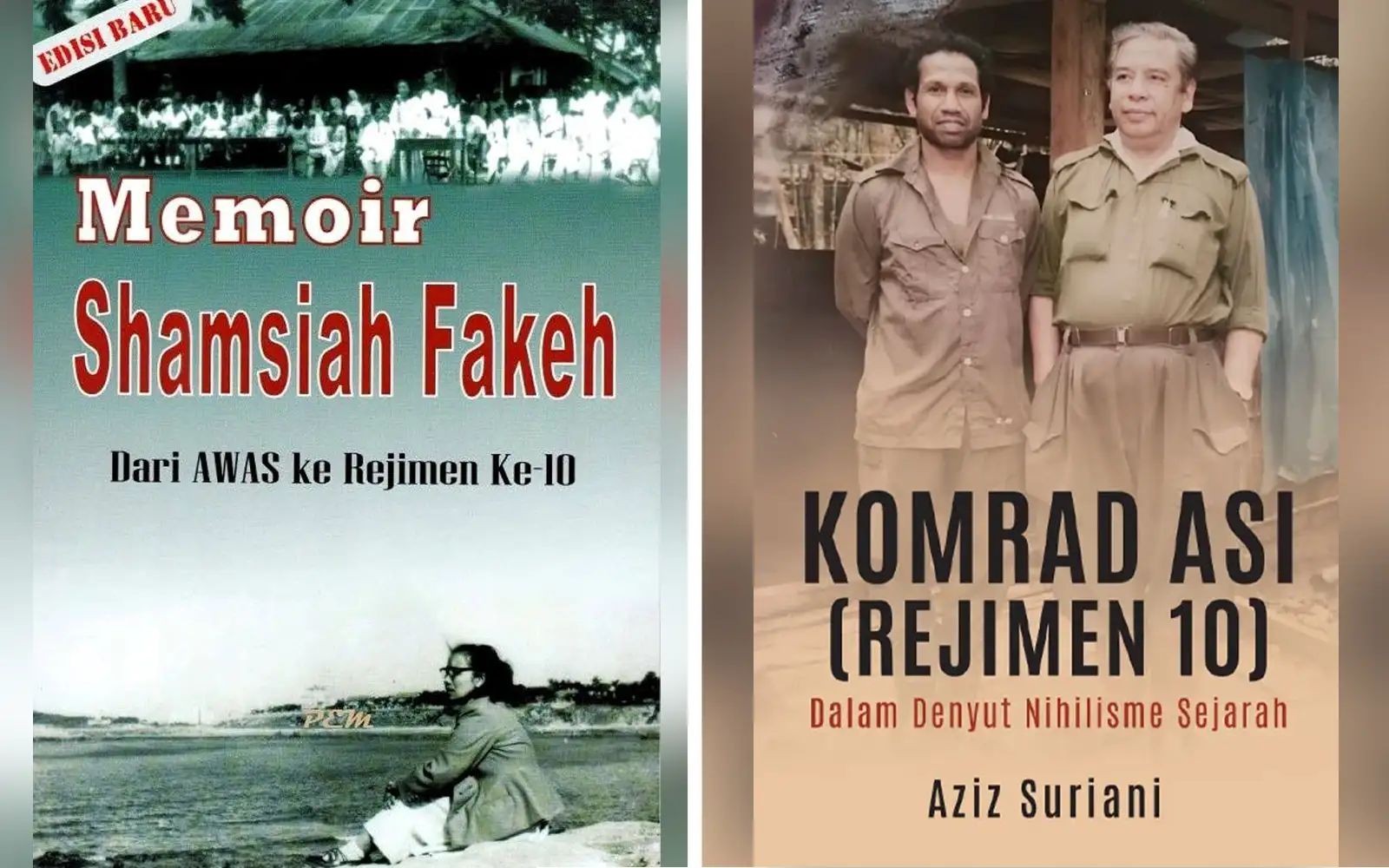



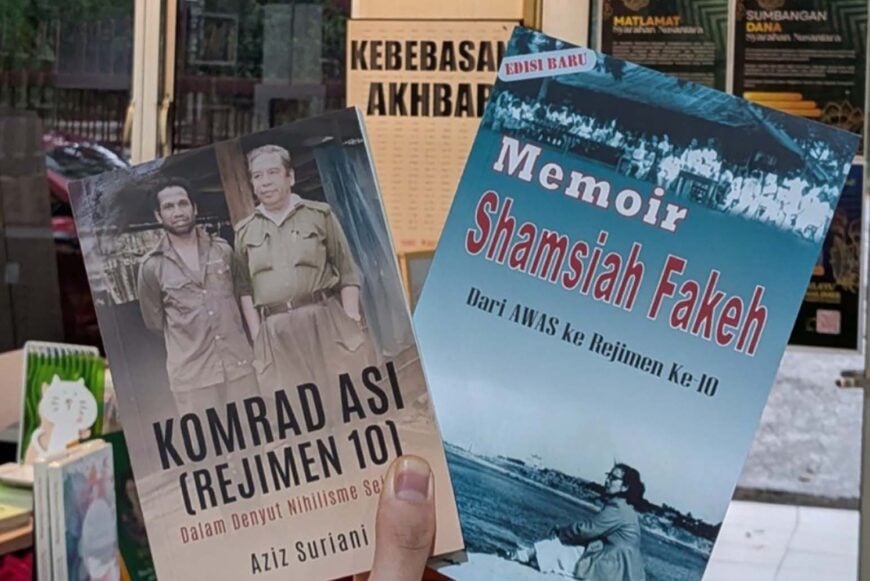


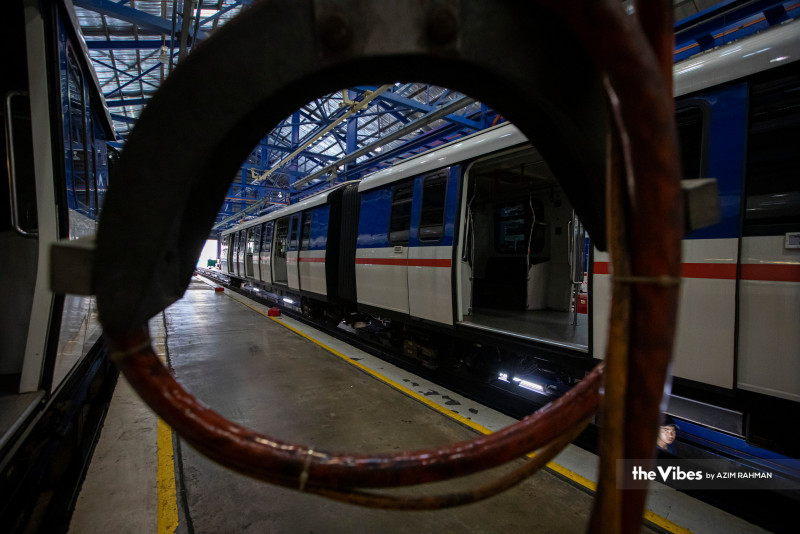


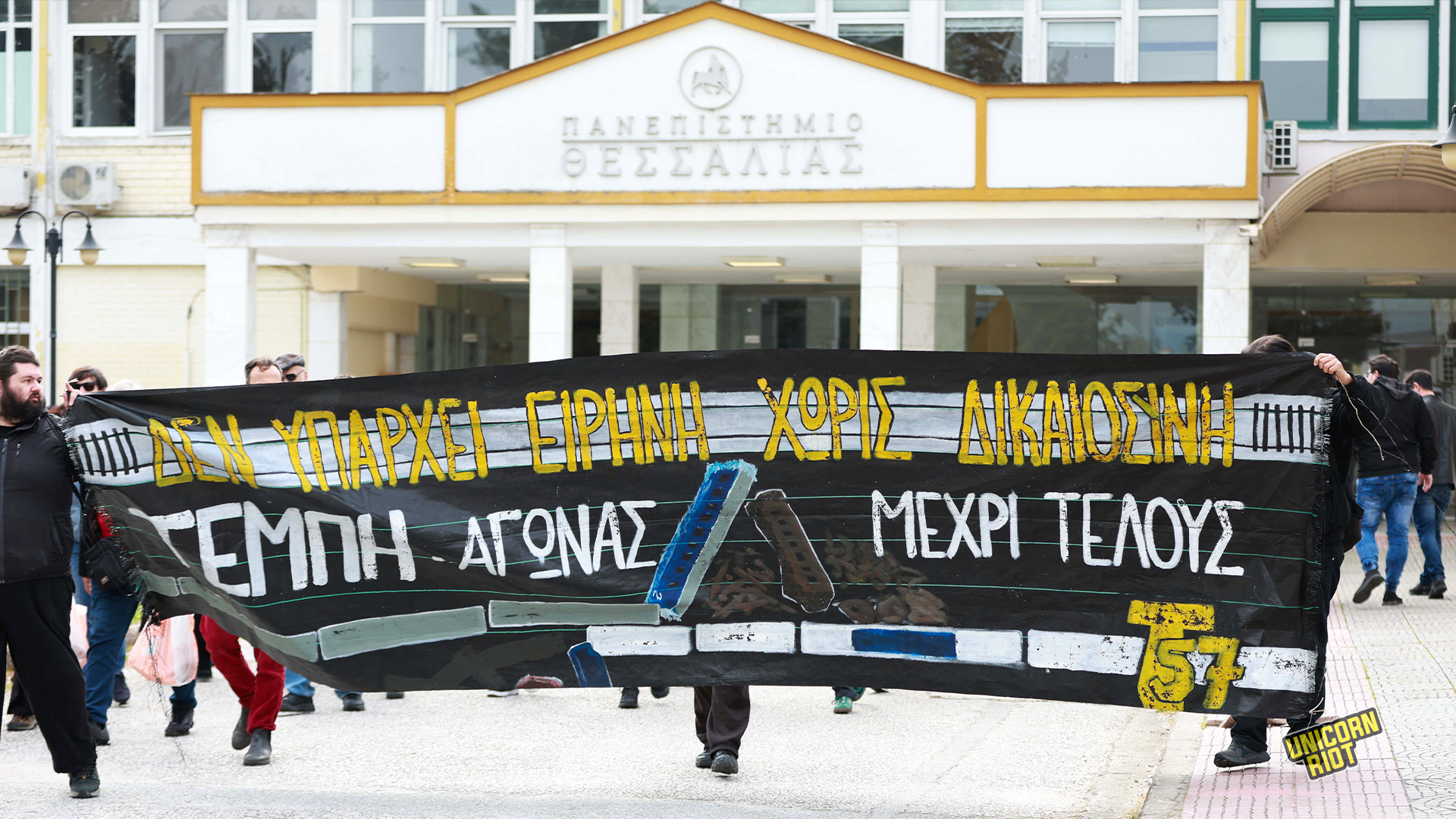
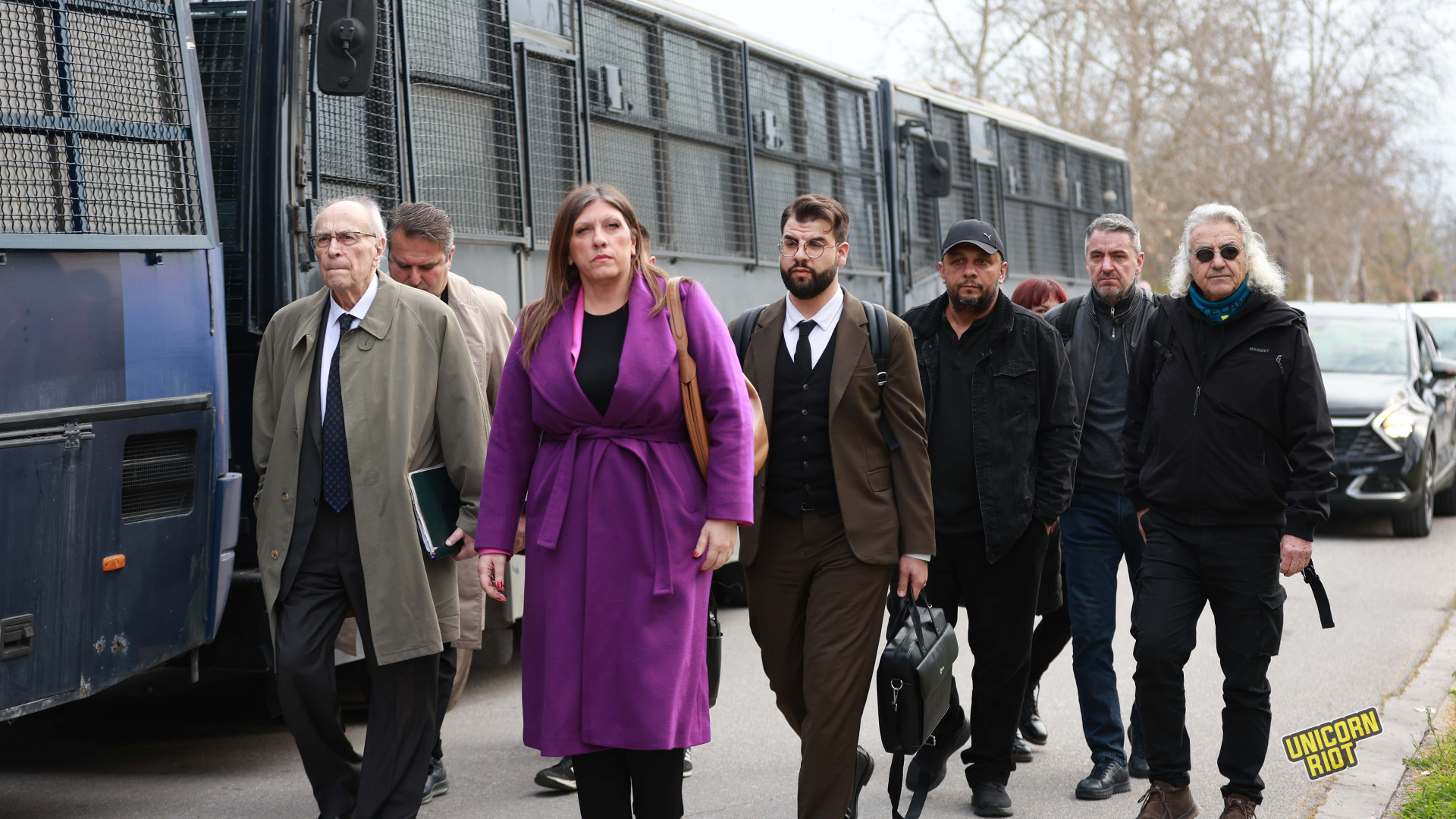 Parliamentarian
and lawyer Zoe Konstantopoulou walks with relatives and lawyers
arriving at the courthouse. Panos Ruci, father of Tempi victim Dennis
Ruci, is seen walking with a hat on next to Giannis Maggos, father of
Vassilis Maggos, who died after being brutally beaten by Greek police in
2020. Photo contributed by Estela Valasi.
Parliamentarian
and lawyer Zoe Konstantopoulou walks with relatives and lawyers
arriving at the courthouse. Panos Ruci, father of Tempi victim Dennis
Ruci, is seen walking with a hat on next to Giannis Maggos, father of
Vassilis Maggos, who died after being brutally beaten by Greek police in
2020. Photo contributed by Estela Valasi.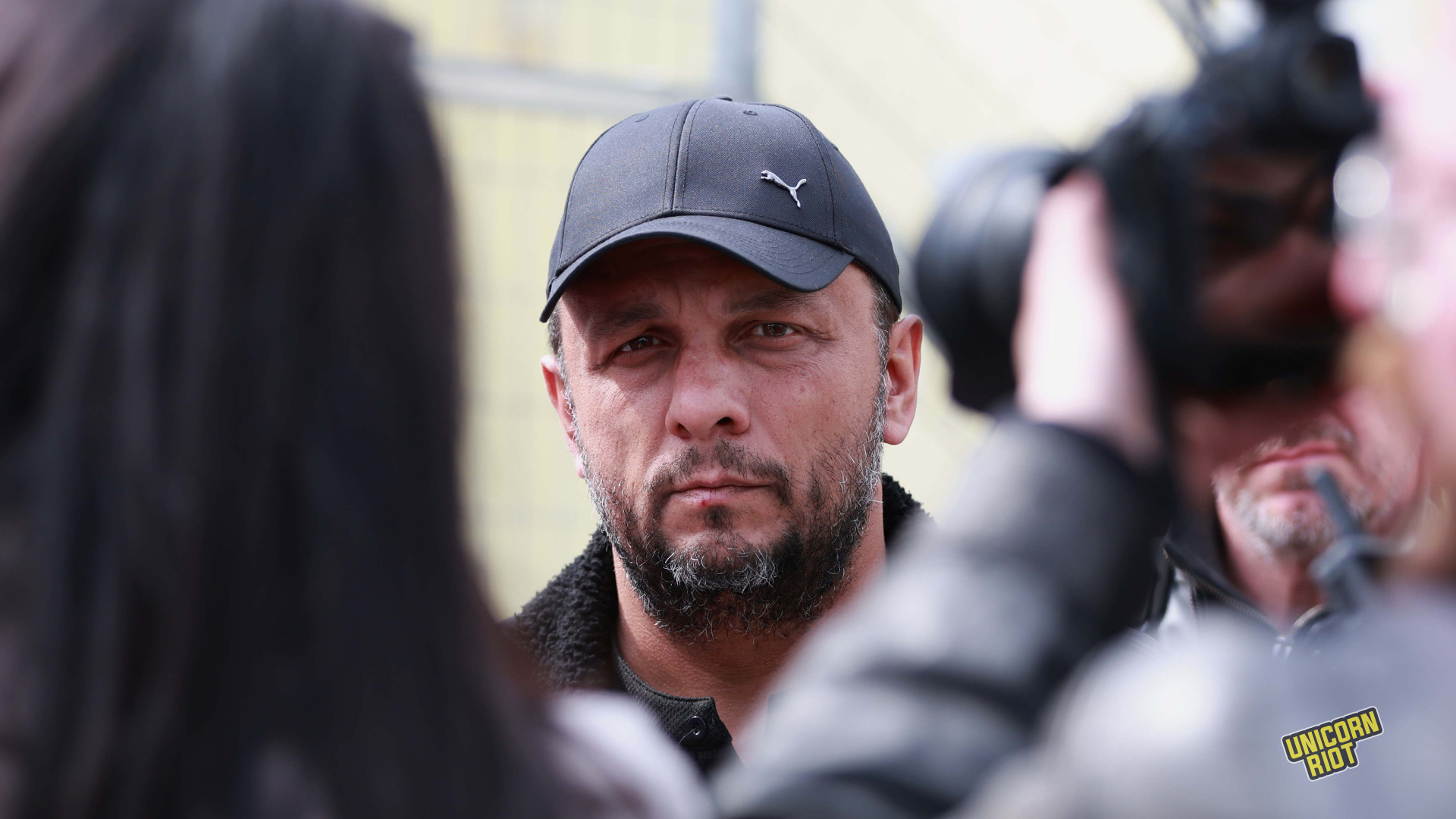 Panos Ruci standing outside the courthouse. His son Dennis Ruci died in the Tempi train crash and he led a
 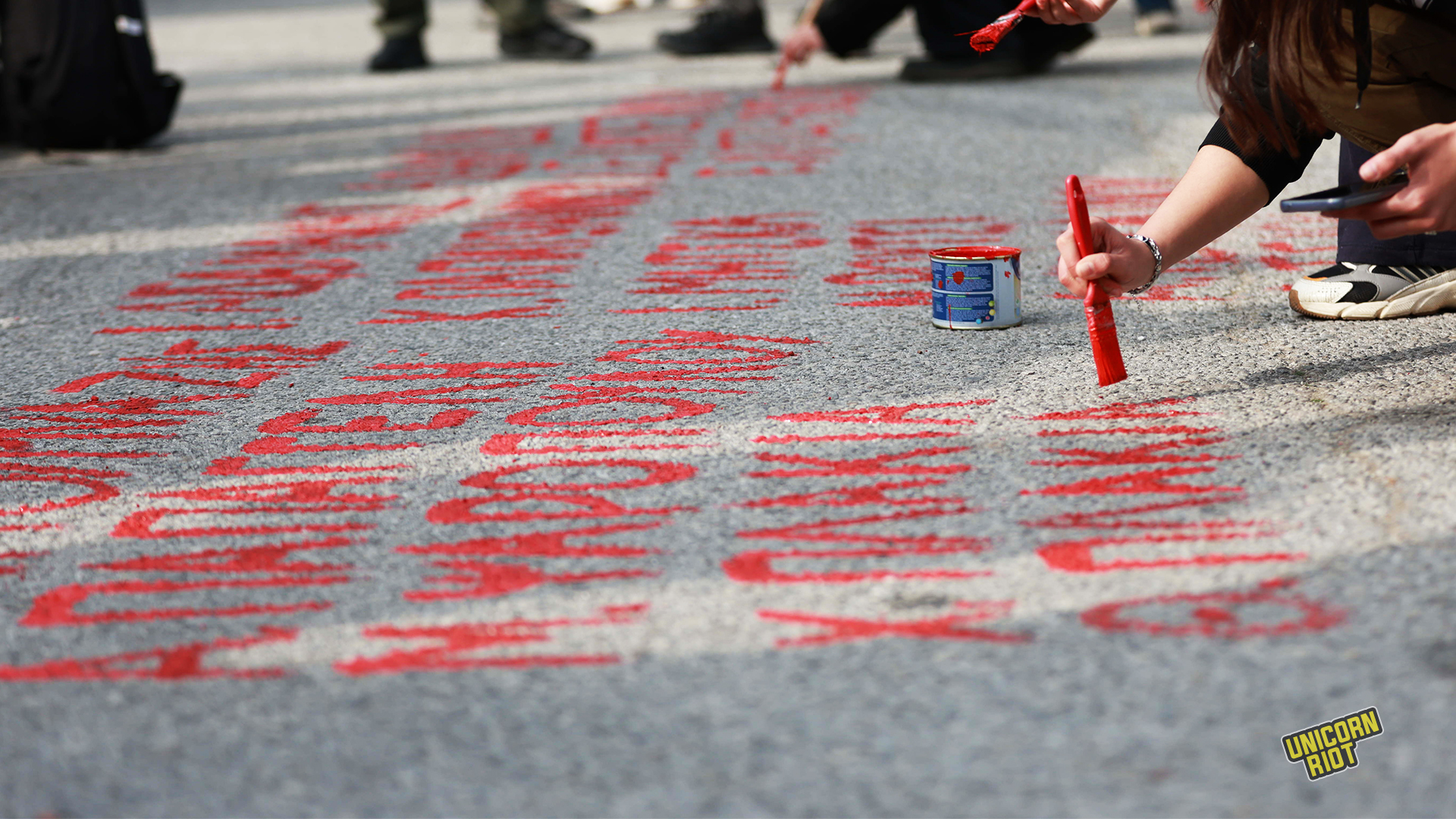 Activists write the names of Tempi victims in red paint outside the courthouse. Photo contributed by Estela Valasi.
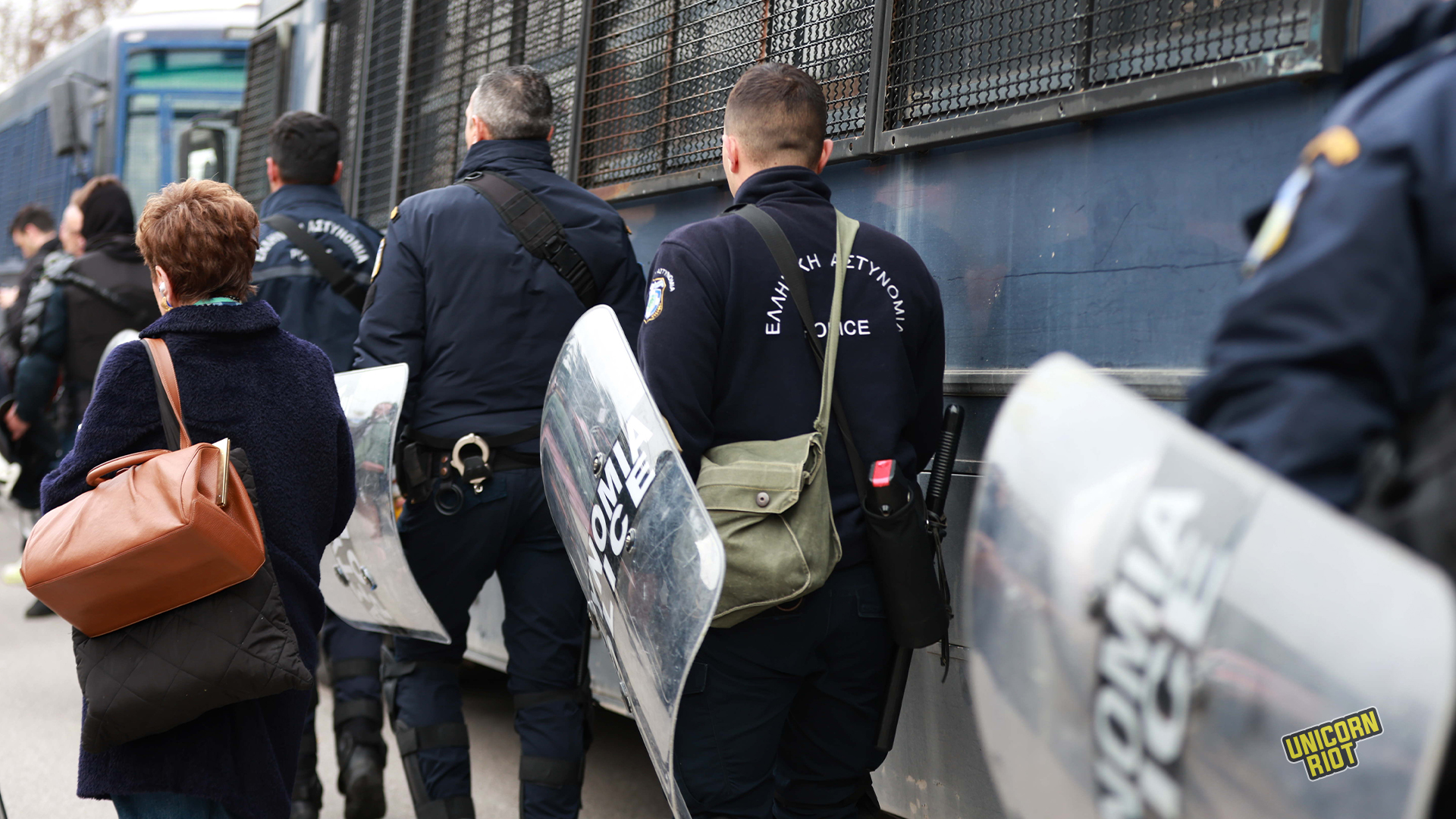 Massive police presence to secure the courthouse from protests. Photo contributed by Estela Valasi.
 Posts
Posts