“For example, we recommend a termination, but instead the wrongdoer is served with a warning instead or no further action taken against them. “This has led to EAIC being often seen as ineffective despite having conducted a thorough investigation after acting on a substantiated complaint,” he[EAIC commissioner Datuk Seri Razali Ab Malik] said.
Monitoring the LAW ENFORCERS is an IMPORTANT issue. Sadly, in Malaysia, this is a PROBLEM even when there are laws that create bodies/Committees to monitor law enforcement -
For example the MACC has 5 monitoring Boards/Panels - Corruption Prevention Advisory Board (LPPR), Special Committee on Corruption (JKMR), Complaints Committee (JKA), Consultation and Prevention of Corruption Panel (PPPR) and an Operations Evaluation Panel (PPO), but the problem is EFFECTIVENESS. We remember how a panel member, Terence Gomez, tried to call for a meeting of a panel but failed because the Chairman allegedly did not want to, ...
See:-
RCI to look into MACC and Azam Baki, That public officers NOT allowed to sue those who highlight alleged wrongs/crimes - Malaysian Bar 2022 Resolution
MACC under Parliament purview - Already is, and Parliament failed to act? Did Parliament fail/procrastinate in the MACC issue?
The problem is WHO appoints, and who is appointed into these monitoring bodies - For so long that the Prime Minister(or the Executive Arm) does or is involved, there is a problem.
Rightfully, these monitoring bodies need to be INDEPENDENT, and more importantly, it must be TRANSPARENT and accountable to the people, not just to the Prime Minister or the government.
The law sometimes say that the King appoints - but really, the King who is not involved in the day to day operations of the country mostly acts on the advice of the Prime Minister or some Minister.
The Prime Minister and the Government of the day[THE EXECUTIVE] is RESPONSIBLE for all public officers - including Law Enforcement. Then, there are the 'confidentiality provisions' and/or Official Secrets Act - all of which inadvertently keeps the Malaysian people in the dark - we do not know what is happening - only the Prime Minister, Minister, etc knows.
This kind of 'SECRECY' regime prevents even 'WHISTLE BLOWING' that exposes abuse of power, corruptions, etc - Even, in the ongoing 'Judicial Crisis', the government was more interested in who 'leaked' the Judicial Appointments Commission minutes - rather that the 'WRONGS' that the said minutes revealed..
Take the MACC - have we heard about other 'problems' within the MACC that was revealed by any of these 5 'monitoring bodies'?
Then, we have SUHAKAM(Malaysia's Human Rights Commission), and others like the EAIC (Enforcement Agency Integrity Commission) - who after a comprehensive investigation/inquiry make recommendation that certain BAD enforcement officers be prosecuted(charged in court and tried for their crimes), be terminated, etc - but then the relevant Minister(or Ministry or Department) or Attorney General(Public Prosecutor) ignore these recommendations - sometimes no action is taken against the perpetrator/s or they may be simply let of with a warning or maybe a fine.
“For example, we recommend a termination, but instead the wrongdoer is served with a warning instead or no further action taken against them. “This has led to EAIC being often seen as ineffective despite having conducted a thorough investigation after acting on a substantiated complaint,” he[EAIC commissioner Datuk Seri Razali Ab Malik] said.
Now, treating CRIMES as MISCONDUCT is very wrong - If a misconduct is also a CRIME in Malaysia, then rightfully, the perpetrator must be charged and tried in court. They should NEVER BE PROTECTED by the State ...
So many deaths in custody - and it has been shown that individual police officers were responsible or caused the death - How many of these police officers have been charged and tried in court in such offenses that resulted in a loss of life?
Policing the enforcers: Who is holding enforcement agencies accountable in the face of misconduct?

KUALA LUMPUR, Aug 11 — When those tasked with upholding the law break it themselves, who ensures they are brought to justice?
As enforcement agencies operate with increasing autonomy and authority, the line between protector and perpetrator blurs in the face of misconduct.
Thankfully, we have the Enforcement Agency Integrity Commission (EAIC) — a federal statutory body — established in 2011 to hold enforcement officers accountable for their transgression.
But first, what is the definition of misconduct of enforcement officers and enforcement agencies?
According to subsection 24(1) of the EAIC Act or Act 700, it is defined as any act by an enforcement officer contrary to existing laws, unreasonable, irrelevant or improperly discriminatory; inaction or non-compliant of existing standard operating procedure or criminal in nature.
Per Act 700, the jurisdiction of the EAIC in carrying out its primary functions among others, are namely:
- Receiving and investigating any public complaints of misconduct
- Referring any complaints of a disciplinary nature to the relevant Disciplinary Authority or of a criminal nature to the Public Prosecutor
- Carrying out full investigations on valid complaints of misconduct to verify the existence of such misconduct
The supervised federal enforcement agencies as stipulated in Act 700 are:
- National Anti-Drugs Agency
- Malaysian Maritime Enforcement Agency
- Department of Environment
- Immigration Department of Malaysia
- Royal Customs Department of Malaysia
- Department of Occupational Safety & Health
- National Registration Department
- Road Transport Department
- Department of Industrial Relations Malaysia
- Fisheries Department
- Department of Wildlife and National Parks
- Volunteers Department of Malaysia (Rela)
- Department of Labour
- Health Ministry (Enforcement Division)
- Tourism, Arts and Culture Ministry (Tourism Licensing Division)
- Domestic Trade and Costs of Living Ministry (Enforcement Division)
- Housing and Local Government Ministry (Enforcement Division)
- Commercial Vehicles Licensing Board (Sabah)
- Commercial Vehicles Licensing Board (Sarawak)
- Registrar of Business
- Civil Aviation Authority of Malaysia (CAAM)
Note: The Royal Malaysia Police (PDRM) was removed from the list after the Independent Police Conduct Commission (IPCC) came into force in 2023.
According to the latest published data, the EAIC recorded a total of 289 complaints as of July this year.
For 2023 and 2024, a total of 600 and 408 complaints were lodged respectively.
Yet despite the hundreds of complaints lodged each year, only a handful have had an investigation conducted by the EAIC.
“We must be clear that most of the misconduct complaints we received are not substantiated or incomplete and were therefore dismissed or referred to another agency after reviewing them.
For comparison, the number of investigation papers opened were 12 (2023), 32 (2024) and 89 (July 2025).
“It could also be a case where the complainant assumed a misconduct had taken place but when we investigated further, we discovered otherwise; or it could be a case where disciplinary action had already been taken but the complainant was not informed of it,” EAIC commissioner Datuk Seri Razali Ab Malik told Malay Mail in an interview recently.
The same data also showed the Immigration Department recording the highest number of misconduct complaints received in consecutive years at 45 (2023), 58 (2024) and 37 (July 2025).

On the department’s ‘high number’ of complaints, Razali attributed the figures to the overall department size and scope of enforcement authority that made it more susceptible to incidents of misconduct.
“When you include a large federal department and its number of personnel nationwide, the likelihood of misconduct taking place is higher as well.
“All of us are aware that the Immigration Department’s overall function involves enforcement in regards to border control and foreign workers, of which complaints seemed more commonplace.
Some of the common complaints against the Immigration Department include inaction against illegal immigrants in a particular area, unsatisfactory counter and passport services; and weaknesses in migrant systems and immigration processes.
But what happens to complaints which fall outside the EAIC’s investigative jurisdiction, such as corruption, criminal or administrative decisions?
For such cases, Razali said these were referred to the relevant authorities such as the Malaysian Anti-Corruption Commission (MACC), the Attorney General Chambers (AGC) or the respective government department head for further action.
Nevertheless, Razali said the commission welcomed all complaints, irrespective of whether there has been misconduct committed or not.
“We want to encourage them to lodge complaints even if they have doubts because it is our collective responsibility to curb any form of misconduct by enforcement officers,” he said. - Malay Mail, 11/8/2025
Why does misconduct persist behind the uniform? EAIC points toward normalisation of ‘tidak apa’ culture, legislative weakness
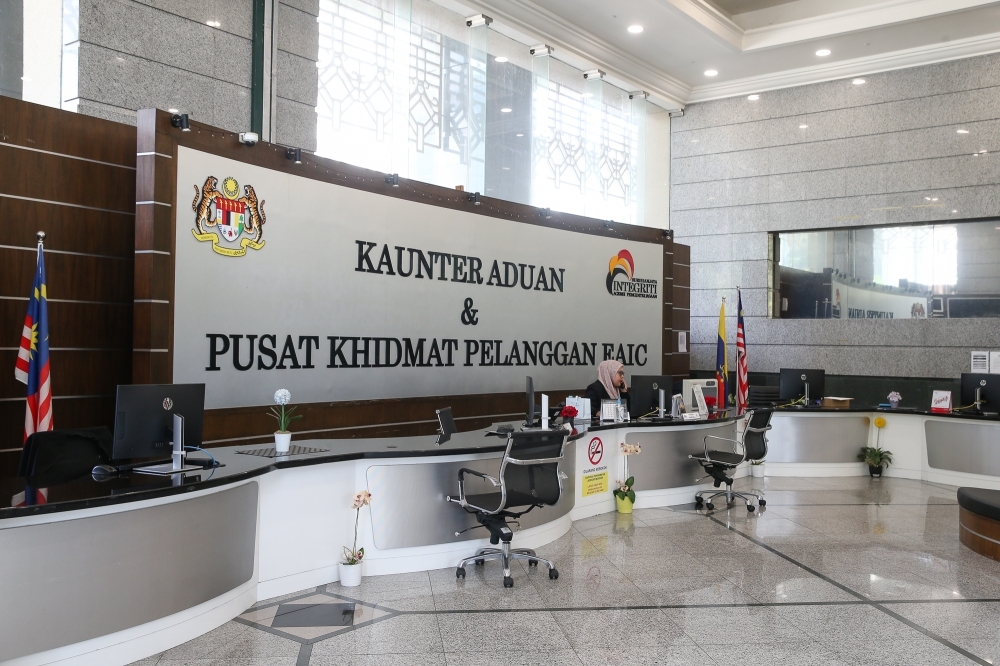
- The EAIC says misconduct in enforcement agencies persists due to legislative weaknesses that limit its powers to mere recommendations without enforcement authority.
- A culture of complacency and top-level officials protecting wrongdoers has normalised misconduct, undermining accountability and effective disciplinary action.
- The commission urges a legal overhaul to give its findings binding power and stresses the need for leadership courage to enforce discipline at all levels.
KUALA LUMPUR, Aug 11 — An old Chinese proverb says: “A fish rots from the head.”
The adage still holds true today, encapsulating the challenges faced by the federal government’s watchdog — the Enforcement Agency Integrity Commission (EAIC) — in performing its statutory duties effectively.
Speaking to Malay Mail, EAIC commissioner Datuk Seri Razali Ab Malik conceded the existence of a large gap between the agency’s investigative findings and follow-up action taken by an enforcement agency under its supervision against reported misconduct.
Existing legislative weakness has also exacerbated existing hurdles, since disciplinary authorities of enforcement agencies under EAIC’s supervision are not legally bound to execute its official recommendations.
“Yes, it is true we faced several persisting challenges because if you look at our EAIC Act, the commission can only make recommendations despite having investigative powers [to probe any complaints].
In the Act, also called Act 700, EAIC may only make recommendations pertaining to disciplinary actions, reviewing of standard operating procedures and internal structure improvements after a complaint is found to be substantiated.
“However, the execution of the recommendation [after an investigation is completed] and final decision is still vested with the respective agencies or ministries of which a complaint of misconduct has been filed against.
Nevertheless, Razali said none is more detrimental than institutional weakness, such as “enablers” at the top normalising misconducts and cultivating a tidak apa attitude — or “couldn’t care less” — among subordinates.
“We have always stressed that continued sternness is key to nurturing a culture of accountability.
“This must come from the top, department senior officials who should serve as guardians of values, yet some chose to protect wrongdoers instead and make it a norm for misconducts to take place,” he said.
Razali then disclosed several instances where enforcement agencies took on a dismissive approach instead, either by imposing a more lenient punishment than recommended or even expressing outright refusal to execute.
“For example, we recommend a termination, but instead the wrongdoer is served with a warning instead or no further action taken against them.
“This has led to EAIC being often seen as ineffective despite having conducted a thorough investigation after acting on a substantiated complaint,” he said.
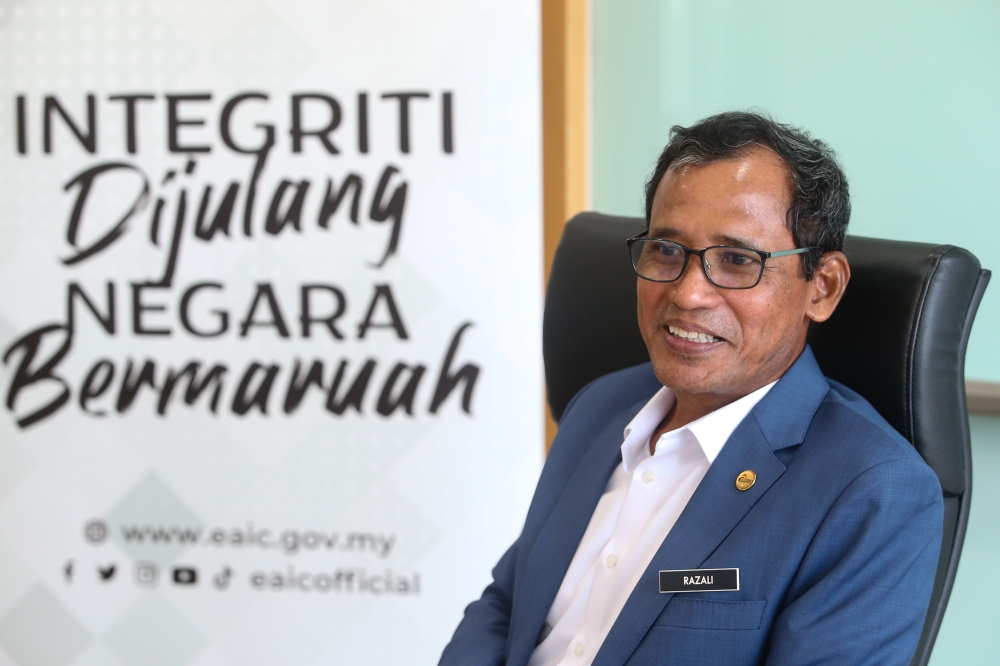
A tiger without its fangs, for now
Razali said there are still rooms for improvement to ensure EAIC effectively performs its role, starting with a thorough review of the existing Act to further strengthen the enforcement of its recommendations.
“Foremost, our recommendation should not remain as mere suggestion but has to be followed with a stern and systematic action,” he said.
“We are also suggesting that any conducted investigations can be used as part of the official evidence in any disciplinary action when a referral is made.
“The existing Act must also be harmonised with other existing laws in order for disciplinary authorities to make use of our findings without legal hurdles,” he added.
Most importantly, Razali said the willpower and courage to take action against any form of misconduct must be instilled on all levels, from the top to bottom.
Citing an internal circular dated July 5, 2024, issued by the Director-General of Public Service, Razali said it was clearly stated any senior officials failing to take action against any misconduct by their subordinates can be punished with disciplinary action for being careless.
“Misconduct will continue to happen not because of the absence of law, but because there is no longer courage to address them.
“It is possible the lack of assertiveness in disciplinary enforcement has fostered a permissive culture where misconduct is considered negotiable or excusable,” he said. - Malay Mail, 11/8/2025
A few bad apples give cops a bad name, says Ayob Khan
The deputy IGP says only a handful of police officers and personnel are involved in corruption, while the majority performed their duties with integrity and dedication.

He said he regretted such a perception due to the handful of police officers and personnel when the majority have been performing their duties with integrity and dedication, Bernama reported.
Ayob Khan added that corruption-related offences must be dealt with firmly, regardless of the rank of the individuals involved.
He said he had never compromised with any officers or personnel involved in such offences during his tenure as Johor police chief, director of the Bukit Aman narcotics criminal investigation department (NCID), and director of the Bukit Aman criminal investigation department (CID).
“In Johor, when I served as police chief, some officers and personnel were subjected to action under the Security Offences (Special Measures) Act 2012 (Sosma).
“At the NCID, officers with the ranks of superintendent, ASP, and inspector were also placed under Special Preventive Measures,” he was quoted as saying after the launch of the book “Antologi Puisi Makan Suap” at the Dewan Bahasa dan Pustaka (DBP) in Kuala Lumpur last night.
He also stressed that attempts to cover up corruption cases involving police officers to protect the reputation of the force would only allow such activities to fester and become harder to prevent.
“I will not compromise. If I detect such cases, the first step is to refer major cases to the Malaysian Anti-Corruption Commission (MACC).
“The second step is to open an investigation paper, and the third is to initiate disciplinary proceedings,” he said.
Meanwhile, in his speech at the book launch, Ayob Khan said he would continue to speak out, reprimand, and remind all police officers and personnel about the disgraceful and humiliating nature of corrupt practices.
He also reaffirmed his firm stance to tackle this reprehensible culture, despite attempts by a few parties, both within and outside the force, to portray corruption in the police force as difficult to eradicate.
He added that Bukit Aman remains committed to upholding integrity, particularly in tackling corruption and abuse of power, and will continue to ensure that national security and public order are maintained while delivering services at the highest standard. - FMT, 16/8/2025


 Posts
Posts




No comments:
Post a Comment