For me, the worst criminal is peoples' representatives - Prime Ministers and Members of the Cabinet, and also MPs/ADUNs that breach the TRUST of Malaysians and abuse their powers like Najib Razak ... and when they do this, their 'public service' should never be considered as a Mitigating factor..
Sadly in Malaysia, in the past, there seems to be selective non-investigation, selective non-prosecution, selective DNAA - that takes away the opportunity of courts to determine GUILT or otherwise, selective NON-APPEAL when they get acquitted - because it is always best that the Court of Appeal confirms that the High Court Judge(that 1 Judge) did not make a mistake in deciding to acquit...
With the defeat of the long in power Barisan Nasional(BN) regime, and the coming into to power of the Pakatan Harapan government in 2018 - for the 1st time, we saw active investigation and prosecution of this class of persons, previously perceived as an 'above the law' class. That ended with the charging of Najib and so many others...
Even if charged and tried, sometimes the prosecution 'fails us' by doing a bad job resulting in acquittal - maybe some material witness not called, material evidence not submitted, material questions was not asked, etc... ending with the Courts having little choice but to ACQUIT because prosecution failed to prove a PRIMA FACIE case, or guilt BEYOND REASONABLE DOUBT..
There was WORRY that Najib too will get of scott free, more so after PM Anwar Ibrahim and his MADANI government came into power...noting that selective non-investigation, non-prosecution, incompetent prosecutions, DNAA that takes away criminal determination of GUILT from the Courts... Why only SOME, not all, the politicians have been charged in Sabah? ...and news like that...
Allegations of the PM Anwar's involvement in crime - raised by Bloomberg, ...then recently Albert Tei - many ask, why was Anwar Ibrahim whose name was implicated not even been called by the relevant law enforcement to give a statement or to be investigated???
SO, when the High Court convicted Najib - many were happy...but there is also worry that in the future we may be seeing lesser politicians(especially those in power) being investigated and prosecuted??? Anyway, we shall see for it all depends on the INDEPENDENCE and professionalism of Law Enforcement and the Public Prosecutor... (and for this to happen, the ROLE of the PM in picking, and the power to remove at any time must be removed from our LAWS...)
Did PM Anwar remove Public Prosecutors because they were investigating or thinking to prosecute him - charge him for some crimes? That WHY the PM should have NO ROLE in picking head of Law Enforcement or Public Prosecutors - and also in picking JUDGES.
Will Anwar Ibrahim now choose to RESIGN as Finance Minister - if not the worry is like Najib, who was both Prime Minister and Finance Minister, we may see similar charges against Anwar too possibly when the MADANI government is no more in power...
CABINET PROCEDURE - Cabinet is the holder of EXECUTIVE Power - the question is whether CABINET plays an effective role in ensuring NO members of the Cabinet can abuse their powers, do wrongs/crimes? If CABINET played that role - would Najib(PM/Finance Minister) be able to abuse his power and commit such crimes he was just recently convicted of? Would CABINET monitoring and approval be a NEEDED safeguard to prevent such ABUSES that resulted in Malaysia suffering about RM50 Billion losses? We need a CABINET LAW - that requires all members of Cabinet to get prior CABINET approval before deciding on policy, laws and even entering into large agreement most risky for the country. CABINET would be the FIRST check and balance - with also the power to ask questions and make queries of any Minister and/or member of Cabinet? If not, should all the MEMBERS OF CABINET during the time Najib committed the crimes be also CHARGED in Court as accomplices of these crimes?
Now, the person who picks the members of Cabinet, and decides to remove members of the Cabinet is the PRIME MINISTER. Naturally and reasonably, he is responsible for all ACTs/Omission of any Cabinet member... or vicariously responsible. THUS, the Prime MINISTER is duty bound to monitor and make sure that NONE of his/her Cabinet members ABUSES their power, does wrongs/crimes in office, etc... So, beside the CABINET - it is the Prime MINISTER. But massive problem arises when a Prime Minister is also a FINANCE Minister or any other Minister. That is WHY maybe the Prime Minister should just be Prime Minister and not be any Minister - especially Finance Minister, Home Minister or any 'powerful' Minister...For then, HOW can the PM effectively monitor himself,the Minister of Finance, be it Finance Minister No. 1 or 2?
Anwar should forthwith RESIGN as Finance Minister - consistent also with the Pakatan Harapan's stance that PM will not also be Finance Minister.
PARLIAMENT FAILURE - they are supposed to be the CHECK and BALANCE - but they failed tp prevent Najib's crimes, the 1MDB Scandal, ... How do we make the Parliament more effective? Should there be Parliamentary Committees monitoring FINANCE Ministry, Khazanah and all government entities - with a mechanism to receive reports/complaints from the Public as well as public officers?
1 - All MPs who are not in CABINET should not be compromised by government positions in any form to ensure their INDEPENDENCE and also their ability to function as an INDEPENDENT Parliament?
2 - Should the WHIPS be abolished especially for political parties in government - freeing them to do as instructed by party leaders/Whips > Najib was the UMNO/BN President - if he can control non-Cabinet MPs, would not their ability as Parliamentarians be compromised?
SO MANY CHANGES are needed to prevent such abuse of power and other CRIMES of the PM, Ministers and members of the Cabinet?
Mariam Mokhtar
Published: Dec 27, 2025 6:00 PM
⋅
Updated: 6:41
COMMENT | Prime Minister Anwar Ibrahim now stands at a crossroads. His coalition government includes former cabinet members who were complicit in the convicted felon, Najib Abdul Razak’s 1MDB abuses.
These are not mere individuals; they are structural enablers whose presence undermines the credibility of governance.
With the High Court ruling that Najib is guilty on all four counts of abuse of power and all 21 money laundering charges linked to the 1MDB scandal, will Anwar clean house?
According to the latest official cabinet list announced this December, Anwar's coalition government includes:
Ahmad Zahid Hamidi: Deputy prime minister I, a senior Umno-Baru leader and coalition partner.
Fadillah Yusof: Deputy prime minister II, another senior coalition figure.
Azalina Othman Said: Minister in the Prime Minister’s Department (Law and Institutional Reform).
Zambry Abd Kadir: Higher education minister.
Noraini Ahmad: Plantation and commodities minister.
Johari Abdul Ghani: Investment, trade and industry minister.
These appointments may reflect continuity in personnel drawn from the Umno-Baru/BN political network, but they also represent senior figures from the political establishment that presided over and tolerated the era in which 1MDB flourished.
How can public trust be rebuilt when those who allowed billions to be siphoned into private accounts remain in positions of authority? Neither can we trust a government that tolerates pardons, house arrests and discounts for jail sentences and fines, for the most serious crime involving a PM in Malaysia?
Didn't Anwar campaign on a promise for reform and on an anti-corruption drive? His coalition must not only prosecute wrongdoing but also preemptively clean the house.
Cabinet members who were part of Najib’s administration and complicit in abuse of power should step down or be removed.
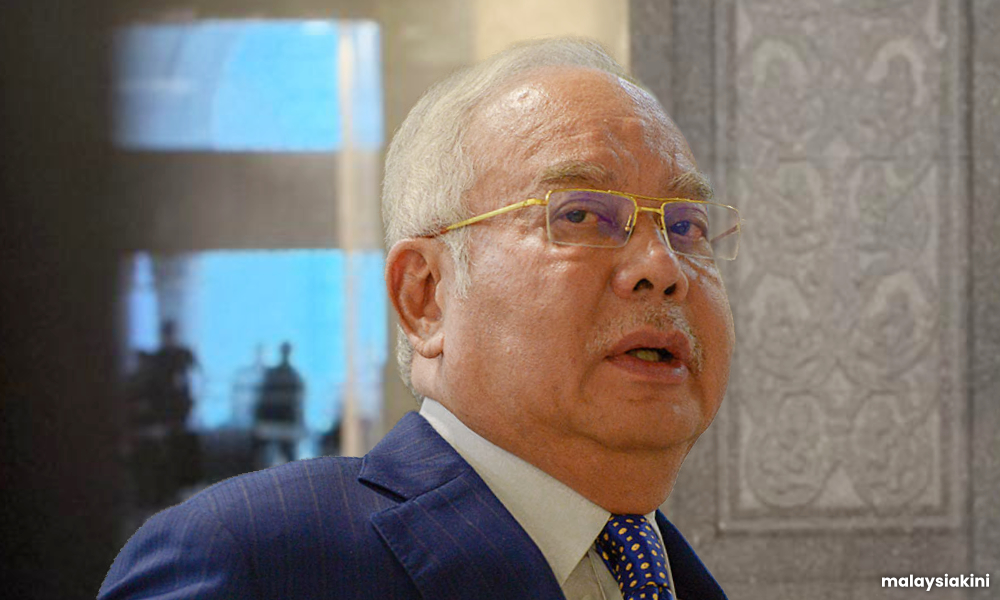
This is not about vengeance. It is about restoring institutional integrity, reinforcing civic trust, and demonstrating that ethical governance cannot coexist with figures who have historically tolerated corruption.
A Netflix drama
For years, Malaysians watched a story so improbable it belonged on a Netflix set: billions of ringgit allegedly “donated” by a distant Arab monarch, landing directly in a former prime minister’s personal accounts.
We, the rakyat, knew it was a lie. International observers knew it too. Yet, for years, the narrative persisted, repeated by those who should have safeguarded transparency and accountability.
The High Court's declaration that the Arab donation letters were forgeries is not really a revelation, but is more of a validation of what the public had long known.
Malaysians are not stupid. We know that fantasy cannot be a substitute for governance.
The verdict should be a clarion call, not just about the past, but about the present structure of power. Malaysians will remember that when Najib’s deputy and a former attorney-general were swiftly removed for “misconduct”, the message then was clear: accountability matters.
However, today, the coalition includes former cabinet members who were complicit in Najib’s abuses.
The absurdity of the Arab donation narrative was not limited to Najib himself. It was amplified by a network of allies, bureaucrats, and political operatives who allowed the story to persist unchecked.
Systems failed because structural oversight failed. Courts ultimately vindicated common sense, but at what cost? Millions were spent on trials that should have been straightforward; years of public attention were consumed by a narrative that never deserved it.
That the coalition government continues to house individuals who either facilitated or ignored these abuses only prolongs the shadow of complicity.
The harm done was not only financial. It was political and institutional. It weakened public trust, muddied civic expectations, and emboldened a culture whereby power protected power.
Now that the courts have spoken, public focus rightly shifts from the conviction of one individual to the structures that let such abuses take root.
Restoring credibility
To restore credibility, Anwar must act decisively. Former Umno-Baru figures who served under Najib, and who tolerated or benefited from misappropriation of public funds, cannot remain in office without calling into question the government’s ethical foundation.
Political expedience and coalition-building are insufficient excuses when the nation’s civic conscience and institutional legitimacy are at stake. The public must see that governance is not negotiable, that integrity is non-transferable, and that complicity carries consequences.
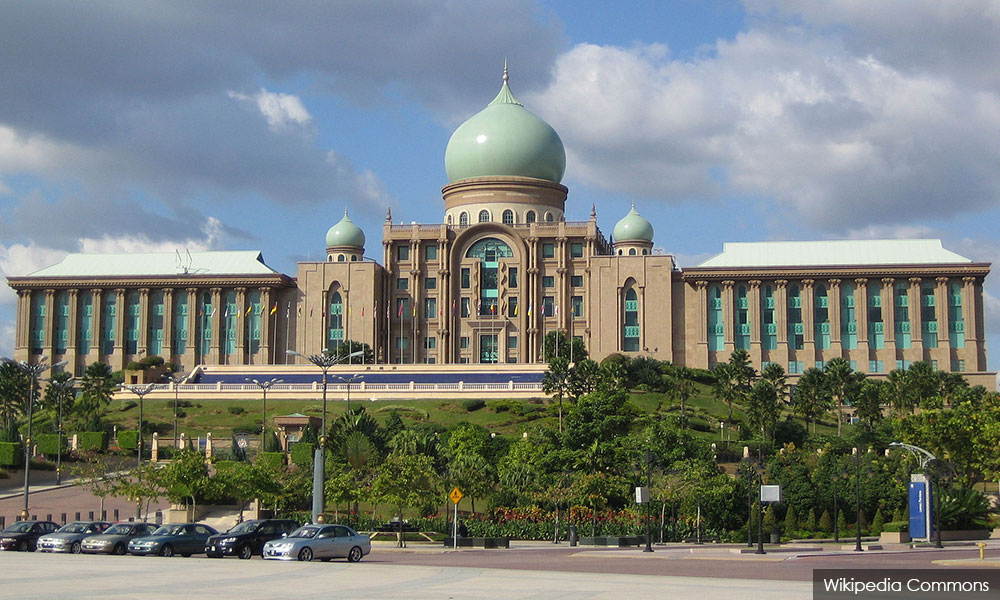
If the coalition government wishes to reclaim legitimacy, it must remove those who contributed to or ignored systemic abuse.
Swift removal of a deputy and AG demonstrated the precedent; the same standard must now apply across the cabinet. Only then can Malaysians have confidence that the government acts in the service of the public, rather than perpetuating old compromises.
The Arab donation farce extends beyond Najib himself. Family members and associates who benefited from ill-got gains, such as Rosmah Mansor and Riza Aziz, represent a broader question of accountability.
The lesson is ongoing: governance cannot rely on fantasy. Malaysians knew the lie, so now the system should act truthfully.
The coalition government must signal that benefiting from corruption carries consequences, reinforcing a culture where no one, neither political allies, family, nor enablers, is above systemic accountability.
We know that coalition governments require negotiation and compromise, but if Malaysia’s political leadership wants to convey credible reform and institutional renewal, then maintaining a cabinet heavily populated by figures tied to the pre‑2018 political establishment sends the wrong signal.
The call to action is unmistakable: Anwar must clean house, not out of spite, but to restore faith in governance, to strengthen institutions, and to signal to all Malaysians that no one is beyond accountability.
MARIAM MOKHTAR is a defender of the truth, the admiral-general of the Green Bean Army, and the president of the Perak Liberation Organisation (PLO). Blog, X. - Malaysiakini, 27/12/2025


 Posts
Posts




No comments:
Post a Comment