Sunday, August 10, 2025

Treat REMAND Prisoners better/humanely - they are Presumed Innocent, and no treating like prisoners serving sentence. DNAA if prosecution/Court not ready to commence trial.


Taiping Prison - Alleged assault that led to one inmate's death. What was most disturbing is that these victims are NOT convicted prisoners serving their sentence, but are REMAND presumed innocent inmates yet to be tried and convicted of the crimes they are being accused of.

There are 2 kinds of inmates in prisons

(1) Those found GUILTY, convicted and sentenced to prison.., AND

(2) Those whose trial are yet to start or finish - not yet convicted, and as such are PRESUMED INNOCENT. They are people that cannot afford BAIL, their bail application was denied by Court, and worse Parliament by law denied them Bail(so, Courts have no choice in the matter) - called REMAND Prisoners

Should REMAND Prisoners be Treated Differently from Convicted Prisoners Serving Prison Sentences?

YES, they must

Now, these REMAND presumed innocent prisoners are generally not detained with convicted prisoners... this is GOOD.

But, other than this - are they treated just like prisoners serving sentences? Are they placed in lock-ups or prison cells and permitted out of their cells on certain times only? Are they also subjected to restricted visits just like prisoners serving their sentences? Are their mails also subject to 'censorship'? Are they also denied access to smartphones, internet, etc.. Are they also getting assaulted or TORTURED by prison officers?

IF YES, THEN THIS A PROBLEM - remembering that they are merely REMAND presumed innocent detainees - they are NOT guilty persons serving out their prison sentences...

In my opinion, they should be accorded good living conditions (maybe even single occupancy units), and free to use smartphones, internet, watch TV and all other things a normal citizen enjoys > They are in DETENTION because they simply cannot afford BAIL, and/or is Denied Bail by Parliament enacted bad laws, or for some special reasons. They should not be allowed to leave the Detention Premises - but allowed to live humanely as others. 

The problem is the BAIL amounts - courts may not be considering their socioeconomic situation or POVERTY, and maybe imposing TOO HIGH a BAIL. Even a Bail of RM5,000 may be unaffordable to a B40 person earning minimum wage of RM1,700.  

The Sessions Court today slapped Umno president Ahmad Zahid Hamidi with 45 charges related to criminal breach of trust, money laundering and corrupt practices, with both the prosecution and his lawyers agreeing to a sum of RM2 million as bail.- FMT, 19/10/2018 

Former prime minister Datuk Seri Najib Razak was granted bail of RM3.5 million, after he claimed trial to 25 charges of corruption and money laundering involving some RM2.3 billion linked to 1Malaysia Development Berhad (1MDB).He was released on bail with two sureties, with payment to commence tomorrow by an initial sum of RM1 million, followed by RM500,000 on each business day from Monday (Sept 24) until Friday (Sept 28). - Edge, 20/9/2018

The primary purpose of bail is to ensure that an accused person appears in court for trial or other legal proceedings, while also allowing them to be released from custody before their trial. It's a mechanism to balance the need to hold individuals accountable for alleged crimes with the presumption of innocence and the right to liberty before conviction. 

Denial of bail is because there is a RISK that the accused may run away... 

This is 2025 - and things have changed a lot. There is something called electronic monitoring  

Denial of bail - RISK or possibility that the accused if released may tamper with evidence/witnesses... To deny bail for this reason requires some PROOF - mere possibility insufficient

Evidence of Risk: A mere allegation is insufficient to deny bail. There must be some material or information on record that substantiates the apprehension of tampering.

Should the government introduce a scheme that will assist the POOR so these accused presumed innocent can afford to be free on BAIL and to also be able to have a FAIR TRIAL..like the Justice Fund in Thailand.

In Thailand, with the passing of the  Justice Fund Act, B.E. 2558 (2015), there is now legal assistance provided by government made available to low-income people so that they could have proper legal defence in court and could be released immediately on bail whilst awaiting their trial to end. Between October 1, 2021 and March 31, 2022, this fund has approved THB190 million to help low-income people related to lawsuits against them … helped 1,425 people fight legal cases in court …also provided money to help 473 people offer financial guarantee for release on bail …’(Nation, 15/4/2022) 

See also :-  40% (or 30,000) innocents, not yet tried and convicted, are in Malaysia’s overcrowded prisons of about 76,336 inmates - A travesty of justice.(MADPET)

The trial of these remand prisoners should be PRIORITIZED and should speedily start and end maybe in 3 months.

We have heard how powerful people like Najib and Zahid Hamidi was DISCHARGED because their trial was delayed in starting, or delayed(in the case of Zahid) because prosecution need more time to investigate - so, the same should apply to these REMAND prisoners > If the trial does not start within 3 months, then they should be immediately DISCHARGED - they can always be charged again when the prosecution and courts are ready to start the trial. Likewise, when the prosecution or court delays a speedy trial by 3 months, then they should be discharged - always can be charged again when prosecution/court ready to proceed.

This way, we also solve the prison overcrowding problem - and it does JUSTICE. Remember a REMAND prisoner may eventually be found NOT GUILTY (Remember Yusoff Rawther who languished in detention for  

An injustice for Yusoff Rawther, who has been held in remand for nine months because the law denies bail, walked out  a free man not found guilty today after the High Court acquitted him of drug trafficking and the possession of two imitation pistols.  Investigate Yusoff Rawther’s claim of being a Victim of Entrapment, and how do Malaysia compensate him for 9 months of pre-conviction detention only to be finally found NOT GUILTY?

Then, there has that INFAMOUS GISBH cases - many are languishing as remand prisoners - it going to be a year - when will the trials begin.

Many INNOCENT, victims of prolonged remand detention, sometimes do later plead guilty - just to get certainty of the sentence, and when they will be finally FREE. This is the consequence of denial of BAIL, and the denial of a SPEEDY TRIAL... A GROSS MISCARRIAGE OF JUSTICE.

We are talking now that CRIMINAL Najib Razak may end up with house arrest serving his remaining prison sentence > Thus better to talk about 'house arrest' for those about 25,000 Remand Prisoners who have yet not been convicted yet... 

I would have expected that our Prime Minister Anwar Ibrahim, who served time in PRISON serving his prison sentence, would be more concerned about this GROSS Injustice that happened in Prison - more so, to REMAND Prisoners - not yet found GUILTY by God.

How these prison officers treated them are SHOCKING - and, sadly no action has been taken by the Home Minister or the PM to reprimand the government employees - who hopefully not be protected by Anwar's administration... 

SUHAKAM Public Inquiry into Alleged Human Rights Violations at Taiping Prison

SUARAM is actively documenting and monitoring the ongoing public inquiry into human rights violations at Taiping Prison on 17 January 2025. Convened by the Human Rights Commission of Malaysia (SUHAKAM), the inquiry aims to identify these violations and examine how and why they occurred, as well as determine the parties responsible and recommend measures to prevent their recurrence. As part of this process, SUARAM is also supporting the families of affected detainees in their pursuit of truth, justice, and institutional accountability.

Penjara Taiping - oleh Fascinating Taipi

Chronology of the Incidents

On 17 January 2025, more than 100 detainees at Taiping Prison were brutally assaulted by over 60 armed and masked prison officers in Dewan B. The following recounts the barbaric assault. 


Pre-Assault

​The violence was preceded by a peaceful sit-in by detainees appealing not to be transferred to Block E. The detainees were well aware that the particular block was a decrepit part of Taiping Prison. Some of them had lived there before and shared first-hand accounts of poor sanitation, dilapidated infrastructure, delayed requests for medications, and restrictions on recreation and bathing.

  • “rosak”

  • “banyak nyamuk”, “ada lipas dan tikus”

  • “ubat akan lambat datang”

  • “banjir” ketika hujan lebat

 
Having established the above, what the detainees were peacefully protesting for were simply basic rights, live in cells that are well-maintained (structurally sound and basic sanitary), not overcrowded (three instead of five detainees/cell), equal access to ‘keistimewaan’ (referring to the recreational and religious activities), and to shower without water rations.


Subsequently, there were at least three ‘negotiations’ between the prison officers and detainee-appointed representatives. In the first two ‘negotiations’ especially, officers responded vaguely and offered no decision, asking the detainees to wait as they consult with their higher-ups. However, indications and attempts to persuade the detainee-appointed representatives were claimed to be made as suggestive words such as ‘cepat-cepat jalan la, jangan kasi masalah’, ‘nanti sampai Block E, akan dapat aktiviti’ by an alleged UKP officer, which in hindsight, can be interpreted as a sign to quickly vacate the hall. Yet, as no resolution was given, the detainees sat in Dewan B in continued protest.


Shortly after, an officer had entered the hall and asked them to vacate it as it would be utilised for PPI (Program Pembangunan Insan), and claimed he would give everyone just a minute to move to Block E. At that time, the detainees were sitting on the floor (many without their shirts on), with some already getting on their feet and ready to leave the hall when detainees heard the banging of shields (including against the pillars of the block; ‘pukul besi tiang blok’) and loud proclamations by prison officers outside the hall. At most 30 seconds later, masked officers with shields entered the hall, surrounded the detainees in the hall on all sides, including along the sides and at the back of the hall, taking position and preparing themselves to inflict a well-orchestrated assault onto the detainees later that afternoon
 

he detainees were ordered into a surrender position—tunduk, with their hands behind their heads. Despite having complied with the order, the detainees were still assaulted. Officers beat them using cota, rotan and kayu, kicked them, and dragged them out of the hall to the front of Block B. Detainees were handcuffed there and beaten, kicked, and walked over by officers while in the surrender position. They were also pepper sprayed.


The assault was not impulsive – it was long-awaited. Whilst being beaten up, one detainee recalled overhearing an officer say, “Kami tunggu lama untuk lesen ini.” While under assault, detainees were forced to apologise to the officers. Profanities such as “tahanan mahkamah tinggi semua anjing” and “babi” were hurled at them. 


“Tuan X pukul kita macam haiwan.” 

(Sir X hit us like animal)


The detainees were then forced to duck walk while handcuffed to Block C or Block E. An officer asked a detainee where his head injury was—and then deliberately sprayed pepper spray directly over the open wound. One detainee was beaten to the extent that he was left without pants. He only received clothing after arriving at Block E.  

One detainee was dragged across rough tarmac until his buttocks were severely bruised and abraded. Days later, he still could not stand during muster due to the extent of his injuries.

Lead-Up to the Assault

The violence was preceded by a peaceful sit-in by detainees appealing not to be transferred to Block E. That particular block was widely known by the detainees to be a decrepit part of Taiping Prison. Some of them had lived there before and shared first-hand accounts of poor sanitation, dilapidated infrastructure and restrictions on recreation and bathing.

  • “rosak”

  • “banyak nyamuk”, “ada lipas dan tikus”

  • “banjir” ketika hujan lebat


There were at least three ‘negotiations’ between the prison officers and detainee-appointed representatives. In the first two ‘negotiations’ especially, officers responded vaguely and offered no decision, asking the detainees to wait as they consult with their higher-ups. As tensions escalated and no resolution was given, the detainees sat in Dewan B in continued protest. Instead of a negotiated solution, they were instead met with coordinated violence later that afternoon.

After the Violence

Despite visible and often severe injuries, many detainees received inadequate medical attention immediately after the violence took place. Some received painkillers and gauze to dress their own wounds, without direct care from a medical assistant or doctor. Access to the prison clinic varied, with some detainees only receiving attention a day or several days later. Out of the 12 detainees who testified, at least two were sent to hospital on the same day for treatment. For other detainees, hospital treatment was delayed by one to two weeks.

Because of the intense pain caused by pepper spray exposure, detainees were unable to shower for two full days.

For two weeks, detainees did not have access to the clothing that they brought with them during the transfer, nor were they allowed visits and calls from their families. Families who attempted to visit within that period were informed that the detainees were under ‘quarantine’ following the prison transfer - a justification used to conceal the violence and obstruct outside scrutiny. - SUARAM 

SUHAKAM Public Inquiry at Kamunting Correctional Centre (KEMTA)

The public inquiry by SUHAKAM has been ongoing since 9 June 2025 at the Kamunting Correctional Centre (KEMTA). Phase 1 was conducted from 9 to 12 June 2025, followed by Phase 2 from 23 to 26 June 2025.


Suhakam inquiry reveals delay in medical help may have cost Taiping Prison inmate’s life

Suhakam inquiry reveals delay in medical help may have cost Taiping Prison inmate’s life
"Suhakam inquiry reveals delay in medical help may have cost Taiping Prison inmate’s life"

“I don’t have the qualifications to assess if someone is sick or faking it.”

Those were the words of Taiping Prison sergeant Azwan Mohammed when shown the closed-circuit television (CCTV) footage of fallen inmate Gan Chin Eng, 62, during a public inquiry by the Human Rights Commission of Malaysia (Suhakam).

Azwan, 38, served at Taiping Prison from March 2, 2008, to June 30, 2025, before being transferred to the Machang Moral Correctional Facility in Kelantan on July 1. He was testifying before the inquiry panel investigating alleged human rights violations at Taiping Prison involving over 100 inmates on Jan 17, 2025.

Gan died hours after the alleged assault from abdominal injuries caused by blunt trauma, as first reported by Twentytwo13.

The inquiry is chaired by Suhakam chairman Datuk Seri Mohd Hishamudin Md Yunus and commissioner Dr Farah Nini Dusuki.

Lawyer T. Shashi Devan, who is representing 99 detainees involved in the alleged assault, questioned Azwan on his apparent lack of empathy towards Gan.

Shashi: As you can see from the footage, Uncle Gan is not well. Is it so difficult for you to inform medical personnel that there is an ill inmate?
Azwan: There were many injured besides Gan. If I were to call for help and say there were many injured inmates, they (medical personnel) probably wouldn’t come.

Mohd Hishamudin then asked Azwan why he didn’t intervene, as it was obvious Gan was in serious pain.

Azwan: I’m not medically trained.
Shashi: Do you agree that if you had followed proper procedures and informed the medical staff about Uncle Gan’s condition, he could have been saved?
Azwan: Maybe.
Shashi: Can I say that your failure to do your duty contributed to his death?
Azwan: I didn’t know he was going to die. If I had known, I would have acted sooner.
Farah Nini: None of us know when we are going to die. But shouldn’t you at least have tried to help him?
Azwan: As I have said, I was trying to settle my duties one by one. The main one was to get the inmates into the cells, so we could then help the others.
Shashi: If I were to sum up your testimony, you’re saying the task of moving prisoners into their cells is more important than their health, as you don’t seem affected or concerned by what happens to them.
Azwan: I was doing my job, step by step until it was done.
Shashi: I suggest your task was prioritised over the health of the inmates.
Azwan: I was only doing my job, one step at a time.

Azwan was one of three witnesses who testified on the 15th day of the inquiry.

No time stamp, many unanswered questions

Members of the media and public, who have not been allowed to view the CCTV footage since the inquiry began on June 9, learnt that there was no time stamp on the footage. This was revealed after Shashi asked Azwan how quickly he had acted to send Gan for treatment after ensuring the inmates were secured in their cells.

At the end of proceedings, Shashi asked the panel:

i. If it had filed police reports against Taiping Prison officers for allegedly perjuring themselves, as their statements recorded during Suhakam’s investigations in February and March, and during the inquiry greatly differed and did not match the CCTV evidence.

ii. If the Prison Department had responded to Suhakam’s request to review Taiping Prison’s internal phone records.

iii. If a copy of the Standing Orders could be obtained, as witnesses repeatedly referred to them to justify their use of batons and pepper spray.

Suhakam’s assisting inquiry officer, Simon Karunagaram, said no decision had been made on filing a police report. He added that the Prison Department had responded to their query and that the prison’s deputy director would bring the internal phone when he testifies.

Prison Department representative Amirah Abdul Razak said she would provide Shashi and the panel with a copy of the Standing Orders but reminded them it could not be shared as it falls under the Official Secrets Act.

Earlier, warden Fazdrul Rosaiman Dalves said he found it odd to be instructed to wear full body armour before assisting in the transfer of inmates from Hall B to Block E in January.

Fazdrul, 32, was one of four officers in full body armour at the facility on Jan 17. He admitted seeing at least two other officers in full body armour using excessive force during the operation, but said he could not identify them as his helmet visor was fogged up and he had difficulty breathing due to the body armour’s weight and constriction.

Another witness, Corporal Zairulazy Mohd Napiah, 41, admitted he used pepper spray on the inmates on Jan 17, despite having no formal training.

He claimed he did not target anyone specifically, but sprayed it randomly to weaken the inmates.

Zairulazy initially denied using any physical force, but when confronted with video evidence, admitted to the abuse.

The inquiry at Suhakam’s headquarters in Kuala Lumpur continues tomorrow. - Yahoo News


Tuesday, August 05, 2025

Anwar's Online 'Propaganda' - Who is paying for it? With Anwar's consent or NOT? Transparency please

Nowadays, there is a lot of pro-Anwar propaganda online, various various different Apps .. For example, some claim to be Anwar Ibrahims's Facebook page, etc (Maybe Anwar should confirm this, whether it is HIM or someone wrongly using his name?).

These pro-Anwar propaganda posts online - WHO is paying for this? Hopefully, it is NOT an abuse of power, and the government is paying for it... 

What is worrying is that some also contains falsehood - For example, there was one about Yusoff Rawther - where misleading statements were made

One post/vdo claims that the Police/Prosecutor have decided that the claim is baseless because the police and/or public prosecutor did not take action after Yusoff Rawther made a police report (and investigations was done). 

This does not mean that Anwar Ibrahim is INNOCENT - all it means is that the police/prosecutor failed to find sufficient evidence to charge him in Court for the moment - REMEMBER Police or Public Prosecutor cannot charge anyone in court even if they find evidence sufficient to convince them 60%, 80% or even 95% guilty -WHY? Because it will be wrong to that - they must believe that they have sufficient evidence to charge only if they are confident that they can prove to Court BEYOND REASONABLE DOUBT that a person is GUILTY - at trial, GUILT is determined by the Judge. Or at the very least, there is prima facie evidence to prosecute him of the charge.

The principle is that a person should not be charged in Court until the investigation into the case against him has been completed and there is prima facie evidence to prosecute him of the charge. In other words, a person should not be put in peril of a criminal trial unless the prosecution is able to prove the case against him. To do otherwise is an injustice. The legal principle as to when one should be CHARGED, Arrested and released on Police Bail - The Case of PP v Tan Kim San, judgement of late Supreme Court Judge Harun Mahmud Hashim

So, the fact that Anwar has not yet been charged for sexual assault, etc is NOT PROOF of Innocence - he may be guilty, but the police/prosecution failed to secure sufficient evidence to date.. There are so many police reports - which have yet to be charged simply because the police/prosecutor to date has still failed to acquire sufficient evidence.

Of course, there is also the possibility of selective non-prosecution when it comes to powerful or connected persons..

NFA or No Further Action - is really no prosecution YET - and if new evidence surfaces later, the suspect can still be charged for the crimes.

What does a VICTIM do in such a situation?

1) He can wait and hope that police will eventually find needed evidence in the future - sufficient for said person to be charged in court, OR

2) Commence a civil suit against the alleged perpetrator - which was what Yusoff Rawther did against Anwar? In a civil suit, the standards are lower that 'beyond reasonable doubt' - it is balance of probabilities 

In legal proceedings, the "balance of probabilities" and "beyond a reasonable doubt" are two distinct standards of proof used to determine the outcome of a case. The balance of probabilities is the lower standard, meaning the fact is more likely to be true than not (more than 50% likely). Beyond a reasonable doubt is the higher standard, requiring the fact to be proven to the point where there is no reasonable doubt in the mind of a reasonable person.

So, people should really consider civil suits, when the police/prosecutors decide not to charge people in the criminal court? Although, it is NOT EASY 

There have been several death in police custody cases, where the alleged perpetrators were not yet charged, but when the victims take a civil suit, they have been successful.

The High Court has awarded RM338,000 to the family of Balamurugan Suppiah who died in custody at the Klang Utara district police headquarters in 2017. "This is the outcome of a suit filed by the family of Balamurugan against the police and the government for negligence, assault and battery, false imprisonment and breach of statutory duty for his death on Feb 8, 2017 while in custody at the Klang Utara district police headquarters."The deceased was discovered with 20 visible injuries, and the pathologist concluded that the cause of death was 'coronary artery disease with multiple blunt force injuries'." - NST, 30/5/2024

The Ipoh High Court today awarded RM560,000 in damages to the mother of a man who died in prison custody on the day of his release in 2017, ruling that there was a systemic failure by the authorities to safeguard the health and wellbeing of R Siva. Judicial commissioner Moses Susayan found that Siva had been healthy and fit before his incarceration at Tapah prison. “However, on the day of his release, a brother of the deceased was instead instructed to go to Tapah Hospital to collect his body,” he said in allowing the civil suit filed by Siva’s mother, R Muniamah..- FMT, 9/7/2025

A carpenter was awarded a sum of RM310,000 in damages by the Federal Court today for unlawful detention and for assault while he was being remanded by police in 2008.Mohd Hady claimed that he had accompanied one Abdul Manan Hassan to the Bukit Beruang Melaka police headquarters on Nov 22, 2008, but while waiting for Abdul Manan at the police headquarters guard house, a policeman brought him to the office of one ASP Leong Mun Choon. He claimed that he was taken to a room blindfolded, stripped and assaulted despite his denial that he was not involved in a fight at a restaurant. - Malay Mail, 7/6/2018

One problem not just in Malaysia is that the police can something 'not be to bothered' about charging in criminal courts not just fellow police officers, other public officers, politicians and/or the 'powerful' - WHY? 'Brotherhood', fear or even corruption...

This problem with the police was one of the factors that led to the proposal to set up the Independent Police Complaints and Misconduct Commission (IPCMC) - something many Malaysians hope. It would be a commission that also has the power to directly investigate, and even prosecute the police in court for crimes of corruption, torture, abuse of powers, etc... 

But sadly, the IPCMC Bill tabled by Pakatan Harapan felt short of these expectations, and Parliament was working on improving it. Then, the Sheraton Move, and subsequent government removed the Bill, and brought it a WORSE  Independent Police Conduct Commission (IPCC), which officially came into force on July 1, 2023, after Anwar Ibrahim became Prime Minister. 

It was a GREAT Disappointment, for one would have expected the new Anwar Ibrahim's government would have not put into force that IPCC Act, but caused it to be REPEALED and for the new IPCMC Bill to be tabled.

The Independent Police Conduct Commission (IPCC) is now akin a 'SORTING Commission' that will send back the complaint to the relevant law enforcement, be it police or MACC to investigate or decide to prosecute,  

Section 25  Classification of complaints [INDEPENDENT POLICE CONDUCT COMMISSION ACT 2022]

The classification of complaints shall be as follows:

(a) where the complaint involves any offence under Part IV of the Malaysian Anti-Corruption Act 2009 [Act 694], the complaint shall be referred to the Malaysian Anti-Corruption Commission;

(b) where the complaint involves any criminal offence under any other written law, the complaint shall be referred to the relevant authority;

(c) where the complaint involves any misconduct mentioned in section 22, the complaint shall be referred to any officer of the Commission for investigation;

(d) where the complaint involves any act regulated under sections 96 and 97 of the Police Act 1967, the complaint shall be referred to the Head of Department responsible for the member of the police force complained against; and

(e) where-

(i) the complaint is frivolous, vexatious or not made in good faith or the subject matter of the complaint is trivial;

(ii) the misconduct complained of occurred at too remote a time to justify an investigation;

(iii) the subject matter of the complaint has been finally determined by any court or is the subject matter of any proceedings pending in any court, including any appeal proceedings;

(iv) the complaint is repetitious and contains no fresh allegation which would significantly affect the content of the complaint; or

(v) the complaint has been withdrawn by the complainant,

the Complaints Committee shall refer the complaint to the Commission and make a recommendation for the Commission to reject the complaint.

What use referring back to the police, MACC and already existing bodies/persons that deal with Misconduct/Crimes - All these have existed even before the idea for the need of an INDEPENDENT commission was raised? 

It was a disappointment of the people that it did not work that brought rise of a need for a NEW Independent Commission. 

So, now we have a WORTHLESS, in my opinion, 'sorting' Commission that cannot even conduct PUBLIC INQUIRY - and come up with reports of inquiry/Investigation - and all BLAME lies with PM Anwar. The Commission now also have no power to prosecute police officers in Court. We need a IPCMC or an Independent Commission with the power to investigate, to PROSECUTE or charge suspected criminal police officers in Court, and be able to conduct Public Inquiry and Publish reports. The Enforcement Agency Integrity Commission (EAIC) was better - see the EAIC investigation reports on Death in Custody Cases of Balamurugan, Syed Mohd Azlan,...  

So did Anwar Ibrahim sexually assault Yusoff Rawther? Somehow, Anwar seems to be AVOIDING the commencement of an TRIAL - the latest being his application to get IMMUNITY from civil litigation....??? 

Some of the online posts/commenters  are questioning Yusoff Rawther's credibility?

Was the action of 'possibly' entrapment where Yusoff Rawther was charged for Drug Trafficking - an attempt to 'force' him to drop his quest for justice? 

Yusoff was acquitted yesterday by the High Court of drug trafficking and possession of two imitation pistols, having spent nine months in remand. - Malay Mail, 13/6/2025

BUT - the concern now is the various PROPAGANDA material online - Are they being paid? Where is the money coming from - Anwar's own pocket or Government Funds? 

2nd issue - maybe there should be a law that requires Anwar to legally be accountable for such posts - Maybe, there should be an insertion, 'I, Anwar Ibrahim, approve of the contents and this post'.

Maybe, the police or law enforcement should be investigating these ONLINE posts - who is paying for it? Is government funds being used? 

WORSE now is that many posts are being blocked or removed - wonder how many are raising issues/disappointments against Anwar and his actions?

Malaysia’s government made the world’s highest number of requests to TikTok to take down content in the second half of 2023, part of a surge in social media censorship that critics say is aimed at silencing political opposition.

According to TikTok’s biannual transparency report, Kuala Lumpur made 1,862 such requests – an average of 10 daily – in that period, 5.5 times the number six months before. The whole of 2023 saw 2,202 requests, a more than 30-fold increase from the 70 requests made in 2022. - Straits Times, 13/6/2024

The Prime Minister must CLARIFY...  


Monday, August 04, 2025

DOUBTS remain on LEGALITY of appointment of CJ and Judges - SOLUTION:- Confirmation that those appointed recommended by JAC needed? Anwar, Judicial Crisis not over with appointments.

“What crisis is there?" said Anwar. "I did not expel any judges, and I did not refer any judges to the tribunal.“I did not interfere in any decisions, nor did I give any judges orders, unlike previous administrations."This is because the independence of the judiciary must be upheld,” he added.

The CRISIS is about the choosing of Judges - not about interference with decisions, etc... 

One major REFORM happens after Judicial Appointments Commission Act 2009, after the Judicial Appointments Commission(JAC) was formed. The ongoing issue, is whether Judges, not recommended by the JAC according to law, have been appointed Judges in Malaysia? The issue is also whether the Prime Minister delayed on acting on the JAC's recommendations that resulted in SO MANY judicial vacancies (about 31 as of 26/7/2025)? 

Before, after the Lingam Tape Scandal, it was discovered that the Prime Minister could be influenced or even 'pressured' by 3rd parties when it comes to the choosing and appointment of judges, deciding which Judge will be elevated to higher courts, and even the appointment of Chief Justice, President of the Court of Appeal, Chief Judge of the 2 High Courts - of Malaya and Sabah-Sarawak.

This came light in the Lingam Tape Scandal, where there was also a Royal Commission of Inquiry -and at the end of the day Parliament decided to deal with the problem. 

They removed the then free choice of the Prime Minister to pick and advice the King on Judicial Appointments. They crated the Judicial Appointments Commission who will vet and decide qualified persons to be appointed Judges, or elevated to higher courts or appointed to the 4 high position of the Judiciary - Chief Justice, etc. 

Thereafter, the Prime Minister’s choices was limited to the persons/judges vetted and recommended by the JAC. 

 The Prime Minister’s choices were now limited  to those recommended by the JAC. The PM thus still had a choice because of each Judicial vacancy, the JAC recommended 2 or 3,and if the Prime Minister is not happy, he can ask for further 2 recommendations. 

Section 27  Request for further selection by the Prime Minister [JUDICIAL APPOINTMENTS COMMISSION ACT 2009]

The Prime Minister may, after receiving the report under section 26, request for two more names to be selected and recommended for his consideration with respect to any vacancy to the office of the Chief Justice of the Federal Court, the President of the Court of Appeal, the Chief Judge of the High Court in Malaya, the Chief Judge of the High Court in Sabah and Sarawak, judges of the Federal Court and the Court of Appeal, and the Commission shall, as soon as may be practicable, comply with the request in accordance with the selection process as prescribed in the regulations made under this Act. 

This put an END to the Prime Minister choosing whosoever he pleases - the end of the possibility of 3rd parties influencing the PM on judicial appointments. 

Who were these 3rd parties? It could be corporate persons, lawyers, judges, politicians, Ministers or anyone else 

Now, we have an Independent Judicial Appointments Commission who picks suitably qualified persons - after the Judicial Appointments Commission Act 2009.  

What is the problem now? There is a DOUBT that this Prime Minister Anwar Ibrahim may have been appointing/elevating Judges persons not recommended by the JAC...Or ignoring recommendations of the JAC.

It LOOKED LIKE PM Anwar Ibrahim wanted to go back to the pre-2009 days - when the Prime Minister had a FREE HAND to choose who he wanted to appoint as Judges, elevate as Judges of Higher Courts, choose who be appointed as Chief Justice - sorry, that ERA is GONE, after Parliament wisely enacted the Judicial Appointments Commission Act 2009. 

 What is the other problem? That even after the JAC has given their recommendations to the PM, he (for whatever reason), maybe because he is unhappy with the recommendations or he wants some other, may have DELAYED the appointment of Judges. 

This may explain the about 9 month delay in the appointment of Chief Judge of the High Court of Malaya, and the about 30 vacancies...HC Judges , Appeal Court Judges ... And even the new Chief Justice and the President of the Court of Appeal (where reasonably would have been recommended by the JAC long before the Chief Justice, President of the Court of Appeal ,... retired .... 

Concern is also whether the Prime Minister have been waiting for a JAC he could influence and/or 'control' ? 

So, did the JAC already make recommendations, including additional recommendations about appointments that the PM chose to simply delay in advising the King?  So was this the reason for the DELAYS

Or did the Prime Minister after taking the 1st recommendations of the JAC WAIT to get back to the JAC for the 2nd additional recommendations? Did he wait until he get a JAC that he knew would give him the recommendations he wanted - the kind of Judges he wanted?

WRONG WRONG if the Prime Minister did any of this :-

a) IGNORED the Recommendation of the JAC and choose who he wanted as Judges or who he wanted on his own choice?

WHY WRONG? He ignored to follow the LAW - more important the very reasons why Parliament(including the King) decided to form the JAC and enact the Judicial Appointments Commission Act 2009?

b) Wrong if delayed advising the King because he did not like the Recommendations of the JAC, or was waiting for a JAC of his liking to make NEW or ADDITIONAL recommendations?  So, which JAC reccomended Wan Farid to be appointed Chief Justice - was it the JAC, whose members included Tengku Maimun, and President of COA  - or was it a new JAC that now had ACTING Chief Justice and Acting COA President? Malaysians need to know this - and sadly the Government has been most VAGUE about this...and here lies the problem..

For a long time, NOBODY was certain as to whether Judicial Appointments were as recommended by the JAC - Anwar, his Ministers/people were just talking about due Compliance with the Federal Constitution, BUT no mention of compliance with the Judicial Appointments Act 2009? Then, on 18

"On the appointment of the Chief Justice, the prime minister said that all the slander and accusations that had been circulating have now been answered. The appointment process followed what is stated in the Federal Constitution.

"The names submitted were those recommended by the Judicial Appointments Commission (JAC). There were no names outside of this list, and the process was in full compliance with the JAC Act and Article 122B of the Constitution," he [Communications Minister Fahmi Fadzil]  said. - NST, 18/7/2025

Interestingly, this may be the FIRST time, that the government talked about due compliance with the JAC Act - before this all they said was that the appointment will be as per Federal Constitution, Article 122B.

Yes, even Home Minister Nasution, a few days before had said 

Home Minister Datuk Seri Saifuddin Nasution Ismail today said that the appointment process for the current vacancy for Chief Justice is clearly defined in the Federal Constitution and must be respected without any political interference.

He said the appointment of the Chief Justice is governed by Article 122B of the Federal Constitution, which stipulates that the Yang di-Pertuan Agong appoints the position on the advice of the Prime Minister and after consulting the Conference of Rulers.

“These three steps are enshrined in our Federal Constitution. There is no room for speculation or baseless accusations of executive interference,” Saifuddin told reporters during a press conference here today. - Malay Mail, 16/7/2025

Note NO mention of the JAC Act - and/or due compliance with that JAC Act > 

It became a MAJOR CONCERN because it seems the PM Anwar and his government FAILED to CLEARLY state that appointments are in compliance with the JAC Act 2009... that the appointments/elevations were as recommended by the JAC, and that too the correct JAC, not some later JAC.

JAC reasonably should recommend way before a Judge retires or there is already a vacancy. 

Note, the next  Chief Judge of Sabah and Sarawak was announced on 18/7/2025, with the swearing in on 28/7/2025.. The then current Chief Judge of Sabah and Sarawak retires on 25/7/2025 - this is CORRECT Way. 

Announcement before the retirement of judge, and swearing in on the day of retirement of the previous holder of Judicial Office is expected - so, there is no GAPs between end of service and new Judge taking over...SO, Anwar must explain 9 month delay in appointment of Chief Judge of Malaya, the existence of about 30 vacancies in judges, the DELAY in the announcement of the NEW CJ and President of the Court of Appeal, which rightly should have been announced before (or at least on the day of retirement being 2/7/2025) ...

Tan Sri Abdul Rahman Sebli has retired as the Chief Judge of Sabah and Sarawak, after over 41 years of serving the nation — including 17 years at the High Court, Court of Appeal and Federal Court. - Malay Mail, 25/7/2025

In a surprise twist, appellate court judge Datuk Wan Ahmad Farid Wan Salleh has been named the new Chief Justice.In a statement issued just after midnight on Friday, the office of the Chief Registrar of the Federal Court of Malaysia also named Federal Court judge Datuk Abu Bakar Jais as the President of the Court of Appeal (COA) and COA judge Datuk Azizah Nawawi as the Chief Judge of Sabah and Sarawak.The swearing-in and signing of the oath of office and oath of allegiance before the King will be held on July 28 at Istana Negara....Former CJ Tun Tengku Maimun Tuan Mat reached the mandatory retirement age of 66 on July 1. Tengku Maimun, along with former COA President Tan Sri Abang Iskandar Abang Hashim, who retired on July 2, were not given the conventional six-month extension usually granted to Federal Court judges. - Edge 18/7/2025

Anwar WRONG  to think that the 'JUDICIAL CRISIS' ends with the appointment of the new Chief Justice - it is far from over...

Was the current Chief Justice recommended by the JAC chaired by the former Chief Justice? Was it recommended by the JAC after the retirement - so, by a NEW JAC which did not include the former Chief Justice or President of Court of Appeal - but just Acting CJ and COA President? 

ALL this will become clear when we have sight of JAC Minutes, just to see who the JAC recommended and WHEN, and recomended additional names on the request of the Prime Minister and WHEN? What we need is HONESTY and TRANSPARENCY...

There were OTHER issues that was raised, which are also important but should be treated separately, and NOT DISTRACT us from the MAIN ISSUE - Did the Prime Minister advise the King to appoint Judges as per the recommendation of the JAC in accordance to law?

OTHER issues-

Allegation of a judge interfering - this really should never be dealt by the JAC in the first place - the Judiciary has their own mechanism to deal with Judicial Misconduct. 

Maybe, the issue came up when JAC was doing their duty '...to select suitably qualified persons who merit appointment as judges of the superior court for the Prime Minister's consideration...'. Was this Judge being considered for elevation, etc? As mentioned earlier, the JAC does not deal with allegation of judicial misconduct... 

Sadly, Nurul Izzah and some have been raising this trying to maybe DISTRACT from the MAIN issue.

Can the Prime Minister just follow the Federal Constitution, and not the Judicial Appointments Commission Act? 

In my opinion, NO. Remember, this was an Act of Parliament - are you suggesting that Parliament (Dewan Rakyat. Senate and the King) were FOOLISH to enact this law - which was not to be followed because it goes against the Federal Constitution? This Act, does not go against the Federal Constitution at all - as it only RESTRICTS the persons/judges that the PM can now advise the King to appoint. 

One strategy by State is sometimes DISTRACTION - from the main issues..

Did Nurul Izzah try to distract us from the MAIN issues affecting her father, Anwar, by focusing issue on ONE minor but different, and still important issue - the issue of judicial interference by another judge?

Did Anwar Ibrahim also try to distract when he said something like 'Malaysia's Anwar says new Chief Justice appointment clears him of interference claims'? - NO, it was much more than that..

Now, they are trying to distract us with the issue of LEAKING of confidential info or 'Secrets' covered by the Official Secrets Act - it is a issue...but let us not be distracted by what I consider the main issue...as discussed above.

BIG PROBLEM NOW - What will happen to the Chief Justice and the other judges appointed during Anwar's premiership - if it is later discovered that they were NEVER RECOMMENDED by the Judicial Appointments Commission as required by law, or rightly...Will all these JUDGES be then REMOVED? 


WHAT DO WE DO NOW? That is the question now. Do we drop this issue, because if judges were found to have been illegally appointed because the Prime Minister advised the King to appoint judges, not recommended by the 'correct' JAC, then their appointment is 'void ab initio'? 

LEAVE IT - well, the top 4 of the Judiciary, and 5 other PM's choices are the Judicial Appointments Commission - and so they decide on all future judges - so, it may be an issue we cannot ignore... 

Some believe that the PM do not have to follow the JAC recommendations, or even that the Judicial Appointments Commission Act is 'ultra vires' the Federal Constitution(i.e. illegal law?) - there are (and maybe more challenges in court) - but problem is that these very judges whose legality of appointment is being question may end up hearing and deciding....problem problem..so will they make a decision which will jeopardize their own appointments? 

Is this a 'Judicial Crisis' that has already happened - and there may be no way out ...???


Malaysia's Anwar says new Chief Justice appointment clears him of interference claims

“I did not interfere in any decisions, nor did I give any judges orders, unlike previous administrations,” says Malaysian Prime Minister Anwar Ibrahim.

Malaysia's Anwar says new Chief Justice appointment clears him of interference claims

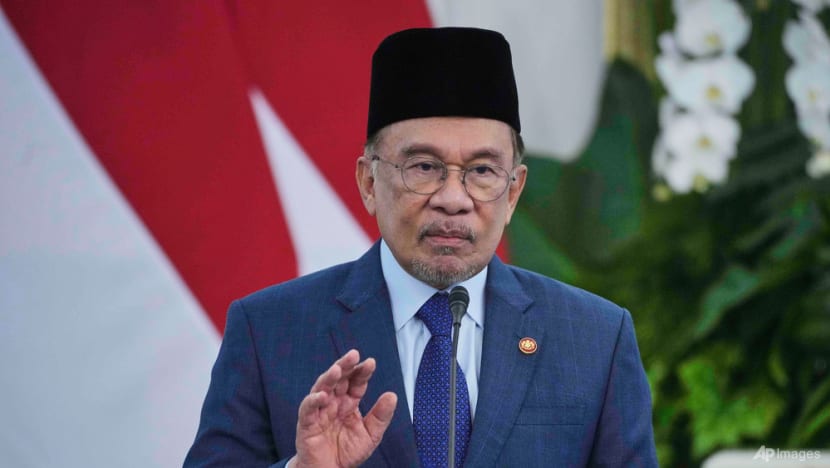
File photo: Malaysian Prime Minister Anwar Ibrahim speaks during a press conference at Merdeka Palace in Jakarta, Indonesia, on Jun 27, 2025. (AP Photo/Achmad Ibrahim)

19 Jul 2025 12:12PM (Updated: 19 Jul 2025 12:51PM)

KUALA LUMPUR: Malaysia’s Prime Minister Anwar Ibrahim said the recent appointment of a new Chief Justice has cleared him of any interference claims, including speculation that former attorney general Ahmad Terrirudin Salleh was eyed for the role. 

Anwar on Friday (Jul 18) acknowledged the speculation but said they were baseless and stemmed from unnamed lawyers whom he accused of “politicking”, Malay Mail reported. 

“The complaints and grievances that were hurled at me for weeks, the criticisms, the slander, but now, it turns out that those claims were completely off the mark,” Anwar told reporters. 

“There were names being thrown around, I can say it, including a former attorney general who served with distinction and is now a Federal Court judge. 

“However, because he still has many years ahead of him, his name was never proposed in the first place. His name was not brought up by me, nor was it discussed by the Conference of Rulers.”

Anwar had been battling growing public pressure over allegations that his government was interfering in the senior appointments of leadership in the judiciary and that he was at odds with certain members of the Judicial Appointment Commission (JAC).

There was widespread speculation among lawyers and retired jurists that the Conference of Rulers had come to some agreement on the appointment of candidates proposed by the premier.

Anwar said he hoped the matter would now be put to rest, and stressed that he had never interfered in the judicial process, nor exercise any prerogative to remove judges, news outlet Malay Mail reported.

According to news outlet The Star, Anwar said any delays in announcing the new appointments stemmed from the lengthy appointment process. 

“What crisis is there?" said Anwar. "I did not expel any judges, and I did not refer any judges to the tribunal.

“I did not interfere in any decisions, nor did I give any judges orders, unlike previous administrations.

"This is because the independence of the judiciary must be upheld,” he added.

Malaysia’s King Sultan Iskandar Sultan Ibrahim on Friday officially consented to the promotion of two judges nominated by Prime Minister Anwar Ibrahim.

The Chief Registrar of the Federal Court said in a statement issued on early Friday morning that Wan Farid Wan Salleh and Abu Bakar Jais have been appointed as Chief Justice and President of the Court of Appeal respectively.

A former politician from the United Malays National Organisation, Wan Farid retired from politics and was appointed a judge to the High Court in August 2018. He was promoted to the Court of Appeal in November last year.

Abu Bakar was appointed a judge to the High Court in July 2013, before being promoted to the Federal Court two years ago.

The leadership vacuum follows the retirement of Chief Justice Tengku Maimun Tuan Mat and President of the Court of Appeal Abang Iskandar Abang Ismail earlier this month, after both justices reached their retirement age of 66.

The statement added that Azizah Nawawi, a Court of Appeal judge, will be taking over as Chief Judge for the High Court of Sabah and Sarawak from Abdul Rahman Selbi, who is set to retire.

The new judges will be sworn in at the National Palace in Kuala Lumpur on Jul 28.

Growing public anger was largely due to widespread speculation that Anwar was considering Terrirudin for higher office, placing the latter at the centre of the political storm whipped up by the crisis in the judiciary.

Last weekend, purported leaked confidential minutes of a JAC meeting in May alleged that his conduct as a judge raised serious questions about his suitability for high office in the judiciary. 

Anwar also addressed the spread of misinformation, highlighting that rumours of Terrirudin being proposed as a top judge were flawed and politically motivated by some lawyers, The Star reported.

“It was disseminated among several senior lawyers who are playing politics. I don’t believe this is a view represented by all,” he said, as quoted by The Star.

He emphasised the importance of the judiciary as a pillar of a sovereign, independent country practising parliamentary democracy.

Anwar also congratulated Wan Farid, Abu Bakar and Azizah on their appointments, expressing confidence in their ability to execute their duties excellently.

Source: Agencies/lk - CNA, 19/7/2025
 

Nurul Izzah calls for probe into allegations of judicial interference


PUTRAJAYA: PKR deputy president Nurul Izzah Anwar has called for a probe into allegations of judicial interference and leak of what is believed to be confidential minutes from a Judicial Appointments Commission (JAC) meeting.

"It is important that these allegations be investigated to restore trust in our judiciary," said the daughter of Prime Minister Datuk Seri Anwar Ibrahim in a statement during the Malaysian Bar's walk in front of the Palace of Justice on Monday (July 14).

"Investigations can commence under Article 125 of the Federal Constitution through the establishment of an independent tribunal comprising at least five senior judges," she added.

Nurul Izzah then said that such actions will go a long way to preserve the faith in the systems and added that the judiciary, executive and the legislature exist to keep one another in check by ensuring that no single branch can operate without accountability.

She added that she attended the walk to safeguard the judiciary.

"Today, we exercise the right to peaceful assembly guaranteed by the constitution and upheld by the Prime Minister.

"In the spirit of reform and justice, which are the foundations of Keadilan, we need to improve the existing structure by making it more transparent.

"An independent judiciary is the essential bulwark against overreach by the executive, the cabinet, and the government as a whole," she said.

Nurul Izzah added that court decisions censure Parliament if and when laws which are oppressive and unconstitutional are introduced.

"Bearing all this in mind, the most crucial thing in an independent judicial system is the lack of interference from internal or external forces.

"As such, persons appointed as the Chief Justice of Malaya; President of the Court of Appeal, the Chief Judge of Malaya and the Chief Judge of Sabah and Sarawak must not only be capable but also be of the highest moral integrity to carry out the job," she said.

Currently, Chief Judge of Malaya Tan Sri Hasnah Mohammed Hashim is assuming the responsibility and duties of the CJ, while Federal Court judge Datuk Zabariah Mohd Yusof, similarly, is taking over the tasks and responsibilities of the Court of Appeal President.

On Sunday, Minister in the Prime Minister’s Department (Law and Institutional Reform) Datuk Seri Azalina Othman Said said the appointment of a new chief justice to head the judiciary will be decided only after the next Conference of Rulers scheduled for July 15-17.

Police have also launched an investigation into the alleged leak and dissemination of what is believed to be confidential minutes from a JAC meeting.- Star, 14/7/2025


Over 30 empty benches threaten justice process nationwide as judicial scandal escalates

It comes amid growing public outrage over allegations of judicial meddling by Anwar Ibrahim.

MalaysiaNow

More than thirty vacancies for senior judges remain unfilled, threatening Malaysia's judicial system as courts across the country are forced to postpone trials for years amid escalating public outrage against Prime Minister Anwar Ibrahim over allegations of judicial interference.

MalaysiaNow has learnt that at least 30 benches of the Federal Court, Court of Appeal and High Courts remain vacant.

These are in addition to the controversy surrounding the search for a permanent Chief Justice as well as the President of the Court of Appeal, exacerbated by the explosive leakage of an official document which critics say indicates that the prime minister is flexing his muscles to fill the country's highest judicial posts.

The 30 empty benches include 24 judges for the High Courts, three for the Court of Appeal and two for the Federal Court.

A source familiar with the process of appointing judges said that while the posts had been "vacant for some time", filling them would now "be more complicated".

"This is more so because there is a general perception that the JAC's recommendations have been rejected," the source said, referring to the Judicial Appointments Commission, the body that advises the government on the appointment and promotion of senior judges.

This comes at a time when Anwar has reportedly rejected the recommendations of JAC and former chief justice Tengku Maimun Tuan Mat for her successor and for the post of the Chief Judge of Malaya (CJM).

It followed the retirement of Tengku Maimun and Abang Iskandar Abang Hashim as the chief justice and president of Court of Appeal respectively.

In the absence of permanent successors, the two posts were temporarily filled by two judges.

Earlier this month, CJM Hasnah Hashim assumed the dual role of acting chief justice, while Federal Court judge Zabariah Yusof was given the role of acting president of the Court of Appeal after both were handed six-month extension upon reaching mandatory retirement age this year.

The whole episode has sparked widespread criticism of the way Anwar, who has made independence of judiciary a key battlecry during his two decades in opposition, handles his constitutional powers in appointing senior judges.

It also came months after Ahmad Terrirudin Mohd Salleh, the first attorney-general appointed by Anwar, was promoted to the Federal Court even though his name was not among those recommended by Tengku Maimun to the prime minister.

Last month, MalaysiaNow reported that Terrirudin was one of two candidates in the running for the position of CJM, which is traditionally a stepping stone to becoming the chief justice.

Citing legal sources, the report said that apart from Terrirudin, his more experienced colleague in the Federal Court, Vazeer Alam Mydin Meera, is also considered a likely candidate for CJM.

The issue has been at the heart of a debate over the role of the prime minister in appointing senior judges, something which was raised by Malay rulers just days after Anwar assumed top office.

In November 2022, the Conference of Rulers proposed stripping the prime minister of the power to appoint five representatives to JAC.

Four of the nine members of JAC are senior judges, while the remaining five are appointed by the prime minister.

Terrirudin's rapid rise from AG to a Federal Court judge, and Anwar's own application to the apex court to seek immunity from a sexual assault suit by a 33-year-old youth, have only fuelled the debate in recent weeks. - Malaysia Now, 14/7/2025