Friday, August 22, 2025

Finance Minister Anwar's FAILURE - Failed to reduce Tariff(originally 2-3%), and 'committed' to US purchases/investment worth over RM1 trillion, eliminate import tax on 11,000 US products?

US announced an increase of tariff(tax or duty to be paid) on Malaysian products from originally 2-3% to 25% - and that means the US Consumer if they still want to buy Malaysian goods will have to pay more...

Many said Malaysia and/or PM/Finance Minister Anwar Ibrahim should NOT have PANICKED, and just waited > for there will be 'protest' from the US consumers - and at the end of the day, Trump may be forced to reduce the Tariff. Further, many Malaysian products are products by Supply Chains that the US companies NEED. 

But, our Prime Minister/Finance Minister went on, maybe too hastily, to NEGOTIATE to reduce the Tariffs...and in so doing SACRIFICED too much(in my opinion)...

And what did Malaysia offer

(a) A commitment to buy/invest about RM1 Trillion on US products;

(b) To eliminate import taxes of 11,000 US products, and worse

(c) To supply rare earth elements (does this mean that Malaysia now will mine rare earth elements and process it, forgetting BUKIT MERAH and even LYNAS - hence putting Malaysians at greater health risk in the future???)

Malaysia also agreed to eliminate import taxes on the majority of 11,000 US products, and to supply rare earth elements.

And, then the US reduced Malaysian Tariff from 25% to 19% ....no success at all. Different if the US reduced it back to the original 2-3% or just NO TARIFF at all, as Malaysia is doing for the 11,000 US products...

And, guess what, Singapore gets 10%, and Philippines gets 17% - so, despite so much bending over backwards, PM/Finance Minister Anwar only managed to get 19%???? We compromised too MUCH... Should the PM have brought this matter to Parliament and discussed it openly, and come up with a Parliamentary approved solution - rather than deciding on his own?

Anwar/Malaysia also fails ASEAN - should Malaysia not acted with all member ASEAN states to secure a 'good deal' for all in ASEAN - or ASEAN could have come together with a collective action - maybe also raise their TARIFF to match the US imposed TARIFF..

Now, Malaysia lost REVENUE from Import Taxes from US Products > how much did we lose?

How does Malaysia spend RM1 Trillion buying US products - What does US have that Malaysia needs? Can't Malaysia get what it needs from other countries, other than the US...

An EXAMPLE

In Malaysian Airlines, there are many makers of planes - Airbus(Europe), COMAC(China), Boeing(US), ... So, were we forced to buy from the US company Boeing to satisfy Anwar's RM1 Trillion commitment to buy US products - have we, the consumer, just lost our right to pick and choose the best product...having to now buy from US...a 'preferential treatment'... 

Anthony Loke says AirAsia and Air Borneo among airlines showing interest in aircraft made by Commercial Aircraft Corporation of China - SCMP, 31/7/2025

Malaysia has reaffirmed its commitment to purchase a total of 26 Boeing aircraft in two phases, a deal estimated to be worth close to US$19 billion, said Minister of Investment, Trade and Industry Tengku Datuk Seri Tengku Zafrul Abdul Aziz.The purchase is part of ongoing commercial agreements with the United States and was highlighted during Malaysia’s recent trade negotiations.“We made some commercial commitments, which have already been announced, but we reinforced them. One is the Boeing aircraft purchase,” Zafrul said at a press conference at Miti headquarters today. - Malay Mail, 1/8/2025

ALL in all, Malaysia came out the LOSER in my opinion - and thus we ask whether it is time for Anwar Ibrahim to stop being Finance Minister, maybe even Prime Minister.

Remember, Malaysia already has about RM1.5 Trillion DEBTS - and that DEBT has been increasing annually since Anwar Ibrahim became Prime Minister. What Anwar did was merely REDUCE annual DEBT INCREASE - but should we not be trying to REDUCE DEBTS? I am shocked that Malaysia still spends more than it earns annually - BE REALISTIC and PRACTICAL. With Debts, there is also Debt Servicing annually -  

As of 2023, Malaysia’s government debt reached RM1.173 trillion, an increase of RM92.918 billion (8.6%) from the previous year. This debt, representing 65.4% of the GDP,...The steady increase in debt raises concerns, especially as the government nears the statutory debt ceiling of 65%....The National Audit Report 2024 highlighted that over 66% of federal debt is due to mature within the next 10 years, raising concerns about Malaysia’s ability to service this debt.... While Malaysia’s debt levels are significantly lower than those of the USA and Japan...Malaysia, being smaller and more exposed to external economic fluctuations, does not have the same luxury. External risks, such as changes in global demand for its exports, fluctuations in currency value, and economic downturns, could exacerbate the country’s debt burden.- Business Today, 21/12/2024

For instance, the government took new loans of only RM75 billion in 2024, down from RM93 billion in 2023 and RM100 billion in 2022. - FMT, 13/6/2025  


 PERSONALLY, I believe Malaysia must be DISCIPLINED and not be spending more than it earns - not increasing DEBTs - and, PM Anwar before making MAJOR DEALS like the one with the US should get Parliament's approval first... where our peoples' representatives(MPs) are - as this is a matter that affect all Malaysians..

PM Anwar may soon be NO MORE PRIME MINISTER but we, Malaysians, end up with the BURDENS he leaves....That is why we need to MONITOR Anwar Ibrahim and make sure that he does not put us Malaysians in a WORSE situation... We certainly need MORE Outspoken MPs who will raise these issue - but sadly most MPs are 'SILENT" - and even when they raise issues, it is all about simple issues like FLAG issue, Crimes, etc - WONDER WHETHER MALAYSIAN MPs ARE OF SUFFICIENT QUALITY or BRAVE ENOUGH to raise issues that matter...MPs can always get advice from those professionals/experts on their own...  

Even if you are in Cabinet or in Anwar's party - MPs should SPEAK UP, more so when Anwar is doing 'wrong things' - BE BRAVE MPs for all of us in Malaysia ... 

The RM1 trillion question hauntting Anwar as outcome of tariff talks comes under fire

The government has been on the defensive amid growing criticism of Malaysia's US$240 billion commitments to Washington.

MalaysiaNow

Prime Minister Anwar Ibrahim's ability to steer the country in the face of global economic challenges following US President Donald Trump's tariff threat is increasingly panned by experts, even as Putrajaya launches a media campaign touting the "success" of its negotiations that resulted in Washington's decision to impose a 19% import tariff on Malaysian goods. 

At the heart of the mounting criticism by economists, political leaders and analysts is the disparity between the offers to the US of purchases and investments worth over RM1 trillion and the actual costs incurred as a result of the 19% tariff on Malaysian exports. 

Those who spoke to MalaysiaNow said that no clear returns could be assessed from an economic perspective, especially when compared to the amount of investment commitments announced. 

These commitments include the mutli-billion dollar purchase of Boeing aircraft as well as the acquisition of technology and cooperation in infrastructure involving major national companies such as Petronas, Tenaga Nasional Bhd, Telekom Malaysia, and several semiconductor industry players.

Malaysia also agreed to eliminate import taxes on the majority of 11,000 US products, and to supply rare earth elements.

"For this, we only get a reduction in US tariff of 6% (from 25% to 19%). That is not a good deal," said former prime minister Dr Mahathir Mohamad. 

The 19% rate however has been repeatedly commended by Investment, Trade and Industry Minister Tengku Zafrul Aziz, who acknowledged Malaysia's total commitment of over US$240 billion or RM1 trillion. 

However, the fairness of the exchange remains under question.

Economist Carmelo Ferlito said the tariff rate previously imposed on Malaysian goods was only about 2% to 3%. 

"Tariffs were not reduced. They were never 25%. They were threatened to go at 25% and this was the starting point of Trump’s negotiations, a good businessman strategy," said Ferlito, who leads think tank Centre for Market Education.

"So tariffs were not reduced, but increased."

He said the government's claims about the success of its negotiations, if factually assessed, would instead highlight concerns about Malaysia's huge commitments. 

'No benefit at all'

Noting the total value of foreign trade at US$681 billion (RM2.87 trillion) last year, he said Malaysia's commitment to spending US$240 billion (RM1.14 trillion) in investment and the purchase of US goods would reach 35% of that amount.

He said Malaysia's total exports to the US last year reached RM198.6 billion, while total imports from the US were RM126.2 billion – a trade surplus of RM72.3 billion (US$17.2 billion).

He then compared this to the total value of Malaysia's economic commitment to the US – a whopping US$240 billion.

"This means that Malaysia’s commitment towards the US is around 13 times the amount of Malaysia’s trade surplus vs the US," he told MalaysiaNow, adding that Malaysia's tariff talks with the US had brought the country no benefit at all. 

"Trade is never between states, but between firms. Therefore, the deal will have to face later on firms’ commitment to the same deal," he said. 

"Trade among firms responds to economic logic rather than geopolitical ones."

He said Malaysia's move to cut or eliminate tariffs on a large number of US goods was not a problem as it would ultimately benefit consumers while increasing competition. 

However, he warned that the real benefits would only be enjoyed if local businesses were prepared to compete fairly and efficiently in an open market system.

'Smoke and mirrors'

Economist Geoffrey Williams also questioned the touted success of Malaysia's tariff negotiations with the US. 

Speaking to MalaysiaNow, he said the government's narrative was nothing but "smoke and mirrors". 

Giving the example of the Boeing purchase, he said that high demand for the aircraft at the global level might cause delays in deliveries. 

"The new orders may not appear until long after Trump has ended his presidency. The orders could then be cancelled. 

"The number of planes is smaller than other countries and it is not clear if this is a normal replacement of the fleet, the substitution of Boeing in place of Airbus, or actual new net investment," he said.

He, too, said that a 6% reduction in tariff was too low, and would not put Malaysia on better footing compared to other Asean nations. 

"Malaysia is in the same position as most other Asean countries and worse than many other countries," he added. 

"It is at a disadvantage to Singapore and the EU, Korea and Japan."

He said what was being portrayed as an achievement was merely the status quo, decked out in political rhetoric, adding that Malaysia was paying too high a price for something that did not exist. 

"If examined objectively, this is more of a play on perceptions, not an actual economic achievement," he said. 

It is a view held by many others, including former minister Zaid Ibrahim who said the Malaysian leadership was easily deceived.

"Trump has less than four years left in office. His protectionist lunacy, like all things Trump, is likely to end in chaos, either at the ballot box or in the courts. 

"Why then are we so gullible? Why did our leaders panic at the first sign of pressure from a volatile foreign president?" he said. 

He said that over the next four years, Malaysia would only save US$10.4 billion or US$2.6 billion per year, based on its current export value of US$43 billion per year.

"In contrast, we committed to buying US$240 billion worth of American goods, effectively trading RM24 to save RM1. How is that sound economic policy?"

Wednesday, August 20, 2025

Court of Appeal ruled that it is no longer a crime in Malaysia to post “offensive” online remarks intended to “annoy” .., REPEAL Section 233 of the CMA.

For a long time, the Malaysian Bar, civil society and others have been calling for the REPEAL of  section 233 and other draconian provisions in the Communications and Multimedia Act 1988, 

C. That we, the Malaysian Bar calls for the repeal of section 263, section 233 and such vague provisions in the Communications and Multimedia Act 1998.-  Resolution adopted at the Malaysian Bar’s 70th Annual General Meeting (“AGM”), held on 19 Mar 2016 - Respect People’s Right to Privacy, Freedom of Expression - Repeal Section 233 and other rights violating provisions in the Communications and Multimedia Act 1998(CMA)- MADPET

And, finally there is GOOD NEWS when the Court of Appeal  came up with a GOOD judgment on this section 233 

The Court of Appeal ruled that it is no longer a crime in Malaysia to post “offensive” online remarks intended to “annoy”, declaring part of the Communications and Multimedia Act's Section 233 as unconstitutional. 

Section 233(1), as it is today is still too VAGUE and open to abuse by the government...

(1) A person who-

(a) by means of any network facilities or network service or applications service knowingly-

(i) makes, creates or solicits; and

(ii) initiates the transmission of,

any comment, request, suggestion or other communication which is obscene, indecent, false, menacing or grossly offensive in character with intent to annoy, abuse, threaten, harass or commit an offence involving fraud or dishonesty against, any person; or

(b) initiates a communication using any applications service, whether continuously, repeatedly or otherwise, during which communication may or may not ensue, with or without disclosing his identity and with intent to annoy, abuse, threaten or harass any person at any number or electronic address,

commits an offence.

What is 'offensive' or 'grossly offensive' and does it mean  'annoy, abuse, threaten, harass'? It is just too vague, and can be abused by government easily ... A crime must be clear and specific so no one can abuse it...

Other offenses that are just too vague include the Sedition Act, and even penal code crimes about ' Activity detrimental to parliamentary democracy' - what exactly is this? 

If the PM or the relevant authorities do not act in accordance to law - my online comments about the 'shocking inaction' of the police, authorities or even the Prime Minister may be considered by these persons to be OFFENSIVE or GROSSLY OFFENSIVE with the intention to ANNOY. 

I am angry that the 4 from ERA FM who insulted a religious practice of Hindus have yet to be charged in court. 

Charge the suspected criminals in Court – Only court decides on guilt/innocence and just sentence

MADPET(Malaysians Against Death Penalty and Torture) is certainly most disappointed on the fact that Malaysia, Communication Minister and/or Malaysian Communications and Multimedia Commission (MCMC) Malaysian  elected to resolve this matter administratively and to not charge in court Era FM hosts Nabil Ahmad, Azad Jazmin John Louis Jeffri, Radin Amir Affendy and others including maybe ERA FM whose actions/words were videotaped that may amount to ‘wounding the religious feelings of any person’ and/or ‘Causing, etc., disharmony, disunity, or feelings of enmity, hatred or ill will, or prejudicing, etc., the maintenance of harmony or unity, on grounds of religion’.

‘Communications Minister Datuk Fahmi Fadzil said last night that no further action will be taken against Era FM hosts Nabil Ahmad, Azad Jazmin John Louis Jeffri, and Radin Amir Affendy over recent online content that sparked religious tensions…’ Malay Mail, 12/3/2025 . However, there was a qualification as  ‘Fahmi also said that under the jurisdiction of the Malaysian Communications and Multimedia Commission (MCMC), the matter is now considered “settled.”…’ This means that they still may be charged under Section 298 and/or Section 298A Penal Code or other laws. -ERA FM Must Refuse Compound Offer, Also Any ‘Out Of Court Settlement’, As It Impacts On Press Freedom And Puts At Risk Media Organizations For Crimes Committed By Employees, Without Their Knowledge/Consent

I am annoyed that the teacher who punished students by asking students to stand under the sun, resulting in one suffering permanent disability has yet to be charged in court... 

WHY teacher perpetrator who 'tortured' kids by standing under the hot sun NOT been charged yet? Another case of 'preferential treatment" of law breakers?

I am annoyed that the prison officers who assaulted inmates, and resulted in death of one has yet to be charged in court ...

When the TRUTH is revealed about some wrongdoings - the one who get offended or annoyed are the PERPETRATORS of the said wrongdoing/CRIME, and those who just want to COVER UP the crime..., etc


There must be NO SELECTIVE Non-Prosecution -  or "PROTECTION' of certain persons  - why the ERA FM individuals have not been charged YET - Did they not break Malaysian law? The 'signal' that Anwar's government is giving is DANGEROUS - OK to insult religious practice of others????

IS IT BECOMING USELESS to just make reports to relevant authorities because they may not ACT? Thus, some have resorted to ONLINE communication - let the whole world know of the wrongs some have done... and, yes this may be 'GROSSLY OFFENSIVE' and even 'ANNOYING" to the perpetrators or those that 'swept' it under the carpet...

Malaysia is a DEMOCRACY - that means people ought to be FREE to communicate with one another >>> even forward articles or comments to one another for their considerations > and SUCH SHOULD NEVER BE A CRIME.

How does the government deal with them? If allegations of possible CRIME, investigate it - not go after the persons that highlighted it or 'whistleblowers'?

If it is FALSE or FAKE - do issue a CLARIFICATION so people will know. 

Do not restrict of FREEDOMS by CRIMINALIZING somethings that can be said or shared online..

REPEAL Section 233 NOW 


Don’t shoot the messenger: Court of Appeal says ‘offensive’ online remarks to ‘annoy’ can’t be a crime in Malaysia

Activist Heidy Quah leaves the Court of Appeal's decision on her constitutional challenge against parts of Section 233 of the Communications and Multimedia Act at the Palace of Justice, Putrajaya. — Picture by Sayuti Zainudin
 
  • The Court of Appeal ruled that it is no longer a crime in Malaysia to post “offensive” online remarks intended to “annoy”, declaring part of the Communications and Multimedia Act's Section 233 as unconstitutional.

  • The Court of Appeal said Section 233 gave no objective standard for what is “offensive”, warning it could criminalise speaking the truth and stifle free speech just because someone feels the online remarks are offensive.

  • The court's decision today only applies to ongoing and future cases where individuals face charges under Section 233. The Malaysian government can still appeal to the Federal Court, but it is not known yet if it would appeal.

PUTRAJAYA, Aug 19 — The Court of Appeal today unanimously ruled that it is no longer a crime in Malaysia to make “offensive” online comments with the intention to “annoy”, and struck down parts of the Communications and Multimedia Act 1998’s Section 233 that had criminalised “offensive” and annoying online speech.

Federal Court judge Datuk Lee Swee Seng, chairing a three-judge panel, said the court found these words “offensive” and “annoy” in Section 233 to be unconstitutional, as they go against the Federal Constitution’s Article 10(2)(a).

“We find the impugned words ‘offensive’ and ‘annoy’ in Section 233 constituting an offence to be violative of Article 10(2)(a) of the Federal Constitution read with Article 8. 

“It is not a permissible restriction to freedom of speech under our Federal Constitution,” he said, before striking down or making these two words in Section 233 invalid.

“We declare this decision to have prospective effect, so as not to resurrect the past,” he added.

The Court of Appeal’s decision’s prospective effect means it will only affect ongoing or future court cases involving the crime of “offensive” online speech intended to “annoy” under Section 233, and will not affect past cases where the court had decided on whether those charged are guilty or not of such crimes.

In reading the broad grounds of his judgment, judge Lee pointed out that there may be some people who feel offended and annoyed even when what is spoken is the truth, and cautioned against making it a crime to speak the truth.

“A premium should be given to truth, and the fact that some truths may be unpalatable does not justify criminalising the messenger merely because some masses of the people do not like the message,” the judge said.

Among other things, the judge said that there is no uniform standard in society on what is “offensive”, and what a person finds offensive may not be offensive to another person in a diverse society.

The judge said Section 233 does not give any standards on what would be “offensive” or what would be an “intent to annoy”, and said freedom of speech becomes illusory and enforcement becomes arbitrary when all types of speech could potentially be “offensive” if a single person feels it is offensive.

The judge cautioned that this would result in every speech having to be “sanitised” — whether it is true or not — to avoid committing a crime under Section 233.

Without an objective standard on what is “offensive”, the judge said regulating online civil discourse would become a “euphemism” for the authorities to police and censor undesirable speeches, which he said would result in a “chilling effect” over the right to freedom of speech and expression which is protected under the Federal Constitution’s Article 10(1)(a).

The judge pointed out that if online remarks are found to be untrue, a person can still be charged under the CMA’s Section 233(1) for making comments that are false with intent to abuse, threaten or harass another person. 

The two other judges on the panel today are Court of Appeal judges Datuk Hashim Hamzah and Datuk Azman Abdullah.

When asked by reporters if the Malaysian government will be appealing today’s decision, senior federal counsel Liew Horng Bin said he would be seeking instructions on whether to file an appeal at the Federal Court.

Lawyers Datuk Malik Imtiaz Sarwar, Surendra Ananth, New Sin Yew and Nur Izni Syazwani represented activist Heidy Quah in her successful constitutional challenge today against the words “offensive” and “annoy” in Section 233.

Lawyer Kee Hui Yee held a watching brief for the Malaysian Bar, while lawyers Lim Wei Jiet and Nevyn Vinosh Venudran represented Clooney Foundation for Justice and Suara Rakyat Malaysia in assisting the Court of Appeal as amicus curiae.

While the Court of Appeal’s decision today has effectively removed the words “offensive” and “annoy” from Section 233, there is now a newer version of Section 233 that uses the words “grossly offensive”. - Malay Mail, 19/8/2025

Saturday, August 16, 2025

EAIC recommends termination, but relevant Ministry/Government lets off BAD officer with a warning or sometimes no action at all? BAD apples from public service must be removed...No compromise.

“For example, we recommend a termination, but instead the wrongdoer is served with a warning instead or no further action taken against them. “This has led to EAIC being often seen as ineffective despite having conducted a thorough investigation after acting on a substantiated complaint,” he[EAIC commissioner Datuk Seri Razali Ab Malik] said.

Monitoring the LAW ENFORCERS is an IMPORTANT issue. Sadly, in Malaysia, this is a PROBLEM even when there are laws that create bodies/Committees to monitor law enforcement - 

For example the MACC has 5 monitoring Boards/Panels - Corruption Prevention Advisory Board (LPPR), Special Committee on Corruption (JKMR), Complaints Committee (JKA), Consultation and Prevention of Corruption Panel (PPPR) and an Operations Evaluation Panel (PPO), but the problem is EFFECTIVENESS. We remember how a panel member, Terence Gomez, tried to call for a meeting of a panel but failed because the Chairman allegedly did not want to, ...

See:-  

RCI to look into MACC and Azam Baki, That public officers NOT allowed to sue those who highlight alleged wrongs/crimes - Malaysian Bar 2022 Resolution

MACC under Parliament purview - Already is, and Parliament failed to act? Did Parliament fail/procrastinate in the MACC issue?

The problem is WHO appoints, and who is appointed into these monitoring bodies - For so long that the Prime Minister(or the Executive Arm) does or is involved, there is a problem. 

Rightfully, these monitoring bodies need to be INDEPENDENT, and more importantly, it must be TRANSPARENT and accountable to the people, not just to the Prime Minister or the government. 

The law sometimes say that the King appoints - but really, the King who is not involved in the day to day operations of the country mostly acts on the advice of the Prime Minister or some Minister.

The Prime Minister and the Government of the day[THE EXECUTIVE] is RESPONSIBLE for all public officers - including Law Enforcement. Then, there are the 'confidentiality provisions' and/or Official Secrets Act - all of which inadvertently keeps the Malaysian people in the dark - we do not know what is happening - only the Prime Minister, Minister, etc knows. 

This kind of 'SECRECY' regime prevents even 'WHISTLE BLOWING' that exposes abuse of power, corruptions, etc - Even, in the ongoing 'Judicial Crisis', the government was more interested in who 'leaked' the Judicial Appointments Commission minutes - rather that the 'WRONGS' that the said minutes revealed..

Take the MACC - have we heard about other 'problems' within the MACC that was revealed by any of these 5 'monitoring bodies'? 

Then, we have SUHAKAM(Malaysia's Human Rights Commission), and others like the EAIC (Enforcement Agency Integrity Commission) - who after a comprehensive investigation/inquiry make recommendation that certain BAD enforcement officers be prosecuted(charged in court and tried for their crimes), be terminated, etc - but then the relevant Minister(or Ministry or Department) or Attorney General(Public Prosecutor) ignore these recommendations - sometimes no action is taken against the perpetrator/s or they may be simply let of with a warning or maybe a fine. 

“For example, we recommend a termination, but instead the wrongdoer is served with a warning instead or no further action taken against them. “This has led to EAIC being often seen as ineffective despite having conducted a thorough investigation after acting on a substantiated complaint,” he[EAIC commissioner Datuk Seri Razali Ab Malik] said.

Now, treating CRIMES as MISCONDUCT is very wrong - If a misconduct is also a CRIME in Malaysia, then rightfully, the perpetrator must be charged and tried in court. They should NEVER BE PROTECTED by the State ...

So many deaths in custody - and it has been shown that individual police officers were responsible or caused the death - How many of these police officers have been charged and tried in court in such offenses that resulted in a loss of life? 


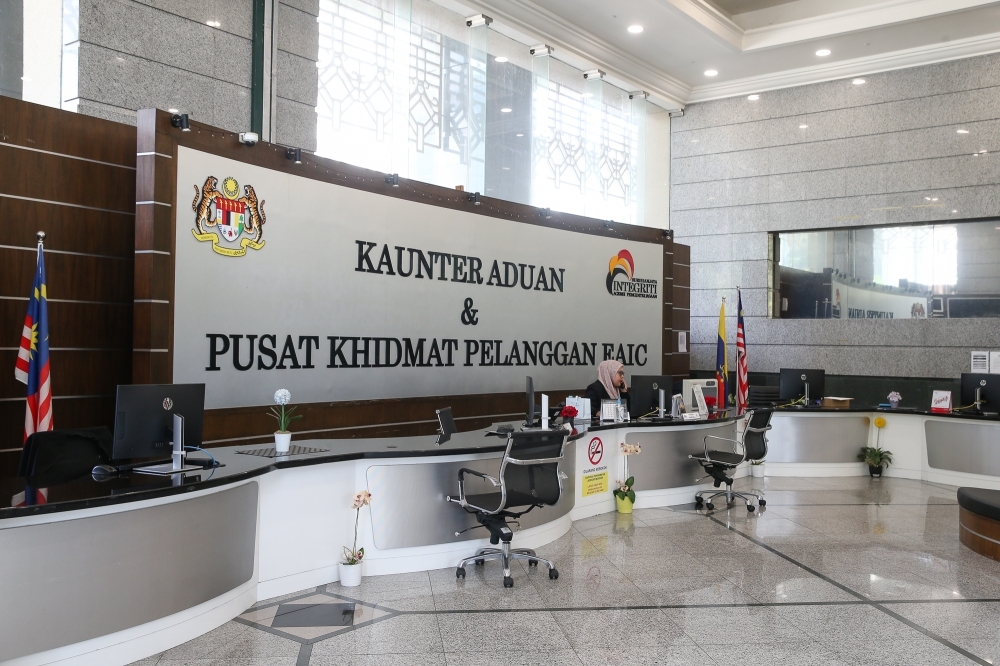
Policing the enforcers: Who is holding enforcement agencies accountable in the face of misconduct?

With 20 agencies under its supervision, the Enforcement Agency Integrity Commission (EAIC) is tasked with receiving and investigating complaints of misconduct from the public against an enforcement officer or against an enforcement agency. — Picture by Yusof Isa

KUALA LUMPUR, Aug 11 — When those tasked with upholding the law break it themselves, who ensures they are brought to justice?

As enforcement agencies operate with increasing autonomy and authority, the line between protector and perpetrator blurs in the face of misconduct.

Thankfully, we have the Enforcement Agency Integrity Commission (EAIC) — a federal statutory body — established in 2011 to hold enforcement officers accountable for their transgression.

But first, what is the definition of misconduct of enforcement officers and enforcement agencies?

According to subsection 24(1) of the EAIC Act or Act 700, it is defined as any act by an enforcement officer contrary to existing laws, unreasonable, irrelevant or improperly discriminatory; inaction or non-compliant of existing standard operating procedure or criminal in nature.

Per Act 700, the jurisdiction of the EAIC in carrying out its primary functions among others, are namely:

  • Receiving and investigating any public complaints of misconduct
  • Referring any complaints of a disciplinary nature to the relevant Disciplinary Authority or of a criminal nature to the Public Prosecutor
  • Carrying out full investigations on valid complaints of misconduct to verify the existence of such misconduct

The supervised federal enforcement agencies as stipulated in Act 700 are:

  • National Anti-Drugs Agency
  • Malaysian Maritime Enforcement Agency
  • Department of Environment
  • Immigration Department of Malaysia
  • Royal Customs Department of Malaysia
  • Department of Occupational Safety & Health
  • National Registration Department
  • Road Transport Department
  • Department of Industrial Relations Malaysia
  • Fisheries Department
  • Department of Wildlife and National Parks
  • Volunteers Department of Malaysia (Rela)
  • Department of Labour
  • Health Ministry (Enforcement Division)
  • Tourism, Arts and Culture Ministry (Tourism Licensing Division)
  • Domestic Trade and Costs of Living Ministry (Enforcement Division)
  • Housing and Local Government Ministry (Enforcement Division)
  • Commercial Vehicles Licensing Board (Sabah)
  • Commercial Vehicles Licensing Board (Sarawak)
  • Registrar of Business
  • Civil Aviation Authority of Malaysia (CAAM)

Note: The Royal Malaysia Police (PDRM) was removed from the list after the Independent Police Conduct Commission (IPCC) came into force in 2023.

According to the latest published data, the EAIC recorded a total of 289 complaints as of July this year.

For 2023 and 2024, a total of 600 and 408 complaints were lodged respectively.

Yet despite the hundreds of complaints lodged each year, only a handful have had an investigation conducted by the EAIC.

“We must be clear that most of the misconduct complaints we received are not substantiated or incomplete and were therefore dismissed or referred to another agency after reviewing them.

For comparison, the number of investigation papers opened were 12 (2023), 32 (2024) and 89 (July 2025).

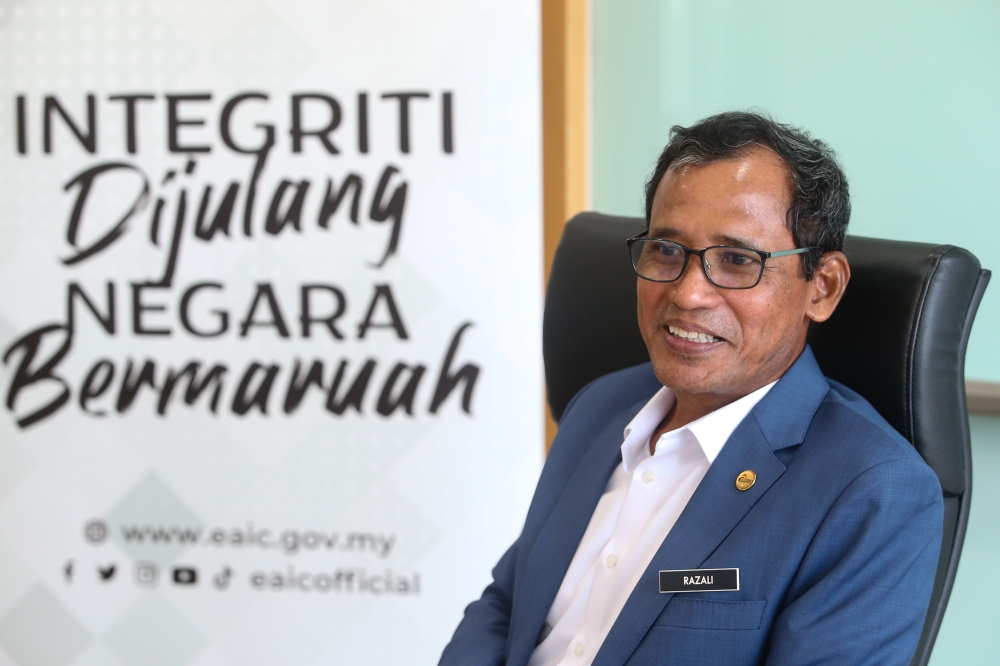
“It could also be a case where the complainant assumed a misconduct had taken place but when we investigated further, we discovered otherwise; or it could be a case where disciplinary action had already been taken but the complainant was not informed of it,” EAIC commissioner Datuk Seri Razali Ab Malik told Malay Mail in an interview recently.

The same data also showed the Immigration Department recording the highest number of misconduct complaints received in consecutive years at 45 (2023), 58 (2024) and 37 (July 2025).

EAIC commissioner Datuk Seri Razali Ab Malik speaks to Malay Mail during an interview at the EAIC head office in Putrajaya. — Picture by Yusof Isa

On the department’s ‘high number’ of complaints, Razali attributed the figures to the overall department size and scope of enforcement authority that made it more susceptible to incidents of misconduct.

“When you include a large federal department and its number of personnel nationwide, the likelihood of misconduct taking place is higher as well.

“All of us are aware that the Immigration Department’s overall function involves enforcement in regards to border control and foreign workers, of which complaints seemed more commonplace.

Some of the common complaints against the Immigration Department include inaction against illegal immigrants in a particular area, unsatisfactory counter and passport services; and weaknesses in migrant systems and immigration processes.

But what happens to complaints which fall outside the EAIC’s investigative jurisdiction, such as corruption, criminal or administrative decisions?

For such cases, Razali said these were referred to the relevant authorities such as the Malaysian Anti-Corruption Commission (MACC), the Attorney General Chambers (AGC) or the respective government department head for further action.

Nevertheless, Razali said the commission welcomed all complaints, irrespective of whether there has been misconduct committed or not.

“We want to encourage them to lodge complaints even if they have doubts because it is our collective responsibility to curb any form of misconduct by enforcement officers,” he said. - Malay Mail, 11/8/2025


Why does misconduct persist behind the uniform? EAIC points toward normalisation of ‘tidak apa’ culture, legislative weakness

With 20 agencies under its supervision, the Enforcement Agency Integrity Commission (EAIC) is tasked with receiving and investigating complaints of misconduct from the public against an enforcement officer or against an enforcement agency. — Picture by Yusof Isa

  • The EAIC says misconduct in enforcement agencies persists due to legislative weaknesses that limit its powers to mere recommendations without enforcement authority.
  • A culture of complacency and top-level officials protecting wrongdoers has normalised misconduct, undermining accountability and effective disciplinary action.
  • The commission urges a legal overhaul to give its findings binding power and stresses the need for leadership courage to enforce discipline at all levels.

KUALA LUMPUR, Aug 11 — An old Chinese proverb says: “A fish rots from the head.”

The adage still holds true today, encapsulating the challenges faced by the federal government’s watchdog — the Enforcement Agency Integrity Commission (EAIC) — in performing its statutory duties effectively.

Speaking to Malay Mail, EAIC commissioner Datuk Seri Razali Ab Malik conceded the existence of a large gap between the agency’s investigative findings and follow-up action taken by an enforcement agency under its supervision against reported misconduct.

Existing legislative weakness has also exacerbated existing hurdles, since disciplinary authorities of enforcement agencies under EAIC’s supervision are not legally bound to execute its official recommendations.

“Yes, it is true we faced several persisting challenges because if you look at our EAIC Act, the commission can only make recommendations despite having investigative powers [to probe any complaints].

In the Act, also called Act 700, EAIC may only make recommendations pertaining to disciplinary actions, reviewing of standard operating procedures and internal structure improvements after a complaint is found to be substantiated.

“However, the execution of the recommendation [after an investigation is completed] and final decision is still vested with the respective agencies or ministries of which a complaint of misconduct has been filed against.

Nevertheless, Razali said none is more detrimental than institutional weakness, such as “enablers” at the top normalising misconducts and cultivating a tidak apa attitude — or “couldn’t care less” — among subordinates.

“We have always stressed that continued sternness is key to nurturing a culture of accountability.

“This must come from the top, department senior officials who should serve as guardians of values, yet some chose to protect wrongdoers instead and make it a norm for misconducts to take place,” he said.

Razali then disclosed several instances where enforcement agencies took on a dismissive approach instead, either by imposing a more lenient punishment than recommended or even expressing outright refusal to execute.

“For example, we recommend a termination, but instead the wrongdoer is served with a warning instead or no further action taken against them.

“This has led to EAIC being often seen as ineffective despite having conducted a thorough investigation after acting on a substantiated complaint,” he said.

EAIC commissioner Datuk Seri Razali Ab Malik speaks to Malay Mail during an interview at the EAIC head office in Putrajaya. — Picture by Yusof Isa

A tiger without its fangs, for now

Razali said there are still rooms for improvement to ensure EAIC effectively performs its role, starting with a thorough review of the existing Act to further strengthen the enforcement of its recommendations.

“Foremost, our recommendation should not remain as mere suggestion but has to be followed with a stern and systematic action,” he said.

“We are also suggesting that any conducted investigations can be used as part of the official evidence in any disciplinary action when a referral is made.

“The existing Act must also be harmonised with other existing laws in order for disciplinary authorities to make use of our findings without legal hurdles,” he added.

Most importantly, Razali said the willpower and courage to take action against any form of misconduct must be instilled on all levels, from the top to bottom.

Citing an internal circular dated July 5, 2024, issued by the Director-General of Public Service, Razali said it was clearly stated any senior officials failing to take action against any misconduct by their subordinates can be punished with disciplinary action for being careless.

“Misconduct will continue to happen not because of the absence of law, but because there is no longer courage to address them.

“It is possible the lack of assertiveness in disciplinary enforcement has fostered a permissive culture where misconduct is considered negotiable or excusable,” he said. - Malay Mail, 11/8/2025


A few bad apples give cops a bad name, says Ayob Khan

The deputy IGP says only a handful of police officers and personnel are involved in corruption, while the majority performed their duties with integrity and dedication.

Deputy inspector-general of police Ayob Khan Mydin Pitchay said corruption-related offences must be dealt with firmly, regardless of the rank of the individuals involved. (Bernama pic)
PETALING JAYA:
Corruption in the police force only involves a few bad apples but their actions have tarnished the reputation of all law enforcers, says deputy inspector-general of police Ayob Khan Mydin Pitchay.

He said he regretted such a perception due to the handful of police officers and personnel when the majority have been performing their duties with integrity and dedication, Bernama reported.

Ayob Khan added that corruption-related offences must be dealt with firmly, regardless of the rank of the individuals involved.

He said he had never compromised with any officers or personnel involved in such offences during his tenure as Johor police chief, director of the Bukit Aman narcotics criminal investigation department (NCID), and director of the Bukit Aman criminal investigation department (CID).

“In Johor, when I served as police chief, some officers and personnel were subjected to action under the Security Offences (Special Measures) Act 2012 (Sosma).

“At the NCID, officers with the ranks of superintendent, ASP, and inspector were also placed under Special Preventive Measures,” he was quoted as saying after the launch of the book “Antologi Puisi Makan Suap” at the Dewan Bahasa dan Pustaka (DBP) in Kuala Lumpur last night.

He also stressed that attempts to cover up corruption cases involving police officers to protect the reputation of the force would only allow such activities to fester and become harder to prevent.

“I will not compromise. If I detect such cases, the first step is to refer major cases to the Malaysian Anti-Corruption Commission (MACC).

“The second step is to open an investigation paper, and the third is to initiate disciplinary proceedings,” he said.

Meanwhile, in his speech at the book launch, Ayob Khan said he would continue to speak out, reprimand, and remind all police officers and personnel about the disgraceful and humiliating nature of corrupt practices.

He also reaffirmed his firm stance to tackle this reprehensible culture, despite attempts by a few parties, both within and outside the force, to portray corruption in the police force as difficult to eradicate.

He added that Bukit Aman remains committed to upholding integrity, particularly in tackling corruption and abuse of power, and will continue to ensure that national security and public order are maintained while delivering services at the highest standard. - FMT, 16/8/2025


Tuesday, August 12, 2025

"Equal pay, equal work"- Equality of PERSONS - Has Guan Eng and DAP forgotten? Does Anwar, PH and parties advocate non-discrimination of workers?


"Equal pay, equal work" means that people in the same workplace should receive the same compensation for performing the same or equivalent work, regardless of gender. This principle is often focused on addressing the gender pay gap and ensuring fairness for different roles, though the concept of pay equity also promotes equal pay for different jobs of comparable value or worth

PARLIAMENT | Malaysia is not bound by any United Nations or International Labour Organisation (ILO) conventions, and there is no need for the government to mandate a minimum wage and EPF contributions for migrant workers who are already in the workforce. This assertion was made by former finance minister Lim Guan Eng (Harapan-Bagan) in the Dewan Rakyat when debating the 13th Malaysia Plan today.

“Hence, there is no need to mandate RM1,700 minimum wage and two percent EPF contributions for migrant workers,” he claimed.

The DAP adviser pointed to Singapore’s policy of not requiring Central Provident Fund (CPF) contributions for migrant workers since 2003 without repercussions from the ILO.

“Therefore, the RM1,700 wage floor and two percent EPF contribution should apply only to new foreign hires - as employers engage current workers based on existing terms,” he said. - Malaysiakini, 6/8/2025 

Human Rights Standard is ours - it is not relevant that Malaysia has not ratified/signed certain UN or ILO conventions, and Malaysia has not ratified/signed many UN or ILO Conventions. Irrespective, Malaysia believes in human rights and justice - and have always enacted laws, etc to ensure Malaysia respects human rights and justice, even if it is NOT yet acknowledged in local laws.  

FIRST, let us be clear as to what Guan Eng said(based on the Malaysiakini report)
 
1) He did not say the new RM1,700 Minimum Wage should not apply to Migrant Workers - he said it should not apply to the EXISTING migrant workers - but only to apply only to new foreign hires > a very DANGEROUS position, because by that logic it means that new Minimum Wages will not apply to also LOCAL Workers, only to NEW Employees after the Minimum Wage Order comes out...
 
How could DAP Chairperson say things like Minimum Wage should only be for LOCAL workers, and not FOREIGN workers?DAP has 'kept quiet" - so, is this the DAP stand too? 
 
People/Workers fight for NEW RIGHTS - and it is ABSURD to even think that such NEW rights only will apply to NEW workers after that right is enacted in law. All the rest of existing workers fight for it and will not enjoy it because they are already working....???
 
2)  Malaysia is not bound by any United Nations or International Labour Organisation (ILO) conventions - This is absurd, already explained...
 
3) Because Singapore  '...pointed to Singapore’s policy of not requiring Central Provident Fund (CPF) contributions for migrant workers since 2003 without repercussions from the ILO.' So, if other countries fail to respect Human Rights, should Malaysia follow it. We should be better than all countries in terms or human rights and justice - and we should look for precedence in other countries that promote better rights and justice > Not Singapore that has a bad record in terms of human rights...
 
Malaysian EPF is now discriminatory against migrant workers - and this is NOT right. For Local Workers, the employer pays 12-13% of the employee's monthly salary - but for migrant workers, the employer pays just an additional 2% of the employees' monthly salary..HERE is the discrimination, a violation of the equal pay equal work, etc..
EPF based on a percentage of the employee's monthly salary. The contribution rates vary based on the employee's age and salary, but generally, employees contribute 11%, while employers contribute either 12% or 13%. 
Starting October 1, 2025, a mandatory 2% EPF contribution will be required for all foreign workers in Malaysia, except for domestic helpers. Both employers and employees will contribute 2% of their monthly wages to the EPF, a significant shift from the previous voluntary system. This new policy extends social protection to non-Malaysian citizens and aligns with international labor standards.

SO, for the same work. local employee gets monthly wages PLUS 12-13% for EPF from Employer...

Migrant workers get monthly wages PLUS just 2% of monthly wage from employer... Even if there is no access to the EPF scheme. the migrant worker MUST get the additional 12-13% of his/her monthly salary...

IF NOT, is this not a VIOLATION of the Equal Work Equal Pay Principle ..

{For a long time, women was paid less than men for the same work done - we have made much progress here to make sure that ALL are paid the same for the same work done >> Now, this discrimination is NOT limited to Gender but also nationality....)

THAT IS WHY WE NEED TO ENSURE THAT FOR THE SAME WORK, ALL WORKERS ARE PAID THE SAME - Not just basic wages, but all payments made by the employer i.e. for EPF, etc

We want Malaysian workers in Singapore and any other country to also not BE DISCRIMINATED - paid less by employers ...but if Malaysia, discriminates (to protect employers) against Migrant Workers - how can we fight DISCRIMINATION faced by Malaysian workers in any other countries...

So, in Malaysia, we should insist that for Migrant Worker's EPF scheme, the employer's contribution MUST BE THE SAME, 12-13% of the monthly wage...if the workers pay less or nothing, it matters not - but the Employer's contribution must be the same for all workers ---

Sadly, Guan Eng and DAP came out looking 'pro-employer' - which also means 'anti-worker'..? And, mind you, the majority of VOTERS are workers...

Remember, that even Malaysian law PROHIBITS discrimination or differential treatment based on nationality - workers should be accorded the same treatment by the employer...

Remember, all workers (local and migrant) can join Trade Unions to fight for better rights - how difficult would it be to unionize if migrant workers already suffer discrimination by reason of receiving LESS from employers??

So, the question is whether MALAYSIA, PH, DAP...discriminates against workers, be it based on GENDER or nationality?

For EPF members, if migrant workers contribute. it is beneficial for even local workers - as more contributions, more investments, more profits?, higher dividends for all EPF members...?

So best, if employers contribute the same as for local workers - 12-13% of the total monthly salary..

BENEFICIAL also - because we have heard that many migrant workers at the end find their own employers delaying payment of monies overdue putting migrant workers in a precarious position - hence, many stay on to work 'illegally' to get enough money before they return home > That EPF account money will resolve some of this 'economic difficulties' as migrant workers will take out the money once their employment in Malaysia is over.

WE have been fighting for a FIXED TERM Contract for migrant workers - be it 3- 5 years, but still their employment contract remains an annual contract - so too their employment pass/visa need annual renewal. Migrant workers should be given employment visa for 3 to 5 years as soon as they begin employment, and there is then certainty...

Before an employer can employ migrant workers, they must first try to employ LOCAL Workers (that was the policy before to ensure local workers can first bite for any employment opportunities in Malaysia) but today, it seems PERMITS to employ migrant workers are so easily given -- WHY? When have you seen adverts or banners offering jobs in Malaysia? Did employers TRY FIRST to employ local workers - or did they straight way go employ migrant workers? Is there still a QUOTA for local factories that LIMITS use of migrant workers to no more than 30%, or is it no more - just look at factories and workplaces, how many LOCAL EMPLOYEES? KLIA cleaning services - I do not see Malaysians, why? 

Malaysia must treat WORKERS equally...no discrimination based on GENDER or even nationality... 

See also:- 


Guan Eng: No need minimum wage, EPF for existing migrant workers

PARLIAMENT | Malaysia is not bound by any United Nations or International Labour Organisation (ILO) conventions, and there is no need for the government to mandate a minimum wage and EPF contributions for migrant workers who are already in the workforce.

This assertion was made by former finance minister Lim Guan Eng (Harapan-Bagan) in the Dewan Rakyat when debating the 13th Malaysia Plan today.

“Hence, there is no need to mandate RM1,700 minimum wage and two percent EPF contributions for migrant workers,” he claimed.

The DAP adviser pointed to Singapore’s policy of not requiring Central Provident Fund (CPF) contributions for migrant workers since 2003 without repercussions from the ILO.

“Therefore, the RM1,700 wage floor and two percent EPF contribution should apply only to new foreign hires - as employers engage current workers based on existing terms,” he said.

While Malaysia is a member of the ILO, only 18 out of 77 conventions have been ratified, with 14 currently in force. The remaining conventions, including those related to migrant labour protections, have yet to be adopted.

Lim also praised the unity government’s achievement in reaching full employment but cautioned that plans to reduce the proportion of migrant workers from 15 percent to 10 percent by 2030 could lead to labour shortages in key industries.

“Hence, the process for hiring foreign workers must be simplified,” he said, suggesting that the system be moved entirely online with the help of emerging technologies.

‘Step up support for local SMEs’

On the local business front, Lim underscored the growing importance of small and medium enterprises (SMEs), which currently contribute 38 percent to the GDP and are projected to hit 40 percent by 2030.

He said SMEs account for 48 percent of jobs and nearly 13 percent of Malaysia’s exports.

“Now, SMEs face intense competition from Chinese traders who fully source and manage costs from China.

“To support local SMEs, all foreign investors and contractors - whether working on public or private projects - should be required to procure at least 50 percent of their supplies from local producers,” he said.

To further ease pressure on the public and businesses, Lim proposed six additional financial measures:

  • Raise the SME tax threshold by 15 percent - from RM150,000 to RM300,000 at a 15 percent tax rate, and from RM300,000 to RM700,000 at a 17 percent rate - potentially saving SMEs up to RM10,000 from the 2025 assessment year;

  • Limit the two percent dividend income tax to individuals receiving dividends only from companies listed on Bursa Malaysia;

  • Introduce an additional RM5,000 in individual tax relief;

  • Expand the existing RM7,000 education tax relief to cover children in both primary and secondary school;

  • Spread the 14 percent electricity tariff hike into two staggered seven percent phases;

  • Exempt the construction and rental sectors from the six percent and eight percent SST expansion, respectively.

Lim said the proposed measures would provide targeted relief while supporting key sectors such as SMEs and households with school-going children. - Malaysiakini, 6/8/2025


Apologise for 'no migrant minimum wage' call, group tells Guan Eng

A migrant rights group has urged DAP adviser Lim Guan Eng to apologise over his remarks that existing migrant workers need not be included in the minimum wage policy or Employees Provident Fund (EPF) contributions.

Tenaganita called the statement Lim made in Parliament “outrageous” and “irresponsible”.

“This is not just tone-deaf, it reinforces the dehumanisation of migrant labour, legitimises exploitative employment practices, and fundamentally betrays the principles of justice and equality,” its executive director Glorene Das told Malaysiakini.

In his debate on the 13th Malaysia Plan (13MP), Lim yesterday claimed that Malaysia is not bound by any United Nations or International Labour Organisation (ILO) conventions, and therefore it need not impose a RM1,700 minimum wage or two percent EPF contribution on migrant workers already in employment.

The Bagan MP had said the wage floor and EPF contribution should only apply to new foreign hires, as employers had engaged existing workers under different terms, prompting outrage from various stakeholders.

Glorene, however, reminded that migrant workers are essential to Malaysia’s economy, particularly in sectors such as construction, manufacturing, plantations, food processing and cleaning.

Tenaganita’s Glorene Das

She also cited Tenaganita's decades of work with migrants, grounded in documented cases, which showed widespread issues including wage theft, unpaid overtime, and hazardous working conditions.

“Minimum wage is not a luxury. It is the bare minimum protection against structural exploitation.

“To deny migrant workers EPF is to rob them of dignity in retirement and strip them of the right to long-term security, while employers and corporations continue to profit off their labour,” she stressed.

In February, Tenaganita mooted a tiered EPF contribution rate for migrant workers, rather than the proposed 2 percent which is down from an initial 12 percent first announced under Budget 2025.

Worse for women migrants

Further, Glorene highlighted the particular vulnerabilities faced by migrant women in factories, agriculture and the food sector, where exploitation is compounded by gender-based discrimination, sexual harassment and unequal pay.

“To deny them the minimum wage is to perpetuate gendered economic violence,” she said, adding that such exclusion fuels a capitalist mindset of profit over people.

Glorene also reiterated Tenaganita's long-standing demand for stronger enforcement of labour laws and penalties against employers who underpay or withhold wages.

Malaysia, as an ILO member, has ratified eight out of 10 fundamental conventions, including one on “equal remuneration”.

The 1951 convention states protection against wage discrimination based on sex, while at least three other conventions ratified by Malaysia provided broader protections for all workers regardless of nationality. - Malaysiakini, 7/8/2025

COMMENT | Guan Eng's views on migrants normalise 'ketuanan' dogma

"Today, you celebrate them. Tomorrow, you will go back to generalising them as cheats, liars and dirty."

- Singaporean social worker Suraendher Kumarr on a sinkhole incident

COMMENT | The quote that opens this piece is in reference to a news story about a group of migrant workers who rescued a woman in a sinkhole in Singapore.

As a BBC piece elaborates, this ignited a debate about how migrant workers in Singapore are treated.

In Malaysia, former finance minister Lim Guan Eng claimed that there was no need for a minimum wage or Employees Provident Fund (EPF) for existing migrant workers.

In response, former Klang MP Charles Santiago reminded Lim that: “It’s unbecoming of a leader who pretends to champion the working class while denying the most basic social protections to those who do the dirtiest, dangerous, hardest, most essential work just because they weren’t born here.”

PSM deputy chairperson S Arutchelvan also chimed in, saying: “This hypocrisy is staggering, especially after years of government efforts to align with International Labour Organisation (ILO) standards.”

Migrant rights activist Adrian Pereira pushed back as well at Lim’s suggestion.

“It is not about whether ILO asks us to do it or not, it is about doing the right thing,” he said.

Politicians rarely, if ever, want to do the right thing, therefore, this point, however laudable, is moot.

While I see no reason for Lim to apologise as Tenaganita demanded - after all he was just protecting the corporate interests which is his true constituency - the migrants rights group reminded Malaysians that: “To deny migrant workers EPF is to rob them of dignity in retirement and strip them of the right to long-term security, while employers and corporations continue to profit off their labour.”

Demonising progressive policies

Non-Malays often lament about the injustices and inequality of the system, but are the first to demonise progressive policies when it comes to issues like these.

The most vociferous defenders of the plutocrat class are most often non-Malay politicians and, by extension, their supporters.

Here we have fat cat politicians who are paid lavishly with our tax ringgit, telling the folk who do the work that the locals do not want to do, that they should be content with their unequal treatment.

Which of course is a similar narrative of Malay uber alles politicians in the sense that non-Malays should be grateful for the opportunities this country affords them and just shut their mouths when it comes to the systemic inequalities.

Also part of ketuanan (supremacy) strategies is cherry-picking international conventions and norms, which would maintain the status quo and not reform it.

This is exactly what Lim is doing, which normalises the inequality embedded in his policy proposal.

Economic competition

Mind you, there are real issues affecting the majority community when it comes to migrant workers.

The fact that there are tensions between working-class Malays and migrants when it comes to economic competition is well documented and remains a flashpoint, which is why Madani is cracking down.

Let us not forget the religious aspect of this. While there are many news reports of migrant workers benefiting from marriage to local women, the Islamic Development Department recently developed a module to curb extremism among foreign workers.

“We want them to return to the true moderate teachings of Islam. If we can assist in rehabilitating their ideology, we are not only protecting our country but also helping to prevent threats in their countries of origin,” Minister in the Prime Minister’s Department (Religious Affairs) Na’im Mokhtar said.

Money matters

All this is about money, of course. When it comes to cartels bringing in cheap labour, there is a connective tissue between the political class, bureaucrats on all levels and the plutocrat class.

This is about cheap labour to satisfy the dodgy economic initiatives of the government, oftentimes to artificially prop up the economy.

The shakedown money, the illegal granting of citizenship – which is treasonous if you ask me – the unreported rapes, physical and mental abuse and a host of other crimes that are inflicted upon foreign workers, which are in themselves a cottage industry carried out by low to mid-level government bureaucrats and those from the state security apparatus.

We have to look no further than certain race-based groups, which demonise foreign communities but at the same time collude to bring them in because they know that cheap foreign labour makes this an ideal country to produce cheap goods or carry out development for the "real" citizens to profit from.

As usual, when it comes to money, it is the exploited who are made scapegoats while the business folk get to rely on governmental programmes which merely enable them to carry on with business as usual instead of admitting that they, like us, are part of the problem.

Don’t take my word for it, Malaysiakini did an exposé on a system which had been operating for decades, exploiting migrant workers and making millions in the process.


READ MORE: Migrant workers: 'Employers' raking in millions through 'A to B' syndicate


It was reported that Malaysiakini learned that this syndicate began its activities in 1996 and was purportedly unstoppable with the help of corrupt law enforcement officers.

While several civil servants were caught colluding with the syndicate over the years, many of them only got a slap on the wrist with punishments such as getting transferred to another department, which was considered mild in comparison to the hefty bribes they received, the report added.

Commenting on the exposé, Arutchelvan said: “Looking at how our MACC hides behind bureaucratic reasoning as in the recent Sabah video cases, one wonders how we are to fight corruption when it is deep within the system of governance.”

This kind of corruption trickles down. Housing and Local Government Minister Nga Kor Ming had to remind Malaysians not to “loan” their licences to foreigners.

"That is why, as Malaysians, we should appreciate the government's efforts and policies in spurring the local economies and not give the benefits to foreigners, especially the undocumented migrants," he said.

Cretins go on about how this unduly places a burden on small businesses, but seem clueless that small businesses also exploit their migrant workers.

Do you know the difference between a “mom and pop” business and corporations exploiting the migrant class? The former, when it is exposed, makes for good press, and the latter, which rarely gets exposed, is just business as usual.

The plutocrat class relies on this argument to sustain these types of policies, understanding there are always useful idiots (Russian propaganda term) ever willing to throw the most disenfranchised under the bus and celebrate “fearless leader” types while ditching egalitarian principles, which would benefit all Malaysians.

The problem with ketuanan privilege is that it really does not extend to non-Malays, even those with power and influence.

KK Mart is an example of how non-Malay businesses had to supplicate before the riff raff of the ketuanan system, and non-Malay power brokers were helpless in the face of Umno Youth chief Dr Akmal Saleh’s rampage, and indeed the state colluded with the riff raff.

Then there’s the "ah pek" flag error - yet another incident where the riff raff have targeted the non-Malay mercantile class and the DAP is helpless to do anything about it.

It demonstrates how odious it is for Lim to defend the collusion between the ketuanan state and the plutocrat class.

However, this collusion does not lend any privilege or protection from the riff raff of the ketuanan state, who are bankrupt of any policy ideas or the legitimacy that democratic and secular ideals confer.

Striving for equality

This is about equality, something the ketuanan system and its adherents rage against.

More importantly, this is about striving for equality in a system which nature pits groups against each other.

At every opportunity, genuine reformists should attempt to change the system in favour of the disadvantaged.

Whenever you want to deny someone equal treatment, the rational question is why? Why deny this person or group equal treatment?

What Lim is attempting to do is normalise ketuanan dogma using Singapore, which has its very serious issues with migrant labour, as a fig leaf for efficient policy.

The ketuanan state thrives on making some more equal than others, or more accurately, seem more equal than others.


S THAYAPARAN is commander (Rtd) of the Royal Malaysian Navy. FÄ«at jÅ«stitia ruat cælum - “Let justice be done though the heavens fall.”- Malaysiakini, 11/8/2025