Tuesday, September 20, 2022

After Najib’s MP disqualification put on hold, NGOs call for constitution to be amended(Focus) so no other criminal can remain an MP after criminal appeals over?

 See full statement:-

Disqualification should be at end of criminal appeal - not delayed for other reason? Repeal Article 48(4)(c) FC?Will these criminal MPs still receive very high pensions?
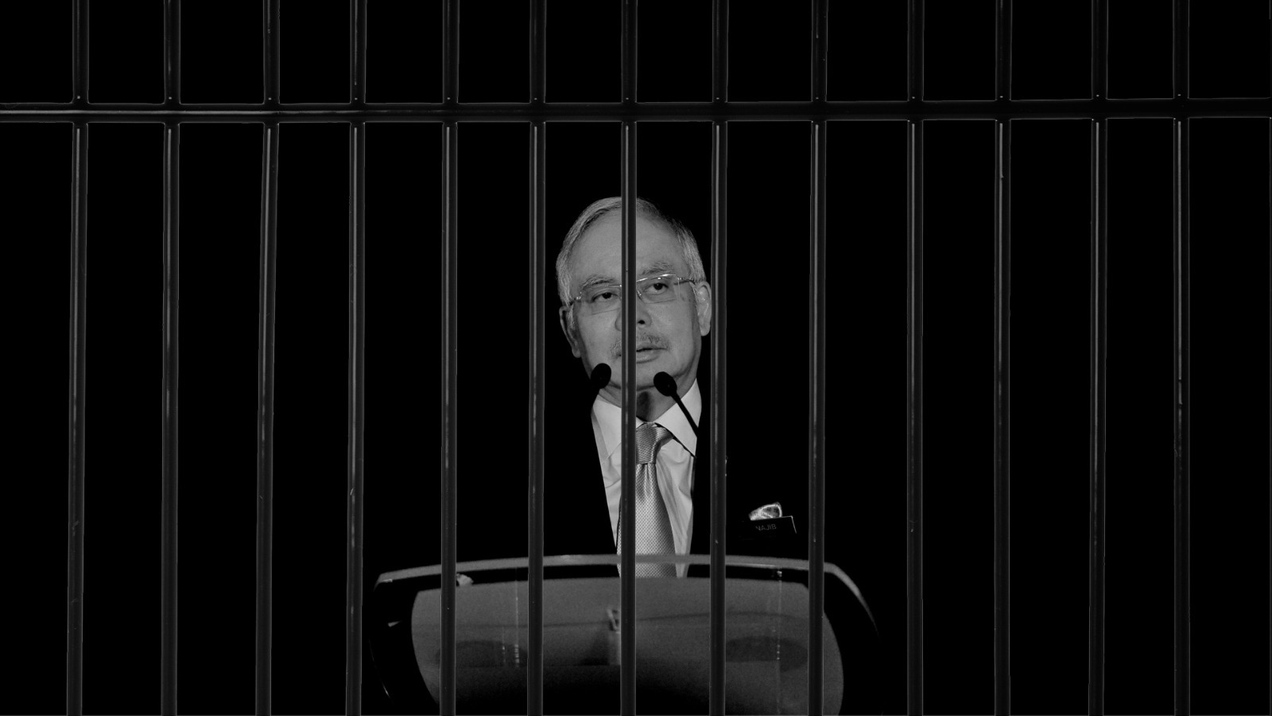
After Najib’s MP disqualification put on hold, NGOs call for constitution to be amended

FOUR human rights groups today called for the repeal of a clause in the Federal Constitution that allows further delay of a federal lawmaker’s disqualification pending a petition of pardon, even after they were convicted in court.

They said an MP convicted of a crime, like former prime minister Datuk Seri Najib Razak, should be immediately disqualified as an MP after all appeals against their criminal conviction are disposed of.

“The disqualification as MP by reason of criminal conviction should never be further delayed by reasons of application for pardon by the King or state rulers,” non-governmental organisations (NGOs) ALIRAN, Malaysians Against Death Penalty and Torture (MADPET), Saya Anak Bangsa Malaysia (SABM) and Workers Hub For Change (WH4C) said.

“As such, Malaysia must justly repeal Article 48(4)(c) of the constitution, which allows further delay of disqualification as MP by reason that a petition of pardon has been filed.”

As the issue cannot be resolved until the constitution is amended, the four groups called for the tabling and passing of a Constitutional Amendment Bill when the Dewan Rakyat sits again next month.

In a statement today (Sept 19), ALIRAN, MADPET, SABM and WH4C clarified that it is still reasonable to delay disqualification of an MP until they have fully exercised their right to two appeals, which is part of the right to a fair trial.
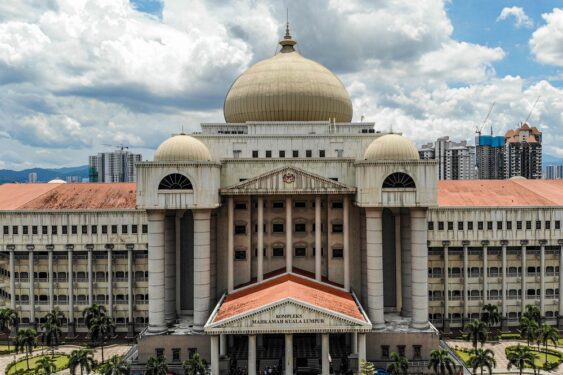
Kuala Lumpur High Court (Pic credit: Hari Anggara | Malay Mail)

“The lower courts could have made a mistake so a delay until the appeal/s are over is reasonable,” they noted.

“However, after the court’s criminal appeal processes are over, there is no longer any reasonable justification to again delay the disqualification of the criminal MP simply because they have filed a petition for pardon to the King or state ruler.”

A pardon, they added, has “nothing to do” with the fact that the said MP was proven to be guilty beyond a reasonable doubt, convicted and sentenced.

On the contrary, a pardon is essentially for instances where the repentant convict is sorry for their crime and has reformed or when a serious miscarriage of justice took place.

“Mockery of the law and court process”

“If the King or state ruler comes in fast and pardons Najib or any other convict, would it not be seen as making a mockery of the law and entire court process that lasted about four years in Najib’s case?” they asked.

They further noted that while Najib was found guilty of all criminal charges and the total sentence of imprisonment was 72 years, the courts “mercifully” decided that all the sentences were to run concurrently so he now only has to spend 12 years in prison.

“Thus, even in a later consideration of a pardon, it is important that the King and/or state rulers take note of the 72-year sentence,” ALIRAN, MADPET, SABM and WH4C said.

Datuk Seri Najib Razak (in pink) and Yang di-Pertuan Agong Sultan Abdullah Ahmad Shah (in purple) (Pic credit: Financetwitter)

Such a delay of an MP’s disqualification also denies the right of the people in the affected constituencies of such lawmakers to “speedily choose” a new, “clean” representative.

Besides that, Malaysians still have to continue paying a convict their salary and allowances even after the High Court finds them guilty and the right of two appeals is exhausted.

“With regard to public servants and peoples’ representatives like MPs and state assemblypersons, ministers and prime ministers, a criminal conviction ought not only lead to a disqualification of the MP but should also include the cancellation or reduction of their pension, especially for those convicted for crimes related to abuse of powers, criminal breach of trust, money laundering, corruption and such crimes while in office,” they said.

“Why should Malaysians continue to bear the burden of having to pay tens of thousands of ringgit monthly in pensions to Najib, a criminal convicted for abuse of position, criminal breach of trust and money laundering until he dies, and thereafter to his dependents?”

The four groups also called on the Government to enact clear laws and enactments that will clearly set out procedures and rights of the pardon process as well as the time limit for disposal of petitions of pardon.

“As it stands now, Najib’s petition for pardon may not even be disposed of for years and so he may stay on as the Pekan MP until the next elections,” they lamented.

On Aug 23, the Federal Court upheld Najib’s seven charges of power abuse, criminal breach of trust and money laundering, RM210 mil fine and 12-year jail sentence in his SRC International RM42 mil corruption case. He is currently serving time in Kajang Prison.

Najib has since applied for a royal pardon from the Yang di-Pertuan Agong as the King has the power to grant pardons for offenses committed in Kuala Lumpur; it was the Kuala Lumpur High Court that heard and ruled on Najib’s SRC International case. – Sept 19, 2022, Focus Malaysia

 
NGOs urge govt to amend Constitution, let Pekan choose new MP
Published:  Sep 19, 2022 12:10 PM
Updated: 2:15 PM

A group of NGOs urged the government to repeal a provision of the Federal Constitution which allows former prime minister Najib Abdul Razak to remain as an MP until his royal pardon process is completed.

In a joint statement, the group called for the immediate repeal of Article 48(4)(c) of the Federal Constitution, to prevent any unjustified further delay in an MP’s disqualification so affected constituencies can choose a new representative.

The statement was issued by human rights activist Charles Hector on behalf of four NGOs, including Aliran, Malaysians Against Death Penalty and Torture (Madpet), Saya Anak Bangsa Malaysia (SABM), and Workers Hub for Change (WH4C).

“We adopt the position that a parliamentarian convicted of a crime, like Najib, should immediately be disqualified as MP after all the appeals against criminal conviction are over,” said Charles.

He said Malaysians have waited for four years after Najib (above) was first charged in July 2018 over the SRC International Sdn Bhd case, to the date the Federal Court rejected his final appeal last month.

He insisted there is no longer any reasonable justification to delay the disqualification of the criminal MP once the appeal processes were over, even though Najib has filed a petition seeking a royal pardon.
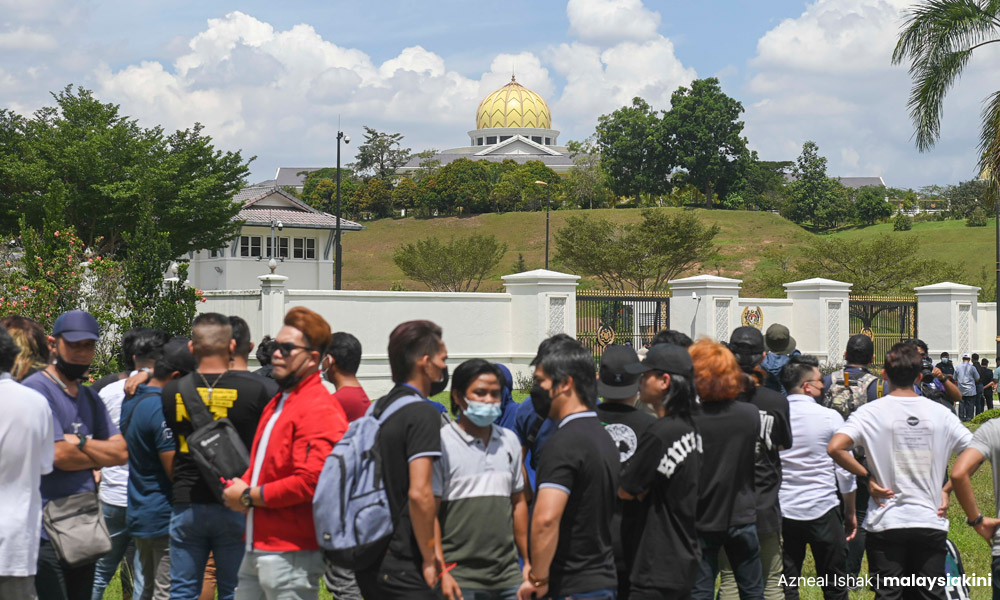
Supporters of former prime minister Najib Abdul Razak outside the Istana Negara, Aug 24, 2022.

“The pardon has nothing to do with the fact that the said MP has been proven guilty beyond reasonable doubt, convicted, and sentenced.

“This delay denies the right of the people in the affected constituencies to choose a new MP. Malaysians still had to continue paying a convicted MP his salary/allowances even after the High Court found him guilty, and then until the right of appeals is exhausted,” Charles said.

The group also felt that Najib should not be granted a royal pardon.

Charles said a pardon should only be for repentant convicts who are sorry for their crime and have reformed, not just because the criminal is a former political leader.

“Alternatively, pardons may be because of a serious miscarriage of justice – but then, should the ruler ‘pardon’ or should it justly be dealt with by the courts?

“If the ruler comes in fast and pardons Najib or any other convict, would it not be seen as making a mockery of the law and entire court process that lasted about four years, in Najib’s case?” he asked.

Why bear the burden?

The group also urged the government to cancel or reduce the pension of convicted lawmakers, ministers, prime ministers, and public servants, especially when they were found guilty of crimes related to abuse of power, criminal breach of trust, money laundering, and corruption while in office.

“Why should Malaysians continue to bear the burden of having to pay tens of thousands of ringgit monthly in pensions to Najib, a criminal convicted for abuse of position, criminal breach of trust, and money laundering, until he dies and thereafter to his dependents?”
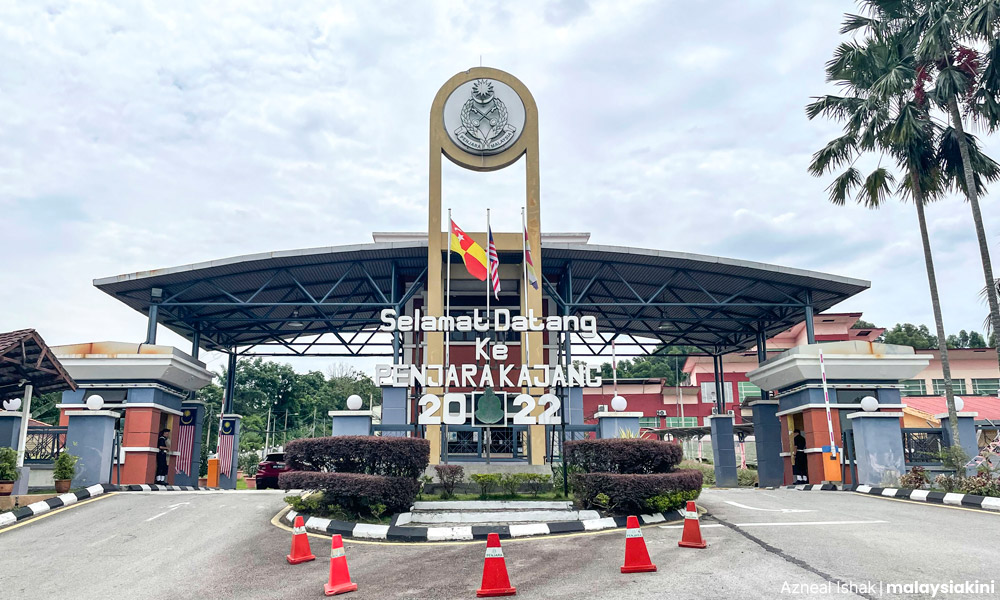
Kajang prison in Selangor

Charles also urged the government to set a time limit for the disposal of petitions of pardon.

On August 23, the Federal Court upheld Najib’s conviction on charges involving abuse of power, criminal breach of trust, and money laundering linked to RM42 million of SRC International Sdn Bhd funds.

With that, he was sent to the Kajang Prison in Selangor to serve his 12-year jail sentence. Najib was also slapped with a fine of RM210 million.

He filed a petition for a royal pardon on Sept 2. - Malaysiakini, 19/9/2022

Also carried in CHINA PRESS in Mandarin 


Monday, September 19, 2022

Amanah has to stop imitating UMNO by delaying its party elections (Focus Malaysia)


Amanah has to stop imitating UMNO by delaying its party elections

THAT Parti Amanah Negara (Amanah) has decided to delay its election slated end-2022 in view of the 15th General Election (GE15) is somehow self-serving as it merely extends the term in office for party leaders whose term in office is meant to expire by end of this year beyond the party constitution/rules set limit of 3 years.

Describing this as a bad excuse, lawyer and social activist Charles Hector said one possibility is that the party’s existing leadership is worried that they will not be voted in for the next term.

“State or Federal general elections can be held at any time – we saw this happening in Sabah, Melaka and Johor recently, and mind you, our GE15 can be held anytime in mid-2023 which are months away,” he penned in his latest blog post.

Charles Hector

“Did all Amanah members even have a say on the decision to delay its party elections by 18 months? Today, online facilities are there for all party members of Amanah to be part of the decision making process to delay its party election? Or had the party’s national leadership decided on their own?”

On Saturday (Sept 17), Amanah secretary-general Datuk Dr Mohd Hatta Ramli said that the party will be delaying its election which is slated end-2022 for 18 months till at least June 2024 to focus on the 15th General Election (GE15).

Moreover, Hector stressed that party constitution must be adhered to strictly to for election to be held every three years unless there is a two-third majority to amend the party’s constitution to extend its election beyond a three-year period.

“Is delaying party elections a means to have control over the choice of MP/state assemblyman candidates or to make sure the current leadership supporters/cronies are chosen?” he asked.

“In any case, members are disrespected when party leadership decides to go against their own party constitution/rules to delay party elections beyond the three-year limit.”

Hector also opined that facilitating GE15 preparation is also a lame excuse for Amanah to defer its party election for “it really is simply negotiations (within the Pakatan Harapan [PH] alliance) and deciding on which seat Amanah will be contesting.”

“With Amanah doing this ‘delay of party elections’, the moral authority of PH to make an issue of UMNO delaying elections may be eroded … You cannot criticise others when you, too, did the same,” he asserted.

“After the Registrar of Societies (ROS) makes a decision, any ordinary member of the party (UMNO or Amanah) can appeal to the Minister. Interestingly for UMNO, not one member appealed the ROS decision to allow the delay of UMNO election to six months after GE15? Are all UMNO members OK with this?” – Sept 19, 2022 - Focus Malaysia, 19/9/2022


See earlier posts:- 

Amanah, just like UMNO, delays party elections beyond party constitution stated length of term of office? Democracy? Violation of party constitution? And members silence ...?

PM and Cabinet need to put the Anti-Party Hopping Law in force now - before dissolving Parliament and calling for GE15?

The anti-party hopping law has been passed by Dewan Rakyat on ___, and then passed by Senate on ___. Royal assent would have been obtained within 14 days - THEREFORE, the mystery is why PM Ismail Sabri and the Cabinet not putting the law in force yet - WHY THE DELAY?

In Force from:  Not Yet In Force       Gazetted Date:  6 September 2022  
Shocking after Dewan Rakyat passed it on ____, and Senate passed it on ____, and the King's assent would have automatically been given within ____, that this law is yet to come into force....WHY? 

 
Now, there is talk about dissolution of Parliament and GE15, and so if the party hopping law is not PUT IN FORCE, after GE15, we will still see a lot of MPs jumping from one party to another...
 
Prime Minister and Cabinet must speedily put this law in force now, and State Governments also should put anti-party hopping laws in force immediately so that there will be no ADUNs in their State jumping from one party to another after elections..


PARTY HOPPING LAWS MUST BE PUT INTO FORCE BEFORE PARLIAMENT IS DISSOLVED AND GENERAL ELECTIONS IS CALLED...


CONSTITUTION (AMENDMENT) (NO. 3) ACT 2022

 Preamble

An Act to amend the Federal Constitution. 

ENACTED by the Parliament of Malaysia as follows:

1  Short title and commencement

(1) This Act may be cited as the Constitution (Amendment) (No. 3) Act 2022.

(2) This Act comes into operation on a date to be appointed by the Yang di-Pertuan Agong by notification in the Gazette.

(3) Notwithstanding subsection (2), section 6 of this Act comes into operation in a State on such date as the Yang di-Pertuan Agong may, with the consent of the Ruler or the Yang di-Pertua Negeri, as the case may be, appoint by notification in the Gazette.

2  Amendment of Article 10

The Federal Constitution is amended in Article 10-

(a) in Clause (1), by inserting after the words "(3)" the words ", (3A)"; and

(b) by inserting after Clause (3) the following Clause:

"(3A) Notwithstanding paragraph (c) of Clause (2) and Clause (3), the right to form associations conferred by paragraph (c) of Clause (1) in relation to a member of the House of Representatives and Legislative Assembly of any State shall be subjected to restrictions imposed by Article 49A and section 7A of the Eighth Schedule respectively.".

 3  Amendment of Article 48

 The Federal Constitution is amended in Article 48 by deleting Clause (6).

 4  New Article 49A

The Federal Constitution is amended by inserting after Article 49 the following Article:

"49A. Change of a member's political party, etc.

(1) Subject to the provisions of this Article, a member of the House of Representatives shall cease to be a member of that House and his seat shall become vacant immediately on a date a casual vacancy is established by the Speaker under Clause (3) if-

(a) having been elected to the House of Representatives as a member of a political party-

(i) he resigns as a member of the political party; or

(ii) he ceases to be a member of the political party; or

(b) having been elected to the House of Representatives otherwise than as a member of a political party, he joins a political party as a member.

(2) A member of the House of Representatives shall not cease to be a member of that House pursuant to this Article only by reason of-

(a) the dissolution or cancellation of the registration of his political party;

(b) his resignation from the membership of his political party upon election as a Speaker; or

(c) the expulsion of his membership of his political party.

(3) Whenever the Speaker receives a written notice from any member of the House of Representatives on the occurrence of a casual vacancy among the members of the House of Representatives under this Article, the Speaker shall establish that there is such a casual vacancy and notify the Election Commission accordingly within twenty one days from the date he received the written notice.

(4) For the purposes of holding an election under Article 54, such casual vacancy shall be filled within sixty days from the date the Election Commission receives the notification from the Speaker.".

 5  Amendment of Article 160

Article 160 of the Federal Constitution is amended in Clause (2) by inserting after the definition of "pension rights" the following definition:

' "political party" means-

(a) any society which by any of its objects or rules, regardless whether such object or rule is its principal object or rule, or constitutes merely an object or rule which is ancillary to its principal object or objects or to its principal rule or rules, makes provision for the society to participate, through its candidates, in elections to the House of Representatives, or to a State Legislative Assembly; or

(b) any society which, notwithstanding anything contained in its objects or rules, carries on any activity or pursues any objective which involves its participation, through its candidates, in elections to the House of Representatives, or to a State Legislative Assembly,

and includes a coalition of such societies which has been registered under any federal law;'.

6  Amendment of Eighth Schedule

The Eighth Schedule to the Federal Constitution is amended-

(a) by deleting subsection (5) of section 6; and

(b) by inserting after section 7 the following section:

"7A. Change of a member's political party, etc.

(1) Subject to the provisions of this section, a member of the Legislative Assembly shall cease to be a member of that Legislative Assembly and his seat shall become vacant immediately on a date a casual vacancy is established by the Speaker under subsection (3) if-

(a) having been elected to the Legislative Assembly as a member of a political party-

(i) he resigns as a member of the political party; or

(ii) he ceases to be a member of the political party; or

(b) having been elected to the Legislative Assembly otherwise than as a member of a political party, he joins a political party as a member.

(2) A member of the Legislative Assembly shall not cease to be a member of that Legislative Assembly pursuant to this section only by reason of-

(a) the dissolution or cancellation of the registration of his political party;

(b) his resignation from the membership of his political party upon election as a Speaker; or

(c) the expulsion of his membership of his political party.

(3) Whenever the Speaker receives a written notice from any member of the Legislative Assembly on the occurrence of a casual vacancy among the members of the Legislative Assembly under this section, the Speaker shall establish that there is such a casual vacancy and notify the Election Commission accordingly within twenty one days from the date he received the written notice.

(4) For the purposes of holding an election under subsection (5) of section 9, such casual vacancy shall be filled within sixty days from the date the Election Commission receives the notification from the Speaker.".


See earlier posts:- 

Azalina Othman, not voting as party 'orders' is NOT Party Hopping? Neither is being 'expelled' from your party?

Government not serious about 'Anti-Party Hopping' - the current Bill is only amending Freedom of Association?? Opposition also not serious?

Anti-Hopping laws - it is about VOTER rights - has it been hijacked by political parties?

People must know now contents of Anti-Hopping Bill - wrong for politicians and political parties to discuss alone, with ordinary voters kept in the dark?

Party Hopping Bill will not end deprival of voter rights, unless Art. 48 of Constitution amended - disqualifying MPs that change parties after election 

Anti-Hopping laws for people - NOT for party to 'enslave' or gag further their members who are MPs? Malaysian Bar Resolution

Azalina Othman, not voting as party 'orders' is NOT Party Hopping? Neither is being 'expelled' from your party? 

'Lompat Party'/ Party Hoping Motion to be discussed at Bar EGM

Selangor State Assembly hypocricy exposed if they do not enact State laws to prevent anti-party hopping of ADUNs?

Automatic Elections if MP hops to another party? If still enjoy confidence of people, they will get elected again?


Disqualification should be at end of criminal appeal - not delayed for other reason? Repeal Article 48(4)(c) FC?Will these criminal MPs still receive very high pensions?

Important to amend Constitution now - to end delay of disqualification of MPs after they have been convicted for crimes and appeals end. The petition for pardon to King or Rulers of States should not be a reason to delay disqualification of a criminal MP... Repeal Article 48(4)(c)...

Media Statement – 19/9/2022

Repeal Article 48(4)(c) of the Federal Constitution so that disqualification of convicted criminal MPs starts at the end of all criminal appeals, and not be further delayed by pardon petitions

People’s right to choose new MP should not be delayed

We, the 4 undersigned groups adopt the position that a Member of Parliament (MP) convicted of a crime, like former Prime Minister Najib Razak, should immediately be disqualified as MP after all the appeals against criminal conviction are over. This disqualification as MP by reason of criminal conviction should never be further delayed by reasons of application for pardon by King or State Ruler. As such, Malaysia must justly repeal Article 48(4)(c), the provision now in the Federal Constitution that allows further delay of disqualification as MP by reason that a petition of pardon has been filed

The Federal Constitution in Article 48(4)(c) that states that disqualification by reason of criminal conviction will be delayed ‘…(c) if within the period specified in paragraph (a) or the period after the disposal of the appeal or other court proceeding specified in paragraph (b) there is filed a petition for a pardon, such disqualification shall take effect immediately upon the petition being disposed of…’.

This means that Malaysia’s Constitution, as it is now, allows for an unjustified further delay in an MP’s disqualification, on the grounds that he filed a petition for a pardon. 'This delay denies the right of the people in the affected constituencies to choose a new MP.

Malaysians still have to to continue paying a convicted MP his salary/allowances even after the High Court finds him guilty, and then until the right of 2 appeals is exhausted. A further delay in disqualification because of a petition of pardon, means we are still paying a convicted criminal until an undefined date when the pardon is disposed of.

Further, the delayed disqualification affects the people of an affected constituency who are denied the right to speedily choose a new clean MP, rather than continue to be represented by a convicted criminal.

Malaysian had waited for 4 years after Najib was first charged July/August 2018 to the date the Federal Court finally rejected his final appeals on 23/8/2022. On 23/8/2022, Najib was finally sent to Prison on August 23 after a five-judge panel at the Federal Court upheld his 7 convictions and sentence for offences related to RM42 million in public funds from SRC International Sdn Bhd, a former subsidiary of 1MDB.

It must be remembered that Najib was found guilty of all 7 criminal charges, where the total sentence of imprisonment was 72 years being

‘(i) For the single charge under s. 23 of the MACC Act for abuse of position for gratification - imprisonment for 12 years and a fine of RM210 million (in default five years' jail);

(ii) For each of the three charges under s. 409 of the Penal Code for criminal breach of trust - imprisonment for ten years; and

(iii) For each of the three money laundering charges under s. 4 of the AMLATFPUAA - imprisonment for ten years.’

As such, despite being convicted for very serious crimes whilst he was Prime Minister/Minister, which would have resulted in Najib being imprisoned for 72 years, the courts mercifully decided that all the sentences were to run concurrently, being at the same time, so he now only had to spend 12 years in prison, and pay RM210 million fine.  Thus, even in a later consideration of a pardon, it is important that the King and/or State rulers take note of the 72 year sentence.

It is reasonable to delay disqualification of an MP until he has fully exercised his right of 2 appeals, as this right to appeals is part of the Right to A Fair Trial. Lower courts could have made a mistake, so delay until appeal/s are over is reasonable.

However, after the court’s criminal appeal processes are over there is no longer any reasonable justification yet again delay the disqualification of the criminal MP because he has filed a petition for pardon to the King or State Ruler. The pardon has nothing to do with the fact that the said MP has proven guilty beyond reasonable doubt, convicted and sentenced.

A pardon should essentially for the repentant convict, who is sorry for his/her crime and have reformed. It should never be because one was a former political party leader or is a member.

Alternatively, pardons maybe because of serious miscarriage of justice – but then, should the King or State Ruler ‘pardon’ or should it justly be dealt by the courts.

If the King or State ruler comes in fast and pardons Najib or any other convict, would it not be seen as making a mockery of the law and entire court process that lasted about 4 years, in Najib’s case.

The delay in disqualification of an MP by the making of a petition for pardon cannot be resolved until the Federal Constitution itself be amended by repealing Article 48(4)(c) of the Federal Constitution, and the opportune moment will be by the tabling and passing of a Constitution Amendment Bill when the Dewan Rakyat sits again in October.

With regard to public servants, peoples’ representatives like MPs and ADUNs, Ministers and Prime Minister, a criminal conviction ought not only lead to a disqualification of the MP, but should also include the cancellation or reduction of pension especially for those convicted for crimes related to abuse of powers, criminal breach of trust, money laundering, corruption and such crimes whilst in office.

Why should Malaysians continue to bear the burden of having to pay tens of thousands of ringgit monthly in pensions to former Prime Minister Najib, a criminal convicted for abuse of position, criminal breach of trust and money laundering until he dies, and thereafter to his dependents.

Hence, when it comes to criminal conviction of MPs, it should not just stop with the disqualification as an MP, but should also include deduction or cancelation of pension entitlements.

Should disqualification of MPs extend also to those who accept compound offers under Anti-Money Laundering and Anti-Terrorism Financing Act (AMLA) offences? After all, should not acceptance of a compound offer be acknowledged to be an ‘admittance’ of guilt. An innocent will seek trial to proof his innocence.

Therefore, we reiterate our

-          Call for the immediate repeal of Article 48(4)(c) of the Federal Constitution, that will ensure that a Member of Parliament will be disqualified when his final criminal appeal ends;


-          Call on Malaysia to table immediately a Constitution Amendment Bill to repeal Article 48(4)(c) at the next Dewan Rakyat sitting in October 2022;


-          Call for cancellation and/or reduction of pension entitlement of Ministers, Members of Parliament and/or public officers who are convicted of criminal offences whilst in office for charges like abuse of position, criminal breach of trust, corruption and money laundering;


-          Call on Malaysia and State governments for the enactment of clear laws/enactments that will clearly set out procedure and rights of  the pardon process, which shall also state clearly the time limit for disposal of petitions of pardon, for as it stands now, Najib’s petition for pardon may not even be disposed off for years, and so he may stay on as Member of Parliament for Pekan until the next General Elections.


Charles Hector

On behalf of the following groups


ALIRAN

MADPET(Malaysians Against Death Penalty and Torture

Saya Anak Bangsa Malaysia [SABM]

WH4C (Workers Hub For Change)

Sunday, September 18, 2022

Minimum Wage Must Be Increased NOW in light of increase of food prices, and drop of Ringgit? Why is Wage Council and Minister silent? RM1,800 - RM2,000 NOW?

National Wages Consultative Council must immediately make recommendations for the INCREASE of MINIMUM WAGE now given the fact that food and basic necessities have had a big jump in prices...

'...National Wages Consultative Council with the responsibility to conduct studies on all matters concerning minimum wages and to make recommendation to the Government to make minimum wages orders according to sectors, types of employment and regional areas, and to provide for related matters. ...'

'...the Council shall take the following actions-

(a) have consultation with the public on the minimum wages rates and coverage in such manner as the Minister may determine; and

(b) collect and analyse data and information and conduct research on wages and the socioeconomic indicators....'

MINIMUM WAGE must be increased now - considering the increase of cost of food, etc that is drastic. 

Why is the Wage Council not recommending to increasing Minimum Wage to RM2,000 now....or maybe they are 'rich' and do not understand the sufferings of the minimum waged worker...

Section 25

(1) The Council shall, at least once in every two years, review the minimum wages order.

(2) Notwithstanding subsection (1), the Council may, on its own accord or upon the direction of the Government, review the minimum wages order.

YES, the Minimum Wage can be increased or decreased any time - there is no need to wait for 2 years. Now, we in Malaysia are suffering because of the increase of price of food and related items....and how much exactly should be the NEW Minimum Wage that will overcome this increase cost of living.

RM1,500 is no longer sufficient for a worker in Malaysia - to pay for food, drinks, rent/housing loans, clothes, children's education, healthcare, transportation, utilities. etc >>> and for most, they have to support not themselves but their family(and other dependents)

Foreign Companies and Investors are 'HAPPY" with the drop of the value of the Malaysian Ringgit - because now they have to pay less, considering that their own money is getting stronger.

When 1 USD was equivalent to RM3.8, RM1500 wages mean USD395 was needed to pay minimum wage in Malaysia

But when 1USD equals RM4.5, then USD334 only needed to pay minimum wage, USD61 saved in wages for 1 worker in Malaysia. So foreign investor and foreign companies are very very happy, as their cost has decreased, and that means more profits >>> Therefore, Malaysia becomes 'attractive' to the foreign investor/companies - and the government should claim 'success' in drawing in more companies.

Now, foreign companies and even local companies selling their products overseas - well if they are selling in USD and some foreign currency, many of which have long term agreements as to their cost of products >>>they too are happy, as their profits really have not been affected.

Of cause, Malaysian companies whose consumers are in Malaysia - they too are affected by the increasing cost of living.

Hence, the increase of MINIMUM WAGE increase must be targeted

(a) Foreign or MNC companies;

(b) Companies exporting products overseas;

(c) Government Linked Companies, and companies having government contract or government contractors

(d) Other companies, with a PROFIT of above RM...

Increased Minimum Wage should not be for small retailers, sundry shops, shops you see everywhere, mechanics, etc..(they would be encouraged pay minimum wage - but not mandatory or obligatory) 

With the drop of the Malaysian Ringgit even with regard to fellow ASEAN nations must mean government failure.  A few years back, RM1 equals to 10 Thai Baht, but now RM1 equals to about 7.5 Baht..In fact, Malaysian Ringgit is dropping compared to even many Asian nations as well...

Malaysia buys a lot of things including vegetables, rice, meat, fish, etc from our neighbors like Thailand >>> and because our RINGGIT has dropped in value to Thai Baht, more ringgit is needed >>> and thus, naturally COST of the products rise..

Malaysian governments of past has failed to ensure FOOD SECURITY to the extend that Malaysia itself produces sufficient rice, chili, vegetables, fish and meat enough for the food consumption in Malaysia.

What is happening in Malaysia can only be blamed on failure of government - too much abuse of powers, corruption, 'leakages', inefficiencies, etc. It is shocking to see former Prime Minister convicted, and former Ministers and friends being charged and tried for serious offenses committed while in public office.
 
We have ELECTED WRONG PERSONS TO BE MPs who become Ministers --- many of our people representatives have become 'corrupted' interested only in self-enrichment, when their focus should have been uplifting all in Malaysia to enjoy a better life..So, come next election, choose CLEAN MPs - Yang Berkhidmat.
 
SO, INCREASE MINIMUM WAGE NOW AS THE WAGES NOW IS NOT ABLE TO COPE WITH INCREASE IN FOOD PRICES, etc.
 
A worker with a HIGHER WAGE will spend more, and this will help the economy - keep afloat smaller businesses, as they struggle now as customers decline because no monies..
 
The government should put in place PRICE CONTROL to keep basic meat(chicken/pork),eggs, cooking oil, selected vegetables, bread, certain fish...so that even the minimum waged worker and family can continue to enjoy a healthy meal...

Disappointed with some politicians and their parties who are not focusing on these ISSUES like increasing minimum wages... they are only interested in internal party politics, seats for General Elections, etc...

Ringgit’s fall will lead to greater demand for local products, says economist


email sharing button
An economist expects consumers to turn to cheaper, locally-produced food items as the fall of the ringgit leads to higher prices of imported goods.

PETALING JAYA: The ringgit’s slide against the US dollar could lead to a renewed focus on efforts to source for cheaper locally-produced food, says an economist.

The price of imported products would rise as the value of the ringgit declined, Sunway University professor of economics Yeah Kim Leng explained.

This, he told FMT Business, would lead to lower consumption of imported food while consumers looked for cheaper domestically produced substitutes.

Given the country’s dependence on food imports, Yeah said, Malaysians should “brace ourselves” for a rise in inflation.

“That’s the best we can do. Higher import costs will spur efforts to source for cheaper products, especially those manufactured locally,” he added.

The ringgit slid to 4.5265/4.5285 when trading ended yesterday, charting a fresh 24-year low.

The nation’s dependence on food imports has risen significantly over the years. The food import bill came up to RM63 billion last year, up from RM55.4 billion in 2020 and RM51.4 billion the year before.

The bill is expected to be even higher this year, given that in just the first quarter, Malaysia has already imported RM17.8 billion worth of food products.

In a Bernama report on Tuesday, anti-inflation task force chief Annuar Musa was quoted as saying that prices of imported food such as meat, vegetables and fish had increased by 62%.

He said that continued dependence on imports using the US dollar would make Malaysia vulnerable to inflation.

Food inflation in Malaysia was 5.2% in May, 6.1% in June and 6.9% in July.

Another economist, Barjoyai Bardai of Universiti Tun Abdul Razak, said that while a weak ringgit would be a boon for exporters, it was bad news for the average Malaysian.

He pointed out that more than 80% of everything consumed in Malaysia, including raw materials used by manufacturers was imported.

“For the average consumers like us, the ringgit’s decline against the dollar will be translated into higher prices of imported goods,” he told FMT Business.

“It’s especially bad if we import raw materials and sell the products domestically, like how we import wheat and produce bread,” he said.

“So either producers have to reduce their profit margins or increase their prices, (both of which options) have limitations,” he added.

However Paolo Casadio, an economist at HELP University, offers a very different view.

He said the “excessive focus” on the US dollar and on “short-term factors” as reasons for the ringgit’s decline against the dollar had resulted in some “biased analysis”.

“The actual problem is the dollar’s strength, not the ringgit’s weakness. The greenback has strengthened in light of the US Federal Reserve’s move to raise interest rates to ease inflationary pressure,” he told FMT Business.

“We can reasonably forecast that the situation is going to reverse before the end of the year,” he said.

The Fed raised interest rate by 0.75% in July, the second time in a row it has increased the rate by such a wide margin. This was also the fourth increase this year.

Casadio said the best way to stem the slide of the ringgit against the US dollar in the short to medium-term would be for the government, in coordination with the central bank, to bring down inflation and maintain a dynamic economy.

The ringgit also closed lower against the Singapore dollar, Japanese yen, euro and British pound. - FMT, 15/9/2022

Expert: Act against those who don’t comply with new wage policy


  • Nation
  • Monday, 29 Aug 2022

PETALING JAYA: Employers resisting changes in the law in relation to the new national minimum wage must face action, says an expert.

Malaysia University of Science and Technology economics professor Geoffrey Williams said he felt the slow implementation could be due to some employers resisting changes in the law.

“They are trying to find ways around it by cutting hours or benefits. This should be reported so that the authorities can act against companies that do not respect the law.

“The authorities should publish the list of companies penalised, just like they have done on chicken cartels, to set an example. This is an effective remedy and deterrent to others,” he added.

Prof Williams, who is also a non-resident senior fellow at the Malaysian Institute of Economic Research (MIER), said this was the right time to introduce the higher minimum wage to help protect those on poverty-line income.

“The minimum wage has no impact on rising prices, which are caused by many other factors. It is the right time to introduce this small minimum wage increase to help protect people from the rising cost of living,” he said.

Prof Williams said a higher wage would result in an increase in local shops and this would help micro, small and medium enterprises and local family businesses.

He said the best way forward for employers was to fully implement the higher minimum wage and add more to the terms and conditions of their workers’ contracts to improve hiring, retention and productivity.

“Good employers will have no problem finding people,” he added.

Prof Williams said for employees, the best way forward was to quit jobs with low wages and poor terms and conditions.

“They should report companies that don’t comply with the minimum wage and other employment laws so that the authorities can take action,” he added.

However, MIER senior research fellow Dr Shankaran Nambiar said although the labour market had improved, many companies were still far from reaching the pre-pandemic level of business.

He said some employers might have been slow in implementing the new national minimum wage rate of RM1,500 due to challenging financial issues.

“For many, rising costs means slim profit margins. Some have not been able to keep afloat,” he said, adding that companies were still faced with a labour shortage, especially those dependent on low-skilled migrant workers. - Star, 29/8/2022