Trump/US 'attacked' Malaysia - by the sudden imposition of increased TARIFF(from 2-4% to 24%- then reduced to 19%) - but still a VICTORY for US, and Malaysia was the LOSER... so Trump had every reason to 'DANCE' and rejoice - more so because Malaysia so 'easily' was subdued.

Article 5.1.1 obliges Malaysia to become a direct participant in US economic conflicts. It states that if Washington imposes sanctions or tariffs on any third country for national security reasons, Malaysia "shall adopt or maintain a measure with equivalent restrictive effect".
This provision effectively ends Malaysia’s long-held foreign policy of non-alignment, contractually obliging it to mirror US sanctions against other nations, regardless of Malaysia’s own interests.
This alignment is deepened in Article 5.2, which requires Malaysia to “align with all unilateral export controls in force by the US” and actively cooperate in restricting its own nationals from transacting with entities on US domestic sanctions lists, such as the Department of Commerce’s Entity List and the Treasury's SDN List.
BUT no similar provisions for US to take the same position if and when Malaysia imposes sanctions on other countries....??
Malaysia was getting its coal from Indonesia, Russia and Australia before - but is it now going to shift to US - who will suffer most - our Asean neighbour Indonesia? $42.6 million annually in U.S. coal sales to TNB Fuel in Malaysia was part of the US-Malaysia deal...What did US gain, and Malaysia LOSE?
# They still at the end of the day - managed to increase TARIFF, and Malaysia already 'willingly' SURRENDERED - and Anwar is smiling...
Increase or imposition of TARIFFs are a violation of the principle of FREE TRADE - as such countries should really not impose any kind of Tarriff on foreign goods entering their country, or tariff(in the form of export tax) on goods leaving the country destined for any other country. Despite that countries have been imposing tariff (be it export/import taxes,...) and that generated some INCOME for countries - but that 'tariff' was generally low - like 2-4%.
How did Malaysia LOSE - well we removed Tariff for almost all US products entering Malaysia - PM Anwar Ibrahim should tell Malaysians how much INCOME Malaysia lost by this move - how many Billions of Ringgit?
The worry when US increases Tariff on Malaysian products - (1) Now the cost of buying Malaysian products in the US increases - so will US consumers stop buying because of 'increase' in prices? Would such manufacturing companies just leave Malaysia, and relocate in some other country which US imposes lesser or NO tariff - or will such companies just move back to US to escape this 'tariff'?
Worse, many companies are in the SUPPLY CHAIN of certain US Brands - meaning they are making needed components basically in Malaysia, that US companies in US NEEDS. They came to Malaysia because it was cheaper operating in Malaysia - easier to get the needed workers.
Even things like Jeans are basically manufactured in other countries, and then send back to the US who then exports them as US products(although now new rules require disclosure of where it was made) - so, the increase of TARIFF will affect pricing of such 'US products??' - that is why there was so much protest even in the US when TRUMP increased Tariffs...[So, if Malaysia and others waited, the US may be forced to withdraw their proposed Tariff increase...So, if Malaysia reciprocated and also increased TARIFF for US products - it would have most likely resulted in US withdrawing the proposal to increase TARIFF - but sadly, Malaysia reacted too fast - rushed over on 'bended knees' and AGREED to give up so much for just a reduction of 5% of the proposed Tariff increase - from 24-19%.
Malaysia also agreed to buy Boeing and other US products - spending BILLIONS - now the commitment was RM1 Trillion > To fulfill this, Malaysia may have just lost the ability to buy the best products at the best prices - because it now have to spend RM1.5 Trillion on US products/investment ...Was it an independent decision of Malaysian Airlines - or did they have no choice in the matter because Anwar wanted them to buy Boeing? Same with TNB, Petronas - was it company's own decision - or did Anwar 'force' them to make that decision..
Likewise, we remember 1MDB - its actions that led to the biggest kleptocracy scandal was because of the then PM/Finance Minister who effectively 'made' them take the respective decision - that maybe is WHY none of the 1MDB Directors have been charged in court for 1MDB crimes...
The problem now is TRUMP - if anyone he is not happy with, he 'punishes' them - just see what happened to Canada...
Donald Trump has said he is adding 10% to US tariffs on goods imported from Canada, after the province of Ontario aired an anti-tariff advertisement featuring Ronald Reagan. - BBC, 26/10/2025
Malaysia did not do anything that justified this US attack on Malaysia... there was no JUSTIFICATION for the US to attack Malaysia in this way - NOW, Tariffs are being used like 'bullets and missiles' to attack other sovereign nation states... WORSE, it is so 'arbitrarily' being used as a 'WEAPON' - in Canada because Trump was angry with an 'anti-tariff' advert..
So, this means that US can and will attack other nation states with this new weapon called 'TARIFF'
So, if Malaysia or Anwar Ibrahim or Malaysia after Anwar ceases to be PM does anything that will 'offend' Trump - then we will be 'ATTACKED' by the US with this kind of new weapons like "Tariff", even the banning of entry of Malaysian products suddenly - remember, that in the past,
a clause requiring Malaysia to consult the US before entering any new digital trade agreement with another country "that jeopardises essential US interests".Another clause states that the US government would reimpose the 25% tariff announced in April should Malaysia enter into any bilateral trade deal with "a country that jeopardises US interests"
the agreement as "a surrender". "Malaysia gives away too much control over its economy, while the US keeps its freedom to decide what benefits its own industries. This deal limits Malaysia's right to make our own decisions, forcing us to follow US rules in trade, investment, and regulation," the coalition said in a statement released by PN secretary-general Azmin Ali. "What is described as a 'reciprocal partnership' is, in truth, the loss of our economic sovereignty and policy space."
Does DAP and Amanah agree with this? Sadly, no views from them - not even DAP with its 40 MPs - who if the act, or withdraw support will result in the fall of Anwar - so we assume they 'fully agree ' with Anwar - so beware the voters may penalize them at the next elections...
Is Malaysia still part of NAM (the Non Aligned Movement), being countries that choose to be independent - no crony to any of the super-powers...Has Malaysia just become a US crony state..
Beyond dance with Trump, shocking details emerge on deal Anwar signed
Several clauses in the trade deal essentially force Malaysia to give up its independence and align itself with US interests.
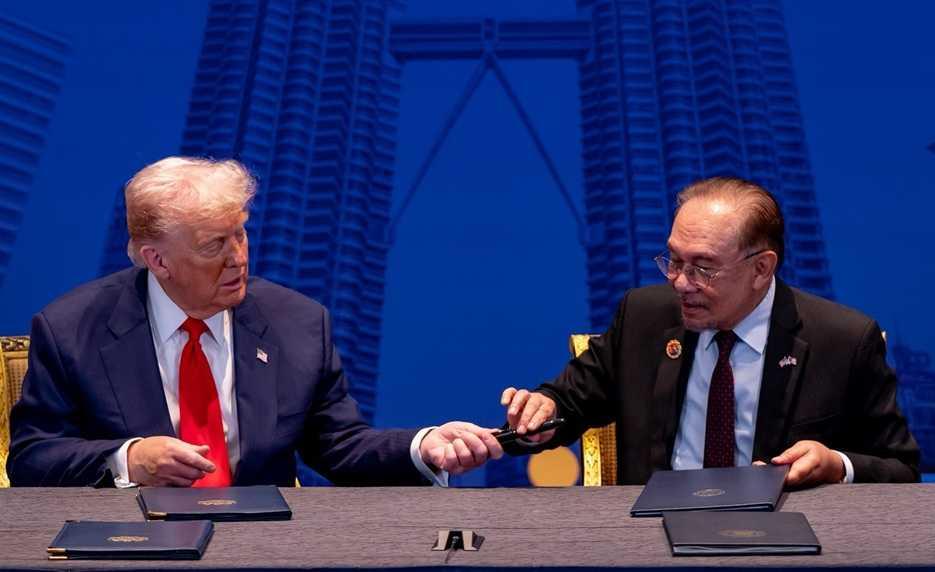
While Anwar Ibrahim has been widely condemned for "undignified" and "servile" behaviour after dancing alongside Donald Trump shortly after the US president emerged from his aircraft yesterday, questions are now being raised over the contents of a trade agreement the prime minister signed hours later, which includes clauses requiring Malaysia to consult Washington before engaging in trade with a third country.
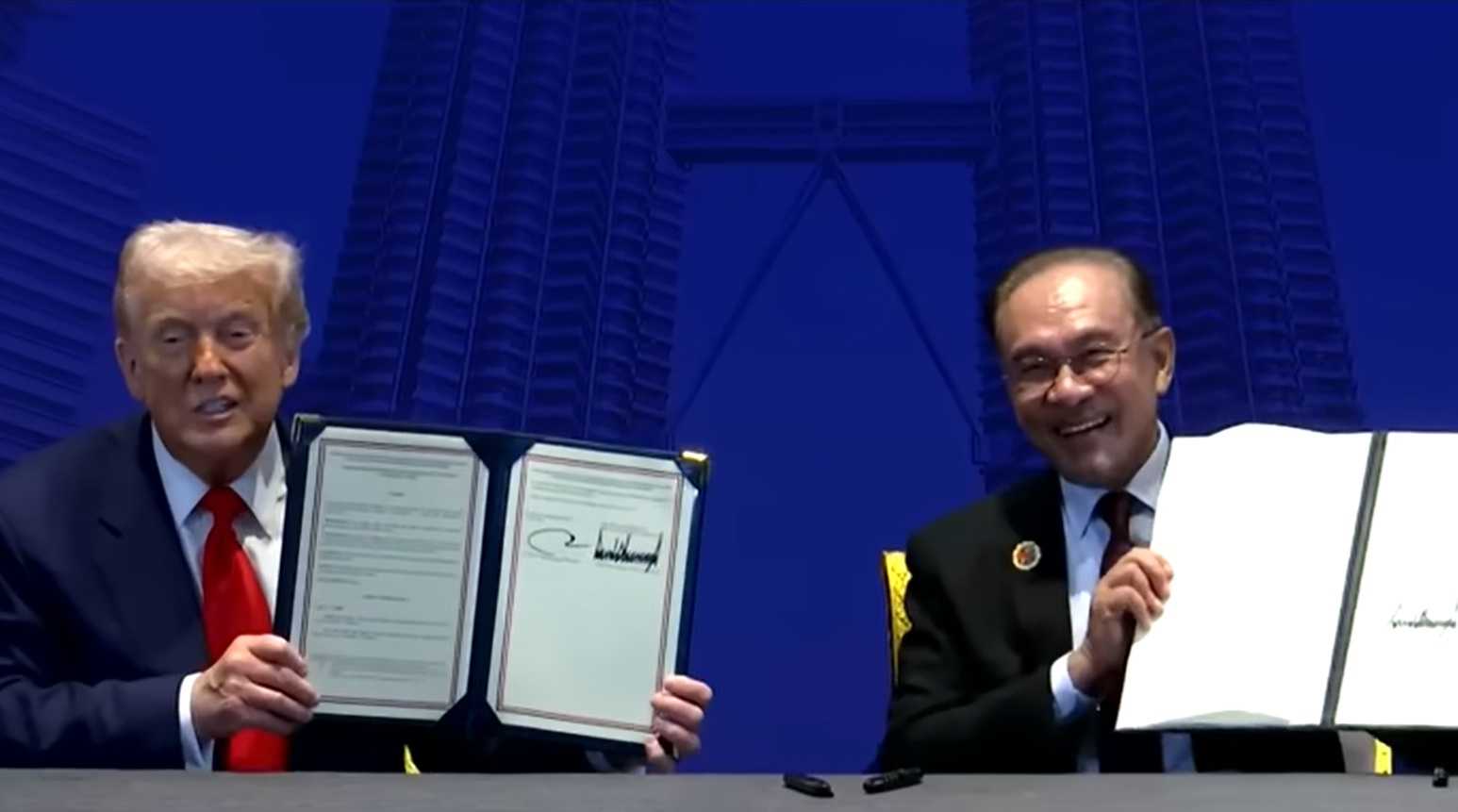
Excerpts from the agreement, signed by Trump alongside a visibly excited Anwar who were seen repeatedly trying to to humour the US leader, have begun circulating on social media, prompting strong public reactions, with many asking whether the prime minister has finally surrendered Malaysia's sovereignty – a familiar warning previously voiced by former leader Dr Mahathir Mohamad.
Trump's visit saw Malaysia and the US sign a new reciprocal trade agreement, granting US exporters a range of preferential access to the Malaysian market, in return for Washington retaining the 19% tariff recently imposed by Trump.
In a statement, Perikatan Nasional condemned the agreement as "a surrender".
"Malaysia gives away too much control over its economy, while the US keeps its freedom to decide what benefits its own industries. This deal limits Malaysia's right to make our own decisions, forcing us to follow US rules in trade, investment, and regulation," the coalition said in a statement released by PN secretary-general Azmin Ali.
"What is described as a 'reciprocal partnership' is, in truth, the loss of our economic sovereignty and policy space."
Veteran DAP leader Teng Chang Khim urged Putrajaya to come clean on the claims.
"If they were true, the government needs to explain why these clauses do not jeopardise the sovereignty of Malaysia," he said, sharing screenshots of several clauses from the agreement.
These include a clause requiring Malaysia to consult the US before entering any new digital trade agreement with another country "that jeopardises essential US interests".
Another clause states that the US government would reimpose the 25% tariff announced in April should Malaysia enter into any bilateral trade deal with "a country that jeopardises US interests".
The phrase likely refers to China, Washington's main obstacle to trade hegemony, as well as several nations facing US sanctions, including Iran and Russia – all members of BRICS, the powerful economic bloc led by Brazil, Russia, India, and China, which Malaysia has applied to join.
According to a joint statement released by the White House, Malaysia also agreed not to ban or impose quotas on exports of rare earth minerals to the US, a move seen as undermining China.
As the world's largest rare earth producer, Beijing has recently used its significant leverage over the US, which relies on China for much of its rare earth supply.
The Trump administration has been forced to negotiate with China after the latter imposed export controls on rare earth minerals to the US, affecting American defence and high-tech industries.
Further in the agreement, Malaysia is also required to align with any US move to punish other countries with customs duties, quotas, prohibitions, fees, charges, or other import restrictions.
It states that once notified of such a move, "Malaysia shall adopt or maintain a measure with equivalent restrictive effect as the measure adopted by the United States or agree to a timeline for implementation".
PN said the clause forces Malaysia to "take sides in other people's conflicts and destroys the neutrality that has long been our strength."
"If Washington decides to block imports from China or Russia, Malaysia must do
the same, even if it harms our economy.
"By aligning Malaysia's policies with US decisions, the agreement risks driving away investors who value Malaysia's role as a neutral and stable partner in this part of the world," it added.
Prominent government critic Eric See-To said the clause essentially binds Malaysia to serve US national security interests.
"The direct effect is that Malaysia loses the right to determine its own trade and diplomatic policies towards other nations. If the US imposes sanctions on any country, Malaysia is automatically expected to follow suit, even if that country is an important trading partner of Malaysia," he said.
He warned that the agreement ties Malaysia's trade and security policies to the US geopolitical agenda.
"If Washington imposes sanctions, Malaysia is no longer free to remain neutral. Instead, it is forced to follow America's lead." - Malaysia Now, 27/10/2025
A charter for annexation: How Anwar delivers Malaysia on a platter to Uncle Sam
A careful review of the texts and annexes of the Malaysia-US reciprocal trade agreement shows it is a one-sided deal that secures Malaysia’s role as a dependent asset for Washington.
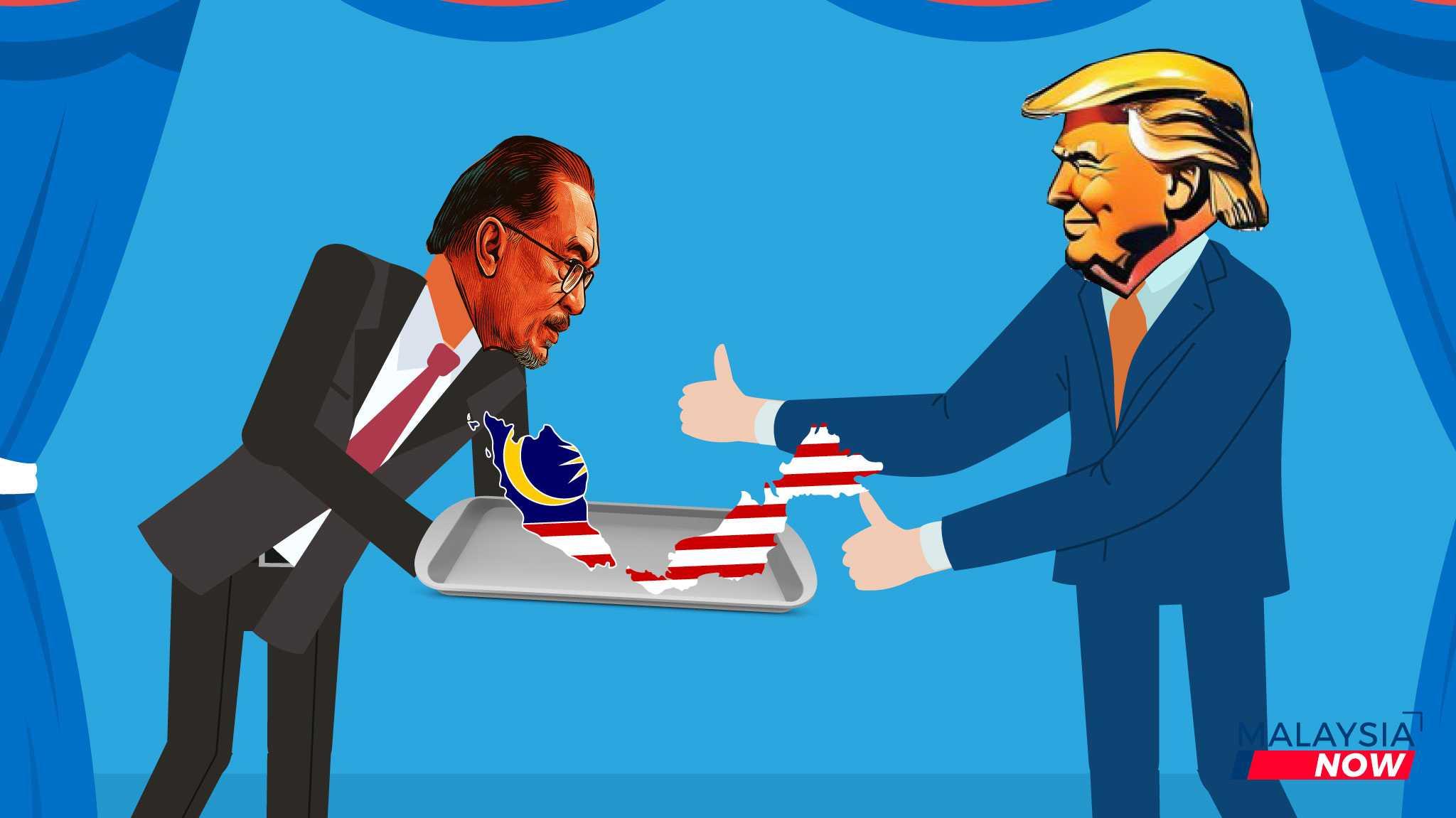
The so-called reciprocal trade agreement, signed on Oct 26 by Prime Minister Anwar Ibrahim for Malaysia and President Donald Trump for the US, has been presented as a pact to enhance reciprocity and secure supply chains.
A comprehensive review of the agreement’s main text and detailed annexes reveals a starkly different reality.
 The
document is not a traditional agreement based on mutual concession. It
is a legal framework that binds Malaysia’s economic, foreign, and
national security policies to the unilateral interests of the US,
extracts staggering, non-reciprocal financial commitments, and
systematically strips Malaysia of its sovereign regulatory power.
The
document is not a traditional agreement based on mutual concession. It
is a legal framework that binds Malaysia’s economic, foreign, and
national security policies to the unilateral interests of the US,
extracts staggering, non-reciprocal financial commitments, and
systematically strips Malaysia of its sovereign regulatory power.
Uncle Sam's latest vassal state?
The deal's most consequential clauses are found in Section 5 under "Economic and National Security".
Article 5.1.1 obliges Malaysia to become a direct participant in US economic conflicts. It states that if Washington imposes sanctions or tariffs on any third country for national security reasons, Malaysia "shall adopt or maintain a measure with equivalent restrictive effect".
This
provision effectively ends Malaysia’s long-held foreign policy of
non-alignment, contractually obliging it to mirror US sanctions against
other nations, regardless of Malaysia’s own interests.
This alignment is deepened in Article 5.2, which requires Malaysia to “align with all unilateral export controls in force by the US” and actively cooperate in restricting its own nationals from transacting with entities on US domestic sanctions lists, such as the Department of Commerce’s Entity List and the Treasury's SDN List.
Malaysia required to show the data
The agreement’s annexes reveal the mechanisms for this enforcement.
Malaysia is required to “screen and share its customs and transaction data with US authorities, granting US agencies direct surveillance access to Malaysia's customs data to enforce US law on Malaysian soil.
Article 5.3 of Annex III requires Malaysia to “screen and share its customs and transaction data” with US authorities, including the Bureau of Industry and Security, to identify transactions of concern to the US.
This grants US agencies direct surveillance access to Malaysia's customs data to enforce US law on Malaysian soil.
As the ultimate enforcement tool, Article 5.3.3 gives the US the unilateral right to “terminate this Agreement” if Malaysia enters into a new free trade agreement with a country that “jeopardises essential US interests”; in other words, the US may veto Malaysia's future trade diplomacy.
At what price?
The economic cost of this subordination is detailed in Section 6 and Annex IV. The agreement mandates a massive, one-way transfer of wealth from Malaysia to the US.
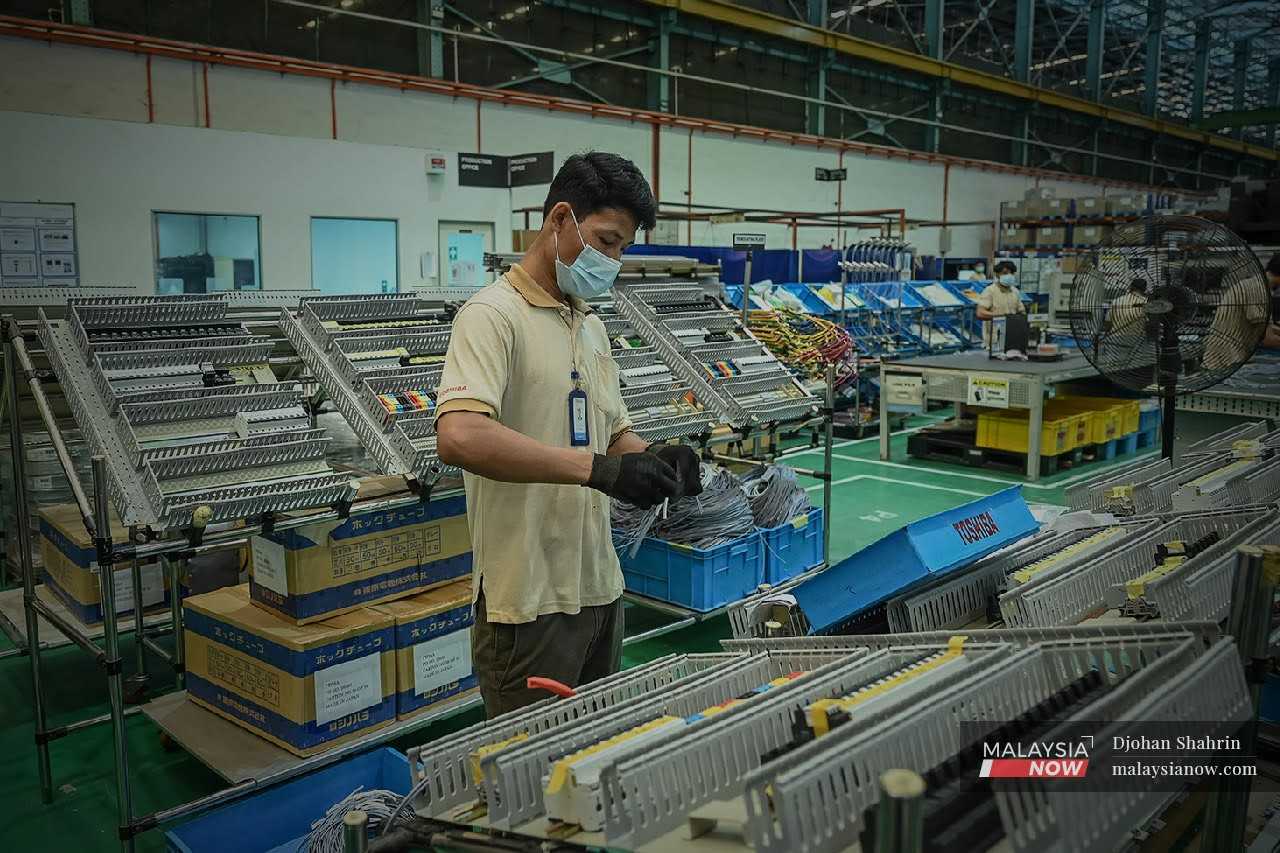 US$70 billion capital outflow
Article
6.1.3, reinforced by Annex IV, commits Malaysia to "facilitate...
approximately US$70 billion in job-creating investment... in the United
States" over the next 10 years.
US$150 billion purchase order
Annex IV also details an
"estimated value of US$150 billion" in purchases by Malaysian
multinational companies for semiconductors, aerospace, and data centre
equipment over the next five years.
This combined US$220 billion commitment functions as a direct, non-reciprocal stimulus package for the US economy, draining capital from Malaysia’s domestic development.
Malaysia is to 'remove the requirement... that broadcast stations devote 80% of terrestrial airtime to local Malaysian programming'.
This is paired with a colonial-style resource grab.
Article 6.2 of Annex III explicitly forbids Malaysia from "banning critical mineral exports to the United States" and forces it to "eliminate any rare earth element export quotas to the United States". It further commits Malaysia to encouraging a supply of rare earth magnets on "terms favourable to the United States".
This clause legally prevents Malaysia from using its own strategic resources to build high-value downstream industries, locking it into the role of a raw material supplier for US industry.
 The dismantling of the Malaysian state
The remainder of the agreement systematically dismantles Malaysia’s ability to regulate its own economy, protect its consumers, or foster its own industry.
a. Banning industrial and fiscal policy
The agreement explicitly bans the policy tools used by developing nations to build local capacity, including restrictions on technology transfer and digital taxes.
Article 3.4 prohibits Malaysia from ever requiring US firms to “transfer or provide access to a particular technology, production process, source code, or other proprietary knowledge” as a condition for doing business.
Article 3.1 of the main text bans "discriminatory" digital services taxes, while Article 3.1 of Annex III specifically forces Malaysia to “remove the requirement for US social media platforms and cloud providers to contribute 6% of their revenue... to a domestic fund”.
b. Outsourcing consumer safety to the US
Malaysia’s domestic regulatory bodies are rendered irrelevant and are legally bound to accept US standards as their own.
 Medicine:
Article 2.4 of Annex III states that Malaysia "shall accept a prior
marketing authorisation issued by the FDA" for US pharmaceuticals as
sufficient for approval in Malaysia, and must accept FDA factory
inspections "without further need for an inspection" by Malaysian
authorities.
Medicine:
Article 2.4 of Annex III states that Malaysia "shall accept a prior
marketing authorisation issued by the FDA" for US pharmaceuticals as
sufficient for approval in Malaysia, and must accept FDA factory
inspections "without further need for an inspection" by Malaysian
authorities.
Food Safety: Article 2.6 of Annex III requires Malaysia to "recognise that the US sanitary and phytosanitary (SPS) measures... satisfy the requirements of Malaysia’s measures".
Furthermore, Article 2.13 states that if Malaysia has no set limit for a pesticide, it “shall recognise and accept the corresponding US tolerances”.
c. TV shows, swine, milk and eggs
The deal directly targets everything from agriculture to media.
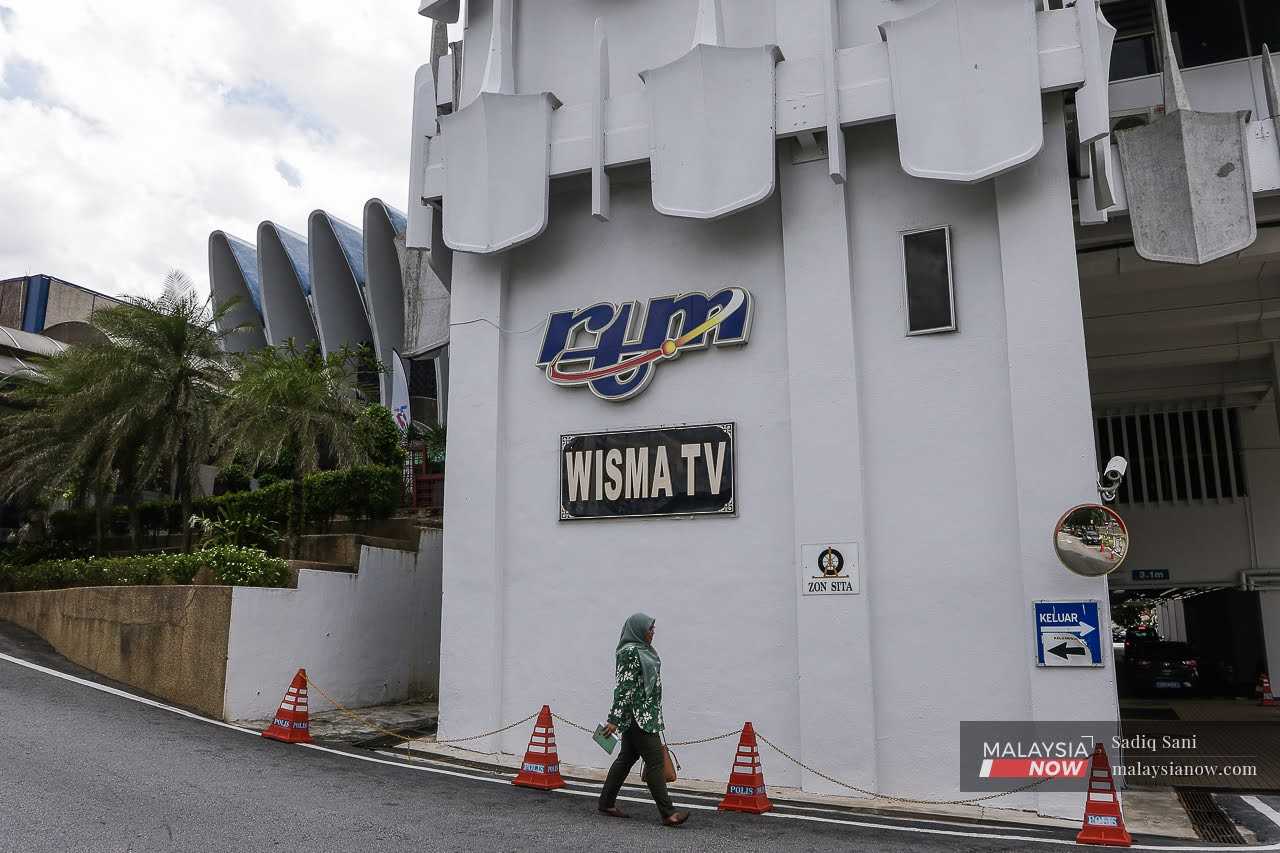 Consider
Article 2.20 of Annex III. It requires Malaysia to "remove the
requirement... that broadcast stations devote 80% of terrestrial airtime
to local Malaysian programming".
Consider
Article 2.20 of Annex III. It requires Malaysia to "remove the
requirement... that broadcast stations devote 80% of terrestrial airtime
to local Malaysian programming".
Meanwhile, Annex I, Appendix 1, establishes large, duty-free quotas for sensitive agricultural goods, including 500,000 kg of swine meat, two million litres of milk, and one million eggs in the first year alone – all set to increase annually – exposing local farmers to devastating, state-sponsored competition.
While Malaysia surrenders its sovereignty, economy, and regulatory power, the US, in Article 7.4, explicitly retains its unilateral right to impose additional tariffs on Malaysia to "protect its economic or national security".
This is not a bilateral agreement. It is a one-sided charter that secures Malaysia’s role as a dependent economic and military asset for Washington. - Malaysia Now, 29/10/2025
Speaking in Parliament, Pasir Gudang MP Hassan Abdul Karim cited figures that the total commitments required from Malaysia to purchase US goods amounted to over RM1 trillion.
This, he said, was as though Malaysia had simply surrendered its wealth to US President Donald Trump.
“What has happened, Tambun (Prime Minister Anwar Ibrahim)? For hundreds of years, we defended (our nation), fought the Dutch, Portuguese, and British.
“We are independent, but today Trump comes - the man who destroyed Gaza, Palestine - we welcomed him and we handed him our wealth.
“This is a redistribution of wealth from a poor country, Malaysia, to the US,” he said in a fiery speech while debating Budget 2026.
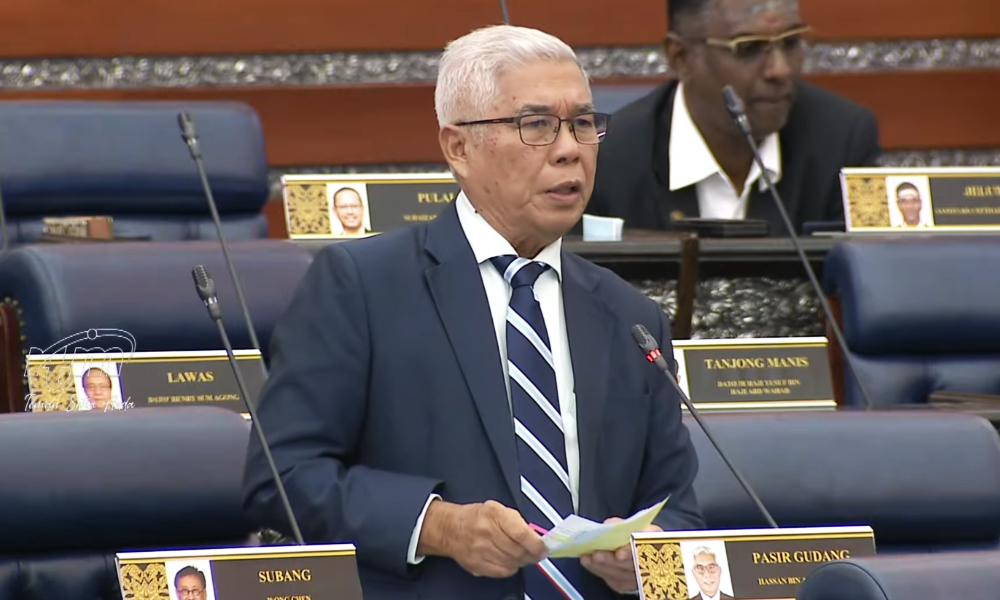
He added that he did not know what would happen to him now for speaking up, but said he must make his criticisms known.
The RM1 trillion Hassan cited refers to commitments by Malaysian government-linked companies (GLCs) to purchase US goods, including Boeing planes, liquefied natural gas, coal, and data centre equipment - in addition to investments Malaysia promised to make in the US.
These were outlined in the annexes to the trade agreement Anwar and Trump signed on Sunday.
In return for the various commitments Malaysia made, the US would lock in reciprocal tariff rates at 19 percent while exempting over 1,000 Malaysian exports, including semiconductors and palm oil.
‘Short-term gains outweighed by long-term costs’
MCA vice-president Lawrence Low expressed similar sentiments, demanding more transparency on the deal from the government.

“Given the scale of the procurement and the possibility of unequal terms, we urge the government to release the full agreement and related documents at the earliest opportunity.
“It would be reassuring if these were subject to careful review by Parliament and independent bodies to ensure full transparency,” he said in a statement.
He also cautioned that the short-term benefits of the trade agreement are outweighed by the long-term costs, as being tied up with procurement commitments limits Malaysia’s flexibility to shape its economic future according to its needs.
“Secondly, we should be mindful of what some term ‘digital neo-colonialism’.
“If large-scale data centre and semiconductor procurements come with restrictive conditions, Malaysia could find its options in digital economy policies, artificial intelligence development, and other technological fields increasingly constrained.
“Over time, this could weaken our own capacity for technological innovation and self-reliance,” he added.
Part of the trade deal stipulates that Malaysia must consult the US before entering into any digital trade agreements with another country.


 Posts
Posts




No comments:
Post a Comment