ON HUMAN RIGHTS, JUSTICE AND PEACE ISSUES, LABOUR RIGHTS, MIGRANT RIGHTS, FOR THE ABOLITION OF THE DEATH PENALTY, TOWARDS AN END OF TORTURE, POLICE ABUSES, DISCRIMINATION...
If a country housing Palestinian Refugees comes to an agreement with the Zionist Israel regime to return 5,000 Palestinians to Israel or Israel Occupied Palestine is ABSURD - so too is Malaysian PM Anwar's Prime Minister's agreement with Myanmar to return 5000 Rohingya back to Myanmar
Myanmar has agreed to take back 5,000 Rohingya currently in Malaysia
following negotiations between the two countries, says Prime Minister
Datuk Seri Anwar Ibrahim. The breakthrough reflected Malaysia’s strong diplomatic ties with the nation, he said. - Star, 30/7/2026
DID the 5,000 Rohingyas AGREED to return to Myanmar as this is the MOST IMPORTANT question?
Do they feel safe? REMEMBER, here we are talking about REFUGEES and ASYLUM seekers who had to flee MYANMAR ... and to date there has yet been any change in the Myanmar regime on their attitude about Rohingya or the various ethnic minorities...
What Anwar is doing or planning to do about these Sunni Muslim Rohingya may be a violation on the principle of NON-REFOULEMENT itself....
Refugees are people forced to flee their own country and seek safety in
another country. They are unable to return to their own country because
of feared persecution as a result of who they are, what they believe in
or say, or because of armed conflict, violence or serious public
disorder.
The principle of non-refoulement requires that asylum applicants be
protected against return to a place where their life or freedom might
be threatened until it has been reliably ascertained that such threats
would not exist and that, therefore, they are not refugees. Every
refugee is, initially, also an asylum applicant; therefore, to protect
refugees, asylum applicants must be treated on the assumption that they
may be refugees until their status has been determined. Without such a
rule, the principle of non-refoulement would not provide
effective protection for refugees, because applicants might be rejected
at the frontier or otherwise returned to persecution on the grounds that
their claim had not been established. ...UNHCR Note on the Principle of Non-Refoulement
Measures of refoulement are various and include
expulsion/deportation orders against refugees, return of refugees to
countries of origin or unsafe third countries, electrified fences to
prevent entry, non-admission of stowaway asylum-seekers and push-offs of
boat arrivals or interdictions on the high seas.
Whenever
refugees - or asylum-seekers who may be refugees - are subjected,
either directly or indirectly, to such measures of return, be it in the
form of rejection, expulsion or otherwise, to territories where their
life or freedom are threatened, the principle of non-refoulement has been violated.
Furthermore,
having regard to the nature and purpose of the principle, it also
applies to extradition. Indeed, the protection of a refugee cannot be
regarded as complete unless he or she is also protected against
extradition to a country where he or she has reason to fear persecution.UNHCR Note on the Principle of Non-Refoulement
In fact, respect for the principle of non-refoulement requires
that asylum applicants be protected against return to a place where
their life or freedom might be threatened until it has been reliably
ascertained that such threats would not exist and that, therefore, they
are not refugees. Every refugee is, initially, also an asylum applicant;
therefore, to protect refugees, asylum applicants must be treated on
the assumption that they may be refugees until their status has been
determined. Without such a rule, the principle of non-refoulement would
not provide effective protection for refugees, because applicants might
be rejected at the frontier or otherwise returned to persecution on the
grounds that their claim had not been established. That the principle
of non-refoulement applies to refugees, irrespective of whether
they have been formally recognised as such - that is, even before a
decision can be made on an application for refugee status
In Malaysia, UNHCR had been the only one processing and according refugee status - BUT on 1/1/2026, Malaysia started its own processing and according refugee status - the end result being an issuance of a DPP card - but the laws are yet to be amended or enacted that recognize the holder of the DPP card - as a person legally permitted to be in Malaysia ...thus the RISK remains that even holders of Malaysian DPP cards may be still treated as 'undocumented foreigners' illegally present in Malaysia....However, Malaysia process has been TOO SLOW ..
Then, ODDLY Malaysia suspended UNHCR's ability to continue assessing and registering...WHY?
Malaysia
has asked the U.N. refugee agency to temporarily stop registering new
refugees in the country, as it builds a domestic system to manage
asylum-seekers, the foreign ministry said on Thursday. Deputy
Foreign Affairs Minister Lukanisman Awang Sauni said the suspension
would enable the government to implement its own refugee registration
programme, known as the DPP, which it launched in January....According to the UNHCR, there were about 215,600 refugees and
asylum-seekers registered with the agency in Malaysia at the end of
February, more than half of them ethnic Rohingya Muslims from Myanmar. - Reuters, 23/7/2026
Malaysia's recent action raises QUESTIONS - Is it done to WOO VOTES in upcoming Negeri Sembilan State Elections and other upcoming elections ...noting there has been 'rumblings' about unhapiness of the existence of Rohingya in Malaysia. SO, was that action to STOP UNHCR refugee registration for now...and the Anwar's statement that 5,000 Rohingya's back to Myanmmar a DESPERATE attempt to woo greater VOTER SUPPORT? If yes, it is MOST UNACCEPTABLE...
BIT OF BACKGROUND ON THE ROHINGYA
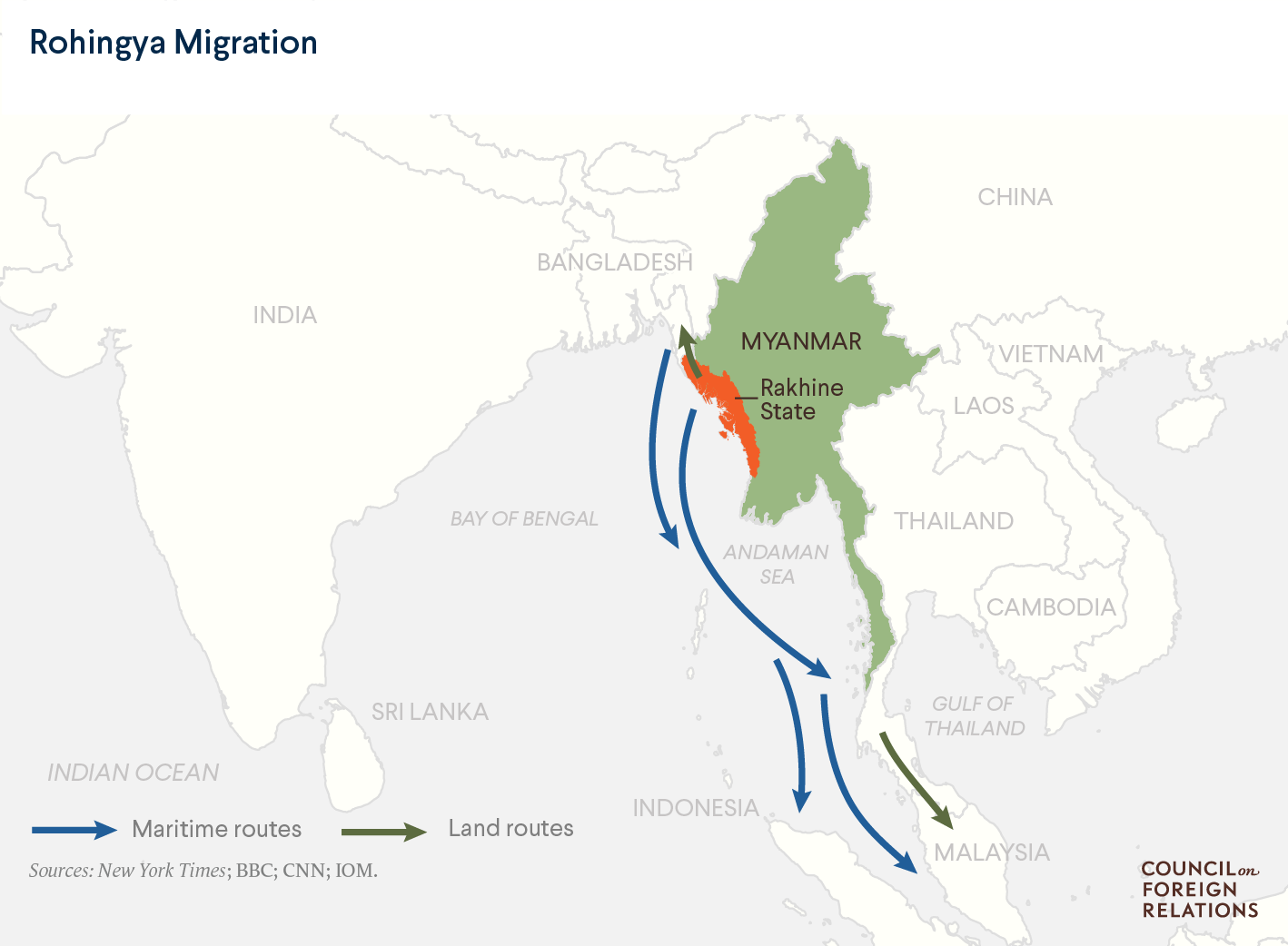
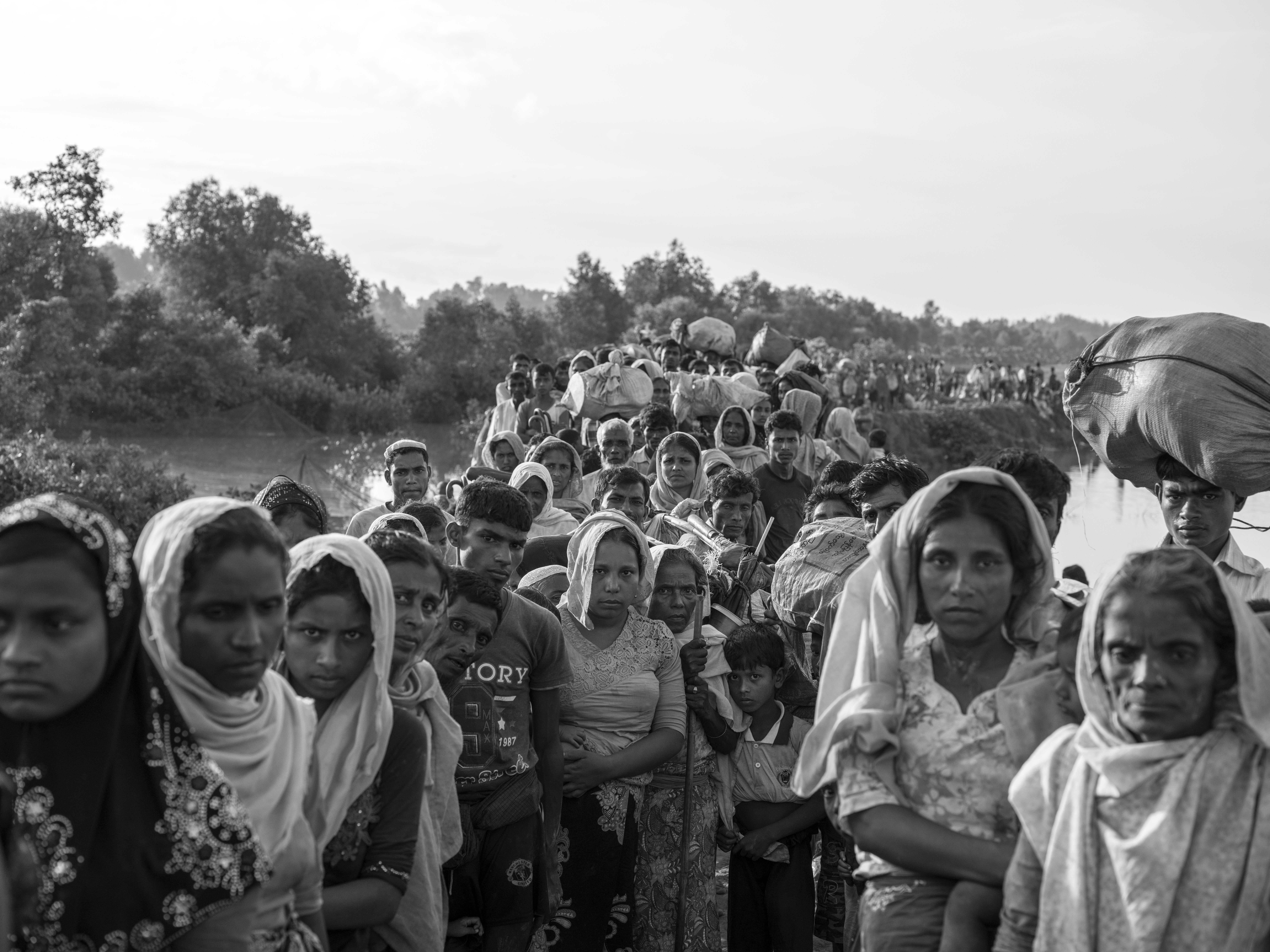
Hundreds of thousands of Rohingya, a Muslim ethnic minority group, have fled persecution in Myanmar’s Rakhine State,
It is good that we look again at WHO the Rohingya people of Myanmar are - they have denied CITIZENSHIP...and even their RIGHT to VOTE removed. They were subjected to discrimination as to the number of children they can have ...
Introduction
Discriminatory
policies of Myanmar’s government since the late 1970s have compelled
hundreds of thousands of Muslim Rohingya to flee their homes in the
predominantly Buddhist country. Most have crossed by land into
Bangladesh, while others have taken to the sea to reach Indonesia,
Malaysia, and Thailand.
Beginning
in 2017, renewed violence, including reported rape, murder, and arson,
triggered an exodus of Rohingya, as Myanmar’s security forces claimed
they were carrying out a campaign to reinstate stability in the
country’s western region. The United Nations has said that those forces
showed “genocidal intent,” and international pressure on the country’s
elected leaders to end the repression continues to rise.
Who are the Rohingya?
The
Rohingya are an ethnic Muslim minority who practice a Sufi-inflected
variation of Sunni Islam. There are an estimated 3.5 million Rohingya
dispersed worldwide. Before August 2017, the majority of the estimated
one million Rohingya in Myanmar resided in Rakhine State, where they
accounted for nearly a third of the population. They differ from
Myanmar’s dominant Buddhist groups ethnically, linguistically, and
religiously.
The Rohingya trace their origins in the region to the fifteenth century, when thousands of Muslims came to the former Arakan Kingdom.
Many others arrived during the nineteenth and early twentieth
centuries, when Rakhine was governed by colonial rule as part of British
India. Since independence in 1948, successive governments in Burma,
renamed Myanmar in 1989, have refuted the Rohingya’s historical claims
and denied the group recognition as one of the country’s 135 official ethnic groups. The Rohingya are considered illegal immigrants from Bangladesh, even though many trace their roots in Myanmar back centuries.
Neither
the central government nor Rakhine’s dominant ethnic Buddhist group,
known as the Rakhine, recognize the label “Rohingya,” a self-identifying term that
surfaced in the 1950s, which experts say provides the group with a
collective political identity. Though the etymological root of the word
is disputed, the most widely accepted theory is that Rohang derives from the word “Arakan” in the Rohingya dialect and ga or gya means
“from.” By identifying as Rohingya, the ethnic Muslim group asserts its
ties to land that was once under the control of the Arakan Kingdom,
according to Chris Lewa, director of the Arakan Project, a
Thailand-based advocacy group.
What is the legal status of the Rohingya?
The
government refuses to grant the Rohingya citizenship, and as a result
most of the group’s members have no legal documentation, effectively
making them stateless. Myanmar’s 1948 citizenship law was already exclusionary,
and the military junta, which seized power in 1962, introduced another
law twenty years later that stripped the Rohingya of access to full
citizenship. Until recently, the Rohingya had been able to register as
temporary residents with identification cards, known as white cards,
which the junta began issuing to many Muslims, both Rohingya and
non-Rohingya, in the 1990s. The white cards conferred limited rights but
were not recognized as proof of citizenship.
In 2014 the government held a UN-backed national census,
its first in thirty years. The Muslim minority group was initially
permitted to identify as Rohingya, but after Buddhist nationalists
threatened to boycott the census, the government decided Rohingya could
only register if they identified as Bengali instead.
Similarly,
under pressure from Buddhist nationalists protesting the Rohingya’s
right to vote in a 2015 constitutional referendum, President Thein
Sein canceled the temporary identity cards in February 2015, effectively
revoking their newly gained right to vote. (White card holders were allowed to vote in
Myanmar’s 2008 constitutional referendum and 2010 general elections.)
In the 2015 elections, which were widely hailed by international
monitors as free and fair, no parliamentary candidate was of the Muslim faith.
In recent years, the government has forced Rohingya to start carrying national verification cards
that effectively identify them as foreigners and do not grant them
citizenship, according to a report by the advocacy group Fortify Rights.
Myanmar officials have said the cards are an initial step toward
citizenship, but critics argue that they deny Rohingya their identity
and could make it easier for the government to further repress their rights.
Why are the Rohingya fleeing Myanmar?
The Myanmar government has effectively institutionalized discrimination against the ethnic group through restrictions on
marriage, family planning, employment, education, religious choice, and
freedom of movement. For example, Rohingya couples in the northern
towns of Maungdaw and Buthidaung are only allowed to have two children [PDF].
Rohingya must also seek permission to marry, which may require them to
bribe authorities and provide photographs of the bride without a
headscarf and the groom with a clean-shaven face, practices that
conflict with Muslim customs. To move to a new home or travel outside
their townships, Rohingya must gain government approval.
Moreover, Rakhine State is Myanmar’s least developed state, with a poverty rate of 78 percent,
compared to the 37.5 percent national average, according to World Bank
estimates. Widespread poverty, poor infrastructure, and a lack of
employment opportunities in Rakhine have exacerbated the cleavage
between Buddhists and Muslim Rohingya. This tension is deepened by
religious differences that have at times erupted into conflict.
What’s caused the recent exodus?
Clashes in Rakhine broke out in August 2017, after a militant group known as the Arakan Rohingya Salvation Army (ARSA) claimed responsibility for attacks on police and army posts. The government declared ARSA a terrorist organization and the military mounted a brutal campaign that destroyed hundreds of Rohingya villages and forced nearly seven hundred thousand Rohingya to leave Myanmar. At least 6,700 Rohingya were killed in
the first month of attacks, between August 25 and September 24, 2017,
according to the international medical charity Doctors Without Borders.
Myanmar’s security forces also allegedly opened fire on fleeing civilians and planted land mines near border crossings used by Rohingya to flee to Bangladesh.
UN Secretary-General Antonio Guterres has described the violence as ethnic cleansing and the humanitarian situation as catastrophic. Rights groups and other UN leaders suspect acts of genocide have taken place, and in September 2018, a UN fact-finding panel released a report [PDF] that claimed the Myanmar government had “genocidal intent” against the Rohingya. The chair of the UN panel said it found clear patterns of abuse
by the military, including systematic targeting of civilians,
committing sexual violence, promoting discriminatory rhetoric against
minorities, and creating a climate of impunity for security forces.
Since early 2018, Myanmar authorities have also reportedly cleared abandoned Rohingya villages
[PDF] and farmlands to build homes, security bases, and infrastructure.
The government says this development is in preparation for the
repatriation of refugees, but rights activists have expressed concern
these moves could be intended to accommodate populations besides the
Rohingya in Rakhine.
Furthermore,
some have raised doubts that the government’s tactics have been in
response to ARSA attacks, with reports showing that the military began
implementing its policies nearly a year before ARSA struck. Sectarian
violence is not new to Rakhine State: security campaigns in the past
five years, notably in 2012 and 2016, also resulted in the flight of
tens of thousands of Rohingya from their homes... - The Rohingya Crisis by the Council on Foreign Relations (updated 23/1/2020)
In Myanmmar, there is ongoing persecution against many ethnic minorities - thus there are MANY asylum seekers and refugees from Myanmmar(BURMA as it was known before). When the military junta seized power, there are also many from the Opposition who are in Malaysia as refugees. Malaysia also have asylum seekers/refugees from Thailand and Philippines, and also was the destination of Acehnese seeking temporary refuge when there was a 'conflict' between Indonesia and Aceh.
Malaysia also is home to many refugees from other countries - possibly even Palestine. Remember how Anwar brought Palestinians injured to Malaysia for healthcare - though, in my opinion, a better response would have been sending medical teams, food and medical assistance to the countries that were then housing Palestinian refugees..
IN SHORT, Malaysia has had a POSITIVE REPUTATION globally when it comes to according temporary shelter to refugees, including the Rohingyas - BUT NOW, that positive image may be affected by reason of recent events including plans to send Rohingyas back to Myanmmar - so, the recent action by PM Anwar Ibrahim and his MADANI government may not be the position of the Malaysian people - and the government action may damage our reputation as a CARING NATION that believes and upholds human rights for all persons.
Anwar's decision to send back Rohingya people is also shocking because the situation in Myanmar has not changed for the better > will they give the Rohingya people citizenship, the right to vote and equal treatment as all other citizens? Myanmar's agreement to accept back Rohingya - is NOT the issue, the issue is WHETHER ROHINGYA IN MALAYSIA FEEL SAFE TO RETURN NOW TO THE COUNTRY THEY FLED FROM...
Remember, Anwar too had once fled to the Turkish embassy to seek 'refuge' - so he should understand more the plight of refugees and asylum seekers...
Malaysia's opposition leader Anwar Ibrahim has left the Turkish embassy
in Kuala Lumpur, where he sought refuge Sunday following sodomy
accusations. Anwar has dismissed the charges as a "complete
fabrication". - France 24, 30/6/2008
MOST IMPORTANT - is that there is a case now before the International Court of Justicethat is expected to render its FINAL decision at the end of 2026 - Should it NOT be better to consider this COURT decision before deciding whether Malaysia will send back Rohingya people to Myanmar?
The Gambia’s case alleging that Myanmar committed genocide against the
Rohingya people began at the International Court of Justice (ICJ) in
January. The Gambia, which filed the case in 2019, accuses Myanmar of
deliberately seeking to destroy the country’s minority Muslim
population, the Rohingya, in whole or in part, through its military’s
actions – allegations that Myanmar denies. It’s the first case brought
to the ICJ by a third country in defence of another nation or group, and
The Gambia is supported by the Organisation of Islamic Cooperation as
well as a number of other intervening countries. - International Bar Association, 9/2/2026
In January 2026, the International Court of Justice (ICJ) held three
weeks of hearings on the merits of the Rohingya genocide case, which The
Gambia brought against Myanmar in November 2019 under the Convention on
the Prevention and Punishment of the Crime of Genocide (the Genocide
Convention)....When thedecision on the merits of The Gambia’s case is made likely
later this year, it will carry significant weight. The ruling will
address the evidentiary threshold for genocidal intent and provide recognition and reparation for the suffering of the Rohingya people if successful, although enforcement will be difficult. - East Asia Forum, 17/3/2026
The refugee asylum seeker problem is REAL, as even the UNHCR does not anymore provide housing, food - only recognition. THUS, there is a problem of daily INCOME GENERATION for the purpose of survival, and there are possibly 200,000 to 300,000 refugees in Malaysia.The Malaysian government FAILED to address this PROBLEM - NO provisions for temporary residence and ... Malaysia has a LABOUR SHORTAGE, that Malaysia now have to depend on about 2 million plus migrant workers. Thus, Malaysia could have used this fact - to enable these refugee/asylum seekers to work legally in Malaysia - but oddly Malaysia did not.
If refugee could work legally, then they could afford to earn and survive temporarily - and the problem of them working illegally in the informal sector - sometimes competing with locals could have been avoided...
Malaysia could have adopted a HUMAN RESOURCE POLICY - that prioritized LOCAL workers, then Refugee/Asylum Seekers - and if there is still a need then MIGRANT WORKERS. Earlier governments failed - and so did PM ANWAR and the MADANI government after governing for 3 YEARS 8 MONTHS? Finally in the beginning of 2026, Malaysia is talking about employment opportunities for refugees...
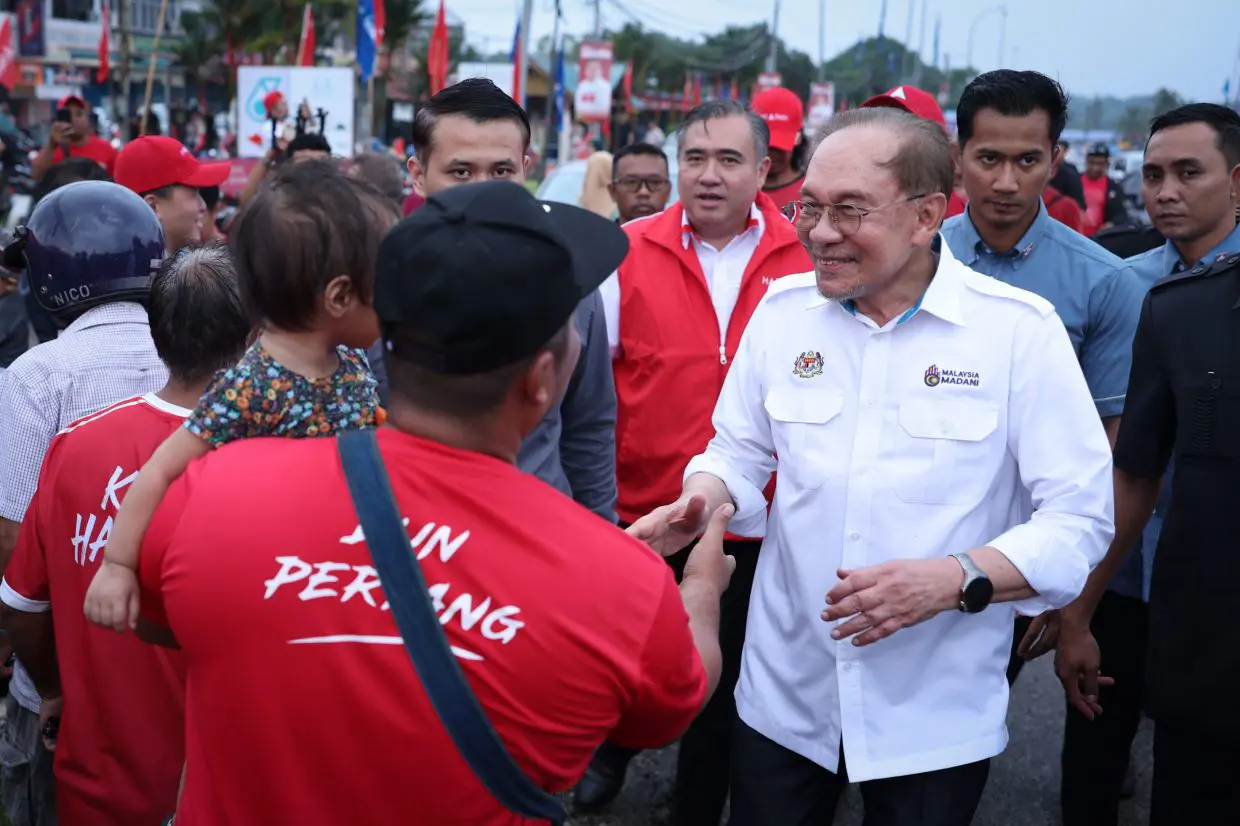
Myanmar will take back 5,000 Rohingya
JELEBU: Myanmar has agreed to take back 5,000
Rohingya currently in Malaysia following negotiations between the two
countries, says Prime Minister Datuk Seri Anwar Ibrahim.
The breakthrough reflected Malaysia’s strong diplomatic ties with the nation, he said.
He said Myanmar had also agreed to accept 300,000 Rohingya from Bangladesh as part of the repatriation effort.
“They have now agreed to take back 5,000 Rohingya from Malaysia and 300,000 Rohingya from Bangladesh.
"Why? Because we negotiated. That is why maintaining good
relations with other countries is important. These matters require
careful diplomacy,” he said in his speech when meeting voters in Chennah
yesterday.
Anwar stressed that Malaysia would not tolerate
Rohingya refugees disrupting public order, saying that he had instructed
the Inspector-General of Police to take firm action against those
causing disturbances in public places.
Anwar said calls for the
Rohingya to be deported had previously been difficult to implement
because Myanmar had refused to accept them.
“People say ‘send them back, send them back’. But where do we send them? Previously, Myan-mar did not want to receive them.
“So we had to place them in designated locations,” he said.
The
Prime Minister also urged the Rohingya community in Malaysia to respect
local laws and avoid causing inconvenience to the public.
“This is our country. Malaysia is our country. Others should not disrupt it. That is why we have to be firm,” he added. - Star, 30/7/2026
Malaysia asks UNHCR to temporarily cease registration of refugees
By Reuters
A
Malaysian navy vessel patrols waters near Langkawi island, May 16,
2015. A boat crammed with migrants was towed out to sea by the Thai navy
and then held up by Malaysian vessels on Saturday, the latest round of
"maritime ping-pong" by Asian states determined not to let asylum
seekers come ashore. TheUnited Nations has called on... Purchase Licensing Rights, opens new tabRead more
Summary
Malaysia launched a new refugee registration programme in January
UNHCR says about 215,600 refugees and asylum-seekers were registered in Malaysia at end-February
More than half those registered are ethnic Rohingya from Myanmar
Malaysia is not a signatory to the UN refugee convention
KUALA
LUMPUR, July 23 (Reuters) - Malaysia has asked the U.N. refugee agency
to temporarily stop registering new refugees in the country, as it
builds a domestic system to manage asylum-seekers, the foreign ministry
said on Thursday.
Deputy
Foreign Affairs Minister Lukanisman Awang Sauni said the suspension
would enable the government to implement its own refugee registration
programme, known as the DPP, which it launched in January.
Report Ad
"Through
the DPP, the government can manage data in a more structured manner,
including in identity verification, monitoring and regulation, without
relying entirely on the records of any foreign entity," he told
parliament's upper house, in response to questions from senators on
Malaysia's efforts to manage Rohingya refugees.
According
to the UNHCR, there were about 215,600 refugees and asylum-seekers
registered with the agency in Malaysia at the end of February, more than
half of them ethnic Rohingya Muslims from Myanmar. The country is not a
signatory to the 1951 U.N. refugee convention and refugees are not
allowed to work or get an education.
Report Ad
There
has been a rise in online hate speech and misinformation targeting the
Rohingya in recent weeks, with social media users accusing them of
taking jobs and land away from Malaysians.
The
move to halt registrations would allow the UNHCR to focus on
re-settling refugees in third countries, if they cannot be repatriated
to their home nations, Lukanisman said, adding that authorities would
continue to engage and cooperate with the agency regularly.
The Malaysian office of UNHCR did not immediately respond to a request for comment.
The agency said on its website that Malaysia's refugee policies,
including the DPP programme, "reflect an important step towards a
structured, predictable, and nationally owned approach to protecting
people forced to flee their country" and that UNHCR's work was
"complementary to and in support of the state’s protection and
humanitarian responsibilities."
Lukanisman
said plans were also underway to deport approximately 5,000 Myanmar
nationals detained in the country's immigration detention centres by
naval vessels, subject to Myanmar's agreement. He did not provide
further details.
In 2021, Malaysia deported
more than 1,000 Myanmar nationals by ship, despite a court-ordered
halt and rights groups saying the repatriation exercise had included
asylum-seekers and UNHCR-registered refugees.
The
military seized control of Myanmar in a coup in February 2021, plunging
the country into civil war. Myanmar does not recognise the Rohingya as
citizens.
Report Ad
Reporting by Rozanna Latiff; Editing by Kate Mayberry - REUTERS, 23/7/2026
International Court of Justice to Hear Rohingya Genocide Case Next Month
The outcome of the case could set important
precedents for future ICJ genocide cases, including South Africa’s case
against Israel.
By Sebastian Strangio
December 22, 2025
The Peace Palace in The Hague, Netherlands, the seat of the International Court of Justice.
Credit: Depositphotos
The
International Court of Justice (ICJ) will next month hear a landmark
case accusing Myanmar of committing genocide against the country’s
Rohingya minority, the court said on Friday.
The Gambia, a predominantly Muslim country, filed the case at the ICJ
with the support of the Organization of Islamic Cooperation in 2019,
accusing Myanmar of committing genocide against the Rohingya.
The case pertains to the Myanmar military’s brutal “clearance
operation” in August 2017. Justified as a response to scattered attacks
by Rohingya militants, soldiers and Rakhine vigilantes torched villages,
shot civilians, and drove an estimated 750,000 desperate people over
the border into Bangladesh, where most remain in large refugee camps.
United Nations investigators later said that the offensives showed “genocidal intent.”
In a statement,
the ICJ, the U.N.’s primary judicial organ for inter-state disputes,
stated that after a long period of preliminaries, the case will be heard
from January 12 to 29. The Gambia will outline its arguments on January
12-15, which will be followed by oral arguments by representatives from
Myanmar’s military junta from January 16-20. The ICJ has also allocated
three days for hearing witnesses, although these hearings will be
closed to the public and the press.
“The hearings will be devoted to the merits of the case and will
include the examination of witnesses and an expert called by the
Parties,” the ICJ said in its statement.
In December 2019, during the preliminary hearings, Myanmar’s former
leader Aung San Suu Kyi appeared at the ICJ to defend her government
against the charge of genocide, during which she said that The Gambia had presented an “incomplete and misleading factual picture of the situation in Rakhine State.”
Aung San Suu Kyi was overthrown in a military coup in February 2021
and imprisoned by the military. Just 10 days before the coup, her
National League for Democracy (NLD) government filed a long list of preliminary objections
challenging the court’s jurisdiction. The opposition National Unity
Government, formed by ousted members of the NLD government, later announced
that it was formally withdrawing “all preliminary objections” in the
case and accepting the jurisdiction of the ICJ. However, officials loyal
to the military junta have since represented Myanmar in the case.
The case has been brought under the 1948 Genocide Convention,
which defines genocide as “acts committed with intent to destroy, in
whole or in part, a national, ethnical, racial or religious group.” Both
Myanmar and The Gambia have signed the Convention.
Although the Rohingya is not the first genocide case that the ICJ has heard, according to Reuters, it could set an important precedent for future cases, including the case filed in late 2023 by South Africa against Israel over its war in Gaza.
Speaking at a special high-level meeting on the situation of the
Rohingya at the United Nations General Assembly in September, The
Gambia’s Minister of Justice Dawda Jallow said he hoped to see a judgment from the ICJ “soon after” the public hearings in January. - Diplomat, 22/12/2026
How Tabung Haji hid a RM4.8bn hole in its accounts
-
A royal commission report unmasks a deep governance failure and a
sacrilegious betrayal of public trust.
The post How Tabung Haji hid a RM4.8bn hole in ...
BN retains Johor in state election
-
Total seats up for grabs: 56 Unofficial results: Let’s see if the dark
horses Bersama and the progressive block of Muda and PSM can upset the
durian cart a...
APA PADA NAMA
-
1. Sejarah Malaysia dikait rapat dengan UMNO, Parti Kebangsaan Melayu
Bersatu. Parti UMNO pula dikenali dengan pemimpinnya. 2. Demikian di
peringkat permul...
China and HK may be barred from Asia Team meet
-
PETALING JAYA: The status of next week’s Asia Team Champion-ships in
Manila, the Philippines, is in quandary as two badminton nations – China
and Hong Kong...
PRU14 - Keputusan TEMERLOH - Parlimen dan DUN
-
Keputusan di Temerloh, harus kita analisa
1- Parlimen dimenangi Pakatan Harapan, yang juga menang DUN Mentakab,
tetapi BN menang DUN Lancang dan DUN Kuala ...
Thank you, Malaysians
-
Before the lights go out on The Malaysian Insider at midnight, we say
"Thank You" to our readers. TMI started on February 25, 2008. Today, after
eight year...
I believe in the freedom of expression - and everyone is free to use, reproduce, quote, copy and circulate, etc... materials published here. Please credit the source: http://charleshector.blogspot.com/.
For those of you who do have Blogs/Websites, it would be good if you could add a link to CHARLES HECTOR Blog. Please do promote the BLOG.
Anonymous comments or those containing profanities and obscenities (or irrelevant matters) will be rejected. Note that all comments made in post are personal opinions.
Number of Visits
Over 4 million visits. On an average, we have about 700-750 visits per day.Thank you all for your support and encouragement..




 Posts
Posts




No comments:
Post a Comment