POLITICAL FUNDING law - what happened? Now, 2 Human Rights Defender and Organization being investigated for receipt of foreign funds? BUT the much needed POLITICAL FUNDING law that governs MONIES that can be received by Political Parties and politicians, especially those who can influence government decisions/actions - which would include Members of Parliament, SENATORS, ADUNS, politically appointed SENATORS, politically appointed members of LOCAL Government/Councils, etc are YET to be enacted.
UMNO has a lot of BUILDINGS and property - where did the monies come from? Political party funds from membership fees may not be enough...so where did that monies come from.
Follow the Charles Hector channel on WhatsApp:
https://whatsapp.com/channel/0029Vb6UokfB4hdNugYmph1B
Follow the Charles Hector channel on WhatsApp:https://whatsapp.com/channel/0029Vb6UokfB4hdNugYmph1B
Is it CORRUPTION - a donation from Corporations to 'thank you' for government projects awarded? Or maybe for government projects that they will get in the future from the government?
With these 'political funding' CORPORATION can also LOBBY and ensure the Government does not improve worker and Trade Union laws to improve worker rights? Is it to lobby that Malaysia does not change the law that legalize overtime of 104 hours per month?
FOREIGN GOVERNMENTS 'funding' to keep political parties in power, or to get political parties in POWER - or for political parties in power to adopt a particular position - PRO-US or Pro-China or Pro-Russia or Pro-Arab Saudi > Should this be allowed to continue, or should this be made ILLEGAL - that is One of the things that Political Funding Law will DECIDE.
This issue came up when then PM Najib Razak alleged that the RM2 Billion Plus he received came from ARAB SAUDI Royalty to support UMNO (later the High Court confirmed this was not TRUE and the money came from the 1MDB scandal/affair.
In the latest revelation on the RM2.6 billion saga, an Umno division leader said today that the funds found in Prime Minister Datuk Seri Najib Razak’s private accounts were donated by an “Arab king and prince”. According to Kepong Umno division chief Datuk Rizuan Abdul Hamid, the money was meant to be a political donation to be used during Election 2013. He said it was because of Najib’s anti-Jewish stance that the Arab royal family decided to make the large contribution. “Because of that, the Arab king, Arab prince generously made the political donation for use during the 13th general election,” he said during the Kepong Umno division meeting today. - Malay Mail, 23/8/2015
The POLITICAL FUNDING ACT hopefully will decide on this ISSUE > is it OK for Malaysian Political Parties and Politicians to receive SUCH Funding from foreign countries and/or entities linked to such foreign governments?
What kind of FUNDING is OK - what about funding for RELIEF after some national disaster - flood, TSUNAMI, for anti-drug trafficking programs, for anti-human trafficking and promotion of awareness about human rights, environmental rights, etc.. WHICH CAN OF FUNDING IS ALLOWED and which kind of FUNDING is NOT ALLOWED?
THERE are pro-Zionist Israel Lobby Groups that actively fund/support Congressmen, Parliamentarians in US, UK and Europe > and thus it can affect GOVERNMENTS and politicians when it comes to the position they take on the Israel Zionist Regime and its actions > will they end up in DEFENCE of the Israel Regime, and be 'BLIND' to the injustices they commit against others like the Palestinians, Iranians, Lebanese, etc??
Some 180 of Britain’s 650 MPs in the last parliament accepted funding from pro-Israel lobby groups or individuals during their political career, Declassified can reveal. That includes 130 Conservative MPs, 41 Labour MPs and three Liberal Democrats. Three members of the DUP, two independents and Reform’s only MP complete the list. The total value of the donations from pro-Israel groups, individuals, and Israeli state institutions amounts to over one million pounds. Between them, the politicians made over 240 paid-for trips to Israel, at a cost of over half a million pounds. - Declassified UK, 6/6/2024
Today, the influence of the groups loosely known as the Israel lobby has only become more powerful. Truman’s bind – caught between his sense of the national interest and the domestic political price of defying a powerful lobby – was something that, in the decades to come, president after president would experience. To fast forward: Donald Trump’s decision to go to war on Iran earlier this year came after a sustained campaign by Israel to convince the US to join the disastrous operation. It also came in defiance of several of his top advisers, as well as the 45% of Republicans who hold an unfavorable view of Israel. - Guardian, 2/8/2026
SO, Political Funding of this sort is DANGEROUS - it can allow such foreign LOBBY Groups like the pro-Israel lobby > to affect decisions/policies of head of GOVERNMENTS and even the majority of people who should be Malaysian peoples' representatives. Because of these 'funding' and not to ANGER such FUNDERS - their decision on behalf of the people and a sovereign nation maybe compromised.
IN UK today, an 'attack' on Jews or even a pro-Palestine stance results on an accusation of 'ANTI-Antisemitism' - but an attack on other minorities may not illicit a response from politicians (and political parties) as being anti-Muslim or anti some other minorities > is it because on the FUNDING already received from the pro Israel Zionist lobby? Why this discriminatory position of the once Western Government that upheld justice and human rights?
We talked about Israel - Palestine > but such lobbies can also affect a lot of other Government decisions and positions too? It can bring about 'special preference' for investments flowing in from certain countries (In Malaysia, questions have been asked as to WHY certain Chinese companies have allegedly been allowed to operate 'differently' - using just Chinese workers - is there no QUOTA requirement that requires all companies operating in Malaysia to have a certain percentage of Malaysian workers?)
POLITICAL FUNDING from foreign entities has some 'COMPLICATIONS' - What funding from foreign governments, foreign entities or 'lobby groups' should be PROHIBITED..and what should not?
Should FUNDING for FREE and Fair Elections, and promotion of DEMOCRACY be allowed?
Should funding for promotion of Human Rights, Women Rights, Worker Rights ...be allowed?
POLITICAL Funding Law Should also cover funds received by MPs and Senators
As a matter of PRINCIPLE, to protect the INDEPENDENCE of Parliamentarians > ALL Funds for Members of Parliament must come from PARLIAMENT - certainly NOT from the Executive(Federal or State Government. This is FUNDAMENTAL as the role of Parliament is also to be an effective 'check and balance' of the Executive(PM, Cabinet and government) - hence if the Federal Government gives monies/benefits to MPs > that would certainly COMPROMISE their independence. Will I highlight wrongdoings, abuses, etc - when the Federal Government can retaliate by removing financial allocations, etc..?
Well, in Malaysia today - the FEDERAL GOVERNMENT still gives direct FUNDING and benefits to SOME not ALL MPs - in terms of funds for Constitutional Development which was and could be as high as RM5 million per year. Now, it was given to JUST MPs from government parties, and recently also MPs that support Anwar Ibrahim's government? Opposition MPs do not get it - a clear DISCRIMINATION against the people (if you elect an Opposition MP > the your constitution NO access to these funds)...
IF the MPs getting these Federal Government allocation and extra benefits do something that 'angers' the PM or the government - your access can be CUT. What happened recently to several MPs of PKR demonstrates this
Subang MP Wong Chen today claimed his parliamentary office had been denied access to the MyKhas Portal, a government-managed system used to process constituency allocations and Projek Mesra Rakyat (PMR) applications. - Malay Mail, 22/5/2026
So, such FEDERAL government allocations and special benefits must END > the Independence of MPs must be protected to ensure they do their duties as a 'check and balance' to the Executive branch of government. They MUST be free to express their views on government actions/policies - free to even HIGHLIGHT wrongs and abuses.
If there are any FUNDS or benefits that are for MPs/Senators, it MUST only flow from Parliament...or pursuant to CLEAR Law,
Some MPs are picked by the Prime Minister to be in the Cabinet or the Executive arm of government. Other MPs, not in CABINET, has the same ROLE as Opposition MPs to be the needed 'check and balance' - and NOTHING must compromise them from this ROLE by the Executive arm of government.
SO, these MPs (not in Cabinet) should also NOT receive any GIFTS from the Executive(PM and Cabinet) - they should not accept APPOINTMENTS to be in government agencies/entities, Government owned or linked companies,... because once they do so > they are beholden and thankful to the PM/Cabinet/Executive arm of Government - and they may not be able to carry out their duties of Parliamentarians. Most of these appointments means MORE Money and more POWER.
MPs in Malaysia - needs PARLIAMENT to allocate needed funds for MPs to maintain offices, have staff(including needed staff to help them analyze Bills, etc) > Now, MPs have to use their own allowances/salary - this is NONSENSE. Parliament should allocate MONEY to MPs for all these to improve the quality and performance of MPs
POLITICAL FUNDING law should also monitor the 'income' and spending of MPs. Should the Auditor General be required to do Annual Audits of every MPs.
YES, Malaysia needs a POLITICAL FUNDING law fast - to ensure we have also better MPs and a better Parliament.
TODAY - Is Prime Minister Anwar Ibrahim still PRIME MINISTER still support him to remain as PRIME MINISTERS. Or has MP's Freedom to Express their position been compromised by THREATS, risk of losing Federal Government allocations/benefits. LOSS of position in some GLC or government entity, or worry that they may be targeted with criminal investigations ...I wonder HOW free our MPs really are to freely express whether they still support ANWAR IBRAHIM or NOT ... whether they support or not is NOT the issue > this issue is their FREEDOM to say YES or NO...
POLITICAL FUNDING BILL - Why are the public kept in the dark > it will be a MALAYSIAN LAW by the people of Malaysia. Why only consulting the 172 political parties or just some...have these political parties been sent the DRAFT BILL - if yes, publish the DRAFT so you can get the Malaysian people's feedback on the proposed law > this should be the NEW Practice involving ALL people in the Consultation about any NEW laws..
Azalina: Malaysians want political funding law before GE16; political parties’ buy-in needed to avoid delay

- In a recent address, Datuk Seri Azalina Othman Said, the Minister in the Prime Minister's Department, emphasized the public's strong demand for a political financing law in Malaysia before the 16th general election, based on findings from public engagement sessions conducted by the Legal Affairs Division.
- Despite acknowledging the complexity and procedural requirements of enacting such a law, Azalina stressed the importance of political parties' involvement and feedback, as their buy-in is crucial for successful implementation.
- While 90.3% of stakeholders support the legislation's introduction before the next election, the timeline remains uncertain, hinging on ongoing studies and consultations.
KUALA LUMPUR, Sept 8 — Malaysians have voiced their desire for Malaysia to have a political financing law to regulate political parties’ funding before the 16th general election, Minister in the Prime Minister’s Department (Law and Institutional Reform) Datuk Seri Azalina Othman Said said today.
Azalina’s remarks were based on findings from the Prime Minister’s Department’s Legal Affairs Division (BHEUU) public engagement sessions.
“I was informed by the BHEUU deputy director general (policy) many voices of the public wants, if possible, that this Act can be in force before the 16th general election,” she said at the Political Financing Convention 2026 held at the Asian International Arbitration Centre (AIAC) building.
Azalina said the views of political parties would have to be obtained before the proposed political financing law is brought to Parliament, as it would be politicians in Parliament who would vote on whether to introduce such a law.
“So they are the users and they will vote on the law. So you must have them to have more say. If not, the delay of the Act may happen if there is no buy-in from political parties,” she said.
Earlier in the speech, Azalina said BHEUU had taken over studies on the proposed political financing law since May 2023, and that the Cabinet had on September 8, 2023 agreed in principle to the enactment of the law and decided on further studies on the policy scope.
“And certainly the people have the right to hope for changes and to demand the government fulfill the commitment as soon as possible.
“But on behalf of the government, I admit that the agenda of institutional legal reform, when we talk about political financing, is not a process that is that simple and capable of being implemented so quickly,” she said, emphasising the need for political parties to be stakeholders and to give their views since the proposed law would apply to them.
“Political will is not just measured by how quickly a reform is presented, but it also has to be evaluated based on the courage to start it, the readiness to accept views and criticism, and the strength of determination to carry it out,” she added.
Earlier in the speech, Azalina said BHEUU had taken over studies on the proposed political financing law since May 2023, and that the Cabinet had on September 8, 2023 agreed in principle to the enactment of the law and decided on further studies on the policy scope.
Azalina noted that BHEUU had carried out engagement work on the proposed law reform over the past two years.
Later at a press conference, Azalina replied to a question on why the political financing law had yet to be introduced in Malaysia, saying this was due to studies being carried out over the past two years: “The delay is not a political delay, but delay in terms of process and procedure done by BHEUU.”
Asked if it was possible for the proposed political financing law to be introduced before GE16, Azalina said the question of when GE16 would be held should be directed to the prime minister.
As for the timeline for how soon the law could be introduced, Azalina said, “I wish it’s as soon as possible”, but that it would depend on the work being done to prepare the Bill.
At the press conference, Azalina outlined various technical aspects of the proposed political financing law that have to be considered before it is brought to the Cabinet, and also proposed that BHEUU collect the written official opinions of all registered political parties in Malaysia on whether they agree to such a law.
Findings show 90.3 per cent want political financing law before GE16
Earlier at the convention, BHEUU deputy director-general (policy and development) Datuk Punitha Silivarajoo presented the findings from BHEUU’s engagement involving 1,544 participants nationwide in 12 engagement sessions from June to November 2025.
Punitha said 100 per cent of the 1,544 participants agreed that Malaysia needs to have a political financing law, and that 90.3 per cent of the 1,544 wanted this law to be tabled and passed in Parliament before the next general election.
Out of the 1,544 participants, 67 per cent were political parties and grassroots leaders, 17 per cent were government agencies and academics, 11 per cent were non-governmental organisations (NGOs), civil society organisations (CSOs) and youths, and five per cent were from the business sector.
A total of 32 political parties and 69 NGOs and CSOs were consulted in the engagement sessions with 1,544 participants.
Separately, BHEUU also commissioned the International Islamic University Malaysia to conduct a study on public perception on the proposal for a political financing law, with the research team also including researchers from Universiti Malaya, Universiti Kebangsaan Malaysia, Universiti Malaysia Sabah, the Bar Council, Institute for Democracy and Economic Affairs, and the Center to Combat Corruption and Cronyism (C4).
The public perception study involved 3,422 survey respondents, 11 focus group discussions involving 103 participants, and in-depth interviews with 14 individuals with the necessary expertise and influence in the political landscape; with the final report totalling 708 pages completed in February this year. - Malay Mail, 8/9/2026
Funding politics while protecting democracy
POLITICAL parties need money to organise, communicate with voters, campaign, and operate. The problem is not political donations themselves. The danger begins when political money is hidden, excessive, or used to buy influence.
As Malaysia considers legislation to regulate political financing, the key question is not simply whether donations should be allowed, but what system can provide legitimate funding while protecting the public interest.
The government is working with think tank Ideas (Institute for Democracy and Economic Affairs) and the All-Party Parliamentary Group Malaysia (a cross-party platform for MPs, academics, and NGOs to work together) on a proposed public funding model. However, international experience shows that public funding alone cannot ensure political integrity, as reflected in the low Corruption Perceptions Index scores of Uzbekistan and Tunisia.
Malaysia does not need to reinvent the wheel. Countries such as Canada, Denmark, Germany, and Sweden offer different approaches combining public funding, private donations, disclosure, spending controls, and oversight.
Canada provides a useful example of a mixed system. Contributions are regulated, foreign- and publicly-owned enterprises are prohibited from contributing, campaign spending is subject to limits, and financial information is publicly disclosed. Elections Canada reviews and audits financial returns, while enforcement is handled under the Canada Elections Act. The Organisation for Economic Co-operation and Development’s (OECD) 2026 assessment found Canada met 90% of its political- finance regulatory criteria and 86% in practice.
Germany also combines public funding with private contributions. State funding is linked partly to electoral support and parties’ own legitimate income. Large donations must be disclosed and published, providing greater public scrutiny.
Denmark and Sweden demonstrate that public funding does not necessarily mean banning private donations. However, both also show that transparency rules must be continuously strengthened. The OECD has identified gaps involving anonymous, foreign, and other forms of contributions in both countries.
Malaysia has already done considerable work on this issue. The National Consultative Committee on Political Finan-cing, chaired by then minister Paul Low, produced 32 recommendations in 2016, yet almost a decade later, nothing has come of them.
The lesson is clear: Malaysia should consider a hybrid model built on five principles.
First, reasonable public funding could be provided to parties meeting transparent requirements, based on objective criteria such as votes or parliamentary representation.
Second, regulated private donations should remain possible, but prohibited sources and reasonable limits must be clearly defined.
Third, full transparency is essential. For significant donations, the donor, amount, and recipient should be disclosed, with timely public reporting.
Fourth, independent oversight is critical. The regulator should have powers to audit, investigate, and impose meaningful penalties.
Fifth, continuous reporting should apply throughout the political cycle, not just during elections.
The fundamental issue is trust. Citizens should be able to ask four simple questions: Who gave the money? How much? Where did it go? And was any favour expected in return?
Political parties need money to function. But democracy needs rules to ensure that money serves politics and not that politics serves money.
And Malaysia needs the strong and sincere political will to act, not just the will to reform.
DATUK SERI DR AKHBAR SATAR
President
Malaysian Integrity and Governance Society - Star, 29/9/2026
RM2.6b a political donation from 'Arab king, prince', Umno leader reveals
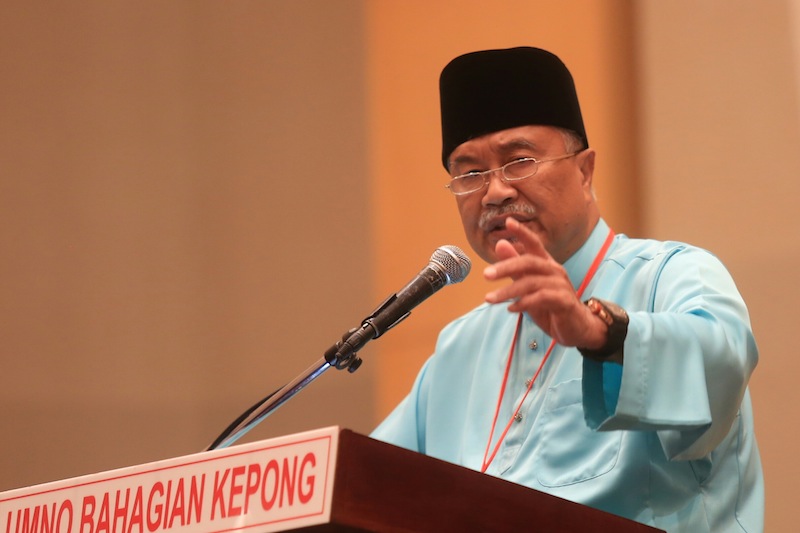
KUALA LUMPUR, Aug 23 — In the latest revelation on the RM2.6 billion saga, an Umno division leader said today that the funds found in Prime Minister Datuk Seri Najib Razak’s private accounts were donated by an “Arab king and prince”.
According to Kepong Umno division chief Datuk Rizuan Abdul Hamid, the money was meant to be a political donation to be used during Election 2013.
He said it was because of Najib’s anti-Jewish stance that the Arab royal family decided to make the large contribution.
“Because of that, the Arab king, Arab prince generously made the political donation for use during the 13th general election,” he said during the Kepong Umno division meeting today.
It was previously speculated that the RM2.6 billion had originated from 1Malaysia Development Berhad (1MDB), a brainchild of the prime minister’s that is currently under probe for alleged financial irregularities.
But the Malaysian Anti-Corruption Commission (MACC) recently refuted this, saying the funds had come from donors from the Middle East. The commission did not, however, reveal the identity or identities of the donors.
Yesterday, Umno vice-president Datuk Seri Ahmad Zahid Hamidi said he met with representatives of the Middle Eastern donor who told him the funds were given as a sign of thanks for Malaysia’s efforts against terrorism.
Zahid also said the donor wanted to keep Umno and Barisan Nasional (BN) in power.
Rizuan let slip again later that the donations originated from Arab royalty when berating Kedah Mentri Besar Datuk Seri Mukhriz Mahathir for allegedly questioning Najib’s receiving the RM2.6 billion donation.
“He questioned Datuk Seri Najib over the RM2.6 billion donation that was given by a prince from Saudi Arabia,” he said.
In a report on June 2, US-based daily Wall Street Journal (WSJ), citing documents from Malaysian investigators currently scrutinising the troubled 1Malaysia
Development Berhad’s (1MDB) financials, claimed that a money trail showed that US$700 million (RM2.6 billion) were moved among government agencies, banks and companies before it ended up in Najib’s accounts.
Najib has repeatedly denied taking funds from 1MDB or any other public entity for “personal gain” and his lawyers have since asked the WSJ to state if it is accusing the prime minister of misappropriating funds.
It was previously alleged that the funds were used for Barisan Nasional’s (BN) Election 2013 campaigns but detractors have pointed out that this would be illegal as RM2.6 billion far surpasses the legal limit allowed by Malaysia’s election laws.
It was also speculated that the RM2.6 billion had originated from 1MDB, a brainchild of the prime minister’s that is currently under probe for alleged financial irregularities.
But the Malaysian Anti-Corruption Commission (MACC) recently refuted this, saying the funds had come from donors from the Middle East. The commission did not, however, reveal the identity or identities of the donors. - Malay Mail, 23/8/2015


 Posts
Posts




No comments:
Post a Comment