ON HUMAN RIGHTS, JUSTICE AND PEACE ISSUES, LABOUR RIGHTS, MIGRANT RIGHTS, FOR THE ABOLITION OF THE DEATH PENALTY, TOWARDS AN END OF TORTURE, POLICE ABUSES, DISCRIMINATION...
In Malaysian Federal Constitution, there is recognition of ethnic groups considered behind in terms of economics/finances, business achievements, education, numbers in professions, etc - hence there is a provision for preferential treatment to ensure equity between the many ethnic groups in Malaysia.
But, one group that was missed out was the Orang Asli(the Indigenous people of Peninsular Malaysia), the earliest residents in Malaysia - there were also generally the most marginalized group and justly ought to have been included as ethnic groups
As of 2017, the Orang Asli accounted for 0.7% of the population of Peninsular Malaysia.
18 ethnic subgroups generally classified for official purposes under
Negrito, Senoi and Proto-Malay. They numbered 178,197 in 2010
representing a mere 0.6 per cent of the national population (28
million).
It is good that SUHAKAM(Malaysian Human Rights Commission) has called for
Article 153 of the Federal Constitution to be amended to explicitly recognize the Orang Asli as entitled to the same constitutional
safeguards and affirmative action measures as other indigenous groups.
Is it time to move away from ethnic based preferential system , in light of PM's Anwar Ibrahim view that it is Unjust for the very rich (being from the identified preferential ethnic groups) benefiting from the benefits provided for these preferred ethnic groups .... Hence, a proposal to move towards a preferential system for the Poor...
Amend Article 153 to recognise Orang Asli rights, says Suhakam
Suhakam
says this is essential to ensuring that the rights, identity, and
entitlements of the Orang Asli are no longer subject to administrative
ambiguity or exclusion.
Suhakam
said policy gaps have left indigenous communities vulnerable to land
disputes, displacement, and the loss of livelihoods. (Bernama pic)
PETALING JAYA:
The Human Rights Commission of Malaysia (Suhakam) has called for
Article 153 of the Federal Constitution to be amended to explicitly
recognise the Orang Asli as entitled to the same constitutional
safeguards and affirmative action measures as other indigenous groups.
In a statement, Suhakam said such
recognition was essential to ensuring that the rights, identity, and
entitlements of the Orang Asli were no longer subject to administrative
ambiguity or exclusion.
Suhakam said the amendment was also in
line with its call to develop and implement a comprehensive national
action plan to safeguard the rights of indigenous peoples.
“For decades, these communities have
endured systemic neglect, marginalisation, and violations of their
fundamental rights, particularly concerning land, identity, and
socio-economic inclusion,” said the rights body.
Article 153 of the Federal Constitution
ensures that the Malays and natives of East Malaysia have access to
“such proportion” of positions in the public service, scholarships, as
well as permits and licences for the operation of any trade or business,
as the Yang di-Pertuan Agong may deem reasonable.
In its statement, Suhakam also pushed for
the creation of an independent national commission on indigenous
peoples, as recommended in its National Inquiry into the Land Rights of Indigenous Peoples.
The proposed commission would advise the
government on relevant laws and policies, monitor sustainable
development on indigenous lands, encourage indigenous participation at
all levels, and conduct research on issues affecting their communities.
Suhakam said the commission must comprise
mostly indigenous representatives, selected transparently and with
community endorsement, to ensure that it truly represents their voices
and respects the principle of self-determination.
Suhakam said although the government accepted 17 of its 18 recommendations from the national inquiry, progress had been slow.
Suhakam also called for a full review of
the Aboriginal Peoples Act 1954 and a reform of the Orang Asli
development department (Jakoa).
It said Jakoa, currently the main federal
agency overseeing Orang Asli affairs, must evolve into a rights-based
institution capable of protecting indigenous rights, not just delivering
welfare.
Another critical issue highlighted in the
statement was a lack of alignment between federal and state policies,
particularly in the recognition and protection of ancestral and
customary land. Suhakam said policy gaps had left indigenous communities
vulnerable to land disputes, displacement, and the loss of livelihoods.
Suhakam said both federal and state
governments must uphold their responsibilities as custodians of
indigenous land and resources, including enforcing land rights through
clear, consistent policies aligned with international standards such as
the UN Declaration on the Rights of Indigenous Peoples and the ILO
Convention 169.
“These instruments affirm indigenous
peoples’ rights to free, prior, and informed consent, and to preserve
their culture, lands, and institutions,” said Suhakam.
Suhakam added that no meaningful reform
could happen without the active involvement of indigenous communities
and civil society, stressing the necessity of their participation to
ensure that any changes are effective and accepted by those directly
affected. - FMT, 3/6/2025
Anthony Loke must apologize and RESIGN as Minister of Transport for yet another death of a man falling on the LRT track - YES, this is not the 1st case - so, the Minister knew but did nothing or PROCRASTINATED until yet another died...
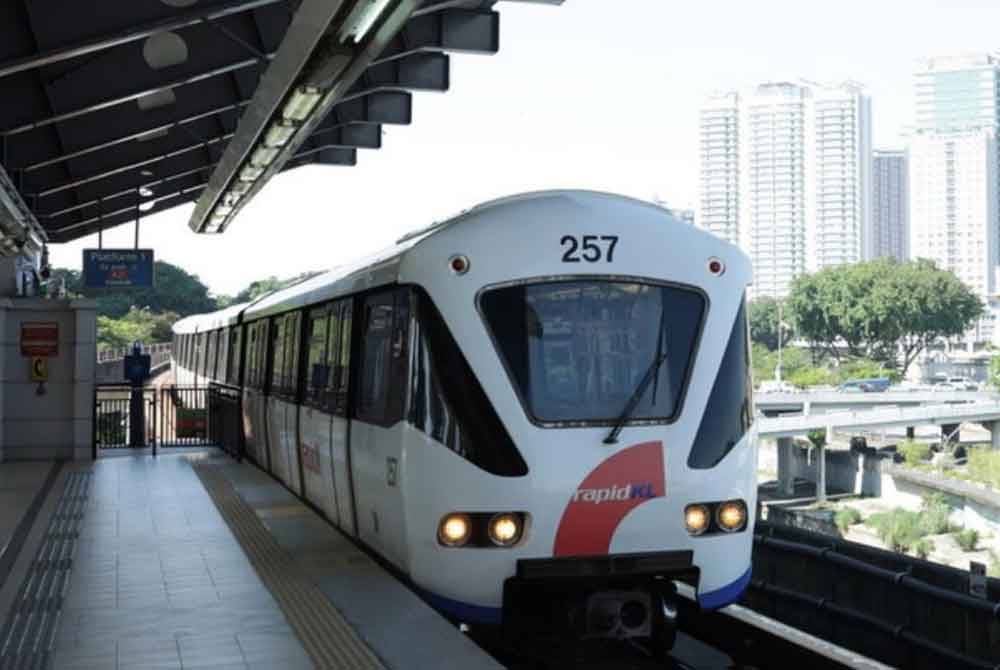
The
announcement comes in response to the death of a Taiwanese man, who is
believed to have fallen onto the tracks at the Pusat Bandar Puchong LRT
station and was subsequently hit by an oncoming train. The incident occurred at around 12.30pm on June 3.
To protect people from walking and falling onto tracks, and possibly killed by oncoming trains requires safety measures like platform doors - that prevent people from walking close to tracks, and falling or jumping on tracks ...this is a standard safety measure in many countries, that should have long been in place in all LRT and also train stations...
The Minister of Transport is RESPONSIBLE and he failed to ensure this safety measure was in place...WORSE, this is not the first time...in February, another person died
In February 2025, a visually impaired man died
after falling onto the tracks at the Titiwangsa LRT station in Kuala
Lumpur and was struck by a train.Similarly, in 2018, a man died
at the same Puchong station where the latest incident occurred when he
descended onto the tracks and was hit by an oncoming train.
At risk, have been persons of disability..
The
Society of the Blind in Malaysia (SBM) in February highlighted that, to
date, there have been at least 20 accidents involving visually impaired
individuals falling onto rail tracks at Monorail, LRT or KTM stations.
Ever since assuming office as Minister of Transport in about November 2022, Anthony Loke is fully aware of the problem - so, his FAULT is for speedy implementation of safety measures, and until then other temporary measures to prevent such incidents - maybe a placement of chains/ropes to prevent anyone falling off the tracks, where it is removed when the train arrives to facilitate entry/exit without incident...
Again after this recent June incident, he again he 'instructs' - this kind of Minister who 'talks' and do not effectively ACT is the kind of Minister Malaysia does not need.
The KLIA aerotrain is still not operational - WHY? We have the needed expertise in KTMB, etc - who could have resolved the problem speedily within weeks...
Another man has died by reason of the Minister's failures - Did he even APOLOGIZE? Will he personally compensate for the loss of life? Will the government take action against the operators of the LRT - will they be prosecuted and jailed? At the very least, the Company, its Directors/Owners should be charged ....
PUBLIC TRANSPORT - Most towns and rural areas today have no Public Busses running (the most affordable public transport) - and, again Anthony Loke fails in his responsibility - his focus should not just be his State(Negeri Sembilan - Seremban) or the Klang Valley or big West Coast towns - it should be ALL the smaller towns and rural areas where the poorer Malaysians live - who simply cannot afford that expensive Grab charges(if even Grab service is available in these areas) - we need a better Minister of Transport...?????
After Taiwanese tourist’s death, Loke orders platform doors at LRT stations
the
directive is aimed at enhancing passenger safety, especially at older
LRT stations that are not yet equipped with such features.
By SINAR DAILY REPORTER
04 Jun 2025 02:40pm
The
Transport Ministry has instructed Prasarana Malaysia Berhad to install
passenger platform doors, also known as platform screen doors, at all
Light Rail Transit (LRT) stations nationwide following the tragic death
of a Taiwanese tourist who was fatally struck by a train at the Pusat
Bandar Puchong station on Tuesday.
PUTRAJAYA
– The Transport Ministry (MOT) has instructed Prasarana Malaysia Berhad
to install passenger platform doors, also known as platform screen
doors, at all Light Rail Transit (LRT) stations following the tragic
death of a Taiwanese tourist who was fatally struck by a train at the
Pusat Bandar Puchong station on Tuesday.
Transport Minister
Anthony Loke said the directive is aimed at enhancing passenger safety,
especially at older LRT stations that are not yet equipped with such
features.
He
stated that Mass Rapid Transit (MRT) stations already have platform
doors that serve as barriers between passengers and the train tracks,
only opening once the train has arrived and come to a complete stop.
“Passenger
platform doors are already in place at MRT stations, serving as an
additional layer of protection before the train arrives.
“However,
there are still a number of LRT stations that have yet to be fitted
with this safety feature,” he said during a press conference on June 6.
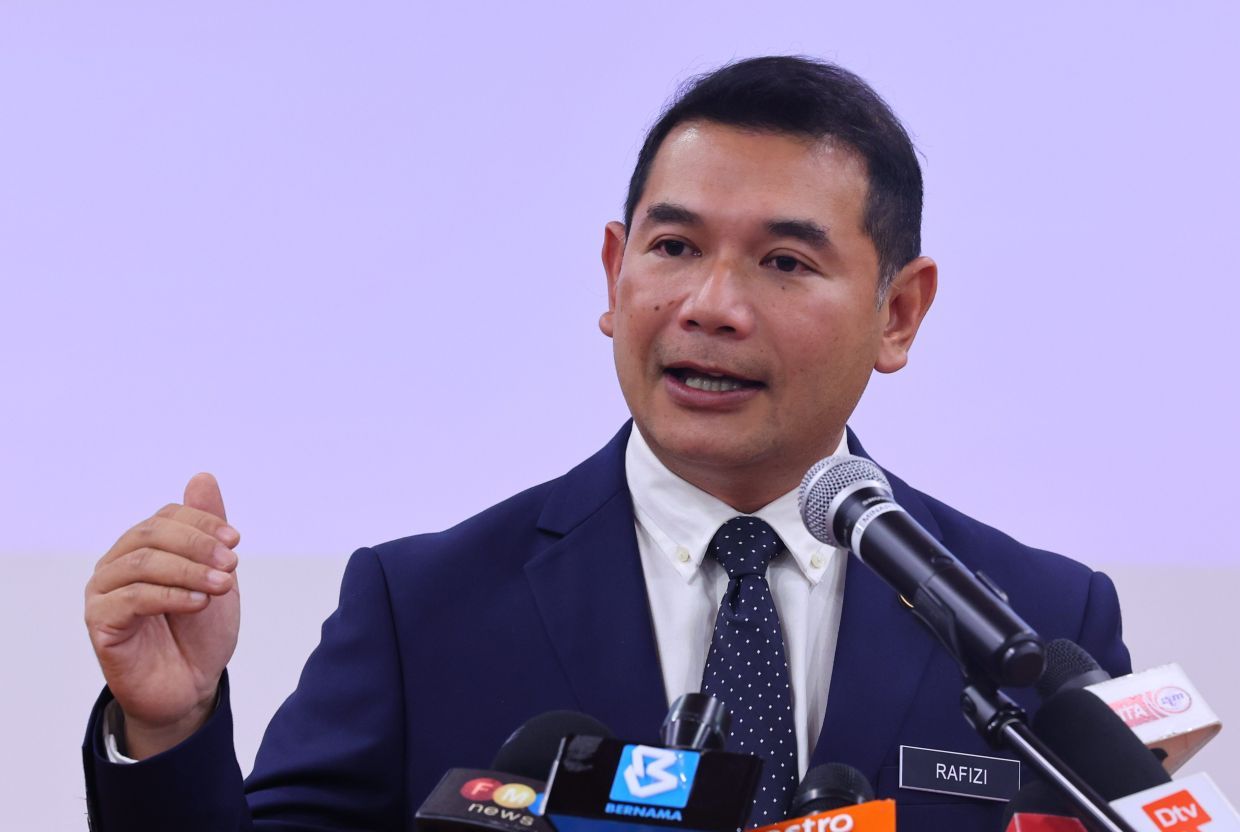
Transport Minister Anthony Loke speaks at a press conference today. Photo by Bernama
The
announcement comes in response to the death of a Taiwanese man, who is
believed to have fallen onto the tracks at the Pusat Bandar Puchong LRT
station and was subsequently hit by an oncoming train.
The incident occurred at around 12.30pm on June 3.
Closed-circuit
television (CCTV) cameras footage from the station has been obtained
and will be handed over to the police, who have been tasked with leading
the investigation.
“We understand that it was indeed an accident,
but we will leave it to the police to conduct a thorough
investigation,” said Loke.
He added that Prasarana would
coordinate with the Foreign Ministry (Wisma Putra) to liaise with the
victim’s family and assist with the necessary arrangements.
This
incident is not isolated. In February 2025, a visually impaired man died
after falling onto the tracks at the Titiwangsa LRT station in Kuala
Lumpur and was struck by a train.
Similarly, in 2018, a man died
at the same Puchong station where the latest incident occurred when he
descended onto the tracks and was hit by an oncoming train.
The
Society of the Blind in Malaysia (SBM) in February highlighted that, to
date, there have been at least 20 accidents involving visually impaired
individuals falling onto rail tracks at Monorail, LRT or KTM stations.
These
incidents have triggered public concern over safety gaps at certain
older LRT stations, with many questioning why crucial features like
platform doors remain absent in parts of the Klang Valley’s rail
infrastructure.
The installation of platform screen doors is
expected to be rolled out progressively, although the ministry has not
yet announced a specific timeline for implementation.
As
investigations continue, Loke stressed the government’s commitment to
improving public transport safety to prevent similar tragedies in the
future. - Sinar Daily, 4/6/2025
Report on blind man’s tragic death by LRT train sent to Transport Ministry, APAD
Prasarana is taking immediate
steps to improve safety at LRT stations, including increasing the number
of auxiliary police and operational staff on platforms
Updated 2 months ago · Published on 31 Mar 2025 5:38PM
The company is actively pursuing technological solutions to prevent such accidents from reoccurring - March 31, 2025
AN investigation report regarding the
tragic death of a visually impaired man, who was crushed by an LRT train
after falling onto the tracks at the Titiwangsa LRT station on February
22, has been submitted to the Ministry of Transport (MOT) and the Land
Public Transport Agency (APAD).
Bernama reported today that Prasarana
Malaysia Berhad CEO Mohd Azharuddin Mat Sah confirmed that a special
committee had been formed to investigate the incident and to propose
recommendations to prevent such accidents from happening again.
He mentioned that Prasarana is taking
immediate steps to improve safety at LRT stations, including increasing
the number of auxiliary police and operational staff on platforms,
particularly at stations commonly used by people with disabilities.
“To address medium-term solutions, we
will work closely with the authorities. If possible, we aim to install
sensors on platforms that will alert if someone has crossed into
dangerous areas,” he said, emphasising that long-term plans include
installing automatic platform screen doors (PSD) similar to those used
at MRT stations.
The fatal incident has spurred Prasarana
to enhance safety measures at stations, particularly for vulnerable
groups like those with disabilities. As part of their commitment, the
company is actively pursuing technological solutions to prevent such
accidents from reoccurring.
On the subject of public transport
operations, Mohd Azharuddin shared that 3,730 Prasarana staff, including
those working with Rapid KL buses and trains, were on duty to ensure
smooth operations during the Aidilfitri holiday. This ensures that
people can visit relatives and travel around the city, especially during
the festive period.
“The operations are running smoothly
today with 3,730 staff members ensuring everything goes as planned. When
people start returning to the city after the holidays, we will increase
the frequency of buses and trains, just like on regular working days,
with over 5,000 staff on hand,” he explained.
When asked about the recent cyber
security breach affecting certain computer systems at Kuala Lumpur
International Airport (KLIA) on March 23, Azharuddin assured the public
that security remains a top priority for the company, working in close
cooperation with the National Cyber Security Agency (NACSA).
“We have received instructions from the
Transport Minister Anthony Loke to ensure that our cyber security
systems remain at optimal levels,” he added.
Meanwhile, station manager Mohamad Fauzi
Abdul Manap, 47, who oversees the KLCC LRT station, shared his personal
experience of working during the festive season. Despite the sadness of
being away from his family, he expressed his commitment to ensuring the
smooth running of operations.
“It's certainly sad not to be able to go
back to my family, only seeing pictures of the celebrations on WhatsApp.
But we are used to it for the sake of our duty. As a station manager, I
have to ensure everything runs smoothly and all equipment functions
properly,” he said.
He also highlighted the challenges of
working in busy stations like KLCC, Pasar Seni, and Masjid Jamek during
the holidays, especially when dealing with foreign visitors who may
struggle to navigate the LRT services due to language barriers or
unfamiliarity with the system.
“We get a lot of foreign visitors, not
all of whom can read the signs or are familiar with how to use the LRT
services, which adds to the complexity of managing operations during
such a busy period,” Fauzi added. - March 31, 2025 - Vibes
What happened to the GISBH trials - that will prove that the allegations were TRUE, ...WHY has it not started yet?
GISBH(Global Ikhwan Services and Business Holdings) was a Malay(Bumiputra) business enterprise with business in Malaysia and many other countries - it could be the biggest most successful Malay business enterprise (which is said to have been developed without government assistance) - and it was the Malaysian government under Prime Minister Anwar Ibrahim that 'cracked down' and possibly 'destroyed' it - accounts were frozen, businesses all over the country ended up being shut down (In Temerloh, for instance so many different businesses have ceased operations). How many workers and those involved in these businesses have been affected - 10,000(or 100,000 or more) including families and children.
Additionally, 96 GISBH bank accounts were frozen, and four were closed, involving assets valued at over RM581,000.
All kind of ALLEGATIONS made - but the ODD thing is WHY HAVE THE TRIALS yet to begin - the public is waiting for the trials, to know if all those allegations are really true - or was the 'crackdown' really for a different reason. Remember, any person is PRESUMED INNOCENT until they are accorded a FAIR TRIAL and the Court finds them GUILTY beyond reasonable doubt, and CONVICTS them... [Remember the Prosecution can only charge anyone when they verily believe that they have sufficient evidence to proof guilt beyond reasonable doubt...so, there should be NO DELAY in the commencement of trial - the need to complete investigation is not an acceptable reason for the delay]
Malaysia remembers OPS LALLANG where there were all kind of allegations forwarded by the government to justify the detention - but, now we know it was all baseless ...
Remember MEMALI - again there was all kinds of justification - then the truth showed that the allegation was baseless...
We need the GISBH TRIALS to start - the people need to be convinced that the allegations made by the police and various authorities are TRUE - do not delay the TRIAL - let Justice be done.
ALLEGATIONS include child abuse in children/welfare homes - the fact that one or 2 of the persons in these establishment committed child abuse crimes NO way justifies the making the COMPANY/GISBH guilty of the crimes. If UMNO or PKR members are convicted of crimes, does that make UMNO or PKR guilty of the crimes as well?
Child/Welfare homes - do these not come under the jurisdiction of some Ministry, and is not that Ministry and its officers responsible for law enforcement to ensure all is done in accordance to law? So, was there a FAILURE of government - why no public officers arrested, investigated or charged for the failings in duty - were they 'bribed' to close their eyes to non-compliance of the law? When a report/complaint or the authority becomes suspicious, are they not obligated to speedily investigate and take action on the suspected person/home - odd that the raids were on many homes at the same time? Was the DELAY cause for more victims? Surely, such homes require the needed license/permits to operate?
One other questionable crime - being a member of an organised crime group. When did GISBH become an organised crime group? Was it gazetted as an organised crime group - when? Or is it open to charge anyone as they please without there being a need of any prior gazette/order that such a group is an 'organised crime group' - and this makes it most unjust - and allows for State abuse of power? What crimes did this 'organised crime group' commit - has it already been proven, and if not - proof will be tabled during trial, and so will the list of crimes that makes this an 'organised crime group' is simply unjust...???
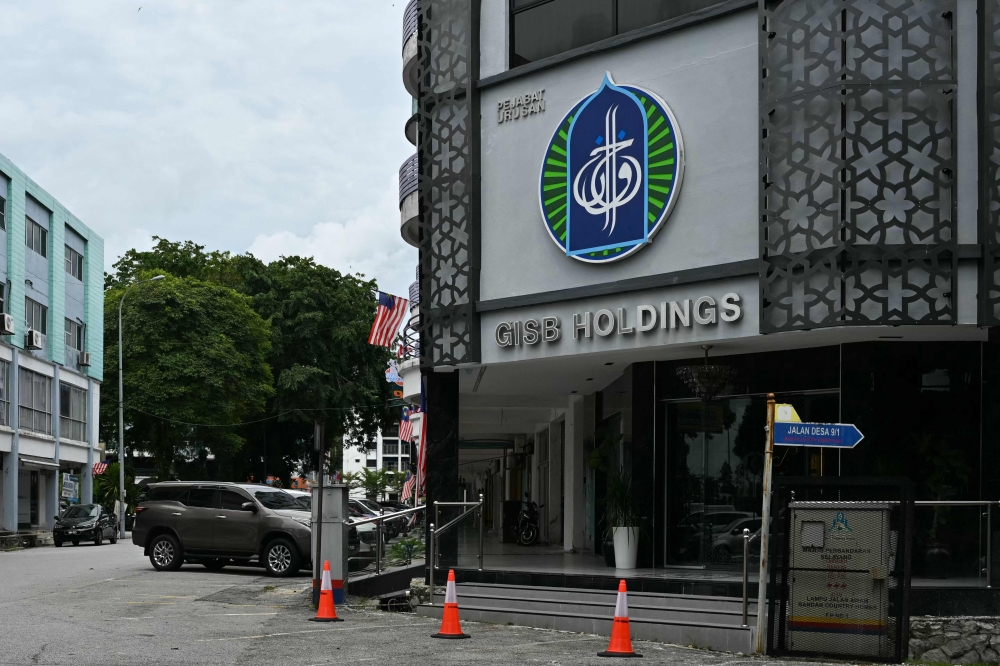
They were charged with being members of
an organized crime group at a location in Bandar Country Homes, Rawang,
between October 2020 and Sept 11, 2024. The charges were made under Section
130V(1) of the Penal Code, which provides for imprisonment of between
five and 20 years upon conviction.
It would have been more JUST if they were charged for specific crimes - not a crime so VAGUE as being a member of an 'organized criminal group' for which one does not even know what CRIMES these 'organized criminal group' even committed? How does an accused even defend himself/herself when the charge is so VAGUE > Worse, there is a legal presumption as well - pushing the burden of proving that he/she is not a member of such an 'organized criminal group"?
130V Member of an organized criminal group
(1) Whoever
is a member of an organized criminal group shall be punished with
imprisonment for a term of not less than five years and not more than
twenty years.
(2) Until the contrary is proved, a person shall be presumed to be a member of an organized criminal group where-
(a) such person can be identified as belonging to an organized criminal group; or
(b)
such person is found with a scheduled weapon as specified under the
Corrosive and Explosive Substances and Offensive Weapons Act 1958 [Act 357].
Was there a BAD INTENTION on the part of the State to charge them for this offence, knowing that it is a SOSMA listed offence, which means BAIL can be denied - forcing them to languish in detention until the trial begins and ends...? I looked at cases of persons charged with this offence - but I did not find any case where there was a TRIAL and I could not find any - most cases was about denial of Bail, and cases where the accussed pleaded Guilty - possibly because the delay in commencement of trial and having to languish indefinitely in detention without BAIL may have forced innocent persons to plead guilty just to have some certainty when they can be free after serving whatever sentence - THUS, it makes this a DRACONIAN piece of legislation, that can be easily abused by State. It must be repealed. In the GISBH, all have claimed trial - and the trial is still to start...
With regard to GISBH - one issue was they practiced a deviant Islam - but then the FATWAs against GISBH was just issued - but then there is a Constitutional guaranteed protection against retrospective criminal laws - no one can be punished for crimes that were not crimes when it was committed. So, it was not a crime if it was done before the FATWA was issued making GISBH a deviant muslim group...
7 Protection against retrospective criminal laws and repeated trials
(1)
No person shall be punished for an act or omission which was not
punishable by law when it was done or made, and no person shall suffer
greater punishment for an offence than was prescribed by law at the time
it was committed.
Was GISBH made a 'organized criminal organization' because of these FATWAs?
Consequently,
on Oct 3, the Sultan of Selangor, Sultan Sharafuddin Idris Shah,
approved the fatwa issued by the state’s Fatwa Committee, declaring that
the leaders, followers, workers, or members of GISBH and its network
deviated from the true Islamic faith. The same fatwa was issued in
Pahang, Perlis, Negeri Sembilan, Sabah, Melaka, Perak, and Penang,
followed by a similar decision by the National Council of Islamic
Religious Affairs on Nov 14.
What makes GISBH an organised criminal group?
Since, the crackdown, how many leaders, followers, workers, or members of GISBH and its network
have been charged and convicted for being Islamic deviants by the various State Syariah Courts? This is an important issue...
For Justice to be done, we need SPEEDY TRIAL - which should be completed fast, as the accussed (presumed innocent) languish in Detention without BAIL until the trial is over. Don't make DELAYING TRIAL a tactic to 'force' the innocent to plead guilty..
IMMEDIATELY commence the TRIAL of persons who are pre-conviction detainees in Malaysian prison, or alternatively DNAA all of them (as they can all be re-charged once the prosecution and courts are ready to start and complete trials speedily)
GISBH - Was it an ABUSE OF POWER, for if not, speedily start the trial and prove them in a FAIR TRIAL to be guilty beyond reasonable doubt..
2024 in review: GISBH raids expose dark secrets of alleged child exploitation and Al-Arqam ties
GISB
Holdings (GISBH) Sdn Bhd chief executive officer Datuk Nasiruddin Mohd
Ali is brought to the Sessions Court in Selayang October 23, 2024. —
Bernama pic
Tuesday, 24 Dec 2024 10:27 AM MYT
KUALA
LUMPUR, Dec 24 — Three decades after the teachings of Al-Arqam were
declared deviant in 1994, the nation was once again abuzz with
controversy following allegations surrounding GISB Holdings Sdn Bhd
(GISBH), an organisation reportedly linked to the group.
GISBH,
known for its extensive business network comprising restaurants, hotels,
clinics, and tahfiz centres, came under scrutiny this year after raids
uncovered books associated with Al-Arqam’s teachings.
Authorities
also investigated allegations of exploitation, abuse, and other crimes,
based on reports from individuals claiming to be victims.
The
controversy surrounding GISBH broke out when the Malaysian Centre for
the Study of Deviant Teachings (PUKAS) claimed the company was linked to
alleged cult activities, via its Facebook page on Aug 16.
Subsequently,
the Perlis Mufti Datuk Dr. Mohd Asri Zainul Abidin raised issues of
purported violence and cruelty within the group, urging an investigation
and intervention by the authorities.
Based
on reports and intelligence, the Royal Malaysia Police (PDRM) launched
the first phase of Op Global in early September, conducting raids on 20
charitable homes believed to be linked to GISBH in Selangor and Negeri
Sembilan.
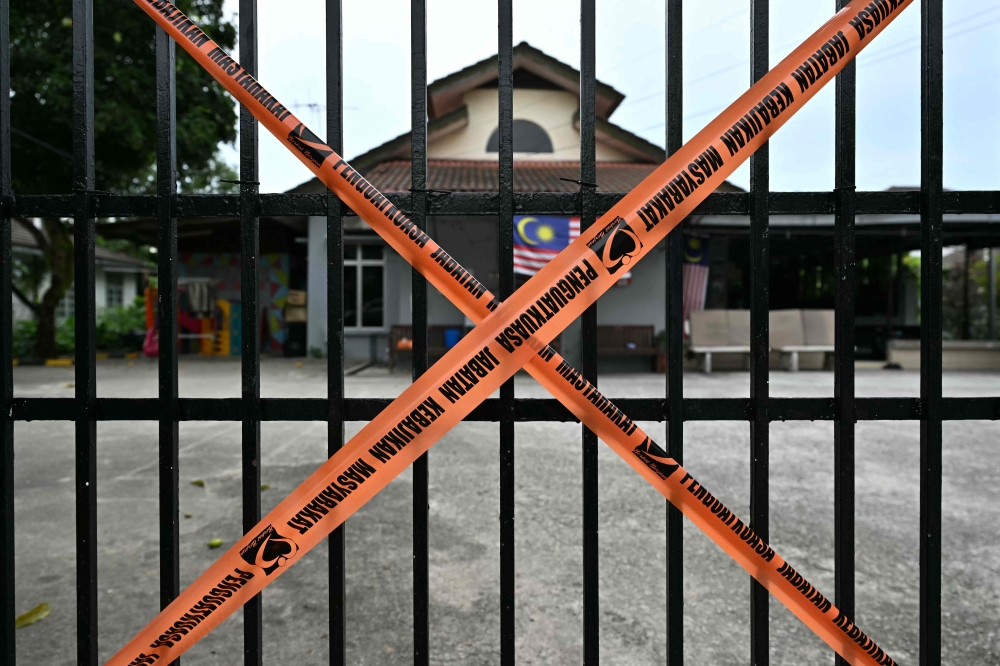
Social
Welfare Department tape blocks off a gate at the entrance to a
GISBH-linked care home after a crackdown by authorities in Subang Jaya
September 12, 2024. — AFP pic
The
coordinated operation, involving multiple enforcement agencies
including religious authorities led to the detention of 171 individuals
to assist in investigations into cases of child abuse and religious
exploitation.
A total of 402 individuals, comprising 201 boys and
201 girls aged between one and 17, were also rescued. Among them were 10
children with disabilities, including autism.
The rescued
children were sent to the Police Training Centre (Pulapol) in Kuala
Lumpur for health screenings, which revealed that 392 of them showed
signs of suspected neglect and abuse, with both physical and emotional
harm.
However, GISBH released a statement denying allegations of
exploiting children for labour, asserting they would not engage in such
activities that violate the law, especially in matters concerning
children.
The issue also drew the attention of the King, His
Majesty Sultan Ibrahim, who ordered the PDRM to conduct an immediate and
thorough investigation into allegations of child abuse and
mistreatment. Prime Minister Datuk Seri Anwar Ibrahim similarly called
for swift action on the case.
The
health screening results of the 266 children rescued from GISB Holdings
Sdn Bhd (GISBH) in Selangor found that 26.8 per cent are stunted while
6.8 per cent suffer from serious stunting. — AFP pic
The
ensuing police investigation led to the remand of numerous individuals
to assist in the inquiry, including senior management members, their
spouses, several GISBH leaders, and the son of former Al-Arqam leader
Ashaari Mohammad.
Additionally, 96 GISBH bank accounts were frozen, and four were closed, involving assets valued at over RM581,000.
Multiple
investigation papers were initiated under the Child Act 2001 (Act 611);
the Sexual Offences Against Children Act 2017 (Act 792); the
Anti-Trafficking in Persons and Anti-Smuggling of Migrants Act 2007 (Act
670); the Penal Code (Act 574), and other applicable laws.
In the
fourth phase of Op Global, authorities raided GISBH premises across
several states, seizing pamphlets and documents allegedly associated
with Al-Arqam teachings contrary to Islamic principles, along with
various items linked to superstitious practices.
In a separate
operation in Kelantan, authorities raided three houses in Kampung Panji,
suspected to be the residences of GISBH’s CEO and his family.
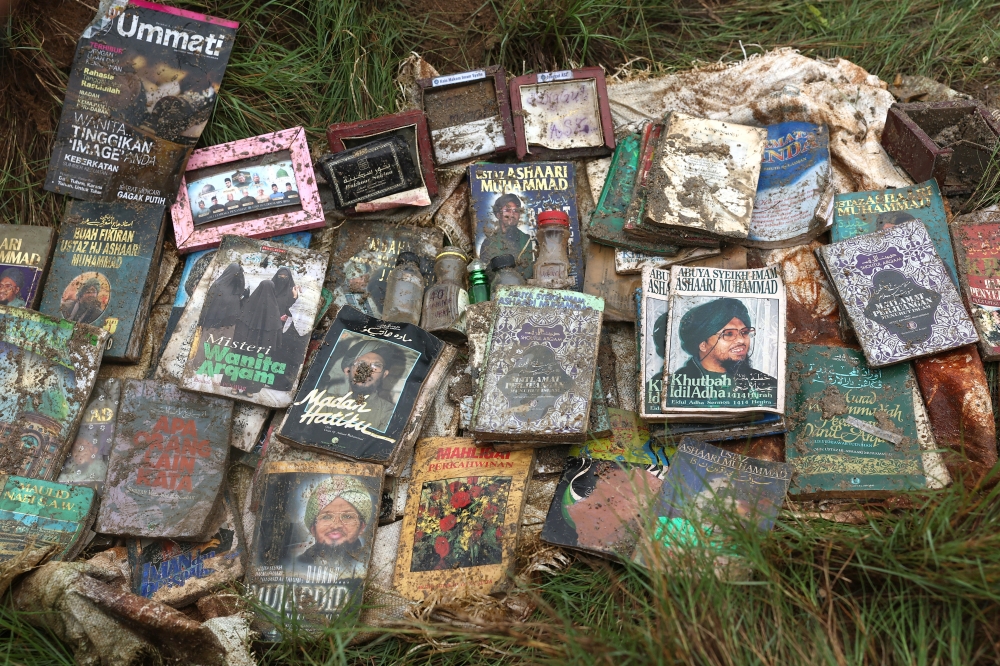
Various Al-Arqam doctrine-based books and documents were discovered buried near a riverbank, with some reportedly burned.
A
file photograph shows Al-Arqam material seized from three houses of top
GISBH executives, in Kampung Pinji September 21, 2024. — Bernama pic
Consequently,
on Oct 3, the Sultan of Selangor, Sultan Sharafuddin Idris Shah,
approved the fatwa issued by the state’s Fatwa Committee, declaring that
the leaders, followers, workers, or members of GISBH and its network
deviated from the true Islamic faith.
The same fatwa was issued in
Pahang, Perlis, Negeri Sembilan, Sabah, Melaka, Perak, and Penang,
followed by a similar decision by the National Council of Islamic
Religious Affairs on Nov 14.
By Oct 10, police had initiated 97
investigation papers covering numerous offences, including under Section
130V of the Penal Code, the Anti-Money Laundering and Anti-Terrorism
Financing Act 2001, and the Sexual Offenses Against Children Act 2017.
Other
related laws involved the Child Act 2001, Sections 354 and 506 of the
Penal Code, the Anti-Trafficking in Persons and Anti-Smuggling of
Migrants Act 2007, and the Child Care Centre Act 1993.
On Oct 23,
GISBH CEO Datuk Nasiruddin Mohd Ali and 21 others were charged in the
Selayang Sessions Court under Section 130V (1) of the Penal Code with
being members of a criminal syndicate, which carries a prison sentence
of between 5 and 20 years upon conviction.
On Dec 23, the Selayang Sessions Court transferred the case to the Shah Alam High Court.
As
of the time of writing, 625 victims, ranging in age from two months to
28 years, have been rescued since Op Global began in September.
The police are still carrying out investigations, particularly involving followers and GISBH premises abroad. — Bernama, Malay Mail24 Dec 2024
WELFARE approach - Give a person a fish to eat, and continuously give him fishes all the time.
DEVELOPMENT approach - Teach the person to fish. Thus this method provides the needed skills, for one to escape poverty - and become independent. The original FELDA model did this - the poor and landless were given land, and taught skills so that they could become rubber/oil palm small holders - ultimately out of poverty. The State provided loans/housing with the understanding that the smallholder will ultimately pay back the loan, after his efforts bore fruit and profit. The principle was good, and it protected the DIGNITY of the worker - and led to liberation from poverty.
JUSTICE approach - But, the problem, is that self-empowerment alone is not enough. Knowing how to fish alone is not enough, when the fish in the river starts dying because of pollution caused by some factory upstream illegally discharging waste, some logging activities affecting the river, the building of some dam/land reclamation project that affects the fish in the water. Hence, the need for empowered persons to understand the socio-economic and political factors that may affect his/her livelihood so that he can act to prevent such happenings - to secure his/her livelihood and life..and the live of the community/nation.
Thus, whilst the welfare approach may be the first - to ensure that the poor have sufficient food, shelter, clothing > it cannot stop there but it must move forward UNLESS the State or POLITICIANS simple just want to build a culture of 'DEPENDENCY' - so that the people will always DEPEND on them, and will be unable to act on their own, not yet EMPOWERED to ensure their life and livelihood, and prevent any future destruction of that livelihood. The end of DEPENDENCY - the beginning of informed choices for a BETTER LIFE for oneself and all others.
Many a politician (and even political parties) prefer to cultivate DEPENDENCY - so that people will always believe that without these politician/political party, they will be goners .... so rather than striving for independence, empowerment,... dependency to keep them all 'poor', and believe that they need the politician or party to survive... without whom, they will again be marginalized and suffer.
When Malaysia achieved independence, it is an undeniable fact that many people were 'behind' in terms of education, skills, etc - it is the case in any community/nation, where special attention may be needed to UPLIFT people to a more equitable position...Rather than providing for a social upliftment or empowerment program based on poverty, marginalization, Malaysia took an ethnic-based approach - preferential treatment for Malays and natives of Sabah and Sarawak... unfortunately some groups were missed out like the many Orang Asli communities in Peninsular Malaysia(many of whom were in a far worse condition) - Subsequent governments, to date, have yet to amend the Constitution to include the different Orang Asli communities as a group that ought to be accorded preferential treatment.
When Prime Minister Anwar Ibrahim came into the picture, he identified a serious flaw, in that the very rich from these identified preferred groups were benefiting from this ethnic based solution, and so he took steps to remove the really rich from using/benefiting -
“We are not reducing or discontinuing subsidies to the people but
subsidies such as electricity and Tabung Haji benefited by the rich are
not reasonable to be continued,” he[Prime Minister Anwar Ibrahim] said. He said he could not
understand why there are still people defending subsidies for Malaysia’s
rich who are said to make up roughly 20 per cent of income earners and
are known colloquially as the T20 — for top 20 percentile demographic
group....On May 22, Anwar said the exclusion would further include the T20 group
from the subsidy scheme, for the purpose of facilitating the granting of
subsidies in a more targeted manner. - Malay Mail, 12/6/2023
In my opinion, Anwar made a GREAT move - and moved towards an option for the POOR and MARGINALIZED, irrespective of ethnicity/religion > so no more will the RICH benefit from the ethnic based preferential system.
BUT, save for subsidies, he failed to address other issues like scholarship, places in educational institute, licenses, contracts, --- will the top rich Malays still be getting scholarship and university places(in Malaysia and overseas) for their children? Anwar's OPTION FOR THE POOR approach is right and we will see if he follows through...
Anwar's WELFARE approach to aid the POOR currently include the RAHMAH scheme, which include direct cash aid to recipients - it is NOT NEW, just a re-branding since Najib was Prime Minister
Sumbangan Tunai Rahmah (STR) handouts will be distributed in stages
from Jan 17 onwards. This is the fourth time that the programme has been renamed since
Najib Razak's administration, when it was known as Bantuan Rakyat
1Malaysia or BR1M. It was rebranded as Bantuan Sara Hidup (BSH) after Pakatan Harapan
(PH), led by Dr Mahathir Mohamad, took over the federal administration
in 2018, and Bantuan Prihatin Rakyat (BPR) under the Perikatan Nasional
government led by Muhyiddin Yassin. The administration of Ismail Sabri Yaakob, which took over from
Muhyiddin in 2021, called the handouts Bantuan Keluarga Malaysia (BKM),
in line with the Keluarga Malaysia tagline being promoted at the time.
Menu Rahmah Programme have agreed to provide daily meals (either lunch
or dinner) at a rate not exceeding RM5 per meal. Usually, the dishes in
the Menu Rahmah Programme contain one source of protein either chicken
or fish and one type of vegetable.
One fundamental problem is that it is NOT A RIGHT - for that, we need a LAW that clearly stipulates the RIGHT TO ENTITLEMENT, possibly clearly stating who exactly is entitled, and HOW MUCH is the entitlement - for so long as it is not a RIGHT in law, it all depends on the sitting PM and his/her government, and it can be extinguished anytime. There is also the problem of determining who is entitled to receive it > for Malaysia still do not have a clear mechanism to determine who should be getting it - Does it just rely on self-declared monthly income, without taking into consideration other sources of income - shares/unit trust, lands, other buildings, etc? The RISK is that many who are really entitled may not get it...
The other problem is that AID in fact only is RM100 or RM200 a month - certainly far from enough for any poor person to survive on. It should be sufficient to cover rental, food, transportation and other NEEDED expenditure to survive...at least RM2,000 per month for those who really do not have any income whatsoever.
Now, the scheme helps 8.4 million recipients (or do they mean families?).
Rather than AID(or Fish), should we not protect the DIGNITY of people like the provision of job/work as done in some countries. What they do is to provide small jobs - like sweeping roads, office cleaning, selling parking tickets,etc - simple jobs within their means.. better jobs with an income, rather than welfare aid..
Malaysia has acknowledged that 8.4 million people need assistance - welfare aid is not a solution - it is better to provide jobs, appropriate to their capacity - Local Government and other governments can do this... After all, one problem in Malaysia is road cleanliness - now, most roads are not swept and maintained. In China, we see many people employed to sweep roads daily -- Rather than giving jobs like cutting grass to contractors, consider giving it to the poor in the towns, ...Malaysia have been removing jobs like tol booth collectors, petrol station attendants (now requiring drivers to fill their own petrol) - bring it back and give it to the local poor... security guards in schools.. better jobs, which preserve dignity, that outright aid..
FOR the elderly poor above 60 years of age, a government PENSION scheme until the pass on... let our OLD FOLKS retire and enjoy the remaining of their life. {As it is, thanks to the 'abuse' of the EPF/KWSP scheme allowing people to withdraw from the 'old age savings' have left many with no money... a poor scheme to provide houses for the poor has caused financial obligation of repaying loans even after they reach 60...
The government must deal with this issue of POVERTY amongst local Malaysians - as cost of living sky rockets, money set aside for 'old age', if any' is clearly not enough...
Sumbangan Tunai Rahmah (STR) 2024 explained: Are you eligible to claim?
finance
2024-05-03
In support of the B40
community, the Malaysian Government has kickstarted the distribution of
phase 2 of the Sumbangan Tunai Rahmah (STR) programme. They're
increasing the funds by 20%, adding to last year's RM1.26 billion
allocation to reach RM1.5 billion. This will benefit 8.4 million
Malaysians, who will receive payments ranging from RM100 to RM650, based
on their individual needs.
What is Sumbangan Tunai Rahmah (STR) programme?
Formerly known as Bantuan Keluarga Malaysia, the
Sumbangan Tunai Rahmah (STR) programme, or Rahmah Cash Contribution in
English, provides cash assistance to Malaysians from the poor, B40 and
M40 individuals, households, and senior citizens. The programme aims to
alleviate financial burdens and enhance the well-being of eligible
recipients.
Payments are distributed in four phases throughout the year:
• Phase 1: January 2024
• Phase 2: April 2024
• Phase 3: August 2024
• Phase 4: November 2024
These phases ensure that assistance is provided
periodically to those in need, contributing to the overall welfare of
Malaysian society.
Here’s what you need to know about eligibility and claiming:
This is the fourth time the programme has been renamed since the Najib Razak era.
Staff Writers
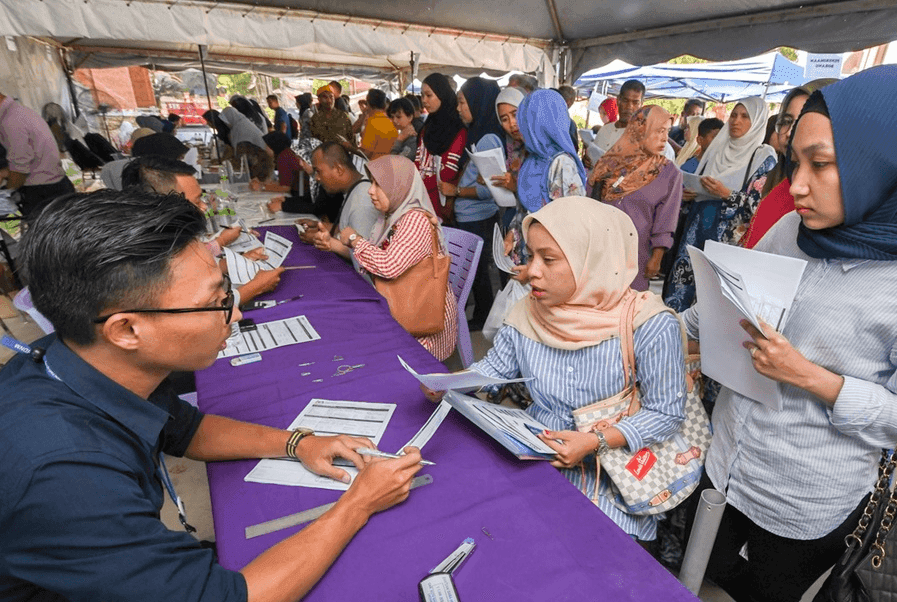
People
queue to check their eligibility for Bantuan Sara Hidup payments at an
Inland Revenue Board office in 2019. Photo: Bernama
The
government's cash aid programme has undergone yet another round of
rebranding, with Prime Minister Anwar Ibrahim announcing today that
Sumbangan Tunai Rahmah (STR) handouts will be distributed in stages
from Jan 17 onwards.
This is the fourth time that the programme has been renamed since
Najib Razak's administration, when it was known as Bantuan Rakyat
1Malaysia or BR1M.
It was rebranded as Bantuan Sara Hidup (BSH) after Pakatan Harapan
(PH), led by Dr Mahathir Mohamad, took over the federal administration
in 2018, and Bantuan Prihatin Rakyat (BPR) under the Perikatan Nasional
government led by Muhyiddin Yassin.
The administration of Ismail Sabri Yaakob, which took over from
Muhyiddin in 2021, called the handouts Bantuan Keluarga Malaysia (BKM),
in line with the Keluarga Malaysia tagline being promoted at the time.
In his announcement today, Anwar, who leads a coalition government
comprising PH, Barisan Nasional, Gabungan Parti Sarawak, Gabungan Rakyat
Sabah and several other parties, said a total of RM1.67 billion would
be disbursed under the STR programme.
Of this, RM1.20 billion will go to some 400 households in payments of
RM300 while the rest will be divided between RM100 handouts for 1.2
million single senior citizens and RM100 handouts for 3.5 million single
individuals. Malaysia Now, 16/1/2023
Choosing Ministers - time for a re-evaluation of how Ministers are chosen, noting that individual Ministers have a lot of power, as contained in Acts of Parliament, which can be exercised without consent of PM or Cabinet, thus, the need to ENSURE that only principled, ethical, suitable and qualified persons are made Ministers and/or Deputy Ministers - Time to introduce laws like PUBLIC APPOINTMENTS (PARLIAMENTARY APPROVAL) ACT, i.e. PM can nominate, but Parliament will vet and approve, before the King appoints.
At present, it is the PM that picks and causes appointment - but it seems, that he alone, picks MAYBE on the basis of whether one is a holder of party position, or by reason of 'deals' with coalition partners, OR .... - END RESULT - RISK of an unsuitable person becoming a Minister, vested with power that even the PM or Cabinet cannot control. Should we also enact a law, that ensures the need for Cabinet approval before a Minister can exercise his/her power?
Was Rafizi and Nik Nazmi even qualified or suitable to be appointed Ministers - or were they appointed simply because they were Deputy President and Vice President of PKR?
Note being a leader of a political party does not translate into suitability or qualification to be a Minister... Some good political leaders of parties make bad members of the Cabinet.. Malaysians should demand ONLY Suitable and Qualified persons be made Ministers.
Rafizi and Nik Nazmi, after they lost party elections - they resigned as Ministers - was it a VOTE of loss of confidence in PM Anwar Ibrahim? Or was it just proof of their 'unsuitability' to be even have been appointed as Ministers.
Worse, Rafizi and Nik Nazmi resigned, and went on leave stating their resignation will be after their leave is over? Should Ministers who wanted to resign be responsible enough in completing their work, and preparing 'hand-over' documents so that their replacements could take over easily. Again, is this a sign of irresponsibility and unsuitableness as Ministers.
Rafizi confirmed that his
resignation will take effect on June 17 and that he will be on annual
leave until then....“I
have submitted my resignation letter to Prime Minister Datuk Seri Anwar
Ibrahim, effective July 4, 2025. I will be on leave starting tomorrow
until July 3, 2025,” he [Nik Nazmi] said.
You are a Minister of Malaysia, and losing party elections should not mean you forsake your duties/responsibilities as Ministers. If you quit the party in protest, or even stayed in the party but opted to declare loss of confidence in Anwar as PM, it may be OK(as what the BERSATU MPs did), but suddenly abandoning your Ministerial responsibilities is a totally different thing - it is a BETRAYAL of the people of Malaysia.
One must note that some of Anwar's Ministers have been found wanting - thus, the time has come for vetting and approval by Parliament - to ensure Malaysia has suitable and qualified Ministers and Deputy Ministers (Art. 43A(2)(2) Deputy
Ministers shall assist Ministers in the discharge of their duties and
functions, and for such purpose shall have all the powers of Ministers.)
It must be noted that Prime Minister Anwar Ibrahim's choice of Ministers and Deputy Ministers have raised some concern. Whilst previous Prime Ministers; Muhyiddin and Ismail Sabri, chose not to appoint anyone who was facing investigations and trials as Ministers or Deputy Ministers, Anwar, on the other hand, appointed some of them in the 'court cluster' as Ministers/Deputy Ministers.
One may argue that Anwar had NO CHOICE because that may have been a 'condition' for BN joining PH, so that the coalition government could be formed, and Anwar could finally be the Prime Minister... Alternatively, PH would not be able to form the government...
Many were then supportive of PH because of its REFORM agenda and promises - but today, as REFORMS never really came, people's perception, and possibility support, for PH may have declined.
Now, the fact that you lost PKR elections, and even GE15 elections is not a reason why you are not suitable to be appointed as Minister - the appointment of Saifuddin Nasution as Home Minister is case in point.
But, if you are facing a charge or trial for a criminal offence makes one unsuitable for being appointed Minister, or remaining as Minister..The case in point is Zahid Hamidi, who was appointed Deputy Prime Minister.
The point is made clear in the Federal Constitution itself, whereby Article 33A,(1) Where the
Yang di-Pertuan Agong ischarged with an offence under any law in the
Special Court established under Part XV he shall cease to exercise the
functions of the Yang di-Pertuan Agong.
Naturally, the same principle ought to apply to the Prime Minister, Minister or Deputy Minister - i.e. if they are charged with any offence and facing trial, they should never be appointed as Minister.
Zahid Hamidi, when PM Anwar made him Minister, and Deputy Prime Minister was still facing trial.
It was only on 4/9/2023, that Zahid Hamidi was granted a DNAA (Discharge Not Amounting To An Acquittal). No problem about appointing Zahid as Minister after he was discharged - meaning facing no more charge, but the appointment when he was charged and facing a trial was wrong - same standards that apply to the King should apply to any of the King appointed Ministers.
That is WHY we need to amend the LAWS requiring APPROVAL of Parliament for all persons that Prime Minister Anwar wants to be appointed as Ministers or Deputy Ministers.
Time for PUBLIC APPOINTMENTS (PARLIAMENTARY APPROVAL) ACT for Malaysia to ensure that only SUITABLE and QUALIFIED persons are made Ministers and Deputy Ministers in Malaysia.
Such an ACT that requires Parliamentary Approval should also apply to the Public Prosecutor, and all heads of Law Enforcement - police, MACC, ...
A NEEDED REFORM....
Rafizi resigns as Economy Minister
Neville Timothy Sanders
Nation
28 May 2025
Mohd Rafizi Ramli
KUALA LUMPUR: Economy Minister Datuk Seri Rafizi
Ramli, has officially tendered his resignation from the Cabinet to Prime
Minister Datuk Seri Anwar Ibrahim, citing his recent defeat in the
Parti Keadilan Rakyat (PKR) party elections as the primary reason for
stepping down.
In his Facebook post on Wednesday, Rafizi confirmed that his
resignation will take effect on June 17 and that he will be on annual
leave until then.
He emphasised that he no longer holds the mandate from his party to
represent and implement the people-centric agenda championed by PKR
within the government.
“I entered politics to foster a new political culture centred on accountability and the people’s mandate.
“Following my loss in the recent PKR elections, it is only right that
I pave the way for new leadership to take my place,” he said.
Rafizi, who is the Pandan MP, also urged the Cabinet to continue with
bold reforms introduced under the 13th Malaysia Plan (13MP), especially
in the education sector, despite his departure.
“I would like to confirm that 13MP has been finalised and is ready to be tabled in the next parliamentary session,” he added.
Rafizi, 47, hails from Besut, Terengganu and is an electrical
engineering graduate from the University of Leeds, the United Kingdom.
He began his career as a chartered accountant and held senior
positions in the private sector before venturing into politics in the
late 2000s.
Known for his data-driven approach and policy advocacy, Rafizi gained
prominence for his role in pushing for economic reforms and greater
transparency in governance.
He served as PKR vice president and was re-elected to Parliament in 2022 after a brief hiatus from active politics.
Rafizi expressed gratitude to the civil service, media, and
stakeholders who supported him during his tenure and reaffirmed his
belief in the long-term economic restructuring agenda laid out by the
Ministry of Economy.
“Our journey towards building a stronger economic structure and achieving high-income nation status is far from over.
“We must remain committed to making difficult but necessary decisions for the benefit of future generations,” he said.
His departure marks a significant shift in the economic leadership of
the Unity Government, with speculation mounting over who will succeed
him in the pivotal role. - Sarawak Tribune, 28/5/2025
After Rafizi, Nik Nazmi resigns as minister following PKR election loss
Minister
of Natural Resources and Environmental Sustainability Nik Nazmi Nik
Ahmad said his resignation will take effect on July 4, with him going on
leave beginning tomorrow. — Bernama pic
By Malay Mail
Wednesday, 28 May 2025 4:38 PM MYT
KUALA
LUMPUR, May 28 — Following Datuk Seri Rafizi Ramli’s resignation as
economy minister, Nik Nazmi Nik Ahmad has today announced his decision
to step down as natural resources and environmental sustainability
minister after failing to retain his PKR vice-presidency.
In a statement today, Nik Nazmi said his resignation will take effect on July 4, with him going on leave beginning tomorrow.
“I
have submitted my resignation letter to Prime Minister Datuk Seri Anwar
Ibrahim, effective July 4, 2025. I will be on leave starting tomorrow
until July 3, 2025,” he said.
Nik Nazmi reflected on his tenure,
highlighting key reforms achieved under his leadership, including
amendments to the Environmental Quality Act 1974, increased transparency
in environmental impact assessments, and significant progress in
biodiversity protection.
“Malaysia became one of the earliest
nations to submit the National Biodiversity Strategies and Action Plan,
which received recognition from United Nations Secretary-General Antonio
Guterres,” he noted.
He
also cited accomplishments such as the passing of the Energy Efficiency
and Conservation Act and the introduction of the much-needed Tariff
Setting Mechanism in the water sector.
Nik Nazmi acknowledged that
his Cabinet appointment had been influenced by his position as a PKR
vice-president, which he lost in the party’s recent elections.
“Given that I was unable to retain the position, I have decided to resign as minister,” he said.
He
expressed gratitude to civil servants, his office team, and
stakeholders for their support, adding that he looks forward to resuming
his responsibilities as Setiawangsa MP.
Quoting late British MP Tony Benn, Nik Nazmi said, “I am leaving the Cabinet to give more time to politics and public service.”
Rafizi,
who lost his bid for re-election as PKR deputy president to Nurul Izzah
Anwar, announced his resignation as economy minister earlier today.
The
Pandan MP had previously stated his intention to step down if he failed
to secure the deputy presidency, citing the importance of Cabinet
members holding party leadership positions.
The resignations of
Rafizi and Nik Nazmi signal significant shifts in the party’s
representation within the federal administration and raise questions
about the Cabinet’s future composition. - Malay Mail, 28/5/2025
NO. 33 OF 2011 PUBLIC APPOINTMENTS (PARLIAMENTARY APPROVAL) ACT [Date of assent: 11th November, 2011.] [Date of commencement: 14th November, 2011.]
An Act of the Parliament to provide for procedures for parliamentary approval of constitutional and statutory appointments and for connected purposes
1. Short title This Act may be cited as the Public Appointments (Parliamentary Approval) Act, 2011.
2. Interpretation
In this Act, unless the context otherwise requires—
“appointing authority” means any person who, under the Constitution or any other law, is required to make an appointment for which the approval of Parliament is required;
“appointment” includes any re-appointment to the same body, whether or not in the same capacity;
“candidate” means a person who has been proposed or nominated for appointment to a public office;
“Clerk” means the Clerk of the relevant House of Parliament; and “Committee” means the relevant committee of Parliament or such other Committee as the Speaker may, for good reasons, direct.
3. Exercise of powers of appointment An appointment under the Constitution or any other law for which the approval of Parliament is required shall not be made unless the appointment is approved or deemed to have been approved by Parliament in accordance with this Act.
4. Notification of vetting requirements Any advertisement inviting applications for nomination for appointment to an office to which this Act applies shall indicate that candidates so nominated shall be required to appear before a committee of Parliament for vetting
Malaysia needs a public transport reset
-
Malaysia must stop building more urban highways which are costly and do not
solve traffic congestion.
The post Malaysia needs a public transport reset ap...
APA PADA NAMA
-
1. Sejarah Malaysia dikait rapat dengan UMNO, Parti Kebangsaan Melayu
Bersatu. Parti UMNO pula dikenali dengan pemimpinnya. 2. Demikian di
peringkat permul...
China and HK may be barred from Asia Team meet
-
PETALING JAYA: The status of next week’s Asia Team Champion-ships in
Manila, the Philippines, is in quandary as two badminton nations – China
and Hong Kong...
PRU14 - Keputusan TEMERLOH - Parlimen dan DUN
-
Keputusan di Temerloh, harus kita analisa
1- Parlimen dimenangi Pakatan Harapan, yang juga menang DUN Mentakab,
tetapi BN menang DUN Lancang dan DUN Kuala ...
Thank you, Malaysians
-
Before the lights go out on The Malaysian Insider at midnight, we say
"Thank You" to our readers. TMI started on February 25, 2008. Today, after
eight year...
I believe in the freedom of expression - and everyone is free to use, reproduce, quote, copy and circulate, etc... materials published here. Please credit the source: http://charleshector.blogspot.com/.
For those of you who do have Blogs/Websites, it would be good if you could add a link to CHARLES HECTOR Blog. Please do promote the BLOG.
Anonymous comments or those containing profanities and obscenities (or irrelevant matters) will be rejected. Note that all comments made in post are personal opinions.
Number of Visits
Over 4 million visits. On an average, we have about 700-750 visits per day.Thank you all for your support and encouragement..








 Posts
Posts