Showing posts with label Freedom of Assembly. Show all posts

Monday, June 18, 2012

Catholic priest - Jail Rather Than Fine - Freedom of Peaceful Assembly

“I would rather go to jail than pay a fine but only if they find me guilty,” Miranda told The Malaysian Insider

What freedom of peaceful assembly if you needed to get the permission of the police before you exercise this basic human right? 

Now we have a new law called the PEACEFUL ASSEMBLY ACT 2012, and this new law, in my opinion, is worse than the previous laws, for it not only restricts venues where peaceful assembly could be held, but it also imposes on the organizers of any peaceful assembly to get the prior 'consent of the owner or occupier of the place of assembly' and there is still a requirement that the police be notified ten(10) days prior to the intended protest...and the police can place restrictions and conditions...

Now, you cannot have a peaceful assembly at a prohibited place and "within fifty metres from the limit of the prohibited place", and prohibited places include petrol stations, hospitals, Fire stations, Airports, Railways, land public transport terminals, ports, canals, docks, wharves, piers, bridges and marinas, places of worship,kindergartens and schools... that means that one can effectively not have peaceful assemblies in any towns....

Oh yes - street protest are not allowed, and it is defined in the law as follows:- "street protest"  "means an open air assembly which begins with a meeting at a specified place and consists of walking in a mass march or rally for the purpose of objecting to or advancing a particular cause or causes;..."

So, where can you have a peaceful assembly - public places, like fields, Dataran Merdeka, etc -  NO - you need the consent of the relevant local authority...

In short, this new law, that sounds so 'good', in fact effectively curtails even more the right of persons to have a peaceful assembly and protest...and this law has increased the penalties that will be imposed...

People resort to a peaceful assembly and protest - (1) to express their protest or support for a particular cause or issue; (2) to demonstrate that this is not just the views of a small minority but one that has the support of many many persons...; (3) to create awareness to other members of the public and to also lobby for their support in a particular cause... That is why it makes no sense if peaceful assemblies are going to be restricted to closed-door halls/stadiums/venues away from the public eye... 

Why is the Malaysian government so fearful of the people?  Why is the government so fearful of differing opinions and views? Why is the government so afraid of criticisms of its actions? 

Have you seen Malaysian  parliamentary reports on TV? Interestingly we never see the objections and the arguments made by the Oppositions... Why do we still not have live telecast of all Parliamentary proceedings - there already is CCTV coverage of parliamentary proceedings, and you can follow these proceedings any where in the parliament building - It is thus so simple for the government to just have a dedicated TV channel that will just let all persons in Malaysia to view it on their TVs at home without 'editing' - your comment programmes and 'interviews' can all be done after parliamentary proceedings end for the day... not during the proceedings. (Live broadcasts of parliamentary proceedings happen in many democracies - even in neighbouring Thailand... )


Catholic priest would choose jail over fine if found guilty of illegal assembly

June 16, 2012
 
KUALA LUMPUR, June 16 — Rev Father Paulino Miranda could be jailed a year and fined up to RM10,000 for taking part in a candlelight vigil four years ago in Petaling Jaya near here despite a new law allowing public assemblies in Malaysia.

Miranda is the parish priest of the Catholic church in Shah Alam. — Picture courtesy of andrew4jc.blogspot.com
But the Malaysian Catholic priest has said he would rather be locked up than spend a single sen on the fine. 
 
“I would rather go to jail than pay a fine but only if they find me guilty,” Miranda told The Malaysian Insider

“Paying the fine would be conceding that what I did was wrong,” he added when contacted yesterday. 

Miranda is among 21 people on trial for taking part in an illegal assembly in Petaling Jaya on October 9, 2008 and refusing a police order to disperse, under section 27(5)(a) and section 27(4) of the Police Act 1967 which have since been amended and replaced with a new law allowing peaceful public rallies. 

Despite the change in law, the charge remains. 

The vocal parish priest of the only Catholic church in Shah Alam, the capital of Malaysia’s most-developed state, said he had asked his lawyer, Francis Pereira, to write in to the Attorney-General’s Chambers (AGC) in September last year asking for the charges against him to be dropped following the change in law. It was to no avail. 

The public prosecutor wrote back three months later in November 2011 rejecting his application. 

“We will continue the prosecution against your client under section 27(5)(a) and section 27(4) of the Police Act 1967,” deputy public prosecutor Mohamad Hanafiah Zakaria said in his letter of reply dated last November 22. 

“I’ve decided, simply because as far as I am concerned, I did not do anything wrong. 

“The whole thing was a candlelight vigil calling for the abolishment of the ISA,” Miranda said, referring to the recently repealed Internal Security Act, which had been criticised as an outdated law used to clamp down on dissent against the ruling Barisan Nasional (BN) government. 

The parish priest of the Church of Divine Mercy has made no secret of his stand and says he has also informed the Catholic Archbishop, Tan Sri Murphy Pakiam, of his decision. 

“Yes, I told him. He didn’t chide me. He said he’ll pray for me,” he said. 

Asked what would happen to his church if he had to go to jail, he said: “Oh, don’t worry. We’re all not indispensable.” 

But not everyone agrees with Miranda’s decision. His own lawyer seemed concerned for his client’s welfare. 

Pereira told The Malaysian Insider he was aware that Miranda had been telling several people about his jail-than-pay-fine stand, but could not sway the priest to change his mind. 

“I am the lawyer, I wouldn’t advise something like that. 

“He’s got a mind of his own and his own convictions,” the lawyer said. 

The prosecution closed its case yesterday. It will be a while before the court makes its ruling. 

Miranda will be back in the dock on August 9 for submissions. 

Also on trial are Petaling Jaya Utara MP Tony Pua, Selangor DAP state assemblymen Ronnie Liu and Lau Weng San, and Petaling Jaya city councillor Tiew Way Keng. 

They are accused of taking part in an illegal assembly held on the grounds in front of the Petaling Jaya City Council (MBPJ) building on October 9, 2008 between 9pm and 10.10pm, and failing to disperse after a police order was given by Supt Mohamad Shukor Sulong about 9.50pm. 

All 21 accused, whose ages ranged between 25 and 62, have pleaded not guilty. 

If found guilty, they can be fined up to RM10,000 and jailed up to one year under section 27(8) of the same Police Act. 

“This is a process of intimidation to drive fear into people from exercising their democratic right of peaceful assembly,” Rev Father O.C. Lim from the Catholic Research Centre here told The Malaysian Insider when Miranda was initially charged. 

The case has been linked to the two Bersih rallies on July 9 last year and the more recent April 28 assembly in Dataran Merdeka, putting the spotlight on the government’s use of laws to clamp down on dissent, despite having repealed the controversial ISA. - Malaysian Insider, 16/6/2012, Catholic priest would choose jail over fine if found guilty of illegal assembly

Tuesday, May 15, 2012

Malaysian Bar : Reactionary attack on independence of the Bar is fundamentally flawed


Press Release


Reactionary attack on independence of the Bar is fundamentally flawed


The Malaysian Bar is flabbergasted at Minister in the Prime Minister’s Department Dato’ Seri Mohamed Nazri Abdul Aziz’s reported announcement that a proposed law academy “can be an alternative” to the Bar, and that the Bar Council “should dissolve itself”.

The Malaysian Bar is opposed to this suggestion, which appears similar to the proposal that the Government had mooted, and subsequently withdrawn, twice in the past.[1]  Regrettably, this third occurrence appears to have come about purely as a reaction to the Bar’s strong message, contained in the Bar’s final report on the BERSIH 3.0 public assembly on 28 April 2012 (“Bar’s final report”) and the resolution adopted at the Bar’s Extraordinary General Meeting (“EGM”) on 11 May 2012 (“EGM resolution”), of grave concern and condemnation of the use of excessive force by the police during the public assembly.

The announcement lends itself to the perception that the proposal is revived from time to time when the Government feels threatened by an independent Bar that does not countenance the abuse of power by the institutions of the state (the police, in this case), and speaks up in defence of the public at large.  The Bar, in doing so, is fulfilling its duty under section 42(1)(a) of the Legal Profession Act 1976 (“LPA”), namely, “to uphold the cause of justice . . . uninfluenced by fear and favour”.  

The Malaysian Bar welcomes any move to encourage legal excellence, promote high academic standards and encourage social interaction and discourse by all those interested in the law. However, under the LPA, only the Bar Council is empowered to set standards for the legal profession, issue Practising Certificates, and regulate Members of the Bar.  The creation of any “alternative” institution empowered to control the conduct of the legal profession, would usurp the functions and powers of the Bar Council under the LPA and ignore its powers and duty to regulate its own affairs, and would be an intolerable assault on the independence of the Malaysian Bar.

If any Member of the Bar wishes to set up an association of lawyers, that Member is entitled to do so, as our Federal Constitution guarantees the right to freedom of association.  Such initiatives have resulted in the founding of, for example, the Malaysian Muslim Lawyers Association, Catholic Lawyers Society, and Association of Women Lawyers.  
The 36 members of the Bar Council are elected — not appointed — as leaders by Members of the Bar annually, in a transparent process.  If there is any dissatisfaction about the leadership of the Bar, Members can propose motions of no confidence against the Council members, as they have done, unsuccessfully, in the past.

The test of a mature and democratic society is the manner in which it treats the weakest amongst it.  On 28 April 2012, when the mighty weight of the police was unleashed without restraint onto the streets of Kuala Lumpur, many innocent participants were undeservedly harmed.  This is in contrast to the restraint exercised by the police in Ipoh, Johor Bahru, Kuantan and Malacca.  The Malaysian Bar will continue to speak out and seek justice for the affected participants, and to require transparency and accountability from our law enforcement agencies, which continue to commit the same transgressions already highlighted in four previous SUHAKAM public inquiries.

The Malaysian Bar urges the Government not to attack the messenger, but to act on the message contained in the Bar’s final report and the EGM resolution instead.

Lim Chee Wee
President
Malaysian Bar
15 May 2012  
_____________________________________

[1] See resolutions adopted at the EGMs of the Malaysian Bar held on 21 September 1996 and 31 May 2002.

Sunday, May 13, 2012

BERSIH 3.0 - Must be an INDEPENDENT inquiry - certainly not one led by former police chief

Now, when it come to BERSIH 3.0 and an INDEPENDENT investigation or inquiry, we have to acknowledge that the allegation of violation of rights is, amongst others, against the police, the government of Malaysia - Minister of Home Affairs, Minister of Information, Communications, and Culture Minister, etc, and also the DBKL (i.e. the Kuala Lumpur mayor and KL's Local Authority which is not a democratically elected entity but one that is appointed by the Federal Government), and as given these facts, any independent panel or inquiry must be independent of the Federal government. 

The suggestion of an independent inquiry headed by the former Inspector General of Police, as such, is absurd more so since the alleged violators of rights is also the police, prior to the event and on the day itself.

Malaysia has its own Human Rights Commission (SUHAKAM), and that would have been the natural choice for the independent investigation and inquiry - and they, in fact, had also done previous similar inquiries involving the exercise of the freedom of peaceful assembly and protest - but sadly the government choose to instead set up some other panel. [It must be pointed out that the Human Rights Commission is made up of  government appointed HR Commissioners - and also the fact that even when they do come up with their report and/or recommendations in the past, this Malaysian government have failed to act on them. The same is also the respond of this BN government when it comes to findings and recommendations of even other Royal Commissions of Inquiry.]    

As such, when the United Nations Special Rapporteur on the Promotion and Protection of the Right to Freedom of Opinion and Expression Frank La Rue offered to be involved in the independent inquiry, it would be best for the Malaysian government to seize this opportunity and allow them to lead and conduct this inquiry. Malaysian lawyers also takes the same position.

Hopefully, our Malaysian government, currently the BN government led by Prime Minister Najib Tun Razak, will without FEAR allow such a body to conduct this independent inquiry...

More importantly, the BN government must commit to implementing the recommendations made by such independent inquiries... [History has shown that this BN government have generally not followed all recommendations of such bodies - even one's that have been appointed by the King...Let's hope that there will be changes...]


Bar Council to boycott panel, wants UN rapporteur instead
  • Hafiz Yatim
  • 8:02PM May 11, 2012
 
The Bar Council will not participate in the independent panel formed by the government to probe last month’s violence at the Bersih 3.0 rally.

The powerful body representing 14,000 lawyers nationwide wants a United Nations special rapporteur to head the independent panel instead of former inspector-general of police Mohd Hanif Omar.

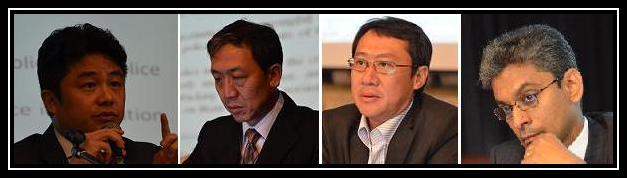
NONE“Otherwise, the Bar Council will not participate in it,” said council chairperson Lim Chee Wee (right) at a press conference following an extraordinary general meeting of the Bar, called to discuss the police crackdown on the mammoth Bersih 3.0 rally on April 28.
“The Bar prefers a UN special rapporteur to oversee the running of the panel and if this is complied with, then the Bar Council will reconsider its participation.”

He said the independent panel formed lacks any legal framework as it is ordinarily found in a royal commission of inquiry or the Malaysian Human Rights Commission of Inquiry (Suhakam).

“It does not have such features as legal immunity for itself or any participating persons involved in the proceeding. By immunity I mean immunity against defamation,” he said.

“Secondly it lacks the legal power to call or subpoena witnesses or call for the production of documents. Under these constraints, the panel has limited utility.”

1,300 lawyers at EGM

A total of 1,270 members attended the EGM to condemn the police’s heavy-handed use of force on Bersih protesters and without giving them ample time to disperse.

A total of 939 voted for the resolution while 16 voted against.

Lim also pointed out that the existing panel does not have any legal standing as it has no powers to summon witnesses to testify before the panel, unlike a royal commission of inquiry.

He said Hanif had also made adverse comments on the Bersih 3.0 rally, describing some of the protesters as communists seeking to overthrow the government.

According to Lim, it was not proper for the government to appoint Hanif to chair the panel as he had espoused such biased views.

“We do not even think Hanif is appropriate to chair the panel. We think the most appropriate person to chair it would be the retired Chief Judge of Sabah and Sarawak Steve Shim,” said the Bar Council president. 

On Sunday, United Nations Special Rapporteur on the Promotion and Protection of the Right to Freedom of Opinion and Expression Frank La Rue offered to be part of the independent panel. - Malaysiakini, 11/5/2012, Bar Council to boycott panel, wants UN rapporteur instead
 

Saturday, May 12, 2012

Resolution condemning actions of police at BERSIH 3.0, and demanding apology passed (11/5/2012)


Extraordinary General Meeting of the Malaysian Bar (11 May 2012)
Friday, 11 May 2012 10:05pm
Contributed by Chin Oy Sim, Deputy CEO, and photos by Md Faizal Mahat, Administrative Assistant, Bar Council


  • 1,270 Members of the Bar attended the Malaysian Bar’s Extraordinary General Meeting (“EGM”) held at Sunway Putra Hotel on 11 May 2012.
  • The EGM was scheduled to begin at 3:00 pm.  By 2:20 pm, 143 Members had already signed in, and the figure rose quickly to 214 Members within the next 11 minutes.  The quorum of 500 Members was achieved by 2:55 pm, but the meeting did not commence until almost 3:30 pm, while the crowd waited for hundreds of additional Members to be registered.  By 3:32 pm, 1,101 Members had signed in, and there was standing room only in the hall.

  • One motion had been proposed for consideration at the EGM: “Motion in relation to the events of and surrounding the BERSIH 3.0 public assembly on 28 April 2012, and matters in connection therewith, proposed by Lim Chee Wee (Chairman, Bar Council), on behalf of the Bar Council, dated 4 May 2012”.
  • Although a few Members spoke fervently against the motion and the convening of the EGM, the vast majority of Members present were strongly supportive of both, and were vocal in expressing their viewpoints. 
  • After a number of amendments had been made to the motion, it was put to a vote and carried by a majority, with 939 votes in favour, 16 against, with no abstentions.
  • The EGM was adjourned at approximately 5:40 pm.
  • (Full report to come)
    Image


    Resolution adopted at the Extraordinary General Meeting of the Malaysian Bar held at Sunway Putra Hotel, Kuala Lumpur (Friday, 11 May 2012)

    Resolution in relation to the events of and surrounding the BERSIH 3.0 public assembly on 28 April 2012, and matters in connection therewith

    Motion proposed by Lim Chee Wee (Chairman, Bar Council), on behalf of the Bar Council, dated 4 May 2012

    (As amended)

    Whereas:

    (A)  A public assembly was called for and organised by BERSIH 2.0, a coalition of 84 NGOs, on 28 April 2012 for electoral reforms.  The public assembly was commonly known as BERSIH 3.0;

    (B)  Dewan Bandaraya Kuala Lumpur refused to allow the assembly at Dataran Merdeka, as chosen by the organisers, and insisted on the use of alternative venues;

    (C)  Despite the Minister of Home Affairs having twice asserted that the BERSIH 3.0 assembly was not a security threat, the police obtained an ex parte order from the Magistrates’ Court on the evening of 26 April 2012 restraining Dato’ Ambiga Sreenevasan, the organisers of the BERSIH assembly and members of the public from gathering at Dataran Merdeka;

    (D)  The police announced, after obtaining the court order, that participants were permitted to gather at various points in Kuala Lumpur, except Dataran Merdeka;

    (E)  It has been reported by various news agencies that there were between approximately 30,000 to 250,000 people gathered for the assembly in Kuala Lumpur on 28 April 2012.  The Malaysian Bar monitoring team estimated the crowd to be at least 100,000 people;

    (F)  The crowd that gathered that day reflected a broad cross-section of Malaysian society, and was peaceful;

    (G)  There were police barriers set up at every point/road leading to Dataran Merdeka, most of which consisted of metal gates, water-filled dividers and razor wire;

    (H) There was massive police presence: approximately 14,000 personnel were reportedly deployed (including personnel from the Federal Reserve Unit) together with water cannons.  It was observed that a substantial number of police personnel did not display their police identification numbers on their uniforms; 

    (I)  At approximately 2:35 pm the organisers of the assembly, through its Co-Chairperson Dato’ Ambiga Sreenevasan, announced that the assembly had concluded and requested that the crowd disperse;

    (J)  The police were initially restrained.  However, this changed at approximately 3:00 pm, when there was a reported breach of the perimeter barriers set up at the junction of Jalan Tun Perak and Jalan Raja;

    (K)  The police then responded by unleashing water cannon and firing successive volleys of tear gas directly into the crowd gathered at that junction, and along Jalan Tun Perak, Jalan Tuanku Abdul Rahman and Jalan Raja Laut.  Similar police action was reported at other points where crowds had gathered;

    (L)  The Malaysian Bar’s monitoring teams reported witnessing the use of heavy-handed tactics by the police, including the indiscriminate discharging of multiple rounds of tear gas directly into the crowds, without any obvious provocation, and the arbitrary use of water cannons;

    (M)  The police also directed their use of water cannon and firing of tear gas to box in participants rather than allowing them to disperse quickly.  As participants retreated, the police should have re-established their barriers and given sufficient time to the crowd to disperse in an orderly and safe manner, instead of chasing participants and persistently shooting water cannon and firing tear gas on them.  It appeared that the purpose of the police was not to disperse, but to attack, the crowd;

    (N)  Random, widespread and wanton physical assault and brutality by the police on members of the public and media professionals have been reported.  It has further been reported that there was confiscation and/or destruction of photographs and video recordings made by members of the public and media professionals, and damage caused to their recording equipment;

    (O)  There were unwarranted arrests of members of the public and media professionals.  The police also arrested Members of the Bar who had participated in the public assembly.  Whilst in the care and custody of the police, at least three of these Members were physically assaulted and beaten, and suffered serious injuries;

    (P)  In response to the use of force by the police, sections of the crowd resorted to retaliatory acts, including the throwing of stones and bottles.  The police responded like for like.  These skirmishes between the police and sections of the crowd carried on until approximately 7:00 pm;

    (Q)  The police have failed to display the maturity, discipline and restraint required of a professional force.  Instead of acting to calm the situation, they aggravated it and contributed to its escalation;

    (QA) The findings and recommendations of the previous four SUHAKAM public inquiries, regarding the incidents at Kesas Highway (2001), KLCC (2007), Bandar Mahkota Cheras (2008) and the BERSIH 2.0 public assembly (2012), do not appear to have been put into consistent practice by the police;

    (R)  It has been reported that the organisers of the BERSIH 3.0 assembly had not made sufficient efforts to manage the crowds or to resolve the impasse between the police and the crowds;

    (S)  It has been reported that between 388 and 513 persons were arrested and taken to Pusat Latihan Polis (“PULAPOL”), Jalan Semarak, Kuala Lumpur.  The Malaysian Bar’s urgent arrest team, comprising members of the Bar Council Legal Aid Centre (Kuala Lumpur) and volunteer lawyers, were present at PULAPOL to assist and represent the arrested persons.  However, the police refused to allow them access to the arrested persons despite repeated requests by both the lawyers present and the arrested persons.  This denial of access to legal representation is a violation of Article 5 of the Federal Constitution and section 28A of the Criminal Procedure Code;

    (T)  The right of every citizen to freedom of speech and expression, and to assemble peaceably, is enshrined in Article 10 of the Federal Constitution as well as Articles 19 and 20 of the Universal Declaration of Human Rights;

    (U)  The right of every person to life and liberty, including the right not to be assaulted or harmed, is enshrined in Article 5 of the Federal Constitution as well as Article 5 of the Universal Declaration of Human Rights; and

    (V)  The Malaysian Government, as a member of UNESCO, is aware of the Medellin Declaration on Securing the Safety of Journalists and Combating Impunity, adopted at the UNESCO Conference on Press Freedom, Safety of Journalists and Impunity on World Press Freedom Day 2007;


    Now it is hereby resolved that with respect to the events of and surrounding the BERSIH 3.0 public assembly on 28 April 2012 in Kuala Lumpur:  

    (1)    The Malaysian Bar views with grave concern, and condemns:

    (a)    the excessive, indiscriminate and wrongful use of water cannons and tear gas by the police on participants of the assembly;

    (b)    the action of the police in not allowing the crowd sufficient time to disperse in an orderly and safe manner, and instead chasing the participants and attacking them by persistently shooting water cannon and tear gas on them;

    (c)    the tactics of the police in trapping and attacking the participants with water cannon and tear gas instead of permitting them to disperse;
           
    (d)    the random, widespread and wanton physical assault and brutality by the police on members of the public and media professionals;

    (e)    the unwarranted arrests of members of the public, media professionals and Members of the Bar, and the physical assault and beating of at least three arrested Members;

    (f)    the unjustifiable and unlawful confiscation and/or destruction of photographs and video recordings made by members of the public and media professionals, and damage caused to their recording equipment; and

    (g)    the lack of discipline and professionalism of the police;

    (2)    The Malaysian Bar calls for the police to identify their personnel involved in the misconduct and unlawful acts and surrender all the wrongdoers, in particular those who assaulted members of the public, media professionals and lawyers, for prosecution;

    (3)    The Malaysian Bar renews our call on the Government to give effect to the recommendation of the Royal Commission to Enhance the Operation and Management of the Royal Malaysia Police to set up the Independent Police Complaints and Misconduct Commission recommended therein, without further delay;

    (4)    The Malaysian Bar calls for the Minister of Home Affairs and the Inspector General of Police to issue a public apology for the actions and conduct of the police, including the excessive, indiscriminate and wrongful use of water cannons and tear gas;

    (5)    The Malaysian Bar calls for the Minister of Home Affairs and the Inspector General of Police to issue a public apology to members of the public, media professionals and lawyers who were assaulted or beaten by the police;

    (6)    The Malaysian Bar calls for the setting up of an independent commission to recommend and formulate proper guidelines or operating procedures governing conduct of police in the control and management of public assemblies, and the use of non-lethal and lethal weapons, which would be in accordance with internationally-accepted standards, in particular the Code of Conduct for Law Enforcement Officials (adopted by United Nations General Assembly resolution 34/169 of 17 December 1979) and the Basic Principles on the Use of Force and Firearms by Law Enforcement Officials 1990;

    (7)    The Malaysian Bar calls on the Government to pay just and proper compensation to members of the public, media professionals and lawyers who were assaulted;

    (8)    The Malaysian Bar condemns the police for denying lawyers access to arrested persons and calls upon the police to abide by and give effect to Article 5 of the Federal Constitution and section 28A of the Criminal Procedure Code;

    (9)    The Bar Council will look into how it can assist those denied their constitutional rights and those who were assaulted to pursue claims against the relevant parties for just and proper compensation;

    (10)    The Malaysian Bar calls on the Government, in line with the Medellin Declaration, to:

    (a)    prevent crimes against media professionals, investigate and penalise such crimes, provide witness protection for those testifying about them and ensure that the perpetrators do not go unpunished;

    (b)    promote awareness and train Malaysian law enforcement agencies to respect and promote the safety of media professionals, and ensure that they are able to work in full security and independence; and

    (c)    take resolute action for the safety of media professionals and ensure respect for their professional independence;

    (11)    The Malaysian Bar calls on Dewan Bandaraya Kuala Lumpur to uphold freedom of assembly and the right of all to utilise Dataran Merdeka for public assemblies; and

    (12)    The Malaysian Bar reaffirms the right of individuals to participate in public assemblies.  The Malaysian Bar is however concerned by, and does not countenance, any acts of violence in a public rally.  Such action by participants is not an appropriate response to the police.  Such right of public assembly must be exercised in a peaceful and responsible manner.  The Malaysian Bar reminds organisers of public assemblies of their responsibility to take all reasonable action to ensure a peaceful assembly.  The Malaysian Bar is equally concerned by reports that certain persons had crossed through the police perimeter barriers at the relevant location when the said organisers had at about 2:35 pm called for a dispersal of the assembly.

    The motion, as amended, was put to a vote and carried by a majority (939 votes in favour, 16 against, with no abstentions).

    Thursday, May 03, 2012

    SUHAKAM: Freedom Of Expression And The Right To A Peaceful Assembly Must Be Protected And Respected


    PRESS STATEMENT

    FREEDOM OF EXPRESSION AND THE RIGHT TO A PEACEFUL ASSEMBLY MUST BE PROTECTED AND RESPECTED

    The Human Rights Commission of Malaysia (the Commission) is deeply disappointed and concerned over various reported incidents, including those reported by its monitoring teams, that took place during the public rally held on 28 April 2012,  in particular, allegations of the heavy-handed and arbitrary manner by which the police dispersed members of the public. The Commission is also appalled by the alleged treatment of the police of members of the media, who are duty-bound to professionally and ethically record, document and report any event of public interest; some were allegedly assaulted while two reporters were reportedly arrested, besides having their equipment damaged or confisticated by the authorities.  The Commission also notes with great concern instances of unruly and disorderly conduct and behaviour on the part of some of the participants of the rally.  Nevertheless, the use of disproportionate and unwarranted force against the participants of the rally as well as members of the media is  an unacceptable conduct on the part of the police whose duty is to maintain law and order and public security in a professional manner, more so when handling and facilitating public assemblies.

    The Commission, in its Annual Reports as well as the reports of the Public Inquiry with regard to the excessive use of force by the police during public assemblies, has repeatedly called upon the authorities, where they find it necessary to control or disperse a crowd during an assembly, to employ proportionate and nonviolent methods. Furthermore, the United Nations Basic Principles on the Use of Force and Firearms by Law Enforcement Officials also provides that law enforcement officials shall, as far as possible, apply nonviolent means before resorting to the use of force.

    Although the Commission has on several occasions  offered to act as a mediator between the police and the organisers of public assemblies in order to arrive at an amicable consensus between the parties before the event, unfortunately, such offers were rejected.  It has also on numerous occasions called upon the authorities to allow and to facilitate the right of the people to assemble peacefully.  The Commission had also urged the police to facilitate the people’s exercise of their right to assemble peacefully and to express their views without jeopardising the rights of others to conduct their daily lives and affairs with minimum disruption. That participants in similar rallies held in a few other places like Georgetown, Kuantan, Johor Bahru, Ipoh, Kuching and Kota Kinabalu, were allowed to assemble and disperse in a peaceful, orderly and responsible manner without any untoward incident is testimony to the feasibility of such measures.  

    The Commission wishes to reiterate its stand that while it acknowledges that peace and stability are paramount and that public order needs to be maintained at all times, it is also of the view that public assemblies provide an avenue for the public to express themselves on issues that are of concern. These rights are provided for under Article 10(1)(b) of the Federal Constitution and Article 20(1) of the Universal Declaration of Human Rights (UDHR) as well as the Peaceful Assembly Act 2011, and Article 19 of the UDHR on freedom of expression.   

    Nonetheless, in the quest for a full functional democracy, the Commission has frequently urged all parties to exercise their rights responsibly in ensuring that peace and safety of all involved are safeguarded and equally important, that the rights of other people who are indirectly involved must also be respected and protected.

    At this juncture, the Commission is calling upon members of the public and the media as well as the relevant authorities who had witnessed any acts or incidents relating to the allegations of infringements of human rights during the rally of 28th April 2012 to submit the relevant information, other documents and evidence to the Commission as soon as possible for its investigation.  In the interim, the Commission will discuss this matter, analyse the evidence gathered and study the reports of its monitoring team in considering its next course of action.  

    For further inquiry and submission of information and documents, please contact:
    Complaints, Inquiry and Monitoring Group
    The Human Rights Commission of Malaysia (SUHAKAM)
    11th Floor, Menara TH Perdana
    Jalan Sultan Ismail, 50250 Kuala Lumpur
    Tel: 03-2612 5600; Fax: 03-2612 5694/5620                                                                                                                                                                                                                                                                                                                                                                                                                                                                                                                                                                                                                                                    


    -END-

    Monday, April 30, 2012

    Bar: Police response during BERSIH 3.0 rally disproportionate and excessive

    Press Release: Police response during BERSIH 3.0 rally disproportionate and excessive
    Sunday, 29 April 2012 01:08pm
    ImageThe Malaysian Bar is appalled at the abuse of the legal process and grotesque use of force by the police in connection with the BERSIH 3.0 rally in Kuala Lumpur yesterday, 28 April 2012.
     
    The crowds that had gathered for the BERSIH 3.0 rally reflected a broad cross-section of Malaysian society, and were peaceful.  The police were initially restrained, although they did try to stop people from reaching various pre-announced meeting points.  However, the attitude of the police underwent a sea-change at 3:00 pm that day.  The reported breach of police barricades in some areas does not justify the police unleashing the full force of their arsenal upon crowds that were peaceful.  The police have shown in this incident that they do not have the maturity, discipline and restraint required of a professional force.  In this regard the Malaysian Bar strongly disagrees with the Minister of Home Affairs’ assertion that the police acted professionally. 

    The court order excluding members of the public from Dataran Merdeka is arguably defective in law due to a lack of specificity.  Given that the BERSIH 3.0 rally had been announced on 4 April 2012, there was no need to have obtained the order ex parte.  There had been ample opportunity for the relevant parties to be heard before deciding if such an order deserved to be issued.  In addition, the order was obtained with respect to a situation of the authorities’ own making, by their unjustifiable denial of access to Dataran Merdeka.  It is important to bear in mind that the Minister of Home Affairs had previously announced that the BERSIH 3.0 rally was not a security threat.

    Nonetheless, having obtained the exclusion order, the police proceeded to disrespect the order by unilaterally closing additional roads and restricting access to other areas not covered by its terms. The terms of the order itself, the closing of the roads and the restriction in access gave rise to a tense situation that contributed to the unnecessary violence that occurred. 

    As has been done with some other public assemblies in the past, the Malaysian Bar deployed lawyers and pupils-in-chambers to act as monitors during the rally, numbering approximately 80. Our monitoring teams reported witnessing the use of an array of heavy-handed tactics by the police, including the indiscriminate discharging of multiple rounds of tear gas without any obvious provocation, and arbitrary use of water cannons.  Police fired tear gas directly at the crowd. They also manoeuvred their firing pattern to box in the participants rather than allowing them to disperse quickly.  This is not action to disperse, but is instead designed to attack, a crowd.  When items were thrown at the police, the police stooped to return like for like. 

    The Malaysian Bar does not countenance the belligerent conduct shown by a number of the participants.  However, we express deep and serious concern as to how the police responded. The police displayed a lack of restraint and proportionality, reminiscent of their actions at the BERSIH 2.0 rally on 9 July 2011.  Instead of displaying action to calm the situation, they instead aggravated it and contributed to the escalation of the conflict.  Although organisers of public gatherings must bear some responsibility when things get out of hand due to their action or inaction, this does not and cannot excuse the response of the police.  

    The monitoring teams also witnessed numerous acts of police brutality, such as assault of arrested persons.  Instead of merely apprehending suspects, the attitude of the police was punitive in nature.  The reported attacks by the police on members of the media, both local and international, and the confiscation and/or destruction of their photographs and video recordings, speaks to police action in covering up or preventing a full and accurate record of the BERSIH 3.0 rally and the responses of the police.
     
    Regrettably, the police also showed a general lack of cooperation towards the Malaysian Bar’s monitoring teams, and were hostile in their attitude and approach at times.  This is most unprofessional and unbecoming, and serves as an unhealthy development with negative connotations for the future.
     
    The Malaysian Bar notes that yesterday’s events have not occurred in isolation, but stem from the fundamental problems that gave rise to the BERSIH 3.0 rally in the first place, namely the ongoing and outstanding issues relating to the electoral roll, and the lack of confidence in its integrity and that of the electoral process in Malaysia.  
     
    Those who look upon Dataran Merdeka as a symbol of freedom will view the exclusion from Dataran Merdeka as freedom denied.  The promise by the Government to respect democracy and human rights, and implement reforms, was tested yesterday.  The Government’s response and actions during the BERSIH 3.0 rally provided an indication of whether the new reform legislation will be perverted and abused in its use and implementation, where the wide powers vested in the authorities call for measured, proportionate and mature exercise.  The events of 28 April 2012 do not bode well in this regard.
     
    Transformation and real recognition of democratic rights come at a price, namely constant vigilance.  The cost of not transforming and not allowing Malaysians the proper exercise of our democratic rights is too high.  In Malaysia’s march towards developed nation status by 2020, which is only eight years away, the constitutional right to clean, free and fair elections cannot and should not be sacrificed.  
     
    Christopher Leong
    Vice-President
    Malaysian Bar
     
    29 April 2012
     

    Wednesday, April 25, 2012

    When the people or their MPs are not saying 'NO' to BERSIH

    Now, BERSIH wants to have their rally at Dataran Merdeka - and we do not hear the people of Kuala Lumpur objecting. Their duly elected Members of Parliament of Kuala Lumpur, who are the legitimate representatives of the people, are also not saying 'No"...

    It is odd that the powers and the decision vests with this Local Authority that was appointed by the Federal Government (not elected by the people...), and not with the Members of Parliament who have been democratically chosen by the people who live in Kuala Lumpur.


    Another thing that the mayor allegedly said was 'Furthermore, Dataran Merdeka had been gazetted as a prohibited place for rallies under the new Peaceful Assembly Act 2011, he said.' Having looked at the official portal of e-Federal Gazzete, I found no such gazette - maybe still not there?


    DBKL to Bersih: Prepare to face the music

    Bersih 3.0 supporters at Saturday's Dataran Merdeka sit-in will face the same actions taken against activists who occupied the venue recently, Kuala Lumpur mayor Ahmad Fuad Ismail has warned.

    “Action has been taken against those kids at Dataran Merdeka... The same action will taken if you (Bersih supporters) do the same,” Fuad said.

    He said this when asked how Kuala Lumpur City Hall (DBKL) would react if the Bersih coalition proceeded with its plan to hold the sit-in at the square from 2pm to 4pm.

    Fuad said this at a press conference after a one-hour meeting between DBKL and Bersih representatives failed to reach agreement on the venue for the rally.

    'In case of chaos, blame Bersih'

    Asked whether DBKL would seek police help to stop the rally from taking place at Dataran Merdeka, Fuad declined to answer.

    "When the time comes, you will know. Don't worry... We are ready. We don't allow them to go to Dataran Merdeka... let us do our job,” he said.

    NONEWhen it was pointed out to him that a confrontation with the Bersih supporters could create chaos, Fuad said should this happen, it is the rally organisers who should be blamed.

    "Who creates chaos? They create it because they want to go against the laws and (threaten) to sit on the road. I have given them alternatives but they didn't give me any alternative," he said.

    He claimed that Bersih representatives had said during the meeting that rally participants might sit on the roads surrounding the square if Dataran Merdeka is cordoned off.

    In recent days, DBKL has conducted several raids on students and activists who have set up a protest camp at Dataran Merdeka for more than a 10 days as part of a campaign for free tertiary education.

    Their tents and belongings have been confiscated by DBKL while one out of six arrested have been charged in court.

    Bersih: No time to change venue

    Prior to Fuad’s press conference, Bersih co-chairperson Ambiga Sreenevasan told reporters the coalition still hoped that Fuad would change his mind before Saturday.
    NONE 
    Thus, she said, Bersih would stick to its original plan to hold the rally at Dataran Merdeka, despite Fuad had offered them Stadium Merdeka, explaining that there was not enough time to change venue.

    "If we change place now, it would cause bigger confusion. People will still gather here (Dataran Merdeka) as well as at Stadium Merdeka.

    "It is just too little time to inform people," she said.

    "We would be prepared to discuss with the mayor on crowd control and security issues if he changes his mind... We are hoping that we can make it happen," Ambiga added.

    DBKL: That's not our fault

    Earlier, Fuad told reporters that Ambiga’s argument about the time constraint was a weak excuse not to relocate the rally.

    He said Bersih has only itself to blame because its official letter to DBKL was only handed on April 19. He said DBKL replied that very day.

    "They claimed they had faxed in the letter on April 16 but we didn't receive it. If it is an important letter, why only fax and not hand deliver it to us?

    "Hence, the issue of DBKL delaying their request, causing them to have insufficient time to inform their supporters does not arise," he said.

    He said Bersih’s argument that DBKL was already informed through an announcement on April 4 of the coalition’s plan to hold a rally there also cannot be accepted.

    "That's your intention but it was not official notice... Let's say if I hold a kenduri (feast) but I don't give you any invitation, would you come?"

    Fuad: I'm being fair

    Fuad also stressed that if Bersih was willing to accept the alternative venue - Stadium Merdeka, which is just 1km away from Dataran Merdeka - he would be willing to hold a joint press conference with Bersih and help publicise the venue change.

    "If all of you here report about it, I think the whole world will know."

    NONEFuad further explained that he was in a dilemma because allowing Bersih to use the historic square would cause him to be accused of double standards, breaking the laws and failing to protect the lives of 1.8 million Kuala Lumpur folks from being disrupted.

    Previously three organisations - Malay rights group Perkasa, anti-LGBT movement and a Malay traditional marital arts group - had made the same request but all had been rejected, he claimed.

    As for the decisions to allow other cultural and sports activities to use the venue, Fuad explained that those events were neutral and nobody would feel uncomfortable with them, unlike Bersih which is opposed by certain quarters of the society.

    Furthermore, Dataran Merdeka had been gazetted as a prohibited place for rallies under the new Peaceful Assembly Act 2011, he said.

    "If they argue that Dataran Merdeka has historical value, same goes for Stadium Merdeka... Independence declaration was made by (first prime minister) Tunku Abdul Rahman there.

    "It is more appropriate (to hold rally there) because it is wide and has many parkings," he elaborated.- Malaysiakini, 25/4/2012, DBKL to Bersih: Prepare to face the music