Tuesday, October 31, 2006

Transparency, accountability and freedom of expression within the Malaysian Bar


Transparency, accountability and freedom of expression within the Malaysian Bar - role of e-groups and Bar newsletters


Contributed by Charles Hector
Monday, 30 October 2006, 22:30


Malaysian lawyers lost a forum for open free discussion with the demise of the Malaysian Lawyers yahoo group (an independent e-group), which apparently had over 3,000 lawyer-subscribers. With the discontinuation of this "yahoo-group" by its moderator/s, freedom of expression, opinion and viewpoints within the Malaysian Bar suffered a set-back, and today all we have is only far less-subscribed yahoo groups, like this Transformed Bar Yahoo Group (the first of the independent yahoo groups which commenced in March 2001)

Demise of the Malaysian Lawyers Yahoo Group

The Malaysian Lawyers Yahoo Group, with its large subscription, did play an important role in making the Malaysian Bar, i.e. Bar Council and the State Bar Committees, more transparent and accountable to its members. It provided a most needed forum for a lot of members to express their views and opinions freely and timely manner.

I believe that it did play a most important role in the development of awareness, constructive criticism and in saving the credibility of the Malaysian Bar when our very own Bar Council was publicly perceived as being in support of the Legal Profession Act amendment which contained even an ouster of judicial review provision. It contributed in getting 3,000 over members coming on a Friday afternoon for a General Meeting of the Malaysian Bar which showed that members were in almost total opposition to the public-stance taken by our elected Bar Council.

Thereafter, this yahoo group (or rather its main moderator) was attacked with allegations that there were "bogus members" - and finally the said Moderator apparently acknowledged that several "members of the said yahoo groups" were actually him using different names. He said that it was just "pseudonyms" that he used, and then decided to discontinue the Malaysian Lawyers Yahoo Group. What he did was wrong - especially since those "pseudonyms" he used were also active contributors to the discussion, and one even went further by claiming that he was some person no longer in practice.

Was there some other ‘agenda’ behind the “attack”?

BUT we need to look deeper into what had happened, and ask the question as to whether this "ATTACK" or "EXPOSE" was motivated by some other AGENDA? Was there an agenda to kill this "alternative independent forum"? - for after all it caused serious concerns about the suitability of the present members of the Bar Council. This is a possibility we must consider.

Adding credence to this possibility was the fact that the key personalities that led the attack were those who did openly, expressly or impliedly, support the Bar Council’s stance on the LPA amendments before the last EGM, and were also against the requisitionists for that EGM.

But then, maybe it had nothing to do with the Bar Council or the stance it took vis-à-vis the LPA amendments. Maybe, it was just because what happened in that yahoo group that saw one of the moderators “sanctioning” the style and manner of expression of some of these personalities, just before the “attack” of the moderator and that e-group began. Maybe, it was just tit for tat, or maybe it was just motivated by the principles of free speech, opinion and expression, and the question of transparency and accountability.

All these are the possibilities as to why the main moderator was attacked so ‘brutally” until it ended with the demise of the Malaysian Lawyers Yahoo Group. I wonder whether we would have got the quorum at the last EGM that saw 3,000 members attending if not for the Malaysian Lawyers Yahoo Group. This e-group did provide a very important forum for debate on the issues surrounding the LPA amendments fiasco.

The independent E-groups, KL Bar E-group and Bar Publications

Before the birth of these independent yahoo groups, the only available channel for members to express their views, other than the General Meetings, were the publications of the Malaysian Bar and the State Bar Committees.

Alas, these publications failed to play this role and many critical articles (especially those critical of the Bar Council and/or the State Bar Committees) never got published – “censored” for reasons like space constraints and Editorial policy and powers of determining what goes in and what stays out.

The newsletters contained mostly uncritical pieces – a lot of reporting of past events/achievements of the Bar Council/ State Bar Committees, and a lot of pictures where of course the then leaders of the Bar were portrayed most often just like our main stream media that gives the lion’s share of coverage to the executive and the Barisan National .

RELEVAN, the KL Bar Newsletter under the leadership of Ragunath Kesavan (as he then was) broke away from this trend of bland uncritical publications of the Bar and for a while there was a Bar newsletter that lawyers earnestly waited for – but after that under the leadership of Jerald Gomez and then Lim Chee Wee, we saw that Relevan slide back into the bland, less critical and “self-serving” publication it was before.

The KL Bar Committee also did start up a yahoo group for members and lawyers, but then after hoo-hah about the post retirement conduct of a former Chief Justice who joined a law firm almost immediately after he left office as a Consultant, the KL Bar Committee shut down their yahoo group. Apparently there were threats of legal action from certain quarters against the KL Bar Committee. The reasons given for the shut-down of that yahoo group at that time was because of maintenance and up-grading – but it never got revived again.

When will the Malaysian Bar E-Group become operational?

At the level of the Bar Council, there was a move to start up a Malaysian Bar E-group – and members were asked to subscribe to it BUT alas to date the Bar Council is yet to approve the activation of this yahoo group. Members today can still subscribe to this e-group, and all we can hope is that the Bar Council will soon give the green light to activate this e-group.

The forum at the Malaysian Bar website is not an e-group – and it requires members to actively go and log in to see the messages, as opposed to an e-group where e-mails postings will be send to all members at their e-mail address. We definitely need the Malaysian Bar e-Group to be activated now, more so since the recent demise of the Malaysian Lawyers Yahoo Group.

E-Groups: A means of continuous check and balance

The e-groups allow members to more effectively be a check and balance on the leaders of the Malaysian Bar, something this is something we really need. The argument that we should just wait for General Meetings is absurd and sometimes it is just too late to check an actions/omissions of the Bar leadership.

E-Groups: A means of advocacy

E-groups also allow members to raise and lobby new issues. It must not be forgotten that the whole issue of post-retirement conduct of judges was first highlighted in an e-group, and then the main-stream media picked it up, and the Bar Council came out with the stance that there must be at least a 3-year cooling off period after retirement before judges join law firms and/or companies as consultants or directors. The then “law” Minister also came out and spoke about the need to incorporate this into the Code of Conduct of Judges.

Print media still has a role

We have to acknowledge that not all members of the Bar are familiar with e-mails and/or the internet, and as such the publications of the Bar are still very important for the dissemination of differing views and new ideas to the over 12,000 members of the Malaysian Bar. This is one reason why it is still very important for articles published on the website of the Malaysian Bar to be also published in Praxis ,the Malaysian Bar newsletter, For example, there was a lot of differing views expressed over the recent LPA amendment in Bar website and forum posts, which I believe should be re-published in the Praxis – maybe even in a special edition of the Praxis.

It was sad that in the last issue of the Praxis, immediately after that General Meeting, none of these articles were published. In fact there were only 1-2 pages that told us about the fact of the General Meeting and the Resolution that was passed. A person who did not have access to the Malaysian Bar website or the independent e-groups will not have the benefit of appreciating the various arguments for and against the LPA amendments. I look forward to the coming issue of the Praxis and I hope that we will see some of these articles, both pro and against the amendments.

It is hoped that the Bar Council will not ‘censor’ these articles out – just because it was embarrassing for the present Bar Council when members overwhelmingly did not support its stance on the LPA amendments at that historical General Meeting.

Let it not be forgotten that these Bar newsletters are OUR newsletters, i.e. the members of the Malaysian Bar, and as such the leadership should not abuse their powers and only publish articles and reports that put the Bar Council in good light. The Bar leadership must be open enough to allow equal space to those that are critical of the Bar Council and those that are not. If this cannot be done, then maybe we may require a Resolution of the Malaysian Bar to ensure the independence of Bar publications. The Editors (and/or Editorial Board) of the Bar newsletters maybe should be chosen by the membership, and should also be accountable to the membership directly. The newsletters should never be used as a tool for the present leadership to promote themselves, their good works, etc – but should be a true means of communication between members and for members of the Bar.

The Malaysian Bar must be the perfect example of democracy

We have repeatedly called on the government and others to be transparent and accountable, to respect and provide avenues for the exercise of the freedom of speech, opinion and expression – and as such the Malaysian Bar must set the highest standards for all others to follow.

We do not want to be like our present Prime Minister, who rather than giving clear answers to the questions and/or criticisms being raised about certain actions/omissions of the government choose to try to divert the attention of the rakyat by changing it into a “clash of personalities”, getting the royalty and others to urge the critic to back off for the good of the country, choosing to expose failures of the governments under the immediate past premier or just ‘demonizing’ the critic.

The Bar Council and the State Bar leaders must respond to criticism correctly. To questions raised, give clear answers. To different opinions raised, consider it without looking at who the proponent of the opinion is. If flaws and mistakes are highlighted, apologize and make sure it is never repeated again.

Our leaders of the Bar must never forget that they are but mere representatives of the members, and as such they are duty bound to listen, consider and act upon the expressions views and sentiments of its members – be it 1, 100, 1,000 or 12,000.

Why were members kept in the dark that the Government was not holding back LPA Amendment Act 2006?

Vazeer Alam, our Bar Council office bearer, recently revealed in a Malaysian Bar website forum post “…I also personally spoke to the AG and Dato Nazri and enquired about delaying the coming into effect of the LPA Amendments. The answers from both of them were the same. The Royal Assent and Gazetting of the Act will take its course and come into effect in its ordinary course of events. They said that they would not hold back the Act….”

I am most perturbed that he and/or the Bar Council did not disclose this immediately to the members of the Malaysian Bar, and we had the means to do so through our Malaysian Bar Website, e-newsletters and even through a circular. I believe that members would have immediately reacted and protested this stance that the government had taken – more so after it was made crystal clear that an overwhelming majority of the members of the Bar are opposed to these draconian amendments, that go contrary to principles of natural justice and fairness. We would have collected signatures, send memorandum of protests and maybe even called for an EGM to show utter disapproval with the stance of Dato Nazri, AG Ghani Patail and the government.

Even when the LPA Amendment Act 2006 came into force, the Bar Council should have come out immediately and called for the repeal of the draconian provisions in the amended LPA – but they did not and I never even saw any media release on the subject. Why was that? Should that at least been done considering the sentiments expressed by the overwhelming majority of the membership present at the last General Meeting?

There are many Acts and Amending Acts that have been passed that are yet to be come into force like the National Anti Drugs Agency Act 2004 (Act 638), Skills Development Fund Act 2004 (Act 640), Subordinate Courts (Amendment) Act 2004 (Act A1228), Courts of Judicature (Amendment) Act 2004 (Act A1229), Islamic Family Law (Federal Territories) (Amendment) Act 2005 (Act A1261) and thus when the government continued to bring into force our LPA Amendment Act 2006, this was unacceptable conduct and behavior by the government more so since this act directly concerns lawyers.

If what Vazeer has disclosed is accurate, the AG and Nazri showed maximum disrespect to the Bar Council as well. This cannot be tolerated, and should not be tolerated by members of the Bar. Why then are we still wasting time with an ad-hoc committee, for after all all they said is that they will consider …just consider and knowing our Malaysian government, it most likely means that it will be there for a very long time. We have no option but to now call for the repeal of these new provisions in the LPA. The failure of the Bar Council to disclose to its members earlier must also be criticized. There should be no more keeping members in the dark.

Towards greater transparency and accountability

We do need to put in place more and more tools/mechanisms so that there can be a continuous check and balance of the Bar leadership. We need to have more channels of communication between members – so that there can a greater opportunity for discussion, debate and participation of members in the workings and positions that the Bar Council takes on behalf of its membership. We need the Malaysian Bar e-group activated. We need more independent e-groups. We need a more independent and fearless editors and editorial board for our publications. We need to have more consultations and meetings between members and the leadership of the Bar. We need to become more democratic – more transparent and more accountable – always remembering our duty to uphold the cause of justice without fear or favour.

Lastly, we need leaders of the Bar to be more open with members and no more keep us in the dark. We are the Malaysian Bar – and we do not sit down quietly hoping for wrongs to be corrected sometime in the future. In the face of injustice, we act without fear and favour. When there is a wrong done, we behave like lions and not lambs just waiting around in silence hoping that politicians and/or oppressors make good their promises and assurances to reform.

Saturday, October 28, 2006

Human Rights Lawyer Ravi gets one-year suspension


Singapore News // Weekend, October 28, 2006

Ravi gets one-year suspension

Loh Chee Kong
cheekong@mediacorp.com.sg

IN stark contrast to his usual unrestrained ways, controversial lawyer M Ravi (picture) was, for the most part, on his best conduct on Friday, as he stood before Chief Justice Chan Sek Keong to answer for his rude behaviour to a lower court judge three years ago.
.
But that was not enough to save him from a one-year suspension. The Court of Three Judges — the legal profession's highest disciplinary panel which has the power to revoke a lawyer's licence — imposed the suspension on Mr Ravi, 37, for raising his voice and being disrespectful to District Judge Wong Choon Ning.
.
According to the Law Society, Mr Ravi had "failed to act with due courtesy" toward Judge Wong when he was representing a client three years ago.
.
While the judge was addressing Mr Ravi, he turned his back to her and also sat down at one point.
.
He was also accused of responding to the judge in an "unbecoming manner" and interfering with court proceedings by "speaking in loud tones" while other cases were being mentioned in the same court.
.
Friday was the first time the lawyer came face-to-face in court with the man appointed to helm Singapore's judiciary.
.
With his hands behind his back, Mr Ravi apologised profusely for not having prepared written arguments, explaining that he did not have time to do so due to his stay until recently at a private psychiatric hospital.
.
He went on to recount how he ended up there, saying that he was warded against his family's wishes after his former client, Opposition figure Chee Soon Juan, saw the mental and physical state he was in.
.
He told CJ Chan: "I have confidence in this new Bench. Honestly, I don't have any problems with any of the judges. I may have problems with politicians. You must protect me, sir… Let me practise law the way I like to carry out justice."
.
CJ Chan delivered the judgement after a 30-minute deliberation. But when he asked Mr Ravi to stand still, the latter lost his cool.
.
Raising his voice, the lawyer said: "You are behaving like you are the Attorney-General (AG). Are you still the AG or are you the CJ? How do I complain against you?"
.
Unperturbed, CJ Chan, who was AG before he became CJ, responded: "We would deal with your other points about the judiciary another day."
.
Proceeding to read the judgement, CJ Chan said that it was "distressing" to hear Mr Ravi's "series of irrelevant and irrational arguments".
.
Remarking that it was "extraordinary" that Mr Ravi had such a dismal disciplinary record — having been penalised five times in the past by the Law Society — CJ Chan advised him to use the enforced break to reflect on his own behaviour.
.
"You are a young lawyer and I know that you are a very, very intense lawyer but you have to accord certain courtesies and a certain degree of respect to the Bench," he said.
.
"We hope that during this one year, you will find peace, examine yourself. We hope that you may become the lawyer that we want you to become."
.
Mr Ravi could have been suspended for up to five years, or even struck off the rolls.

Thursday, October 26, 2006

NEP: Time for a change of mindset (Mkini)


NEP: Time for a change of mindset
Koon Yew Yin
Oct 26, 06 12:49pm :

AFTER the publication of Asli’s finding of bumiputeras’s equity of about 45%, many Umno leaders including Prime Minister Abdullah Ahmad Badawi objected furiously. Umno vice-president Muhyiddin Yassin demanded the retraction of the report and he succeeded. Subsequently Dr Lim Teck Ghee, Asli’s director who took full responsibility, resigned. He is prepared to stand by his finding and the method he used in his calculation.

A few days ago, Gerakan president Dr Lim Keng Yaik requested the government to reveal the methodology they used to arrive at a such low figure of 18.9%. Then Deputy PM Najib Tun Abdul Rasak said the government is willing to make public the methodology used by the Economic Planning Unit (EPU) to calculate the corporate equity ownership of various communities. He said that this would dispel any lingering doubts about the authenticity of the figures by EPU, which comes under the Prime Minister’s Department.

In 1970, the bumiputeras had 2.4% equity when the NEP was first introduced. After 20 years, in 1990 it was acknowledged that the bumiputeras had 19.4% equity. Now they claim that they have only 18.9% equity, less than what they had 15 years ago. How can this be possible when the government did not stop giving out special privileges under the NEP all along?

It seems like every body is arguing whether the NEP should be prolonged but no one is questioning whether it is doing any good for Malaysia as a whole nation.

However, I am not here to expound a new method of measuring to resolve this controversy. But I wish to take this opportunity to point out the weaknesses of the NEP. The fact that they claim to have far less than what they expected, can only mean that the NEP cannot produce the desired result. Moreover, the NEP is not helping us to achieve our vision 2020. NEP is really the stumbling block and I will explain with some vital statistics so that we all can see that the NEP is actually doing more harm than good for the nation as a whole.

The United Nations classify countries as a developed nations, a developing nations and a under developed nations. Currently, Malaysia is classified as a developing nation. All countries are classified based heavily on the following four fundamental criteria or measurement standards:

1) Gross Domestic Product (GDP) per capita, this is an indisputable standard of measuring the economy of a nation.
2) Human Development Index (HDI) is a comparative measure of poverty, literacy, education, life expectancy, rate of deaths at childbirth and other factors for countries worldwide.
3) Transparency International Prospective Corruption Index (TIPCI). This agency looks at the government’s procurement system, e.g. awarding billion ringgit contracts without inviting open tenders, and the issues of business licenses and permits. This is one area where an ill defined system can lead to corruption involving huge sums of money. The system must be just, fair and transparent to all citizens and foreign investors.
4) Institute of Management Development Index (IMDI), this institution is based in Lausanne, Switzerland. It measures a nation’s competitiveness relative to other countries in the world, based on economic performance, government efficiency, business efficiency and infrastructures, and facilities for doing business.

Statistics

I have extracted the relevant statistics for Hong Kong, Singapore, Taiwan and South Korea which had about the same GDP/Capita in 1970 when the NEP was first introduced, to compare with Malaysia. These neighbouring countries have progressed much faster than us and they are now classified as developed nations. As a standard marker, I have included USA. I have also included Australia, which has about the same population as ours and it has remarkable statistics for us to emulate.

Statistics do not lie and the numerical figures project the true picture.

World Economic Forum’s shocking report:-
As in the IMDI survey, the World Economic Forum based in Geneva, in its ranking also stressed the need for Malaysia to improve its domestic business environment for the next stage of development. Among the areas that need greater attention, according to both organizations, is government red tape. On this criterion, the World Economic Forum ranked Malaysia 101st among 117 countries worldwide last year. Compliance of all the NEP conditions is often the obstacle especially for foreigners.

Indisputable statistics show that NEP is retarding our progress and Malaysia has lost the way to vision 2020.

When the New Economic Policy (NEP) was introduced in 1970, the GDP per capita of our neighbours, Singapore, Hong Kong, Taiwan and South Korea were all about the same as ours. After 36 years, Singapore and HK are three times, Taiwan is 2.5 times and South Korea is two times our GDP per capita. The differential gaps between Malaysia and these four countries are getting wider and wider as time goes by. These figures are indisputable and definitely show that the NEP is doing more harm than good to our economy. We are growing slower than our neighbours despite the fact that we have fossil fuel, palm oil, rubber and other natural resources which they do not have. At this growth rate, Malaysia will never ever become a developed nation.

Khalid Ibrahim, former CEO of Kumpulan Guthrie Bhd and presently Parti Keadilan Rakyat treasurer, said it is most unlikely Malaysia will become a fully developed nation by 2020 at a recent forum on the 9th Malaysian Plan.

Instead of disputing the accuracy of Asli’s report to justify prolonging the implementation of the NEP, our government should make drastic policy changes to improve efficiency and competitiveness. Our leaders must realize that the global competitive market does not make allowance or special handicap for bumiputeras. All the political rhetoric demanding the continuance of the NEP at the last Umno general assembly will not make Malaysia a developed nation by 2020. The statistics definitely show that the NEP is retarding Malaysia’s progress. Unless the government is bold enough to make changes, Vision 2020 will not be achieved. At the moment, it looks like Malaysia has lost its way to Vision 2020. Do our political leaders realise that?

Practice meritocracy

To become a developed nation we must at least double our GDP per capita from US$10,000 to US$20,000. The only way is to accelerate our GDP growth rate by practicing real democracy and meritocracy so that we become more efficient and competitive to face global challenges. Are our political leaders willing to practice real democracy and meritocracy?

It is a system of management which is strictly based solely on one's abilities [merit] rather than by political connection, social position or race. Merit means ''intelligence plus effort''. It is quite different from aristocracy or NEP which is a system that caters to biased practices and nepotism. True meritocracy acknowledges individual prowess and rewards it in kind, regardless of disposition.
Meritocracy is one of the most important principles in all of human civilization. It is most important to practice meritocracy in the student selections for entrance into our universities and institutions of higher learning. If we accept lower grade students we can only get lower grade graduates. When we have lower grade graduates to manage all our government and private sector services we can only expect lower grade results.

It is also essential to practice meritocracy in the selection of employees. The most qualified must be given employment and for promotion the best and most efficient employee must enjoy recognition so that everyone will try his best to get promotion. Otherwise management will lose its respectability and the whole workforce will not work efficiently. There has been no Malaysian of ethnic Chinese or Indian origin appointed as CEO of any of our GLCs, government departments and universities. Surely, there must be at least one capable ethnic Chinese or Indian available for the job. Perhaps that is why almost all the GLCs eg MAS, Proton and universities are under performing.

Practice transparency, cut corruptions

Under the pretext of the NEP, the government can simply give out large contracts without open tenders to enrich bumiputeras and no one can question this, not even in Parliament. Only a few well connected Malays will benefit from these handouts but a lot more who did not get the benefit are grumbling. The gap of the rich and poor bumiputeras is getting wider. Many will bribe their way to get some of these goodies. The problem is that the authorities cannot find enough APs and other goodies to distribute; so they clone their own APs. This defeats the original aim of the NEP.

So what is a developed nation?

All developed nations practice democracy and meritocracy. Their constitutions decree that all men are created equal and that life, liberty, and the pursuit of happiness is not to be infringed upon. All their citizens irrespective of their race or religion can expect justice, equity and equal opportunity. As a result, their citizens enjoy a higher standard of living than Malaysians. If Malaysia wants to be a developed nation, our government must accord justice, equity and equal opportunity to all Malaysians irrespective of race or creed. Are our political leaders willing to make changes?


--------------------------------------------------------------------------------
KOON YEW YIN is a Chartered Civil Engineer and a former member of the Board of Engineers, Malaysia. He is also a former secretary-general of the Master Builders Association, Malaysia.

Tuesday, October 17, 2006

Rela men break locks to enter houses (Star)


Rela men break locks to enter houses

CHINA Press front-paged complaints from residents of about 10 households in Taman Anggerik, Cheras, Kuala Lumpur, that Rela personnel crashed into their homes after breaking door locks and smashing gates, and told them they were looking for illegal workers.

The residents said the Rela personnel acted like gangsters and showed them no respect.

When they asked the Rela personnel to explain why they crashed into their homes, they were told “we are the law.”

One resident said he rented a house to be used as his office and told the Rela personnel no one stayed in the house, but they ignored him and broke the door lock to search the premises.

The daily said the man also claimed cash totalling RM3,756 in his drawer was subsequently found missing.

Another resident said he was upstairs when he heard a commotion and before he could rush downstairs to see what was happening, Rela personnel had broken his gate.

The daily said the residents had lodged a police report.

A lawyer told the paper that the Rela personnel were not police and had no right to crash into the homes of residents and search their homes without a search warrant.

He said the residents could take legal action against the Rela personnel.

Meanwhile, various Chinese dailies reported that Genting group chairman, president and chief executive Tan Sri K. T. Lim had given his eldest son a RM16mil 21st birthday gift – a piece of land worth S$7mil (RM15.4mil) in Sentosa, Singapore, which he had bought recently.

Monday, October 16, 2006

Racialising research: The Asli report debacle

Racialising research: The Asli report debacle
Edmund Terence Gomez
Oct 12, 06 11:28am

When the study titled ‘Corporate Equity Distribution: Past Trends and Future Policy’ was undertaken late last year, it was part of a larger report prepared for submission to the government which was then in the midst of putting together the Ninth Malaysia Plan (9MP).

The Asian Strategy and Leadership Institute's Centre for Public Policy Studies (CPPS), headed by Dr Lim Teck Ghee, had invited a multi-ethnic group of academics to review urgent issues, including the alleviation of poverty, the reformation of the civil service and tertiary institutions, and the plight of the nation's highly marginalised communities, in particular the Orang Asli.

This study was specifically undertaken in response to the call by Prime Minister Abdullah Ahmad Badawi for public participation in the formulation of the 9MP, a call that was seen as a genuine request to secure honest feedback on social and economic inequities.

For this reason, it is truly unfortunate that the whole debate on the CPPS report has eventually come to be focused on just one issue: the corporate wealth owned by bumiputeras.

As one of the authors of the section on ‘Corporate Equity Distribution’, I want to stress that this was neither the study's primary nor motivating concern. In fact, the point that the volume of publicly-listed corporate wealth attributable to bumiputeras may even be as high as 45% was only raised in the conclusion.

Different methodology

The report's sole basis for bringing up the issue of bumiputera equity ownership was to argue that there was a serious methodological flaw in the government's calculation of wealth distribution along ethnic lines.

By adopting a different methodology, that is by assessing equity distribution among owners of publicly-listed stock, the study wanted to show to the government that this alternative tabulation raised serious doubts about the government's figures.

The CPPS report's primary contention is that undue emphasis was being given by the government to achieving the 30% bumiputera target. In fact, as the study sought to show, important transitions had occurred in Malaysian society that raised the question whether it was necessary or even relevant to have policies concerned with redistributing wealth along ethnic lines.

For example, it noted that the New Economic Policy (NEP) had help create a new professional and entrepreneurial bumiputera community that was on par with non-bumiputeras in terms of competence and capacity to compete. The study also provided evidence of the emergence of business partnerships forged along inter-ethnic lines and indicated that a number of these firms involved bumiputeras from the new middle class.

Its concern, then, was if the present form of policy planning did not take into account these significant changes within society, such an omission would not help the government effectively advance the creation of a dynamic local entrepreneurial community. This objective of promoting the rise of entrepreneurial Malaysian firms was, after all, one of the government's key objectives.

Official figures unrealistic

Prime Minister Abdullah, when commenting on the report, voiced serious reservations, citing several reasons why the CPPS study could not be compared with the government's tabulation of wealth distribution.

First, he said that the government's figures were based on an assessment of 600,000 companies nationwide, while the CPPS study was merely an evaluation of publicly-listed firms.

Second, he stated that the government's tabulation was based on the par value of the shares of these 600,000 firms, while the study's was based on an appraisal of the market value of listed stock.

Third, he stated that while the study attributed equity owned by the government-linked companies (GLCs) to bumiputeras, the government did not include ownership of these shares in its tabulation. He also argued that GLC-owned stock is not to be listed as equity attributable to bumiputeras.

The points raised by the prime minister drew attention to two important issues that needed to be addressed.

The first concerned the government's tabulation of stock based on its par value. The argument in the CPPS report was that the official methodology for computation of corporate equity distribution - used first in the 1970s and continued until today - was unrealistic and had resulted in an underestimation of wealth attributable to bumiputeras.

There is clearly wide support for the argument that wealth distribution patterns cannot be accurately, and fairly, determined through this method. The report's tabulation, based on market capitalisation of equity, a more reliable indicator of wealth distribution, was precisely to draw attention to this point. This evaluation of wealth distribution of quoted stock along ethnic lines suggested that the government's figures were probably inaccurate.

Second, the prime minister disclosed a very important new point when addressing the issue of GLC ownership of equity - that the government had not included in its tabulation the equity owned by these companies. If the government is to include in its calculation the equity owned by the GLCs, the value of stock attributable to each ethnic community would vary considerably, presenting a fairer and more accurate indication of wealth distribution patterns.

Politicians racialise report

However, instead of debating these issues and the CPPS' recommendations, given that a forum had been created for a much-needed discussion of these pressing matters, politicians have chosen to racialise the report. Some of them have gone so far as to dismiss the report as 'rubbish', while others deemed it an attempt to incite racial tension, in the process portraying themselves as champions of the Malay community.

By drawing attention solely to the 45% equity figure, the debate has been diverted from one that could have been an open assessment of changes and issues in Malaysian society, such as the rise of new inequities, strategies to promote genuine entrepreneurship, and ways and means to ensure greater national cohesion.

At no point did any of these politicians address a key concern raised by the CPPS report: that the pattern of implementation of affirmative action had contributed to serious wealth and income disparities within the bumiputera community.

This point alone demonstrated the urgent need for a serious review of government policies, specifically those that were targeted at bumiputeras but that had done little to alleviate the plight of the poor of this community.

When this issue first emerged in the public domain last month, there was some hope that the debate it generated would compel the government to release its data on the 600,000 firms used to determine wealth distribution patterns. There was also some hope that the government would initiate an independent study to undertake an assessment of its implementation of affirmative action.

Unfortunately, however, this debate has been summarily dismissed by Umno leaders, who have also claimed that the intention of the CPPS report is to "incite anger" and "confuse the Malays". By racialising the debate and invoking the spectre of ethnic conflict, the government can now justify bringing this debate to a close. There will now be no compulsion on the part of the government to release its data on wealth ownership, nor can society hope for an independent study on this issue.

Resignation a noble act

What is most unfortunate about this incident is that the genuine attempt by the CPPS and its director, Dr Lim, to foster new research and debate on issues of crucial importance to the nation has been so thoroughly undermined.

The resignation of Dr Lim from the CPPS was a noble act, for by so doing he has refused to concede to the totally unwarranted demands that the centre retract its report and admit that it was a flawed scholarly exercise. The denunciation of a report that was aimed at helping to generate a serious review of public policies may now deter other academics from pursuing similar research for fear of inviting an adverse reaction from the government.

This incident does not augur well for the government as the CPPS report was undertaken solely in the spirit of responding to the prime minister's call to all Malaysians to speak the truth to him.


EDMUND TERENCE GOMEZ is research coordinator at the United Nations Research Institute for Social Development (UNRISD) in Geneva. He is also associate professor of political economy at the Faculty of Economics, Universiti Malaya.

Saturday, September 30, 2006

Number of illegals set to reach critical stage (Star)


Number of illegals set to reach critical stage

KAJANG: The number of illegal immigrants in detention centres nationwide is expected to reach critical stage by January next year.

Home Affairs Minister Datuk Seri Radzi Sheikh Ahmad said: “There are about 7,467 illegal immigrants detained in 15 centres around the country and based on the progression of arrests made by Rela, we are expected to face a crisis for space by January.

“I am now touring the country to see the conditions of the centres and preliminary observation shows that we need new centres to take in the growing number of detainees,” Radzi told reporters after visiting the Semenyih Immigration Detention centre here yesterday.

The minister added that one of the biggest centres like the one here could only take in a maximum of 1,500 detainees while smaller ones could accommodate up to a maximum of 500 people.

He said his ministry had no intention to build lavish-looking new centres but would invest in simple and practical ones to save costs.

To a question, Radzi said it was not an easy task to just deport illegal immigrants to their countries of origin to solve the problem.

“We need to liase with the authorities of the respective immigrant and this process takes at least three months to be resolved,” he said.

Later, Immigration Department head of enforcement Datuk Ishak Mohamad said the department was now looking for at least 200 Bangladeshi illegal outsourcing agents who were responsible for bringing in Bangladeshi workers using forged working permits.

Friday, September 29, 2006

Rela arrests 17,700 suspected illegals (Star)


Rela arrests 17,700 suspected illegals

PETALING JAYA: Rela arrested a total of 17,700 people believed to be illegal immigrants and screened 94,010 people up to Sept 26 this year.

In a statement issued here yesterday, Rela said that out of the figure, Indonesians comprised the highest number of those arrested at 12,076, followed by those from Myanmar (2,089), Indians (963), Bangladeshis (923), Thais (402), Chinese (43) and others (1,200).

In addition to that, four employers were also arrested.

The statement added that Rela would intensify operations to help reduce the number of illegal immigrants during the Ramadan month up to Hari Raya.

The statement also said that state Rela directors and district Rela officers had been ordered to proceed with the usual operations.

Employers were also warned not to employ illegal immigrants or harbour them because it was against the law.

Friday, September 22, 2006

GLOBAL CORRUPTION REPORT 2006 - focus on MALAYSIA

GLOBAL CORRUPTION REPORT 2006
(Extracts on MALAYSIA)

MALAYSIA
Conventions:

UN Convention against Corruption (signed December 2003; not yet ratified)
UN Convention against Transnational Organized Crime (ratified September 2004)
ADB-OECD Action Plan for Asia-Pacific (endorsed November 2001)

Legal and institutional changes
• The Central Bank introduced two public complaints and redress forums in 2005. The Financial Mediation Bureau (FMB), launched in January, is an integrated dispute resolution centre for financial institutions. The FMB’s predecessors, the Banking Mediation Bureau and the Insurance Mediation Bureau, handled a total of 1,515 cases in 2004. The FMB provides an avenue of redress for a wider spectrum of the public since it covers the consumer areas of Islamic insurance, development finance institutions, as well as nonblank issuers of credit and charge cards. In February, the Central Bank set up a website, LINK, to facilitate a rapid response to the public, as well as small and medium enterprises, on matters related to the financial sector. LINK also has the potential to encourage internal and external whistleblowers to disclose corruption in the financial sector.

• In December 2004, the Treasury issued new guidelines for public procurement on infrastructure maintenance projects that outline the selection process for contractors, the use of open tenders and the participation of a broader group of public officials to ensure transparency. Though the guidelines cover one area of public procurement only, they apply to all departments of government (see below).

• The Anti-Corruption Academy, first announced in December 2003, is expected to become operational in September 2005. Its main role is to train officials of the domestic Anti-Corruption Agency, but it will function as a regional centre for anti-corruption capacity building, promoting best practice in investigation, monitoring and enforcement, as well as forensic accounting and engineering (see below).


Malaysia
Country reports Malaysia
• A number of civil society organisations, including TI Malaysia, formed a lobbying group in October 2004, Infokl, to press for greater freedom of information. Housed at the Centre for Independent Journalism, Infokl will draft a freedom of information bill, including provisions for whistleblowers, for submission to government. It will also call for a review of the Official Secrets Act, which inhibits comment on many public sector activities.

The government’s anti-corruption campaign
The fight against corruption has been the centre piece of Prime Minister Abdullah Badawi’s government since it came to power in October 2003. The campaign has focused on prevention, including the formation of the National Integrity Plan (NIP), the Integrity Institute of Malaysia (IIM) and the Anti-Corruption Academy, but it has punitive aspects as well. It is too early to assess the real impact of the campaign but the signs are encouraging.

In April 2005, the government announced that the IIM would develop a National Integrity Index (NII), to assess progress in areas including corporate governance. The IIM was established in April 2004 to implement an NIP for 2004–08, aimed at reducing corruption and abuse of power, mainly through education and training. Since its inception, the IIM has conducted numerous courses on integrity for the private and public sectors, and in universities and schools.

The Anti-Corruption Academy, which is expected to open its doors in September 2005, is the first of its kind in the Asia-Pacific region. Established by the Anti-Corruption Agency (ACA) to train anti-corruption officials in Malaysia and from across the region, the academy will function as a centre for anticorruption capacity building, promoting best practices in investigation, monitoring and enforcement, and in newer areas such as forensic accounting and engineering. Although it has yet to begin operations, it has been welcomed by the Asian Development Bank and the Organisation for Economic Cooperation and Development.

Meanwhile, the ACA stepped up enforcement of the Anti-Corruption Act with a 47 per cent increase in corruption related arrests in 2004, compared to 2003, and 179 new cases registered for trial.1Among those charged in 2004 were the former land and cooperative development minister, Kasitah Gadam, and Eric Chia Eng Hock, a businessman closely associated with former prime minister, Mahathir Mohamad, who retired in October 2003 after 22 years in office. The charges were remarkable since the agency had been criticised for targeting only ‘small fish’, with some observers blaming this on the lack of independence of the attorney general, who held the final decision to prosecute.2

Other anti-corruption laws have not been enforced so effectively. The first prosecution under the Anti-Money Laundering Act of 2001 was only initiated in 2004, but a spate of prosecutions is expected in the near future.3

Despite this, there is continuing concern about the ACA’s independence. It forms part of the prime minister’s office and, though the king appoints the director general, he does so on the prime minister’s advice. This does not necessarily translate into executive interference with its investigations, but the former prime minister did remove ACA director general Datuk Ahmad Zaki in March 2001, in spite of his diligence and record of effectiveness.

Another aspect of the government’s strategy has been to limit the opportunities for corruption by improving public service delivery. To this end, an internal circular in November 2004 repealed the 1979 auditing system, setting out new objectives, functions and responsibilities. The new auditing regime will be responsible for all monetary and financial transactions, including verifying all the expenditure, profits, assets and stock managed.

In January 2004, the Public Complaints Bureau (PCB), which many had criticized for the complexity of its procedures, launched the MESRA Rakyat programme whereby it tours the country to listen to local complaints. Heads of government departments are also present at these meetthe-people sessions. At a session in Melaka state in July 2004, 278 citizens met 49 heads of department and raised over 40 issues.

The officer in charge reported that of the 40 cases brought up, 37 had been settled, while three were pending. All cases relating to corruption are referred to the ACA for further investigation. The PCB plans to monitor these investigations to ensure that action has been taken.

Procurement policies on the mend
In November 2004, a local newspaper published a front-page story on defective buildings and roads that had cost the taxpayer an estimated MYR2 billion (US $500 million).4 The response of the public works minister was that the fiasco was not the fault of his department, but of a group of contractors known as Project Management Consultants (PMC), set up in the 1990s and registered with the finance ministry.

PMC comprises several contractors who were awarded projects through direct negotiation, circumventing procurement regulations. A treasury circular in September 2000 sanctioned privileged consortia to cover five regions and exempted government departments from normal procurement procedures.5 This allowed agencies to implement their own projects through limited tenders or direct negotiations. The usual procedure had been to go through the public works department and, only if the latter were unable to take on the contract, could other contractors be selected. The justification for the new procedure was speedier completion of projects,6 but the cost doubled in some cases and the construction was seriously flawed. With a consultancy fee fixed at 1.5 per cent of a project’s cost, the PMC concept contributed to massive overruns and individual project failures.7

For example, the health ministry was forced to close the MYR500 million (US $133 million) Sultan Ismail Hospital on 27 September 2004 due to structural and design flaws. Repairs to bring it up to safety standards were estimated at MYR8 million (US$2 million).8 Work on the MYR167 million(US $44 million) Malaysian External Trade Development Corporation tower, due to have been completed in 1997, was not finished until mid-2005 and the costs rocketed to MYR400 million (US $106 million). Defects in the building were estimated to cost MYR28.4million (US $7.5 million).9 Even on modest projects, PMCs came in substantially over costs. According to Public Works Minister Samy Vellu, the ministry could construct a classroom for MYR55,000 (US $15,000), but when taken over by a PMC, the bill would soar to MYR120,000 (US $32,000).10 The public welcomed the new government’s move to abolish the PMC in March 2004.

Departments have been directed to comply with current procurement policies that use the tender system to ensure transparency and accountability. New guidelines may be issued to deal with specific contracts. For example, a treasury circular in December 2004 provides guidelines for the selection of contractors for public infrastructure maintenance, applicable to all government departments.11 The terms detail the use of open tenders and the participation of a more balanced group of public officials, including a representative from the public works department. These conditions comply with the ‘Model Law on Procurement of Goods, Construction and Services’, issued by the UN Commission on International Trade Law in 1995, but they do not divide the roles of selection and supervision, as outlined in TI’s ‘Minimum Standards for Public Contracting’.12 Even more significant is Malaysia’s failure to require companies to adopt a code of ethics against corruption, or to blacklist companies with a track record of corrupt practices.

Country reports
Mehrun Siraj and Sunita Chima (TI Malaysia)

Further reading
Tunku Abdul Aziz, ‘Fighting Corruption: My Mission’ (Kuala Lumpur: Konrad Adenauer
Foundation, 2005)
Zarinah Anwar and Kar Mei Tang, ‘Building a Framework for Corporate Transparency: Challenges
for Global Capital Markets and the Malaysian Experience’, International Accountant 18, 2003
Khaliq Ahmad Mohd Israil and Abul Hassan M. Sadeq, Ethics in Business and Management: Islamic
and Mainstream Approaches (Kuala Lumpur: Asian Academic Press, 2001)
Mazilan Musa, Izal Arif Zahrudin and Suzanna Che Moin (eds), ‘Ethics and Integrity in Malaysia:
Issues and Challenges’ (Kuala Lumpur: Integrity Institute of Malaysia, 2005)
TI Malaysia: www.transparency.org.my

Police corruption under fire
The Royal Commission on Enhancing the Operations and Management of the Police (RCP), set up in February 2004 to reform the police force, submitted a report of its findings to the king on 19 April 2005. Of the 926 complaints the commission received from the public between March 2004 and March 2005, 98 concerned police corruption.

The RCP’s enquiries revealed widespread corruption within the police force, including: monthly kickbacks from illegal factory owners and employers of illegal immigrants; demands for payments in exchange for providing detainees with food, or allowing them to make telephone calls; and accepting bribes to detain innocent people, or to decline from taking action against guilty parties.

The report also accuses police personnel of bribing senior officers to obtain promotions or transfers. The report cited public complaints of the lavish lifestyle some officers enjoy. One is alleged to have declared assets of MYR34 million (US $9 million), but no investigation was conducted to determine how he had acquired such a fortune. Influenced by the finding that corruption awareness is low among police personnel at all levels, the commission recommended that eliminating it must rank high on the reform agenda. It made 125 recommendations, of which 10 relate to corruption.

There were some indications that the government may be ‘sitting on’ the RCP’s report, as it does with reports from the Human Rights Commission.

The deputy prime minister announced that it would have to be scrutinised by all central agencies, the finance ministry and the department for public works, before any of its recommendations could be implemented.13 However, in May 2005, Prime Minister Badawi announced that a task force would meet to determine an order of priority for implementation and, a few weeks later, police were reportedly investigating the corruption cases cited in the report. In late June, five sub-committees were set up to study the recommendations in greater detail. Civil society has welcomed the RCP’s findings and is monitoring its implementation.

Notes
1. Keynote address by Prime Minister Abdullah Ahmad Badawi, World Ethics and Integrity Forum, Kuala Lumpur, 28–29 April 2005.
2. Transparency International, National Integrity Systems Country Study: Malaysia (Berlin: Transparency International, 2003).
3. Information provided by the deputy public prosecutor in the office of the attorneygeneral.
4. New Straits Times (Malaysia), 21 November 2004.
5. Treasury Circular, no. 4, 2000, at
www.treasury.gov.my/design/web/b_pekeliling.htm
6. Utusan Online (Malaysia), 14 November 2004.
7. New Straits Times (Malaysia), 21 November 2004.
8. The Star (Malaysia), 15 November 2004.
9. Bernama (Malaysia), 22 October 2004.
10. Utusan Online (Malaysia), 14 November 2004.
11. Treasury Circular, no. 7, 2004, at
www.treasury.gov.my/design/web/b_pekeliling.htm
12. See Global Corruption Report 2005, p. 4.


http://www.transparency.org/publications/gcr/download_gcr (22/9/06)


GLOBAL CORRUPTION REPORT 2006
(Source: Tables from GCR 2006)

Corruption Perceptions Index 2005

Country Ranking/ Country /2005 CPI Score
1 Iceland 9.7
2 Finland 9.6
3 New Zealand 9.6
4 Denmark 9.5
5 Singapore 9.4
6 Sweden 9.2
7 Switzerland 9.1
8 Norway 8.9
9 Australia 8.8
10 Austria 8.7
11 Netherlands 8.6
United Kingdom 8.6
14 Canada 8.4
15 Hong Kong 8.3
16 Germany 8.2
17 USA 7.6
18 France 7.5
21 Chile 7.3
22 Japan 7.3
23 Spain 7.0
26 Portugal 6.5
28 Israel 6.3
29 Oman 6.3
30 United Arab Emirates 6.2
32 Qatar 5.9
32 Taiwan 5.9
32 Uruguay 5.9
36 Bahrain 5.8
37 Cyprus 5.7
37 Jordan 5.7
39 Malaysia 5.1
40 Hungary 5.0
40 Italy 5.0
40 South Korea 5.0
43 Tunisia 4.9
45 Kuwait 4.7
59 Cuba 3.8
59 Thailand 3.8
70 Saudi Arabia 3.4
78 China 3.2
88 India 2.9
88 Iran 2.9
97 Algeria 2.8
98 Argentina 2.8
107 Vietnam 2.6
117 Afghanistan 2.5
117 Nepal 2.5
117 Philippines 2.5
126 Russia 2.4
130 Cambodia 2.3
137 Indonesia 2.2
137 Iraq 2.2
144 Pakistan 2.1
144 Sudan 2.1
155 Myanmar 1.8
158 Bangladesh 1.7

* ‘2005 CPI score’ relates to perceptions of the degree of corruption as seen by business people, academics and risk analysts, and ranges between 10 (highly clean) and 0 (highly corrupt).

* A total of 16 surveys were used from 10 independent institutions, and at least three surveys were required for a country to be included in the CPI.

• The survey involved 159 countries.

http://www.transparency.org/publications/gcr/download_gcr

Wednesday, September 20, 2006

2.4 judges to a million people

23 posts created to ease workload of judges

Wednesday, 20 September 2006, 09:28

© New Straits Times
by Anis Ibrahim

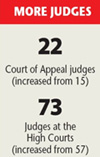
More judges to be appointedKUALA LUMPUR: Twenty-three new judicial posts have been created to help ease the workload of judges and expedite the disposal of cases.

The number of judges at the Court of Appeal will be increased from 15 to 22 while at the High Court, 16 new posts have been created.

This will bring the number of judges at the High Court of Malaya and the High Court of Sabah and Sarawak to 73.

Minister in the Prime Minister’s Department Datuk Seri Nazri Abdul Aziz said the Cabinet had given its approval last week following a proposal from the Chief Justice’s office.

When pressed for details, Nazri said: "At this stage, only the new posts have been created. The names of the candidates will be put forward by the Chief Justice in due course.

"Candidates may be from the legal and judicial service or the private sector."

Constitutional law expert Prof Dr Shad Saleem Faruqi said the new positions would be created by way of gazette notification by the Yang di-Pertuan Agong on the advice of the Prime Minister.

"This will not be the first time new posts have been created," he said.

This development is the latest effort by Chief Justice Tun Ahmad Fairuz Sheikh Abdul Halim to expedite the disposal of court cases.

Last month, he proposed that retired judges be appointed on an ad-hoc basis to ease the backlog.

According to Federal Court chief registrar Datuk Tengku Maimun Tuan Mat, the number of judges in the country was low compared with other Commonwealth nations.

The Malaysian ratio is 2.4 judges to a million people — a far cry from the ratio in India (10.5 judges), Australia (57.1), Britain (50.1) and Canada (75).

The increase in the number of cases has also aggravated the problem, which is at its worst at the magistrate’s courts.

Between January and June this year, 505,774 cases were registered at magistrate’s courts nationwide.

Another 475,507 cases were brought forward from last year, bringing the total number of cases to 981,281.

Of these, nearly 450,000 cases are still unresolved.

Monday, September 18, 2006

US releases International Religious Freedom Report 2006 on Malaysia

US releases International Religious Freedom Report 2006 on Malaysia
Sunday, 17 September 2006, 00:01

This report is submitted to the Congress by the Department of State in compliance with Section 102(b) of the International Religious Freedom Act (IRFA) of 1998. The law provides that the secretary of state, with the assistance of the ambassador at large for international religious freedom, shall transmit to Congress "an Annual Report on International Religious Freedom supplementing the most recent Human Rights Reports by providing additional detailed information with respect to matters involving international religious freedom."

Malaysia: The constitution provides for freedom of religion; however, the Government places some restrictions on this right. Islam is recognized in the constitution as "the religion of the Federation," but the practice of non-Sunni Islamic beliefs was significantly restricted, and those deviating from accepted Sunni beliefs could be subjected to "rehabilitation." Non-Muslims were free to practice their religious beliefs with few restrictions.

There was no material change in the status of respect for religious freedom during the period covered by this report.

The generally tolerant relationship among religious groups in society contributed to religious freedom.

The U.S. government discusses religious freedom issues with the Government as part of its overall policy to promote human rights.

Section I. Religious Demography

The country has an area of approximately 127 thousand square miles, and its population was estimated at 25.6 million. According to 2000 census figures, approximately 60 percent of the population practiced Islam; 19 percent Buddhism; 9 percent Christianity; 6 percent Hinduism; and 3 percent Confucianism, Taoism, and other traditional Chinese religions. The remainder was accounted for by other faiths, including animism, Sikhism, and the Baha'i Faith. Ethnic Malays, accounting for approximately 55 percent of the population, are legally classified as Muslims at birth.

Section II. Status of Religious Freedom

Legal/Policy Framework

The constitution provides for freedom of religion, but it also recognizes Islam as the country's religion. In practice the Government significantly restricts the observance of Islamic beliefs other than Sunni Islam. The Government provides financial support to an Islamic religious establishment composed of a variety of governmental, quasi-governmental, and other institutions, and it indirectly provides more limited funds to non-Islamic communities. State governments impose Islamic religious law on Muslims in some cultural and social matters but generally do not interfere with the religious practices of non-Muslim communities. Prime Minister Abdullah is a proponent of moderate, progressive "Islam Hadhari" (literally "civilizational Islam"). Some observers believe support for this policy contributed to his 2004 election victory over the opposition Islamic Party of Malaysia (PAS), which advocated a stricter Islamic agenda.

Several holy days are recognized as official holidays, including Hari Raya Puasa (Muslim), Hari Raya Qurban (Muslim), the Birth of the Prophet Muhammad (Muslim), Wesak Day (Buddhist), Deepavali (Hindu), Christmas (Christian), and, in East Malaysia, Good Friday (Christian).

The Registrar of Societies, under the Ministry of Home Affairs, determines whether a religious organization may be registered and thereby qualify for government grants and other benefits. Various religious groups were not recognized as such by the Government, and they sometimes registered themselves under the Companies Act to operate legally. In June 2005 nine Falun Gong practitioners were fined for committing technical violations of the Companies Act, such as failure to provide minutes of the organization's meetings within the required time frame.

Public schools generally offered Islamic religious instruction, which is compulsory for Muslim children. Non-Muslim students are required to take nonreligious morals/ethics courses. Private schools are free to offer a non-Islamic religious curriculum as an option for non-Muslims. There are no restrictions on home instruction. The Government offered grants only to privately run Muslim religious schools that agreed to allow government supervision and adopted a government-approved curriculum.

In February 2005 the Malaysian Bar Council organized a forum to discuss the creation of an interfaith commission aimed at promoting better understanding and mutual respect among the country's religious groups. Several groups claiming to represent mainstream Islam refused to participate in the forum on the grounds that an interfaith commission would "weaken Islam." The Government subsequently announced that an interfaith commission was not necessary but stated that interfaith dialogue should be encouraged.

Restrictions on Religious Freedom

In practice Muslims are not permitted to convert to another religion. In several recent rulings secular courts ceded jurisdiction to Shari'a courts in matters involving conversion to or from Islam. In July 2004 the Federal Court, 'the country's highest court, upheld a 2002 lower court ruling that only the Shari'a courts were qualified to determine whether a Muslim has become an apostate. In September 2005 'the country's second-highest court, the Court of Appeal, denied the request of a Muslim who had converted to Christianity to change the religion designated on her national identity card. The Court of Appeal ruled that a Shari'a court must first approve a request by a Muslim citizen to convert to another religion. In practice Shari'a courts routinely denied such requests. Citing the case as "a matter of general public interest," the Federal Court agreed in April 2006 to hear the woman's appeal and address the degree to which Shari'a courts have jurisdiction over determinations of Muslim apostasy.

In December 2005 a trial court ruled that it lacked jurisdiction over Shari'a court decisions on matters that concerned Islamic family law. The case involved the disposition of the remains of a Hindu man who was alleged to have converted to Islam before his death. The man's Hindu wife, claiming that there was no clear evidence that he had converted to Islam, struggled with Islamic authorities over which religion's rites should govern his burial. A Shari'a court ruled that the Hindu man was a Muslim and ordered his burial according to Muslim rites. As a non-Muslim, the wife took her case to the secular High Court, but the court ruled that it had no jurisdiction to hear the case because it involved a Muslim. She then filed an appeal, which was pending as of June 30, 2006. In January 2006, following the death of an eighty-nine-year-old ethnic Malay woman who had practiced Buddhism her entire adult life, Islamic religious authorities requested a Shari'a court to rule whether the woman's Buddhist family could be allowed to bury her according to Buddhist rites. The Shari'a court ruled in favor of the woman's family.

In January 2006 the non-Muslim members of the cabinet presented a memorandum to the prime minister calling for a review of constitutional provisions affecting the legal rights of non-Muslims. Following protests from several Muslim leaders within the governing coalition and a commitment by the prime minister to address the non-Muslim ministers' concerns in future cabinet meetings, the ministers withdrew their memorandum. The prime minister stated publicly that 'the country's constitution provides sufficient protection of religious freedom and should therefore not be reviewed or amended in that regard.

Control of mosques is exercised at the state level rather than by the federal government; state religious authorities appoint imams to mosques and provide guidance on the content of sermons. While practices vary from state to state, both the Government and the opposition PAS have attempted to use mosques in the states they control to deliver politically oriented messages. In recent years, several states controlled by the governing coalition announced measures including banning opposition-affiliated imams from speaking at mosques, more vigorously enforcing existing restrictions on the content of sermons, replacing mosque leaders and governing committees thought to be sympathetic to the opposition, and threatening to close down unauthorized mosques with ties to the opposition. Similarly the state government of Kelantan, controlled by the PAS, reportedly restricts imams affiliated with the Barisan Nasional (the ruling coalition) from speaking in mosques.

The Government opposed what it considered "deviant" interpretations of Islam, maintaining that allegedly deviant groups' views endanger national security. According to the Government's Islamic Development Department's (IDD) website, fifty-six deviant teachings had been identified and prohibited to Muslims as of June 2006. They included Shi'a, transcendental meditation, and Baha'i teachings, among others. The Government asserted that "deviationist" teachings could cause divisions among Muslims. The IDD has established written guidelines concerning what constitutes "deviationist" behavior or belief. State religious authorities, in making their determinations on these matters, have generally followed the federal guidelines. Members of groups deemed "deviationist" may be arrested and detained, with the consent of a Shari'a court, in order to be "rehabilitated" and returned to the "true path of Islam." In June 2005 the religious affairs minister told parliament that 22 "deviant" religious groups with an estimated 2,820 followers had been identified in the country. Neither the Government nor religious authorities provided data on the number of such persons who have been subjected to "rehabilitation."

The Government continued to monitor the activities of the Shi'a minority.

Proselytizing of Muslims by members of other religions is strictly prohibited, although proselytizing of non-Muslims faces no similar obstacles. In April 2005 two foreign Christian missionaries were arrested after distributing religious materials in front of a mosque. They were charged with "disturbing the peace in a religious manner." After ten days the Government dismissed the charges against the two men and released them.

The Government restricts the distribution in peninsular Malaysia of Malay-language translations of the Bible, Christian tapes, and other printed materials. In April 2005 the prime minister declared that copies of the Malay-language Bible must have the words "Not for Muslims" printed on the front and could be distributed only in churches and Christian bookshops. The distribution of Malay-language Christian materials faces few restrictions in East Malaysia.

According to the Malaysian Consultative Council of Buddhists, Christians, Hindus, and Sikhs (MCCBCHS), the Government restricted visas for foreign clergy under the age of forty to inhibit "militant clergy" from entering the country. While representatives of non-Muslim groups did not sit on the immigration committee that approved visa requests, the MCCBCHS was asked for its recommendations. In August 2005 the Selangor state religious authorities announced their decision to withhold support for visa applications by foreign Muslim imams and religious teachers. Local media reported that the decision was largely targeted at the ethnic Indian Muslim community, in an effort to increase the number of "homegrown" imams. Ethnic Indian religious leaders expressed concern that some mosques and religious schools might need to be closed.

The Government prohibits publications that it alleges might incite racial or religious disharmony. In 2004 it prohibited Muslims from viewing the movie "The Passion of the Christ" but allowed non-Muslims to view the film at private screenings.

The Government continued to require all Muslim civil servants to attend government-approved religion classes.

State governments have authority over the building of non-Muslim places of worship and the allocation of land for non-Muslim cemeteries. Approvals for building permits sometimes were granted very slowly. Some religious groups complained that state policies and local decisions restrict the construction of non-Muslim places of worship. Muslim residents of a neighborhood in Kajang objected to the building of a church in a residential area that was predominantly Muslim. In May 2005 the local municipal council determined that the proposed site was designated for residential building and rejected the church's application. A Roman Catholic church delayed for more than fourteen years by the state government of Selangor was officially opened in September 2005. Church officials publicly accused state and local officials of intentionally delaying construction of the church by demanding relocation of proposed building sites and revoking previously approved building plans and designs.

Unregistered religious statues and houses of worship may be demolished by the state. Several nongovernmental organizations (NGOs) complained about the demolition of unregistered Hindu temples and shrines located on state and local lands. These structures were often constructed on privately owned plantations prior to the country's' independence in 1957. Around that time,' plantation lands containing many Hindu shrines and temples were transferred to government ownership. In March 2006 state officials in Negeri Sembilan announced their intention to demolish an unregistered Hindu temple believed to be 150 years old. The temple sits on state-owned land that was zoned for road construction in 1956. Approximately 300 worshippers regularly use the temple. In May 2006 the temple sought a court injunction against the pending demolition. The court case remained open as of June 30, 2006.

In family and religious matters, all Muslims are subject to Shari'a law. Some women's rights advocates asserted that women faced discriminatory treatment in Shari'a courts due to prejudicial interpretation of Islamic family law and the lack of uniformity in the implementation of such laws among the various states.

Government-controlled bodies exerted pressure upon non-Muslim women to wear headscarves. In November 2005 the minister of higher education stated that non-Muslim women students at the International Islamic University of Malaysia in Kuala Lumpur must wear headscarves when attending lectures and during graduation ceremonies. In March 2006 the leader of the Royal Malaysian Police stated that all female police officers, including non-Muslims, should wear headscarves during public ceremonies.

Since the defeat of the PAS in Terengganu in March 2004 elections, state and local officials in that state have significantly reduced enforcement of dress codes for women. In Kelantan, the PAS also lost ground in 2004 but remained in control of the state legislature by a narrow margin. Many observers interpreted the result as a rejection by voters of the call by the PAS for the establishment of an Islamic state and of the strict form of Islam that it promoted. The PAS-led state government in Kelantan continued its ban on traditional Malay dance theaters, prohibited advertisements depicting women not fully covered by clothing, enforced wearing of headscarves by Muslim women, and imposed fines for violators during the reporting period. However, state authorities reversed several previously enacted Islamic law-related prohibitions. The PAS-led government allowed operation of gender segregated cinemas and concert venues, fashion shows limited to female attendees, and billiard/snooker centers for men only.

Abuses of Religious Freedom

According to the Government, no individuals were detained under the Internal Security Act (ISA) for religious reasons during the period covered by this report.

The Government is concerned that "deviationist" teachings could cause divisions among Muslims. Members of "deviationist" groups can be arrested and detained, with the consent of a Shari'a court, to be "rehabilitated" and returned to the "true path of Islam." In July 2004 the Federal Court dismissed an appeal by four followers of Ayah Pin, leader of a nonviolent religious group in Terengganu known as the Sky Kingdom. The appeal by the four former Muslims sought a statutory declaration that Sky Kingdom followers have the right to practice the religion of their choice. The Federal Court held that their attempt to renounce Islam did not free them from the jurisdiction of the state Shari'a court. In July 2005 seventy Sky Kingdom members were arrested at the sect's main compound in Terengganu. In August 2005 all nonresidential buildings on the compound were destroyed on the instruction of state officials, who asserted that nonfarming structures had been built on property zoned exclusively for agricultural use. The remaining individuals living on the compound were ordered to vacate their residences. No Shari'a law-qualified attorneys initially agreed to defend the Sky Kingdom followers, forcing postponement of their hearings. Ayah Pin and one of his four wives remained at large as of June 30, 2006, and were sought by religious authorities for supporting "deviant" religious practices. One of the seventy arrested Sky Kingdom followers agreed to undergo religious rehabilitation; the cases against the other Ayah Pin followers were pending at the end of the reporting period.

Forced Religious Conversion

There were no reports of forced religious conversion, including of minor U.S. citizens who had been abducted or illegally removed from the United States, or of the refusal to allow such citizens to be returned to the United States.

Section III. Societal Abuses and Discrimination

The generally tolerant relationship among religious groups in society contributed to religious freedom.

Non-Muslim ecumenical and interfaith organizations in the country include the MCCBCHS, the Malaysian Council of Churches, and the Christian Federation of Malaysia. Muslim organizations generally do not participate in ecumenical bodies. In 2005 several Muslim NGOs boycotted and condemned the proposed formation of an interfaith council on the claimed grounds that "matters concerning Islam could only be discussed by Muslims."

Section IV. U.S. Government Policy

The U.S. government discusses religious freedom issues with the Government as part of its overall policy to promote human rights.

Embassy representatives maintained an active dialogue with leaders and representatives of various religious groups, including those not officially recognized by the Government. The embassy coordinated funding for a Fulbright scholar who addressed interfaith issues while in residence as a lecturer at a public university. The embassy sponsored visits by American Islamic scholars; it also funded civil society grants and exchange grants for representatives of NGOs working to promote greater religious tolerance, respect for diversity, and human rights and openness in the country.

Released by the US Bureau of Democracy, Human Rights, and Labor on September 15, 2006