Sunday, May 29, 2022

Lawyers for Malaysian drug trafficker ordered to pay SGD20,000 prosecution costs - The law/practice must be abolished to ensure Right To Fair Trial?

RIGHT TO A FAIR TRIAL - Laws that allow the Court, in Criminal Trials, to order the accused person to pay prosecution cost  to the Public Prosecutor(or Attorney General's Chambers) is UNJUST and a violation of one's right to a fair trial. Would it not DETER the accused from making all needed applications to court to prove his innocence - such laws should never even exist, and accused persons should be FREE to make all needed applications. Courts will decide. Accussed belief, or his lawyer's belief of whether a new evidence or a new legal arguement will move the court to vary their decision is irrelevant - for ultimately it is Courts that decide in a criminal trial.

Remember the courts and the prosecution are fully funded by government's monies - compared to the suspect or accused, who bears his/her own cost to defend himself/herself and will have to pay their lawyers fees, the court filing charges, and even the cost of needed witnesses. The cost to get an expert witness is HIGH - like getting a doctor to do the needed test to determine the mental/intellectual capacity and then coming to court to testify and submit his expert opinion is all very high[That cost itself could be from RM20k to RM50k or more, and all the cost is paid by the accused persons]. If the accused is super rich, then not a problem but the reality is that many accused/suspects are POOR.

The State appreciate the unfairness - and, in some countries, have responded by the provision of Legal Aid schemes. In Malaysia, for a long time, the government did not provide Legal Aid for suspects/accused in criminal trials - and the Malaysian Bar stepped in to provide Legal Aid. Of late, the Malaysian government has joined in to provide legal aid to accussed/suspects in criminal matters. But still, the government is unwilling to provide legal aid to non-Malaysians.

In Legal Aid schemes, the suspect/accused may not have to pay legal fees to their lawyers - but most legal aid schemes may not bear the additional cost of calling expert witnesses - the suspect/accused have to pay for it.

With legal aid, the right to be represented by lawyer of your choice is affected > your choice may be limited to lawyers in the legal aid scheme, or you may be 'forced' to accept the lawyer assigned by the Legal Aid Programme.

Thankfully, there are many lawyers, who may not be paid by Legal Aid Schemes, that do come in on their own to represent the accused/suspect in criminal trials. These lawyers may charge a minimal fee, or may not charge any fees at all - so they spend their own time and resources to ensure that a suspect/accused gets his right to a fair trial.

Hence, in criminal trials - the suspect/accused should never be burdened by the RISK that he/she may be ordered by court to pay the cost of the Prosecution.

More importantly, lawyers who act for clients in criminal trials should never be at RISK of personally having to pay cost of prosecution in Criminal Trials.

Hence, such law and practice of ordering accused/suspects and/or their lawyers to pay cost of prosecution if the fail in any applications made in court should be abolished - REPEALED.

The possibility of lawyers having to pay cost/damages personally for things done as lawyers for a client is ABSURD. A lawyer can only do as instructed by client - he cannot do things if the client does not tell him to do, or agree that any application be filed.

LAWYERS must be protected from risks, threats and harassment for things done in court processes as the the client's lawyer. 

The very existence of laws that can be used against lawyers personally for things done in court in the defence of his/her client ought to be abolished - more so, court orders that the lawyer personally pays for the cost of prosecution and/or other court costs. ir

A lawyer at risk, as above, may not be able to act as best as he could for his/her client worrying about possible repercussions against him/her personally.

Hence, the requirement of a fair trial, which must include the right to a lawyer of one's choice, where the lawyer is at personal risk may lead to an accused not getting his FAIR TRIAL. That 'personal risk', in this case possible future orders that the lawyer personally may have to pay the prosecutor or AGC cost of prosecution(or court costs) must be removed to better ensure the full enjoyment of the Right To a Fair Trial.

It is shocking that the Public Prosecutor(or the Attorney General's Chambers) was the one in this case asking for the lawyer to pay personally costs ...  

Note that if the Public Prosecutor is ordered to pay cost, that monies does not come out his/her pocket but from State funds. When a lawyer is asked to pay cost, it comes out of his/her pocket....


Violet Netto and M Ravi


Lawyers for Malaysian drug trafficker ordered to pay $20,000 for incurring unnecessary costs
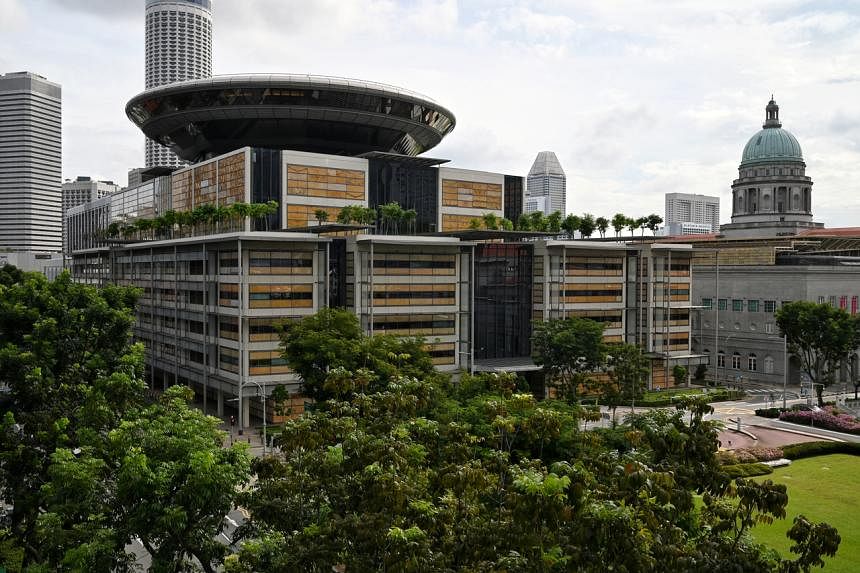
The court has the power to order personal costs against a lawyer who causes the incurring of unnecessary costs. PHOTO: ST FILE

SINGAPORE - The two lawyers who acted for Malaysian drug trafficker Nagaenthran K. Dharmalingam in a last-ditch attempt to halt his execution were on Wednesday (May 25) ordered to pay $20,000 in costs to the Attorney-General's Chambers (AGC).

Mr M. Ravi, who did most of the work, was ordered by the Court of Appeal to bear 75 per cent of the costs, while Ms Violet Netto, who later took over as the lawyer on record, was held liable for 25 per cent.

The AGC had originally sought personal costs totalling $40,000 against Mr Ravi and Ms Netto for setting out to delay Nagaenthran's execution by filing unmeritorious applications, which caused it to incur unnecessary costs.

Under the law, the court has the power to order personal costs against a lawyer who causes the incurring of unnecessary costs by acting improperly, unreasonably or negligently.

On Wednesday, a five-judge Court of Appeal, led by Chief Justice Sundaresh Menon, said it would be apparent to any reasonable defence counsel that the case advanced by the duo lacked factual basis.

The court reiterated that the way the case had been conducted was a blatant and egregious abuse of the court process.

Instead of putting their best case forward at the first instance, the lawyers "drip fed" the supposed evidence and tendered documents at the last possible moment, said the court.

The court also rejected Mr Ravi's argument that he and Ms Netto cannot be made to pay personal costs as they are no longer practising lawyers.

Nagaenthran was convicted of trafficking 42.72g of heroin in 2010 and given the mandatory death penalty. His appeals against his conviction and sentence were dismissed in 2011.

Over the years, Nagaenthran filed a total of seven applications to challenge his death sentence.

Days before he was scheduled to be hanged on Nov 10 last year, Mr Ravi filed an applicaton seeking judicial review of the impending execution.

Mr Ravi also filed another application, asking for a stay of execution for Nagaenthran to be assessed by a panel of psychiatrists.

The main argument was that the death sentence could not be carried out because Nagaenthran was mentally disabled.

The case was argued by Ms Netto, assisted by Mr Ravi, before the apex court on March 1.

On March 29, the court dismissed the legal actions, saying that the case was baseless and that there was no admissible evidence of any decline in Nagaenthran's mental condition.

The court said the proceedings brought by Nagaenthran amounted to an abuse of the court's processes and had been conducted with seeming aim of delaying his execution.

On April 26, a last-minute application by Nagaenthran's mother to halt his rescheduled execution was dismissed by the court.

He was hanged at Changi Prison Complex on April 27. -  Straits Times, 25/5/2022

High Court dismisses misconduct charge against lawyer M Ravi over comments about death penalty case
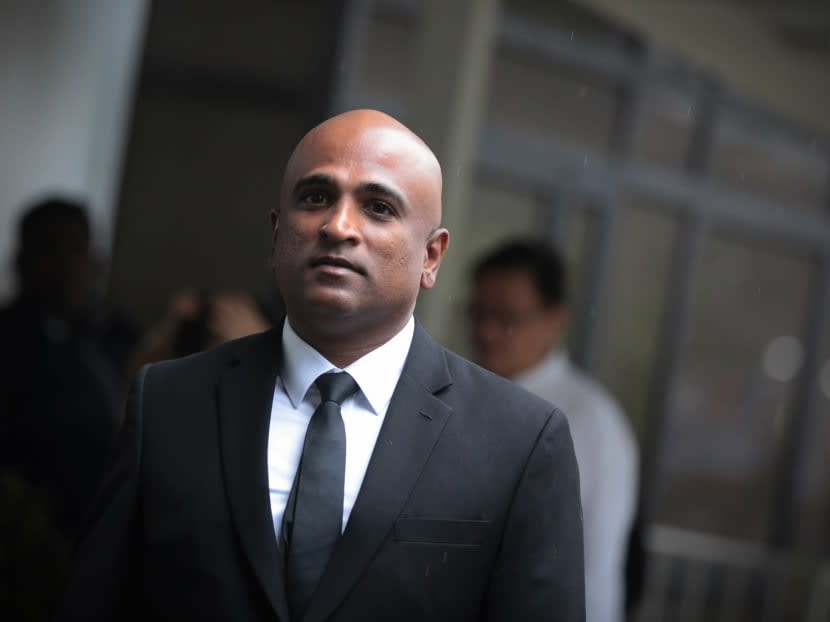
High Court dismisses misconduct charge against lawyer M Ravi over comments about death penalty case
The Attorney-General's Chambers said that lawyer M Ravi (pictured) had made serious allegations insinuating that the Public Prosecutor had acted in bad faith or maliciously for a death penalty case.
  • Lawyer M Ravi spoke in an interview after a Court of Appeal decision about his client who was then on death row
  • AGC filed a disciplinary complaint to LawSoc
  • It took issue with the lawyer’s comments during the interview about an "overzealous" prosecution for the death row case
  • After a disciplinary tribunal formed by LawSoc said those were fair comments, AGC applied to the court for a review of the decision
  • High Court judge See Kee Oon dismissed AGC’s application, but Mr Ravi still faces one misconduct charge

SINGAPORE — A High Court judge on Thursday (May 12) dismissed a request by the Attorney-General (AG) to review a disciplinary tribunal’s decision where lawyer M Ravi was found to have made fair criticism, thus ruling that he did not act with malice over a death row case.

The case was tied to Mr Ravi’s client Gobi Avedian, a 32-year-old Malaysian drug courier.

Gobi escaped the gallows in October 2020 after the Court of Appeal reviewed his earlier death penalty sentence and reinstated his original High Court sentence of 15 years’ jail and 10 strokes of the cane.

After this, Mr Ravi gave a video interview that was posted on the Facebook page of the now-defunct socio-political news site The Online Citizen.

In the interview, Mr Ravi said: “The prosecution, in prosecuting people especially for (the) death penalty — it is extremely important that you must be fair to both sides, the accused and the state.

“So therefore, balancing this, the state has been overzealous in its prosecution, the Public Prosecutor has been overzealous in this prosecution and that has led to the death sentence of Gobi.”

Mr Ravi also said it was “troubling” that the prosecution ran a different case before the High Court and Court of Appeal, and that the apex court had called the fairness of the prosecution into question.

The Attorney-General’s Chambers (AGC) then said that his claims were “categorically false”. It also issued the lawyer a letter demanding that he apologise and retract his allegations.

The AG serves as the Public Prosecutor.

When Mr Ravi refused to do so and demanded an apology from state prosecutors, AGC filed a disciplinary complaint against him to the Law Society of Singapore (LawSoc).

AGC said that Mr Ravi had “made serious allegations insinuating that the Public Prosecutor had acted in bad faith or maliciously... and that this alleged misconduct led to the imposition of the death sentence on (Gobi)”.

A disciplinary tribunal convened by LawSoc found that Mr Ravi’s statements constituted fair criticism, given that he had a rational basis for saying what he did.

This was because the Court of Appeal had observed that the prosecution advanced a different case against Gobi during the High Court trial, as compared to what was put forward on appeal, and expressed its concern that this had ultimately prejudiced Gobi.

The tribunal did not make out a professional misconduct charge arising from AGC's complaint.

The AG then filed an application to the High Court to review the tribunal's decision.

The AG argued that Mr Ravi's use of the word “overzealous” could carry the insinuation that the prosecution was overly enthusiastic or too eager to secure Gobi's conviction on a capital charge.

WHAT JUDGE SAYS

On Thursday, High Court judge See Kee Oon considered whether Mr Ravi had implied that the prosecution acted with malice, in bad faith or improperly. TODAY had obtained a copy of his oral remarks.

The judge found that the lawyer’s statements, “taken as a whole and understood in context”, did not imply that the prosecution had sought to achieve this at all cost or through any means.

What Mr Ravi said was premised on the rational basis that the prosecution’s approach during Gobi’s appeal had prejudiced him, which meant that Mr Ravi did not intend to impute malice, bad faith or impropriety to AGC, Justice See said.

"It does not equate to a suggestion that the prosecution had acted improperly in its conduct of Gobi’s case on appeal when it changed its case,” he added.

Justice See also saw no issue with Mr Ravi’s use of the word “troubling” because there was some factual basis to this sentiment.

Justice See noted that that the context of Mr Ravi’s remarks was also relevant in determining how an ordinary, reasonable person would understand them when they were made, as well as what Mr Ravi intended.

The judge said that in his view, the relevant context was the full transcript of Mr Ravi’s interview alongside the Court of Appeal’s oral judgement on Gobi’s case.

He rejected the AG’s submissions that the disciplinary tribunal had failed to consider what happened in the days after the interview.

This included the AG’s letter to Mr Ravi; the lawyer’s Facebook post that stated that the “government lawyers” who “handled Gobi’s case are the wrongdoers”; and Mr Ravi’s response letter where he refused to apologise.

Justice See said: “Even if the evidence of subsequent statements or events in the days after may be said to shed some light on (Mr Ravi)’s intent at the time of making the statements, such evidence would only serve as a form of secondary (and weak) corroboration at best.”

The judge also agreed with the disciplinary tribunal that Mr Ravi’s statements constituted fair criticism. Pertinently, the Court of Appeal had accepted that the prosecution’s failure to run a consistent case at trial and on appeal was unfair to Gobi.

However, the apex court acknowledged that during the High Court trial, a judgement regarding the issue of wilful blindness in drug trafficking cases had not been released.

In Gobi's case, the Court of Appeal had found that the prosecution failed to prove he was “wilfully blind” to the nature of the drugs — 40.22g of heroin that were found on him at Woodlands Checkpoint in 2014.

Thursday’s development does not spell the end of Mr Ravi’s disciplinary issues. LawSoc's tribunal has made out a misconduct charge in relation to the Facebook post he had published alleging that “government lawyers” who “handled Gobi’s case are the wrongdoers”. -  Today, 12/5/2022

 Criminal Procedure Code 2010

PART 18
COMPENSATION AND COSTS
Order for payment of costs by accused and order for payment of costs incurred by accused in accused’s defence   
355.—(1)  The court before which a person is convicted of an offence may, in its discretion and if satisfied that the defence of the person was conducted in an extravagant and unnecessary manner, make an order for costs, of an amount fixed by the court, to be paid by the person to any other party to the proceedings in which the person is convicted of the offence.
[19/2018]
(2)  If an accused is acquitted of any charge for any offence, and if it is proved to the satisfaction of the court that the prosecution was frivolous or vexatious, the court may order the prosecution or the complainant or the person on whose information the prosecution was instituted to pay full costs, charges and expenses incurred by the accused in and for the accused’s defence, to be taxed by the Registrar of the Supreme Court or the Registrar of the State Courts, as the case may be.
[5/2014]
(3)  The court may direct that either an order for payment of costs under subsection (1) or an order for payment of compensation under section 359(1) be paid in priority to the other, and if no direction is given, the order for payment of costs takes priority over the order for payment of compensation.
Costs ordered by Court of Appeal or General Division of High Court
356.—(1)  The Court of Appeal or the General Division of the High Court, in the exercise of its powers under Part 20, may —
(a)on its own motion, make an order for costs to be paid by any party to any other party as the Court of Appeal or the General Division of the High Court thinks fit; or
(b)on the application of any party, make an order for costs, of such amount as the Court of Appeal or the General Division of the High Court thinks fit, to be paid to that party by any other party.
[19/2018; 40/2019]
(2)  Where the Court of Appeal or the General Division of the High Court makes any order for costs to be paid by the prosecution to an accused, the Court of Appeal or the General Division of the High Court must be satisfied that the conduct of the matter under Part 20 by the prosecution was frivolous or vexatious.
[40/2019]
(3)  Before the Court of Appeal or the General Division of the High Court makes any order for costs to be paid by an accused to the prosecution, the Court of Appeal or the General Division of the High Court must be satisfied that —
(a)the commencement, continuation or conduct of the matter under Part 20 by the accused was an abuse of the process of the Court; or
(b)the conduct of the matter under Part 20 by the accused was done in an extravagant and unnecessary manner.
[19/2018; 40/2019]
(4)  If the prosecution applies to the Court of Appeal or the General Division of the High Court for an order for the costs of any matter under Division 1B of Part 20 to be paid by an accused to the prosecution on the ground that the commencement, continuation or conduct of that matter by the accused was an abuse of the process of the Court, the Court of Appeal or the General Division of the High Court must state whether it is satisfied that the commencement, continuation or conduct of that matter by the accused was an abuse of the process of the Court.
[19/2018; 40/2019]
Costs against defence counsel
357.—(1)  Where it appears to a court that costs have been incurred unreasonably or improperly in any proceedings (for example, by commencing, continuing or conducting a matter the commencement, continuation or conduct of which is an abuse of the process of the Court) or have been wasted by a failure to conduct proceedings with reasonable competence and expedition, the court may make against any advocate whom it considers responsible (whether personally or through an employee or agent) an order —
(a)disallowing the costs as between the advocate and his or her client; or
(b)directing the advocate to repay to his or her client costs which the client has been ordered to pay to any person.
[19/2018]
(1A)  If the Court of Appeal or the General Division of the High Court makes an order under subsection (1)(a) or (b) in respect of any proceedings for a matter under Division 1B of Part 20, and the prosecution has applied to the Court of Appeal or the General Division of the High Court for an order for the costs of that matter to be paid to the prosecution on the ground that the commencement, continuation or conduct of that matter was an abuse of the process of the Court, the Court of Appeal or the General Division of the High Court must state whether it is satisfied that the commencement, continuation or conduct of that matter was an abuse of the process of the Court.
[19/2018; 40/2019]
(2)  No order under this section may be made against an advocate unless he or she has been given a reasonable opportunity to appear before the court and show cause why the order should not be made.
Costs awarded against Public Prosecutor
358.—(1)  Costs awarded against the Public Prosecutor are to be paid out of the Consolidated Fund and costs awarded to and received by the Public Prosecutor are to be paid into the Consolidated Fund.
(2)  The Public Prosecutor is not personally liable for any costs awarded against him or her.
Order for payment of compensation
359.—(1)  The court before which a person is convicted of any offence must, after the conviction, consider whether or not to make an order for the payment by that person of a sum to be fixed by the court by way of compensation to the person injured, or his or her representative, in respect of his or her person, character or property by —
(a)the offence or offences for which the sentence is passed; and
(b)any offence that has been taken into consideration for the purposes of sentencing only.
(2)  If the court is of the view that it is appropriate to make such an order mentioned in subsection (1), it must do so.
(3)  If an accused is acquitted of any charge for any offence, and if it is proved to the satisfaction of the court that the prosecution was frivolous or vexatious, the court may order the prosecution or the complainant or the person on whose information the prosecution was instituted to pay as compensation to the accused a sum not exceeding $10,000.
(4)  Any order for compensation made under subsection (1) does not affect any right to a civil remedy for the recovery of any property or for the recovery of damages beyond the amount of compensation paid under the order, but any claim by a person or the person’s representative for civil damages in respect of the same injury arising from the offence, is deemed to have been satisfied to the extent of the amount paid to the person under an order for compensation.
(5)  The order for compensation made under subsection (3) does not affect any right to a claim for civil damages for malicious prosecution or false imprisonment beyond the amount of compensation paid under the order, but any claim by the accused for civil damages in respect of the malicious prosecution or false imprisonment is deemed to have been satisfied to the extent of the amount paid to the accused under an order for compensation.

Friday, May 27, 2022

SUHAKAM ‘dead’ with no HR Commissioners for 1 Month is unacceptable - 8 groups

# Statement reported by media:-

Appoint commissioners to ‘dead’ Suhakam now, govt urged FMT Reporters

Has Suhakam ceased to function, with no new chair, commissioners?The Vibes, May 27, 2022

Media Statement – 27/5/2022

SUHAKAM ‘dead’ with no HR Commissioners for 1 Month is unacceptable

We, the 8 undersigned organizations and groups are perturbed that the Malaysian Human Rights Commission (SUHAKAM) has ceased to function when the term of office of the previous Chairman and SUHAKAM Commissioners came to an end on 27/4/2022, and to date no new Chairpersons and HR Commissioners have been appointed.

Without any HR Commissioners, SUHAKAM cannot play the vital role it has been playing in Malaysia. They can make no SUHAKAM statements, recommendations to the government or even hold public inquiries. Human Rights suffers.

A media report on 11/5/2022, stated that the ‘…Human Rights Commission of Malaysia (Suhakam) is conducting an investigation into alleged human rights violations against junior doctors at public hospitals in Malaysia…’ raises a fundamental question, as to how SUHAKAM, with NO Commissioners at present, can even make such a statement. SUHAKAM employees reasonably cannot act on their own if and when there are no Commissioners. (FMT, 11/5/2022).

SUHAKAM is a statutory body created by reason of the Human Rights Commission Of Malaysia Act 1999, and the Commission is made up of the appointed HR Commissioners, appointed for a 3-year term. When there are NO Commissioners, as had been the case for the past month, SUHAKAM ceases to function, and will not be able to do anything including issuing  statements, appointing and also providing directions to SUHAKAM’s staff/employees.

Noting the important role that SUHAKAM has been playing in Malaysia, in terms of the promotion and defense of human rights, it is an embarrassment for SUHAKAM to find itself in a comatose stage by reason of a failure of government to ensure that SUHAKAM always have Commissioners.

It must be pointed out that the process of identifying and selecting new SUHAKAM Commissioners began in October 2021, and so the failure of the appointment of Chairperson and new Commissioners on or before the end of the term of previous Commissioners on 27/4/2022.

The choice of the future Chairperson and SUHAKAM Commissioners is crucial, for that determines the future functioning and effectiveness of the National Human Rights Institution.

In the past, from the birth of SUHAKAM, its effectiveness was not so evident but it changed after Tan Sri Hasmy Agam (2010-2016), and later Tan Sri Dato' Razali bin Ismail(2016-2019)  were appointed as Chairpersons of SUHAKAM. The strong effective SUHAKAM continued on until April 2022.

The number of Commissioners who will act without fear or favour for human rights in SUHAKAM is crucial, for all decisions of SUHAKAM requires consensus failing which the decision by a two-thirds majority of the members present at meetings shall be required. If the wrong kinds of Commissioners are appointed, we may end up with a less vocal, possibly ‘pro-government’ SUHAKAM who may be disinclined to speak up when required, or even hold public inquiries, more so when the alleged perpetrators may be State or State officers.

If the wrong Chairperson and Commissioners are chosen, there may be no more public inquiries on matters of human rights, like the Public Inquiry Into The Disapperances Of Joshua Hilmy And Ruth Sitepu, Public Inquiry Into The Disappearance of Pastor Raymond Koh And Amri Che Mat, Public inquiry into the incidents during and after the public assembly of 28 april 2012, Public Inquiry into the Infringement of Human Rights Including the Use of Excessive Force Prior to and During the Assembly on 9 July 2011, Public Inquiry Into The Arrest And Detention Of Five Lawyers Of The Kuala Lumpur Legal Aid Centre on 7 May 2009, Public Inquiry Into The Allegation Of Excessive Use Of Force By Law Enforment Personnel During The Incident Of 27th May 2008 At Persiaran Bandar Mahkota Cheras 1, Bandar Mahkota Cherasil and inquiries into death in custody.  

The days when the Human Rights Commission of Malaysia (SUHAKAM) was effectively an independent organisation which investigates complaints for the violation of human rights may come to an end.

We hope that the members of the Commission appointed by the Yang di-Pertuan Agong on the recommendation of the Prime Minister are done without any more delay.

Charles Hector

For and on behalf of the 8 groups/organizations listed below


ALIRAN

MADPET(Malaysians Against Death Penalty and Torture)

Greenpeace Malaysia

International Women's Rights Action Watch Asia Pacific (IWRAW AP)

NAMM (Network of Action for Migrants in Malaysia)

Saya Anak Bangsa Malaysia (SABM)

Teoh Beng Hock Trust for Democracy

WH4C (Workers Hub For Change)


Suhakam left with no commissioners for third time

Mah Weng Kwai says having no commissioners will affect advocacy work and maintaining the good standing of Suhakam.

PETALING JAYA: The Human Rights Commission of Malaysia (Suhakam) does not have any commissioners after their term expired yesterday, similar to what happened twice previously.

Former commissioner Mah Weng Kwai said a selection committee met on Monday and the process would take some time.

“As of today, there are no commissioners and this will affect advocacy work and maintaining the good standing of Suhakam,” he told FMT.

Mah said only the Suhakam management functioned and no policy decisions could be made.

There are nine commissioners who have a three-year term from 2019.

Five, including Mah, a former Court of Appeal judge, served two terms, the maximum allowed under the Suhakam Act.

The other four – Osman Hashim, Noor Aziah Mohd Awal, Madeline Berma and Hishamudin Md Yunus – could be reappointed for another term.

FMT understands that Hishamudin, also a retired Court of Appeal judge, had expressed his wish not to be reappointed.

Mah said that three years ago, it took the government two months to appoint the commissioners.

“It is in the best interest of the public that the commission is up and running at all times as there are always serious challenges on human rights issues like the threat to the independence of the judiciary,” he said.

In 2016, under Najib Razak’s administration, Suhakam was also left without commissioners for almost two months. - FMT, 27/4/2022


Five Suhakam commissioners complete two service terms
Published:  Apr 27, 2022 10:22 AM
Updated: 10:25 AM

Five Suhakam members completed their second term at the human rights commission yesterday.

They are Mah Weng Kwai, Jerald Joseph, Nik Salida Suhaila Nik Saleh, Lok Yim Pheng and Godfrey Gregory Joitol.

All five started their tenure as Suhakam commissioners in 2016 during then prime minister Najib Abdul Razak's administration.

Each term lasts three years. Section 5(4) of the Human Rights Commission of Malaysia Act 1999 (Suhakam Act) does not allow a third term.

Four other commissioners completed their first term including Othman Hashim (outgoing chairperson), Madeline Berma, Mohd Hishamuddin Md Yunus and Noor Aziah Mohd Awal.

Putrajaya has yet to announce the list of replacement commissioners.

Suhakam members are appointed by the Yang di-Pertuan Agong on the recommendation of the prime minister in consultation with an appointment committee chaired by the chief secretary of the government.

According to Section 11 of the Suhakam Act, the committee must also consist of the chairperson of Suhakam and three members of civil society who have practical experience in human rights matters, appointed by the prime minister.

In previous cycles, there have been incidents where there will be a gap of several months before a new batch of commissioners is appointed. - Malaysiakini, 27/4/2022

Appoint commissioners to ‘dead’ Suhakam now, govt urged

The term of the previous Suhakam commissioners expired on April 27.

PETALING JAYA: Eight NGOs have urged Putrajaya to appoint new Human Rights Commission of Malaysia (Suhakam) commissioners immediately, after a month of the commission being left “dead”.

In a joint statement, the groups said Suhakam cannot function without any commissioners, noting that the term of the previous members had expired on April 27.

They also questioned how Suhakam was reportedly conducting an investigation into rights violations against junior doctors in public hospitals when it did not have any commissioners to carry out such a probe.

“When there are no commissioners, as has been the case for the past month, Suhakam will not be able to do anything, including issuing statements, appointing and also providing directions to Suhakam employees.


“Noting its important role in the promotion and defence of human rights, it is an embarrassment for Suhakam to find itself in a comatose by reason of the government’s failure to ensure that Suhakam always had commissioners,” they said.

They urged for the right people to be appointed to Suhakam to ensure that the commission remained vocal and not “pro-government”, in order to uphold human rights in Malaysia.

The statement was signed by Aliran, Malaysians Against Death Penalty and Torture, Greenpeace Malaysia, International Women’s Rights Action Watch Asia Pacific, Network of Action for Migrants in Malaysia, Saya Anak Bangsa Malaysia, the Teoh Beng Hock Trust for Democracy, and Workers Hub For Change. - FMT, 27/5/2022

Has Suhakam ceased to function, with no new chair, commissioners?

NGOs alarmed by ‘comatose’ state of national human rights body

Updated 1 day ago · Published on 27 May 2022 8:37AM · 0 Comments

Has Suhakam ceased to function, with no new chair, commissioners?
Suhakam was established by Parliament under the Human Rights Commission of Malaysia Act 1999, which was gazetted on September 9, 1999. – The Vibes file pic, May 27, 2022

KUALA LUMPUR – Eight non-governmental organisations have raised extreme concern that the Malaysian Human Rights Commission (Suhakam) has “ceased to function”, with the term of office of the previous chairman and commissioners ending April 27 and no replacements being made to date.

Stressing that they are perturbed over the matter, they said that without any human rights commissioners, Suhakam cannot play the vital role it has been playing in Malaysia. 

“They can make no Suhakam statements, recommendations to the government or even hold public inquiries. Human rights suffer,” they said. 

“Noting the important role that Suhakam has been playing in Malaysia in terms of the promotion and defence of human rights, it is an embarrassment for Suhakam to find itself in a comatose stage by reason of a failure of the government to ensure that Suhakam always have commissioners.”

The statement today was undersigned by Aliran, Malaysians Against Death Penalty and Torture, Greenpeace Malaysia, International Women’s Rights Action Watch Asia Pacific, Network of Action for Migrants in Malaysia, Saya Anak Bangsa Malaysia, Teoh Beng Hock Trust for Democracy, and Workers Hub For Change.

The NGOs noted a report earlier this month that Suhakam is conducting an investigation into alleged human rights violations against junior doctors at public hospitals in Malaysia.

They said this raises a fundamental question as to how Suhakam, with no commissioners at present, can even make such a statement. 

They stressed that Suhakam employees reasonably cannot act on their own if and when there are no commissioners.

“Suhakam is a statutory body created by reason of the Human Rights Commission Of Malaysia Act 1999, and the commission is made up of the appointed HR commissioners, appointed for a three-year term,” they said in the statement. 

“When there are no Commissioners, as had been the case for the past month, Suhakam ceases to function, and will not be able to do anything including issuing statements, appointing and also providing directions to Suhakam’s staff/employees.”

The NGOs pointed out that the process of identifying and selecting new Suhakam commissioners began in October 2021.

They noted the failure to appoint a new chairman and commissioners on or before the end of the term of previous commissioners on April 27 this year.

“We hope that the members of the commission appointed by the Yang di-Pertuan Agong on the recommendation of the prime minister are done without any more delay.”

“The choice of the future chairperson and Suhakam commissioners is crucial, for that determines the future functioning and effectiveness of the national human rights institution,” they said.

A check on Suhakam’s website early this morning showed that the names of Tan Sri Othman Hashim whose term as chairperson lapsed last month, as well as the names of all the immediate former commssioners, are still on the portal.

Former commissioner Mah Weng Kwai was reported by Free Malaysia Today last month as saying that a selection committee had met on April 25, and the process of choosing and appointing the new commssioners would take some time.

Caution against ‘pro-government’ commissioners

Suhakam was established by Parliament under the Human Rights Commission of Malaysia Act 1999, which was gazetted on September 9, 1999. Its inaugural meeting was held on April 24, 2000.

The NGOs said that Suhakam’s effectiveness was not so evident since its inception, but this changed after Tan Sri Hasmy Agam (2010-2016) was appointed chairman, followed by Tan Sri Razali Ismail (2016-2019).

“The number of commissioners who will act without fear or favour for human rights in Suhakam is crucial, for all decisions of Suhakam require consensus, failing which the decision by a two-thirds majority of the members present at meetings shall be required,” they said. 

“If the wrong kinds of commissioners are appointed, we may end up with a less vocal, possibly ‘pro-government’ Suhakam who may be disinclined to speak up when required or even hold public inquiries, more so when the alleged perpetrators may be (the) state or state officers.”

“The days when Suhakam was effectively an independent organisation which investigates complaints for the violation of human rights may come to an end,” they warned.

With wrong appointments, there may be no more public inquiries on matters of human rights, like that on disappearances of Joshua Hilmy, Ruth Sitepu, pastor Raymond Koh and Amri Che Mat, they added.

They also cited the public inquiries into the incidents during and after the public assembly of April 28, 2012; into the infringement of human rights, including the use of excessive force prior to and during the assembly on July 9, 2011; into the arrest and detention of five lawyers of the Kuala Lumpur Legal Aid Centre on May 7, 2009; into the allegation of excessive use of force by law enforcement personnel during the incident of May 27, 2008 at Persiaran Bandar Mahkota in Cheras; and inquiries into deaths in custody.  – The Vibes, May 27, 2022