DAP, Amanah, PKR,..(Pakatan Harapan itself) have suffered a possible loss of support and/or confidence of the people under the premiership of Anwar Ibrahim in this PH-led MADANI Coalition government...for various reasons including the FAILURE to realize the REFORMASI promises - and, in fact, situation may have even deteriorated in the area of JUSTICE and Human Rights. BLAME and/or RESPONSIBILITY will not be placed just on the PRIME MINISTER, but on all the PH and MADANI government coalition parties and that may affect peoples' support in the coming GE.
The credibility and support DAP build over decades thanks to MPs like the late Karpal Singh, Lim Kit Siang, Pattoo, and many more ...resulted in support because of the fact that they had then BRAVELY stood up for Justice and Human Rights.. They fell victim to the ISA, even Guan Eng was send to jail for Sedition Act - ' charged under the Sedition Act with “prompting disaffection with the administration of justice” after he publicly criticized the Malaysian Government’s handling of allegations of statutory rape made against the former Chief Minister of Malacca, Tan Sri Abdul Rahim Tamby Chik, in 1994. He was also charged under the Printing Presses and Publications Act with “maliciously printing” a pamphlet allegedly containing “false information” about the case' - Amnesty International
Likewise Amanah and PKR had the support of the people - primarily for their commitment to justice and human rights - and their promises for REFORM if they were elected into POWER they will bring about changes...repeal bad laws like the Sedition Act, Detention Without Trial laws, SOSMA, make needed amendments to the University and University Colleges Act(AUKU), etc...And finally they got power and became government but the REFORMS were slow to happen...or just did not happen...and the political parties like DAP, Amanah..went silent - not even criticizing or expressing an opinion...Remember, many see SILENCE as CONSENT to what the government does.
There is NOTHING stopping any political party(even parties in government) from speaking their own views if they disagree with the government's position. This is expected also from MPs in Cabinet, and MPs who are back-benchers in Parliament - that silence will affect peoples' support (Was what happened in the recent elections an indication of the peoples' feelings - even DAP(the strongest party in PH and also the MADANI government) were 'kicked out' by the people.
Remember Nazri Aziz expressed personal views on the death penalty that often appeared more liberal and abolitionist-leaning than the official, strict Cabinet position held by the Barisan Nasional government at the time. Remember even Muhyiddin that allegedly raised his views on the 1MDB issue in Najib's Cabinet that led to his sacking... so, we have precedence of people in government speaking up at the RISK of facing retaliation. DAP, Amanah, PKR and/or their MPs could also still do this > when they disagree with government or PM's decisions or actions...Oh yes, one PKR MP has been bravely doing this - MP Hassan Karim?
Then, now, DAP reacted, indicating 'disappointment' in the PM Anwar Ibrahim's PH-led Coalition government, in DAP's Anthony Loke saying that DAP gives 6 months ultimatum without even specifically naming the meaningful REFORMS DAP wanted..
WHEN DAP Secretary-General Anthony Loke warned on Dec 9, 2025 that the party would reassess its position in the unity government if “meaningful reforms” were not delivered within six months, it sounded like a long-overdue attempt to reassert the party’s reformist spine.
But deadlines only matter when the public knows exactly what is being measured. Without a clear, written and time-bound reform checklist, DAP’s ultimatum risks being dismissed as political posturing rather than a serious governing demand.
This is not about semantics. It is about credibility. Reform cannot remain a flexible slogan that shifts with coalition arithmetic. If DAP wants Malaysians to take its warning seriously, it must do what genuine reform movements do: name the reforms, name the laws, name the institutions, and name the deadlines.
Was there any sincerity - or was it mere 'posturing' because DAP also said that it will not withdraw support from PM Anwar Ibrahim or the MADANI government - What is this? Reasonably, a disappointment with existing government must include removing or changing the Prime Minister. Support for government is OK, because always the MADANI coalition can pick a new and better PM who will bring 'meaningful reforms'...
SIX MONTHS - that would be by 10th June, but now DAP is saying that it will have an Emergency General Meeting on the 7th month...RIGHTLY, the EGM should have been held in June, possibly on 10th June or early June...The fact that 'the special congress' will only happen more than a one month after the 6-month deadline affects Anthony Loke and DAP's reputation, credibility,etc...No mention whether there has been ANY of the 'meaningful reforms' that DAP wanted....
DAP will hold a special congress on July 12 to decide whether the party’s leaders should resign from their positions in the unity government while continuing to support it in Parliament.DAP secretary-general Loke Siew Fook said the 4,000 delegates attending the congress will vote on whether DAP leaders should resign as ministers, deputy ministers, state executive councillors, local councillors and GLC appointees, Sin Chew Daily reported...
The transport minister stressed that regardless of the outcome, the party’s MPs would continue backing the government until the next general election.
He also insisted that DAP would not withdraw support for the unity government or take part in any attempts to form a “backdoor government”.
“This is not a threat (to Prime Minister Anwar Ibrahim), but a review of our role in government,” he said, adding that some DAP leaders were still adjusting to the pressures of being in government after years in the opposition.
“We will ensure the government remains stable. Our 40 MPs will ensure the government’s stability.”
Worse, when Anthony Loke says the party will continue to support the PM and the government until next general elections - Should this not be a DECISION of that upcoming DAP Special Congress? Does Anthony Loke and the DAP leadership want to support PM Anwar and the MADANI government despite the fact that there is NO MEANINGFUL REFORMS...? If DAP was in BN during Najib's Premiership, what would you think of a party that will continue to support the PM despite all that 'wrongdoings' until the next elections????
WHY continue to support a PM and a government that fails to do justice, and bring about needed REFORMS? Is that DAP serving the people? Is that DAP acting for the best interest of Malaysia and its people? It all sounds very funny...?
REMEMBER again that SILENCE is often seen as CONSENT - so DAP, by its silence, CONSENTS with everything PM Anwar says and did???
Why does Anthony Loke and the leadership of DAP want to limit the upcoming Special Congress to JUST whether DAP leaders should resign as ministers, deputy ministers, state executive Councillors, local councillors and GLC appointees?
Should NOT the Special Congress be able to DECIDE ALL matters including whether DAP should continue to support Anwar Ibrahim to continue being PRIME MINISTER, should DAP continue support the MADANI coalition forming the government (DAP could support the coalition, and insist on a NEW PM), .... Should NOT DAP also be deciding whether it will remain Pakatan Harapan, and other matters related...
Now, Anthony Loke talks about the possible resigning as ... local councillors and GLC appointees...and this is INTERESTING - How many Local Councillor positions did DAP get? Did it reflect the number of MPs (40) and the number of ADUNs DAP has? In KL, for example,... did it reflect the demography of the particular local council...
- DAP: 40 seats
- PAS (Opposition): 43 seats
- PKR (Parti Keadilan Rakyat): 31 seats
- UMNO (Barisan Nasional): 26 seats
- GPS (Gabungan Parti Sarawak): 23 seats
- BERSATU (Opposition): 19 seats
- AMANAH: 8 seats
- GRS (Gabungan Rakyat Sabah): 5 seats
In Kuala Lumpur
| Constituency | MP | Party/Coalition |
|---|---|---|
| P114 Kepong | Lim Lip Eng | PH (DAP) |
| P115 Batu | P. Prabakaran | PH (PKR) |
| P116 Wangsa Maju | Zahir Hassan | PH (PKR) |
| P117 Segambut | Hannah Yeoh | PH (DAP) |
| P118 Setiawangsa | Nik Nazmi Nik Ahmad | PH (PKR) |
| P119 Titiwangsa | Johari Abdul Ghani | BN (UMNO) |
| P120 Bukit Bintang | Fong Kui Lun | PH (DAP) |
| P121 Lembah Pantai | Fahmi Fadzil | PH (PKR) |
| P122 Seputeh | Teresa Kok | PH (DAP) |
| P123 Cheras | Tan Kok Wai | PH (DAP) |
| P124 Bandar Tun Razak | Wan Azizah Wan Ismail | PH (PKR) |

The impact of PH joining hands with BN to form government
Malaysians CHANGED substantially, when they finally OUSTED the BN from government - and the anger of the people continued on after GE14. In GE14, the BN had 79 MPs, and in GE15, they only had 30 MPs - will the people forget, or are they still angry with BN for what it did wrong to Malaysians, and Malaysia - indication is that they may not.
"Sekali terkena, dua kali beringat"(once burned twice shy) - and the convictions against Najib, and the PRIMA FACIE case against Zahid Hamidi just re-enforces the correctness of their decision to reject BN...
Would the voting trends against BN continue in GE16? Would PH too suffer the anger Malaysians still have against the BN - Noting that PH did not stop at just forming a Coalition Government with BN after elections, but also went further on an electoral pact with BN in recent by-elections and even the Sabah elections > this changes the situation, the forming of Coalition to govern was out of NECESSITY, but the electoral pact is very different...
Come GE16, would PH and BN have an ELECTORAL PACT? Would PH break-up, with some PH parties joining BN? Or will BN be absorbed into PH or vice-versa?
In GE14, PH which included Mahathir wins 113 seats, PH without Mahathir(and this time led by Anwar Ibrahim wins only 81 seats. Was the loss of support due to the absence of Mahathir and BERSATU, or was it because of lesser support of the people because Anwar Ibrahim was leading it? Was the lost of support simply because the post GE14 PH failed to bring about speedy reforms? It is difficult to figure out the minds of people...
But after GE15, with Anwar as PM, the question that many is asking is what reforms has Anwar who had much more time really brought?
# The government abolished the MANDATORY Death Penalty and LIFE IMPRISONMENT - and allowed for the Federal Court Review of those on death row, or facing life imprisonment > but even during the Review, the Federal Court maintained the Death Penalty for some, and still our Courts, even though there is no more MANDATORY Death Penalty is still sentencing people to DEATH - and to date this government has failed to come up with any solution to deal with now again increasing persons on death row.
# Sedition ACT - Not repealed although Anwar assured us that it will ONLY be used for 3R cases - but still it continues to be used for what are NOT 3R cases...???
# Freedom of Expression/Opinion and the right to share has been SERIOUSLY been affected with the government even targeting. POSTs are being removed, worst without the knowledge of the owner of the post and uncertainty as to for what reason exactly, and this is a MAJOR PROBLEM.
...a lot more...
One of the most important REFORM that moved people was the 'RESTORATION OF LOCAL COUNCIL/GOVERNMENT ELECTIONS' - people want democratically elected Local Government - NOT a political appointed Local Government. DAP and PKR led governments could not have Local Government Elections because a FEDERAL LAW had to be amended to RESTORE Local Government Elections - but when PH got Federal Power after GE14 - but at least they were still working towards it...saying it will need about 3 years before it can happen BUT, when Anwar PH-led coalition government, they went 'SILENT' on this fundamental issue.
Note, in Malay kampungs, the Kampung Baru(New Villages), Orang Asli kampungs -the leaders continue to be POLITICAL APPOINTEES - not democratically elected leaders? WHY?
The other REFORM promised - that the PM will not also be the Finance Minister > a needed reform to prevent another 1MDB like scandal???
Given the disappointment of the people, it is WISE for the PH parties like DAP, Amanah and even PKR to WORRY about their future come GE16....The 'promised' or expected REFORMS did not happen...
Worse, what is happening to people's PRIVACY, freedom of expression and the right to share with others - the government admit that they are blocking some online posts > most are OK if it is Pornography, Online Gambling, Post attempting to SCAM people - BUT there is uncertainty as to whether post critical of government, the PM and Ministers are also being BLOCKED. WORST, the victims whose post/accounts get blocked/censored are denied the right to KNOW 'grounds for government action(or government backed actions), the Right To Be HEARD - the right to say why their posts/accounts should not be blocked..
Then, there was the issue of PM/Government manipulating online content/sentiments -
A Malaysiakini investigation finds a network of 263 Facebook accounts engaged in astroturfing to artificially boost support for Prime Minister Anwar Ibrahim...The discovery comes two years after Meta removed a separate, 600-account network engaged in pro-government manipulation, which it linked to the police. - Malaysiakini, 30/9/2025
Part 1: Investigation: Network of 263 ‘cybertroopers’ boosts Anwar's FB support
Part 2: Deception and data: Inside pro-Anwar CIB network investigation
Part 3: Experts: Systemic challenges enable persistent influence networks
I, for one, thought this was a VERY SERIOUS issue - Can the Government or the Prime Minister 'manipulate' online views? The Minister of Communication should have INVESTIGATED this, and laws should have been enacted CRIMINALIZING this, if needed. But, still NO INVESTIGATIONS. It is OK for the Government, PM and/or Ministers to resort to ONLINE comments/communication BUT they must clearly state that it is the government views, or that the 'commenters' are making comments approved by the Government - to not do so could be a DECEPTION because people believe that this a personal view of fellow Malaysians, not views of persons 'employed' or engaged to give a pro-government or government response. STILL TIME to investigate this...after all the Minister of Communication has the duty to tell the people what is 'FALSE' and to correct misunderstandings - but it has to be done OFFICIALLY, and not by hiding behind some paid/contracted persons...??
SILENCE of DAP, Amanah, PKR and other parties in the MADANI Coalition, their party leaders, their MPs or ADUNs implies that they CONSENT to this act to manipulate public perception?
Many Parties, their MPs and their candidates for the upcoming GE may be 'punished by the people' for this - and that is why political parties must wake up and realize that SILENCE(which implies CONSENT) is not an option - they must speak up and express their Opinions/Views even when the government they are part of is doing it..
Malaysian people are EMPOWERED now - and they will NO LONGER vote you simply because you raised Public Officers Pay, Judges Pay, gave SARA Aid, ... they will look at MORE IMPORTANT matters to decide who is best to be their MP, ADUN or to form the next Government...and now they have options, as even the Opposition parties like PAS, BERSATU,...had proven that they have the CAPABILITY of governing Malaysia and States...as they governed Malaysia and did OK - No Major Consequences at all... ??
PH and BN had been using 'the fear of religious extremism' is parties like PAS came into power will no longer work??? - PKR-led Selangor now has decided to disallow PIG farming(showing little concern for the workers and those who survive with the income from this industry), and all are watching to see if the individuals who went and demolished a Temple(allegedly illegal) will be charged and tried in Court for the crime he committed - noting that the individuals who 'mocked' an Hindu religious practice were never charged for their crime... Malaysia is a multi-religious nation, and its people are respectful of the religion and religious practices of others - and would they want a government that fails to do so? I believe that the use of 'religion' by some politicians and parties do not go down well with the ordinary Malaysians - they live harmoniously with people of different faiths, and such issues that try to divide people on religion or even ethnicity never gets popular support...and in fact, such behavior may lead to loss of support.
DAP and other political parties have LOT TO THINK ABOUT now ... BLIND LOYALTY or 'SILENCE' may impact people's support come next GE.
People tell your Peoples' Representative(MPs) whether you still want Anwar Ibrahim to remain Prime Minister or NOT? MPs, listen to the people and do the RIGHT thing for the GOOD of Malaysia?
Anwar & MADANI - stop violating our right to freedom of expression, freedom to communicate with others, and FREEDOM to have a different view from PM Anwar and the TRUTH? The Murray Hunter saga...
Will Sabin Samirah be choice of the people of Kota Kinabalu if there was elections to be the MAYOR of Kota Kinabalu?
DAP’s six-month reform ultimatum needs a checklist
WHEN DAP Secretary-General Anthony Loke warned on Dec 9, 2025 that the party would reassess its position in the unity government if “meaningful reforms” were not delivered within six months, it sounded like a long-overdue attempt to reassert the party’s reformist spine.
But deadlines only matter when the public knows exactly what is being measured. Without a clear, written and time-bound reform checklist, DAP’s ultimatum risks being dismissed as political posturing rather than a serious governing demand.
This is not about semantics. It is about credibility. Reform cannot remain a flexible slogan that shifts with coalition arithmetic. If DAP wants Malaysians to take its warning seriously, it must do what genuine reform movements do: name the reforms, name the laws, name the institutions, and name the deadlines.
The unity government may be fragile. But reform has always been inconvenient. That was the moral bargain voters accepted when DAP asked for their trust.
If DAP is serious about “meaningful reforms”, it should publish a reform list that is specific, testable and non-negotiable. At minimum, it should include the following six items.
DAP also cannot credibly argue that these reforms are too complex or politically impossible to deliver within six months. The party has been in government for seven years, first under Pakatan Harapan and now within the unity administration.
If institutional reform was truly its core mission, these issues should have been prioritised from the moment power was secured. Instead, many were deferred, diluted or quietly side-lined.
Claiming that six months is insufficient today only reinforces the perception that reform urgency emerges when political leverage is threatened, not when responsibility is assumed.
Corruption reform: MACC independence, Ismail Sabri, and the Sabah mining exposè
Any reform agenda that does not begin with corruption is already compromised.
The Malaysian Anti-Corruption Commission (MACC) remains structurally vulnerable to executive influence. Regardless of how often the government declares its commitment to clean governance, enforcement that lacks institutional independence will always be perceived as selective.
DAP has long argued for MACC reform, including placing the commission under parliamentary oversight, strengthening security of tenure for the chief commissioner, and separating investigative authority from political control over prosecution.
These reforms are not cosmetic. They are structural necessities if corruption is to be tackled consistently rather than episodically.
The urgency of MACC reform is underscored by the unresolved contradictions in recent high-profile cases.
One of the most damaging is the RM169 million linked to former Prime Minister Ismail Sabri Yaakob. Large sums of cash were seized and subsequently forfeited. Yet what the public has not seen is prosecution, charges, or a courtroom examination of evidence.
The uncomfortable question remains: how can someone allegedly linked to RM169 million return the money and walk away effectively uncharged? Can others do so too or is it only a privilege for Members of Parliament whose vote at the Dewan Rakyat is depended upon by the Government?
Returning funds does not equate to accountability. Without prosecution, forfeiture risks becoming a substitute for justice rather than a step towards it. DAP’s silence on this case has been conspicuous and damaging.
Compounding this credibility gap is the Sabah mining scandal exposed through a series of videos released by businessman Albert Tei.
Despite multiple video revelations allegedly implicating 15 politicians, only two have been charged. Several others named continue to hold senior positions in the Sabah government, including a deputy chief minister and key ministerial posts. To top it all, one of the two was recently appointed to an important GLC position. And DAP said nothing…yet.
Tei has publicly challenged Prime Minister Anwar Ibrahim to demonstrate that anti-corruption enforcement is not constrained by political considerations. That challenge remains unanswered.
These three elements, MACC structural weakness, the Ismail Sabri case, and the Sabah mining expose, are not separate issues. They form a single corruption credibility test. If DAP’s six-month ultimatum does not confront them directly, it will be seen as rhetorical rather than reformist.
Separation of power between the Prime Minister and the Finance Ministry
Closely linked to corruption risk is the concentration of power at the apex of government.
DAP itself once strongly condemned the practice of the Prime Minister also assuming the role of Finance Minister, warning that it undermines parliamentary oversight and increases the risk of abuse.
That principle does not lose validity simply because political circumstances have changed.
Any credible reform checklist must therefore include a firm commitment to separate these two offices, supported by a clear timeline and institutional safeguards to prevent future reconsolidation of power.
Without structural limits, clean governance becomes dependent on personal restraint rather than system design, a fragile foundation for reform.
Recognition of the Unified Examination Certificate (UEC)
Another reform DAP can no longer afford to treat as optional is the recognition of the Unified Examination Certificate (UEC).
For decades, UEC recognition has been framed not as a cultural concession, but as an education and meritocracy issue. DAP has repeatedly argued that students should not be disadvantaged by the education system they are born into.
If the party remains sincere about equal opportunity, UEC recognition, whether through public university entry, teacher training pathways, or professional accreditation, must be clearly stated rather than vaguely implied.
Ambiguity will only reinforce perceptions that politically sensitive reforms are quietly abandoned after power is secured.
A warning from history: the toll abolition promise
DAP should also reflect candidly on its own record of unfulfilled pledges.
For years, the party promised nationwide toll abolition once it entered government. That pledge featured prominently in campaigns and manifestos, yet disappeared after power was attained.
That experience continues to shape public scepticism today. It raises a blunt question DAP must confront: will the reforms promised under this six-month ultimatum suffer the same fate, remembered only as casualties of political compromise?
Justice issues that appear forgotten after power was gained
There is a deeper concern DAP must address: the perception that urgency on justice issues diminished after becoming government.
Justice for Teoh Beng Hock was once central to DAP’s moral narrative. Today, accountability remains elusive and public pressure appears muted.
The same applies to the disappearances of Pastor Raymond Koh and Amri Che Mat. A public inquiry found state involvement, yet no senior official has been held responsible.
Silence in government carries more weight than outrage in opposition. A reform party cannot afford to appear selective in its pursuit of justice.
Reform cannot be conditional on political survival
If corruption enforcement is calibrated to political risk rather than legal principle, DAP’s six-month deadline will achieve nothing of substance.
Reform will be seen not as a principle, but as a tactical exercise.
If this is the price of remaining in power, DAP must confront a difficult question: has it become what it once opposed?
Put it in writing or lose public trust
DAP supporters are not demanding perfection. They are demanding clarity and consistency.
Anthony Loke’s six-month clock started on Dec 9, 2025, with June 30, 2026 identified as the point of reckoning.
As of Jan 20, 2026, 161 days remain.
If by then MACC reform remains stalled, corruption cases unresolved, and structural power concentration intact, the ultimatum will expire without meaning.
The great DAP leader Karpal Singh once said: “There are no permanent friends or foes, only permanent principles.”
Giving up permanent principles for new-found friends will be hypocrisy of the highest degree.
If DAP constantly flip flops, it risks losing something far more serious than votes – its moral authority.
The clock is ticking.
— Datuk Seri Ashraf Abdullah was former Group Managing Editor of Media Prima Berhad’s Television Networks. - Malaysian Gazette, 22/1/2026
DAP congress in July to review role in government
The congress will determine whether DAP leaders, such as ministers, deputy ministers and state executive councillors, should relinquish their posts.

DAP secretary-general Loke Siew Fook said the 4,000 delegates attending the congress will vote on whether DAP leaders should resign as ministers, deputy ministers, state executive councillors, local councillors and GLC appointees, Sin Chew Daily reported.
Loke said the congress would serve as an internal “referendum” as this will be the first time the party has entrusted such a major political decision to a congress, rather than having the central executive committee (CEC) decide on the matter.
The transport minister stressed that regardless of the outcome, the party’s MPs would continue backing the government until the next general election.
He also insisted that DAP would not withdraw support for the unity government or take part in any attempts to form a “backdoor government”.
“This is not a threat (to Prime Minister Anwar Ibrahim), but a review of our role in government,” he said, adding that some DAP leaders were still adjusting to the pressures of being in government after years in the opposition.
“We will ensure the government remains stable. Our 40 MPs will ensure the government’s stability.”
Loke noted that the CEC had previously made decisions on joining or leaving political coalitions, in accordance with the party’s constitution, without putting the matter to a delegates’ vote.
“However, given the current circumstances, especially the impact of the Sabah state election, it is necessary for delegates to decide our direction collectively,” he said.
“We want the process to be more institutionalised and democratic.”
On Dec 2, Loke said the party would work closely with Anwar to accelerate reforms over the next six months following DAP and Pakatan Harapan’s drubbing in the Sabah state election, where DAP lost all eight seats it contested.
However, political analysts have warned that the party’s plan to fast-track its reform agenda risks being seen as mere “political sugar coating” if not accompanied by tangible measures. FMT, 19/2/2025.
DAP secretary-general Anthony Loke said the party will hold a special congress on July 12, in which its delegates will determine whether its officeholders should step down from all government positions.
Sin Chew Daily reported Loke characterising the gathering as an internal “referendum”, emphasising that even if members opt to withdraw from executive roles, the party’s 40 MPs would still support the government led by Prime Minister Anwar Ibrahim until the next general election.
More than 4,000 central delegates are expected to take part in the vote, making it the first occasion on which such a consequential political question has been decided by the party’s top deliberative assembly rather than solely by its central executive committee (CEC).
"The 40 DAP MPs will ensure government stability. But our roles in the government, whether to continue as ministers or deputy ministers, or to resign from all official positions, including local councillors and positions in government-linked agencies, are up to the delegates to decide.
"We cannot want to govern without bearing the burden of governance. Once the congress decides to remain in the government, the entire DAP must share the responsibility and act in unison," he added.

He said the party cannot have it both ways, adding that if the DAP chooses to remain in the government, it must bear the responsibility and pressure of governing, and cannot govern while simultaneously opposing the government.
The party's annual national congress was originally scheduled for September but has been moved up to July.
Loke, who is also the transport minister, reportedly said the core motion will determine the party’s direction for the next 12 to 18 months.
He explained that the CEC previously decided on joining or leaving political coalitions according to the party constitution, and these decisions were never put to a vote of delegates.
However, current circumstances, particularly the impact of the Sabah election, require delegates to collectively decide the party’s direction.
Sabah polls
In December last year, the CEC vowed to compile all the feedback it received from Sabah voters during the recent state election and work towards regaining public confidence.
The decision was made following the party's dismal performance in the polls, where it lost all eight of its contests, including six constituencies it previously won with large majorities in the 2020 election.
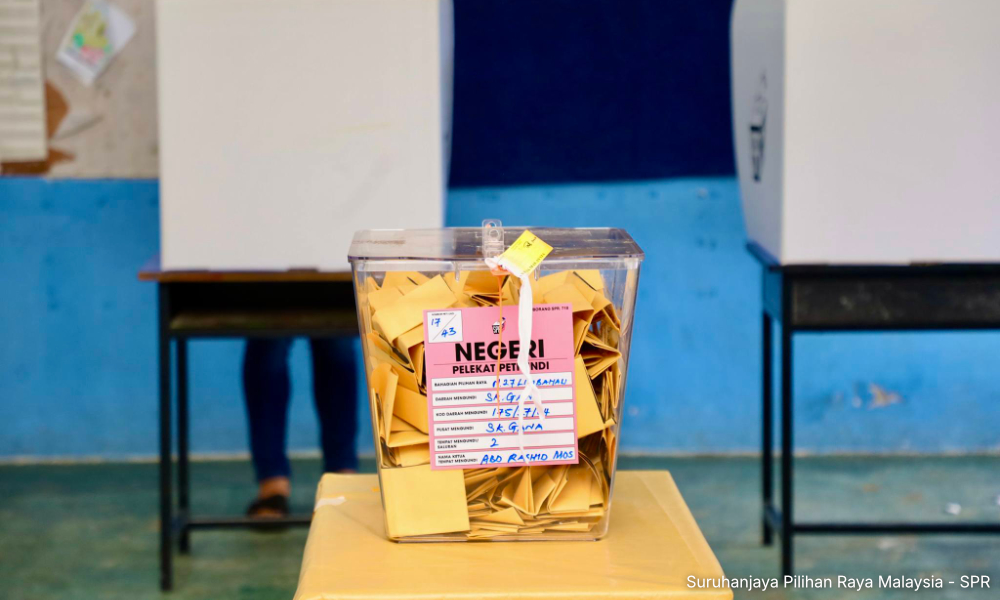
Loke had said at that time the results were a "strong and unmistakable message from the voters" and reflected a serious crisis of confidence faced by both DAP and Pakatan Harapan.
He said DAP would also compile all the feedback it received, and work closely with Anwar to accelerate a six-month reform agenda.
The Sabah state election saw a wave of rejection for peninsula-based parties.
Parties such as Harapan’s DAP and PKR, as well as Bersatu and PAS of Perikatan Nasional, which hold significant political territory in Peninsular Malaysia, were wiped out or lost in most of their contests.
No to 'backdoor government'
The Chinese daily further reported Loke as saying that DAP's move was not a threat to Anwar, as the party would not withdraw its support for the unity government, much less participate in any "backdoor government" arrangements.
"I have already made it clear at the Harapan meeting that this is not a threat, but a review of our role in the government. We will ensure government stability," he stressed.
Loke added that once the party’s direction is confirmed at the congress on July 12, the entire party must act in unison, without personal agendas or hesitation.
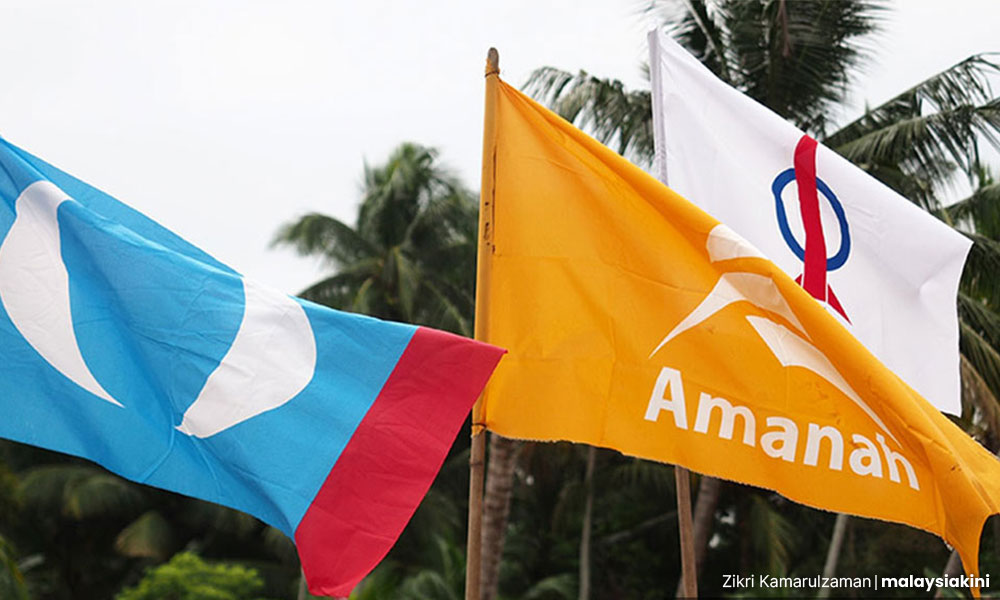
He also stated that he did not want anyone to suggest that the CEC members were reluctant to step down merely because of their positions or the benefits they enjoyed.
"More than half of the delegates have made the decision, and everyone must obey. Whether it is to step down from the front line of governance or to continue working hard in the government, the whole party must be of one mind. If you want to stay, stay; if you want to leave, leave. There can be no ambiguity.
"Our role in the government is not just that of a minister, but also a deputy minister and a position in multiple government agencies; if we are to be removed, we will be removed together," he added. - Malaysiakini, 20/2/2026


 Posts
Posts




No comments:
Post a Comment