ON HUMAN RIGHTS, JUSTICE AND PEACE ISSUES, LABOUR RIGHTS, MIGRANT RIGHTS, FOR THE ABOLITION OF THE DEATH PENALTY, TOWARDS AN END OF TORTURE, POLICE ABUSES, DISCRIMINATION...
Press Release | Repeal SOSMA - Recognise Right to a Fair Trial and the Rule of Law
Thursday, 07 November 2019 08:59am
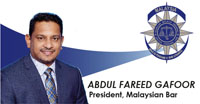
The Malaysian Bar welcomes the recent announcement by Prime Minister, Tun Dr Mahathir Mohamad, that the Government will table amendments to laws that are considered draconian. It was reported that the Government will be considering amendments to "fix certain areas in these laws that allow for arrests without charges".1
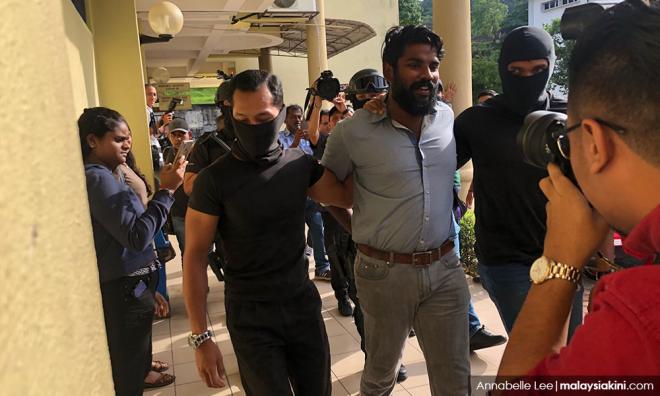
This is a particularly poignant commitment, as it appears to have been made in the wake of the recent use of the Security Offences (Special Measures) Act 2012 ("SOSMA") against 12 individuals allegedly linked to the Liberation Tigers of Tamil Eelam ("LTTE"). These persons were arrested, detained, and denied bail under SOSMA, and were only charged nearly two weeks later.
It is the position of the Malaysian Bar that SOSMA be repealed in its entirety. Piecemeal amendments to SOSMA will not suffice as we believe that SOSMA is an unnecessary piece of legislation that has resulted in arbitrary powers to the police that substantially erodes the right of an accused to a fair trial, and undermines the protections and fundamental liberties contained in the Federal Constitution.
SOSMA serves as a procedural law, side-stepping the Criminal Procedure Code ("CPC"), that works in tandem with the predicate offences provided in Part VIA of the Penal Code. SOSMA and the various amendments to the Penal Code, Evidence Act 1950, and CPC were introduced as part of an "anti-terrorism" legislative package in 2012, ostensibly to replace the repealed Internal Security Act 1960.
SOSMA provides for various provisions designed to tackle terrorism, including detention for investigative purposes, special procedures for the trial or hearing of terrorism offences in Court, and powers of surveillance. However, these provisions also contain draconian elements that run counter to the rule of law. SOSMA provides for an accused person to be arrested without a warrant, and detained for up to 28 days without being brought before a magistrate. SOSMA also provides that "Bail shall not be granted to a person who has been charged with a security offence".2
The Malaysian Bar believes that there are existing laws, such as the Penal Code and Criminal Procedure Code, which are tried and tested, and accord accused persons fundamental liberties in the trial process, and are sufficient to address such crimes. If found insufficient, the solution lies in amending existing non-draconian laws or enacting new laws that observe the rule of law.
Further, the conflicting reports -- from the detainees and the Government -- of mistreatment, torture and intimidation while in custody, does not augur well for a Government that prioritises the rule of law. To this end, the Malaysian Bar calls for an immediate investigation be carried out to ascertain the truth of the allegations.
Such scenarios should no longer arise. The Malaysian Bar has, through the years, repeatedly called for the urgent repeal of SOSMA, having seen its abuse in the past, and recognises its potential for misuse, going forward. While the current Government has pledged in its Election Manifesto to "abolish draconian provisions in ... [SOSMA]", and the total repeal of other draconian and oppressive laws,3what we have seen instead is flip-flopping and reneging on these promises. The Malaysian Bar hopes that the Government's reiteration of their commitment to this pledge bears tangible results.
The Malaysian Bar is cognisant of the Government's need to maintain national security. However, this must always be done in harmony and recognition of constitutional guarantees and the rule of law. SOSMA as it stands, has no place in a democratic nation, and is an affront to the principles of natural justice.
The Malaysian Bar stands ever ready to assist the Government in executing this pledge.
Home Minister, Muhyiddin, and Inspector General of Police(IGP)'s recent speedy denial of torture, as alleged by some SOSMA detainees, is disturbing..
If there is an allegation of torture or police wrongdoing, then the reasonable response is to conduct an INVESTIGATION.
If there were CCTV cameras(with recording capability), all over the police station and places of detention that records every movement of every arrestee, from the moment of arrest - it will be so easy to determine that those arrested/detained were not tortured, not threatened, ...and whether the police conducted themselves according to law and that 'still mysterious SOP(Standard Operating Procedures). Yes, CCTV recordings will ensure a 'clean' police force and ensure that there is no torture or other abuses of the law - Did the IGP and the Home Minister rely on these CCTV records to say that the allegations are false?
Anwar's Black Eye - the police denied allegations > later the truth came out and that earlier denial was a LIE.
Death in Custody - Again there was denial > but we see that EAIC Inquiries reveal otherwise.
The recent Najib trials show how other civil servants stayed 'silent' even when they knew or ought to know that somethings were wrong and/or against the law. The culture of 'speedy defence' of police officers and those under one's Ministry as happened is also something that must end. If there is an allegation of wrongdoings - then there must be proper investigation...people should be encouraged to HIGHLIGHT any alleged wrongdoings.
The IGP's request to those who alleged wrongdoings and their lawyers to produce CCTV recording is laughable -
The Inspector-General of Police has urged anyone who made such
allegations to produce their evidence including the closed-circuit
television (CCTV) camera footage of the alleged misconduct to the court."I strongly deny all the public allegations of
unlawful act or misconduct by our police officers against any of the
LTTE detainees made by their lawyers and certain politicians."I
stand firm on the explanation given by my officers that the allegations
are completely baseless and very irresponsible," he said in a statement
to Bernama here Saturday (Nov 2).
In Hong Kong, the arrestee(or his/her lawyer), have a right to request and get CCTV recordings from point of arrest ...all the time the arrestee was in police custody. GOOD PRACTICE > that will make sure police do not torture or do things against the law, and all investigations are in full compliance of the law..
The current problem with torture or other abuse in police custody is:-
1) The difficulty of proving the allegations > as even other witnesses are police officers - and will they be witnesses against their fellow police officers?
2) The difficulty of making police reports to allege torture or police abuses - one may request the right to make a police report - but will they get it? Of course, denial of the opportunity to make a police report is also wrong. Then there is the risk that after making such report, the police may counter with a report of making a false report..
3) The worry of retaliation by the police - maybe more torture or ... Even, when tortured, many victims simply do not want to reveal this, even though some may tell their lawyers,...Physical torture which is 'sexual' in nature sometimes is even worse, and victims simply do not want to reveal - worry that later the 'shame' will be intollerable.
4) Magistrates can curb torture - knowing that arrestee will be brought before Magistrates for remand applications 'protects' them from torture that may be visible. In a case, which I acted before, when one of the detainee allegedly had a 'black eye' the police chose to evade the Magistrate and simply brought the accused before a District Officer(2nd Class Magistrate) for further remand order. I protested this by bringing up the matter to the Magistrate who had heard all previous remand hearings...[But, torture, even physical torture, can be 'hidden' if torturer is skilled - i.e. no visible signs of torture > maybe a speedy medical examination may reveal the fact of torture.
5) SOSMA, where there is no requirement to bring detainee before Magistrate for further remand hearings...means that even if there is physical proof of torture - it could not be highlighted to the Magistrate > hence TORTURE and abuses are easier without requirement of remand proceedings in front of a Magistrate. (The reason why the maximum length of remand orders was fixed by law through amendments - where the maximum even for murder is now 7 days - thereafter before the Magistrate again for further remands COULD have been to DETER torture ..and for the Magistrate to also monitor and ensure no police abuses of the Detainee) - but this protection is not available when SOSMA is used...or POTA/POCA/DWT laws are used, is there?
Sosma detainees complain of torture and intimidation
Kow Gah Chie
Published:
| Modified:
Five out of 12 suspects who were charged with supporting the now-defunct terrorist group Liberation Tigers of Tamil Eelam (LTTE) have complained of mistreatment, torture or intimidation during their detention.
This prompted Kuala Lumpur Sessions Court judge Azura Alwi to record statements from two accused persons in camera today, whereby the media were not allowed to cover the court proceedings.
In camera means that only the judge, lawyers and witnesses are present during the testimony.
The
two accused person who will be recounting their experiences before
Azura were grocery shop owner B Subramaniam, 57, and scrap metal dealer A
Kalaimughilan, 28.
This is being done under Section 131 of the Criminal Procedure Code after Friday prayers.
Lawyer S Selvam, who applied for the court to hear the statement of his client Subramaniam told Malaysiakini that his client complained of being tortured.
"During the arrest and subsequent (detention in) 21 days, he was tortured and forced to say 'I am an LTTE member'," he said.
"He
faced all sort of threats, including a threat that he would be sent
prison for life if he didn't do this (what asked by the police)," said
Selvam.
Subramaniam's son S Ravindran and daughter-in-law R
Thiviya alleged that the police threatened that he should confess to his
involvement with LTTE or else the police would not release all his five
sons and his wife.
"When we saw him for the first time five days
after his arrest on Oct 10, he was in tears. He said they really
threatened him, saying all his five sons and his wife were caught and
they were in jail," said Thiviya.
"They said, 'If you don't admit then we will charge them according to what we charge you'," she added.
"They are manipulating him (into thinking) that the entire family is (being charged as) a terrorist family," she added.
"He
was inside and he had been mentally tortured. You imagine that one
person was arrested and doesn't know where he is, and the room was
dark," she said.
Ravindran said his father was "given the offer"
of serving only two years in prison unlike the others who will be put in
jail for 15 years.
"(They tried to) forced him to sign the (confession) form, but he didn't," he said.
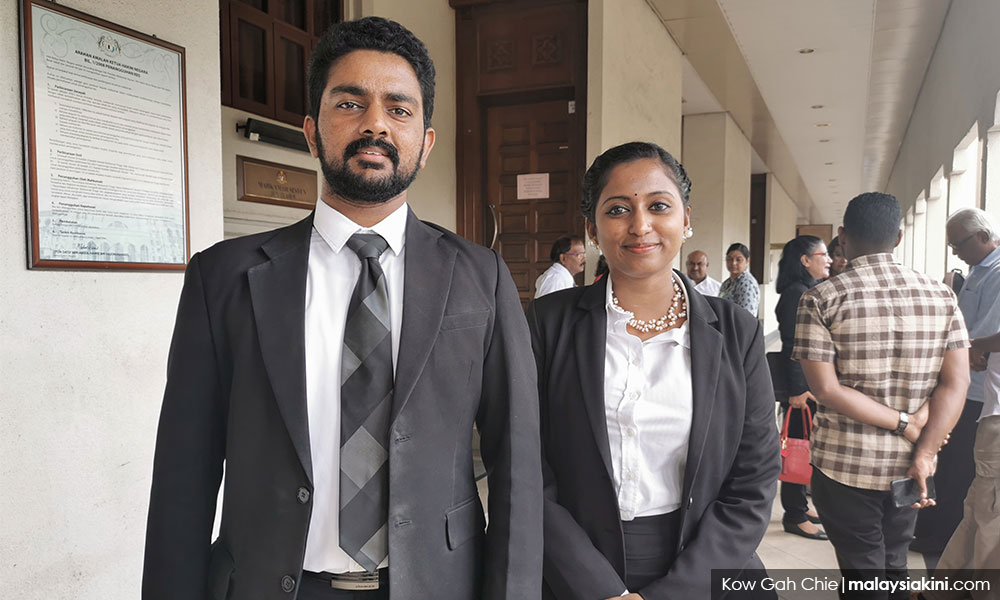
Meanwhile, lawyer MV Yoges (photo, below right), who acted for Kalaimughilan, said her client was kept in a separate dark cell where he couldn't communicate with others.
The
cell did not comply with lock-up regulations under which the detainee
was not provided with a bed and pillow while the toilet was clogged and
full of mosquitoes, rats and cockroaches, according to her.
"My
client had an accident back in April and got eight stitches at his head.
He suffered back pain and he could not stand nor sit for long," added
Yoges.
She said the court should examine the statement of her client and record the statement.
"Basically, they are punished before they were proven guilty, they were treated like terrorists," she said.
Yoges'
colleague Raja Sekaran added the police appeared to be attempting to
break their spirits and get his client to confess and plead guilty by
torturing them physically.
"Some of them told they will get lesser charges if they plead guilty," he said.
Meanwhile,
Yoges who represented three others who were charged in another court
presided by judge Azman Amad, applied to the court to take the
statements of her clients.
They are teacher R Sundram, 52, security guard M Pumugan, 26 and storekeeper S Thanagaraj, 26.
Yoges
told the court that her clients were aggrieved by the bad conditions of
Sungai Buloh Prison, and they were kept in dark cells and not provided
with a bed and pillow.
Azman, however, ruled that the lawyers should raise the matter during the mention date on Dec 23.
Police
had detained 12 men including two DAP state assemblypersons under the
Security Offences (Special Measures) Act 2012 over their alleged link
with the LTTE.
They were slapped with multiple charges under Section 130 of Penal Code on Oct 29 and Oct 31.
Determining whether police committed offence
In the three-hour in camera
proceeding today, the judge set Nov 8 to decide whether it was
necessary for her to instruct the Magistrates' Court to examine the way
the police had probed Subramaniam and Kalaimughilan.
"We were
saying there was an offence during the investigation. But she needs to
see whether there is an offence, so she had an informal hearing (just
now) to see if there is an offence," Yoges told Malaysiakini.
"She
set Nov 8 to decide if there was an offence (committed by the police) .
If there was an offence, then she will call for an examination (by the
Magistrate's Court)," she added.
An examination can be conducted
under Section 133 of the Criminal Procedure Code when the magistrate
takes cognisance of an offence of a complaint.
According
to her, Kalaimughilan complained that he had been ill-treated and
coerced by the police into giving a statement when he was not in the
right frame of mind, particularly when he had enough of the poor
conditions in prison.
"Right after he was charged yesterday, the police still recorded a statement from him. This is wrong," she said.
Meanwhile, Selvam said his client Subramaniam was induced, compelled and forced to give a statement prepared by the police.
"Towards the end, the police were so frustrated with him that they threw the paper on his face (sic)," he said. - Malaysiakini, 1/11/2019
Home Ministry denies abuse and torture of Sosma detainees
Nation
Saturday, 02 Nov 2019 3:43 PM MYT
Muhyiddin speaking to the media after the conclusion of nominations of candidates for the Tanjung Piai by-election on Saturday.
PONTIAN (Bernama): The Home Ministry on Saturday (Nov 2) denied allegations that five of the 12 men under arrest in connection with the Security Offences (Special Measures) Act 2012 (Sosma), were been abused and tortured throughout their detention.
Minister Tan Sri Muhyiddin Yassin said he had already checked the allegations with Inspector-General of Police Tan Sri Abdul Hamid Bador and the officers involved, and these checks indicated that the allegations were untrue.
Nevertheless, he said that because the allegations made were serious, he had instructed the IGP to undertake a detailed investigation into the matter.
The five detainees were also entitled to lodge a police report on the matter, Muhyiddin told the media Saturday, upon the conclusion of nominations of candidates for the by-election for the Tanjung Piai parliamentary seat here.
He was commenting on a report by a portal alleging the abuse and torture of five of the 12 men who were detained recently on charges of supporting the terrorist group Liberation Tigers of Tamil Eelam (LTTE), also known as the Tamil Tigers.
"When they were brought before the judge in court and such...they did not complain that they were beaten...", the minister said, adding that until yesterday, there was no indication of abuse in reports he had received on the matter. - Bernama - Star, 2/11/2019
IGP: Allegations of police misconduct against Sosma detainees baseless and irresponsible
Nation
Saturday, 02 Nov 2019 7:17 PM MYT
IGP Tan Sri Abdul Hamid Bador during the press conference. NORAFIFI EHSAN / The Star.
KUALA LUMPUR (Bernama): Allegations of police misconduct against individuals detained on suspicion of involvement in the Liberation Tigers of Tamil Eelam (LTTE) are baseless and irresponsible, says Tan Sri Abdul Hamid Bador (pic).
The Inspector-General of Police has urged anyone who made such allegations to produce their evidence including the closed-circuit television (CCTV) camera footage of the alleged misconduct to the court.
"I strongly deny all the public allegations of unlawful act or misconduct by our police officers against any of the LTTE detainees made by their lawyers and certain politicians.
"I stand firm on the explanation given by my officers that the allegations are completely baseless and very irresponsible," he said in a statement to Bernama here Saturday (Nov 2).
Yesterday, several news portals reported that five out of the 12 individuals detained under the Security Offences (Special Measure) Act (Sosma) 2012 were allegedly abused and tortured during detention.
Earlier Saturday, Home Minister Tan Sri Muhyiddin Yassin denied the allegations, saying that he had already checked on the allegations with Abdul Hamid and officers involved, and found that the allegations were untrue.
Abdul Hamid said what needs to be understood was that the allegations of police misconduct were made after the in-camera session before the judge in chambers.
"All quarters should respect the legal process and not make baseless allegations in public," he said, adding that he had also referred the matter to the Attorney General and now awaiting instruction for further action. - Bernama - Star, 2/11/2019
MTUC yet to explain what exactly is their unhappiness with the amendments to the Industrial Relations Act..
Penang Deputy Chief Minister talks about giving MTUC greater freedom to negotiate with State - Well, that really is up to the State governments - Does Penang have regular consultations with MTUC, other Trade Unions in Penang and workers in Penang?
Biggest problem with MTUC in the past is that workers and trade unions in Malaysia simply do not know what MTUC is fighting for at these National Labour Advisory Council (NLAC) meetings - what are they agreeing to...what are they objecting to? MTUC should be TRANSPARENT ...and disclose openly in their website what they are fighting for at the NLAC...maybe even in the EPF/KWSP Board...the SOCSO Board...In Parliament, we can see the minutes ...in the Hansard .. but not in these other meetings? The question then is whether MTUC is fighting for workers...or like 'yellow unions' they are pretending to fight for workers..but in truth it may be a different matter.
MTUC has a website - so they have the means of letting all workers know exactly what they are fighting for. MTUC represents all workers and it is important that they keep all their 'constituents' informed.
Does MTUC have the support of workers in Malaysia - we do not know. But the numbers that attend May Day celebrations are small..The biggest picket/protest by MTUC has been on their protest against the 'Contractor For Labour' where the protests were held in many towns nationwide - they managed to get about 10,000 workers...
Recently, they made clear one objections - they do not want the provision that allows for more than one union at the workplace...(does it also mean they do not want more than one union per sector...per industry..per occupation?) - Well, the reality is that with the old 'restrictive' regime of limiting one union per workplace, per sector/industry/occupation - the number of unionized workers is only about 7% overall, less than 4% in the private sectors - and numbers of unionized workers is not increasing...maybe old unions became lazy and are not actively getting more members...WHY? Maybe they are 'yellow unions'(really may be pro-employer rather than pro-worker)..or maybe they are interested in something else other than organising workers...whatever it is, the new amendment allows for more unions to emerge ...hence workers will have CHOICES - lazy ineffective unions will suffer as workers choose unions that really fight for their rights...We shall see...we shall see..
HUMAN RESOURCE MINISTRY RESPONSE TO STATEMENT MADE BY MR P. RAMASAMY, DEPUTY CHIEF MINISTER OF PENANG, AS PUBLISHED IN FMT ON 1ST NOVEMBER 2019
P. Ramasamy in his article in FMT on 1st November 2019, had called for MTUC to be given greater freedom to engage with state and employers on labour matters and that the existing tripartite mechanism through the National Labour Advisory Council (NLAC) and technical committees reflects a unilateral decision-making process, with little or no input from labour or MTUC.
It is actually the opposite. To date, in this year alone ten (10) NLAC meetings were held where various labour and industrial relations issues were deliberated mostly in heated tone given the conflicting interests of employers’ and workers’ representatives in the advisory council. Apart from that, for the consultations on the amendment to the Industrial Relations Act 1967 (Act 177), several technical committee meetings were held, namely on 14 January 2019, 13-14 February 2019, 30-31 May 2019 and on 26 August 2019. In all the above technical committee meetings, MTUC (and MEF) representatives were present and they have given their views on each clause that were to be amended or newly introduced.
MTUC had also officially given their written comments on the proposed amendments to Act 177 on 12th January 2019 whereas MEF had also submitted their written comments on 9th January 2019 and subsequently on 25th August 2019.
It is totally unbecoming for anyone to say that MTUC (or MEF) was not consulted for the amendments to Act 177. The ministry has all the records of their attendance in these meetings. While, admittedly the ministry engaged various stakeholders, apart from MTUC and MEF for the amendments to labour legislations, including other workers’ groups, MTUC was never side-lined. To date, MTUC occupies the workers’ seat in NLAC, and MTUC representatives also sit in the technical committees, so in what way are they side-lined?
It is certainly not for this ministry to ascertain whether MTUC is playing a meaningful role in NLAC or otherwise. This is entirely up to the affiliated trade unions of MTUC to evaluate MTUC’s office bearers’ role in NLAC. The ministry would remain independent of MTUC internal affairs. Till now, the ministry is puzzled on which clauses in the Amendment Bill of Act 177, that MTUC is not happy about! There are a total of 35 clauses in the Bill and out of this, at least 18 clauses are particularly benefitting workers, as follows –
i. In order to expedite the process of unfair dismissal cases, the Minister’s power to refer representations on dismissal cases to the Industrial Court is replaced by the Director General for Industrial Relations.
ii. Workers will have the right to be heard and access to justice in the Industrial Court as unresolved cases will be referred directly to the Industrial Court without any filtering process. This has been voiced by MTUC for a very long time and now their wish has been fulfilled.
iii. Workers may be represented by any person of their choice (except lawyers) to represent them during the conciliation process at the Department of Industrial Relations. This clause will assist workers greatly.
iv. Workers under mental disability and not having a guardian may be represented by the next of kin at conciliation proceedings. This is also benefitting the workers.
v. In the event workman dies after filing a case for unfair dismissal, the next-of-kin of the deceased workman may be awarded back-wages or compensation in lieu of reinstatement or both.
vi. To enhance protection to trade union officers, Industrial Court will be empowered to make awards by not confining to the restrictions in the Second Schedule, in the event the dismissal is due to union busting.
vii. Dismissed workman of any statutory authority (that will be listed later by Ministerial Order) will be allowed to file a claim for unfair dismissal at Department of Industrial Relations. Currently, they are not allowed to do so.
viii. To expedite the recognition process, the Minister’s power is replaced by the Director General for Industrial Relations and the recognition process will be under the purview of Department of Industrial Relations only.
ix. To increase workers’ welfare and rights, trade unions now only have to obtain majority support from the workers for recognition purposes.
x. As part of embracing the principles of Freedom of Association and the Right to Organise (ILO Convention No. 87), which is championed by MTUC for decades, the right for workers to join unions of their choice and choose the unions with the best bargaining power for collective bargaining will be given.
xi. For the first time ever, through this amendment, trade unions will be allowed to raise questions of general characters during collective bargaining relating to transfers, employment, termination of services due to redundancy, dismissal and reinstatement and assignment or allocation of work.
xii. To increase trade unions bargaining power in line with international labour standards, a new mechanism on dispute resolution relating to collective bargaining is introduced where reference to Industrial Court will only be made upon consent from employers and workmen except in certain conditions.
xiii. To ensure the rights of workers is protected, Industrial Court will be empowered to award backdated benefits based on merits of each case, without restricting to 6 months.
xiv. To allow any person dissatisfied with an award of the Industrial Court to appeal to the High Court without the need to get prior leave from the Industrial Court. This new mechanism will expedite the process and give substantive rights for the aggrieved parties to appeal on question of fact and question of law.
xv. In line with international labour standards, imprisonment sentence for unlawful pickets and strikes will be removed.
xvi. The First Schedule of the Essential Services is replaced with the new schedule in line with international labour standards.
xvii. To protect workers, Industrial Court is enabled to impose interest on its awards, of at least 8% per annum, or lesser rate as the Court may direct.
xviii. Lastly, Industrial Court will also be able to hear and determine the date of dismissal in the event it is disputed by any parties.
The current amendment to Act 177 which was passed by the Dewan Rakyat on 9 October 2019 should rightfully gain the support of MTUC as this amendment is a move in the right direction towards conformity to international labour standards as always demanded by MTUC in various international platforms.
The ministry would like to ask MTUC to appreciate the far-reaching benefits of the above amendments as listed above. MTUC should be brave enough to tell the ministry which amended clauses or new clauses will be disadvantageous or detrimental to workers and we can deliberate in the next round of amendments to Act 177. This is not the end of it.
Ministry of Human Resources Putrajaya 2 November 2019
Empower MTUC to engage with state, employers, says Ramasamy
FMT Reporters
Representatives
from MTUC and several NGOs hold a peaceful protest over the minimum
wage outside Parliament building on Oct 17, 2018. DAP’s P Ramasamy says
there is no scope for ‘honest engagement’ with stakeholders in MTUC’s
current position. (Bernama pic)
PETALING JAYA: DAP’s P Ramasamy today called for the Malaysian Trades
Union Congress (MTUC) to be given greater freedom to engage with the
state and employers on labour matters in the country.
While MTUC wants to engage with these stakeholders “in a just and
fair manner”, he said, the National Labour Advisory Council (NLAC) under
which the congress falls does not appear to be a suitable platform.
“By limiting the role of MTUC to one of consultation, NLAC has the
tendency to push legislations that might not be in the interest of
labour.
“MTUC faces difficulty playing a meaningful role in NLAC. There is no
honest engagement of labour. Consultation means nothing for the
advancement of labour rights,” he said in a statement.
MTUC’s role in labour matters was recently in the spotlight, with the
congress accusing Human Resources Minister M Kula Segaran of tabling
amendments to the Industrial Relations Act (IRA) without consulting the
relevant stakeholders.
MTUC secretary-general J Solomon said Kula had unilaterally decided
to submit proposed amendments to the IRA, Employment Act and Trades
Union Act to the Attorney-General’s Chambers for approval, and that MTUC
had been sidelined.
However, Kula maintained that his ministry had held nine NLAC
meetings this year, as well as various technical committee meetings
since January.
He also said he placed the “utmost importance” on his ministry’s
tripartite consultations by conducting such meetings on a monthly basis.
But Ramasamy said the tripartite mechanism seemed “merely a euphemism
to hide the unilateral nature of decision-making, with little or no
input from labour or MTUC”.
He added that the changes to the IRA had brought only incremental benefits for workers.
“MTUC might be just a labour centre organised under societal
registration without the benefits of a labour federation, but it is
certainly the labour centre and principal representative of 15 million
workers in the country,” he said.
“For unions to play an effective role in the country, there must be a
recognition that some fundamental concerns of labour associated with
freedom of association and voluntarism must be addressed.” - FMT, 1/11/2019
Proposed labour law amendments meant to destroy unions, claims MTUC
FMT Reporters
-
MTUC
secretary-general J Solomon likens the proposed changes to the
Industrial Relations Act as ‘state-sponsored union busting tactics’.PETALING JAYA: The Malaysian Trades Union Congress (MTUC) today
compared Putrajaya’s amendments to the Industrial Relations Act 1967 to
state-sponsored union busting tactics meant to divide the labour
movement as the spat between the congress and the human resources
minister continues.
Its secretary-general J Solomon said the amendments tabled by
minister M Kula Segaran last month were aimed at “destroying the
solidarity of the labour movement”.
He also alleged that they were aimed at denying workers effective
union representation in negotiating collective agreements (CA) with
employers.
Solomon said Kula had gone ahead with the amendments despite
allegedly telling the MTUC president and himself that having more than
one union in the same workplace will destroy unions.
“However, he made a complete U-turn and tabled the amendments which,
if passed, will enable multiple unions being created at workplaces,
leading to chaos and in-fighting among unions and depriving workers of
effective bargaining power,” he said in a statement.
Solomon also said that if the amendments are passed, he expects
employers and the ministry to actively promote their “preferred unions”
at work places.
He claims “friendly NGOs and individuals” will support such a move,
adding that this would only render unions unproductive and unable to
serve workers effectively. Solomon criticised Kula’s attempts to justify multiple unions at a
workplace as being in line with a convention that allows freedom of
association and protection of the right to organise a convention under
the International Labour Organisation (ILO). Such reasoning, he said, “defies logic”. “There are so many restrictions on trade unions in the Industrial
Relations Act 1967 which are against the spirit of Convention 87 and
have continuously weakened the labour movement over the years,” he said,
referring to the said convention.
Solomon said that while Convention 87, or C87, did touch on
multiplicity of unions, the ILO has made it clear the governments were
free to determine which relevant provisions should be applied based on
“needs and suitability”. He said that despite espousing the amendments as being in line with
C87, Kula failed to explain to Parliament why the government has not
ratified the ILO convention. He said that Kula had, a few months ago, told the National Labour
Advisory Council (NLAC) that he will recommend for the government to
ratify C87 at the next Cabinet meeting, but till today, they have not
heard anything. “So, we have a situation where the minister says his Industrial
Relations Act amendments are in accordance with C87 and yet his ministry
does not want to ratify the very same convention. Clearly, something is
not right.” - FMT, 3/11/2019
SOSMA - Is it time for Malaysian Lawyers to take a strong position, as in 1977, when they called for a boycott of trials using ESCAR?
Is it time for Malaysian lawyers to have yet another peaceful assembly calling for the immediate repeal of SOSMA, a similar and maybe worse than ESCAR?
SOSMA is used - but we do not have statistics? How many victims? SOSMA does not create any new offences - but removes right to be brought before Magistrate within 24 hours, No remand without Magistrate's remand order, NO BAIL (save for few exception) until trial is over...
Arrested for a 'security offence' under SOSMA - means they will charged in court and given a TRIAL >
So, how many suspects arrested for a 'security offence' and SOSMA was used was NEVER CHARGED in court?
So, how many were charged in court for a 'security offence' and BAIL denied - they stay in detention until end of trial/appeal? How many were found NOT GUILTY? How many were found GUILTY?
Essential Security
Cases Regulations (ESCAR), was a draconian law that provided for the admission of evidence, not admissible in any other trials in Malaysia. It also provided for 'special procedures' during trials that were most unjust to the accused person(and his/her lawyer).
What did the Malaysian Bar do about ESCAR? Well, they took a very strong stand calling for its abolition - They even passed a Malaysian Bar Resolution in effect calling on lawyers to BOYCOTT trials when ESCAR was used..
The amendments were introduced in the wake of the Essential Security
Cases Regulations (ESCAR) trials controversy of 1977 when the Bar
adopted a resolution to boycott the ESCAR trials because of the removal
of the traditional safeguards enjoyed by accused persons.- Dato’ Dr. Cyrus Das,President, Malaysian Bar, 9/2/1999
1.
When the government introduced the Essential (Security Cases)
Regulations 1975 or ESCAR to amend the law for trial of "security
offences", particularly in respect of the basic rules of evidence. As an
example, ESCAR allows for excluding of both the accused and counsel
from the court room when evidence is taken from a witness. ESCAR allows
for a witness to give testimony hiding his face and even his voice from
the accused and/or his counsel.
2. In October 1977, in response
to the government introducing the Essential (Security Cases) Regulations
1975 ("ESCAR"), the Malaysian Bar passed a resolution at an
Extraordinary General Meeting criticising ESCAR as laws that " were
manifestly unfair and unjust as to offend the conscience of all good
men" and also advised its members not to appear for accused tried under
the laws in protest of the same on the premise that an accused under
ESCAR would be denied a fair trial notwithstanding provision for
presence of counsel.
Well, the government then was not happy - and so they brought in amendments to the Legal Profession Act that governs the Malaysian Bar - they made it difficult for lawyers to make quorum at their General Meetings, they disqualified certain groups of lawyers from being able to be elected into the Malaysian Bar and State Bar leadership...or even be in any committees of the Bar - this disqualification applied to 'young lawyers', those who held political party positions..
3.
The government in response to the criticism of the Bar, introduced the
Legal Profession (Amendment) Bill 1977 which allowed the
Attorney-General to admit foreign lawyers, increased the quorum
requirements of general meetings of the Bar to 1/5 of its membership and
automatically disqualified certain classes of lawyers from holding
office in the Bar Council, the State Bar Committees and their
sub-committees.
Then SOSMA, an act similar or maybe worse, came into being. The Malaysian Bar continued to protest this draconian act - calling for its repeal...
(44)The
Malaysian Bar opposed the passing of the Essential (Security Cases)
Regulations 1975 (“ESCAR”), which were promulgated to amend the
procedural and evidential rules in relation to trials for offences
against the national interest. ESCAR brought draconian changes in the
basic rules of evidence and the judicial discretion of the courts in
meting out sentences.
(45)In
October 1977, the Malaysian Bar held an Extraordinary General Meeting
(“EGM”) to discuss ESCAR, and resolved to advise all Members of the Bar
not to appear in trials under ESCAR.
(46)SOSMA is similar to ESCAR, and the Malaysian Bar needs to strongly oppose its usage, and call for its repeal.
Therefore, it is hereby resolved:....(C)That
the Malaysian Bar call on the Malaysian Government to repeal the
Security Offences (Special Measures) Act 2012 [Act 747] (“SOSMA”);
(A) Call for the immediate abolition of the following draconian
legislation:
(i) Sedition
Act 1948;1
(ii) Prevention of Crime Act 1959;2
(iii) Universities and University Colleges Act 1971;3
(iv) Printing Presses and Publications Act 1984;4
(v) Dangerous Drugs (Special Preventive Measures) Act
1985;5 (vi) Security Offences (Special Measures) Act 2012;6
(vii) Prevention of Terrorism Act 2015;7
and
(viii) National Security Council Act 2015.8
(B) Call for the immediate repeal of the following draconian
legislative provisions:
(i) Penal Code,
sections 124B to 124J;
(ii) Communications and Multimedia Act 1998, in relation to
sections 233, 263, and other vague provisions;9
(iii) Official Secrets Act 1972, sections 2A, 2B and 16A;10
(iv) Film Censorship Act 2002, sections 23(2) and 48;11 and
(v) Peaceful Assembly Act 2012, section 4;12
Another Resolution that year also stated clearly ...C. The Malaysian Bar call on the Malaysian government
to abolish Security Offences (Special Measures) Act 2012;
YES, in the Najib's SRC case, the prosecution have finished their case... and now will be the time when the Court will decide whether Najib will be acquited, OR whether he needs to now enter his DEFENCE (i.e. call his own witnesses, submit his evidence, etc..)
So, November 11 is an important date for Malaysians - what will the judge decide?
Has the prosecution submitted enough evidence to to prove beyond reasonable doubt that Najib is guilty?
It is a well-established principle of Malaysian criminal law that the general burden of proof lies throughout the trial on the prosecution to prove beyond reasonable doubt the guilt of the accused for the offence with which he is charged. There is no similar burden placed on the accused to prove his innocence. He is presumed innocence until proven guilty. To earn an acquittal, his duty is merely to cast a reasonable doubt in the prosecution case...To earn an acquittal at the close of the case for the prosecution under s. 173(f) or s. 180 of the Criminal Procedure Code, the court must be satisfied that no case against the accused has been made out which if unrebutted would warrant his conviction (Munusamy v. PP ). If defence is called, the duty of the accused is only to cast a reasonable doubt in the prosecution case. He is not required to prove his innocence beyond reasonable doubt. - kes Mohamad Radhi bin Yaakob v. Public Prosecutor
It therefore follows that there is only one exercise that a judge sitting alone under s. 180 of the Code has to undertake at the closeof the prosecution case. He must subject the prosecution
evidence to maximum evaluation and ask himself the question: If I
decide to call upon the accused to enter his defence and he elects to
remain silent, am I prepared to convict him on the totality of the evidence contained in the prosecution case? If the answer is in the negative then no prima facie case has been made out and the accused would be entitled to an acquittal. - Gopal Sri Ram HMR (pada ketika itu) menyentuh isu yang sama dalam kes Looi Kow Chai & Anor v. Public Prosecutor [2003]
So, we shall see what the Judge decides on November 11?
Remember that one may have committed the crime - but then the Prosecution failed to present sufficient evidence to convince the Judge...
OR maybe we need better laws that will clearly make some actions/omissions a crime... Our laws also do protect 'public servants' maybe too much? Maybe, we need better laws to address wrongdoings of the Prime Minister or Members of the Cabinet?
What will that HIGH COURT Judge independently decide - yes, independently without any interference from anyone?
SRC International: Najib to know by Nov 11 if he has to answer corruption charges
Nation Wednesday, 23 Oct 2019 5:47 PM MYT
By NURBAITI HAMDAN
KUALA LUMPUR: The High Court will deliver its decision in the case of former prime minister Datuk Seri Najib Razak, who is accused of misappropriating RM42mil in SRC International funds on Nov 11.
Justice Mohd Nazlan Mohd Ghazali thanked both the prosecution and the defence for their comprehensive oral presentations at the end of a two-day submission here on Wednesday (Oct 23).
Earlier, the court heard submissions from Najib's lead counsel Tan Sri Muhammad Shafee Abdullah, who said his client could not be said to have had dominion, as he did not have the power to dispose of any asset belonging to the company.
The lawyer was rebutting the prosecution’s argument that Najib was the “shadow director” of the 1Malaysia Development Bhd (1MDB) subsidiary.
On Tuesday (Oct 22), Attorney General Tan Sri Tommy Thomas submitted that Najib was SRC’s shadow director who benefited financially from its coffers.
Shafee said the prosecution had relied on
Section 402A of the Penal Code, which mentioned the part of a
"director", and this included a shadow director.
Section 402A was introduced into the Penal Code in 1993 through an amendment in the law.
“This
amendment to incorporate shadow director is yet another attempt to make
a person who is not a director, but liable as a director, ” he said
here on Wednesday.
Shafee also submitted that Najib had neither
dishonesty nor had dishonest intention and maintained that his client
had no knowledge that the money came from illegal sources.
He urged the court to acquit Najib of all the charges.
“This
is a case that Your Honour should not call for the defence purely to
satisfy the curiosity of what he (Najib) is going to say.
"You don't call for the defence just to know what is he going to say," Shafee added.
Shafee’s submission wrapped up the two-day submission in the prosecution’s case.
Najib
is facing seven charges, of which three are for criminal breach of
trust, one for abuse of power and three for money laundering involving
SRC International funds totalling RM42mil. - Star, 23/10/2019
Najib should be acquitted of SRC International-related charges, says defence
Nation Tuesday, 22 Oct 2019 12:45 PM MYT By NURBAITI HAMDAN
KUALA LUMPUR: The defence in the SRC International trial involving Datuk Seri Najib Razak (pic) submitted to the High Court that the former prime minister should be acquitted of the seven charges he is facing in relation to the misappropriation of SRC International's RM42mil.
Lawyer
Harvinderjit Singh, who is representing the Pekan MP, argued that the
prosecution had failed to prove a prima facie case against his client.
"The
defence ultimately submits that no prima facie case has been made out
on all the charges and an order of acquittal as provided for in Section
180(2) of the Criminal Procedure Code ought to be recorded," he said
here during submissions on Tuesday (Oct 22).
Harvinderjit
further submitted that the bulk of evidence relating to Najib's
involvement in the events between 2010 and 2012 – leading up to and
including the government's decision to grant the government guarantees
to SRC International and Retirement Fund Incorporated (KWAP) providing
SRC International with loans amounting to RM4bil – did not establish the
existence of a corrupt arrangement which Najib could be said to be a
party to.
"The bulk of evidence in fact leads to reasonable inferences
that the transactions involving the RM42mil were carried out without
Najib's knowledge and involvement and the impetus and purpose was
unconnected to any act by Najib," Harvinderjit added.
The lawyer
said the evidence led to a reasonable inference that the transactions
involving RM42mil were actually done at the behest of others for their
own ulterior purpose and benefit.
"The conclusion there is that
the RM42mil cannot be said to amount to 'gratification' as consideration
for a use of office of position by Najib," he said.
Najib is
facing seven charges, of which three are for criminal breach of trust,
one for abuse of power and three for money laundering involving SRC
International funds totalling RM42mil.
Justice Mohd Nazlan Mohd Ghazali presided over the trial which spanned over 57 days, with 57 witnesses called to testify. - Star, 22/10/2019
AG: Najib was SRC’s ‘shadow director’
Nation
Wednesday, 23 Oct 2019
By NURBAITI HAMDAN
KUALA LUMPUR: Datuk Seri Najib Razak, who is accused
of misappropriating RM42mil from SRC International Sdn Bhd, was its
“shadow director” who benefited financially from its coffers, the High
Court heard.
Attorney General Tan Sri Tommy Thomas submitted
before the court that the former prime minister was entrusted with
dominion over the property of SRC and therefore had an interest over the
company.
“The interest that
the accused had in SRC was camouflaged in smoke and mirrors, behind the
guise of missing persons and questionable characters.
“However,
the facts indicate that it was the accused and his proxies that pulled
the strings behind the curtain of SRC, ” Thomas said on the first day of
a two-day submission at the end of the prosecution’s case in the SRC
trial here yesterday.
He questioned the willingness of Najib’s administration in
pulling out all the stops to assist the subsidiary of 1Malaysia
Development Bhd.
“Why was the government so interested and
pulled all the strings to assist SRC, a newly established company with
no track record, barely 12 months into operation, and so keen to
facilitate a RM2bil loan followed by a second RM2bil loan within eight
months of each other to SRC?
“The inescapable conclusion must point to the interest of the accused in SRC, ” Thomas added.
The AG also said that SRC’s constitution gave Najib the powers of “hire” and “fire”, making him the ultimate decision maker.
“Nothing of importance could be decided by SRC without the input of the accused, and none were, ” Thomas said.
Ad
hoc prosecutor Datuk V. Sithambaram said that despite being “shocked”
over the RM42mil in his personal bank account, Najib did not take any
action.
He submitted that the accused’s reaction on finding out
that monies had been paid into his account was nothing more than a drama
as he had actually utilised the RM42mil sitting in his account.
“If
the accused was innocent of this sum of RM42mil, he should have sued
the bank for unlawful deposit of the said sum which may well amount to
his account being used for money laundering.
“The shock that the
accused suffered should have translated into a police report being
lodged, to show his outrage of unauthorised monies being paid into his
account. He should have hounded the police to investigate the case which
caused him his reputation, ” he said.
None of these simple
steps were taken, said Sithambaram, adding that it only showed the
accused’s present cry of innocence could not be true.
Meanwhile,
Najib’s lawyer Harvinderjit Singh argued that his client should be
acquitted of the charges against him on grounds that the prosecution had
failed to establish a prima facie case.
He said the bulk of
evidence relating to Najib’s involvement in the events between 2010 and
2012 – leading up to and including the government’s decision to grant
the government guarantees to SRC and Retirement Fund Incorporated (KWAP)
providing SRC with loans amounting to RM4bil – did not establish the
existence of a corrupt arrangement which Najib could be said to be a
party to.
Harvinderjit also contended that the prosecution had failed to prove the RM42mil truly belonged to SRC.
“The
evidence fell short of establishing that the RM42mil depicted in the
criminal breach of trust charges was indeed funds belonging to SRC. In
any event, the evidence did not establish any specific entrustment or
dominion over the RM42mil by Najib, ” he said.
Najib is facing
seven charges, of which three are for criminal breach of trust, one for
abuse of power and three for money laundering involving SRC
International funds totalling RM42mil.
The submission before Justice Mohd Nazlan Mohd Ghazali resumes today. - Star, 23/10/2019
Bolehkah ‘kerajaan perpaduan’ bertahan?
-
Selepas Sabah dan Johor, dua kisah yang bersaing sedang berebut untuk
mengawal naratif sebelum pilihan raya umum akan datang.
The post Bolehkah ‘kerajaan...
Negeri Sembilan state election predictions
-
The Negeri Sembilan state assembly has 36 seats. (Past election results
above) Ilham Centre’s prediction: Ong Kian Ming’s prediction: Pas
campaigner Abdul ...
APA PADA NAMA
-
1. Sejarah Malaysia dikait rapat dengan UMNO, Parti Kebangsaan Melayu
Bersatu. Parti UMNO pula dikenali dengan pemimpinnya. 2. Demikian di
peringkat permul...
China and HK may be barred from Asia Team meet
-
PETALING JAYA: The status of next week’s Asia Team Champion-ships in
Manila, the Philippines, is in quandary as two badminton nations – China
and Hong Kong...
PRU14 - Keputusan TEMERLOH - Parlimen dan DUN
-
Keputusan di Temerloh, harus kita analisa
1- Parlimen dimenangi Pakatan Harapan, yang juga menang DUN Mentakab,
tetapi BN menang DUN Lancang dan DUN Kuala ...
Thank you, Malaysians
-
Before the lights go out on The Malaysian Insider at midnight, we say
"Thank You" to our readers. TMI started on February 25, 2008. Today, after
eight year...
I believe in the freedom of expression - and everyone is free to use, reproduce, quote, copy and circulate, etc... materials published here. Please credit the source: http://charleshector.blogspot.com/.
For those of you who do have Blogs/Websites, it would be good if you could add a link to CHARLES HECTOR Blog. Please do promote the BLOG.
Anonymous comments or those containing profanities and obscenities (or irrelevant matters) will be rejected. Note that all comments made in post are personal opinions.
Number of Visits
Over 4 million visits. On an average, we have about 700-750 visits per day.Thank you all for your support and encouragement..


 The Malaysian Bar welcomes the recent announcement by Prime Minister, Tun Dr Mahathir Mohamad, that the Government will table amendments to laws that are considered draconian. It was reported that the Government will be considering amendments to "fix certain areas in these laws that allow for arrests without charges".1



 Posts
Posts