ON HUMAN RIGHTS, JUSTICE AND PEACE ISSUES, LABOUR RIGHTS, MIGRANT RIGHTS, FOR THE ABOLITION OF THE DEATH PENALTY, TOWARDS AN END OF TORTURE, POLICE ABUSES, DISCRIMINATION...
Syed Saddiq's case highlights disturbing questions about the administration of justice in Malaysia. The fact that he was only charged 7 months as alleged after consent to prosecute was given.....WHY?
...explain why
the former youth and sports minister was charged seven months after the
consent to prosecute had been given.
Does that mean that some Ministers, politicians and their friends will not be INVESTIGATED, CHARGED IN COURT and/or accorded a Fair trial in Malaysia?
Will such decisions be based of the political rulers of the day...the police/prosecutors...etc?
Would Syed Saddiq be even charged in court if he was a supporter of the current PN-BN Plus government led by Muhyiddin or whatever current government?
How many MPs or politicians are 'PROTECTED' from criminal investigations and prosecutions...and trials? Was this a 'promise' made to get them to support current government and decisions of its leaders?
Is our POLICE, Public Prosecutors and even the Judges truly INDEPENDENT - or are they just 'loyal servants' of the people in power?
Some are claiming that the current charging of Syed Saddiq is 'POLITICALLY MOTIVATED'? Well, if he is believed to have committed a crime, he must be immediately investigated, charged and tried in court - irrespective if whether he/he is the Prime Minister, Minister, member of the royalty, party members... and if this is not happening in Malaysia, then we have serious problems with the administration of justice ...and also a possible violation of the Federal Constitution that guarantees equality and equal treatment under the law..
The prosecution will and should only charge a person in court if they believe they have sufficient evidence to proof the guilt of the person. After all, guilt or innocence of a person is ultimately dependent on the independent JUDGE - no one else.
How can 'friends' be protected by those in power?
1 - Simply do not investigate properly reports that are being made - INVESTIGATE PROPERLY means a thorough investigation to unearth the truth and needed evidence, and taking needed actions there after. The police has got this 'NFA"(no further action) - which puts an end to investigations - this should be open to Judicial Review to prevent possible abuse of law enforcement authorities.
2 - INDEPENDENT PROSECUTORS - now, before charging a person in court, for many crimes, there is a requirement that CONSENT be obtained from the Public Prosecutor. So, even after a thorough investigation with more that required evidence to prove the crime, the Public Prosecutor have the POWER to prevent someone being charged in court - should this also be subject to Judicial Review?
3 - Well, in Syed Saddiq's case, it is reported that after getting the required CONSENT, he was not immediately charged in court. This raises much questions, where the Public Prosecutor must provide answers - why the delay? Remember in Najib's case, the Public Prosecutor came out and gave an explanation...
4 - Even after someone is charged in court, and before the trial proceeds or completes, the prosecution can decide to DISCONTINUE PROCEEDINGS, and then the JUDGE has the power DISCHARGE NOT AMOUNTING TO ACQUITTAL or grant a full ACQUITTAL. The problem for a discontinuance is normally because of insufficiency of evidence not that the accused is not guilty. HENCE, there should be NO ACQUITTAL - but just a discharge not amounting to acquital(DNAA).A DNAA restores STATUS QUO - and if at a later date, more evidence is found, the person can be charged again. An ACQUITTAL is unjust and wrong, and a means to provide total immunity to a possible guilty person - for once acquitted, he/she can never be charged again for the same offence. Hence, the best protection for political allies/friends, is to charge, and then ensure an ACQUITTAL. How many of Malaysian politicians and friends of politicians have got this ACQUITTAL before even a full trial is completed.
Justice Suraya said the
failure of the prosecution in not calling six board members who were
present in the meeting was detrimental to the case as it had created a
big gap over the question of whether the board members were actually
cheated by the accused.
Judge '...Akhtar said the most glaring setback was the prosecution’s failure to call two material witnesses,
who would have been able to confirm whether payment was needed for...'
6.Then there is PARDON - Anwar was quick to be pardoned. One former Minister convicted for MURDER facing the death penalty received Pardon No.1 that commuted sentence to imprisonment, and then a 2nd Pardon which reduced the prison sentence. The PARDON powers can also be abused and selective - so Beware..
It is key for the administration of justice to be INDEPENDENT, and the jobs be done professionally without discrimination.
No one is ABOVE THE LAW and ought to be accorded special treatment...
Article 8 (1) All persons are equal before the law and entitled to the equal protection of the law.
Even if the investigation by police reveal that a sitting Prime Minister or Minister committed a crime, then he must be charged in court then and there.
'POLITICALLY MOTIVATED CASES' - real or simply an excuse by the accused and their friends.
There should be NO POLITICALLY MOTIVATED action or influence by any parties in the administration of justice...
Is the charges against Syed Saddiq politically motivated - I do not believe that the prosecution would have charged him if they had not acquired sufficient evidence to prove the crime ...
Are promises of no investigation or no prosecution a means to keep MPs or political parties in line with the current government or even party leadership .....i,e, 'if you do not do as told ...or make too much noise...' - then you will be investigated, charged and tried...
Look at the corruption charges against Najib and some of the other politicians - most of it are for offences commenced many years ago - is that indicative of a failure of the police/MACC/etc - or indicative of political power used to subvert investigation and prosecution?
WHAT MALAYSIA NEEDS IS REFORMS TO PREVENT DISCRIMINATION IN THE APPLICATION OF LAW - AND THAT ALL ASPECTS OF THE ADMINISTRATION OF JUSTICE FROM THE POLICE, LAW ENFORCERS, PROSECUTORS AND JUDGES TO ACT INDEPENDENTLY NOT INFLUENCED BY THOSE IN POWER...
Explain charges against Syed Saddiq, Kit Siang tells PM
Updated 1 day ago ·
Published on 23 Jul 2021 10:08AM · ore
DAP veteran Lim Kit Siang
says PM Muhyiddin Yassin must explain why former minister Syed Saddiq
Syed Abdul Rahman was charged seven months after the consent to
prosecute had been given. – The Malaysian Insight pic by Seth Akmal,
July 23, 2021.
THE prime
minister must explain in Parliament if the criminal charges preferred
against Syed Saddiq Syed Abdul Rahman yesterday were politically
motivated.
The Iskandar Puteri MP said Muhyiddin Yassin must also explain why
the former youth and sports minister was charged seven months after the
consent to prosecute had been given.
The DAP leader said Muhyiddin must make these explanations in the
form of a ministerial statement in Parliament when it meets for a
special briefing next week.
“If Muhyiddin is unable to give a satisfactory explanation, then Syed
Saddiq’s charge that his prosecution was politically motivated stands,”
Lim said in a statement.
He added that it would also prove that Syed Saddiq was correct in his
warning that several other MPs were also being “targeted” by the
authorities with corruption investigations.
He also said that it was unacceptable and a gross abuse of state
institutions to prosecute or penalise MPs just to save the government of
the day.
Syed Saddiq, the Muar MP and a founder of Muhyiddin’s party, was
charged at the Kuala Lumpur Sessions Court yesterday with two counts of
misappropriating his former party funds to the sum of RM1.12 million.
In the first charge, he is accused of misappropriating RM1 million
via a CIMB cheque, at CIMB Bank, KL Sentral, Kuala Lumpur, on March 6
last year.
He is charged under Section 405 of the Penal Code for criminal breach
of trust and faces up to 10 years in jail, caning and a fine if found
guilty for the first charge.
In the second charge, he is accused of withdrawing RM120,000 from
Maybank Islamic Bhd in Taman Pandan Jaya, Kuala Lumpur in April 2018.
The Muda president has pleaded not guilty to both charges.
In a press conference later, Syed Saddiq said the allegations against
him were unfair and that the RM1 million withdrawn from a Bersatu
account was used to deliver aid to parliamentary constituencies under
the party.
He also said the RM120,000 raised during the fundraising events on
April 8 and 9, 2018 were for his 2018 general election campaign in Muar
and were not meant for Bersatu.
He has also launched a crowdfunding campaign to help pay for his legal cost as well as his RM330,000 bail.
He was released from detention after posting the first RM80,000 of
the bail yesterday, with the remaining RM250,000 to be paid by next
Tuesday. – July 23, 2021, Malaysian Insight
Well, Parliament will be commencing soon, and the FIRST thing that should be done is to pass laws that will allow Parliament to be able to function virtually - there is ZOOM, Jitsi and a range of available options for Parliament to continue sitting even if physical attendance is impossible be it by reason of Covid or some other natural disaster...and this should also allow for the various Committees to continue to operate..
Even if Parliament could not physically sit, there was NO REASON why MPs could not submit WRITTEN QUESTIONS and get answers from the relevant Ministers..
PM Muhyiddin and his BN-PN Plus government used an EMERGENCY PROCLAMATION to suspend Parliament and State Legislative Assemblies - This should never happen in the future - so, here we need a Constitutional Amendment - that clearly states that Parliament and State Legislative Assemblies cannot be suspended by a Declaration of Emergency.
Further, this Emergency Declaration disrespected State sovereignty and its Rulers - The King acting on the advice of the sitting Prime Minister did it, affecting even State legislature. Surely, the State and its Rulers must AGREE before such a thing can happen in the future.
PARLIAMENTARY SITTING - even if Parliament is not sitting the MPs and ADUNs can still perform their functions as peoples' representatives - they can SPEAK UP...they can ask questions - they can put forward SUGGESTIONS of what alternative things can be done... After all, we are in the ICT Age, and there is so many alternative media(NOT State controlled) and the social media...but look at your MP or ADUNs, did they speak up at all...
Parliament Procedure does not accord FREEDOMs needed - the AGENDA and who speaks is limited and controlled, and, of course some MPs inadvertently just do not speak sense or logical/relevant points - JUST read the Hansard of past.
CHANGING THE PM - Well, we never needed the Parliament to sit for that. At any time, when it is shown that a sitting PM has lost the confidence of the majority, that PM has NO CHOICE but to resign with his entire Cabinet - and a new PM comes into being, if not a General Elections.
UMNO proclaims that they have lost confidence in Muhyiddin ...but then it may be 'mere puff' - the UMNO members could have all resigned from Cabinet - but wait, that did not happen.
At the end of the day, MUHYIDDIN still enjoys the confidence of the majority of MPs - and the WHY is a question for reflection. Was UMNO's noice or protest quelled by the naming of an UMNO man as Deputy Prime Minister, and the appointment of another SENIOR Minister that hails from UMNO?
FEDERAL CONSTITUTION guarantee of equality and equal treatment under the law is VIOLATED when everyone returning back to Malaysia are subjected to a Mandatory 14 day quarantine but not MINISTERS...
Comparatively, SINGAPORE has outshined Malaysia in its battle against COVID..
SO MUCH MONEY SPEND - so how much DEBT of Malaysia? How much of the monies were wastefully expended? How much disappeared ....mmm
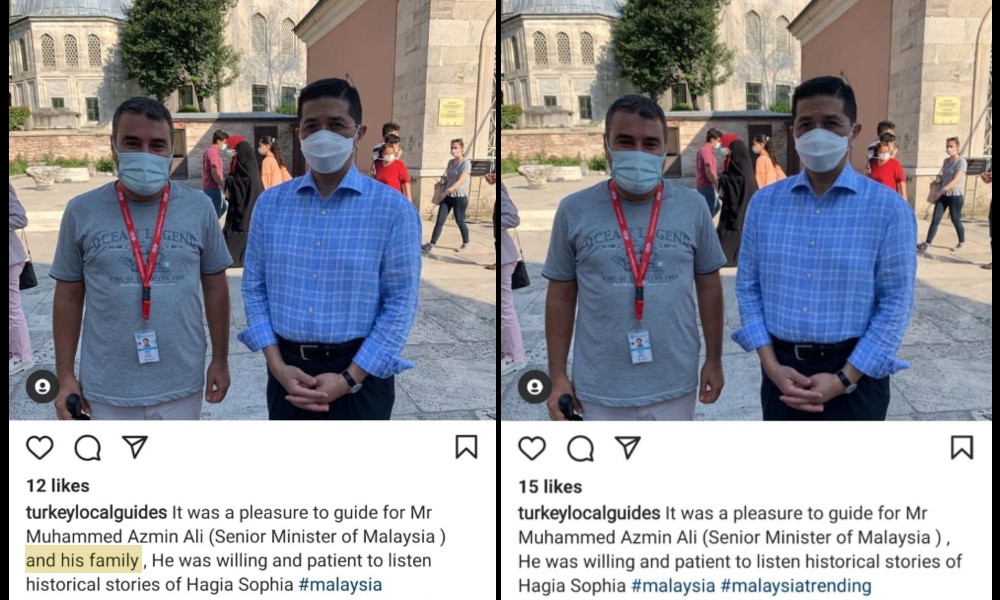
All of us were asked to STAY at Home, practice social distancing but then our PM during the Pandemic managed to go for UMRAH, and Senior Minister visited the tourist attraction, Hagia Sophia in Turkey...
Should not our 'leaders' be setting examples rather than...
So much news about Parliament opening...but really we need our MPs to be an effective check and balance...and making good alternative suggestions...
How many MPs even disclose how they spend the monies given to them for their constituencies ...that new 'food basket' allocations... If you want government to be transparent and accountable, then you too must be transparent and accountable with regards the monies given to you to spend in your constituencies, etc...
Muhyiddin and wife perform 'umrah' in Mecca amid official Saudi visit
Sunday, 07 Mar 2021 11:09 AM MYT
Prime Minister Tan Sri Muhyiddin
Yassin and his wife Puan Sri Noorainee Abdul Rahma leave the Kaabah
after fulfilling their umrah, March 7, 2021. — Bernama pic
Follow us on Instagram and subscribe to our Telegram channel for the latest updates.
MECCA, Mar 7 — Prime Minister Tan Sri Muhyiddin Yassin performed the umrah here yesterday.
He was given the opportunity to enter the Kaaba.
His wife Puan Sri Noorainee Abdul Rahman also performed the umrah,
and they completed the ritual at about 10pm yesterday (3am Sunday in
Malaysia).
Muhyiddin, who is on a four-day official visit to this country
beginning yesterday, performed the umrah at the invitation of the Saudi
Arabian King and Custodian of the Two Holy Mosques, King Salman bin
Abdulaziz Al-Saud. — Bernama, Malay Mail, 7/3/2021
BERITA
Azmin lawat bangunan ikonik Hagia Sophia ketika di Turki
Diterbitkan
Dikemaskini 12 Jul 2021, 8:58 pm
Menteri Perdagangan Antarabangsa dan Industri Mohamed Azmin Ali melawat bangunan ikonik Hagia Sophia ketika berada di Turki.
Menteri
kanan itu berada di Eropah untuk lawatan rasmi dan minggu lalu
mengunjungi Austria serta bertemu dengan Menteri Hal Ehwal Digital dan
Ekonomi Austria, Margarete Schramböck.
Ketika di Austria juga Azmin berkesempatan mengunjungi sebuah syarikat semikonduktor di Loeben.
Turkey
Local Guides, yang menyediakan perkhidmatan pemandu pelancong, hari ini
menyiarkan di Instagramnya foto Azmin di Hagia Sophia, sebuah tempat
bersejarah dan pelancongan yang terkenal di Istanbul, Turki.
"Dengan
senang hati memandu lawatan Mr Muhammed (sic) Azmin Ali (Menteri Kanan
Malaysia). Dia bersedia dan sabar untuk mendengar (mengenai) kisah
sejarah Hagia Sophia," katanya.
Akaun instagram itu pada awalnya
berkata ia menjadi pemandu pelancong untuk Azmin dan "keluarganya". Pun
begitu, perkataan "keluarga" itu kemudian dikeluarkan.
Untuk
rekod, Bangunan Hagia Sophia - atau Ayasofia - itu asalnya dibina
empayar Rom Timur sebagai gereja besar pada abad keenam Masihi sebelum
diubah menjadi masjid oleh kerajaan Uthmaniyah pada 1453.
Statusnya
sekali lagi bertukar apabila kerajaan sekular Turki menjadikannya
muzium pada 1934 dan lebih 50 tahun kemudian Hagia Sophia itu diiktiraf
Unesco sebagai sebahagian daripada Kawasan Bersejarah Tapak Warisan
Dunia Istanbul.
Pada 11 Julai tahun lalu, Presiden Turki, Recep Tayyip Erdogan mengumumkan Hagia Sofia akan kembali menjadi masjid selepas mahkamah tertinggi negara itu memutuskan status terdahulunya sebagai muzium tidak sah.
Sementara
itu, timbul persoalan mengenai tempoh kuarantin yang akan dilalui Azmin
setelah pulang dari program lawatan kerjanya itu.
Pada bulan
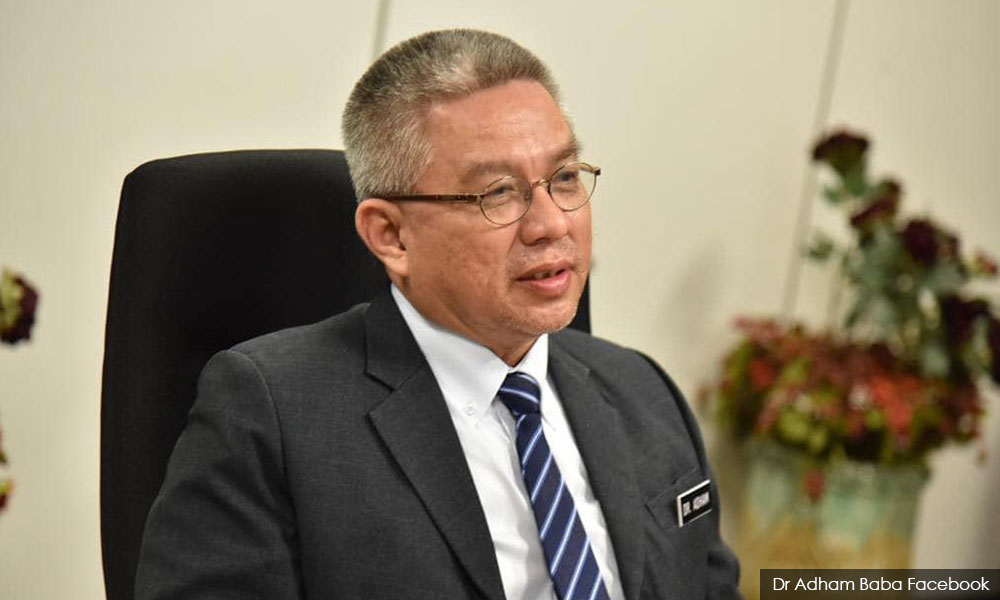
Februari, Menteri Kesihatan Adham Baba memendekkan masa kuarantin bagi
menteri yang pulang dari luar negara dari 10 hari menjadi tiga hari.
Bagaimanapun,
Adham berkata SOP kuarantin untuk menteri dilonggarkan tetapi mesti
disertakan dengan peraturan perjalanan yang ketat.
Tempoh
kuarantin bagi warganegara yang kembali dari beberapa negara dinaikkan
dari 10 hari menjadi 14 hari pada bulan April kerana kebimbangan varian
baru Covid-19.
Sejak itu, varian Beta (Afrika Selatan) dan varian Delta (India) telah mula menyebar di negara ini.
Varian yang lebih ganas telah dituding punca peningkatan kes Covid-19 di negara ini walaupun dalam keadaan PKP.
Azmin dan anggota kabinet yang lain telah diberi vaksin sepenuhnya.
Vaksin Covid-19 secara dramatik mengurangkan kemungkinan jangkitan yang teruk atau kematian.
Pun begitu, vaksin tidak menjadikan seseorang kebal sepenuhnya terhadap Covid-19.
Beberapa vaksin Covid-19 juga didakwa kurang berkesan terhadap varian Covid-19 yang baru.
Pada masa ini, rakyat biasa dilarang pergi ke luar negara kerana wabak Covid-19.
Namun, pengecualian dapat dibuat untuk keadaan khusus, seperti keadaan darurat dan pengajian di luar negara. - Malaysiakini, 12/7/2021
Cabinet ministers now need to be quarantined only for three days
KUALA
LUMPUR (Feb 8): The government has decided that Cabinet ministers
returning from overseas trips to only be subjected to a three-day
quarantine period, as opposed to the usual 10-day quarantine
requirement.
A federal gazette signed by Minister of Health Datuk Seri Adham Baba,
which will be effective tomorrow (Feb 9) until Aug 1, states that
cabinet ministers who are returning from any official overseas visit
will need to be under observation for three days or undergo supervision
until they can be released without endangering the public.
The order, called the Prevention and Control of Infectious Diseases
(Exemption) Order 2021, states that any minister who is returning from
an official visit abroad would be exempted from Section 15 of the
Prevention and Control of Infectious Diseases Act 1988.
Section 15 states that “an authorised officer may order any contact
to undergo observation in such place and for such period as he may think
fit, or to undergo surveillance until he may be discharged without
danger to the public”.
Currently, Malaysia enforces a 10-day mandatory quarantine
requirement for those that are taking flights, either international or
domestic.
Prime Minister Tan Sri Muhyiddin Yassin made an official visit to
Indonesia last week for a one-hour face-to-face meeting with President
Joko Widodo.
In October last year, he emphasised that there was no practice of
double standards in complying with the Covid-19 quarantine orders and
said he himself and his ministers were not exempted from adhering to the
standard operating procedures.
Wakil Rakyat - setiap orang di semua Negeri ada TIGA(3) orang wakil rakyat iaitu:-
Ahli Parlimen - Wakil Rakyat Kerajaan Persekutuan - di undi secara demikratik oleh rakyat
ADUN (Ahli Dewan Undangan Negeri) - Wakil Rakyat Kerajaan Negeri - di undi secara demokratik.
Ahli Majlis Perbandaran - Wakil Rakyat kerajaan tempatan... TIDAK diundi secara demokratik - lantikan politik kerajaan negeri.
HAPUSKAN WAKIL RAKYAT KERAJAAN TEMPATAN kerana mereka bukan wakil rakyat dipilih secara demokratik oleh rakyat tempatan... tetapi ada banyak KUASA membuat keputusan bagi pihak rakyat tempatan.
Sebelum PRU-14, parti Pakatan Harapan mahu pilihanraya kerajaan tempatan tetapi masalahnya kebebasan NEGERI menjalankan pilihanraya kerajaan tempatan dihalang oleh oleh Akta(Undang-Undang Persekutuan) - sebaiknya hak kerajaan Persekutuan menafikan rakyat sesebuah Negeri atau kawasan kerajaan tempatan harus dimansuhkan. Biarkan kerajaan Negeri membuat keputusan berkenaan kerajaan tempatan dan pilihanraya kerajaan tempatan dalam Negeri berkenaan.
The Housing and Local Government Ministry is expected to amend
several laws in Parliament as early as the end of 2020 to reinstate
local government elections, its minister Zuraida Kamaruddin said.
Kerajaan Tempatan di Temerloh ada 19 wakil rakyat kerajaan tempatan TEMERLOH - tetapi adakah mereka menjalankan tugas sebagai 'wakil rakyat' - sila buat carian internet untuk mana-mana nama wakil rakyat ini, dan kemungkinan besar tidak ada mendapat apa-apa keputusan.
KERAJAAN Tempatan - ada membuat undang-undang sendiri - tetapi dalam Laman WEB MPT pun kamu tidak boleh lihat apa undang-undang yang dibuat - hanya tajuk - tak cukup.
Mesyuarat Kerajaan Tempatan saperti sidang Parlimen dan DUN harus terbuka kepada orang ramai - tetapi minit mesyuarat pun tak diberikan.
Sistem wakil rakyat tak dipilih secara demokratik oleh rakyat harus dihapuskan.
COVID-19 - Apakah yang telah dibuat oleh Wakil Rakyat kerajaan tempatan? Apakah perancangan di peringkat kerajaan tempatan?
Gaji dan elaun juga pasti dibayar kepada wakil rakyat kerajaan tempatan..
Kerajaan TEMPATAN ada banyak WANG - cukai pintu, saman, bayaran iklan, dll - tetapi BAGAIMANA WANG INI DIGUNAKAN?
Sebagai contoh, NURUL ASLINA BINTI SAMAN - siapa dia? Adakah dia berindak sebagai wakil rakyat di Temerloh..
WAKIL RAKYAT di semua peringkat mewakili rakyat dalam bidangkuasa mereka - untuk berbuat demikian, perlu ada konsultasi dengan rakyat sebelum membuat apa-apa keputusan, mesti sentiasa memberikan lapuran kepada rakyat, dll..
Saya tak pilih NURUL ASLINA atau mana-mana 19 orang yang kini disenaraikan sebagai wakil rakyat kerajaan tempatan Temerloh - justeru lebih baik, mereka semua RESIGN - dan wang boleh digunakan untuk kebajikan rakyat..
1.DATO' ALI SYAHBANA BIN SABARUDDIN , DIMP. (PEGAWAI DAERAH TEMERLOH) 2.ACP MOHD YUSRI BIN OTHMAN (KETUA POLIS DAERAH TEMERLOH) 3.ENCIK ANUAR BIN MOHD AZLAN (JURUTERA JKR DAERAH TEMERLOH) 4.DR.SHARIFAH MAHANI BT SYED MAHAR AFFANDI (PEGAWAI KESIHATAN DAERAH TEMERLOH) 5.ENCIK MOHD. RIZZAL BIN MOHD. ALI NAFIAH (QADHI DAERAH TEMERLOH)
AHLI MAJLIS
DATO’ RIDZUAN HAZIMIN BIN RAMLI, DIMP
DATO’ JUHANIS BINTI ABD AZIZ, DIMP.,AMN.,AAP.,PPN.
CIK NURUL ASLINA BINTI SAMAN
ENCIK AHMAD ZAILANI BIN JUNOH,PKC.,PJK.
YM RAJA SHAMSUL KAMAL BIN RAJA MOHD NOR
ENCIK TUAN HAJI NORDIN BIN IDRIS
ENCIK TUAN HAJI ABD SYUKUR BIN ABD WAHAB
ENCIK ROZLAN BIN ABD MANAF
ENCIK TUAN HAJI MOHD NASIR BIN LANI
ENCIK OTHMAN BIN CHIK, AMN.,AAP.,PJK
PUAN WATI BINTI ABDUL RAHMAN
PUAN ROSMINA BINTI ABDUL GHAFAR
ENCIK JAMALUDDIN BIN IBRAHIM, PKT
ENCIK MOHD ALI HANAFIAH BIN HJ AHMAD,AMN., PJPN., PJK
ENCIK MOHD. FADZLIE BIN ABDUL MUBIN
ENCIK ISMAIL BIN ABDULLAH KUNJI
ENCIK AZRIL RIZAL YUSOF BIN DATO’ SRI HAJI MOHD. SARIT
* see full previous Court of Appeal Judgment below. Thanks CLJ
Media
Statement – 17/7/2021
Lawyer incompetence can result in death
*Miscarriage of justice
a reason for the abolition of the death penalty*
MADPET(Malaysians Against Death Penalty and Torture)
highlights that lawyer’s incompetence could have resulted in a 31 year old man
being hanged to death, which is proof that an innocent person could end up being
a victim of miscarriage of justice due
to the fallibility of lawyers and other human persons involved in the
administration of justice.
Yahya Hussein Mohsen Abdulrab, 31, was sentenced to death by
hanging in 2014 by the Tawau High Court in Sabah. He was found guilty of
trafficking 1,800 grams of Methamphatamine.
Then, on 8/9/2020, the Court of Appeal quashed the conviction
and sentence against the Appellant Yahya Hussein because of the flagrant incompetency of his counsel
during the High Court trial. The Court of Appeal found Yahya was deprived of
his right to a fair trial due to the 'flagrant incompetence' of his counsel,
and ordered a re-trial.[Current
Law Journal [2020] 1 LNS 1239]
The Federal Court on 13/7/2021, acquitted a man on death row.
The court agreed that the previous counsel
was 'flagrantly incompetent', but it held that the Court of Appeal was
wrong to order a retrial instead of a complete acquittal.(New
Straits Times, 13/7/2021).
Yemeni Yahya Hussein Mohsen Abdulrab was simply very lucky
that he could afford and/or find a competent lawyer, different from the lawyer
who defended him at the High Court who then made the needed application for the
adducing of new evidence, and thereafter also appealed the decision to the
Court of Appeal. If the same lawyer at the High Court had handled the appeals,
he may still be on death row.
The Court of Appeal, in its decision, raised several issues
that led it to conclude that the lawyer handling the case during the High Court
trial was ‘….flagrantly incompetent in the handling of the trial for the
Appellant. This has also deprived the Appellant a fair trial resulting in a
miscarriage of justice. …’
Amongst these issues, as sighted from the Court of Appeal
judgment, were:-
a)Failure
to raise the accused version of how he came into being in possession of the
said drugs by ‘…not proposing it to the prosecution's witnesses…’. The later
attempt to just raise it when the accused was called to testify was found by
the court to be ‘….only an afterthought considering this was not put before the
prosecution's witnesses…’
b)Failure
to call material Defence witness that could corroborate the accused version of
how he came into being caught with the drugs;
c)Failure
to ‘…make oral submission at the end of the prosecution's case and did not put
up a written submission at the end of the defence's case…’; and
d) The
Court also found that it was ‘….too risky for the Appellant's counsel to
advance only one defence for the Appellant i.e. the weight of the drugs….’
If Yahya Hussein Mohsen Abdulrab did not manage to get
another lawyer to take over the case from the previous lawyer, he would most
probably still be on death row awaiting execution.
How many other accused are on death row, or have been
executed simply because of the failings of their lawyers?
In our administration of justice, mistakes can be made by the
police, prosecutors, judges, lawyers and others, and the risk of miscarriage of
justice is there, and more worrying is when the victims could be executed.
If prosecution and lawyers of the accused fails to adduce
relevant facts and evidence in the court of first instance, it is very
difficult to bring in new evidence at a later stage or during appeals. In this
case, the failure to challenge prosecution witnesses, and just raising the
accused version of how he came into being in possession of the said drugs
during the defence case was fatal – leading the judge to believe it to me
merely an afterthought.
Judges too have the right to question witnesses but rarely is
this right utilized. This right exercised may overcome failings of prosecutors
and lawyers.
Poverty and ability to get competent lawyers can be most
prejudicial to accused persons in criminal trials, where a finding of guilt can
lead to incarceration in prison and even death.
“No criminal justice system is perfect. You take a man’s life
and years later, you find out that another person did the crime. What can you
do?” - Datuk Seri Nazri Abdul Aziz, the then Minister in the Malaysian Prime
Minister’s Department.
We also recall the case of Chiang Kuo-ching, who was executed
in Taiwan in 1997 after being convicted of sexually abusing and murdering a five-year-old
girl, and in 2011, Taiwan’s Ministry of Justice admitted that Chiang had been
executed in error.
Therefore, MADPET reiterates the call for the abolition of
the death penalty;
MADPET also calls for the amendment of the laws that will
make the adducing of new evidence in criminal trials, especially in capital
punishment cases, during appeals be made easier as failures of lawyers,
prosecutors and judges at courts of first instance leads to imprisonment,
whipping and even death;
MADPET also calls for action to be taken against lawyers and
prosecutors that fail to ensure that the court is made aware of all the
relevant facts that will lead to justice being done; and
MADPET calls for the abolition of legal presumptions that
shift the burden to accused persons to proof that the drugs found in their
possession did not belong to them or was in their knowledge or was used for
drug trafficking an offence that carries the death penalty.
Charles Hector
For and on behalf of
MADPET(Malaysians Against Death Penalty and Torture)
A Yemeni man was spared the gallows today after he was acquitted by the Federal Court of drug trafficking. - NSTP file pic
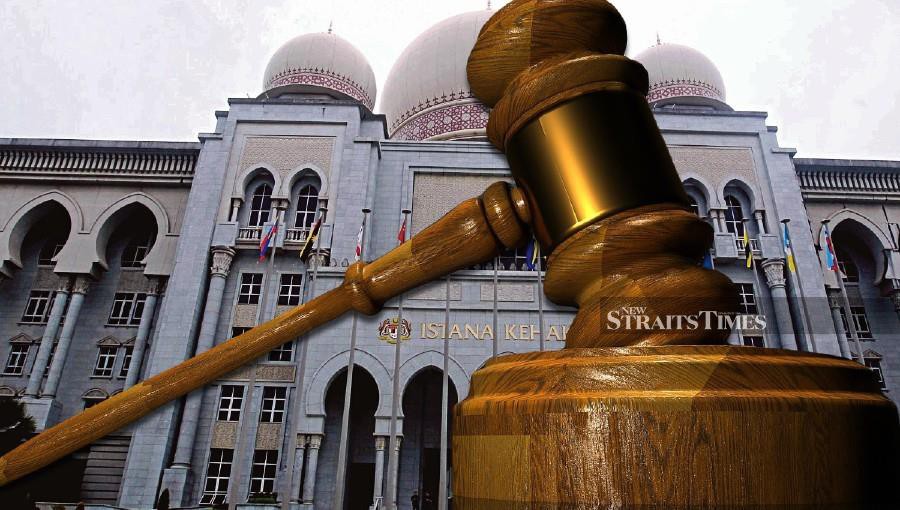
PUTRAJAYA: A Yemeni man was spared the gallows today after he was acquitted by the Federal Court of drug trafficking.
Yahya Hussein Mohsen Abdulrab, 31, was sentenced to death by hanging in 2014 by the Tawau High Court in Sabah.
He was found guilty of trafficking 1,800 grams of Methamphatamine.
Today, a three-member bench led by Chief
Justice Tun Tengku Maimun Tuan Mat set him free after unanimously
allowing his appeal.
The bench which also comprised Federal Court judges Datuk Seri Mohd
Zawawi Salleh and Datuk Nallini Pathmanathan made the decision after
hearing the matter.
Yahya's lawyer Rahmat Hazlan said the court in its decision cited the
incompetency of his client's previous counsel who conducted the trial.
He said the Court of Appeal had quashed the conviction and ordered a
retrial last year after concluding that Yahya had been deprived of his
right to a fair trial due to the 'flagrant incompetence' of his counsel.
Although the Federal Court in its decision today agreed that
the previous counsel was 'flagrantly incompetent', it held that the
Court of Appeal was wrong to order a retrial instead of a complete
acquittal, Rahmat added.
"The Federal Court decided that a retrial would be unfair as there
was a breach of the constitutional safeguards, and as a result the trial
process was unfair," he said.
He said the appellant had been incarcerated for more than eight years
and the court was also of the view that it was unfair to order a
retrial as it could lead to Yahya languishing in jail further.
On the merits, Rahmat said the additional evidence clearly show more
than a reasonable doubt had arisen in the prosecution's case and the
order for retrial or a reduction to a lower offence of possession was
unsafe.
Yahya was also represented by lawyer Tan Sri Muhammad Shafee Abdullah
and Wan Aizuddin Wan Mohammed while deputy public prosecutor Hanim Mohd
Rashid prosecuted.
According to the charge sheet, Yahya had trafficked in 1,800.28 grams
of Methamphatamine at the Arrival Hall of Tawau Airport at about 11am
on July 25, 2013
The charge under Section 39B(1)(a) of the Dangerous Drugs Act 1952 carries a mandatory death sentence upon conviction. - New Straits Times, 13/7/2021
IN THE COURT OF APPEAL OF MALAYSIA
(APPELLATE JURISDICTION)
[CRIMINAL APPEAL NO: S-05-12-01/2015]
BETWEEN
YAHYAHUSSEIN MOHSEN ABDULRAB
(SMPP NO.: 86-13-01628 BA)
... APPELLANT
AND
PUBLIC PROSECUTOR
... RESPONDENT
[In the matter of High Court in Sabah and Sarawak at Tawau
Criminal Trial No. TWU-45A-1/3-2014]
BETWEEN
PUBLIC PROSECUTOR
AND
YAHYAHUSSEIN MOHSEN ABDULRAB
(SMPP NO.: 86-13-01628 BA) ]
CORAM:
YAACOB HAJI MD SAM, JCA
HANIPAH FARIKULLAH, JCA
ABU BAKAR JAIS, JCA
JUDGMENT
Introduction
[1]
This is a drug trafficking case that originated from the High Court.
The Appellant appealed against the decision of the said High Court which
convicted and sentenced him for the charge of trafficking the drugs. We
heard oral submissions by the Appellant and Respondent for the appeal
against the decision of the High Court on 19 February 2020 and we
decided to order a retrial of this case before another High Court Judge.
The Appellant lodged an appeal to the Federal Court not on the whole
decision but only with respect to our decision that this case be retried
before a different High Court Judge.
[2] It is therefore
incumbent and relevant to note both the limited scope of the appeal
lodged and hence our reasoning herein in arriving only to that part of
the decision. As a consequence, there is no reason to be more elaborate
than necessary in addressing the limited grievance of the Appellant.
More so when the Respondent did not appeal against the whole of our
decision.
The Charge
[3] The charge against the Appellant, a Yemeni national, reads as follows:
"That you on 25th
day of July 2013 at about 11.00 am at the arrival hall of Tawau Airport
in the District of Tawau, in the State of Sabah did on your own behalf,
traffic in a dangerous drug, to wit 1,800.28 grams of Methamphetamine
and that you have thereby committed an offence under section 39B(1)(a) of the Dangerous Drug Act 1952 punishable under section 39B(2) of the same Act ".
The Prosecution's case
[4]
The Appellant arrived by flight from Kuala Lumpur to Tawau. PW1, an
Immigration officer checked the Appellant's passport and found his
social visit pass had expired. The Appellant then was accompanied by PW1
and his supervisor to the carousel after the Appellant informed that he
had a luggage. They found the luggage, a briefcase on the floor at the
carousel. There were no other passengers or any other luggage at that
carousel.
[5] Upon request by PW1, two Customs officers,
PW2 and PW6 then scanned the briefcase. Upon scanning, PW2 saw a
suspicious image inside the briefcase. PW2 instructed the Appellant to
bring the briefcase to him for further inspection. The Appellant using
the key he had, unlocked the briefcase. PW2 then saw a transparent
plastic package inside the inner compartment of the briefcase. PW2 then
instructed the Appellant to close the briefcase and follow him with the
briefcase to the Customs office.
[6] At the Customs office,
PW10 instructed the Appellant to open the briefcase. Using the key
inside his wallet, the Appellant opened the briefcase again. PW10 then
saw one transparent plastic package containing crystalized substance.
Using a test kit, PW10 conducted the initial drug test and found the
crystalized substance suspected to be Methamphetamine. The Appellant
then was arrested. The Chemist PW 9 confirmed that the substance found
was Methamphetamine weighing 1800.82 grams.
The Findings of Trial Judge at the End of Prosecution's Case
[7] Based on the case of PP v. Sukumaran a/l Sundram [1999] 4 CLJ 242; [1999] 4 MLJ 426, the learned High Court Judge ("HCJ") found prima facie
case as sufficient credible evidence was adduced by the prosecution for
each essential ingredients of the offence for a supposition of guilt if
it is not answered by the accused.
[9] Based on the evidence adduced by the prosecution as narrated, the learned HCJ found the following ingredients to be proven:
(a) The Appellant had possession of the drug;
(b) The drug in question was Methamphetamine;
(c) The Appellant had committed an act of trafficking of the drug.
[10]
In respect of the first ingredient, the learned HCJ found the Appellant
had custody and control of the briefcase. He had opened the same using
the key he had. There was no other passenger at the carousel when the
briefcase was taken by the Appellant. The briefcase was not tempered as
it was still locked and the Appellant had the key all the time.
[11] The Appellant also had knowledge of the drug in the briefcase having regard to the presumption under s. 37(d) of the Dangerous Drug Act 1952.
The fact that the Appellant had custody and control of the briefcase,
would mean the Appellant had possession and knowledge of the drug by the
operation of this statutory presumption.
[12] In respect
of the second ingredient, PW2 testified that he saw a transparent
plastic packet containing white crystalized substance when the briefcase
was opened by the Appellant. Later the initial test done by PW10 using a
test kit revealed that the substance to be Methamphetamine.
Subsequently, the chemist PW9 conducted further test to confirm the
substance as Methamphetamine and the learned HCJ accepted the weight of
the drug as indicated in the charge. Essentially, the learned HCJ found
the second ingredient to be proven having regard to the facts narrated.
[13]
In respect of the third ingredient, the learned HCJ found direct
trafficking. The Appellant was found having possession of the briefcase
and the Appellant had the briefcase containing the drug for trafficking
and not for own consumption. The amount of the drug found cannot mean
the drug is for own consumption but for trafficking.
[14] The learned HCJ therefore called for the Appellant to enter his defence.
Defence
[15]
The Appellant was the only witness who testified for the defence. He
gave evidence that his friend by the name of Mickey requested him to
bring the briefcase to Tawau. Mickey paid the air ticket, booked a hotel
room and gave him RM 1000 for his expenses while in Tawau. Mickey told
him to hand over the briefcase to Mickey's friend. Mickey gave the
telephone number of his friend to the Appellant.
[16] He
did not know the contents of the briefcase but he gave his shirts, pants
and shoes to Mickey and Mickey packed them in the briefcase.
[17]
The Appellant denied knowledge of the drug in the briefcase and said
that Mickey as the one who had packed his clothes in the briefcase and
therefore Mickey too had kept the drug in the briefcase.
[18]
He said when he saw the briefcase at the airport, it was already on the
floor and it was already opened. He had to press it again to close it.
He admitted that he did not tell the Customs officers about this.
[19] He also admitted that he had never mentioned Mickey to the Customs officers.
The Findings of Trial Judge at the End of Defence
[20] Having regard to the cases of PP vs. Lim Chan [1992] 2 MLJ 561 and Hamidon Bin Mat Yatim v. PP [1995] 3 CLJ 724,
the learned HCJ was of the finding that this an afterthought as this
was not raised during the prosecution's case and in particular to the
Customs Officers when the Appellant gave his cautioned statement.
[21]
There is also no reason for Mickey to pack the Appellant's clothes. It
is also illogical for the Appellant to say that Mickey packed his
clothes according to the learned HCJ. It is illogical for the Appellant
to say that he was supposed to pass the briefcase to Mickey's friend and
in return, Mickey would hand over his clothes back to the Appellant.
[22]
According to the learned HCJ too it is illogical for Mickey to send the
Appellant to pass the briefcase to his friend when it is much cheaper
to send the same by courier.
[23] And it is not possible
for someone else to open the briefcase at the airport as the airport is
manned by security personnel who would have seen such incident. Besides,
the briefcase was locked and no one else would be able to open the
same.
[24] Hence the learned HCJ found the existence of
Mickey merely the make up story of the Appellant. His defence was merely
a denial and afterthought. This had not rebutted the presumption of
knowledge pursuant to s. 37(d) of the Act.
[25]
Having heard the evidence of the Appellant, the learned HCJ found that
the appellant had failed to rebut the presumption and no reasonable
doubt had been raised against the prosecution's case. Hence the
prosecution has proven its case beyond reasonable doubt.
[26] The learned HCJ therefore, convicted the Appellant on the charge preferred against him and sentenced him to death.
Event after Conviction and Sentence
[27] It should be noted that after the Appellant was convicted and sentenced by the High Court, the Appellant applied under section 61 of the Courts of Judicature Act 1964
to adduce further evidence to show the incompetency of his own counsel
in handling the case at the High Court. A different panel of the Court
of Appeal allowed this application. Therefore fresh evidence was
recorded accordingly for this purpose at the High Court.
Grounds of Appeal
[28]
Noting the manner upon which the submission was made during oral
hearing of the appeal, we had remarked in open court that it seemed to
us that the Appellant was not contending against the trial judge's
grounds of judgment nor the findings made by His Lordship. In reply,
counsel for the Appellant emphatically said that the Appellant's grounds
of appeal are not directed against the decision. The records of the
proceeding before us would show these exchanges. Instead, the
Appellant's counsel said the submission before us is impressed to
highlight that the previous counsel handling the case in the High Court
for the Appellant was incompetent in defending the Appellant against the
charge. Hence this is not the normal case where the grounds of judgment
and the findings of the trial judge are being questioned. Instead the
focus of the submissions is being directed at the Appellant's own
previous counsel who conducted the Appellant's case at the trial court.
[29]
In fact it is also recorded that the Appellant's counsel told us that
the only issue arising from the submission above is whether the
conviction and sentence by the trial judge are safe considering the
incompetency of Appellant's previous counsel handling the case at the
trial court.
Our Analysis and Decision
A. Scope of the Issue
[30]
First, it cannot be overstated the limited scope of the issue raised by
the Appellant in proceeding with the present appeal. It must also be
remembered, the Respondent did not appeal against our decision.
[31]
Having in mind the limited extent of the present appeal, it is relevant
to highlight the case law that discussed the scope of an appeal and how
the courts had confined itself and not strayed into others areas beyond
the point or issue that is appealed. We expressed this to set the
perimeters of what is only essential to be considered and to remind
ourselves not to delve into matters irrelevant as to why we had decided
for another High Court Judge to rehear the case.
[32] A
case that illustrates the approach of the courts to strictly confine
itself to what is being appealed is the Federal Court's case of Sababumi (Sandakan) Sdn Bhd v. Datuk Yap Pak Leong [1998] 3 CLJ 503;
[1998] 3 MLJ 151. Although this case dealt with the issue raise for an
appeal after leave is given, nonetheless it still relevant to denote how
the court had been strict to limit what can be raised in the appeal
proper. And though this is a civil case, there is no reason to say that
the approach in this case should not be applicable for a criminal case.
In this case the relevant provision pertaining to leave to appeal and
the scope of such appeal is said as follows:
Under r. 108(1)(c) of the Rules of the Federal Court 1995,
the Federal Court may determine or frame the questions or issue which
ought to be heard in the appeal; in my view, this discretionary power
given statutorily must be given effect to. In other words, only the issues or questions thus framed would be heard or entertained.
[Emphasis Added]
[33]
Likewise, the Appellant too in the present appeal must be bound to only
the issue of competency or lack of it by his former counsel at the High
Court as a point of argument for the appeal now. He should not go
beyond this contention in deciding the appeal as he through his counsel
had said they are confining themselves to this issue alone.
B. The Law
[34]
Having laid down the scope of the issue, it would be appropriate to
state the law in respect of the contention that the Appellant's counsel
who conducted the case at the trial court was incompetent. This
according to the Appellant had caused a miscarriage of justice for him,
warranting the conviction to be reviewed. In our view, it would also be
instructive for the law to be highlighted first before the facts are
considered to determine whether indeed the counsel for the Appellant was
incompetent in handling the case.
[35] The leading authority on this issue is the Federal Court's case of Shamin Reza Bin Abdul Samad v. Public Prosecutor [2009] 6 CLJ 123;
[2011] 1 MLJ 471. First, of importance regarding this case is the
recognition that a conviction for a criminal offence can be set aside if
it is proven that the counsel representing the accused had been
incompetent in handling the case as a whole and in particular,
presenting the defence of the accused resulting in the said conviction.
[36]
Second, this case laid down two conditions that must be satisfied in
order to find indeed the counsel of an accused person had not been up to
the mark in defending the accused against the charge he was facing.
These two conditions are as follows:
(a) The incompetence must be flagrant and;
(b) It has deprived the accused a fair trial.
[37]
The case also stressed that the conduct of the counsel handling the
case must be viewed as a whole and it would not be sufficient to find
the said counsel incompetent if he was found merely wanting in one or
two aspects.
[38] The case also noted that the overarching
principle in applying this law is that the duty of the court in
achieving justice should always be in the forefront despite the
contention a counsel may have been incompetent. This is taken to mean
that at the end of the day, the courts should still bear in mind whether
justice is served in view of the totality of the evidence adduced,
notwithstanding the manner the trial had been handled by the accused's
counsel.
[39] The relevant excerpt of this case states as follows:
In
our considered judgment, the incompetence of counsel in the conduct of a
defence in a criminal trial is a ground on which a conviction may be
quashed provided that (i) such incompetence must be flagrant in the
circumstances of the given case; and (ii) it must have deprived the
accused of a fair trial thereby occasioning a miscarriage of justice.
Nothing short will suffice. And in considering the question, an
appellate court must have regard to the conduct of counsel as a whole
and not merely to his or her failure in one or two departments. Further,
in the ordinary way, a court (whether at first instance or at the
appellate state) will of course have regard to its paramount function
and duty to ensure that justice is done so that the incompetence of
counsel will not factor into the equation.
[40]
Before us in the present appeal, it was argued that what the Appellant
needs to show is just that his counsel was incompetent, thus depriving
him of a fair trial. We could not agree to this submission as we are
bound by the Federal Court's decision above. In this regard the Federal
Court clearly has decided the incompetency must be flagrant and therefore not merely being incompetent per se.
There is a higher standard imposed than just merely saying the counsel
was not doing his work properly. Flagrant in this context means
conspicuously or obviously offensive. It does not mean merely failing to
do one's work. It is not meant to apply for incompetency at its lowest
level. Therefore it is insufficient for the Appellant to prove mere
incompetency without the same being flagrant.
[41] Besides,
if we were to accept the submission of the Appellant as narrated above,
it would be much too simple and easy for a conviction to be overturned,
solely on the score that an accused's counsel was merely incompetent in
managing the case in court for the accused.
C. The Facts
[42]
Having laid down the law on the subject, it is now apposite to state
the facts pertaining to what was done or not done by the Appellant's
counsel in handling the case at the trial court. This is to determine
whether indeed the Appellant's counsel was incompetent based on the law
highlighted.
[43] In this regard, first of significance is
the fact that during cross- examination of the prosecution's witnesses,
the Appellant's counsel had only challenged these witnesses on the
weight of the drugs. There were no other areas where the Appellant's
counsel had taken other issues with these witnesses. This is important
to note because the line of questions adopted by the Appellant's counsel
during his cross-examination suggested that the defence of the accused
was solely on the ground that the drugs were not up to the weight to
find there was trafficking of the same. It would seem there were no
other grounds of defence, considering what was cross-examined by the
Appellant's counsel.
[44] This is indeed untrue and a
precarious position undertaken by the Appellant's counsel at the trial
court. This is untrue because as narrated earlier at paragraphs [15] to
[17] above, the Appellant's defence was that the briefcase containing
the drugs were given to him by Mickey. Therefore, it was indeed
flagrantly incompetent for the Appellant's counsel not to cross-examine
the prosecution's witnesses on this particular defence. This would also
mean the Appellant had been deprived of a fair trial.
[45]
It is also too risky for the Appellant's counsel to advance only one
defence for the Appellant i.e. the weight of the drugs. More so when as
stated, there was also the defence that the briefcase was given by
Mickey and the Appellant was not aware of the drugs in that briefcase.
[46]
After further evidence was ordered to be adduced by the Court of Appeal
then, the Appellant testified he met his counsel in prison before the
trial. He told his counsel that he was under the impression he was
bringing presents for a friend of Mickey and was not aware that the
briefcase contained the drugs. The Appellant further testified after he
told his counsel the full narrative of his defence, the latter said he
would study the Appellant's case and get back to the Appellant. But his
counsel never turned up in prison on this thereafter. The Appellant
afterwards met only briefly with his counsel in court. And his counsel
told him he will only bring the defence of the discrepancy of the weight
of the drugs. No other grounds of defence were discussed.
[47]
We are of the opinion that not cross-examining the prosecution's
witnesses on the defence that the Appellant was not aware of the drugs
in the briefcase was indeed a matter so serious that it materially would
have affected the Appellant's version of his innocence. It does not
matter that defence might be weak but not proposing it to the
prosecution's witnesses and merely relying on the sole defence of the
weight of the drugs showed the flagrant incompetency of the Appellant's
counsel and this had deprived the accused of a fair trial, thereby
occasioning a miscarriage of justice.
[48] Indeed only
after the defence was called, did the Appellant testify that Mickey had
requested the former to bring the briefcase to Tawau. This prompted the
learned HCJ to find that this defence was only an afterthought
considering this was not put before the prosecution's witnesses. This
finding of the learned HCJ could only be possible because of the
flagrant incompetency of the Appellant's counsel in not introducing and
pursuing this defence at the prosecution's stage. This was made more
serious as the evidence tendered after further evidence was ordered to
be adduced, indicated the Appellant had narrated this defence to his
counsel before the trial. It is only the Appellant's counsel's refusal
to raise this defence earlier that had caused the learned HCJ finding
fatally against the Appellant.
[49] Evidence was also
tendered that Mickey is the Appellant's wife's brother in-law. And
instruction was given for the Appellant's counsel then to call the
Appellant's wife as she would be in a position to corroborate the
Appellant's evidence that the drugs in the briefcase belonged to Mickey.
There was evidence that she came to court to be called as a witness but
the Appellant's counsel then decided not to call her without giving any
reasons. We considered this most surprising and crucial as her evidence
could well support the evidence of the Appellant. Not calling her when
she was ready to testify, had seriously affected the Appellant's
defence. More so when no reasons were given by the Appellant's counsel
as to why she was not called as a witness for the Appellant. This
constituted another instance where the incompetency of the Appellant's
counsel was flagrant and had caused the Appellant a fair trial and had
occasioned a miscarriage of justice.
[50] It is also
relevant to note, when further evidence was adduced, one Ahmad Faisal
Mohd Al-Moafa from the Yemeni embassy testified he met the Appellant
while the latter was in prison. In this meeting, the Appellant told
Ahmad the whole details of his arrest. Ahmad later relayed it to the
Appellant's counsel what was told to him. Ahmad gave evidence that the
Appellant's counsel said such information was not useful and the latter
kept insisting that his legal fees be paid in full.
[51]
There was also evidence the Appellant's counsel did not make oral
submission at the end of the prosecution's case and did not put up a
written submission at the end of the defence's case.
[52]
It is our considered view that all the facts as narrated above would
only mean that the Appellant's counsel was flagrantly incompetent in the
handling of the trial for the Appellant. This has also deprived the
Appellant a fair trial resulting in a miscarriage of justice. The
conduct of the trial by the Appellant's counsel was flagrantly
incompetent as a whole and not confined only to one or two areas. The
defence that the Appellant was requested to carry the briefcase by
Mickey and as a consequence not having the knowledge that the drugs were
contained in the same was so fundamental that it ought to have been
raised by the Appellant's counsel. The failure to raise it, has caused
the Appellant to be convicted for a very serious offence, resulting in
the death penalty. In light of the circumstances, this court has also
considered that as a whole, justice is best served for the conviction to
be quashed as it would not be safe to affirm the conviction and
sentence despite the evidence that had been adduced against the
Appellant.
D. Order for retrial before a different High Court Judge
[53]
Having quashed the conviction and sentence against the Appellant
because of the flagrant incompetency of the Appellant's counsel, it
would be most appropriate to order that a retrial be held before another
High Court Judge. To order the Appellant to be acquitted and discharged
for the offence charged, would not be a fair and appropriate decision
to be made considering the circumstances of this case. If this order is
made instead, it would be far too easy for an accused to be acquitted
and discharge, i.e. just by engaging counsels who would by design not
handle the case properly and with certain standard expected in defending
an accused person.
[54] The Appellant had been detained in
prison for a long time and may have to stay in prison for some time
more, awaiting for the retrial. However, balancing the interest of the
State and the Appellant's interest, it is only fair for a retrial to be
ordered instead of letting the Appellant scot free by acquitting and
discharging him just because of his own counsel improper handling of his
defence at the High Court. In fact, as shown from the factual matrix of
this appeal, the decision to set aside the conviction and sentence
against the Appellant has to be done not on account of the prosecution
fault or the erroneous findings of the learned HCJ but solely because of
the flagrant incompetency of the Appellant's own counsel. Therefore, in
the interest of justice, a retrial before another High Court Judge
would be an appropriate and fair decision that should be made.
Conclusion
[55]
Based on all the reasons aforesaid, we are unanimous that this is a
proper case for the conviction and sentence to be quashed. However, for
the reasons explained too, the case should be remitted to the High Court
for a retrial before another High Court Judge.
BN-PN topple PH in Negeri Sembilan
-
The Negeri Sembilan state assembly has 36 seats. Actual results: BN 18
seats + PN 7 seats = 25 seats PH 11 seats Ilham Centre’s prediction: Ong
Kian Ming’s...
APA PADA NAMA
-
1. Sejarah Malaysia dikait rapat dengan UMNO, Parti Kebangsaan Melayu
Bersatu. Parti UMNO pula dikenali dengan pemimpinnya. 2. Demikian di
peringkat permul...
China and HK may be barred from Asia Team meet
-
PETALING JAYA: The status of next week’s Asia Team Champion-ships in
Manila, the Philippines, is in quandary as two badminton nations – China
and Hong Kong...
PRU14 - Keputusan TEMERLOH - Parlimen dan DUN
-
Keputusan di Temerloh, harus kita analisa
1- Parlimen dimenangi Pakatan Harapan, yang juga menang DUN Mentakab,
tetapi BN menang DUN Lancang dan DUN Kuala ...
Thank you, Malaysians
-
Before the lights go out on The Malaysian Insider at midnight, we say
"Thank You" to our readers. TMI started on February 25, 2008. Today, after
eight year...
I believe in the freedom of expression - and everyone is free to use, reproduce, quote, copy and circulate, etc... materials published here. Please credit the source: http://charleshector.blogspot.com/.
For those of you who do have Blogs/Websites, it would be good if you could add a link to CHARLES HECTOR Blog. Please do promote the BLOG.
Anonymous comments or those containing profanities and obscenities (or irrelevant matters) will be rejected. Note that all comments made in post are personal opinions.
Number of Visits
Over 4 million visits. On an average, we have about 700-750 visits per day.Thank you all for your support and encouragement..





 Posts
Posts