Rare Earth Mining and Processing in Malaysia - What is PM Anwar Ibrahim and the Pakatan Harapan(DAP,PKR and Amanah) led Madani Coalition's position NOW - remember it a MOST DANGEROUS industry - with possibility of affecting the environment and also human health.
Pakatan Rakyat is definitely shutting down Lynas if the opposition coalition takes over the government. It
would take a "miracle" for Pakatan to reverse its earlier stance of
vowing to stop the operations of the rare earth processing plant if it
comes to power, PKR's strategy director Rafizi Ramli said at a press
conference this morning - Edge, 14/3/2013
Then DAP/PKR/Amanah(now Pakatan Harapan) is in power with Anwar Ibrahim as Prime Minister > and recently, LYNAS was 'gifted' a 10 year contract.
After Trump visited Malaysia, and gave Anwar a car ride - Malaysia signed an agreement with US
Malaysia has committed to refrain from banning, or imposing quotas on, exports to the United States of critical minerals or rare earth elements. Malaysia has committed to the expedient development of its critical minerals and rare earths sectors in partnership with U.S. companies, including granting extended operating licenses to create certainty for businesses to increase production capacity. Malaysia has committed to ensure no restrictions are imposed on the sale of rare earth magnets to U.S. companies. - Joint Statement US-Malaysia Agreement, 26/1o/2025
Then, the 10 year licence for LYNAS.
Then, Lynas agree to supply US Department of Defence
Lynas, the largest rare earth refiner outside of China, has signed a binding letter of intent with the US Department of Defense to finalise an agreement to supply the country’s defence sector with rare earth minerals for four years.“Through this agreement, the US defence industrial base will continue to have access to light and heavy rare earth oxides that are essential for modern manufacturing,” its CEO and managing director, Amanda Lacaze, said in a statement from the company today....Under this arrangement, the Department of Defense will set aside about US$96 million (RM377.62 million) to purchase rare earth oxides from Lynas. - Malaysiakini, 16/3/2026
Now, with this supply agreement with US Department of Defence, can Malaysia NOW cancel Lynas operating license - can it kick out LYNAS from Malaysia....US and TRUMP may not be happy with Anwar and Malaysia????
Guess WHAT, Malaysia may now be 'helping' US - for these weapons may be used to kill Palestinians, Iranians, Lebanese, etc..
What is the status of the
The Agreement on Reciprocal Trade (ART) between the United States and Malaysia is now null and void, said Investment, Trade and Industry Minister Datuk Seri Johari Abdul Ghani.Johari said this follows a United States Supreme Court ruling that struck down the majority of US President Donald Trump's earlier broad tariff measures, rendering the arrangement inapplicable."It is not on hold. It is no longer there, it's null and void. The United States Supreme Court has ruled that if you want to impose tariffs, you must have reasons," he said.- NST, 15/3/2026
BUT, our Minister said TERMINATED???? - if it has been TERMINATED or is NULL and VOID - Why is that Agreement still on the US White House Website?
Remember Malaysia entered into that agreement when the US Court already ruled that that the Tariff imposed by Trump was ILLEGAL and void...Malaysia still knowingly entered into that agreement - SO, how can a US Supreme Court confirming that the TARIFF action was illegal affect the Malaysia-US Agreement?
Malaysia MUST ACTIVELY terminate that US-Malaysia agreement...
Malaysia has suspended operations at a rare earth site and two tin mines in western Perak state following an investigation into complaints that a stretch of a major river had turned bright blue, the natural resources and environment ministry said. Minister Johari Abdul Ghani told parliament on Wednesday that authorities had launched a probe after public reports about discoloured water in a part of the Perak River, the second-longest on the Malaysian peninsula. Initial investigations found discharges at the rare earths mining site, operated by MCRE Resources Sdn Bhd, which matched the colour of the water in the river, Johari said. . he added. - Reuters, 20/11/2025
KUALA LUMPUR, March 5 — Both of Malaysia's commitments regarding Licensing Certainty as contained in the Joint Statement on the Agreement on Reciprocal Trade (ART) (Article 5.2) and the memorandum of understanding (MoU) on Critical Minerals (Areas of Cooperation, Section 3) do not affect the government's decision to enforce technical conditions on Lynas Malaysia or other rare earth elements (REE) companies that are about to be approved to operate in Malaysia.
The Ministry of Investment, Trade and Industry (Miti) said the Critical Minerals MoU signed by Malaysia and the United States clearly states that areas of cooperation between the two countries include topics related to good regulatory practices, such as facilitating the process of issuing permits related to the REE industry, including mining permits, land purchase and manufacturing licences.
“This agreement includes fair and equitable treatment for investors, as well as the implementation of sustainable projects that comply with environmental, social and governance practices.
“In addition, both countries are committed to working together in strengthening the critical minerals sector and ensuring that the sale of REE products is determined by the respective authorities or governments,” the ministry said in a written reply to the Dewan Negara yesterday to a question from Senator Datuk Wu Him Ven who wanted to know whether the two commitments affected the government’s decision to enforce technical conditions on Lynas Malaysia or the rare earth industry.
The Licensing Certainty commitment is enshrined in the Joint Statement on ART (Article 5.2), while the Critical Minerals MoU has the Areas-of-Cooperation, Section 3.
Regarding the status of negotiations between Khazanah Nasional Bhd and companies from China in the development of the REE industry, Miti said that until now the discussions are still at an early stage and no final agreement has been signed.
“This is because the Chinese government has not yet named the party that will represent the country to implement the cooperation,” he said.
The ministry also explained that the government has mandated Khazanah Nasional as a focal point to comprehensively examine potential strategic collaboration models.
“The research covers aspects of commercial viability, technology safeguarding, strategic governance and control structures, as well as alignment with national interests,” it said.
Regarding the heavy rare-earth element (HREE) separation technology, Miti said that so far no technology transfer has been finalised either in terms of scope, form of implementation or timeline.
“Currently, HREE production at a commercial level in the world is only done by processing plants in China and the Lynas company in Kuantan,” it said. — Bernama, Malay Mail, 5/3/2026
Lynas, the largest rare earth refiner outside of China, has signed a binding letter of intent with the US Department of Defense to finalise an agreement to supply the country’s defence sector with rare earth minerals for four years.
“Through this agreement, the US defence industrial base will continue to have access to light and heavy rare earth oxides that are essential for modern manufacturing,” its CEO and managing director, Amanda Lacaze, said in a statement from the company today.
Lynas said the letter of intent establishes a framework to finalise an agreement for the supply of light and heavy rare earth oxides to support US national security and supply chain resilience objectives.
Under this arrangement, the Department of Defense will set aside about US$96 million (RM377.62 million) to purchase rare earth oxides from Lynas.
Lynas said the agreement followed a mutual decision with the Pentagon to modify an earlier agreement, due to “significant uncertainty” on whether plans to build a heavy rare earth processing facility in Seadrif, Texas, would proceed.
The statement also mentions that neodymium-praseodymium (NdPr) oxides will have a floor price of US$110 per kg under the arrangement.
For comparison, its benchmark price generally hovered around US$60 to US$80 per kg last year, though it briefly reached as high as US$128 per kg this year.
Market dominated by China
The mineral is a crucial raw ingredient for making powerful magnets needed for electric motors, actuators, and other applications.
Bloomberg Intelligence reported on March 2 that China dominates 90 percent of the world’s NdPr supply, but upcoming supplies from Australia and the US are likely to slash China’s market share to 69 percent by 2030.
Lynas mines rare earth minerals from Mt Weld, West Australia, processes them, and then ships them for refining and separation into rare earth oxides at the Lynas Advanced Materials Plant in Gebeng, Pahang.
The facility in Gebeng is not only capable of producing light rare earth elements, but is also the only significant producer of heavy rare earth elements outside China, and therefore the only producer not subject to China’s export controls on critical minerals.
10-year licence extension, with strings attached
However, the facility has faced significant opposition from environmental activists, particularly for issues surrounding the disposal of radioactive residue from its water leach purification (WLP) process.
The Malaysian government granted the facility a 10-year extension of its licence beginning March 3, but on the condition that it reduces the radioactivity of the WLP residue below regulatory limits by extracting the radioactive element thorium from the waste.
Moving forward, Lynas will also be required to complete the thorium extraction process in Australia before shipping it for further processing in Malaysia. - Malaysiakini, 16/3/2026
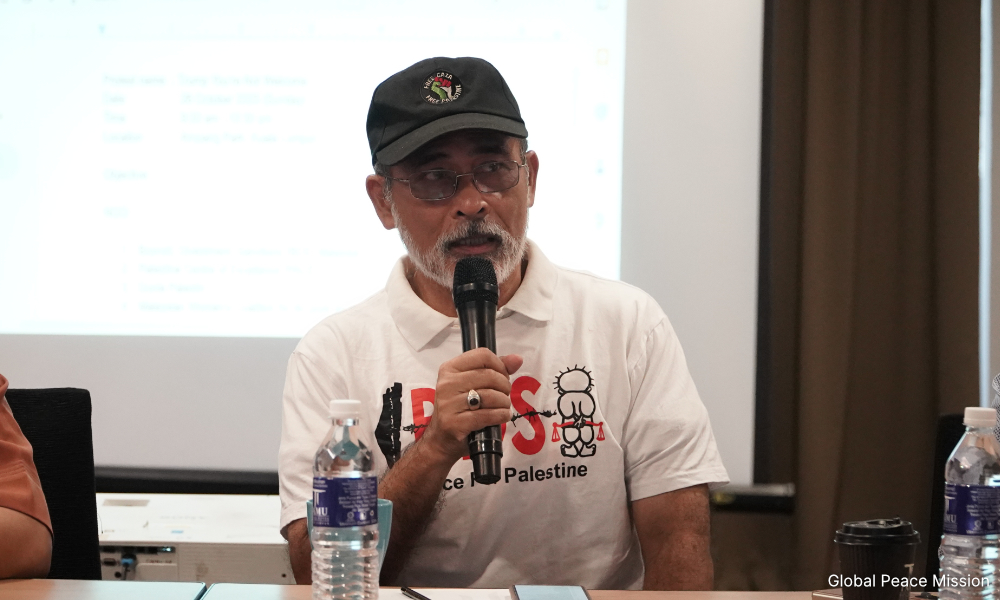
Two pro-Palestine advocates have called for Malaysia to impose restrictions on the export of rare earth materials processed by Lynas Rare Earths.
This came after the company signed a binding letter of intent with the US Department of Defense to finalise a four-year agreement to supply the US defence sector with rare earth minerals.
Boycott Divestment & Sanctions Malaysia (BDS) chairperson Nazari Ismail argued that the business deal is also a challenge to Malaysia's spirit of non-aligned foreign policy.
"Yes, the Malaysian government should impose some form of restriction on the export of Lynas' output. It should not supply countries that use them for illegal military operations.
"Clearly, the US is now engaged in military operations after it carried out an unprovoked attack on Iran," the academic told Malaysiakini.
Nazari concurred that while this could lead to diplomatic repercussions, he said it was "normal when you stand up for justice and hold on to moral principles”.
He added that Putrajaya should be concerned about the Lynas deal, given the US' role in the deadly bomb strike on two schools in Iran, which resulted in the deaths of over 100 schoolchildren.
Nazari said that since Lynas holds an operating licence issued by Putrajaya, the terms of that licence should be revisited to include restrictions on the end buyers of the processed materials.
"As stated earlier, the output should not be sold to buyers who plan to use it for illegal military campaigns," he emphasised.
Weaponry production
Former PKR vice-president and fellow pro-Palestine activist Tian Chua echoed Nazari's sentiments.
"It is quite clear that the supply of rare earth elements to the US Department of Defense for security purposes would include weaponry production.
“This agreement could potentially drag Malaysia into the US supply and production chain of war machinery.
"Malaysia could impose some additional export conditions to prevent rare earth products from being shipped to US defence industries," Chua said when contacted.
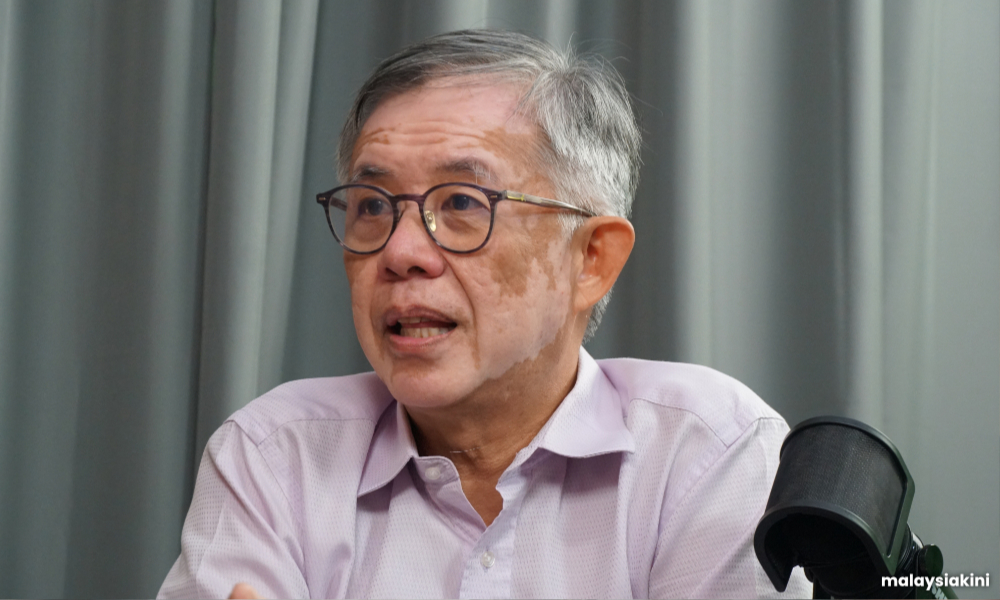
He acknowledged that while the law may not provide a clear legal mechanism to prevent Lynas - a private, foreign-listed company - from entering into a commercial agreement with the US defence establishment, Malaysia is not absolved of responsibility.
"Malaysia has a lot of leverage as the US is a country committing war crimes. Our refusal to allow Lynas to support the military complex will earn us international and domestic credit.
"Our neutrality means we are open in the rare earth market, and we will continue to prevent China's monopoly on rare earth. However, the bottom line is that our industrial production and resources should not be supplying to a mass murder industry," Chua stressed.
‘Public deserves answers’
In a statement yesterday, Selangor PAS Youth chief Sukri Omar urged Lynas and Putrajaya to provide "clear, responsible explanations" to the public about the agreement.
He said the agreement raises legitimate concerns because rare earths are strategic materials used in modern military technology, including radar systems, missile systems, satellites, defence electronics, and various components of high-technology arms industries.

"The public has the right to know whether the rare earth processed through Lynas' operations in Malaysia will form part of the supply chain for the US defence sector.
"Lynas must also clarify the source of the raw materials involved in the contract, the locations where processing takes place, and whether its processing facility in Malaysia is directly or indirectly involved in supplying the American military industry.
"As a foreign company operating in Malaysia and benefiting from this country's resources and ecosystem, Lynas bears both a moral and corporate responsibility to ensure that its operations do not give rise to sensitive geopolitical implications for its host nation," Sukri added.
He said an explanation from the government was equally necessary, stressing that the rare earth issue was not a routine trade concern but one deeply tied to strategic security, global geopolitics, and the country’s standing on the international stage.
"The government must clarify whether any policy or control mechanism exists to ensure that strategic resources processed in Malaysia are not channelled to the military industries of any major power involved in international conflict," Sukri said.
Malaysiakini has contacted Lynas for comments.
What the deal is about
On March 16, Lynas said the letter of intent establishes a framework to finalise an agreement for the supply of light and heavy rare earth oxides to support US national security and supply chain resilience objectives.
Under this arrangement, the US Department of Defense will set aside about US$96 million (RM377.62 million) to purchase rare earth oxides from Lynas.
Lynas said the agreement followed a mutual decision with the Pentagon to modify an earlier agreement, due to “significant uncertainty” on whether plans to build a heavy rare earth processing facility in Seadrif, Texas, would proceed.

The statement also stated that neodymium-praseodymium (NdPr) oxides will have a floor price of US$110 per kg under the arrangement.
For comparison, its benchmark price generally hovered between US$60 and US$80 per kg last year, though it briefly reached as high as US$128 per kg this year.
The mineral is a crucial raw ingredient for making powerful magnets needed for electric motors, actuators, and other applications.
Bloomberg Intelligence reported on March 2 that China dominates 90 percent of the world’s NdPr supply, but upcoming supplies from Australia and the US are likely to slash China’s market share to 69 percent by 2030.
Lynas mines rare earth minerals from Mt Weld, West Australia, processes them, and then ships them for refining and separation into rare earth oxides at the Lynas Advanced Materials Plant in Gebeng, Pahang.
The facility in Gebeng is not only capable of producing light rare earth elements but is also the only significant producer of heavy rare earth elements outside China, and therefore the only producer not subject to China’s export controls on critical minerals.
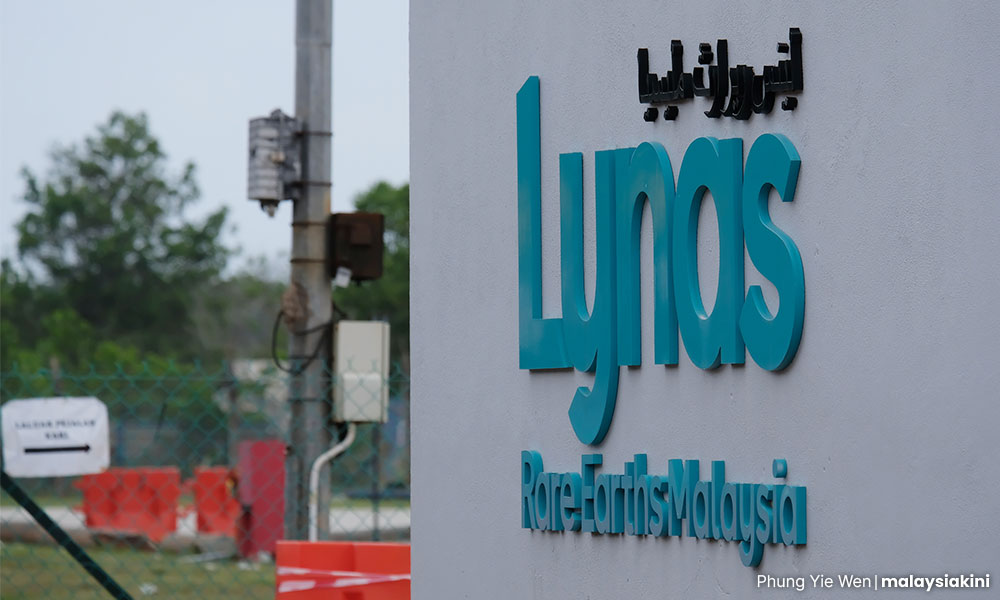
However, the facility has faced significant opposition from environmental activists, particularly on issues surrounding the disposal of radioactive residue from its water leach purification (WLP) process.
Putrajaya granted the facility a 10-year extension of its licence beginning March 3, but on the condition that it reduces the radioactivity of the WLP residue below regulatory limits by extracting the radioactive element thorium from the waste.
Lynas will also be required to complete the thorium extraction process in Australia before shipping it for further processing in Malaysia. - Malaysiakini, 19/3/2026
1. Safety of the permanent disposal facility
The facility’s design strictly adheres to international standards set by the International Atomic Energy Agency (IAEA). Under IAEA General Safety Guide No GSG-1 (Classification of Radioactive Waste), Water Leach Purification (WLP) residue is classified as Very Low Level Waste (VLLW). This category of waste can be safely managed through engineered surface landfill facilities.
These facilities are specifically designed to safely contain waste with radioactivity levels above “exempted” limits. WLP residue, which contains natural radionuclides, has a radioactivity level of approximately six Bq/g, well within the safety threshold for VLLW.
In addition, a flood risk assessment was incorporated into the environmental impact assessment (EIA). The findings confirmed that, due to appropriate ground elevation and land treatment during project development, the site is not exposed to significant flood risks.
2. Timeline for thorium extraction
Scaling thorium extraction from laboratory to industrial level is a complex engineering process that typically takes up to seven years. However, the government has mandated that Lynas complete this transition within five years.
The licence will be subject to a comprehensive review after this initial five-year period. During this time, Lynas must meet the following milestones:
By June 3, 2026: Submit the upgrade plan for the Lynas Advanced Material Plant (LAMP) in Gebeng, Pahang;
From March 3, 2028: Begin physical construction and facility modification;
By March 2, 2031: Cease all production of new WLP radioactive residue.
The Atomic Energy Department (Atom Malaysia) will strictly monitor compliance through continuous enforcement, including performance checks and environmental sampling.
The Environment Department will also oversee compliance under the Environmental Quality Act 1974. Failure to meet these conditions may result in licence revocation.
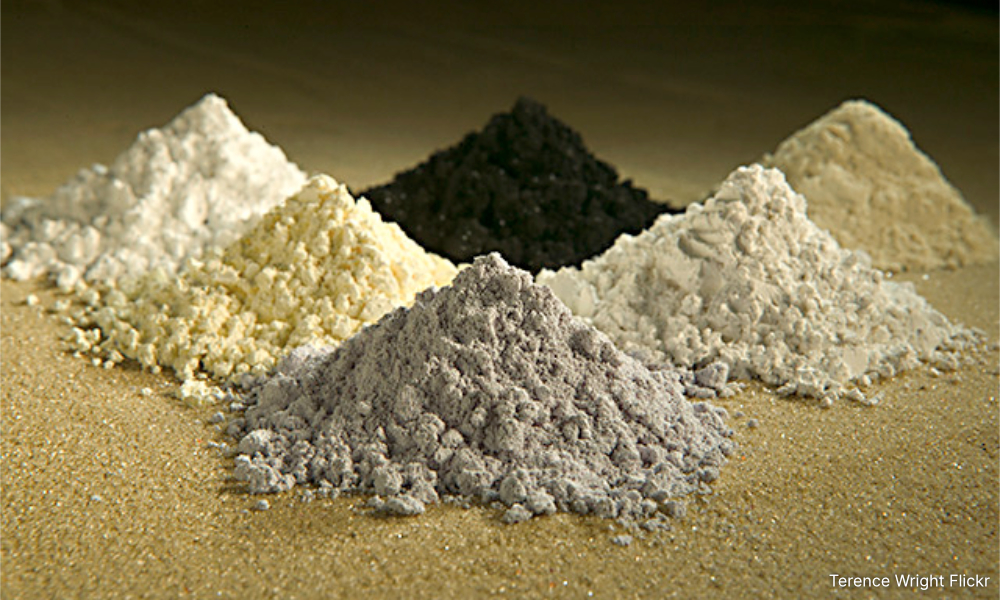
3. Management of radioactive waste
The “cracking and leaching” process has been a longstanding concern, as it generates WLP residue. Previous approaches focused on the long-term storage of this waste through permanent disposal facilities.
Under the current licence conditions, a clear end-point has been established: Lynas must stop producing WLP residue by March 2, 2031. All WLP generated between March 2026 and March 2031 must undergo thorium extraction, reducing its radioactivity from approximately six Bq/g to below one Bq/g, effectively rendering it non-radioactive.
Importantly, Lynas is no longer permitted to construct any new permanent disposal facilities. This ensures that, beyond 2031, no additional radioactive waste will accumulate in Malaysia, providing a long-term resolution to this issue.
The cracking and leaching process is also carried out in Kalgoorlie, Australia, where it produces iron phosphate residue. Mastery of this process is critical for Malaysia’s advancement in the rare earth value chain, enabling a shift from raw extraction to high-value processing and refining.
4. Real-time monitoring and transparency
To enhance transparency, the ministry and the Atomic Energy Department have made the Environmental Radiation Monitoring System (ERMS) accessible to the public. Real-time environmental radiation data can be viewed here and here.
The government remains committed to strict oversight, ensuring that radioactive waste does not continue to accumulate in Malaysia.
CHANG LIH KANG is the MP for Tanjung Malim and science, technology and innovation minister.
The views expressed here are those of the author/contributor and do not necessarily represent the views of Malaysiakini. - Malaysiakini, 24/3/2026


 Posts
Posts




No comments:
Post a Comment