SLAPP(Strategic Lawsuit Against Public Participation) lawsuits are typically used by powerful individuals, corporations, or government entities to intimidate watchdogs—such as activists, journalists, and everyday citizens—by burying them in expensive and lengthy legal proceedings.
Malaysian Anti-Corruption Commission (MACC) chief commissioner Tan Sri Azam Baki has filed a defamation lawsuit against news agency Bloomberg over the publication of an article he alleged was baseless, Sinar Harian reports...“Through this lawsuit, our client is seeking appropriate damages as well as an order for a permanent injunction.. - Star, 20/2/2026Malaysian Anti-Corruption Commission (MACC) chief commissioner Tan Sri Azam Baki has filed a defamation lawsuit against journalist Lalitha Kunaratnam over his alleged ownership of shares. - Edge, 12/1/2022
NOTE :- To date, we still do not know whether Azam Baki committed a misconduct of owning more than the amount of permitted share ownership by a PUBLIC officer - was there a disciplinary proceedings, and what did they find out was, I believe, never made Public. Of course, the Bloomberg highlighted much more than just the share holdings??? SO, did the SLAPP actions by Azam SCARE everyone into not raising any allegations or suspicions of wrongdoings.
On Thursday, Bloomberg cited three informed sources as saying that Anwar had instructed Malaysian Anti-Corruption Commission (MACC) chief, Azam Baki, not to investigate his former political secretary Farhash Wafa Salvador over the controversial purchase of shares in a company linked to the development of a new billion-ringgit immigration system.
The report also claimed that Azam had told MACC officials that the investigations into former leader Dr Mahathir Mohamad, his three sons and former finance minister Daim Zainuddin were launched on Anwar's instructions. - Allegation of Abuse of Power with regards law enforcement surfaces again against PM Anwar Ibrahim and others - how this be dealt with matters to the Rakyat?
The Attorney-General’s Chambers (AGC) has classified the police probe into a Bloomberg report last year alleging the prime minister had interfered in MACC affairs as “no further action” (NFA)... Azalina said in a written parliamentary reply yesterday in response to a query from PAS’ Besut MP Che Zulkifly Jusoh, referring to defamation under Section 499 of the Penal Code. - Malaysiakini, 5/11/2025 (Note: S.499 is defamation - so, it was Bloomberg being investigated, not PM Anwar Ibrahim > will the allegation now be investigated - or just swept under the carpet? Same done when 1MDB allegations were first highlighted > we really need an INDEPENDENT and brave Public Prosecutor who is NOT AFRAID to prosecute even a sitting PM)
An apology to Lynas Corp Ltd
Re: Lynas Corporation Ltd & Anor v Mtoday News Sdn Bhd
Kuala Lumpur High Court Civil Suit No 23 NCVC-52-04-2012
We refer to the articles previously published by us which claim that the Lynas plant may be unsafe. We apologise for these publications as such claims do not have a scientific basis. The regulatory review of the Lynas plant has been thorough and diligent.MToday’s counsel, Rueben Mathiavaranam, told reporters that as part of terms of the settlement, Lynas withdrew the suit and the defendant gave the undertaking not to publish any more anti-Lynas statements.
[ http://www.freemalaysiatoday.com/category/nation/2012/07/17/an-apology-to-lynas-corp-ltd/#ixzz21omXEMfv ]
NOW, whether it has scientific basis or NOT is never the duty of MEDIA. It just reports honestly the views of those concerned with the issue - FULL STOP. When such concerns are raised, the one who has the DUTY to look into it is the Government and the relevant law enforcement agencies to determine whether there is scientific basis or NOT. How can even MToday even conclude 'that the review had been thorough and diligent' - and to be forced to agree to NOT publish any more anti-Lynas statements > NOT not publish any FALSE anti-Lynas statements, but also any TRUE Anti-Lynas Statements...
Why do the VICTIMS of SLAPP Suits do this - well, they simply do not have the RESOURCES/MONIES to fight to the end - so, the solution is apologize and end this 'torture' so they can move on with their work...and not be stuck with such 'oppressive' law suits that can drag on for years...
That is WHY Malaysia to MUST enact Anti-SLAPP law now? But in Malaysia, even the Government and persons in government is using SLAPP suits ...
Strategic lawsuits against public participation (SLAPPs) in Malaysia have recently targeted media outlets, journalists, and environmental NGOs to suppress public interest coverage and scrutiny.1. Bestinet Sdn Bhd vs. CIJ, Media Outlets, and Politicians
- The Plaintiffs: Bestinet Sdn Bhd and its founder Aminul Islam Abdul Nor. [1]
- The Defendants: Media outlets (including Bloomberg, Malaysiakini, and The Edge), MP Rafizi Ramli, and former MACC chief Latheefa Koya, among others. [1]
- The Details: In February 2026, Bestinet filed a massive RM1+ billion libel lawsuit over a Bloomberg report titled “Everyone gets a cut, and migrant workers pay the price”. The article alleged that a syndicate extorted migrant workers using the Foreign Worker Centralised Management System (FWCMS) platform. [1, 2, 3]
- SLAPP Context: Human rights groups like the Centre for Independent Journalism (CIJ) strongly condemned the move, arguing the disproportionate damages and ex-parte injunction attempts were clearly designed to silence journalists investigating matters of public interest. Defendants like Bloomberg (Malaysia) subsequently sought to have the libel suit struck out. [1, 2]
2. Samling Plywood vs. SAVE Rivers
- The Plaintiff: Logging giant Samling Plywood. [1]
- The Defendant: Sarawak-based indigenous rights and environmental NGO SAVE Rivers. [1, 2]
- The Details: Samling filed a defamation suit demanding over RM5 million in damages over articles published by SAVE Rivers. These articles highlighted complaints from Indigenous communities alleging that the company failed to consult them and logged native customary lands without free, prior, and informed consent. [1, 2]
- SLAPP Context: The lawsuit sparked international outcry from over 160 civil society organizations and intervention from United Nations experts. After intense public and international pressure, Samling officially withdrew the lawsuit in late 2023. [1, 2, 3]
1. MCMC vs. Murray Hunter (Transnational SLAPP Case)
- The Plaintiff: The Malaysian Communications and Multimedia Commission (MCMC). [1]
- The Defendant: Australian writer and political commentator Murray Hunter. [1]
- The Details: In 2025, the MCMC took the unusual step of filing a cross-border criminal defamation complaint in Thailand, where Hunter resides. The charges stemmed from four articles on his Substack accusing the regulator of abusing its power and blocking critical websites. Hunter was arrested at a Bangkok airport, detained, and forced to post bail. [1, 2]
- SLAPP Context: Human rights groups heavily criticized the lawsuit as a dangerous "transnational SLAPP" meant to police free speech outside Malaysian borders. After international backlash, the MCMC withdrew the case in February 2026 after Hunter agreed to issue an apology and remove the articles. [1, 2]
2. State Politician & Corporate Firms vs. Parti Sosialis Malaysia (PSM) Activists
- The Plaintiffs: A Perak State Legislative Assembly Executive Council member and a major construction firm. [1]
- The Defendants: Activists from the socialist political party PSM, including network coordinator Sukumaran, chairman Dr. Jeyakumar Devaraj, and secretary-general M. Sivaranjani. [1]
- The Details: By early 2025, PSM was hit with four separate defamation lawsuits. One suit came from a Perak state politician after activist Sukumaran criticized a "zero cattle" policy that evicted elderly retired plantation workers from traditional grazing fields. Another massive suit was filed by a construction company after PSM activists assisted migrant workers in filing complaints over human trafficking and modern-day slavery quota fraud. [1]
- SLAPP Context: Local human rights coalitions classified these multiple, overlapping lawsuits as direct attempts to use financial and psychological pressure to exhaust a grassroots political group defending vulnerable, low-income communities. [1, 2]
3. Federal Territory Islamic Religious Department (JAWI) vs. Fadiah Nadwa Fikri
- The Plaintiff: The Federal Territory Islamic Religious Department (JAWI) and institutional figures.
- The Defendant: Human rights lawyer and activist Fadiah Nadwa Fikri.
- The Details: This civil suit targeted Fikri for public statements, legal defense work, and articles criticizing state-enforced religious overreach and institutional abuses of power in Malaysia.
- SLAPP Context: Legal analysts pointed out that using state-backed resources to drag an independent human rights lawyer into long, expensive litigation acts as a strong deterrent to prevent other legal professionals from taking up sensitive public interest cases.
Key Characteristics of Malaysian SLAPP Cases
Trait [1, 2, 3, 4] How it Manifests in Malaysia Drastic Financial Claims Plaintiffs often demand multi-million Ringgit damages to financially paralyze small NGOs or media outlets. Ex-Parte Injunctions Requesting immediate, temporary gag orders before the case is even fully heard, forcing media sites to delete reporting. Criminal Parallel Tactics Simultaneously filing police reports under the Communications and Multimedia Act (CMA) or Sedition Act to induce fear of jail time.
Something relevant, again results of an AI Search
The enactment of ANTI-SLAPP laws - is to encourage people, Human Rights Defenders, Community, Media to HIGHLIGHT alleged wrongdoings/crimes and other CONCERNS bravely, so that the Government and law enforcement will investigate it, and if TRUE, make sure the criminal perpetrators are charged and tried for their CRIMES or wrongdoings?
OR do the Government (and even the Political Parties) want Malaysians to KEEP QUITE even when you see a CRIME or a WRONGDOING being committed - IF you are against this kind of thinking - then enact ANTI-SLAPP laws > prevent the government and the laws being used against those that HIGHLIGHT alleged wrongdoings...
Poland: Passing of Anti-SLAPP Act a victory for media freedom
IPI and MFRR partners jointly welcome approval of new law by Polish president
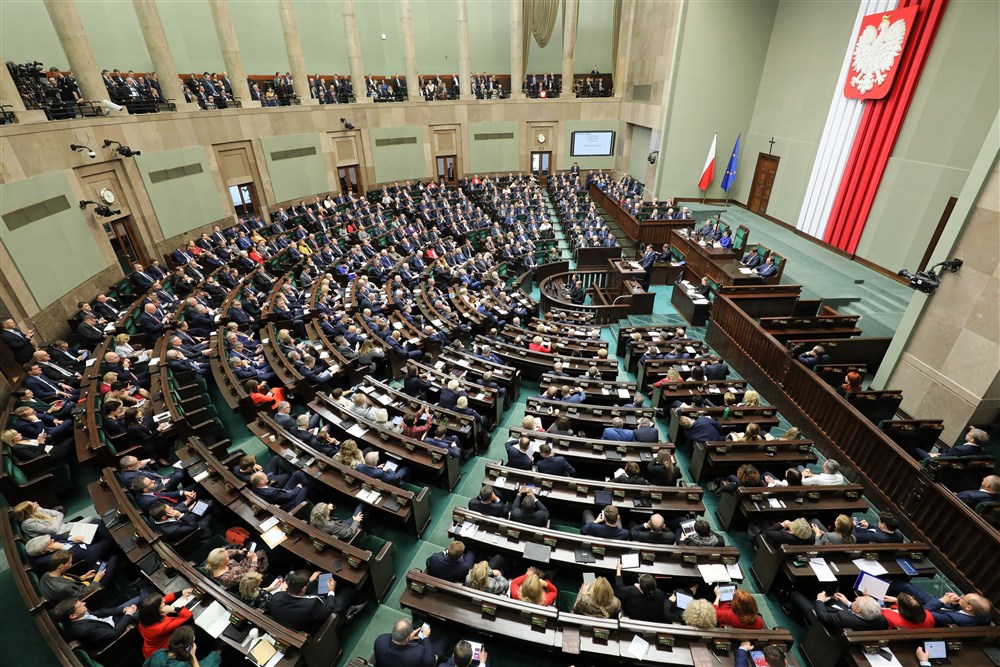
The passing of a law by the President of Poland which will establish stronger safeguards against Strategic Lawsuits Against Public Participation (SLAPPs) is a long-awaited victory for media freedom which will provide important legal protections for public interest journalism, IPI and Media Freedom Rapid Response (MFRR) said today.
Our organisations welcome the passing of the amendment, which will establish a strong legal basis in Poland to fight SLAPPs. The law covers both domestic and cross border SLAPPs ensuring implementation of both EU Anti-SLAPP Directive and Council of Europe Recommendation Against SLAPPs. Crucially, the Polish law will provide safeguards against vexatious lawsuits filed against journalists and media domestically, as well as other individuals participating in the public debate.
The bill was signed into law on 19 June by Polish President Karol Nawrocki after being passed in the Sejm on 16 May. The Act on Special Protection Measures in Civil Proceedings for Persons Participating in Public Debate, known as the ‘Anti-SLAPP Act’, will come into effect soon.
The law includes several progressive elements which media freedom groups have long advocated for, including early dismissal mechanisms for vexatious lawsuits, the introduction of security deposits for claimants, and the reversal of the burden of proof on the claimant in SLAPP cases.
Lawsuits identified as manifestly unfounded and instead aimed at suppressing or disrupting public debate can now be declared an abuse of procedural law by a court and dismissed. However, the effectiveness of this protection will depend significantly on judicial practice. The law also provides detailed definitions for identifying SLAPPs.
These changes will significantly increase the power of the courts to swiftly reject extortionate or censorious lawsuits and protect journalists and media carrying out public interest reporting from costly and time-consuming legal battles.
Regrettably, defamation remains a criminal offence in Poland and the new law does not apply to criminal proceedings. As a result, Article 212 of the Criminal Code remains open to abuse by actors seeking to silence public interest speech and reporting. However, the Ministry of Justice has committed to supplementary reform of the country’s criminal code within the current parliamentary term, which runs until November 2027. In addition, the law falls short of allowing defendants to seek compensation within the same proceedings. Those wishing to claim damages will need to initiate a separate legal process, generating additional costs.
Overall, however, Poland’s legislation now represents one of the most well-designed anti-SLAPP laws in Europe, broadly aligns with Council of Europe standards, and should act as an example for other EU Member States in transposing the Anti-SLAPP Directive, the deadline for which passed on 7 May.
SLAPPs are a form of vexatious legal harassment commonly filed by powerful companies, businesspeople or politicians which aim to silence legitimate public interest speech, including journalism. In recent years, the MFRR has documented how SLAPPs have become a powerful tool used by political actors in Poland for attempting to muzzle investigative reporting and intimidate watchdog journalism.
Poland has long been one of the EU countries to experience the highest numbers of SLAPPs, according to the Coalition Against SLAPPs in Europe (CASE). The vast majority of SLAPPs in Poland are filed domestically, underlining the importance of the bill going beyond the EU minimum standards and extending to domestic cases.
MFRR partners have long advocated for the passing of such legislation, including with the Ministry of Justice during a mission to Warsaw in 2024. Since 2020, MFRR partners have monitored and documented different forms of legal threats and SLAPPs in Poland.
With wider media reforms by the Tusk government currently delayed due to political deadlock, the Anti-SLAPP Act represents one of the most positive elements of the current government’s press freedom record to date.
The passing of the bill should provide impetus for wider media freedom reforms in Poland under the European Media Freedom Act (EMFA). MFRR partners welcome the approval of the Anti-SLAPP Act by President Nawrocki, who our organisations previously called upon to support such reforms, as well as the cross-party support for this bill in Poland.
MFRR partners hail the work of consortium member ARTICLE 19 Europe, which played a key role in the Polish anti-SLAPP working group, along with the Helsinki Foundation for Human Rights and the Citizen Network Watchdog Poland, and all those who participated in the development and passing of this law.
MFRR partners will monitor implementation of the anti-SLAPP law, continue to document SLAPPs and other forms of abusive lawfare against media actors in Poland, and push for the full decriminalisation of defamation, in line with European standards.
Signed:
International Press Institute (IPI)
ARTICLE 19 Europe
European Federation of Journalists (EFJ)
European Centre for Press and Media Freedom (ECPMF)
Free Press Unlimited (FPU)
Osservatorio Balcani Caucaso Transeuropa (OBCT)
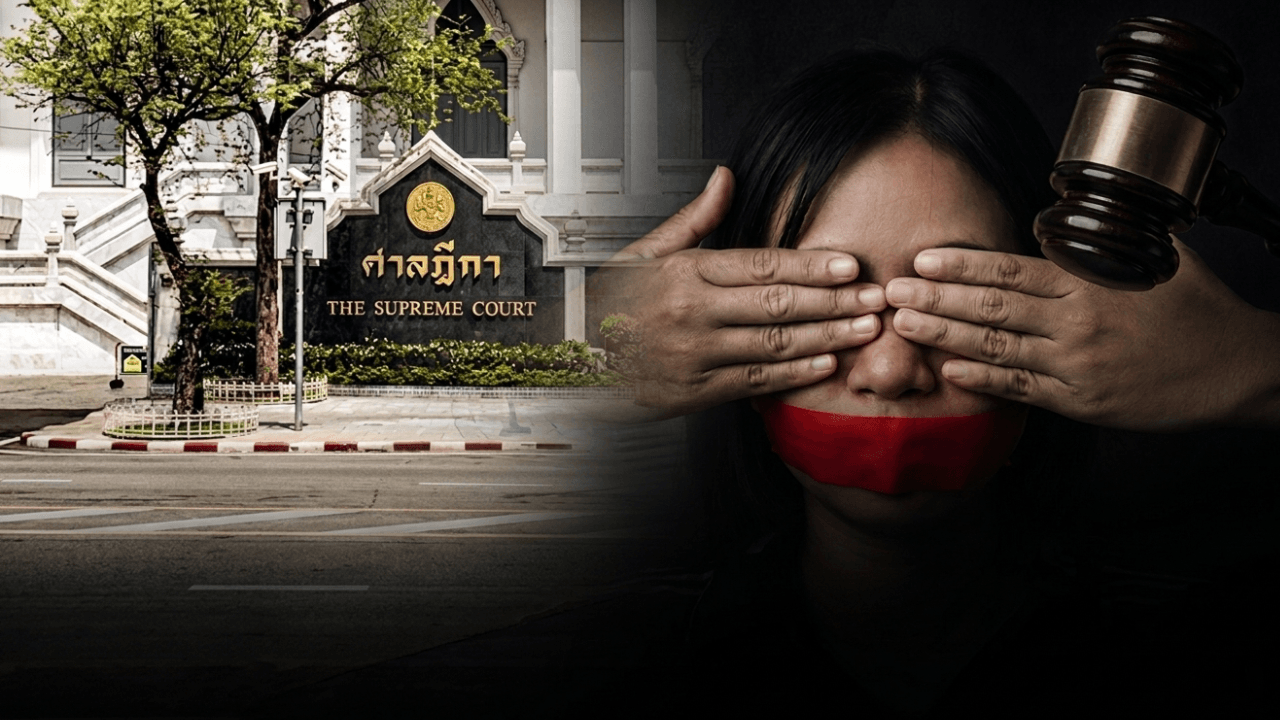
Supreme Court President Adisak Tantiwong has issued a directive providing guidelines to judges on how to handle court cases deemed to be Strategic Lawsuits Against Public Participation (SLAPP), in order to protect honest defendants acting in the public interest.
Among ASEAN countries, Thailand has the highest number of SLAPP cases filed annually and ranks among the highest in the Asia-Pacific region.
The directive marks a significant step forward by the Thai judiciary in developing criminal proceedings that are more efficient, transparent and aligned with the current social context, ensuring that the exercise of legal rights is based on honesty and cannot be used as a tool for persecution.
The essence of the directive, signed on Monday, is that judges are authorised to examine suspected SLAPP cases to determine whether they are being used as tools of persecution, to restrict freedom of expression, or to harass and intimidate defendants into silence.
According to the directive, several criminal defamation cases have been filed by politicians or businesspeople with the aim of burdening defendants who merely expressed their views honestly to protect public interests, the environment, consumer or workers’ rights, or to expose corruption or irregularities.
Under the directive, courts may dismiss cases found to be SLAPPs during the pre-trial process or order court officials or police officers handling the cases to present additional evidence to help determine whether the cases qualify as SLAPPs. - Thai PBS, 26/5/2026


 Posts
Posts




No comments:
Post a Comment