Wednesday, April 17, 2019

Extending Draconian National Security Council Act 2016?

Pakatan Harapan ....disappointment rising....The bad laws they 'promised' to repeal is still there...and sadly, some of these laws still being used...and even being extended...


Press Release

Honour the Election Promise to Abolish the National Security Council Act 2016

The Malaysian Bar is deeply concerned that on 9 April 2019 the Government tabled a bill to further extend the Government’s expansive powers under the National Security Council Act 2016 (“NSC Act”) — a law that, in its current form, already has all the hallmarks of authoritarianism. 

As detailed in the Malaysian Bar’s press statements issued on 3 December 2015 and 15 June 2016, the NSC Act is of questionable constitutional validity and violates the rule of law.  Further, the NSC Act avoids public scrutiny and proper accountability, and promotes unfettered discretion and an environment of impunity.   

It bears restating that the Pakatan Harapan coalition pledged — in “Promise 27” of its election manifesto for the 14th General Election — to abolish laws that it described as “oppressive” and “tyrannical”, with the NSC Act being listed as one such law.

The Malaysian Bar reminds the Government that it has more than enough laws giving it more than enough powers to address security concerns.  If there are gaps in laws to effectively deal with security concerns, existing laws can be amended or appropriate new laws enacted, without recourse to the repressive laws that the Government had promised to abolish.

The tabling of the bill to further strengthen the draconian NSC Act can only be understood as an abandonment of Pakatan Harapan Government’s election promise as well as its commitment and willingness to bringing forth genuine and positive legislative reform. 

The Malaysian Bar urges the Government to withdraw the bill, and to abolish the NSC Act at the very next Parliamentary sitting, in fulfilment of its election promise. 

Abdul Fareed Abdul Gafoor
President
Malaysian Bar

14 April 2019

Friday, April 05, 2019

Charge the police officers in COURT - no to 'internal disciplinary' procedures or termination for enforced dissapearance cases

Will the Pakatan Harapan-led Malaysian government now investigate the enforced disappearance of Amri Che Mat and others(about 4), and prosecute the perpetrators even if they are police Special Branch officers? 

Victims of Enforced Dissapearance by police officers - Amri and Pastor Koh? HR Commission's findings


Or will they just sweep it all under the carpet - and we see no action again when police personnel are suspected perpetrators of the crime. 'Secret' internal discipline is not what we want but a PUBLIC open trial? A transfer, a demotion or even a termination from employment simply will not do in such cases ...

We recall sadly that in death in custody cases before, that the EAIC conducted an enquiry and found the police guilty of various wrongdoing including the causing of death - we saw no prosecution of the suspected perpetrators...

See earlier related posts:-

Police officers that tortured and killed detainee - what will the AG and the Malaysian government do?

Cepat tindakan kes bunuh lelaki korea, kenapa lambat tuduh polis/pembunuh Syed Mohd Azlan?

Police officers that killed Syed Mohd Azlan, and tried to hide a crime? What happened?

EAIC’S INVESTIGATION FINDINGS ON THE DEATH OF N. DHARMENDRAN IN POLICE CUSTODY

15 Immigration Officers 'Sacked' - not right, just charge them in court? To ensure no 'cover ups'? Deterrence too? Justice demands it..


(Bilingual) Press Statement by Teoh Beng Hock Trust for Democracy on 3 April 2019 in Petaling Jaya

Re-open the Case of Amri Che Mat and Raymond Koh, Get UN Working Group on Enforced or Involuntary Disappearances Involved.

Teoh Beng Hock Trust for Democracy welcome the conclusion of the SUHAKAM’s public inquiry on the disappearances of activist Amri Che Mat and Pastor Raymond Koh. We urge the federal government to conduct a fresh investigation with the participation of United Nations Working Group on Enforced or Involuntary Disappearances.

The involvement of international experts is crucial because the police have failed to conduct independent and professional investigation on cases of human rights violations, such as the first probe into the disappearances of Amri and Koh, the custodial death of Kugan and Teoh Beng Hock. The police must recuse themselves from the new probe as police cannot investigate police themselves.

The SUHAKAM’s conclusion that the special branch of police involved in the enforced disappearances of Amri and Koh is shocking. Stern action must be taken against those implicated in the abduction of the victims should the allegation proved true in the fresh investigation.

Pakatan Harapan was elected on promises of democratic and human rights reforms, it has obligation to right all wrongs committed by the previous government, including the enforced disappearances of Amri and Koh.

Justice delayed is justice denied. The perpetrators must be brought to court as soon as possible, the government must ensure justice for the families of Amri and Koh.

It is also high time for the government to reform and trim down the special branch of police and ratify the International Convention for the Protection of All Persons from Enforced Disappearance

Ng Geok Chee
Chairperson
Teoh Beng Hock Trust for Democracy


致:新闻编辑

赵明福民主基金会文告,201943日于八打灵再也发出

重新调查安里与许景裕失踪案件,邀请联合国强迫失踪小组参与

赵明福民主基金会欢迎人权委员会将安里和许景裕牧师列为强迫失踪受害者。我们促请联邦政府马上展开新的调查,并邀请联合国强迫失踪小组参与。

我们强调,重新开案调查亟需国际专家的参与。因为警方在许多侵犯人权案件上无法展开独立和专业的调查,譬如安里和许景裕牧师的第一次调查,古甘和赵明福的扣留所死亡案件等等。警察不应该调查控诉警察犯罪的案件,他们必须回避参与新的调查。

人权委员会的结论指出,警察政治部参与拐走安里和许景裕,这个指控令人震惊。若新的调查证明指控属实,政府就必定要严厉对付强迫失踪的迫害者。

希盟在大选获胜,乃是因为它提出许多民主与人权改革的承诺。因此它有义务纠正前朝政府犯下的所有错误,包括安里和许景裕的强迫失踪事件。

迟来的正义意即正义被否决。政府必须尽速将迫害者带到法庭,确保安里和许景裕的家属获得正义。

赵明福民主基金会也吁请政府改革政治部和削减其编员,以及核准保护所有人免遭强迫失踪国际公约(International Convention for the Protection of All Persons from Enforced Disappearance)。

赵明福民主基金会主席
黄玉珠

Victims of Enforced Dissapearance by police officers - Amri and Pastor Koh? HR Commission's findings

Police officers involved in enforced dissapearance of Amri Che Mat pastor Raymond Koh Keng Joo is shocking
 
After an extensive public inquiry, the Human Rights Commission of Malaysia (Suhakam) announced today that the Special Branch, the special police intelligence team from Bukit Aman, was involved in the abduction of pastor Raymond Koh, similar to that of activist Amri Che Mat.
 
Suhakam chairman Datuk Mah Weng Kwai said evidence showed that the abductions of Koh and Amri were carried out by agents of the Special Branch in Bukit Aman...
He added: “The panel is of the view that the ‘enforced disappearance’ (of Amri and Koh) was carried out by agents of the state, mainly the Special Branch, Bukit Aman”...

Mah said the inquiry panel unanimously reached this conclusion based on evidence that showed that individuals or groups, probably operating with the involvement or support of “state agents” whom they also identified as the Special Branch, were behind the abduction....

“The direct and circumstantial evidence in Amri Che Mat’s case proves, on a balance of probabilities, that he was abducted by state agents, namely the Special Branch.”...

In the case of Koh, the panel said: “The direct and circumstantial evidence proves, on a balance of probability, that he was abducted by state agents, namely the Special Branch”.
The full reports of the Inquiry Panel is available at SUHAKAM website

Now, the question is what is the government going to do...Will, there immediately be a TASK FORCE set up to investigate and hopefully prosecute the guilty...and more importantly find these victims of enforced disappearance... 


It is vital that the whereabouts of Amri Che Mat and Pastor Raymond Koh; the two other missing persons, Pastor Joshua Helmi and his wife Ruth; and a fifth person, a former civilian contract worker for the Royal Malaysia Police based at the police training centre by the name of Saiful Bahari who has also vanished; be determined for the sake of their families and loved ones.  They, and the Malaysian public, have the right — and deserve — to know the truth about what has happened to all of them. - Abdul Fareed Abdul Gafoor, President Malaysian Bar

Suhakam: Amri, Koh victims of enforced disapperance by state agents (Updated)

03 Apr 2019 / 11:38 H.
KUALA LUMPUR: The police were behind the disappearance of pastor Raymond Koh Keng Joo and activist Amri Che Mat more than two years ago, the Human Rights Commission of Malaysia (Suhakam) said today.

Suhakam chairman Datuk Mah Weng Kwai said evidence showed that the abductions of Koh and Amri were carried out by agents of the Special Branch in Bukit Aman.

Mah, who led the year-long inquiry into the disappearance of Amri and Koh, said Amri was abducted by persons acting with authorisation and support of “agents of the state”.

However, in Koh’s case, there was no evidence to show that those who abducted him were acting on the authorisation and support of the state.

He added: “The panel is of the view that the ‘enforced disappearance’ (of Amri and Koh) was carried out by agents of the state, mainly the Special Branch, Bukit Aman”.

Mah said the inquiry panel unanimously reached this conclusion based on evidence that showed that individuals or groups, probably operating with the involvement or support of “state agents” whom they also identified as the Special Branch, were behind the abduction.

“The direct and circumstantial evidence in Amri Che Mat’s case proves, on a balance of probabilities, that he was abducted by state agents, namely the Special Branch.”

In the case of Koh, the panel said: “The direct and circumstantial evidence proves, on a balance of probability, that he was abducted by state agents, namely the Special Branch”.

Amri, a co-founder of welfare association Perlis Hope, was reported missing on Nov 24, 2016.

Koh was on his way to visit a friend on Feb 13, 2017 when he was abducted by a group of men on Jalan SS4B/10 in Petaling Jaya.

His silver-coloured car bearing the registration number ST5515D has still not been found.

Koh was the founder of Harapan Komuniti, a reading centre.

Mah said the evidence adduced also showed clearly that both the police and religious authorities were uncertain of the extent of their powers and jurisdiction in the enforcement (of the law) against the propagation of Christianity.

The panel said it is now up to the police to “properly investigate and bring to book the culprits responsible for the two men’s disappearance.

“For starters, experienced investigating officers should be appointed to reinvestigate the case,“ it added.

A total of 25 people, including senior police officers and Perlis mufti Mohd Asri Zainul Abidin, testified at the inquiry.

Final Decision of the Public Inquiry into the Disappearance of Amri Che Mat:

Final Decision of the Public Inquiry into the Disappearance of Pastor Raymond Koh:

Special Branch behind pastor Raymond Koh’s disappearance, says Suhakam

Susanna Liew and Norhayati Mohd Arifin attend the announcement of Suhakam’s public inquiry findings into the disappearances of pastor Raymond Koh and Amri Che Mat in Kuala Lumpur April 3, 2019. — Picture by Hari Anggara
KUALA LUMPUR, April 3 — After an extensive public inquiry, the Human Rights Commission of Malaysia (Suhakam) announced today that the Special Branch, the special police intelligence team from Bukit Aman, was involved in the abduction of pastor Raymond Koh, similar to that of activist Amri Che Mat.

Commissioner Datuk Mah Weng Kwai said its decision was based on the findings of its panel that had been looking into Koh’s abduction, which took place on February 13, 2017.

“The direct and circumstantial evidence in Pastor Raymond Koh’s case proves, on a balance of probabilities, that he was abducted by State agents namely, the Special Branch, Bukit Aman, Kuala Lumpur.

“The Panel further finds that there is no evidence to support the contention, as suggested by Counsel on behalf of Pastor Raymond Koh’s family and Counsel for the Bar Council, Pastor Raymond Koh was abducted by persons or groups of persons acting with the authorisation, support or acquiescence of the State,” Mah said. - Malay Mail, 3/4/2019

 The Malaysian Public Has the Right to Know the Truth about What Has Happened
Posted by Web Administrator   
Wednesday, 03 April 2019 03:35pm
ImageThe Malaysian Bar is appalled that the finding unanimously reached by members of the panel of the Human Rights Commission of Malaysia (“SUHAKAM”)’s Public Inquiry into the Disappearance of Amri Che Mat and Pastor Raymond Koh (“Inquiry Panel”), is that both Amri Che Mat and Pastor Raymond Koh were the victims of enforced disappearance at the hands of the Special Branch of the headquarters of the Royal Malaysia Police in Bukit Aman.

The decision is a damning indictment of the impunity exercised by this particular section of the Royal Malaysia Police (ie the Special Branch), which is privileged, and protected from scrutiny and accountability.  

The decision, as summarised and read out by the Chairman of the Inquiry Panel, former Court of Appeal Judge Dato’ Mah Weng Kwai, sets out a litany of fake alternative explanations in what had been an ill-conceived and nefarious attempt to shift attention away from the Special Branch and to pin the responsibility for these disappearances on other groups or individuals.  There were conclusions arrived at by the Inquiry Panel concerning dubious and contradictory testimony by various police personnel, including by former Inspector General of Police, Tan Sri Khalid Abu Bakar; possible fabrication of evidence by the police; and even a concerted effort to derail the proceedings by charging an individual and claiming that, as a result, SUHAKAM no longer had any jurisdiction to proceed with the inquiry.

More worrying still was the thread of actual testimony and circumstantial evidence that interwove this operation by the Special Branch with the abuse of power by certain individuals within the state Islamic religious authorities, to seek to highlight the threat of Shia Islam. 

The Malaysian Bar thus wholeheartedly supports the recommendations of the Inquiry Panel, principally the establishment of a Special Task Force to reclassify, reopen and reinvestigate the disappearance of Amri Che Mat and Pastor Raymond Koh, and especially to look into police involvement in their disappearances.  In our view, such a Special Task Force must be given every power to investigate this matter, without let or hindrance.

The Inquiry Panel has also recommended that the authorities:

(1) respect the freedom of religion as a fundamental human right;

(2) clearly demarcate the powers of the police and state Islamic religious authorities; 

(3) reform the standard operating procedures of the police, to make the police more cooperative, open and transparent; less suppressive and concealing of evidence; and better and more quickly deal with cases of missing persons; 

(4) accede to the International Covenant on Civil and Political Rights as well as the International Convention for the Protection of All Persons from Enforced Disappearance, and amend our domestic laws accordingly; and 

(5) establish the Independent Police Complaints and Misconduct Commission, as an independent oversight body to investigate complaints about the police force.

The Malaysian Bar strongly urges the Government to take the decision of the Inquiry Panel with the utmost seriousness, and to adopt and immediately implement the Inquiry Panel’s various recommendations without any delay or excuse.  

It is vital that the whereabouts of Amri Che Mat and Pastor Raymond Koh; the two other missing persons, Pastor Joshua Helmi and his wife Ruth; and a fifth person, a former civilian contract worker for the Royal Malaysia Police based at the police training centre by the name of Saiful Bahari who has also vanished; be determined for the sake of their families and loved ones.  They, and the Malaysian public, have the right — and deserve — to know the truth about what has happened to all of them.

Abdul Fareed Abdul Gafoor
President
Malaysian Bar

4 April 2019


Monday, April 01, 2019

'Scandalizing the Court' a contempt that should be abolished in Malaysia? Freedom of expression and duty to highlight suspected wrongdoings/mistakes more important?

The contempt of scandalizing the court should be abolished in Malaysia...as it has already been done in other jurisdictions like the United Kingdom..

This contempt seems to be also about comments, articles and publications that say judgments are wrong or maybe influenced by by external and other factors. It could be suggestions of corruption or even about 'orders' and 'directions' of others that could influence our judges - attacking the very essence of the 'independence' of the judiciary.

Contempt should maybe be limited to non-compliance with court orders, or even non-compliance with what a judge says ...like a lawyer or another continuing to talk or creating a rucus in court affecting a judicial proceedings. 

Saying judges made a mistake is really what an appeal is all about. When I first appeared in a Court of Appeal hearing, one of the Appelate judge asked me whether I was saying that the learned Judge in the High Court had made a mistake...and, of course, my response was 'Yes'. That is why there are appeals...Likewise, many may take the position that the judge and/or courts made mistakes...or did wrong. That, my friend, is an opinion and people should always be FREE to express that opinion - this is freedom of speech. But, that is what makes it very disturbing about this case whereby our Attorney General has commenced contempt proceedings against a person(a lawyer) because of 2 articles he wrote.

WHY did the judge make a mistake? If there is suggestion of corruption, should not there be an investigation by the police, MACC or relevant bodies? If there is a suggestion that the judge was 'pressured', instructed or ordered to rule as it did, then should there be an investigation too to root out these other people who are interfering with the 'independence of the judiciary'..

What kind of 'pressure' could be placed on Malaysian judges?
- It could be simply 'money'...
- It could be a promise of elevation to become a Court of Appeal or Federal Court judge
- It could be a threat to transfer a judge to some town far from the capital - maybe to Kota Bharu or somewhere in Sarawak or Sabah?
- It could be a promise to extend his period of service ...our law allows the extension of tenure beyond retirement for Federal Court judges...another 6 months, or even for a few more years as happened to our immediate past Chief Justice..
- It could be a promise to get him/her appointed as some Commissioner or even Director after he/she retires..
- It could be also pressure exerted that somethings may be done to a member of the family(or not) - maybe a son being charged in court, a daughter investigated, etc..

To protect the INDEPENDENCE of the Judiciary, certain safeguards have been put in place ...their HIGH pay, Security of Tenure(judges cannot be retrenched or terminated until retirement), ...but the question is whether this is enough..maybe, it need be strengthened..


Today, in Malaysia, this seems to be the contempt of court, in the action initiated by the Attorney General against a lawyer, for things allegedly said in 2 article, entitled..

The alleged contempt, allegedly arises in 2 articles written by Arun Kasi, which were entitled:- 

“How a dissenting judgment sparked a major judicial crisis” dated Feb 16, 2019, and 

Tommy Thomas must look into arbitration centre that sparked judicial crisis” dated Feb 22, 2019.

* I still have not the opportunity of reading the 2 articles, and am not aware of the contempt of court details and basis as contained in the relevant applications - so points made are generally on the issue of scandalizing the court/judiciary contempt.
 
See earlier post:- 

Maybe not proper for Tommy Thomas to act for AG in this contempt proceedings Arun Kasi?


The question is:- 

* Can we write an article criticizing the judgment of the courts? Highlighting the mistakes in judgment? Or maybe even suggesting that something is amiss - possible corruption, threat, ...or even judgments as ordered by others, be it the Prime Minister, government, some other judges, or even a 'friend' of the judge..

* Can we highlight a possible wrongdoing asking(or suggesting) that the MACC or the police to investigate?

* Are judges and judgment beyond reproach or even suggestion of 'wrongdoing'?  

* What do we do if we suspect possible corruption or wrongdoing? Keep quite?

In Malaysia, we have history about highlighting concerns about the Judiciary... many of which could have resulted in 'scandalizing of the judiciary' contempt proceedings..
- 1988 Judicial Crisis
- Judges conduct and decision about certain cases - like the Anwar Ibrahim's case - much criticism about then Judge Augustine Paul
- Criticim also arise when a former Chief Justice immediately after retirement joined a law firm...(Well, here the Bar suggested a 'cooling off' period of 3 years after a judge resigns..
- The most recent episode is about the extension by contract for several years after RETIREMENT the immediate past Chief Justice and the President of the Court of Appeal - who also CONTINUED as the Heads of Judiciary...
- Judges holidaying with lawyers also was an issue..

In fact, most of these issues could have resulted in Contempt of Court proceeding for 'scandalizing the judges/judiciary'...against many different people in Malaysia - but it did not?

Hence, the question in my mind is WHY have the AG initiated contempt of court proceedings now...for possible 'scandalizing the judiciary'...Are judges, their judgments now beyond any criticism or suggestion of possible wrongdoing? It really is about cases, that really never got the 'spotlight' ...and many, even lawyers, were not really aware of these cases? QUESTIONS, QUESTIONS,...

Now, in many jurisdictions, like the UK, this form of contempt has been even abolished...
On 10 December 2012 the House of Lords debated, and accepted, the abolition of scandalising the court as an amendment to the Bill. All the Lords who spoke were in favour of abolition. 
People will comment, criticize...judges, judgments, etc - but is this not freedom of speech and opinion. Would not such comments be the reason why changes will happen...now, in Malaysia we are already talking about an INDEPENDENT selection of judges committee - who hopefully will independently recommend on elevations, or extensions..

SECURITY OF TENURE is a topic of discussion today, after the former Chief Justice and President of Court of Appeal issue came up. 
Should not ALL judges retirement age be fixed? 
Should the powers to extend the tenure for a further 6 months for judges be removed - as it can be perceived as some form of 'thank you' to some judges...when some judges get their term extended but not all. 
Should the powers of appointing some retiring/retired judges as 'additional judges' be removed when most retire on their retirement age - but a few can end up serving for an additional 2-3 years?

Extended tenure could be perceived as a form of corruption - remember judges must be independent and seen to be independent from even the Prime Minister, the Government, the Chief Justice or other leaders of the Judiciary, and even the King - Yes, now we have special courts that will decide on cases involving the royalty...and do not judges preside over these Special Courts as well...

We want not only independent judges but BERSIH judges - so allegations of corruption, orders/directive from others are serious issues...we ought to encourage people to highlight any such wrongs ...that will lead to investigation and action. We certainly do not want to turn a 'blind eye' to possible wrongdoings - Faith in an independent judiciary is essential for any country, including Malaysia..

Whether BN or PH is in power should never matter - judges always act independently and justly...
Judges have to be hardy enough to shrug off criticism, even if it is intemperate or abusive, which has happened; even if it is unfair and ill-informed, which has certainly happened; and even if it is downright deliberately misleading, the same applies...I speak from some knowledge. I have been scandalised on several occasions in the course of criminal trials at which I was the presiding judge without a jury. It was intemperate, certainly ill-informed and extremely offensive. I was deeply offended and hurt, but I certainly did not consider attempting to ask anyone to invoke the special procedure of scandalising the court. If anyone had suggested it, I would have firmly discouraged him at that time, which is a good many years ago now. -Lord Carswell


Amendment 113A
Moved by Lord Pannick

113A: After Clause 23, insert the following new Clause—

“Abolition of scandalising the judiciary as form of contempt of court

(1) Scandalising the judiciary (also referred to as scandalising the court or scandalising judges) is abolished as a form of contempt of court under the common law of England and Wales.

(2) That abolition does not prevent proceedings for contempt of court being brought against a person for conduct that immediately before that abolition would have constituted both scandalising the judiciary and some other form of contempt of court.”
 
Lord Pannick: My Lords, this amendment seeks to abolish the crime of scandalising the judiciary in England and Wales. I am delighted that the Minister has added his name to this amendment. The amendment is also signed by the noble Lord, Lord Lester of Herne Hill, who has played a leading role in arguing for reform of this area of the law. The amendment is also in the names of the noble and learned Lord, Lord Carswell—a former Lord Chief Justice of Northern Ireland—and the noble Lord, Lord Bew.

I can explain the reasons for this amendment very briefly. It is no longer necessary to maintain as part of our law of contempt of court a criminal offence of insulting judges by statements or publications out of court. The judiciary has no need for such protection. As the noble and learned Lord, Lord Carswell, explained in Committee, the wise judge—and he, if I may say so, was a very wise judge—normally ignores insults out of court. The noble and learned Lord, Lord Brown of Eaton-under-Heywood, made a similar point in a case he decided, as he may recollect. Judges, of course, are as entitled as anyone else to bring proceedings for libel, and some have done so.


The law of scandalising the judiciary could have been left in the moribund state in which it has rested for many years. However, the Attorney-General for Northern Ireland unwisely chose earlier this year to seek to breathe life into it by bringing a prosecution, later dropped, against Peter Hain MP for some critical comments he had made in his autobiography concerning a Northern Ireland judge. That prosecution had two main consequences. First, it substantially increased the sales of Mr Hain’s book and, secondly, it led to this amendment.


When we debated this subject in Committee on 2 July, the Minister gave a cautious welcome to the amendment but said, very properly, that the Government wished to consult on the matter. As a result of the debate in this House, the Law Commission expedited the publication of a consultation paper on 10 August in which it proposed that the offence of scandalising the judiciary should indeed be abolished.


I emphasise that the amendment will not affect other aspects of the law of contempt of court and in particular the powers of the judge to deal with any disruptions during court proceedings. I also emphasise that the amendment is not designed to encourage criticism of the judiciary. Much of the criticism to

10 Dec 2012 : Column 872

which judges are subjected is ill informed and unsubstantiated. However, even where criticism is unjustified, it should not be a criminal offence.

The amendment will not affect the law in Northern Ireland or Scotland, in the latter of which the offence is known as “murmuring judges”. I understand that in Northern Ireland more consultation is required. It is ironic that the impetus for this amendment came from the Peter Hain case in Northern Ireland, and now the anachronistic law that led to that case is to be abolished in England and Wales but not in Northern Ireland. I hope that the Minister can give us an indication of when consultations with Northern Ireland will be completed and a decision reached.

Meanwhile, I am delighted by the historic decision which I hope that this House will take tonight to approve an amendment abolishing the offence of scandalising the judiciary in England and Wales. As Justice Albie Sachs said on this subject in a judgment in the Constitutional Court of South Africa in 2001, respect for the courts will be all the stronger,

“to the degree that it is earned, rather than to the extent that it is commanded”.

I beg to move.

Lord Lester of Herne Hill: My Lords—
 
The Minister of State, Ministry of Justice (Lord McNally): My Lords, I wonder if my noble friend will give way. I want to intervene now because what I am going to say will help the shape of the debate. I realise that my noble friend and a number of noble and learned Lords may wish to contribute. I in no way want to cut short or pre-empt that debate, but I hope that my comments will establish the context for them to comment on what the Government intend to do.

As the noble Lord, Lord Pannick, told us, we considered a similar amendment to this in Committee in July. I said that the Government were sympathetic to the concerns raised about the offence of scandalising the judiciary but we wished to consider the issue further and to consult others. In particular, before moving to reform or abolish this offence, we wished to consider whether such a step could result in a gap in the law or have an unwanted side-effect.

As the noble Lord, Lord Pannick, told us, in this we had the benefit of the work of the Law Commission, which was and is currently reviewing the law on contempt of court. As the noble Lord said, it kindly brought forward the element of its review considering scandalising the court and published a paper for public consultation in August. The commission considered three options in its consultation paper—to retain, abolish or replace the offence—and it has concluded that the offence should be abolished without replacement. Its analysis was in-depth, examining the human rights aspects and considering the arguments for and against the various options.

The consultation closed in October, and the commission published a summary of responses last month and a summary of its conclusions yesterday. I was pleased to see that several noble Lords responded with their views, and that members of the judiciary and other legal professions were also well represented. Of 46 responses, some from organisations, 32 were in

10 Dec 2012 : Column 873

favour of abolition. The remainder expressed a variety of views, most favouring a replacement offence, but I note that only two favoured retaining the offence in England and Wales, at least for now.

We have also noted other views, such as those expressed by noble Lords in Committee, and have concluded that it is right that this offence should be abolished. We therefore support the amendment. However, we also noted the Law Commission’s observation in its paper that:
“It may be necessary to clarify that the abolition of this offence does not affect liability for behaviour in court or conduct that may prejudice or impede particular proceedings”.

We support that view that abuse of a judge in the face of the court, or behaviour that otherwise interferes with particular proceedings, should remain a contempt. The new clause includes a provision that will ensure such behaviour will remain subject to proceedings for contempt of court.

In contrast to the amendment we debated in Committee, which extended to Northern Ireland, this amendment applies to England and Wales only, as the noble Lord, Lord Pannick, explained. In July, I said that we would be consulting the devolved Administrations; noble Lords must remember the criminal law is a devolved matter in both Northern Ireland and Scotland. Scandalising the judiciary is also a common law offence in Northern Ireland. As I have said, we consulted with the Minister of Justice, David Ford, who has confirmed that he does not wish the Westminster Parliament to legislate on behalf of the Northern Ireland Assembly on this offence. Similarly, the Scottish Government have also confirmed that they do not wish us to legislate on their similar common law offence of murmuring judges. Given that this is a devolved matter in both jurisdictions and under the terms of the Sewel Convention, we wish to respect the wishes of the Scottish Government and Northern Ireland Assembly in this matter.

I am grateful to my noble friend Lord Lester and the noble Lord, Lord Pannick, for bringing this matter before the House. The Government are happy to support this amendment, and through it the abolition in England and Wales of the offence of scandalising the judiciary. I hope that my intervention at the start of the debate does not prevent other noble Lords and noble and learned Lords from making observations on where we are and where we are going.
4 pm
Lord Lester of Herne Hill: My Lords, I declare a former professional interest in that I acted for the Northern Ireland Human Rights Commission in the aborted contempt proceedings in relation to Peter Hain and his publisher. I am extremely grateful to the Attorney General for Northern Ireland for his entirely misguided decision to move for committal because, but for that, I would not be standing here in support of the amendment. We owe everything to the Attorney General because it was that which caused me to contact the Law Commission and the Government, and to discuss the matter with my friend, the noble Lord, Lord Pannick, in the first place.

10 Dec 2012 : Column 874

It is important that the Government have decided to do what we have just heard from the Minister, and that is most welcome. However, I pay tribute to the previous Government, and I see the noble Lord, Lord Bach, in his place when I say this. He will remember that the other antique and archaic speech crimes of sedition, seditious libel, defamatory libel, obscene libel and blasphemous libel were all abolished by the previous Government and Parliament for similar reasons connected with free speech.

So far as blasphemy was concerned, for the reasons given by the Minister, it was decided that, although we could abolish that offence in Britain, we could not do so in Northern Ireland. We left it to Northern Ireland to do so itself, and we thought that it would be easy to do there because Northern Ireland already had a law on incitement to religious hatred that was rather stricter than what we have in this part of the kingdom. However, nothing has happened on that issue in Northern Ireland because there is institutional paralysis about doing anything of the kind. I know that this matter has concerned the Northern Ireland Human Rights Commission, and exactly the same problem arises now. Even though the amendment springs from a problem that arose in Northern Ireland, I am doubtful as to whether the Northern Ireland Government will agree to bring their common law into line with what we are doing in England and Wales. However, given that two other supporters of the amendment know far more about Northern Ireland than I would ever know, I shall not say more about that matter.

I should like to make one other point. Although abolishing this crime in this country will make very little difference because the law is entirely obsolete, it will make a difference in the rest of the common law world. All the textbooks, including that of the noble Lord, Lord Borrie, say the same thing, which is that, although this is an outmoded and archaic offence, there remain many parts of the common law world where it is enforced. The most notorious example occurred in Singapore last year, where Mr Alan Shadrake, who wrote a book criticising the Singapore judiciary’s attitude towards the death penalty, was committed for contempt, sentenced to prison, fined and told to pay legal costs. This gentleman, who is about my age and a distinguished senior writer, was condemned in that way, with the Singapore Court of Appeal applying its view on our case law and this offence.

By abolishing the offence today we do not really change much in this part of the world because, apart from what happened in Northern Ireland, it is simply never invoked anymore. However, it will send an important message across the common law world. That is another reason why I am so delighted that the Government have decided to take this course.
 
Lord Carswell: My Lords, I support this amendment. I spoke briefly in Committee and I intend to be brief again today, particularly in view of the way in which the House has so far received the amendment and what the Minister has said.

Since that debate in Committee, the Law Commission has published this admirable consultation paper, which contains a full and helpful discussion of the issues, the principles and the possible solutions. My view, which

10 Dec 2012 : Column 875
was very direct and brief in Committee, remains unchanged. The special sanction for judges remains unnecessary. My reasons remain the same. Judges have to be hardy enough to shrug off criticism, even if it is intemperate or abusive, which has happened; even if it is unfair and ill-informed, which has certainly happened; and even if it is downright deliberately misleading, the same applies.

I speak from some knowledge. I have been scandalised on several occasions in the course of criminal trials at which I was the presiding judge without a jury. It was intemperate, certainly ill-informed and extremely offensive. I was deeply offended and hurt, but I certainly did not consider attempting to ask anyone to invoke the special procedure of scandalising the court. If anyone had suggested it, I would have firmly discouraged him at that time, which is a good many years ago now.

After I read the Law Commission consultation paper, I considered quite seriously whether there was room for the possibility of a new and more specific offence, penalising possibly deliberate and malicious targeting of a judge by making untrue and scandalous allegations into something of a campaign. I am persuaded, however, that it is better not to introduce any such offence into the law but simply to leave it at abolishing the offence of scandalising.

My reasons are three. First, special protection of judges immediately invites criticism from those who are all too ready to give vent to it. Secondly, if a judge had to give evidence in such proceedings, it would create a further and better opportunity for intrusive cross-examination and create a field day for publicity for critics of the judiciary. Thirdly, as I have said before, judges have to put up with these things; they have to be robust, firm and, on occasions, hard-skinned enough.

The Law Commission, in my view, was right in its provisional conclusions and I hope that when the report has been considered, the responses will confirm that. I would certainly support the amendment that the offence should simply be abolished.

Finally, as noble Lords have said, this of course does not apply in Northern Ireland. The authorities there will form their own view and take their own course. I cannot and do not in any way speak for them, nor have they consulted me about such provisions. I have to say, and I hope that they will take this into account, that I cannot see any reason why judges in Northern Ireland should have any different protection from judges in England and Wales against scandalising. I think the same considerations apply, and having been a judge there for 20 years, I would certainly not wish to see any differentiation.
 
Lord Beecham: My Lords, I echo the remarks made by the Minister and by other noble Lords. We are entirely supportive of the amendment, and glad that the Government have agreed to take matters forward in the way that the noble Lord indicated.

Lord McNally: My Lords, I will clarify a point raised by the noble Lord, Lord Pannick. The Justice Committee in Northern Ireland recently agreed to proceed with an amendment to its Criminal Justice Bill that would see this offence repealed. I am sure that

10 Dec 2012 : Column 876
the words uttered by the noble and learned Lord, Lord Carswell, about his own experience will carry great weight. However, this is a devolved matter for Northern Ireland.
 
Lord Pannick: I am grateful to all noble Lords who spoke.


Friday, March 29, 2019

Maybe not proper for Tommy Thomas to act for AG in this contempt proceedings Arun Kasi?

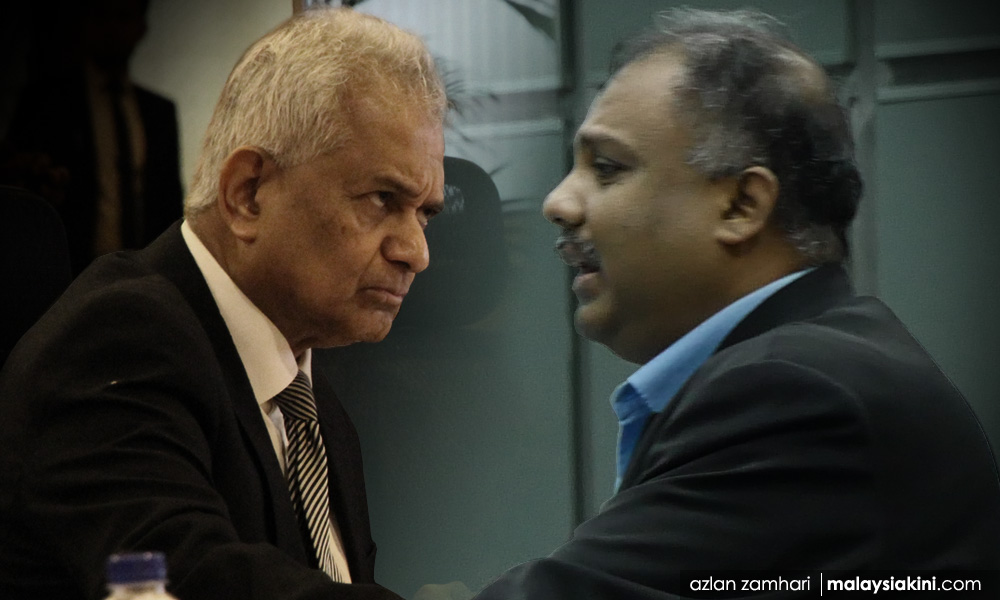
Tommy Thomas, Attorney General/Public Prosecutor of Malaysia, should really not be acting in this contempt proceedings in my opinion. Even the title of one of the two articles mentions 'Tommy Thomas'

WHY? 

The alleged contempt, allegedly arises in 2 articles written by Arun Kasi, which were entitled:- 

“How a dissenting judgment sparked a major judicial crisis” dated Feb 16, 2019, and 

Tommy Thomas must look into arbitration centre that sparked judicial crisis” dated Feb 22, 2019.

 Arun, who is an advocate and solicitor, had authored two articles which were published on the Aliran website under the heading “How a dissenting judgment sparked a major judicial crisis” dated Feb 16, 2019, and “Tommy Thomas must look into arbitration centre that sparked judicial crisis” dated Feb 22, 2019.

At the ex-parte stage, Senior Federal Counsel Datuk Amarjeet Singh seem to have  represented the Attorney General.

But, at the contempt proceedings, it seems that AG Tommy Thomas  also acted for AG. This, I do not think is proper or right - in my opinion, some other Senior Federal Counsel should have acted. 

I have yet to read the 2 articles, but based on the media reports, it seems to be about 

The articles in question had criticised the apex court’s Nov 7, 2018 decision to expunge Court of Appeal judge Hamid Sultan Abu Backer’s dissenting judgement in the case of Leap Modulation Sdn Bhd vs PCP Construction Sdn Bhd.

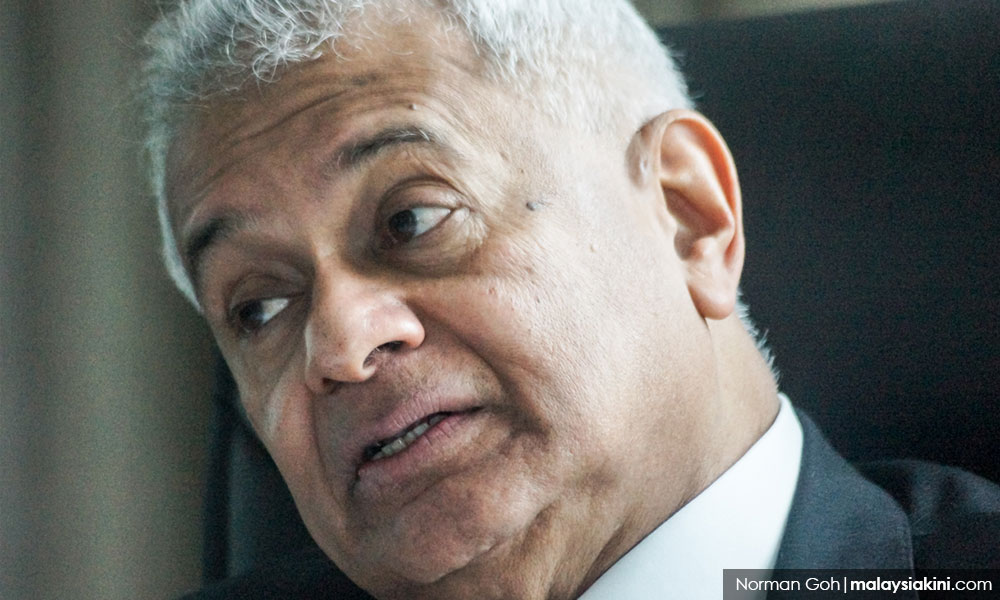
In both Arun’s original statement and the published articles, Thomas (photo) argued that he had “crossed the line” and committed contempt of court when he suggested that the Federal Court’s decision to expunge Hamid’s dissenting judgement warranted an investigation by the MACC.

I may later discuss more about this issue - but I am concerned that this seems to be a question of freedom of expression and opinion. I believe that anyone should have the right to express their opinions about even court judgments. To say, that judgments of courts are unquestionable is just not right. Well, many have said in the past that the judgments made in Anwar Ibrahim's case was wrong - would they also be subjected to contempt proceedings by the Attorney General.

Judges are human beings, and as as such they are fallible - they can make mistakes, and everyone should have the right to highlight what they see as wrong, don't they? 

Is the new government and/or the new Attorney General now saying that judges and judgments should just be accepted and not questioned or criticized? 

Judges themselves can initiate contempt proceedings, but here the Judges did not but the Attorney General did.  Or did the judiciary ask the AG to initiate contempt proceedings? A lot of questions and we really must look at it in more detail...

Judges make their judgments, and in the Court of Appeal, where usually it is a coram of 3 judges, all of them are expected to give their own judgment. Should the Federal Court later have the power to 'edit out'(expunge) part of the judgment of any of the Court of Appeal judges? Remember, a dissenting judgment also have value as it can be relied on in other cases...

A lot of questions ...something we need to study more and understand better... 

In any case, I am of the opinion, that Tommy Thomas should not have acted on behalf of the Attorney General in this particular case..Maybe, it should have been the Solicitor General or maybe some other Senior Federal Counsel..

Drama and sparks at lawyer's contempt proceedings

Annabelle Lee  |  Published:  |  Modified:
   
Testifying in contempt proceedings against him before the Federal Court in Putrajaya today, lawyer Arun Kasi maintained that he had not scandalised the courts in two articles of his published on an NGO’s website.

Though being significantly edited versions of his original statements, he said that in substance, the pieces showed that he had written them in good faith and in public interest with no intent to attack the judiciary.

The articles in question had criticised the apex court’s Nov 7, 2018 decision to expunge Court of Appeal judge Hamid Sultan Abu Backer’s dissenting judgement in the case of Leap Modulation Sdn Bhd vs PCP Construction Sdn Bhd.

In response, Attorney-General Tommy Thomas, who initiated the contempt proceedings against Arun, contended that it would be an insult to any reader of the articles to have understood it to be anything other than an attack on the judiciary.


Arun booted from witness stand

Today’s court proceedings was heard by a five-member bench, which was led by Justice Ramly Ali and comprised judges Rohana Yusof, Azahar Mohamed, Tengku Maimun Tuan Mat and P Nallini.
Proceedings were interrupted by a total of four breaks following several charged exchanges.

The hearing began with Arun’s (photo) lead counsel V Bastian asking for an adjournment on grounds that his client needed to tend to his daughter who had been admitted to hospital.
The judges dismissed the application after a short break but were again asked to call for another recess by Bastian, explaining that he needed more time to prepare Arun for his oral evidence submission.

When the court resumed, Arun was cautioned by the judges to speak only on relevant points not already mentioned in his affidavit.

After Arun repeatedly mentioned that his articles were in the public interest and meant to seek reform of the Asian International Arbitration Centre (AIAC), the judges again cautioned him to stay on course.

Justice Ramly eventually instructed Arun to “step down now” from the witness stand and called for a lunch break.

Defense counsel told to 'cool down'

When the hearing resumed, Thomas submitted that Arun had never asked the NGO to correct his articles, despite claiming they were different from his original statements.
In both Arun’s original statement and the published articles, Thomas (photo) argued that he had “crossed the line” and committed contempt of court when he suggested that the Federal Court’s decision to expunge Hamid’s dissenting judgement warranted an investigation by the MACC.

The proceedings came to yet another halt after Bastian responded to this by saying the Federal Court had indeed erred in their Nov 7 decision. This caused several of the judges to ask Bastian if he was aware of the seriousness of his allegation.

“I call for a stand down and will give you 10 minutes to cool down,” Justice Ramly told Bastian.

When the session reconvened, Bastian submitted that Arun, in his articles, was not calling for the MACC to probe the three Federal Court judges who made the Nov 7 decision but had called attention to the intervention by the AIAC into the case.

Even if Arun’s comments were considered scandalous, Bastian argued that the allegations, which arose from Hamid’s affidavit for another case, had already been reported by other news outlets before his client’s articles were published.

“So it is okay to undermine public confidence in the judiciary because public confidence had already been undermined? Is that Arun Kasi’s position?” asked Justice Nallini.

'Don't get personal,' AG told

Thomas then stressed that Arun’s criticism had been directed at the courts and no other body.
“It is insulting the intelligence of the readers of the article and the press release (to believe) that the attack was on the MACC (or the AIAC). It was an attack on the judiciary,” the attorney-general, who appeared visibly upset, said when pointing out to the bench where Arun had criticised the courts.

This prompted lawyer Mohamed Haniff Khatri Abdulla, a member of Arun’s legal team, to urge the attorney-general to not “get personal” with his submissions.

Thomas responded by saying officers of the courts ought to administer the truth when carrying out their jobs.

He also argued that even if other news articles had commented on allegations contained in Hamid’s “notorious” affidavit, Arun could not be allowed to scandalise the courts in his articles on the NGO’s website.

After hearing submissions from both sides, the five-member bench set April 23 to deliver their decision.- Malaysiakini, 28/3/2019


Contempt proceedings against lawyer Arun Kasi over Hamid affidavit articles in Aliran (updated)
Nation


Wednesday, 27 Feb 2019 1:22 PM MYT


PUTRAJAYA (Bernama): The Federal Court has granted an ex-parte application for leave by Attorney General Tommy Thomas (pic) to initiate contempt proceedings against a lawyer who had allegedly criticised the proceedings and decision of a court case.

Justice Ramly Ali, who chaired a three-man bench, allowed Thomas to go ahead with the proceedings against Arunachalam Kasi who had, in two articles published on the Aliran online portal, made the alleged criticism in reference to an affidavit of Court of Appeal Judge Dr Abdul Hamid Abu Backer on alleged judicial misconduct.

The court fixed March 13 for a substantive inter-partes hearing for both parties to submit.

"The case before us is an ex-parte application. This is on scandalising judges of the Federal Court. The act complained of relates to two articles by the respondent (Arunachalam Kasi, also known as Arun Kasi) published on Feb 16 and Feb 22, 2019, on the Aliran website.

"Having considered the submissions and all the court papers, we are satisfied that all procedures required for leave have been fulfilled.

"We, therefore, grant the order sought by the applicant," said Justice Ramly, who heard the matter with Justices Rohana Yusuf and Tengku Maimun Tuan Mat.

Earlier, the court heard submissions by Senior Federal Counsel Datuk Amarjeet Singh who represented the Attorney General.

Amarjeet submitted that Arun, who is an advocate and solicitor, had authored two articles which were published on the Aliran website under the heading “How a dissenting judgment sparked a major judicial crisis” dated Feb 16, 2019, and “Tommy Thomas must look into arbitration centre that sparked judicial crisis” dated Feb 22, 2019.

He said that in both articles, he had criticised the conduct of the proceedings by the Federal Court and the decision that was delivered on Nov 11, 2018, in the case of PCP Construction vs Leap Modulation (the Leap Modulation case).

“The statements in the articles impute impropriety in carrying out judicial functions and lack of integrity by the judges who had decided the Leap Modulation case.

“The conduct and the irregularities committed in the case were said to warrant an investigation by the Malaysian Anti-Corruption Commission (MACC).

“The respondent had, on Feb 9, 2019, made such a complaint against the irregularities committed in the case,” he said.

Amarjeet said the contempt committed in the case was “scandalising contempt” for interfering with the administration of justice.

He said such interference would occur when there are acts and statements undermining public confidence in the administration of justice.

“The authority of the law rests on public confidence, and it is important to the stability of society that the confidence of the public should not be shaken by baseless attacks on the integrity or impartiality of the judges,” he said.

He further submitted that the Attorney General had identified the offensive statements in the articles, which was possible when one read each article in its entirety.

He said Arun, in his second article, had questioned why the Federal Court had expunged Justice Abdul Hamid's remarks about the Asian International Arbitration Centre (AIAC) in the Leap Modulation judgment.

Amarjeet said the statement in the second article had scandalised the judges, which, among others, meant that expunging parts of the dissenting judgment without an appeal was unprecedented and making the order of expungement when the right parties were not heard in opposition.

He also said that the two articles had insinuated that the Federal Court judges who heard and decided the Leap Modulation case were guilty of misconduct and impropriety in carrying out their judicial functions, involved in corrupt activity and had compromised their integrity, which warranted an investigation by the MACC.

He said Arun had made untrue statements and this was borne out by the Court of Transcript of the Proceedings dated Nov 11, 2018, in the Leap Modulation case.

“The statements set out in the articles, when read as a whole or individually, gave rise to the perception and conveyed imputation which are not only demeaning, insulting and offensive to the dignity, integrity and impartiality of the Federal Court but which will have or might have a tendency to undermine public confidence in the Judiciary,” he said. – Bernama