Media Statement – 6/4/2026
Failure Of Public Prosecutor to Apply to Court for Compensation for Victims of Crime to Be Paid by the Convicted, Including Those Who Cause Death, is Unforgivable
There is an ongoing debate whether the perpetrator in recent fatal drunk driving case should be charged for murder or some other crimes. Whatever crime, the sentence only if convicted, does not do justice to victims unless victims are also compensated for their loss/suffering by the convicted criminal.
Compensation for Victims of Crime by the Convicted Criminal
Victims of crime, including those who were ‘killed’ in drunk driving fatal accidents, deserve to be compensated by the convicted criminal, and this RIGHT is already there in Malaysian law, in section 426 of the Criminal Procedure Code but victims, many a time, are do not compensations because of failure of Public Prosecutor Dusuki and Public Prosecutors before him who failed to apply to court for compensation for victims.
Section 426A states ‘…. the Court before which an accused is convicted of an offence shall, upon the application of the Public Prosecutor, make an order against the convicted accused for the payment by him, …. of a sum to be fixed by the Court as compensation to a person who is the victim of the offence committed by the convicted accused… ‘
If and when an application is made by the Public Prosecutor, ‘the Court may hold an inquiry as it thinks fit’, and amongst the things that the court will consider include ‘(a) the nature of the offence; (b) the injury sustained by the victim; (c) the expenses incurred by the victim;(d) the damage to, or loss of, property suffered by the victim;…’
Section 432 provides that when the Court orders the convicted to pay the victim ‘…compensation, the Court making the order may in its discretion do all or any of the following things, namely- (a) allow time for the payment of that sum; (b) direct payment of that sum to be made by instalments; (c) issue a warrant for the levy of that sum by distress and sale of any property belonging to that person;… (e) direct that that person be searched and that any money found on him when so searched or which in the event of his being committed to prison, may be found on him when taken to prison shall be applied towards the payment of that sum, the surplus, if any, being returned to him:…’
Even when the Court orders the victim to be compensated, the right to sue for more is still preserved in law.
Section 426A (4) states ‘To the extent of the amount which has been paid to a person, or to the representatives of a person, under an order for compensation, any claim of such person or representatives for damages sustained by reason of the offence shall be deemed to have been satisfied, but the order for payment shall not prejudice any right to a civil remedy for the recovery of any property or for the recovery of damages beyond the amount of compensation paid under the order.’ That means that the victim still can claim for more damages and compensation from the convicted criminal.
Public Prosecutor Fails to Apply for Compensation for Victims
Whilst there are very few reported cases, where the court ordered victims to be compensated, the norm seems to indicate that the Public Prosecutor failed to apply to court for the victim to be compensated.
Now, we no longer should just be interested that the convicted criminal be punished, but are also concerned about victim of the crime – their right to be compensated.
Restorative justice aims to repair harm caused by crime by focusing on victim needs, offender accountability, and community involvement rather than just mere punishment.
Whilst monetary compensation for victims by the perpetrators is the first step, the State need to look beyond that including support and rehabilitation of victims.
MADPET (Malaysians Against Death Penalty and Torture) calls on Public Prosecutors to show concern for victims of crime, and never again fail, intentionally or otherwise, to apply to the Court so that victims of crime will be compensated by convicted criminals;
Sec 426 must be amended – giving right of Victims to apply for compensation, etc
MADPET calls for the amendment of Section 426, to give the Courts the power to act on their own even when the Public Prosecutor fails to apply for compensation for victims;
MADPET also calls, for victims to be given the RIGHT to directly apply to court for an order for compensation by the convicted criminal; and
Victims must be informed of trial dates by Public Prosecutor
Noting that in many criminal trials, the victims today do not even know that the accused has been charged in Court, or when the trial dates are, it is important to enact a law, requiring the Public Prosecutor to mandatorily inform all victims, that the accused has been charged and the trial dates of the criminal trial. Victim’s right to know who is the perpetrator of the crime and the right to attend trials should be a fundamental right. Victims also have a right to know what happened to their property that was stolen – was the property recovered or what happened to it.
It is a sad state and unacceptable state of affairs, when victims are kept in the dark – not knowing that the perpetrators have been identified, arrested, charged and even convicted. Victims rightly must be informed of the details of the identity of the convicted perpetrators, including their MyKad or Passport details, address, etc. sufficient for victims to be able to consider taking legal action against said perpetrators to get compensation and/or damages.
Section 107A Criminal Procedure Code, which came into force in 2007, now states (1) Any person who has given information under section 107 may request for a report on the status of the investigation of the offence complained of in his information from the officer in charge of a police station where he gave the information. - this provision is to ensure that persons who lodges reports, including victims, have a right to know the status of the investigation BUT for victims of the crime, they should not be required to make any request, but should reasonably be informed as of right when the accused is charged, the trial dates, and also the fact of conviction and sentence. Victims should also be furnished with charge sheets, and also the facts of the case the accused admitted to if the accused pleads guilty, and/or a copy of the court judgment – and rightly this duty should fall on the Public Prosecutor.
Legal Presumption that criminal convictions is proof of crime in claims by Victims for compensation
Malaysia also needs to amend laws, whereby a criminal conviction will raise the legal presumption of guilt for the offences committed by the convicted against the victims, to make it easier for victims in particular to succeed in claims for compensation from the convicted criminals. Today, generally a criminal conviction is often inadmissible in a subsequent civil case, thus requiring victims to proof again the liability of the convicted in civil suits to succeed in a claim for damages/compensation – which is an onerous burden and unnecessary burden that hinders justice be done for victims.
MADPET also calls for Section 426 to be reviewed and amended, so that loss suffered by the families/dependents by the death of the victim who was killed by the perpetrator of the crime of murder and/or driving under the influence also be specifically considered by the Criminal Court Judge in determining the amount of compensation that the convicted be ordered to pay the families/dependents.
Justice must be done and be seen to be done. The administration of criminal justice in Malaysia need to ensure that victims of crimes get at the very least compensation/damages from the convicted.
Charles Hector
For and on behalf of MADPET (Malaysians Against Death Penalty and Torture)
The statement was carried by Malaysiakini in their SNAPSHOTS
Law
Malaysians Against Death Penalty and Torture (Madpet) today argued that the debate over murder charges in fatal drunk driving cases overlooked a more important issue: justice for victims.
The group highlighted that Malaysian laws, particularly Section 426A of the Criminal Procedure Code, provide for compensation. However, it said that in practice, victims often do not receive compensation, accusing public prosecutors of frequently failing to apply to the court for such orders.
In a statement, Madpet coordinator Charles Hector said when applications are made, courts have the authority to assess compensation based on factors such as the nature of the offence, injuries suffered, expenses incurred, and property loss.
He said courts may also enforce payment through instalments, property seizure, or other means. Importantly, victims retain the right to pursue additional civil claims beyond the compensation awarded in criminal proceedings.
He also criticised the justice system for focusing on punishment rather than restorative justice, which includes repairing harm and addressing victims’ needs. - Malaysiakini, Snapshots, 6/4/2026
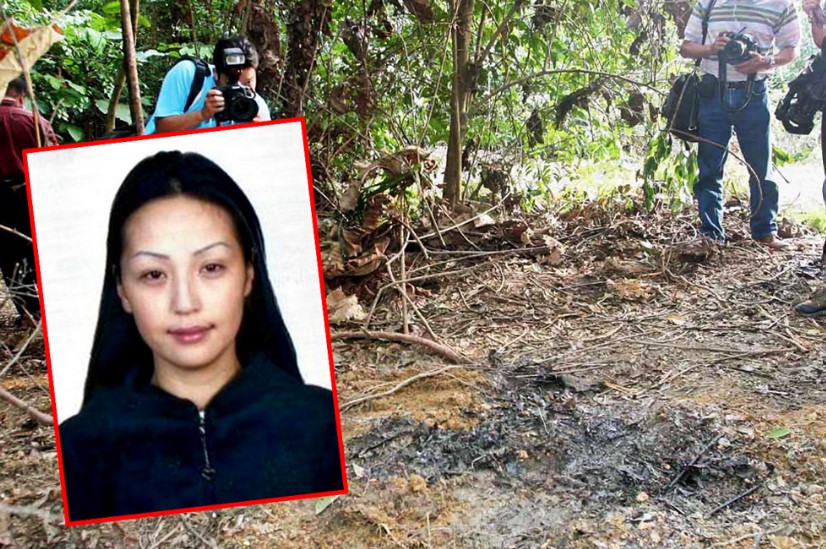
IN welcoming the Dewan Rakyat’s passing of the Abolition of Mandatory Death Penalty Bill (AMDPB) 2023 yesterday (April 3), the Malaysians Against Death Penalty and Torture (MADPET) now calls on the public prosecutor to diligently apply for compensation from the convicted in criminal trials for victims of crime, including family members of murder victims.
The non-governmental organisation (NGO) said a perusal of reported cases shows that the public prosecutor seldom applies for compensation for victims, including the family of murder victims.
“In some cases, they just apply for prosecution cost,” MADPET co-founder Charles Hector pointed out in his latest blog. “The government is considering this but it must be pointed out that it is already provided for in the Criminal Procedure Code.”

Section 426 states that the public prosecutor can apply for an order against the convicted accused for payment by him of a sum to be fixed by the court as compensation.
Moreover, the same section also states that the order for payment shall not prejudice any right to a civil remedy for the recovery of any property or damages beyond the amount of compensation paid under the order.
“This means that victims of murder or other crimes can still commence a civil court action to claim damages,” explained Hector who is also a human rights lawyer.
“Altantuya Sharibu’s family did just that with the court finding that not just convicted murderers Sirul (Azhar Umar) and Azilah (Hadri) but also political analyst Abdul Razak Baginda liable to their claim of unlawful killing of the deceased (Altantuya).”
In the legal suit, the government was vicariously liable as Sirul and Azilah were police officers. The accused were ordered to pay cost and RM5 mil in general, aggravated and exemplary damages to the deceased’s family, among others.
In a related development, MADPET also called on the Dewan Negara “to speedily pass the AMDPB 2023 and the Revision of Sentence of Death and Imprisonment for Natural Life (Temporary Jurisdiction of the Federal Court) Bill 2023 so that it can be put in force as soon as possible.
The latter bill will enable the Federal Court to review the death sentence and life imprisonment imposed on a convicted person following the abolition of mandatory death penalty.
This will mean that the about 840 of the 1,320 prisoners on death row who have completed all appeals will have their death sentence reviewed by the Federal Court. Likewise, those who are currently serving life sentence will now be subject to “imprisonment for a term of not less than 30 years but not exceeding 40 years”. – April 4, 2023, Focus
Enforce law compelling criminals to compensate victims’ families, govt told
Lawyers say Section 426 of the Criminal Procedure Code can be applied to require that offenders in road accident cases compensate their victims.

They said prosecutors should especially seek compensation orders on behalf of victims of murder, culpable homicide not amounting to murder, and deaths caused by negligence — all of which are recognised as serious offences under the Penal Code.
Lawyers S Jayananda Rao, N Sivananthan and J S Naicker said the CPC already allows prosecutors to apply to the court for convicted persons to compensate their victims in cases that result in death or injury.
“Forcing a convict to make financial contributions could act as a deterrent to would-be offenders,” Jayananda told FMT, adding that, based on news reports, the number of road fatalities caused by drivers who disregard the law has been on the rise.
He was responding to the transport ministry’s proposal to amend the Road Transport Act 1987 (RTA) to compel offenders to pay compensation to victims’ families.
The proposal followed the death of a motorcyclist in Klang who was struck by a driver allegedly under the influence of alcohol and drugs.
Under Section 44 of the RTA, those convicted of driving under the influence of alcohol or drugs and causing death face imprisonment of between 10 and 15 years, and a fine of between RM50,000 and RM100,000.
The punishment is heavier for repeat offenders, involving a jail term of between 15 and 20 years, and a fine of between RM100,000 and RM150,000.
Jayananda said there was no need to amend the RTA to provide for compensation, as the matter is already covered under Section 426 of the CPC.
Section 426(1A) and (1B) provide that a court may, on the application of the Public Prosecutor, order that a convicted accused pay compensation to a victim, or if the victim is deceased to their next-of-kin, in respect of any injury or loss of income or property suffered.
“This general provision could be utilised when the court finds an accused guilty of causing injuries or taking a life in a road mishap,” said Jayananda.
Sivananthan said compensation orders should not be confined to road accidents as it risked being seen as discriminatory and may be subject to legal challenge.
“The prosecution should apply for a compensation order upon securing a conviction in all offences,” he suggested.
The lawyer also said Section 432 of the CPC empowers a court to stipulate a timeline within which the compensation must be paid.
“However, the survivors or the victims’ families will have to enforce the ruling themselves, which has the same force as a civil judgment,” he said.
Sivananthan said enforcement, including by freezing an offender’s personal accounts or the sale and seizure of assets may involve time, effort and financial resources.
He said the government should consider amending the law to allow the families of victims in criminal cases, including road accidents, to recover compensation from the offenders’ Employees Provident Fund account.
J S Naicker, an insurance lawyer, explained that a motor insurance policy generally excludes liability when the driver is found to be under the influence of alcohol.
“However, an injured party, or the next-of-kin of a deceased victim, will not be deprived of damages under the RTA and the relevant motor policy if they succeed in a civil claim.”
Naicker explained that, in such circumstances, the insurer would satisfy the judgment and thereafter seek to recover the sum paid from the insured vehicle owner.
“If the ministry’s proposal is implemented, the intoxicated driver may be exposed to dual financial liability — namely, personal liability to compensate the victim, as well as an obligation to reimburse the insurer for any sum paid out.” - FMT, 2/4/2026


 Posts
Posts




No comments:
Post a Comment