Joint Media Statement - 6/10/2026
Malaysian MUST stop sending refugees and asylum seekers back to Myanmar in violation of human rights and international law against the principle of non-refoulement
1,473 already sent out of planned 5,000 when the reasons for fleeing from persecution still remains
We, the 21 undersigned groups, organizations and trade unions or are appalled and condemn the action of the Malaysian government that send back 1,473 Myanmar nationals/Rohingya, most probably refugees/asylum seekers, back to Myanmar, the very country from where they fled from fear of persecution. This is a breach of the principle of non-refoulement which is a fundamental rule of international law that bans countries from returning any person to a place where they would face torture, cruel treatment, persecution, or other serious harm.
It is also a violation of Article 14 of the United Nations Declaration of Human Rights, that states, amongst others, that ‘Everyone has the right to seek and to enjoy in other countries asylum from persecution.’
The is the first batch of 5,000 that Malaysian plans to send back to Myanmar after an agreement was made. It was reported that ‘Malaysian Prime Minister Anwar Ibrahim said Myanmar has agreed to take 5,000 Rohingya asylum seekers currently in Malaysia, where there has recently been tension between the refugees and local communities.’(Reuters, 30/6/2026), and after this statement, many including UN urged Malaysia to reconsider, also because "Given the ongoing conflict across Myanmar, current conditions do not support the safe and sustainable return of refugees from Myanmar,"
Despite calls to stop the sending of these 5,000 back, Malaysia proceeded with the sending of the 1st batch of 1,473 on Tuesday (29/9/20260, using 3 Myanmar naval vessels. According to the Malaysian home ministry, this included 27 children, comprising 20 boys and seven girls.
Malaysia still plans to repatriate another 3,524 Myanmar nationals, being the next phase of the repatriation programme, whereby the date is yet to be confirmed by Myanmar and/or Malaysia.
What makes it worse, is that this happens when the Myanmar’s military government is still actively in conflict/war with the ethnic minorities and also the National Unity Government (NUG) People's Defence Forces (PDFs).
Even on 29/9/2026, the government military airstrike on riverside commercial hub in Kyauktaw town in western Rakhine state on Monday that killed around 50 persons, including "innocent passersby, market vendors, shoppers and cargo loaders" France24, 29/9/2026.
The situation of Myanmar and the reason for REFUGEES
The conflict with the different minority ethnic groups of Burma (now Myanmar) and the Burman/Brama majority ethnic group government started since Independence in 1948. The ethnic conflict, including armed conflict, and is still ongoing.
It started allegedly because of broken post-independence autonomy promises. Tensions boiled over after the central government failed to fully honor the 1947 Panglong Agreement, which had promised regional autonomy and political rights for ethnic minorities. The affected minority groups include the Shan, Karen, Rakhine (Arakanese), Mon, Chin, Kachin and Kareni ethnic minorities.
Then, in 1962, Myanmar’s military junta ousted the democratic government, and this caused many members and supporters of political parties fleeing the country in fear of persecution by the State.
Even recently, on February 1, 2021, the military yet again seized power. President Win Myint, Aung San Suu Kyi, and other NLD members were detained.
This is the reality of Myanmar, and thus many refugees have fled – including those from the persecuted ethnic groups and members of democratic forces – including also supporters and members of political parties, and Human Rights Defenders and civil society struggling to restore democracy.
Who are the Rohingya?
The Rohingya are an ethnic minority group that have long lived in the Arakan region of western Myanmar. As Muslims in an overwhelmingly Buddhist country, the Rohingya have often experienced discrimination and persecution. In 1982, Myanmar passed a law that removed the Rohingya from a list of ethnic groups eligible for citizenship. As a result, most Rohingya lost their citizenship, and with it, their most basic rights and freedoms.
The 2017 brutal military crackdowns by the Tatmadaw (Myanmar military) in Rakhine State forced over 700,000 Rohingya to flee into Bangladesh, resulting also in mass killings, sexual violence, and village arsons.
More than a million Rohingya have since fled Myanmar into neighboring countries, notably Bangladesh. Including Malaysia.
A 2019 report from the United Nations Independent International Fact-Finding Mission on Myanmar concluded that the violence amounted to the “gravest crimes under international law.”
The International Court of Justice (ICJ) will soon rule on a case filed by Gambia, whether Myanmar committed GENOCIDE. (Conversation, 27/9/2026)
Human Rights Commission of Malaysia states Malaysia has done wrong
The Human Rights Commission of Malaysia (SUHAKAM) has urged the government to halt any further repatriation of Myanmar refugees. It said it was customary international law that refugees should not be returned to their home country if they face a real risk of persecution, torture or other serious harm.
“Being a principle of customary international law, this principle binds all states regardless of whether or not they are parties to the Refugee Convention. This means that Malaysia, although not a party to the Refugee Convention, is bound to adhere to this principle. “Hence, Malaysia is prohibited by international law from repatriating any refugee or asylum seeker to Myanmar if there is a reasonable risk that their life or freedom will be threatened on account of their race, religion, nationality, membership of a particular social group or political opinion. “Any violation of this cardinal principle is a violation of international law,” the commission said in a statement. (FMT, 1/10/2026)
No TRANSPARENCY on who was sent back to Myanmar
Malaysia to date has not revealed the identity of those sent back to Myanmar – how many Rohingya? How many ethnic minority who are still in conflict with the State? How many are supporters of political parties or are fighting for democracy? Malaysian Prime Minister Anwar Ibrahim said Myanmar has agreed to take 5,000 Rohingya asylum seekers currently in Malaysia (Reuters, 30/7/2026).
Did those sent back AGREE to being returned to Myanmar?
There is concern as to what Myanmar will do with these returned refugee/asylum seekers – will they be arrested, detained and/or persecuted? Malaysia claimed that those returned had given their consent – but this alleged ‘consent’ was never verified by any independent body, be it the UN or even The Human Rights Commission of Malaysia (SUHAKAM).
As such, we, the undersigned,
A) Call on Malaysia to immediately STOP sending back to Myanmar most likely refugees and/or asylum seekers including stateless Rohingya, which is a gross violation of Human Rights and international law;
B) Calls on Malaysia to monitor what actually happens to the 1,473, including 27 children, that was already sent back to Myanmar on 29/9/2026. Real concern as to whether they may end up being arrested, detained and persecuted by Myanmar regime;
C) Calls on Malaysia to respect Human Rights and International Law, and NOT violate the principle of non-refoulement, that that prohibits countries from returning any person to a place where they would face torture, cruel treatment, persecution, or other serious harm;
D) Call on Malaysia, who is not yet a signatory of the Refugee Convention, to speedily enact a law that recognizes refugees and asylum seekers. Malaysian law currently only recognizes foreigners who are legally or illegally present in Malaysia, and thus refugees and asylum seekers are NOT RECOGNIZED in law. The Malaysian position on refugees now is based on the policy of sitting government, and Prime Minister Anwar Ibrahim’s government position has now resulted in refugees/asylum being sent back to the country they fled from to avoid risk to their life or freedom being threatened on account of their race, religion, nationality, membership of a particular social group or political opinion. Policies are precarious and can change anytime, thus a clear law enacted by Parliament is best; and
E) Call on Malaysia to ratify the 1951 Refugee Convention and its 1967 Protocol that define the term 'refugee' and outline their rights and the international standards of treatment and protection of refugees and/or asylum seekers.
Charles Hector
For and on behalf the 21 organisations/groups listed below
ALIRAN
MADPET (Malaysians Against Death Penalty and Torture)
Asia Human Rights and Labour Advocates (AHRLA)
Banglar Manabadhikar Suraksha Mancha (MASUM), India
Building and Wood Workers International (BWI)
Cambodian League for the Promotion and Defense of Human Rights (LICADHO)
Center for Orang Asli Concerns (COAC)
Gindol Initiative for Civil Society Borneo
Global Women’s Strike, UK
Global Women’s Strike, US
Haiti Action Committee
Legal Action for Women, UK
MAP Foundation, Thailand
Parti Rakyat Malaysia (PRM)
Payday Men’s Network, UK/US
Programme Against Custodial Torture & Impunity (PACTI), India
Tenaganita
The Foundation Day of the Endangered Lawyer
Vietnam Committee on Human Rights (VCHR)
WH4C (Workers Hub For Change)
Women of Color/Global Women’s Strike US/UK
Note: 2 more organisations have since endorsed this Joint Statement, being
Hawai'i Institute for Human Rights
North South Initiative
Myanmar’s illicit economy fuels escalating violence, with civilians bearing the brunt
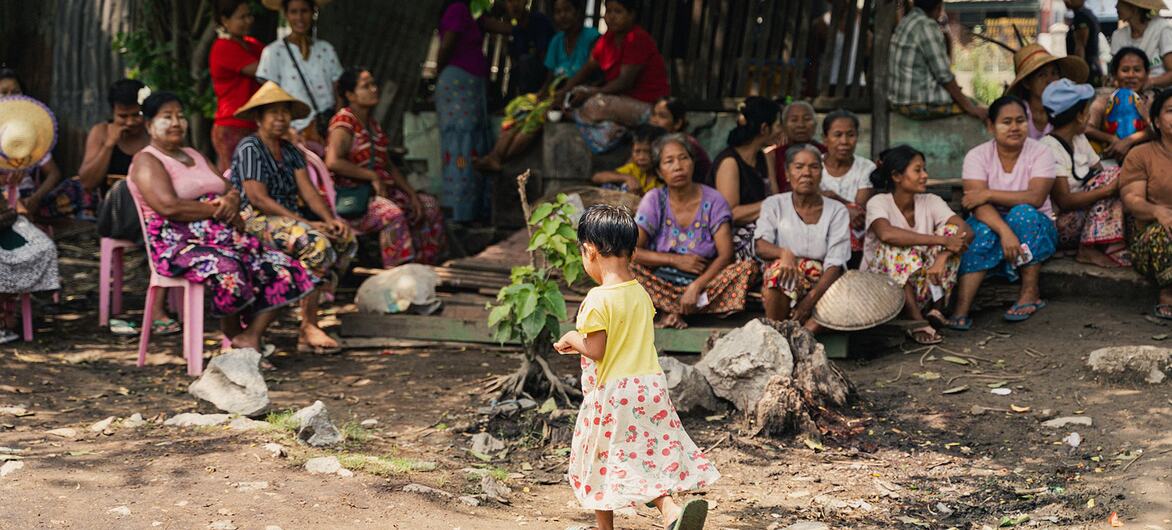
Myanmar’s human rights situation is “catastrophic”, the UN independent expert on the country warned at a press briefing Thursday, as the war spirals with no end in sight.
Myanmar has been engulfed in civil war since the military overthrew the democratically elected Government in February 2021, triggering widespread armed resistance across the country.
Special Rapporteur Kelley Anne Eckels-Currie’s new report found that at least 8,384 civilians have been killed by the military since the coup, up until 15 September 2026.
Special Rapporteurs are independent experts appointed by the UN Human Rights Council who serve in their individual capacity and receive no salary for their work.
Intentional harm
Despite the regime launching a so-called “100-day peace plan” between 20 April and 31 July 2026, the situation in the country has only deteriorated, the independent expert found.
The military continues to use weapons of war – including airstrikes and artillery – to target and destroy civilian infrastructure, including schools, healthcare facilities, religious buildings, markets and displacement camps.
“These are not accidents…This is intentional infliction of harm on civilian populations for the purpose of terrorising them and trying to force them into submission,” Ms Eckels-Currie told journalists.
Around 753 civilians were killed during the 100 day period, with the Myanmar military and paramilitary forces responsible for 89 per cent of civilian deaths.
Blocking humanitarian aid
The military’s strategy is rooted in the “Four Cuts” doctrine, the Special Rapporteur noted: sever food, resources, humanitarian access, and support networks from any area resisting the regime.
She found that the military deliberately obstructs humanitarian operations through telecommunications blackouts, movement restrictions and checkpoints, preventing the critical delivery of food, medicine, fuel and other essential supplies to displaced communities.
Aid workers also face harassment, arbitrary detention, torture and killings. In July 2026, three humanitarian workers were reportedly tortured and killed in the southeastern city of Dawei.
‘Conflict economy’ driving war
The Special Rapporteur also warned that Myanmar’s growing illicit economy has become a major driver of the conflict, rather than simply a consequence of it.
As the formal economy shrinks under the weight of war and economic mismanagement, criminal activity – including online scam centres, illegal mining, human trafficking and forced labour – are increasingly filling the gap.
Black market profits are helping to finance the military’s weapons purchases, including from China and Russia, and sustain loyalty within the junta’s ranks, Ms. Eckels-Currie explained.
Chinese transnational criminal networks provide the “backbone” of most of the criminal enterprises in Myanmar, using cryptocurrency platforms like Tether and social media like TikTok, Meta and X to facilitate their operations, she said.
Corruption in neighbouring countries, meanwhile, is enabling this cross-border trafficking, she added.
The Special Rapporteur also highlighted the difficulty of disrupting these networks without harming civilians. For instance, efforts to cut off Starlink internet access to scam centres have also left humanitarian organisations and local communities without vital connectivity. - UN News, 29/10/2026
UN investigator: Myanmar junta attacks civilians to terrorize them as arms buys fuel war
UNITED NATIONS (AP) — The military-backed government in Myanmar is intentionally attacking civilians to terrorize them and force them into submission, and its increasing weapons purchases from China, Russia and elsewhere are fueling the conflict and the “catastrophic” human rights situation in the war-torn Southeast Asian nation, a U.N. rights investigator said.
Kelley Currie told reporters it is worrying that countries in the region and beyond are engaging with the government without asking for anything in return, such as a reduction in the level of violence, freedom for thousands of political prisoners and dialogue toward peace with all parties.
Myanmar’s fellow members in the Association of Southeast Asian Nations, which had rebuked the military there for its 2021 seizure of power from the elected government of Aung San Suu Kyi, have lately seemed receptive to warmer relations.

The army’s takeover triggered widespread pro-democracy protests that were brutally quashed, leading to armed resistance that has spread a civil war over much of the country. The government’s armed forces have a huge advantage in arms and manpower, but have failed to overcome opponents despite the heavy use of force, including the unchallenged use of air power using planes from China and Russia.
Currie, the Human Rights Council’s special rapporteur on human rights in Myanmar, said Thursday she also wanted to raise concern about “the potential of violence” if the International Court of Justice, the U.N.’s highest tribunal, rules that Myanmar’s military engaged in genocide or failed to prevent it when it cracked down on the Muslim Rohingya minority in 2017.
“I have been seeing some signals on the ground in Myanmar that the groups that were responsible for hate speech and stirring up violence against non-Buddhist, non-Bamar minorities, including the Rohingya, that they are becoming much more active online,” she said, referring to Myanmar’s dominant Bamar ethnic majority. “They’re become much more active in the political spaces and under the regime’s control, and I see this as a prelude to potential violence following the ICJ decision.” - AP News, 30/10/2026
Big Brother Defends Myanmar Regime at UN, Chinese Aid Shortfall, and More


China defends Myanmar regime at UN

The UN General Assembly’s Third Committee devoted its 29th plenary session Tuesday to Myanmar’s human rights crisis, hearing reports from Special Envoy Julie Bishop, Independent Investigative Mechanism head Nicholas Koumjian, and Special Rapporteur Kelley Currie. All three highlighted the war crimes and crimes against humanity committed by the military regime.
Of the 23 countries whose delegates spoke, only Belarus, Russia and China defended the regime. Finding nothing good to say about it either, Beijing instead urged the international community to say fewer bad things. “The international community should focus on helping bridge differences and resolving problems rather than intensifying tensions and aggravating turbulence,” China’s representative said.
Myanmar, after all, is “an important member of the ASEAN family and an equal member of the international community,” he added, voicing support for the regime’s pursuit of a development path “suited to its national conditions and supported by its people.”
Beijing bristled when Currie noted that during Min Aung Hlaing’s first 100 days after declaring himself president, he deployed new coercive surveillance technologies “gifted” by China and Russia to suppress dissent.
China’s representative rejected the allegation, calling it “false information,” and urged Currie to carry out her mandate “objectively and impartially” and avoid spreading “unverified” claims that could mislead the public.
Currie hit back directly: “Countries that are most loudly complaining about interference in Myanmar’s internal affairs are ones that are most actively interfering in Myanmar’s internal affairs. Those that are talking most loudly about peace are the ones selling the weapons to Min Aung Hlaing that he uses against his own people.”
She challenged Beijing’s denial, saying she would welcome any evidence refuting that China was selling arms or providing political and economic support to the regime. Currie reminded delegates that under UN procedures, China, Russia and Belarus had been given five days to respond before her October report was published—and none of them had.
She cited the 2023 report “The Billion Dollar Death Trade” by her predecessor Tom Andrews as the proof of her claim. The report found Myanmar’s military imported over US$1 billion in arms and dual use goods since the 2021 coup, with China and Russia identified as top suppliers. Chinese state-linked firms provided raw materials and equipment for Myanmar’s ordnance factories including aircraft parts and explosives precursors used in attacks on civilians.
A milestone for China’s cross-Myanmar pipeline

The Myanmar–China crude oil pipeline has transported more than 100 million metric tons of crude oil since it began operations in 2017, PipeChina announced earlier this week. Stretching 771 km from embattled Kyaukphyu in Rakhine State through northern Shan State to Yunnan Province, the twin oil and gas pipelines are strategic lifelines that reduce Beijing’s dependence on the congested and vulnerable Malacca Strait.
One of China’s four major energy import corridors, the pipelines traverse 22 townships across Rakhine, Magwe, Mandalay and Shan, and today ethnic armed organizations such as the Arakan Army (AA), Kachin Independence Army (KIA) and Ta’ang National Liberation Army (TNLA) control substantial sections there.
Myanmar is projected to receive around $1.5 billion annually from the pipelines, though the exact profit structure is unclear. It certainly receives a fixed, annual right-of-way payment of $13.81 million for both pipelines plus $1 per ton of crude transiting through the country—PipeChina reckons at an average rate of 35,000 tons a day, most of it disgorged at Kyaukphyu from the Middle East. PipeChina and CNPC own 51 percent, while state-owned Myanma Oil and Gas Enterprise (MOGE) holds 49 percent.
The gas pipeline, meanwhile, started operation in 2013 and carries output from the offshore Shwe fields, with a a design capacity of 12 billion cubic meters per year. China National Petroleum Corporation holds a controlling 50.9 percent stake and MOGE just 7.365 percent. Sales of natural gas from Shwe to China are estimated to generate around $1 billion annually.
To finance its stakes, MOGE borrowed around $1.5 billion from the China Development Bank at an interest rate of 4.5 percent, according to Sandhi Governance Institute. Nobody knows how much of that has been paid back or ever will be.
Chinese aid bottleneck throttles Myanmar regime’s budget

Myanmar’s military regime faced severe fiscal strain in the 2025–2026 fiscal year when China withheld approval for multiple projects under the Lancang–Mekong Cooperation (LMC) Special Fund. Naypyitaw’s budget deficit shot up amid overspending by ministries and loss‑making state enterprises.
Deputy Planning and Finance Minister Kyaw Htin admitted that the deficit was exacerbated by failure to secure expected grants, project approvals, and technical resources from Beijing. The Ministry of Cooperatives and Rural Development did submit proposals for LMC financing in 2025, but the response was deafening silence. Likewise, the Industry Ministry budgeted for computer hardware and technical equipment for Chinese experts who were to come to Myanmar for a technology transfer, but they never turned up and the equipment was not delivered.
The reasons are shrouded in mystery. In a recent article in regime newspapers, Chinese Ambassador Ma Jia claimed China had backed 140 development projects in Myanmar through the LMC Special Fund. In March, Myanmar’s Foreign Ministry said the country benefited from 132—worth $38.6 million—since 2017.
Either way it would be the biggest handout to any Mekong country.
Some older Chinese projects are already falling to pieces. Kyaw Htin admitted that power transmission lines from two China‑backed hydropower plants—the 240 MW Dapein Hydropower Station in Bhamo, Kachin State and the 600 MW Shweli 1 Dam in Namhkam Township, northern Shan State—were damaged and could not be repaired due to “security conditions,” depriving the regime of projected electricity revenues.
Russian grant money that had been promised was also not forthcoming, Kyaw Htin said. The rest of the world has suspended official development aid since the 2021 coup.
More trouble in Shan over Kokang ‘Sinicization’

The past two weeks have seen growing tensions between Shan communities and the Myanmar National Democratic Alliance Army (MNDAA) that is consolidating its control in territories it has seized over the past three years.
The Shan State Joint Action Committee (SSJAC)—comprising the armed Shan State Progress Party/Shan State Army (SSPP/SSA), the civilian Shan Nationalities League for Democracy, and other Shan opposition groups—issued a statement accusing the MNDAA of undermining ethnic rights, erasing Shan cultural heritage, and imposing Chinese language and governance systems there.
The MNDAA rejected the allegations as “baseless” and “politically motivated” and accused the SSJAC in turn of stirring the ethnic pot.
Earlier this month, Shan civil society organizations also released an open letter warning that the MNDAA’s cultural and administrative practices threaten ethnic coexistence and stability on the Chinese border. And in April, Ta’ang civil society groups condemned the MNDAA after it seized Kutkai, where ethnic Ta’ang communities form the majority.
Founded in 1989 from the remnants of the Communist Party of Burma, the MNDAA is rooted in Kokang, an enclave that is 90 percent ethnic Chinese. Once limited to Laukkai and Kongyan townships, the group has expanded its territory west of the Salween River since Operation 1027, and locals report a great deal of painting over of signboards and other attempts to suppress their languages and identities by their brash new masters.
Compiled by Thurein Lynn - Irrawady, 30/10/2026


 Posts




No comments:
Post a Comment