Foreign nationals who marry Muslim Malay citizens in Malaysia will not automatically see their ethnicity altered or qualify for special Bumiputera privileges, Home Minister Datuk Seri Saifuddin Nasution Ismail said in a written parliamentary reply.
He stressed that the National Registration Department (JPN) does not reclassify a foreign national’s ancestral lineage based solely on marriage, amid persistent questions around the legal and administrative status of cross-border marriages.
“Determining whether an individual holds Bumiputera status, as well as their eligibility to enjoy rights or privileges allocated to Bumiputera, falls outside JPN’s jurisdiction,” Saifuddin said in the written reply dated October 12.
“This is because such matters remain governed by specific laws, policies, and criteria set by the respective agencies or relevant authorities,” he added.
That answer by the HOME MINISTER raises QUESTIONS/CONCERNS:-
1 - The response seem to talk about just 'MUSLIM Malay citizens' - what about the natives of Sabah and Sarawak, who together with Malays, enjoy Art. 153 special preference. What about foreign spouses of the natives of Sabah and Sarawak - can they also one day become natives and enjoy the Art. 153 special preference. HOW? WHY?
2 - The use of the term Bumiputera - he should just talk about Malay and natives of Sabah/Sarawak privileges. The term BUMIPUTERA is not YET clearly LEGALLY defined - nobody knows clearly whether there are OTHER Malaysian ethnic groups, other than Malay and natives of Sabah/Sarawak also considered BUMIPUTERA. If the government wanted to add other ethnic groups as beneficiaries of Art 153, then do so. If they wanted to use the term Bumiputra, then include it in the Constitution and clearly define?
3 - Who decides one is a MALAY, or a native of Sabah and Sarawak, that qualifies to enjoy the benefits of Art 153? That must be MADE CRYSTAL CLEAR as now we run the risk of NEW MALAY also taking benefits/preferences allocated for just qualified MALAY (not some foreigner who because he is Muslim, speaks Malay, follow Malay Custom is Malay today, a status he may have just obtained after coming to Malaysia after MERDEKA) - the Minister said it was not the National Registration Department(JPN), but 'such matters remain governed by specific laws, policies, and criteria set by the respective agencies or relevant authorities' - No mention of which agency and which law. BEST if the qualified Malay or native of Sabah and Sarawak that qualifies Art. 153 preference are stringently defined by the HOME MINISTRY - and this qualification maybe be clearly stated in National Registration Cards(MyKad) > why the risk of unqualified 'stealing' benefits/preferences from the unqualified > this affects the qualified Malays and natives of Sabah/Sarawak as provided for in our Constitution - and also all other Malaysians who ultimately pay for this.
Today, many later arrivals from Malaysia and neighboring countries, including also some from other countries like Bangladesh, Pakistan, India, Arab Nations ...maybe qualified as MALAYs - but they certainly are not entitled to enjoy Art. 153 benefits/preferences. If an unqualified Malay wrongly gets a SCHOLARSHIP or a University place because of Art.153 - it denies another qualified Malay that scholarship, place in University...
The issue of the 'NEW Malay' and whether they too benefit from the preferences provided for under Art 153 Federal Constitution Reservation of quotas in respect of services, permits, etc., for Malays and natives of any of the States of Sabah and Sarawak.
Under the Constitution those entitled to special preferences are 'Malays and natives of any of the States of Sabah and Sarawak'
Under this PART XII (which includes Art 152 to 160B) - Art. 160 defines 'MALAY'
"Malay" means a person who professes the religion of Islam, habitually speaks the Malay language, conforms to Malay custom and—
(a) was before Merdeka Day born in the Federation or in Singapore or born of parents one of whom was born in the Federation or in Singapore, or is on that day domiciled in the Federation or in Singapore; or
(b) is the issue of such a person;
THUS, it reasonably means that ONLY Malay that falls within this Constitutional Interpretation can benefit from the special preferences provided in Art 153 - Reservation of quotas in respect of services, permits, etc....
This means that the 'NEW Malay' - those came later to Malaysia, although they are subsequently seen as MALAY will NOT QUALIFY to get the benefits of Art. 153 ...
Malay - to become a Malay, there is no requirement that your parents/grandparents/great grandparents, etc were ethnically MALAY (which could be determined today be DNA analysis, etc) - because all the Federal Constitution says is that he/she is 'a person who professes the religion of Islam, habitually speaks the Malay language, conforms to Malay custom' - and that means any MUSLIM from any part of the world who is today a Malaysian citizen 'who habitually speaks the Malay language, conforms to Malay custom...'
The Malaysian Government to date have FAILED to properly record who are MALAY and enjoy the benefit of Art. 153, and who are Malay (or new Malay) who do not enjoy the benefits of Art. 153.
In Malaysia, the benefit to Malays and/or Natives of Sabah and Sarawak comes NOT just from Art. 153 > but can also come in through other laws/policies/practice of the Federal/State and even Local Government. HOWEVER, if comes from some other law/policy and NOT Art. 153 - it may be UNCONSTITUTIONAL and VOID.
For instance that policy/practice of 10% DISCOUNT for certain citizens for House purchases from Developer > it, in my opinion, does not arise from Art. 153 > it, I believe, arises from a CONDITION for approval of Housing Development projects that is imposed by the relevant Local Government/Council > is it then UNCONSTITUTIONAL - In my opinion, it is as it violates Art.8(1) that guarantees equality of persons, and also Art 8(2) that prohibits discrimination - there shall be no discrimination against citizens on the ground only of religion, race, descent, place of birth or gender in any law. Until this matter is raised in COURT - sadly some Developers or governments may continue to impose such BAD Practices.
On the ART. 153 preferences/benefits - which should also be just a REASONABLE PROPORTION not all - '...proportion as he may deem reasonable...' - and it is only for '....positions in the public service (other than the public service of a State) and of scholarships, exhibitions and other similar educational or training privileges or special facilities given or accorded by the Federal Government and, when any permit or licence for the operation of any trade or business is required by federal law,...'
So, maybe good if Prime MINISTER Anwar Ibrahim of this Pakatan Harapan led Coalition Government openly clarify what exactly is this REASONABLE PROPORTION currently :-
* Positions in Public Service
* Scholarships
* Places in PUBLIC Universities and other government educational institutions
* License or permits for trade/business...
Another issue - is the Statistics since independence on who got these Art.153 benefits - according to the qualified ethnic groups(to ensure there was equitable distribution, also DATA on whether the benifits reached ALL within qualified ethnic groups > and not just the T20(the very rich) whilst the B40 did not benefit.
ALSO when non-qualified Malay had been benefiting? This is a 'LEAKAGE' in the objects of this preferential treatment.
#####
PROBLEM Caused during British Colonial Government RULE
During colonial rule (1786–1957), the British practiced a "divide-and-rule" approach that segregated groups economically. Chinese immigrants dominated mining and commerce, Indian immigrants worked rubber plantations, and Malays were largely left in traditional rural villages, subsistence farming, and fishing....Malays lagged far behind non-Malays in corporate wealth, urban capital, and professional expertise. Special preferences were designed as an equalizer to help bridge this socio-economic gap.
The preference that needed to be given Malays is OLD and commonly accepted - it was also acknowledged in the PEOPLE's Constitution and was the reason for the 1947 HARTAL - it differed from the UMNO-British Colonial Government proposal...(Note the Peoples' Constitution was not supported by the then UMNO or the Communist Party.
The objective of the preferences was to bring about equity in all the Ethnic Groups in Malaysia(sadly the Orang Asli was not included) BUT the implementation need to be reviewed > why are there still so many Malays that are POOR? Did it help only help rich Malay/natives become richer - thus failed to uplift all Malay/Natives ???
| Dimension | The Putera–AMCJA Vision (The People's Constitution) | The Anglo-UMNO Vision (The Federation of Malaya Agreement) |
|---|---|---|
| The Coalition | A broad, multi-ethnic alliance combining left-wing Malay nationalists (PUTERA) and non-Malay progressive/labor groups (AMCJA). | The British colonial administration working exclusively with conservative Malay elites represented by the United Malays National Organisation (UMNO). |
| Concept of Citizenship | Proposed a unified "Melayu" nationality applied equally to all residents who viewed Malaya as their home, stripping the term of exclusive ethnic or religious requirements. | Maintained strict ethnic divisions, offering restrictive citizenship pathways for non-Malays. |
| Malay Preference & Status | Envisioned Malay primacy but not dominance. It rejected institutionalized, permanent special privileges in favor of socio-economic upliftment under a framework of civic equality. | Codified the formal "special position" of the Malays under the protection of the Malay Rulers, safeguarding quotas in civil service, education, and business. |
Home minister: Children of Malay-foreign marriages may be registered as Malay, but foreign spouses won’t automatically gain Bumiputera status


- In a recent parliamentary response, Malaysian Home Minister Datuk Seri Saifuddin Nasution Ismail clarified that foreign nationals marrying Muslim Malay citizens do not automatically receive a change in ethnicity or qualify for Bumiputera privileges.
- The National Registration Department (JPN) does not alter a foreign national's lineage based on marriage, as Bumiputera status and associated benefits are governed by specific laws and criteria outside its jurisdiction.
- While the ethnic classification of a foreign spouse remains unchanged, children from such unions can be registered under either parent's lineage, impacting their eligibility for various socio-economic benefits.
KUALA LUMPUR, Oct 13 — Foreign nationals who marry Muslim Malay citizens in Malaysia will not automatically see their ethnicity altered or qualify for special Bumiputera privileges, Home Minister Datuk Seri Saifuddin Nasution Ismail said in a written parliamentary reply.
He stressed that the National Registration Department (JPN) does not reclassify a foreign national’s ancestral lineage based solely on marriage, amid persistent questions around the legal and administrative status of cross-border marriages.
“Determining whether an individual holds Bumiputera status, as well as their eligibility to enjoy rights or privileges allocated to Bumiputera, falls outside JPN’s jurisdiction,” Saifuddin said in the written reply dated October 12.
“This is because such matters remain governed by specific laws, policies, and criteria set by the respective agencies or relevant authorities,” he added.
Pang Hok Liong (PH-Labis) had asked the minister whether Muslim foreign nationals could claim Bumiputera status upon marrying local Malay citizens, and what conditions, if any, govern eligibility for affirmative action privileges.
While the foreign spouse retains their original ethnic classification, Saifuddin said children born to a legally recognised marriage between a local and a foreign national enjoy flexibility regarding registration.
Parents can choose to register the child’s lineage following either the mother or the father, meaning the child may legally inherit Malay lineage or that of the foreign parent, subject to registration guidelines.
In Malaysia, ethnic classification and Bumiputera status carry significant legal and socio-economic weight, governing access to government quotas, housing discounts, public university admissions, and specialised financial instruments like Amanah Saham Bumiputera. - Malay Mail, 13/10/2026
Bumiputera: Are you one? Or can you ‘become’ one in Malaysia?
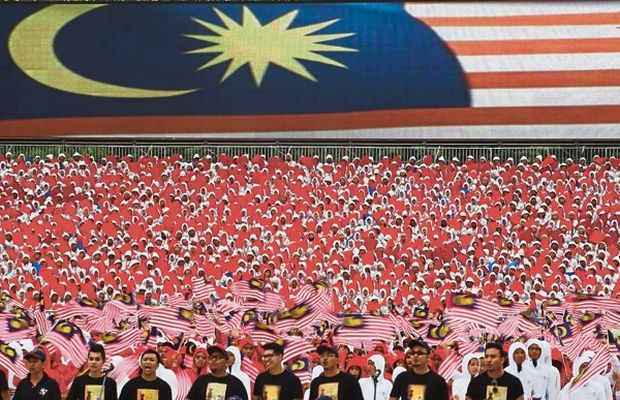
KUALA LUMPUR, July 26 — Mention the word “Bumiputera” and the word “Malay” immediately comes to mind, and to a lesser extent the natives of Sabah and Sarawak, based on decades of experience on how affirmative action policies are carried out.
With Malaysia’s Indian Muslim community recently asking to join the special group of people known as Bumiputera, you might be asking: can you too “become” one, or must you be born one?
1. What is a Bumiputera?
The term “Bumiputera” however is not found in the Federal Constitution, which suggests that its meaning is not set in stone.
Article 160 of the Constitution only states the criteria for a person to be considered a Malay; which is to profess the religion of Islam, habitually speak the Malay language, conform to Malay custom and be born to a Malaysian parent.
The Department of Statistics Malaysia estimates the country’s population this mid-year as slightly over 32 million citizens and non-citizens, with the Bumiputera forming the bulk of the 28.7 million citizens at 19.78 million and the Chinese and Indians at 6.66 million and just below 2 million, and “others” at over 284,000.
One wonders at the tricky bureaucratic decisions in multiracial Malaysia where mixed marriages are not uncommon and ethnic identity can as a result be relatively fluid.
2. When can you be a Bumiputera?
The broad constitutional definitions of the word “Malay” raises the question of whether or not someone born to a different ethnic group but fits all the criteria could be considered by both society and the government to be a Malay.
Similarly, who can get official recognition as being Bumiputera, which literally means “sons of the soil”?
Can a community stake their claim to the Bumiputera label if their ancestors had laid down roots in this land generations ago, or if they had intermarried with Malays or east Malaysian natives or other locals, or if they profess the religion of Islam and adopt Malay customs and language, or if political expediency allows for it?
It’s a complicated question, but one that at least one group has raised in public. Perkasa had last week called for a careful study of the Bumiputera status, asking the government if Indian Muslims are also to be conferred the status because of their religion. The non-governmental organisation also asked if Muslims of other ethnicity would be given the same status.
3. It’s just a label, isn’t it?
Well, yes and no. Yes, because some Bumiputera may feel that their community is ready to stand on its own feet.
No, because the “Bumiputera” identity comes with a whole range of economical benefits and tangible advantages that often overlap special privileges for the Malays and natives of Sabah and Sarawak. The definition of “natives” of Sabah and Sarawak can be found in Article 161A of the Constitution.
Under Article 153, the Yang Di-Pertuan Agong is responsible for safeguarding both the “special position” of Malays and east Malaysian natives and the “legitimate interests” of other communities. It does not use the word “rights” or “special privileges” however.
This provision covers what Malaysians often refer to as “quotas” for Malays and the east Malaysian natives with regards to scholarships, educational or training privileges, positions in the civil service, special facilities, permits or licences for trade or business activities.
There are certain restrictions under Article 153 on such privileges that act as a form of safeguard to other communities.
Malaysians can quickly pinpoint real-life examples of pro-Bumiputera policies to help the community catch up such as the carving out of contracts; while some hold a lingering suspicion that public university entry and scholarship awards are not purely merit-based and that race continues to play an important role.
And according to the Securities Commission, companies that wish to be listed on Malaysia’s stock exchange must offer at least 12.5 per cent of their shares to Bumiputera investors, while the percentage of mandatory quotas of discounted property units in new developments have been reported to differ from state to state — Johor offers 40 per cent while Negri Sembilan offers 50 per cent and Kelantan 70 per cent as of last year.
The federal government has even launched this April the second version of its Bumiputera Economic Transformation Roadmap (BETR) to go beyond economic measures and improve the wellbeing of the Bumiputera community in areas such as education, health, income levels and property ownership.
4. Half the title?
Interestingly, the Amanah Saham Nasional Berhad’s (ASNB) mutual funds that are only open to the Bumiputera community also welcomes another group of local investors known as the “minorities”.
ASNB provides a detailed breakdown of who falls under the Bumiputera category, which includes Malays who must also be Muslims. There is no requirement to be Muslim for other indigenous Malaysians under this category—the Orang Asli in the peninsula, the natives of Sabah and Sarawak, or those born to mixed marriages involving Sabahans and Sarawakians.
Aside from helpfully stating the documents required or the departments where Bumiputera verification may be obtained, ASNB’s website also clearly lists out investment eligibility for east Malaysians based on both their parents’ status.
And who are these “minorities” eligible to invest in Bumiputera-only unit trust schemes? Well, they are the “Siamese/Thai, Portuguese/Eurasian/ Serani, Muslim converts/Muslims with non-Bumiputera status, Indian Muslims”.
And who else has been seeking to be recognised as Bumiputera? According to past news reports, it includes the Melaka Chitty community or Indian Peranakan who are also Hindus and the Peranakan Chinese. Malaysians of Siamese descent had in the past been declared as having Bumiputera status.
Does the enjoyment of a benefit normally accorded only to the Bumiputera community mean one has partial Bumiputera status or is de facto a Bumiputera?
This brings us full circle to the question of who is a Bumiputera and who can be one… and which can only be answered by the government in power. - Malay Mail, 26/7/2017
First all–race political action and the People’s Constitution 1 Aug 2007 12:00 am
©The Sun
(Used by permission)
by Fahmi Reza
ON Oct 20,1947,the whole of Malaya and Singapore bore witness to the first political action that involved the united action of people of all races – the Malaya–wide hartal.
The hartal, a general strike and the halting of economic activity, was effectively used in the Indian struggle for independence. It was used for the first time in Malaya by the left–wing coalition, Putera–AMCJA as a weapon against British colonialism.
Putera–AMCJA was a united front comprising two major political forces in Malaya: the Pusat Tenaga Ra’ayat (Centre for People’s Power) and the All–Malaya Council of Joint Action.
The AMCJA was a federation of political parties, labour unions, women’s associations and youth organisations that was inaugurated on Dec 22, 1946 in Kuala Lumpur.
The main organisations in the AMCJA was the Malayan Democratic Union (MDU), Malayan Indian Congress (MIC), Pan–Malayan Federation of Trade Unions (PMFTU),12–State Women’s Federation in Malaya, Malayan New Democratic Youth League (MNDYL) and the Malayan People’s Anti–Japanese Ex–Service Comrades’ Association.
Although dominated by left–leaning parties,the AMCJA was led by a prominent Straits–born capitalist,Tan Cheng Lock.
Putera was a coalition inaugurated on Feb 22,1947,consisting of Malay left–wing parties such as Parti Kebangsaan Melayu Malaya (PKMM), Angkatan Pemuda Insaf (Api), Angkatan Wanita Sedar (Awas), Barisan Tani Se–Malaya (Batas), Gerakan Angkatan Muda (Geram), Lembaga Persatuan Melayu Johor, and other smaller organisations.
Putera was led by Ishak Haji Muhammad, a journalist and nationalist who was also one of the founders of Kesatuan Melayu Muda (KMM) in 1938.
Putera–AMCJA succeeded in bringing together all the political parties in Malaya except the United Malays National Organisation (Umno) and the Communist Party of Malaya (CPM) in a popular people’s front to protest the Federation Constitution that was formulated by the British to replace the Malayan Union.
The coalition argued that the Federation Constitution was undemocratic because it was formulated in secret consultations between the colonial government and the Malay aristocracy,and sidelined the opinions and wishes of the Malayan people who sought democracy and self–governance.
For Putera–AMCJA, the British action of consulting only one party was part of a divisive “divide and rule” tactic. It held mass demonstrations throughout Malaya to protest.
At each gathering, attended by thousands from all races, Putera–AMCJA leaders such as Tan Cheng Lock,Ishak Haji Muhammad, John Thivy, Philip Hoalim Sr, Dr Burhanuddin Helmy, Gerald de Cruz, Ahmad Boestamam, K. Ganapathy and Shamsiah Fakeh explained the importance of people from all races uniting to fight the Federation Constitution and to back Putera–AMCJA’s struggles.
The coalition also held mass meetings throughout Malaya to gain endorsements for resolutions opposing the Federation Constitution. Hundreds of telegrams and protest letters were sent to the British government. But the British did not pay heed to any of this.
The People’s Constitution
Putera–AMCJA realised they needed a stronger and more progressive programme to win mass support. From May 1947,it began drafting an alternative constitution to challenge the Federation Constitution.
On Aug 10, 1947, the People’s Constitution was completed, taking into consideration the opinions and aspirations of the different factions within the Putera–AMCJA pact. It was a comprehensive document that covered provisions for a democratic system of government, towards establishing a new nationality and an independent nation–state.
The Straits Times dubbed the People’s Constitution as “the first political attempt to put Malayan party politics on a plane higher than that of rival racial interests, and also as the first attempt to build a political bridge between the domiciled non–Malay communities and the Malay race”.
On Sept 21, 1947, the People’s Constitution was presented for the first time to more than 20,000 people who had gathered at Farrer Park, Singapore. Subsequently, Putera–AMCJA began a national campaign to explain the contents of the People’s Constitution to Malayans.
Meetings, mass gatherings, and demonstrations were held in various places to get the people’s support.
The constitution was published in four languages and disseminated throughout the states. Copies were also sent to the Malayan Union Government, the British Prime Minister and the Colonial Office in London.
Yet once more, the British refused to pay attention to Putera–AMCJA or to hold discussions. The colonial government also rejected all proposals in the People’s Constitution.
Malaya–wide Hartal
On Oct 6, 1947, Putera–AMCJA released a “Hartal Manifesto”. It called upon all those who regarded Malaya as their home to observe Oct 20, 1947 as a Day of Protest against the Revised Constitutional Proposals,by staging a Malaya–wide hartal on that day.
“October 20 has been selected as the Day of Protest because it is on that day that the British Parliament is scheduled to begin its autumn session, during which it is reported that a debate on the constitutional issue in Malaya will take place.
“On October 20, therefore, between the hours of six a.m. and midnight, all those who regard Malaya as their real home and who support the People’s Constitution issued by Putera–AMCJA, are asked not to carry out their usual occupations, but to remain indoors throughout the day and night.
“You are asked for one day to cease work in order to demonstrate to government that you reject the Revised Constitutional Proposals, and in order to carry our struggle for acceptance of the People’s Constitution one step further.
“October 20 is the day on which the people of Malaya will be called upon to stage the greatest political demonstration that this country has ever seen.”
The campaign to promote the hartal began on Oct 7. Its aim was to ensure the hartal’s success and to prove to the British that the masses were behind the hartal.
Full hartal instructions were issued on how it should be observed, and “12 Hartal Slogans” that pinpointed the reasons for the hartal were sent to the media, all the parties within Putera–AMCJA, and to the 30 Putera–AMCJA centres throughout Malaya to be translated and disseminated to the people so that they fully understood the hartal’s aim as a political act.
Committees were set up in each state to align and plan activities for the hartal. Propaganda corps were established to tour the towns, districts and kampung to put up posters and banners,as well as give out leaflets explaining the hartal and the People’s Constitution.
Thus, on Oct 20, 1947, beginning from 6am,the whole of Malaya underwent the hartal. Merchants shut their shops, labourers stopped going to the mines, factories, shipyards, and rubber plantations, farmers did not work their lands, fishing folk stayed ashore, housewives did not go to the markets, and the youth stayed away from amusement parks. Only colonial government offices, European stores and several other shops operated as usual.
It was estimated that the British colonial government suffered £4 million in losses from the nationwide strike that day.
According to the Putera–AMCJA, the hartal was also “a unique method of political education. It brought the constitutional issue into every home in the country, and confronted every man, woman and child with this issue. Even in the Government English schools, children in the fourth and fifth standards questioned their teachers about the hartal, asked about its nature and why the government was opposed to it”.
Even though the hartal was a complete success in its execution, it failed to change British constitutional policy in Malaya. The British rejected the People’s Constitution and stayed committed to their agreement with the Malay aristocracy and defended their Federation Constitution.
On Feb 1, 1948, the Federation of Malaya was inaugurated to replace the Malayan Union.
Then, to crush Putera–AMCJA’s continued protests against the new Federation of Malaya, the British declared a state of Emergency throughout Malaya in June 1948.
Thousands of Putera–AMCJA leaders and members were arrested. Most were locked up in detention camps for several years while others were banished.
Most of the organisations affiliated to Putera–AMCJA were banned or dissolved. This was the turning point ad marked the beginning of the end of the constitutional independence struggle of the left in Malaya.
Fahmi Reza is the director of Sepuluh Tahun Sebelum Merdeka, a short documentary film that chronicles the events that culminated in the Malayawide hartal day of protest against British colonial rule on Oct 20, 1947. - Malaysian Bar Website


 Posts




No comments:
Post a Comment