ON HUMAN RIGHTS, JUSTICE AND PEACE ISSUES, LABOUR RIGHTS, MIGRANT RIGHTS, FOR THE ABOLITION OF THE DEATH PENALTY, TOWARDS AN END OF TORTURE, POLICE ABUSES, DISCRIMINATION...
#Extradition
agreements may result in persons being sent back subsequently being
charged tried and sentenced to death. Hong Kong, at present no
extradition if it is political in nature and the requesting country need
give an undertaking that the death penalty will not imposed...which is
difficult if national laws provide for the death penalty.
In
Malaysia, Australia is refusing to sent back convicted murderer Sirul
Azhar because sending him back means that he may be sentenced to death.
However, if Malaysia abolishes the death penalty, not just the mandatory
death penalty, and commutes the death sentence of all on death row, the
situation may be different...
Sending
back anyone to Malaysia has the risk of death penalty. A person could
be send back, but there can be no GUARANTEE that after return, he may
end up being charged with some other offence that carries the death
penalty, is there?
What
about Detention Without Trial? Should countries being requested to send
back Malaysians suspected of a crime have to worry about this - the
fact that the said person may simply end up under Malaysia's draconian
Detention Without Trial laws - hence the denial of a fair trial?
SOSMA
- Well, this provides for the 'denial of bail', and the use of evidence
not usually admissible in trial, and criminal procedure(not usually
allowed in a fair trial) - Should the return Malaysians back to Malaysia
on the request of Malaysia.
CONVICTED
PRISONERS UNDERGOING SENTENCES IN MALAYSIAN JAILS - This is a totally
different set of issues...the question of discrimination
arises...better(or worse) prison conditions in the requesting country,
different sets of conditions when it come to 'parole' proceedings or
even Petitions to King/Sultan...this we may discuss at a later time?
MALAYSIA MUST ABOLISH THE DEATH PENALTY, DETENTION WITHOUT TRIAL LAWS AND SOSMA-LIKE LAWS...
Hong
Kong is considering changing the law on transferring fugitives – so how
are extraditions dealt with now, and why are there no deals with
mainland China, Taiwan and Macau?
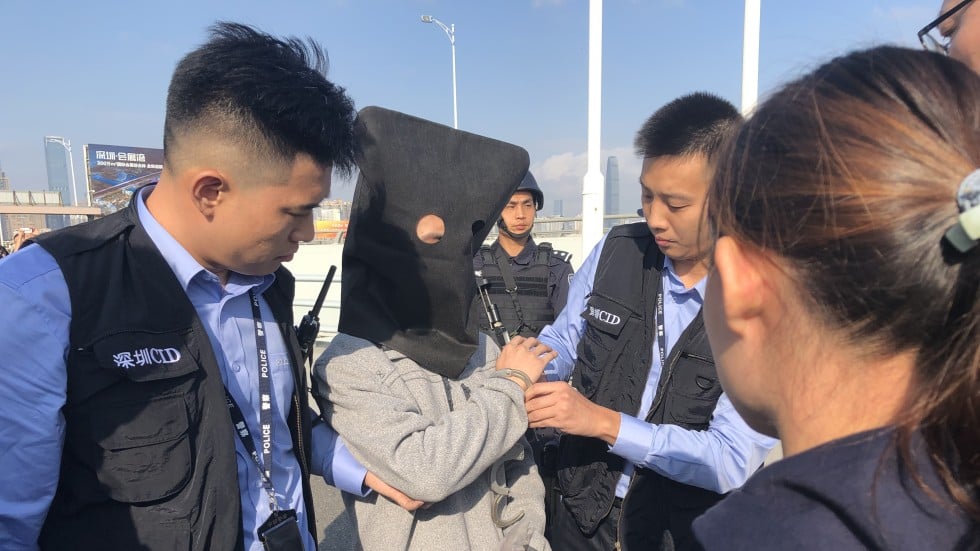
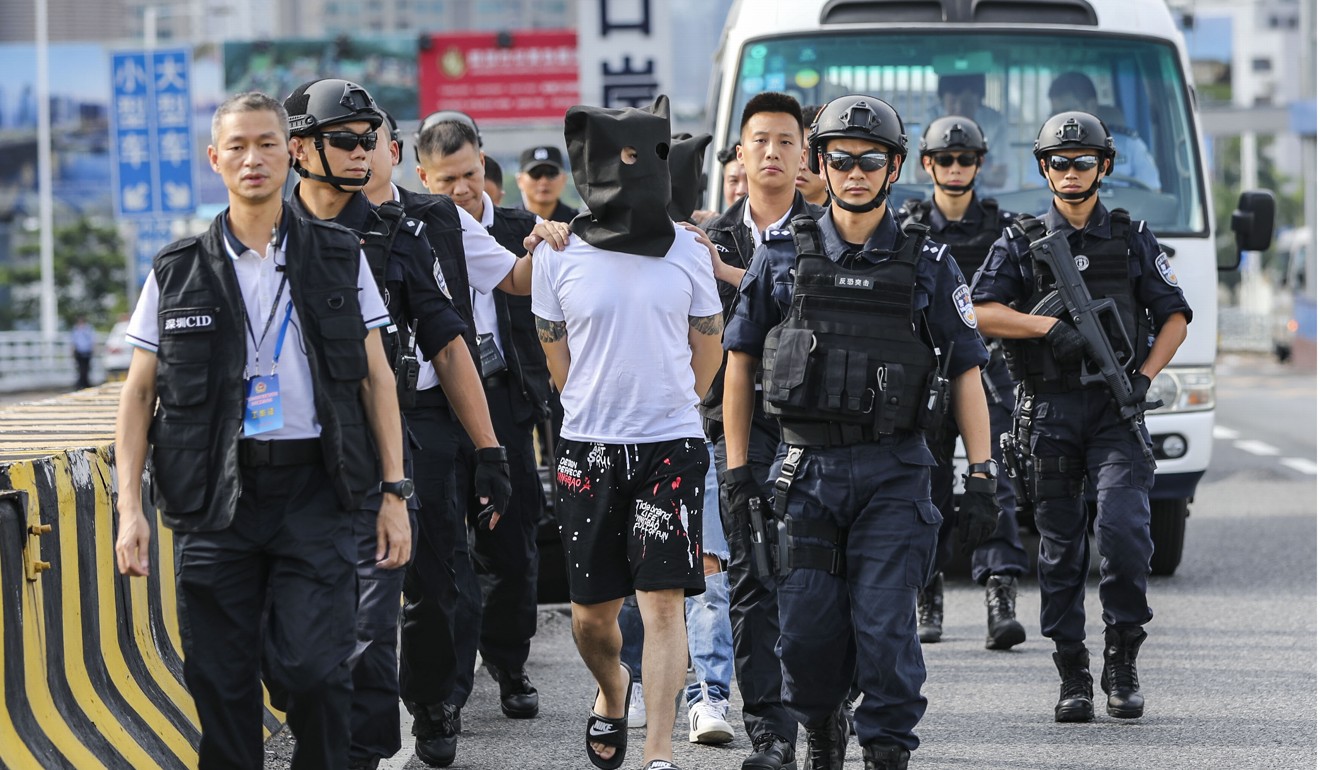
If proposal becomes law, there will be an extradition arrangement between Hong Kong and the mainland for the first time
But legal experts caution such a change could also affect existing arrangements with other jurisdictions
The
proposal by the Security Bureau is the latest response to a
high-profile case in Taiwan, involving a Hongkonger accused by the
authorities there of murdering his pregnant girlfriend last February
before fleeing to Hong Kong.
Chan
Tong-kai, 19, was arrested in Hong Kong, but is facing charges related
only to having his dead girlfriend’s bank card, cash and other
possessions.
He
has not been sent to Taiwan, despite requests from the authorities
there, because there is no formal extradition agreement between the two
places.
If
the bureau’s proposal becomes law, there will be an extradition
arrangement between Hong Kong and the mainland for the first time. Legal
experts caution that such a change could also affect existing
extradition arrangements with other jurisdictions.
How are extradition requests handled now?
Hong
Kong has signed mutual extradition agreements with 20 countries,
including the United States, Britain, Canada and neighbouring
jurisdictions such as the Philippines and Singapore. Every new agreement
negotiated between Hong Kong and a different country must be approved
by the city’s lawmakers.
When
a foreign country makes an extradition request, Hong Kong’s chief
executive must decide whether to issue an arrest warrant. Among
other things, the city’s leader must consider if the accused person’s
alleged action would be considered a crime in Hong Kong as well, and be
satisfied that the case was not of a political nature.
If
the crime the person is accused of carries the death penalty in the
jurisdiction requesting extradition, the country must undertake not to
impose the death penalty if the suspect is sent back.
If an arrest warrant is issued, the fugitive is allowed to oppose the order in a Hong Kong court.
Aside
from extraditing wanted individuals, Hong Kong also provides criminal
legal assistance to 32 countries, for instance, by handing over
evidence, with decisions made by the secretary for justice.
Why is there no extradition to the mainland, Taiwan and Macau?
Hong
Kong’s two main laws governing the transfer of fugitives and providing
help in criminal cases – the Fugitive Offenders Ordinance and the Mutual
Legal Assistance in Criminal Matters Ordinance – have expressly
excluded China. Macau and Taiwan are also excluded.
On
a discretionary basis, mainland authorities have handed over to Hong
Kong fugitives accused of violating the city’s laws. But this has only
been an administrative arrangement, and Hong Kong has never
reciprocated.
The former deputy director of public prosecutions, John Reading SC, said the
major obstacle in reaching an agreement with the mainland was the death
penalty in its legal system. Other signatories were prepared to give
Hong Kong the assurance in their respective agreements that they would
not impose the death penalty if a fugitive was extradited.
“I
really can’t believe that China would agree to give an undertaking not
to impose the death penalty if somebody is to be extradited to China,”
he said.
Hong Kong and the mainland have moved closer in recognising civil and commercial verdicts by each other’s courts.
In
recent years, the mainland’s judiciary has also raised the issue of the
absence of mutual legal agreements on cross-border criminal cases. In
2017, the former vice-president of the Supreme People’s Court, Shen
Deyong, mentioned the issue in a speech in Hong Kong.
After
the two sides signed a reciprocal arrangement on enforcing judgments in
civil cases, a spokesman of the Supreme People’s Court said there was a
need to also “resolve the void in criminal legal assistance between
Hong Kong and the mainland”.
What is Hong Kong pushing for in changing the law?
The
bureau has proposed taking a case-by-case approach for extraditions
involving any place with which Hong Kong does not yet have an agreement.
The
process will involve following all the requirements in the Fugitive
Offenders Ordinance, which covers Hong Kong’s dealings with the 20
countries with which there are extradition agreements.
To
trigger the process, the chief executive will issue a certificate to
request a provisional arrest, and that will be used to apply for an
arrest warrant in court. The accused person may contest the extradition
in court.
The
government cited the case of the woman found dead in Taiwan last year
to justify the need to change the law. Although her boyfriend was in
custody in Hong Kong, there was no extradition arrangement to send him
to Taiwan, where the authorities suspect him of murder.
Hong Kong hopes to amend the law before the Legislative Council’s summer recess in July.
Are there any concerns over the proposed change?
Democratic
Party lawmaker James To Kun-sun and Reading both warned that
introducing the one-off extradition mechanism could affect how countries
with extradition agreements view Hong Kong.
In contrast, he said, extradition agreements always relied on trusting the requesting country’s legal system.
Pro-establishment
lawmakers Starry Lee Wai-king and Regina Ip Lau Suk-yee dismissed
concerns over handing over Hongkongers to mainland authorities, saying
there were enough safeguards.
Law
professor Simon Young of the University of Hong Kong, however, said the
proposed change could be a breakthrough, so long as a fugitive received
no less legal protection before being handed over.
The
change could strengthen strategic cooperation with Taiwan and Macau in
combating commercial and financial crime as well, he said.
Young
pointed out that at present, if a criminal was suspected of moving
assets to any of these jurisdictions, there was very little Hong Kong
could do to recover them.
Can the rule change be retrospective?
Technically, the new law could apply to cases that happened earlier, although much depends on the actual wording of the bill.
“Usually
the law is not retrospective, but sometimes, very rarely, drafters do
make the law retrospective,” Reading said. But such a move could attract
opposition, he added, if the law was viewed as violating the basic
principle of natural justice.
Young
said the principle of not making the new law retrospective would not
apply if an action such as murder was considered an offence in both
jurisdictions. He noted that other existing extradition arrangements
could apply in cases that happened before the change in the law.
But such request did not mean Lau would be jailed if Hong Kong did decide to hand him over to Macau.
“Under
the existing Fugitive Offenders Ordinance, you cannot send someone to
serve a sentence if he was convicted without being present at the
trial,” Young said.
“You would only send a person back to face trial.”
Additional reporting by Ng Kang-chung
This article appeared in the South China Morning Post print edition as: Ensuring justice is served by closing fugitives’ legal loophole - South China Morning Post, 16/2/2019
LETTER
| Madpet (Malaysians Against Death Penalty and Torture) is saddened by
the delay in the abolition of the death penalty, which would also most
likely delay justice in the case of Altantuya Shaariibuu, the Mongolian
mother of two. She was murdered and her body was blown up in a forest
with explosives in 2006.
Sirul Azhar Umar and Azilah Hadri,
who were serving as then deputy prime minister Najib Abdul Razak’s
personal security detail at the time of the murder, were arrested and
convicted for the murder by the High Court.
In 2013, the Court of
Appeal overturned the convictions and both were released. Thereafter,
the Federal Court in January 2015 allowed the appeal by the prosecution,
and the murder conviction and death sentence was restored. Murder
carries the mandatory death penalty.
A co-accused, former
political analyst Abdul Razak Baginda, a confidant of Najib, was
acquitted in 2008 without his defence being called to the charge of
abetting Azilah and Sirul. The prosecution did not appeal the
acquittal.
Najib, at the time of the murder was the deputy prime
minister, and in March 2009 he became the prime minister until the last
general election in May 2018, that saw the defeat of Umno-BN, and
formation of a new alternative Pakatan Harapan government.
Sirul,
after his release by the Court of Appeal left for Australia, and he did
not turn up for the hearing at the Federal Court, that again sentenced
him to death. Since 2015, he has been detained at the Immigration and
Border Protection Department’s facility in Sydney.
In 2015, Sirul was reported by Malaysiakini as saying, "I was under orders. The important people with motive (to commit murder) are still free."
This
raised serious doubts that the person, or persons who ordered the
killing of Altantuya or paid for it may still be at large. Australia,
which is an abolitionist state, would not send Sirul back to Malaysia,
knowing that he may be hanged if he is sent back to Malaysia.
It
is now good that the current Malaysian cabinet has decided to abolish
the death penalty, and all that needs to be done is the passing of bills
in Parliament that will abolish the death penalty, and hopefully also
result in the death sentence of all those on death row being commuted.
This would enable Sirul to be brought back to Malaysia, and his evidence
which may be vital for the successful prosecution of any other
remaining perpetrators will finally happen.
In the recent United
Nations General Assembly resolution calling for the moratorium of
executions pending the abolition of the death penalty, Malaysia, voted
in favour of the resolution for the very first time in line with the new
government’s declared position.
The Altantuya case has also made
us aware that there may be many others who have ordered or paid for some
other to commit murder who may still be out there free, and as such
justice is not yet fully achieved. All these other persons who ordered
or paid for such murders should also be identified, prosecuted,
convicted and sentenced.
In any criminal trial, it is of no use
for a person who was involved in the commission of the crime to confess
or plead guilty. Most will exercise their right to silence until all
appeals are exhausted.
These
persons may also be subject to threats against themselves and their
family members by those who ordered or paid them to kill. Those who
admit they killed because they were paid to kill are still guilty of
murder – so there is little reason to speak up and identify other
accomplices who are yet to be identified and/or prosecuted.
When
the death penalty is abolished, and better still any mandatory life
prison sentence, the courts will then have the ability to impose a lower
prison term on any or all who co-operated in making sure all others
involved are also identified and prosecuted. This would be another
mitigating factor that the courts can consider, but always ensuring that
a just sentence is imposed.
The abolition of the death penalty is
needed to prevent the ‘innocent’ from being wrongly killed, as there is
always the risk of miscarriage of justice, which could be due to
lawyers, prosecutors, police, judges, court procedures and many other
factors.
It has been shown in Malaysia, that the death penalty, even if mandatory, does not deter crime.
Further,
it is against religious values, even Islam, as the death penalty in
Malaysia is not provided for in Islamic laws but civil laws, and the
trial does not comply with Islamic evidential and procedural
requirements.
Note, that in Islam, even for murder, execution is a possibility as there is ‘diyat’(diya),
where compensation and forgiveness from a victim’s family can save a
murderer from death – this highlights that repentance or forgiveness
from victims is important, not simply punishment if you commit a crime.
In
Malaysia, for a long time, the lack of political will and strength on
the part of the government despite the global trend towards abolition
may have kept the death penalty in our law books.
The fear of the
government to do the right and just thing simply because of a fear of a
possible loss of political support is pathetic. Hopefully, this new
Pakatan Harapan, unlike its predecessor, will not weaken and backtrack
on its decision to abolish the death penalty.
Many expected that
the relevant bills leading to the abolition of the death penalty would
have been tabled at the last parliamentary session in 2018, and the hope
now is that it will be tabled in the upcoming parliamentary session
starting on March 11, 2019.
It is sad that some have been calling
for the retention of the death penalty, who may simply be those who are
unaware of the just reasons for abolition. They may simply be opposing
it because this was the decision of the current government, and as such
be merely a political strategy rather than one based on justice or
values.
They may also be people who fail to also appreciate the
sufferings of the children and families, simply because a parent or
sibling is executed. They fail to appreciate that even the mandatory
death penalty has failed to reduce murder or drug trafficking in
Malaysia.
Therefore, Madpet
calls on Malaysia to
ensure that all those, if any, who ordered or paid for the murder of
Altantuya Shaariibuu are identified and prosecuted. The abolition of the
death penalty will also make it less likely for accomplices including
those who ordered or paid others to commit the crime to escape justice,
as those caught and/or convicted will more likely help make this happen,
if their assistance can affect/reduce sentences;
calls for the
Malaysian government to immediately and bravely table the relevant bills
that will see the abolition of the death penalty, preferably during
this upcoming parliamentary session beginning in March 2019; and
calls
for the Malaysian government to immediately commute the death sentences
of all those on death row, which was about 1,267 in July 2018. - Malaysiakini, 14/2/2019
MADPET Media Statement was reported by FMT, Star, MSN and Star...and hopefully other media will also carry the statement...
Media Statement –
14/2/2019
Delay in abolition of
Death Penalty delays the bringing to justice all those involved in murder of Altantuya
Shaariibuu
Table Bills To Abolish Death Penalty in Parliament Session Starting 11th
March
MADPET(Malaysians Against Death
Penalty and Torture) is saddened by the delay in the abolition of the death
penalty, which would also most likely delay justice in the case of Altantuya
Shaariibuu, the Mongolian mother of two. She was murdered and her body was
blown up in a forest with explosives in 2006.
Sirul Azhar Umar and Azilah Hadri,
who were then serving as Najib’s personal security detail at the time of the
murder, were arrested and convicted for the murder by the High Court. In 2013,
the Court of Appeal overturned the convictions and both were released.
Thereafter, the Federal Court in January 2015, allowed the appeal by the
prosecution, and the murder conviction and death sentence was restored. Murder
carries the mandatory death penalty.
A co-accused, former political
analyst Abdul Razak Baginda, a confidant of then deputy prime minister Najib
Razak, was acquitted in 2008 without his defence being called to the charge of
abetting Azilah and Sirul. The
prosecution did not appeal the acquittal.
Najib, at the time of the murder
was the Deputy Prime Minister, and in March 2009 he became the Prime Minister
until the last General Election in May 2018, that saw the defeat of the
UMNO-Barisan National, and formation of a new alternative Pakatan Harapan
government.
Sirul Azhar, after his release by
the Court of Appeal left for Australia, and he did not turn up for the Federal
Court hearing, that again sentenced him to death. Since 2015, he has been
detained at the Immigration and Border Protection Department’s facility in
Sydney.
In 2015, Sirul was reported
saying, ‘"I was under orders. The important people with motive (to commit
murder) are still free," Sirul Azhar Umar said in a phone interview
published on Wednesday by Malaysian news website Malaysiakini.’(Straits Times,
18/2/2015).
This raised serious doubts that
the person/s who ordered the killing of Altantuya or paid for it may still be
at large. Australia, which is an abolitionist state, would not send Sirul back
to Malaysia, knowing that he may be hanged if he is send back to Malaysia.
It is now good that the current
Malaysian cabinet has decided to abolish the death penalty, and all that needs
to be done is the passing of Bills in Parliament that will abolish the death
penalty, and hopefully also result in the death sentence of all on death row to
be commuted. This would enable Sirul to be brought back to Malaysia, and his
evidence which may be vital for the successful prosecution of any other
remaining perpetrators will finally happen.
In the recent United Nations
General Assembly Resolution calling for the moratorium of executions pending the
abolition of the death penalty, Malaysia, consistent with the new government’s
declared position for the very first time voted in favour of the resolution.
The Altantuya case has also made
us aware that there may be many others who have ordered or paid for some other
to commit murder may still be out there free, and as such justice is not yet
fully achieved. All these other persons who ordered or paid for such murders should
also be identified, prosecuted, convicted and sentence.
In any criminal trial, it is of
no use for a person who was involved in the commission of the crime to confess
or plead guilty. Most will exercise their right to silence until all appeals
are exhausted. These persons may also be subject to threats against themselves
and their family members by them that ordered or paid them to kill. Those that
admit they killed because they were paid to kill is still guilty of murder – so
there is little reason to speak up and identify other accomplices who yet to be
identified and/or prosecuted
When the death penalty is
abolished, and better still any mandatory life prison sentence, the courts will
then have the ability to impose a lower prison term for any or all who
cooperated in making sure all others involved are also identified and
prosecuted. This would be another mitigating factor that the courts can
consider, but always ensuring that a just sentence is imposed.
The abolition of the death
penalty is needed to prevent the ‘innocent’ from being wrongly killed, as there
is always the risk of miscarriage of justice, which could be due to lawyers,
prosecutors, police, judges, court procedures and many other factors.
It has been shown in Malaysia,
that the death penalty, even if mandatory, does not deter crime.
Further, it is against religious
values, even Islam, as death Malaysia is not provided for in Islamic Laws but
civil laws, and the trial does not comply with Islamic evidential and
procedural requirements. Note, that in Islam, even for murder, execution is a
possibility as there is ‘diyat’(diya), where compensation and forgiveness from
victim’s family can save a murderer from death – this highlights that
repentance and/or forgiveness from victims is important, not simply punishment
if you do a crime.
In Malaysia, for a long time, the
lack of political will and strength on the part of government, despite the
global trend towards abolition may have kept the death penalty in our law
books. The fear of government to do the right and just thing simply because of a
fear of a possible loss of political support is pathetic. Hopefully, this new
Pakatan Harapan, unlike its predecessor, will not weaken and backtrack on its decision
to abolish the death penalty.
Many expected that the relevant
Bills leading to the abolition of the death penalty would have been tabled at
the last Parliamentary session in 2018, and the hope now is that it will be tabled
in the upcoming Parliamentary session starting on 11 March 2019.
It is sad that some have been
calling for the retention of the death penalty, which may simply be those who
are unaware of the just reasons for abolition. They may simply be opposing
because this was the decision of the current government, and as such be merely
a political strategy rather than one based on justice or values. They may also
be people who fail to also appreciate the sufferings of the children and
families, simply because a parent or sibling is executed. They fail to
appreciate that even the mandatory death penalty has failed to reduce murder or
drug trafficking in Malaysia.
Therefore, MADPET
-Call of Malaysia to ensure that all those, if
any, who ordered or paid for the murder of Altantuya Shaariibuu are identified
and prosecuted. The abolition of the death penalty will also make it less likely
for accomplices including those who ordered or paid others to do the crime to
escape justice, as the those caught and/or convicted will more likely help make
this happen, if their assistance can affect/reduce sentences;
-Calls for the Malaysian Government to
immediately, preferably during this upcoming Parliamentary session beginning in
March 2019, to bravely table the relevant Bills that will see the abolition of
the Death Penalty; and
-Calls for the Malaysian government to
immediately commute the death sentences of all those on death row, which was
about 1,267 in July 2018.
Charles Hector
For and on behalf of MADPET
Group says death penalty in the way of seeking truth behind Altantuya’s murder
Former policeman Sirul Azhar Umar, one of two men sentenced to death for the murder of Altantuya Shaariibuu.
PETALING JAYA: A group campaigning for the abolition of the death
penalty says doing away with the punishment would help bring to justice
those responsible in the Altantuya Shaariibuu murder case.
Malaysians Against Death Penalty and Torture (Madpet) was referring
to Australia’s refusal to release Sirul Azhar Umar, one of two men
sentenced to death for the murder of the Mongolian citizen in 2006.
Sirul has since sought refuge in an immigration centre in Sydney,
with Canberra saying it is not allowed by Australian laws to deport him
due to the death sentence awaiting him in Malaysia.
Australian laws prohibit the extradition of anyone to face the death penalty in his home country.
Madpet said cancelling Sirul’s death sentence would allow him to be
returned to Malaysian authorities to assist investigators in shedding
light on the brutal murder of Altantuya.
“The abolition of the death penalty will make those who ordered or
paid others to do the crime be identified, as those caught or convicted
will more likely help make this happen if their assistance can reduce
the sentences imposed,” Madpet spokesman Charles Hector said in a
statement today.
He also questioned the delay in amending the laws to do away with the death sentence despite Putrajaya’s promise.
Madpet said supporters of the death penalty appeared unaware of the
“just reasons” for its abolition, or could be furthering a political
strategy.
“They may also be people who fail to appreciate the suffering of the
children and families, simply because a parent or sibling is executed.
“They fail to appreciate that even the mandatory death penalty has
failed to reduce murder or drug trafficking in Malaysia,” Hector said. - FMT, 14/2/2019
Delay in abolishing death penalty is justice delayed for Altantuya’s family, says group
Nation,Thursday, 14 Feb 2019 1:05 PM MYT by rashvinjeet s. bedi
PETALING
JAYA: The hold-up in abolishing the mandatory death sentence is
delaying justice in the murder of Mongolian Altantuya Shaariibuu, says a
group campaigning against the death penalty.
Madpet
(Malaysians Against Death Penalty and Torture) said that abolishing the
death penalty would enable Sirul Azhar Umar, one of two people
convicted for Altantuya’s murder, to be brought back home from
Australia.
“It
is now good that the current Cabinet has decided to abolish the death
penalty, and all that needs to be done is the passing of Bills in
Parliament that would abolish the death penalty, and hopefully also
result in the death sentence of all on death row being commuted.
“This
would enable Sirul to be brought back to Malaysia, and his evidence
which may be vital for the successful prosecution of any other remaining
perpetrators will finally happen,” said Madpet founder Charles Hector
in a statement Thursday (Feb 14).
Australia takes into account whether or not the death penalty would be applied in that country in extradition cases.
Hector
said the Altantuya case has also made Malaysians aware that there may
be many others who ordered or paid for some other to commit murder who
may still be out there free, and as such justice is not yet fully
achieved.
“All
these other persons who ordered or paid for such murders should also be
identified, prosecuted, convicted and sentence,” he said.
He
also called for the government to immediately table the relevant Bills
that will see the abolition of the death penalty during in upcoming
Parliamentary sitting beginning in March.
Last
October, Minister in the Prime Minister’s Department Datuk Liew Vui
Keong said the Cabinet would abolish the death penalty, with a
moratorium for those on death row.
However,
there have been protests from some quarters, including law enforcement
officials and the families of some murder victims.
Earlier
Thursday, Liew said the Cabinet would make the final decision on
whether to bring the legislative amendments to Parliament in March.
In 2009, Sirul and Azilah Hadri were convicted of Altantuya’s murder and sentenced to death.
The
Court of Appeal overturned their death sentences in 2013, but this was
reinstated by the Federal Court after the prosecution filed an appeal.
However, Sirul fled to Australia and was detained by Immigration officials in Sydney after Interpol issued a Red Notice for him.
He has been held at the Villawood detention camp in Sydney since 2015. - Star, 14/2/2019
Delay in abolishing death penalty is justice delayed for Altantuya’s family, says group
PETALING JAYA: The
hold-up in abolishing the mandatory death sentence is delaying justice
in the murder of Mongolian Altantuya Shaariibuu, says a group
campaigning against the death penalty.
Madpet (Malaysians Against
Death Penalty and Torture) said that abolishing the death penalty would
enable Sirul Azhar Umar, one of two people convicted for Altantuya’s
murder, to be brought back home from Australia.
“It is now good
that the current Cabinet has decided to abolish the death penalty, and
all that needs to be done is the passing of Bills in Parliament that
would abolish the death penalty, and hopefully also result in the death
sentence of all on death row being commuted.
“This would enable
Sirul to be brought back to Malaysia, and his evidence which may be
vital for the successful prosecution of any other remaining perpetrators
will finally happen,” said Madpet founder
Charles Hector in a statement
Thursday (Feb 14).
Australia takes into account whether or not the death penalty would be applied in that country in extradition cases.
Hector
said the Altantuya case has also made Malaysians aware that there may
be many others who ordered or paid for some other to commit murder who
may still be out there free, and as such justice is not yet fully
achieved.
“All these other persons who ordered or paid for such murders should
also be identified, prosecuted, convicted and sentence,” he said.
He
also called for the government to immediately table the relevant Bills
that will see the abolition of the death penalty during in upcoming
Parliamentary sitting beginning in March.
Last October, Minister
in the Prime Minister’s Department Datuk Liew Vui Keong said the Cabinet
would abolish the death penalty, with a moratorium for those on death
row.
However, there have been protests from some quarters,
including law enforcement officials and the families of some murder
victims.
Earlier Thursday, Liew said the Cabinet would make the
final decision on whether to bring the legislative amendments to
Parliament in March.
In 2009, Sirul and Azilah Hadri were convicted of Altantuya’s murder and sentenced to death.
The
Court of Appeal overturned their death sentences in 2013, but this was
reinstated by the Federal Court after the prosecution filed an appeal.
However, Sirul fled to Australia and was detained by Immigration officials in Sydney after Interpol issued a Red Notice for him.
He has been held at the Villawood detention camp in Sydney since 2015.- MSN, 15/2/2019
Delay in abolition of Death Penalty delays the bringing to justice all those involved in murder of Altantuya Shaariibuu
LETTERS/SURAT
By admin-s
35
Shares
This would enable Sirul to be brought back to Malaysia, and
his evidence which may be vital for the successful prosecution of any
other remaining perpetrators will finally happen.
Charles Hector, MADPET
Table Bills To Abolish Death Penalty in Parliament Session Starting 11th March
MADPET(Malaysians Against Death Penalty
and Torture) is saddened by the delay in the abolition of the death
penalty, which would also most likely delay justice in the case of
Altantuya Shaariibuu, the Mongolian mother of two. She was murdered and
her body was blown up in a forest with explosives in 2006.
Sirul Azhar Umar and Azilah Hadri, who
were then serving as Najib’s personal security detail at the time of the
murder, were arrested and convicted for the murder by the High Court.
In 2013, the Court of Appeal overturned the convictions and both were
released. Thereafter, the Federal Court in January 2015, allowed the
appeal by the prosecution, and the murder conviction and death sentence
was restored. Murder carries the mandatory death penalty.
A
co-accused, former political analyst Abdul Razak Baginda, a confidant
of then deputy prime minister Najib Razak, was acquitted in 2008 without
his defence being called to the charge of abetting Azilah and
Sirul. The prosecution did not appeal the acquittal.
Najib, at the time of the murder was the
Deputy Prime Minister, and in March 2009 he became the Prime Minister
until the last General Election in May 2018, that saw the defeat of the
UMNO-Barisan National, and formation of a new alternative Pakatan
Harapan government.
Sirul Azhar, after his release by the
Court of Appeal left for Australia, and he did not turn up for the
Federal Court hearing, that again sentenced him to death. Since 2015, he
has been detained at the Immigration and Border Protection Department’s
facility in Sydney.
In 2015, Sirul was reported saying, ‘”I
was under orders. The important people with motive (to commit murder)
are still free,” Sirul Azhar Umar said in a phone interview published on
Wednesday by Malaysian news website Malaysiakini.’(Straits Times,
18/2/2015).
This raised serious doubts that the
person/s who ordered the killing of Altantuya or paid for it may still
be at large. Australia, which is an abolitionist state, would not send
Sirul back to Malaysia, knowing that he may be hanged if he is send back
to Malaysia.
It is now good that the current Malaysian
cabinet has decided to abolish the death penalty, and all that needs to
be done is the passing of Bills in Parliament that will abolish the
death penalty, and hopefully also result in the death sentence of all on
death row to be commuted. This would enable Sirul to be brought back to
Malaysia, and his evidence which may be vital for the successful
prosecution of any other remaining perpetrators will finally happen.
In
the recent United Nations General Assembly Resolution calling for the
moratorium of executions pending the abolition of the death penalty,
Malaysia, consistent with the new government’s declared position for the
very first time voted in favour of the resolution.
The Altantuya case has also made us aware
that there may be many others who have ordered or paid for some other to
commit murder may still be out there free, and as such justice is not
yet fully achieved. All these other persons who ordered or paid for such
murders should also be identified, prosecuted, convicted and sentence.
In any criminal trial, it is of no use for
a person who was involved in the commission of the crime to confess or
plead guilty. Most will exercise their right to silence until all
appeals are exhausted. These persons may also be subject to threats
against themselves and their family members by them that ordered or paid
them to kill. Those that admit they killed because they were paid to
kill is still guilty of murder – so there is little reason to speak up
and identify other accomplices who yet to be identified and/or
prosecuted
When the death penalty is abolished, and
better still any mandatory life prison sentence, the courts will then
have the ability to impose a lower prison term for any or all who
cooperated in making sure all others involved are also identified and
prosecuted. This would be another mitigating factor that the courts can
consider, but always ensuring that a just sentence is imposed.
The abolition of the death penalty is
needed to prevent the ‘innocent’ from being wrongly killed, as there is
always the risk of miscarriage of justice, which could be due to
lawyers, prosecutors, police, judges, court procedures and many other
factors.
It has been shown in Malaysia, that the death penalty, even if mandatory, does not deter crime.
Further,
it is against religious values, even Islam, as death Malaysia is not
provided for in Islamic Laws but civil laws, and the trial does not
comply with Islamic evidential and procedural requirements. Note, that
in Islam, even for murder, execution is a possibility as there is
‘diyat’(diya), where compensation and forgiveness from victim’s family
can save a murderer from death – this highlights that repentance and/or
forgiveness from victims is important, not simply punishment if you do a
crime.
In Malaysia, for a long time, the lack of
political will and strength on the part of government, despite the
global trend towards abolition may have kept the death penalty in our
law books. The fear of government to do the right and just thing simply
because of a fear of a possible loss of political support is pathetic.
Hopefully, this new Pakatan Harapan, unlike its predecessor, will not
weaken and backtrack on its decision to abolish the death penalty.
Many expected that the relevant Bills
leading to the abolition of the death penalty would have been tabled at
the last Parliamentary session in 2018, and the hope now is that it will
be tabled in the upcoming Parliamentary session starting on 11 March
2019.
It is sad that some have been calling for
the retention of the death penalty, which may simply be those who are
unaware of the just reasons for abolition. They may simply be opposing
because this was the decision of the current government, and as such be
merely a political strategy rather than one based on justice or values.
They may also be people who fail to also appreciate the sufferings of
the children and families, simply because a parent or sibling is
executed. They fail to appreciate that even the mandatory death penalty
has failed to reduce murder or drug trafficking in Malaysia.
Therefore, MADPET
– Call of Malaysia to ensure that
all those, if any, who ordered or paid for the murder of Altantuya
Shaariibuu are identified and prosecuted. The abolition of the death
penalty will also make it less likely for accomplices including those
who ordered or paid others to do the crime to escape justice, as the
those caught and/or convicted will more likely help make this happen, if
their assistance can affect/reduce sentences;
– Calls for the Malaysian
Government to immediately, preferably during this upcoming Parliamentary
session beginning in March 2019, to bravely table the relevant Bills
that will see the abolition of the Death Penalty; and
– Calls for the Malaysian
government to immediately commute the death sentences of all those on
death row, which was about 1,267 in July 2018.
TERRORIST - Who do Malaysia say are terrorists? A very good question raised again by the Perlis Mufti...I did raise this issue when we were ruled by UMNO-BN, but still an important question for the new Pakatan Harapan government to answer...
Malaysians have a RIGHT to know what are the 'terrorist groups' - so we can stay away from them, not give them any support, etc...
Using of violence in the commission of crime does not make one a 'terrorist'...Neither is being in possession of firearms. They are both crimes in Malaysia - but really they do make them 'terrorist', or do they. The Perlis Musfti was reported saying..
“I was told, the interrogators will ask you if you perform your subuh
(dawn) prayer with or without reading out the Qunut (a verse read in
between the prayer). If you don’t read it then you are a terrorist.
War Against Terrorists, I believe, started with the US after the 9-11 incident, and so, did Malaysia simply follow suit enacting such laws to pacify the US, or to evade the possibility of being branded 'terrorist-friendly' regimes. Of course, the US and Western many a time seems to be focused on 'Islamic' groups - but we all know that there are all kinds of terrorist groups like The Japanese Red Army that took more than 50 hostages at the AIA building in Kuala Lumpur in 1975...
There are many 'terrorist offences' in our statute books. Both the POCA and the POTA canb be used to 'detain without trial' such alleged terrorist offence suspects. The SOSMA also list terrorist offences as one of the group of offences where SOSMA applies.
Siti Nor Aishah Atam is a case which comes to mind, which I believe was a serious miscarriage of justice - something that the new Government and AG need to review..
Siti Noor Aishah Atam, 29 year old Malaysian
woman, who was arrested for a 'terrorist offence' for the alleged possession of 12 books, detained, tried
and acquitted by court, and thereafter re-arrested and detained under Prevention Of Crime Act 1959 (POCA). She was charged in the Magistrate Court
in Kemaman, Trengganu under Section 130JB(1)(a) of the Penal Code which states
that ‘whoever-(a) has possession,
custody or control of; or(b) provides,
displays, distributes or sells, any item associated with any terrorist group or
the commission of a terrorist act...This was an offence that SOSMA list as being a 'security offence', so SOSMA automatically applied - no bail until trial over.
The 12 that were in her place of residence, were not even books BANNED in Malaysia - and I believe that some of the books were purchased from shop/s in Malaysia. The High Court judge, that first released her stated...[Note later, the Court of Appeal reversed the High Court decision, and the case went back to the High Court that convicted her and sentenced her to imprisonment.
The Judge, amongst
others, in his judgment said, ‘…Apalah
ertinyapemilikanbuku-buku tersebut yangdikatakan mempunyaikaitandanunsur-unsurpengganasmenjadisuatu kesalahankeatassesiapayangmemilikibuku-bukutersebut, walhalpihakKementerianDalamNegerigagalmenjalankan fungsisebenarnyauntukmengharamkandanseterusnya menghapuskan buku-buku…’ (What is the meaning when possession of the said
books said to have links and elements of terrorism is an offence against those
found in possession of such books, when the Ministry of Home Affairs fails to
even ban and thereafter destroy such books.)- KLSCAH
CRC makes it 37 groups calling for the release of Siti Noor Aishah
Atam and all victims of Detention Without Trial laws?
We already have laws that criminalize the use of arms? We already have laws that deals with gangsters? Do we need laws for 'terrorists'? If yes, then the Government must clearly define what it means by 'terrorist' - and clearly identify who are considered Terrorist Groups - list them all online(so Malaysians will know). Likewise list all BOOKS that are banned in Malaysia publicly..
FAIR TRIAL for all - let the courts determine who is guilty, and who is not? Detention Without Trial laws that 'detain people without trial' must be abolished.
SOSMA, not the replacement of ISA, but a draconian law that denies fundamental rights, including Bail and a 'Fair Trial'(unfair because police can use evidence normally inadmissible in any other criminal trial in Malaysia) need to be abolished...
REMEMBER, when anyone is arrested or charged for any of the offences that SOSMA lists as 'security offences', automatically SOSMA applies - the police or prosecutor or the judge has no choice in the matter. One consequence is also the denial of BAIL...
Govt should clearly define terrorism and terrorist, says Perlis mufti
Alfian Z.M. Tahir
Updated 1 hour ago ·
Published on 9 Feb 2019 2:26PM
Perlis mufti Mohd Asri
Zainul Abidin says a clear definition of terrorism is urgently needed as
the authorities make subjective calls when dealing with terrorism
cases, particularly those involving Muslims. – The Malaysian Insight pic
by Seth Akmal, February 9, 2019.
PUTRAJAYA must define what terrorism is
and who is considered a terrorist to stop the abuse of anti-terrorism
laws being used to detain people, Perlis mufti Mohd Asri Zainul Abidin
said at a forum today.
The mufti said a clear definition was urgently needed as the
authorities make subjective calls when dealing with terrorism
cases, particularly those involving Muslims.
“I was told, the interrogators will ask you if you perform your subuh
(dawn) prayer with or without reading out the Qunut (a verse read in
between the prayer). If you don’t read it then you are a terrorist.
“How can one be so simplistic about this? Do you know that in Saudi
Arabia, Pakistan, India, China, Iraq and some other parts of the world,
many people perform their subuh prayers without reading out the
Qunut? Does that make them a terrorist?” Asri asked at a forum entitled
‘Who is a Terrorist’ held in Petaling Jaya today.
Other participants were former ISA detainee Saari Sungib, Petaling Jaya MP Maria Chin Abdullah and lawyer Syahredzan Johan.
Asri said another Muslim scholar, Ibnu Taimiyyah, had written extensively on a wide range of subjects including jihadism.
“Many of his books were used as a foundation in Islamic banks as well
as Jakim who had used his ideas, but today, the police will detain you
if you have books written by him.
“How can one be considered a terrorist by having Ibnu Taimiyyah’s
book? Yes, he has written books on jihad and that was because he
experienced the war during the Mongol invasion of Syria,” he said.
Bukit Aman has classified Ibnu Taimiyyah’s sentiment on jihad as dangerous.
Speaking further, Asri expressed disappointment with police for labelling Salafism as the root cause of terrorism.
“The fact is many of those who went to Syria were from the
traditional Islamic schools in Kedah which were clearly not
Salafism, and if you look at the Talibans, they were Hanafis (one of the
four Islamic school of thoughts) not Salafis. There are, of
course, Salafis who believed in Jihad, but to simplify that the root
came from Salafism is not correct and dangerous.
“Terrorism has no face. The definition of who is a terrorist is on
someone’s hand and this must not happen. We need to have a clear
definition about this in Malaysia,” he said.
Earlier, Asri slammed Bukit Aman Special Branch Counter Terrorism
director Ayub Khan Mydin Pitchay over a raid on an Islamic school in
Perlis last year, where he said there was no substantial evidence to
link the school with terrorism.
He then questioned the way the investigation was carried out.
“If you still remember, a school in Perlis was raided by the special
branch last year and it was all out in the media that Perlis is a place
where terrorists stay.
“Although I am not part of the school and my views are different from them, I do not agree with the way the probe was handled.
“In Perlis, whoever becomes the head of police will be part of the
Majlis Agama committee (Islamic Council committee) and I have asked the
police chief several times about his opinion on the school, and he said
there was no problem.
“Suddenly the school was raided and several people were detained
including foreign men. Later the police released the local individual
but deported the foreign men.
“To make matters worse, the van that was carrying the foreign men
met with an accident and one of the suspected terrorists died on the
scene. The case was just left there as it was. Where is the justice?
Where is the fair trial?” he questioned.
The forum today was organised by Suara Rakyat Malaysia and Desak
Sampai Mansuh – a civil society group working against draconian laws. –
February 9, 2019. - Malaysian Insight
Hak Asasi - Adakah anda tahu bahawa lebih kurang 50 kumpulan termasuk Angkatan Belia Islam Malaysia, DAP, Parti Semangat 46, MTUC, CUEPACS, ALIRAN, HAKAM dan lain-lain pertubuhan telah datang bersama untuk bincang dan putuskan bersama apakah Piagam Hak Asasi Manusia Malaysia.
Proses bermula dengan mendapatkan pendapat semua, yang menjadi asas Deraf Pertama perbincangan. Seterusnya kesemua organisasi tersebut telah datang bersama untuk 2 hari berbincang dan berdebat untuk tujuan mencapai persetujuan semua. Setiap perkataan dan ayat diteliti. Akhirnya apa yang mendapat persetujuan semua di masukkan menjadi Piagam Hak Asasi Malaysia.
SELEPAS itu, semua organisasi diminta kembali untuk mendapatkan persetujuan pertubuhan mereka. Ya - bukan hanya wakil yang hadhir perjumpaan buat keputusan. Keputusan terpaksa dibuat oleh setiap organisasi, yang kemudian diperlukan mengembalikan persetujuan rasmi secara bertulis...
50 organisasi telah bersetuju akhirnya, dan ini melibatkan kumpulan hak asasi, perempuan, kesatuan sekerja, parti politik, persatuan alam sekitar, persatuan penguna..
Semua ini berlaku pada tahun 1993, di mana PIAGAM HAK ASASI MALAYSIA akhirnya dicetak dan diterbitkan pada tahun 1994.
Timber, tycoons and the making of Sarawak politics
-
Review of Ngu Ik Tien’s Ethnic Chinese Politics in East Malaysia,
1945–2018: From Timber-tycoons to Sarawak Regionalism
The post Timber, tycoons and the ...
BN-PN topple PH in Negeri Sembilan
-
The Negeri Sembilan state assembly has 36 seats. Actual results: BN 18
seats + PN 7 seats = 25 seats PH 11 seats Ilham Centre’s prediction: Ong
Kian Ming’s...
APA PADA NAMA
-
1. Sejarah Malaysia dikait rapat dengan UMNO, Parti Kebangsaan Melayu
Bersatu. Parti UMNO pula dikenali dengan pemimpinnya. 2. Demikian di
peringkat permul...
China and HK may be barred from Asia Team meet
-
PETALING JAYA: The status of next week’s Asia Team Champion-ships in
Manila, the Philippines, is in quandary as two badminton nations – China
and Hong Kong...
PRU14 - Keputusan TEMERLOH - Parlimen dan DUN
-
Keputusan di Temerloh, harus kita analisa
1- Parlimen dimenangi Pakatan Harapan, yang juga menang DUN Mentakab,
tetapi BN menang DUN Lancang dan DUN Kuala ...
Thank you, Malaysians
-
Before the lights go out on The Malaysian Insider at midnight, we say
"Thank You" to our readers. TMI started on February 25, 2008. Today, after
eight year...
I believe in the freedom of expression - and everyone is free to use, reproduce, quote, copy and circulate, etc... materials published here. Please credit the source: http://charleshector.blogspot.com/.
For those of you who do have Blogs/Websites, it would be good if you could add a link to CHARLES HECTOR Blog. Please do promote the BLOG.
Anonymous comments or those containing profanities and obscenities (or irrelevant matters) will be rejected. Note that all comments made in post are personal opinions.
Number of Visits
Over 4 million visits. On an average, we have about 700-750 visits per day.Thank you all for your support and encouragement..







 Posts