Anthony Loke, Ramkarpal - Don't Anthony LOKE know that what he is proposing is already law - See Section 426 of the Criminal Procedure Code - ALL convicted criminals, for any offences under Penal Code and other laws(including the Road Transport Act), can be ordered to pay COMPENSATION to victims of the CRIME.
In the COURT, which deals with any CRIME, after the COURT finds him/her GUILTY and convicts, then in that same CRIMINAL Court, then the JUDGE can order the CONVICTED to pay compensations to the VICTIMS of the CRIME.
The law is VERY CLEAR and it even goes on to state what factors the Court will look into in deciding a JUST compensation.
The LAW also is most clear that the ORDERED compensation will NOT prejudice the VICTIMS, who still go and file a CLAIM for more compensation. - 'but the order for payment shall not prejudice any right to a civil remedy for the recovery of any property or for the recovery of damages beyond the amount of compensation paid under the order.'
Ramkarpal being a lawyer disappoints > he should know of Sec.426 - and should have opposed Anthony Loke's plans to introduce an unnecesary provision when the LAW in Malaysia already allows the COURT that convicts to make orders that the CONVICTED pays the victims compensations...
Section 426 Criminal Procedure Code - Order for payment of costs of prosecution and compensation(1) The Court before which an accused is convicted of an offence-
(a) in its discretion, may make an order for the payment by the convicted accused of the cost of his prosecution or any part thereof as may be agreed by the Public Prosecutor; or
(b) where-
(i) the prosecution of the convicted accused involves evidence obtained pursuant to a request made under the Mutual Assistance in Criminal Matters Act 2002 [Act 621]; or
(ii) the accused has obtained pecuniary gain,
upon the application of the Public Prosecutor, shall make an order for the payment by the convicted accused of the cost of his prosecution or any part thereof, the sum of which is to be fixed by the Court as may be agreed by the Public Prosecutor.
(1A) Without prejudice to subsection (1), the Court before which an accused is convicted of an offence shall, upon the application of the Public Prosecutor, make an order against the convicted accused for the payment by him, or where the convicted accused is a child, by his parent or guardian, of a sum to be fixed by the Court as compensation to a person who is the victim of the offence committed by the convicted accused in respect of the injury to his person or character, or loss of his income or property, as a result of the offence committed.
(1B) Where the person who is the victim of the offence is deceased, the order of compensation shall be made to a representative of the deceased person.
(1C) The Court shall, in making an order under subsection (1A), take into consideration the following factors:
(a) the nature of the offence;
(b) the injury sustained by the victim;
(c) the expenses incurred by the victim;
(d) the damage to, or loss of, property suffered by the victim;
(e) the loss of income incurred by the victim;
(f) the ability of the convicted accused to pay; and
(g) any other factors which the Court deems relevant.
(1D) For the purpose of making an order under subsection (1A), the Court may hold an inquiry as it thinks fit.
(2) The Court shall specify the person to whom any sum in respect of costs or compensation as aforesaid is to be paid, and section 432 [except paragraph (1)(d)] shall be applicable to any order made under this section.
(3) The Court may direct that an order for payment of costs, or an order for payment of compensation, shall have priority, and, if no direction is given, an order for payment of costs shall have priority over an order for payment of compensation.
(4) To the extent of the amount which has been paid to a person, or to the representatives of a person, under an order for compensation, any claim of such person or representatives for damages sustained by reason of the offence shall be deemed to have been satisfied, but the order for payment shall not prejudice any right to a civil remedy for the recovery of any property or for the recovery of damages beyond the amount of compensation paid under the order.
(5) Every order made under this section by a Magistrate shall be appealable to the High Court.
WHY is ANTHONY LOKE talking about JUST DUI offences (Drunk Driving or Driving Under the Influence of DRUGs) - and not for all TRAFFIC Offences - His suggestion means that if someone driving causes the DEATH or injury of VICTIMS - he DOES not have to pay compensation simply because he/she was not DRUNK or under the influence of DRUGS? Utter NONSENSE, don't you think?
Amendments compelling those who drive under the influence of alcohol or drugs to pay compensation to victims and their heirs are expected to be tabled in Parliament early next year. Transport Minister Anthony Loke (pic) told the Dewan Rakyat that this element will not replace existing penalties. "It will be an additional responsibility for offenders for the consequences of their actions on victims and their families," he said during Question Time on Thursday (Oct 15).- Star, 15/10/2026
It must be HIGHLIGHTED that only if there is a CONVICTION - so the perpetrator needs to be charged, tried and CONVICTED before that same COURT can order COMPENSATION for Victims.
Follow the Charles Hector channel on WhatsApp: https://whatsapp.com/channel/0029Vb6UokfB4hdNugYmph1B
However, if COMPOUND is offered and accepted by a SUSPECT, the RIGHT for VICTIMS to get compensations from the Convicted - by the JUDGE in the Court that convicted EVAPORATES and victims get nothing...from the court that convicted....because there was NO CONVICTION.
The ROAD TRANSPORT ACT gives several people/entities to COMPOUND - and many can offer Compound However, if there VICTIMS of the Crime - then there will NO OFFER TO COMPOUND - this will be JUSTl The law must deny COMPOUND for such offences.
We recall how under Minister Anthony Loke - for the 2 LRT accidents, whereby in the 1st the 24/5/2021 LRT collision of 2 trains on the same track that injured the 213 passengers, 47 severely, and the 2nd in 2024 that caused 1 death > BOTH were offered compound of RM100,000 - thus ALL Victims cannot rely on compensation by the perpetrator, if they had been Charged, Tried, Convicted and sentenced. ARE these LRT Accident VICTIMS still struggling to get JUST COMPENSATION
Loke, again a 'COMPOUND offer' rather than CHARGE in COURT? Is the Minister 'pro-Business' rather than prioritising PUBLIC safety when they use PUBLIC Transport? A new 'PROTECTOR of CRIMINALS'? Have the VICTIMS yet to be compensated?
Criminally Liable In 2021 LRT Collision Must Be Charged in Court and Convicted Before Court Can Order Convicted to Compensate Victims
If it is a COMPOUND - that means no CONVICTION > thus NO CRIMINAL RECORD. Even if the 2nd 'crime' was same, since there was no conviction b4, court will not take into accord past conviction on deciding on appropriate sentence.
Some say, if the Criminal Court that convicted did not order COMPENSATION - then no problem > HOW WRONG CAN THEY BE.
If the SUE the perpetrators of CRIME for damages and compensations in a different CIVIL SUIT, it is VERY DIFFICULT - because they cannot rely on the CONVICTION by the Criminal Court as proof of the wrong...NO, the convictions is NOT admissible
Criminal convictions are generally inadmissible as evidence in subsequent civil proceedings in Malaysia, under the application of the common law Hollington v Hewthorn rule codified via Section 43 of the Evidence Act 1950. Malaysia continues to follow the old English common law principle from Hollington v Hewthorn & Co Ltd, which states that a criminal conviction is not admissible in a civil suit to prove that the defendant committed the crime.
Thus, the Plaintiff(Victims) have to prove liability of the convicted right from square 1 - and, it not at all easy. The victim cannot act on their own - they best employ LAWYERS and all this cost monies...
Section 426 is a VERY GOOD law as it just does not deal with sentencing the criminal BUT also looks into compensating VICTIMS
Rather than viewing crime purely as an offense against the state (retributive justice), Section 426 serves as a mechanism to integrate restorative justice by holding offenders financially accountable and helping repair the direct harm suffered by victims.
When we look at past cases of murder. rape, theft, etc > what becomes obvious that 'there was no order for compensation of victims" - this is because of fault of the prosecution(because to get the Court to order compensation for victims, - upon the application of the Public Prosecutor,..
The Courts also failed - because if the JUDGE had asked or 'reminded' prosecutors about asking for compensations for victims - VICTIMS would have been compensated.
VICTIMS in Malaysia are not notified by prosecution or Courts > that the person who committed crimes will be charged in Court, and of all trial dates > maybe there should be a LAW that makes it mandatory for the prosecution to inform all VICTIMS of trial dates of those accussed of committing crimes against these victims.
NOW, often trial starts and ends > and the victims of crime are most of the time totally unaware of this fact. I believe most victims would like to know or even attend the trials of these perpetrators of CRIME.
Although our Attorney General/Public Prosecutors ordered all deputy public prosecutors to apply for the courts to order compensation for the victims of crimes
Attorney-General Dusuki Mokhtar has ordered all deputy public prosecutors to apply for the courts to order compensation for the victims of crimes, including those killed by drivers driving under the influence. Dusuki said Section 426 of the Criminal Procedure Code gives courts the authority to order convicts to make a payment of costs for prosecution and compensation to victims or their next of kin. “That order can be made on top of a sentence, for the purpose of compensating the aggrieved party.“This is to ensure that, in the appropriate cases, victims obtain adequate compensation under the law to uphold justice and in view of public interest,” he said, according to Berita Harian. - FMT, 15/4/2026
Anthony LOKE - Our Public Prosecutor/Attorney General has already told you about SECTION 426 - so why are you still talking about an unnecessary provision in the Road Transport Act > saying the same thing > that the CONVICTED should be ordered to pay VICTIMS compensation ... AND worse, just for DUI offences, and not all Road Transport Act offences that causes injury/death to victims.
Despite the PUBLIC PROSECUTORS/ATTORNEY GENERAL's some Deputy Public Prosecutor continue to disobey this ORDER. Will action be taken against deputy public prosecutor Fathin Nadhirah Kasim, who based on the media report failed to ask the COURT to order that the Perpetrator pay the rape victim COMPENSATION (a very high COMPENSATION I propose)
A Sessions Court judge said a 24-year jail term for a father who raped his 13-year-old daughter reflected the need to deter sexual offences....However, deputy public prosecutor Fathin Nadhirah Kasim sought a heavy sentence, arguing that the public interest outweighed the accused's personal circumstances. NST, 14/10/2026
How many Road Transport Act accidents that caused injury/death to victims were COMPOUNDED - thus denial of victim's right to be compensated by the Convicted (if compound, no trial, no conviction and no orders of compensation for victims?
Law compelling DUI offenders to pay compensation slated for tabling in early 2027
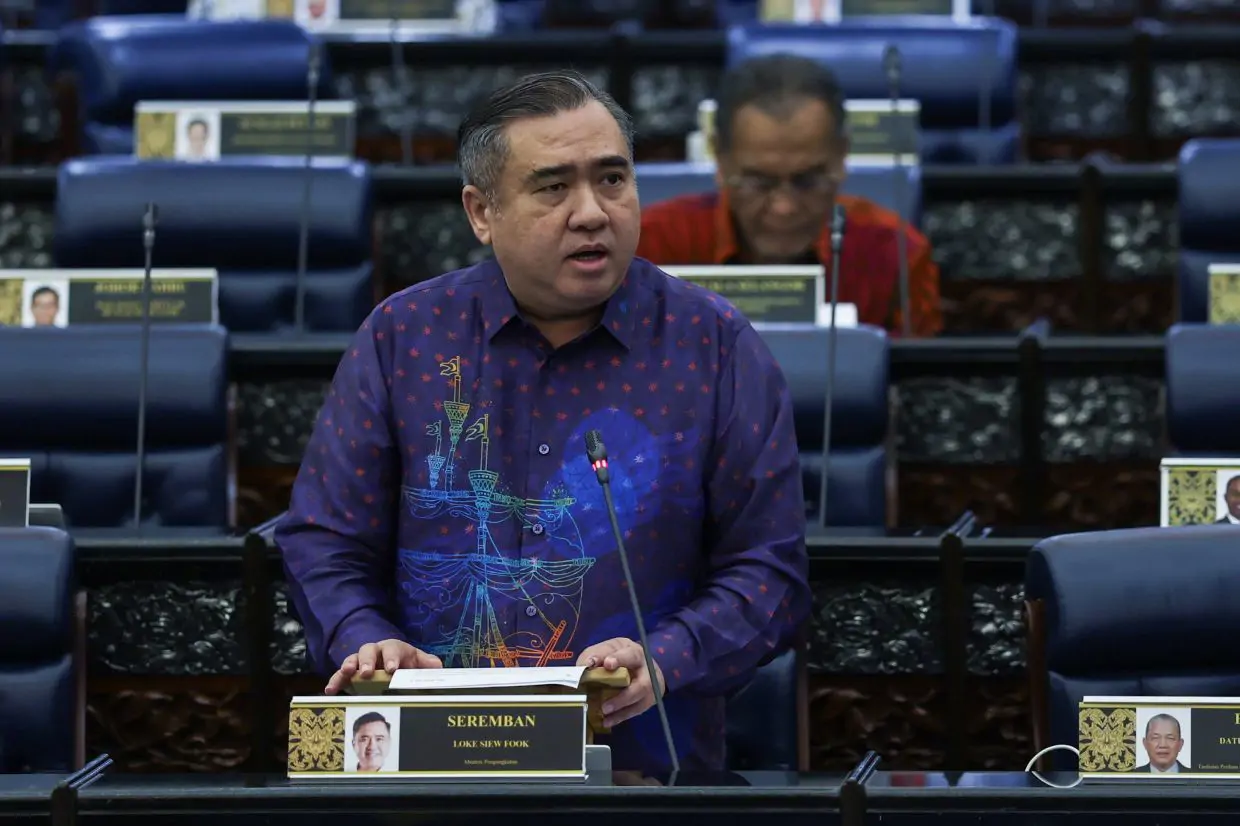
KUALA LUMPUR: Amendments compelling those who drive under the influence of alcohol or drugs to pay compensation to victims and their heirs are expected to be tabled in Parliament early next year.
Transport Minister Anthony Loke (pic) told the Dewan Rakyat that this element will not replace existing penalties.
"It will be an additional responsibility for offenders for the consequences of their actions on victims and their families," he said during Question Time on Thursday (Oct 15).
He said the Bill was expected to be tabled in Parliament in early 2027, subject to the completion of consultations and the legislative process.
"The Cabinet agreed in principle to the proposed amendments on July 15, allowing compensation orders to be imposed in addition to existing penalties such as imprisonment, fines and disqualification from driving," he said.
He added that his ministry is consulting relevant agencies and ministries to refine the compensation mechanism, intended to help families affected by fatal crashes, serious injuries and permanent disabilities.
He told Syahredzan Johan (PH-Bangi) that the ministry would also seek to improve public awareness and encourage motorists to use alternatives such as e-hailing services instead of driving after consuming alcohol.
Separately, Loke said the proposed amendments would also strengthen the driver demerit points system, which he described as ineffective under the current arrangement.
"The demerit system is not implemented effectively because points are only imposed on drivers after they pay their summonses.
"We will improve the system so that drivers will be more careful and more aware of road safety,” he added.
Loke said the changes were part of broader efforts to make motorists more accountable for their actions, stressing that road safety involved responsibility not only towards individuals themselves but also other road users and society.
Responding to Datuk Haji Ahmad Saad (PN-Pokok Sena), Loke said the government was also studying how compensation could be secured if convicted offenders cannot afford to pay.
Possible measures include additional penalties under existing laws and asset seizure, although the mechanism has yet to be finalised.
"The government is also open to seeking views from Islamic legal experts on the principle of diat, or compensation for death or injury, but stressed that the proposed mechanism would operate under common law and apply to everyone.
"Prevention remains crucial, with tougher penalties intended to deter motorists from driving under the influence of alcohol or drugs," he said. - Star, 15/10/2026
/file/publisher-c1a3f893382d2b2f8a9aa22a654d9c97/2024/10/42bc41cc307e53591db4142087088d95.jpg)
Ramkarpal wants clear formula for road crash victim compensation
PARLIAMENT | Ramkarpal Singh (Harapan-Bukit Gelugor) has urged the government to clarify how compensation will be calculated for victims of serious road traffic offences, including those involving drivers under the influence of drugs or alcohol.
While welcoming proposed amendments to the Road Transport Act 1987 that would empower courts to order offenders to compensate victims, the former deputy law minister said the government must explain how the amounts would be determined.
Ramkarpal (above) asked whether compensation would be calculated using a standard formula or assessed on a case-by-case basis, taking into account factors such as the severity of injuries, medical and rehabilitation costs, loss of income, long-term care needs, and the impact on victims’ dependents.
“How will compensation be determined for fatal cases compared to (those involving) injuries that cause permanent disability or loss of limbs?” he asked during his debate on Budget 2027 in the Dewan Rakyat today.
He also called for clear guidelines or a uniform assessment mechanism to ensure compensation is awarded fairly, transparently, and consistently.
Earlier today, Transport Minister Anthony Loke (below) said the proposed amendments would empower courts to order offenders convicted of serious road traffic offences to compensate victims or their lawful next of kin.
/file/attachments/886/4e4d24faf7a2cbd63a998687e1c5e648_619394.jpg)
The compensation would be in addition to imprisonment, fines, and other penalties under the law. The government is also considering seizing the assets of convicted motorists to fund the payments.
However, responding to Ahmad Yahaya (PN-Pokok Sena) in the Dewan Rakyat, Loke said no decision had been made on how the proposed compensation system would operate.
The Transport Ministry is working with other government agencies to finalise the details, with the amendments expected to be tabled in Parliament in early 2027.
When tabling Budget 2027 on Oct 9, Prime Minister Anwar Ibrahim confirmed that the compensation mechanism for victims of accidents caused by motorists under the influence of intoxicating substances would be included in the proposed amendments.
In June, the Dewan Rakyat passed a separate Road Transport (Amendment) Bill aimed at strengthening enforcement and increasing penalties for serious traffic offences.
However, the compensation proposal was not included, prompting several MPs to question the government’s commitment to addressing driving under the influence.
Civil claims
Ramkarpal also questioned how the proposed compensation mechanism would interact with victims’ existing rights to seek damages through civil proceedings.
He noted that under civil law, accident victims or their legal representatives can, subject to applicable laws, claim damages from the party responsible. These claims typically cover medical expenses, loss of income, care needs, and other losses recognised by law.
He asked whether compensation awarded through the proposed mechanism would be factored into the calculation of damages in civil proceedings.
“How will the government ensure that victims do not receive double compensation for the same loss without compromising their rights to claim appropriate damages?
“At the same time, we need to ensure that this new mechanism does not inadvertently limit the victims' rights to seek justice through the court,” Ramkarpal said.
/file/publisher-c1a3f893382d2b2f8a9aa22a654d9c97/2025/06/41a2f27ab467fe3e8147a82c80e8d650.jpg)
Loke previously said Malaysia’s existing system requires motorists who drive under the influence of alcohol or drugs to face criminal proceedings, while victims seeking compensation must file separate civil suits.
“This is where the problem lies because some victims do not have the means to file a civil case, and it will take years for them to get compensation in a civil case.
“What we are doing right now is combining these two into one so that when the case is brought to the court, the judge can also award compensation to the victims,” Loke reportedly told a press conference on Oct 12. - Malaysiakini, 15/10/2026
DPPs ordered to seek compensation for crime victims
The Criminal Procedure Code allows the courts to order convicts to pay costs of prosecution and compensation to victims or their next of kin.

Dusuki said Section 426 of the Criminal Procedure Code gives courts the authority to order convicts to make a payment of costs for prosecution and compensation to victims or their next of kin.
“That order can be made on top of a sentence, for the purpose of compensating the aggrieved party.
“This is to ensure that, in the appropriate cases, victims obtain adequate compensation under the law to uphold justice and in view of public interest,” he said, according to Berita Harian.
Section 426 states that the court must consider the nature of the offence, the injury or expenses sustained by the victim, the damage or loss of property suffered, the loss of income incurred by the victim, and the convict’s ability to pay compensation.
Dusuki said this meant that prosecutors would need to obtain additional information to fulfil the criteria for the court to order payment of compensation.
He acknowledged that seeking compensation was not a conventional practice of deputy public prosecutors and would not be possible in all cases.
“This department remains committed to ensuring that prosecutions are conducted independently, fairly, and with integrity, and that justice is upheld and the interests of the public and victims are preserved.” - FMT, 15/4/2026
Father jailed 24 years for raping daughter


RAUB: A Sessions Court judge said a 24-year jail term for a father who raped his 13-year-old daughter reflected the need to deter sexual offences.
Judge Noor Zaihan Mohamad Ali, in her grounds of judgment, cited previous court decisions stressing the need for heavy sentences to deter sexual crimes, particularly those committed against children by their own fathers.
She referred to Md Adam Mustafar v Public Prosecutor, in which the judge stressed that severe punishment was necessary to deter fathers from preying on their children and other vulnerable victims.
She also cited Yek Hock Soon, in which judge Datuk Azman Abdullah said sentences should serve as a lesson and instil fear among offenders and society.
Azman had warned that a mere "pinprick" punishment could lead society to regard rape as a less serious offence.
Noor Zaihan said the principles were particularly relevant in the case involving the 54-year-old father, who pleaded guilty to repeatedly raping his daughter
The judge said the fact that the accused was the victim's father made the offences particularly serious, as he should have protected her rather than caused her trauma and pain.
"She should have received love and affection from him but was treated otherwise.
"These acts clearly showed that the accused did not regret his actions and continued to repeat the offences against his own biological daughter," she said.
The court sentenced him to 12 years in jail and 10 strokes of the rotan for each of two rape charges, with the sentences ordered to run consecutively.
The offences took place on March 17 and May 27 at their house in Bentong.
The court also took into account another rape committed against the victim on Sept 19 last year, for which the accused was sentenced to eight years in jail and 10 strokes of the rotan. That sentence was ordered to run concurrently with the sentence for the first rape charge in the present case.
Noor Zaihan said the two offences in the present case could not be treated as a single transaction because they occurred on different dates and involved separate acts.
The accused, who was unrepresented, had appealed for a lighter sentence, citing heart disease and high blood pressure. He said he worked as a security guard earning about RM2,000 a month and had a wife and three other daughters aged 11, 10 and six.
However, deputy public prosecutor Fathin Nadhirah Kasim sought a heavy sentence, arguing that the public interest outweighed the accused's personal circumstances.
She said he should have protected and educated his daughter instead of raping her.
The court also ordered him to undergo rehabilitation counselling in prison and be placed under police supervision for two years after completing his sentence.
The victim disclosed the offences to her mother on May 27, and the accused was arrested later that night.
Noor Zaihan said the sentence was adequate and appropriate after considering the facts and circumstances of the case, and should deter the accused from repeating his criminal conduct.- NST, 14/10/2026
©The Star (Used by permission)
ARTICLES OF LAW By BHAG SINGH


 Posts
Posts




No comments:
Post a Comment